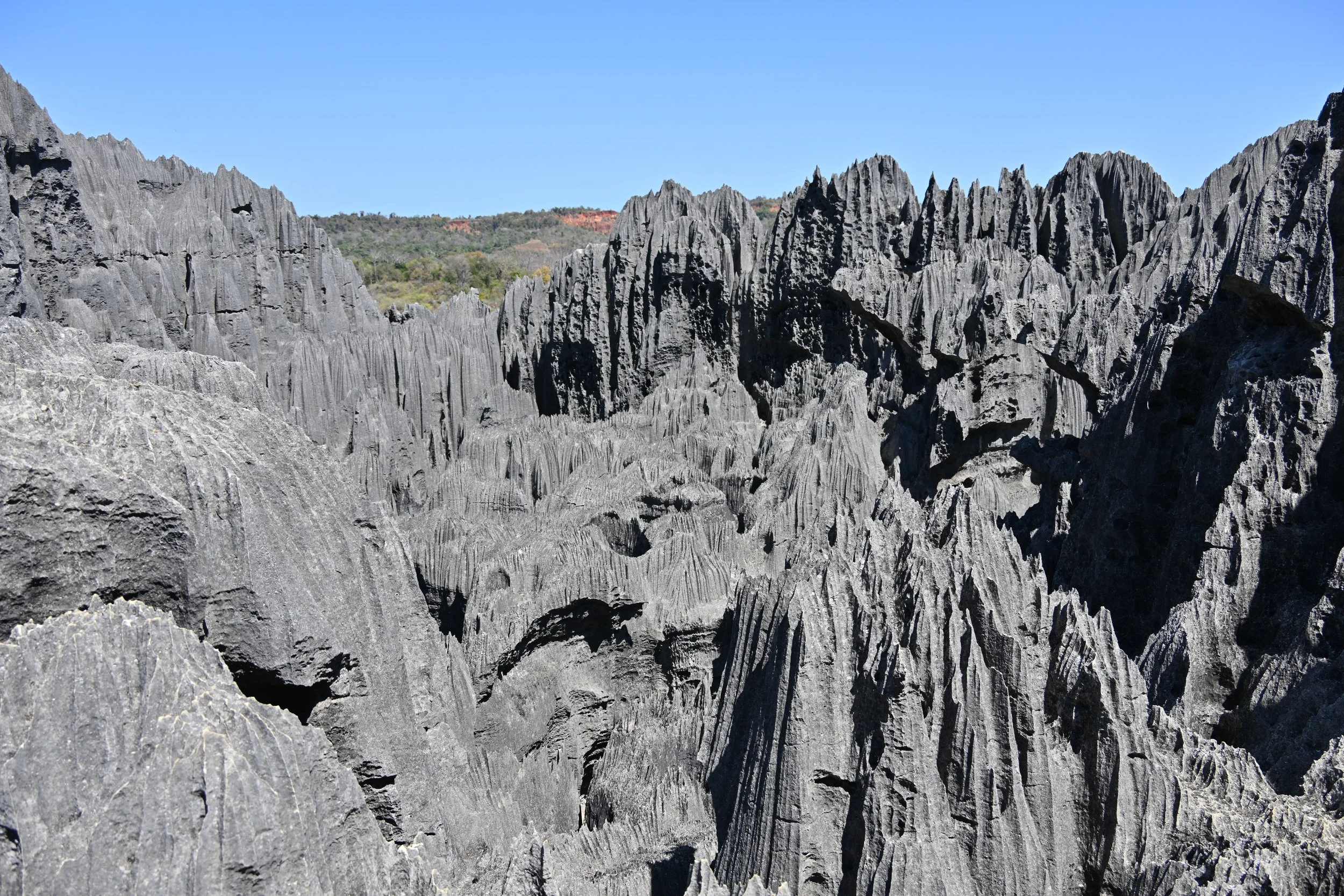
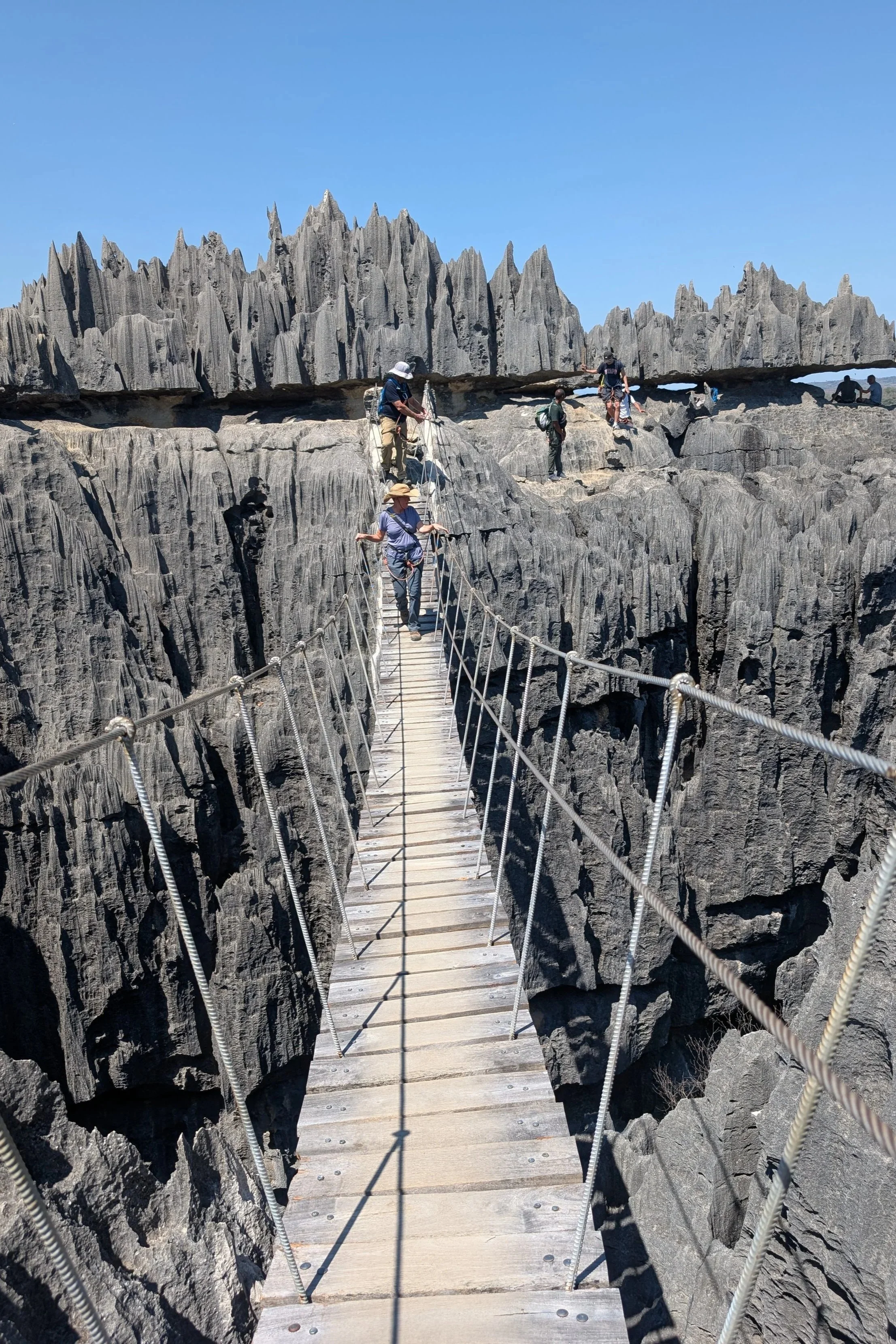
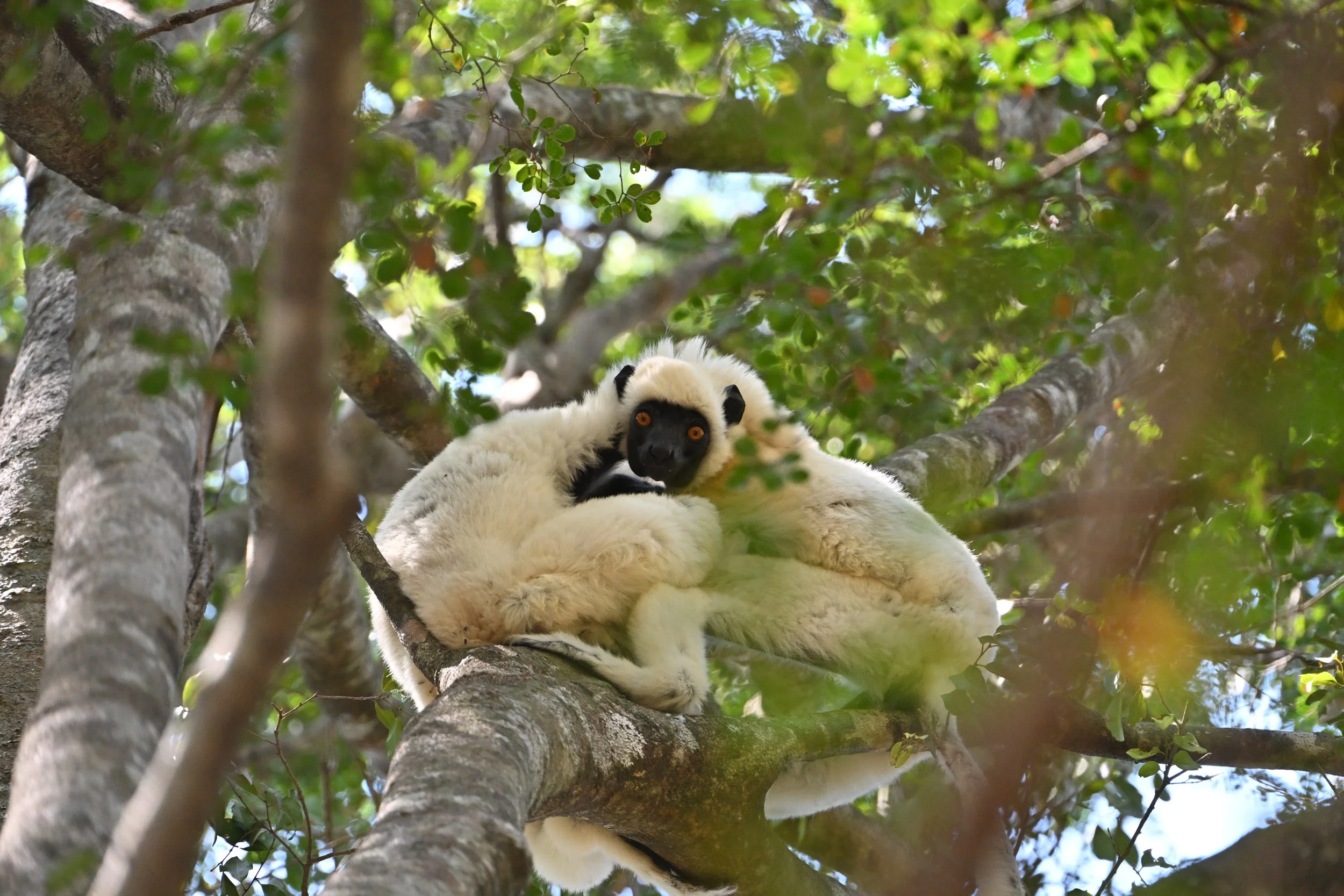
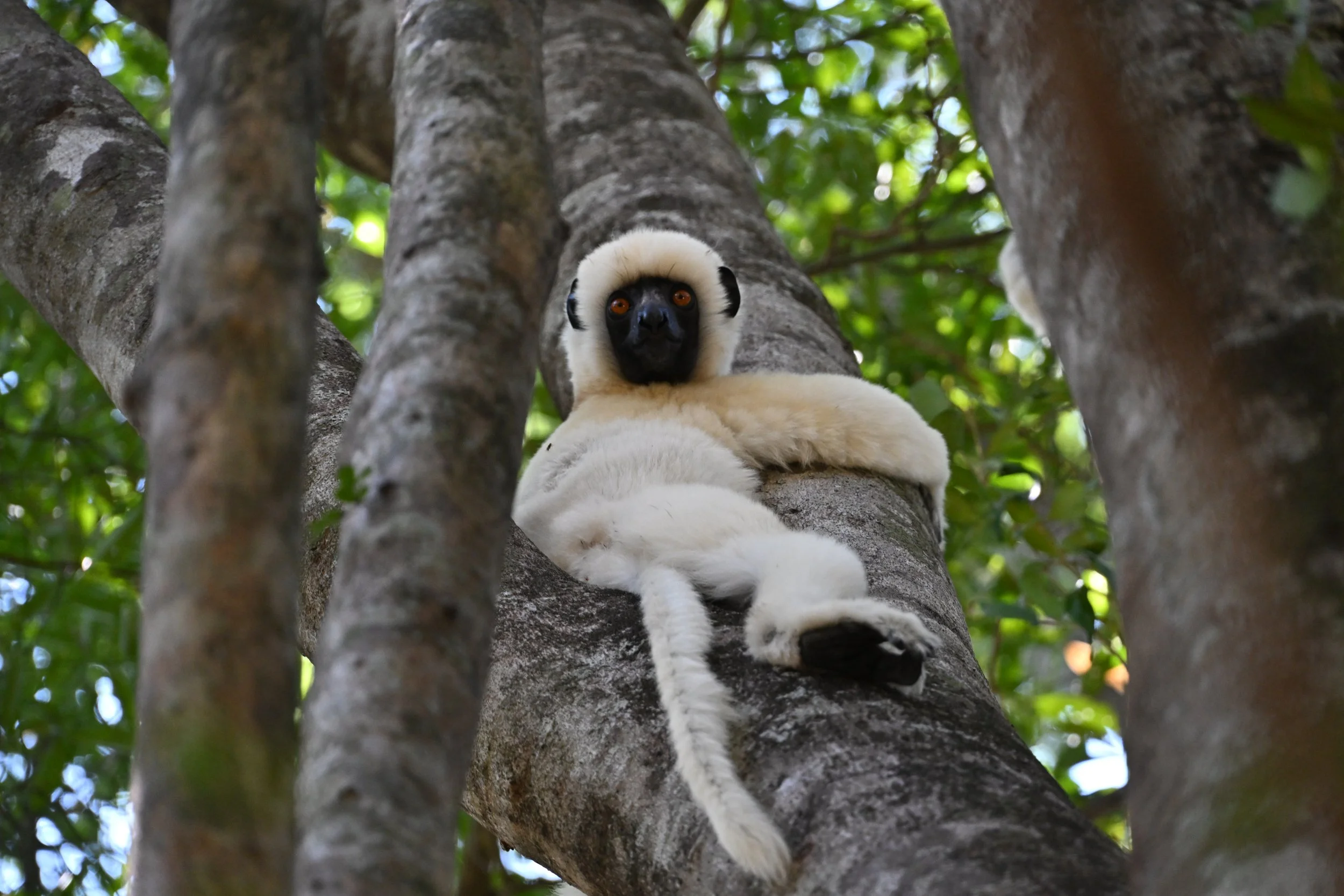
Isalo National Park

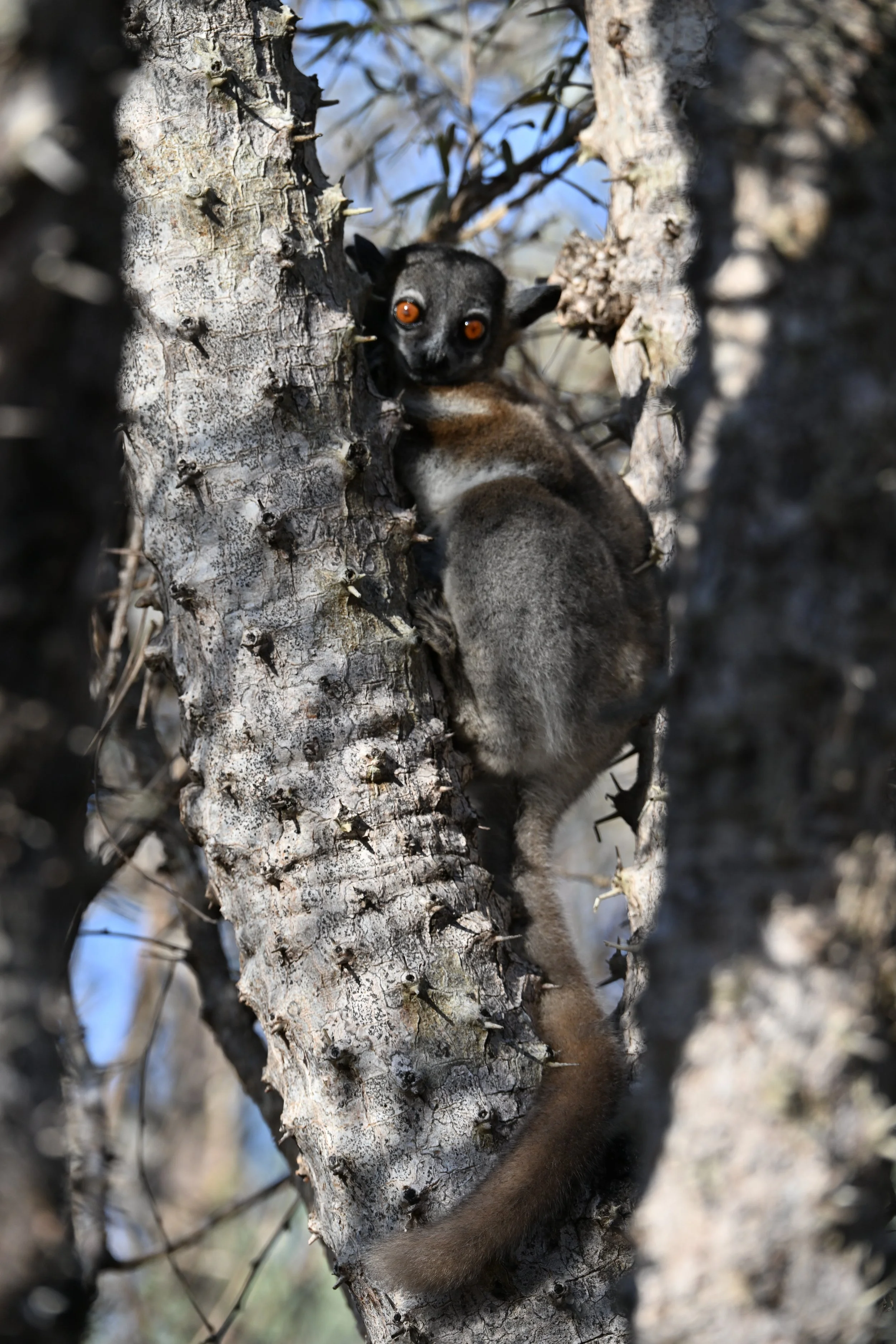
Now we were headed inland across the island, with a brief stop at Zombitse National Park, where we met yet another lemur species - the Zombitse Sportive Lemur, which exists nowhere else in Madagascar -
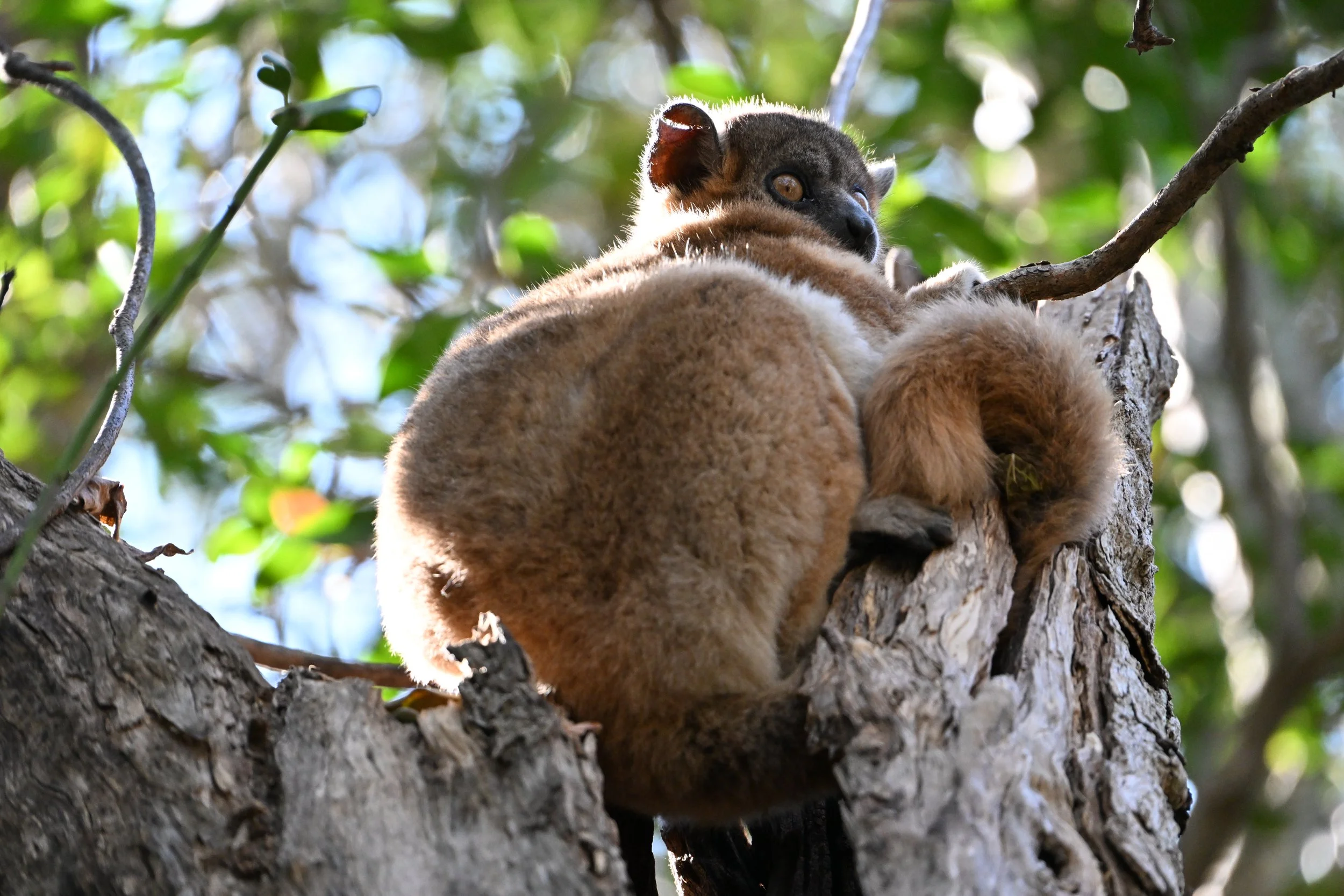
They are nocturnal, but this one was just zoning out at the top of its lair.

We also saw the striking Standing’s Day Gecko…
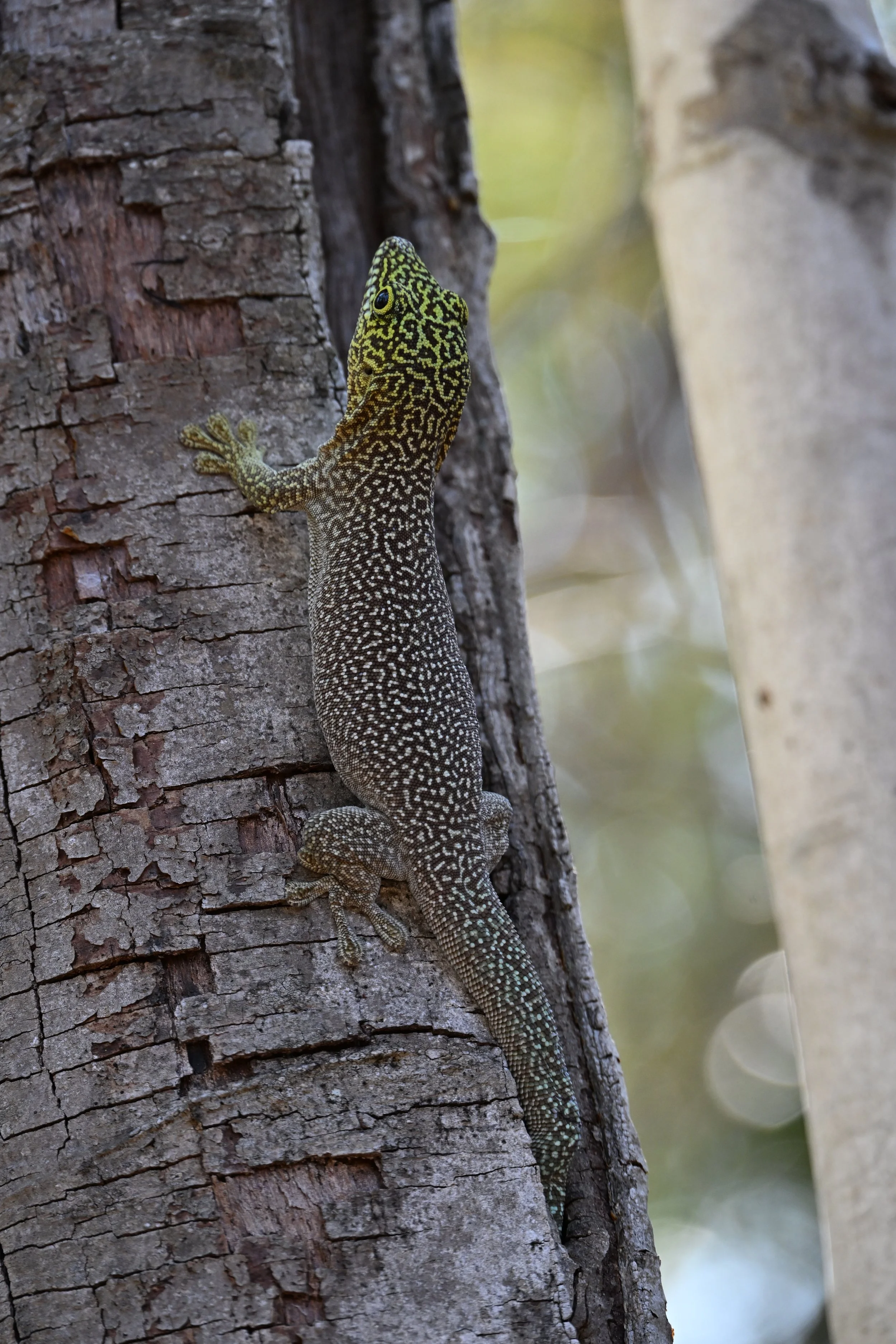
check out its toes!

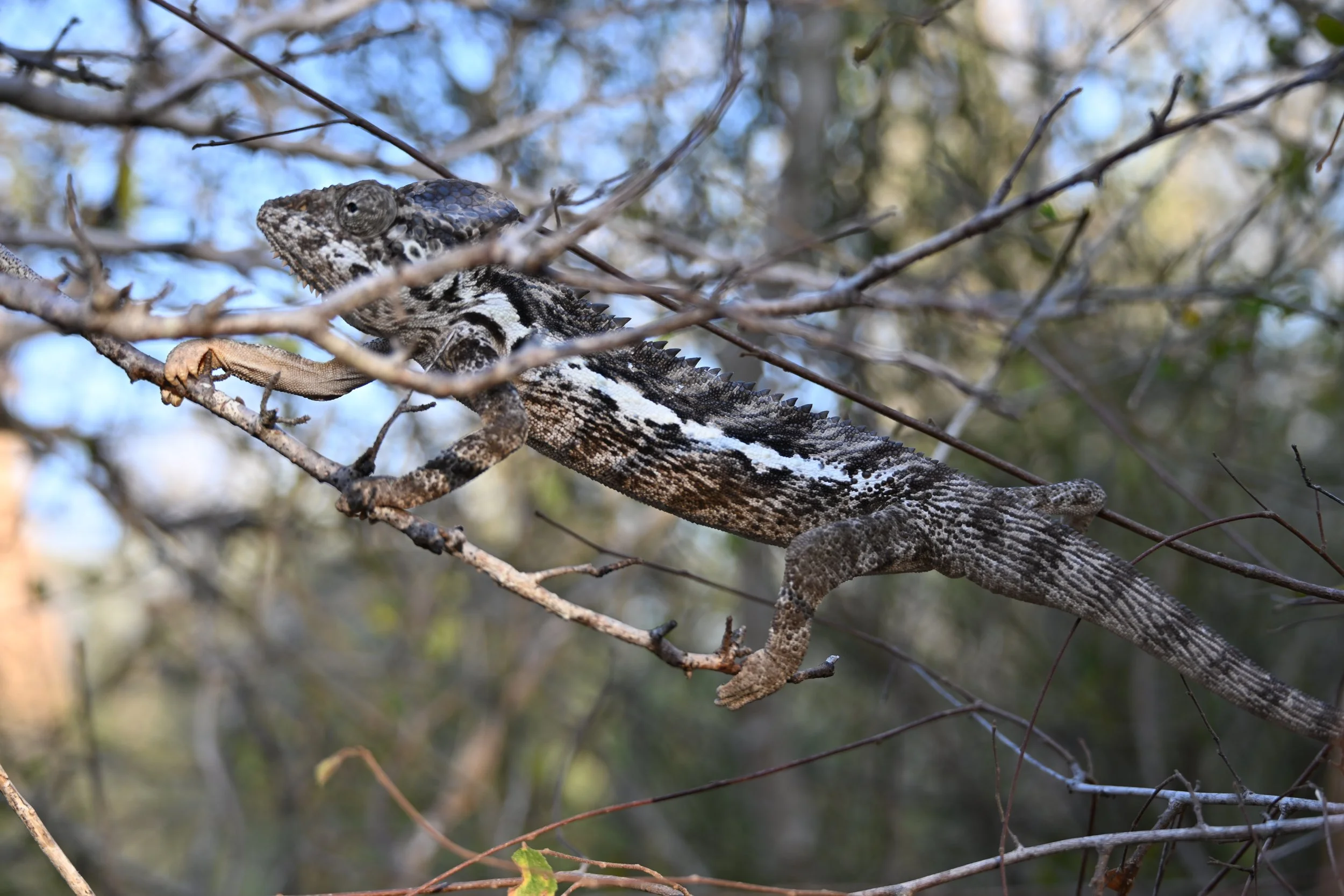
… and this neat looking Chameleon -
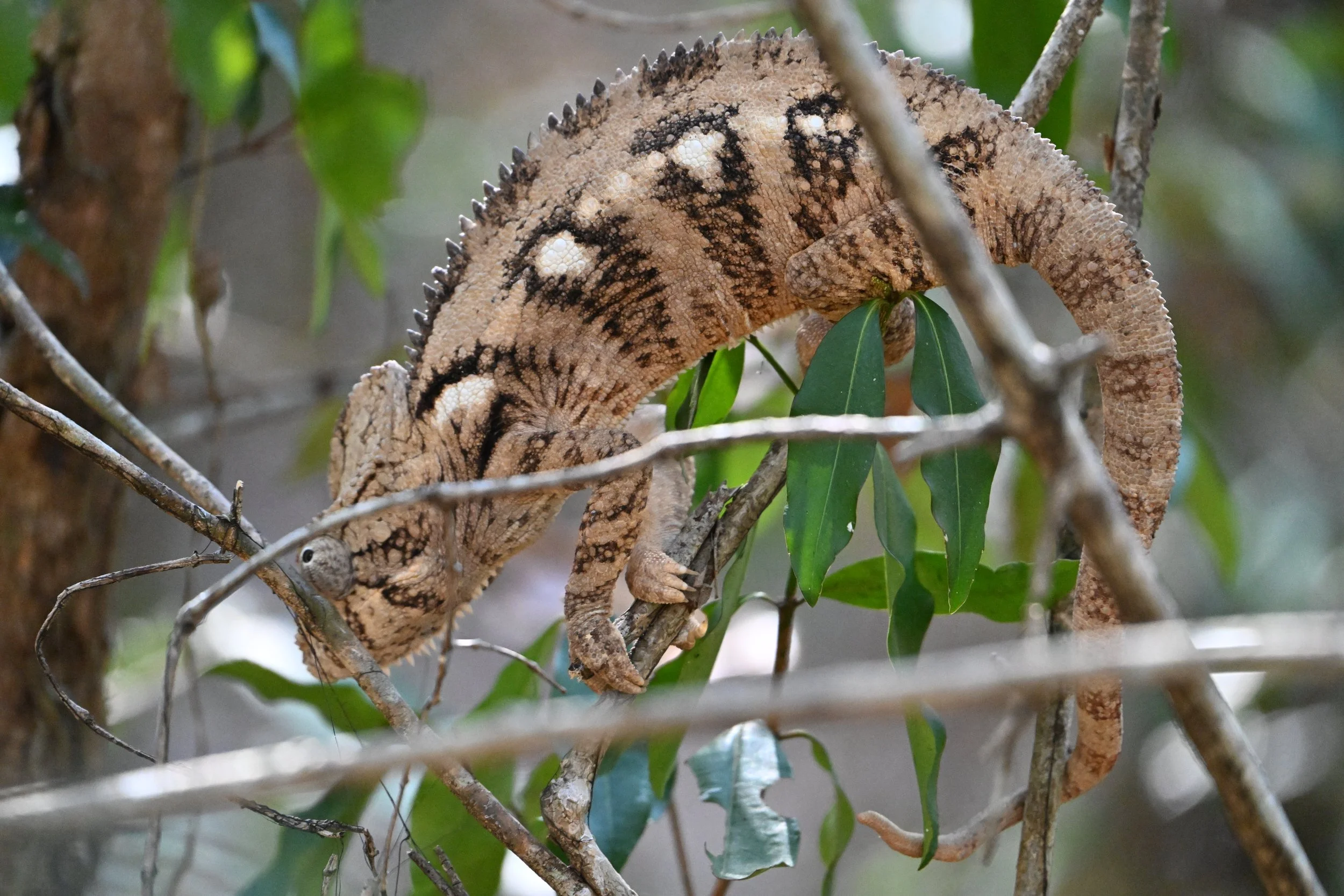
I love the 360 degrees each eye can swivel

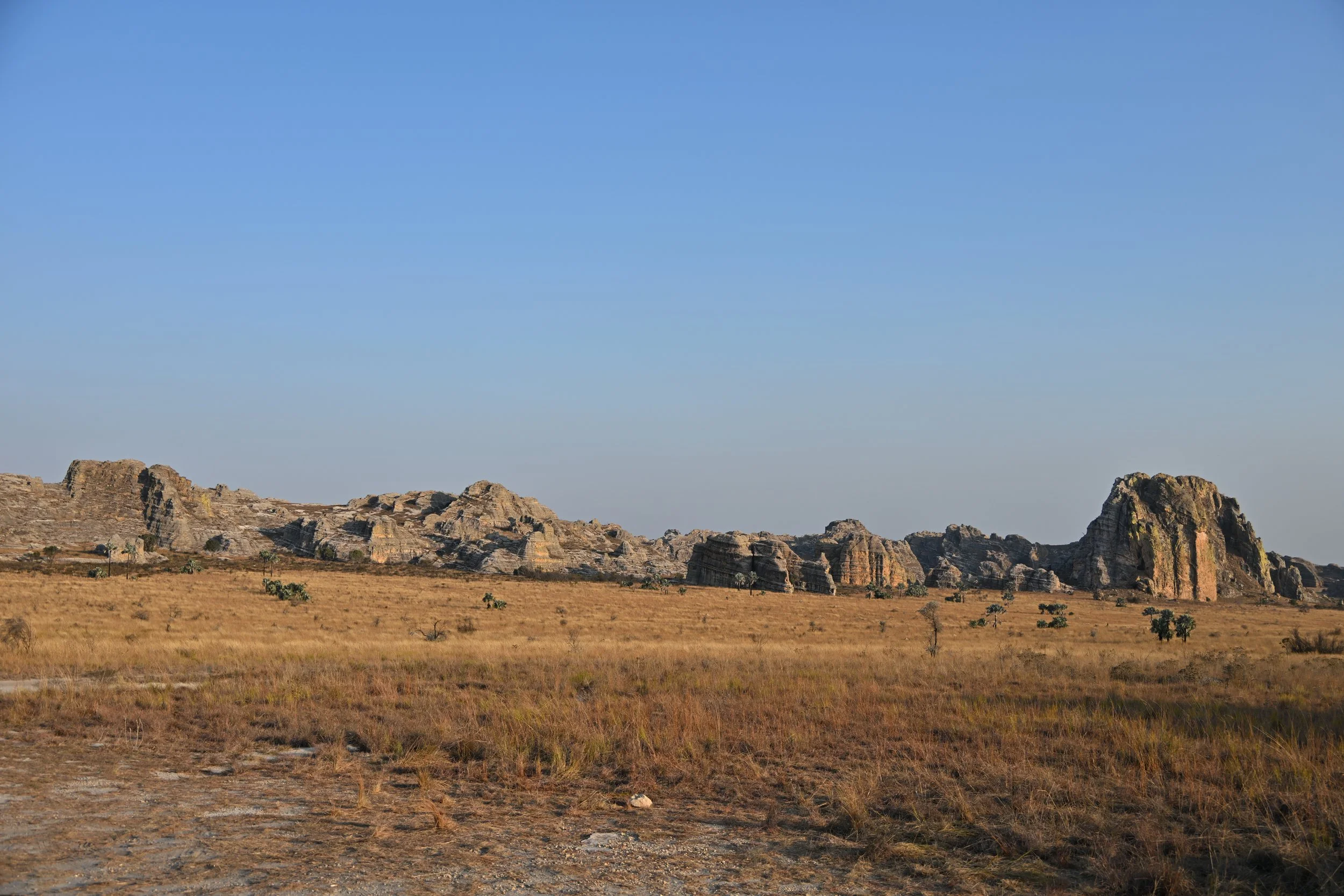
Our main destination was Isalo National Park, which is in the center of the southern part of the island and comprises more than 200,000 acres. As we approached, we saw more and more rock ridges appearing out of the dry grasslands -

On our way to our evening activity, this ridgeline glowed warmly in the “golden hour” -
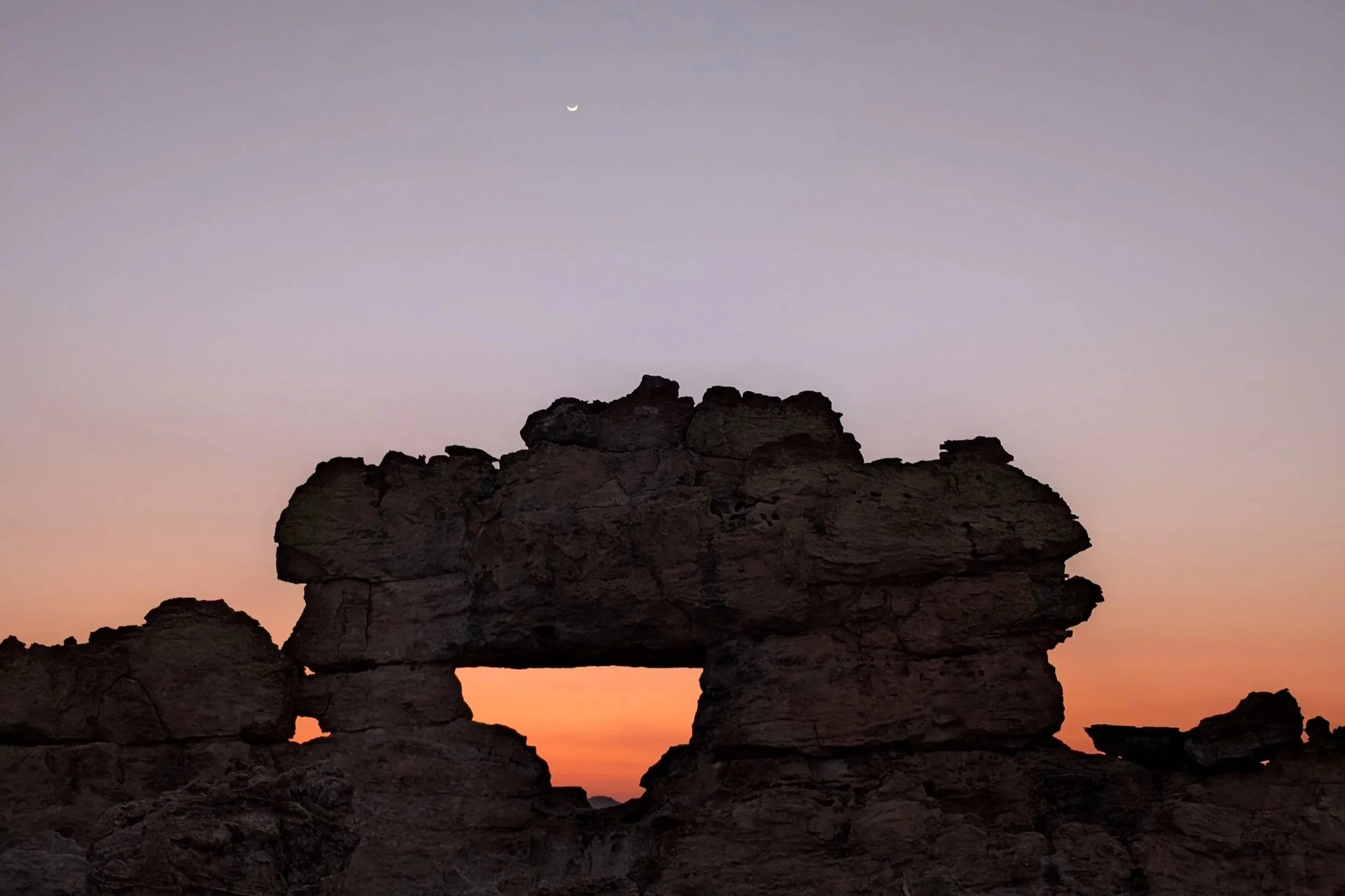
We had come to see the Isalo Window…
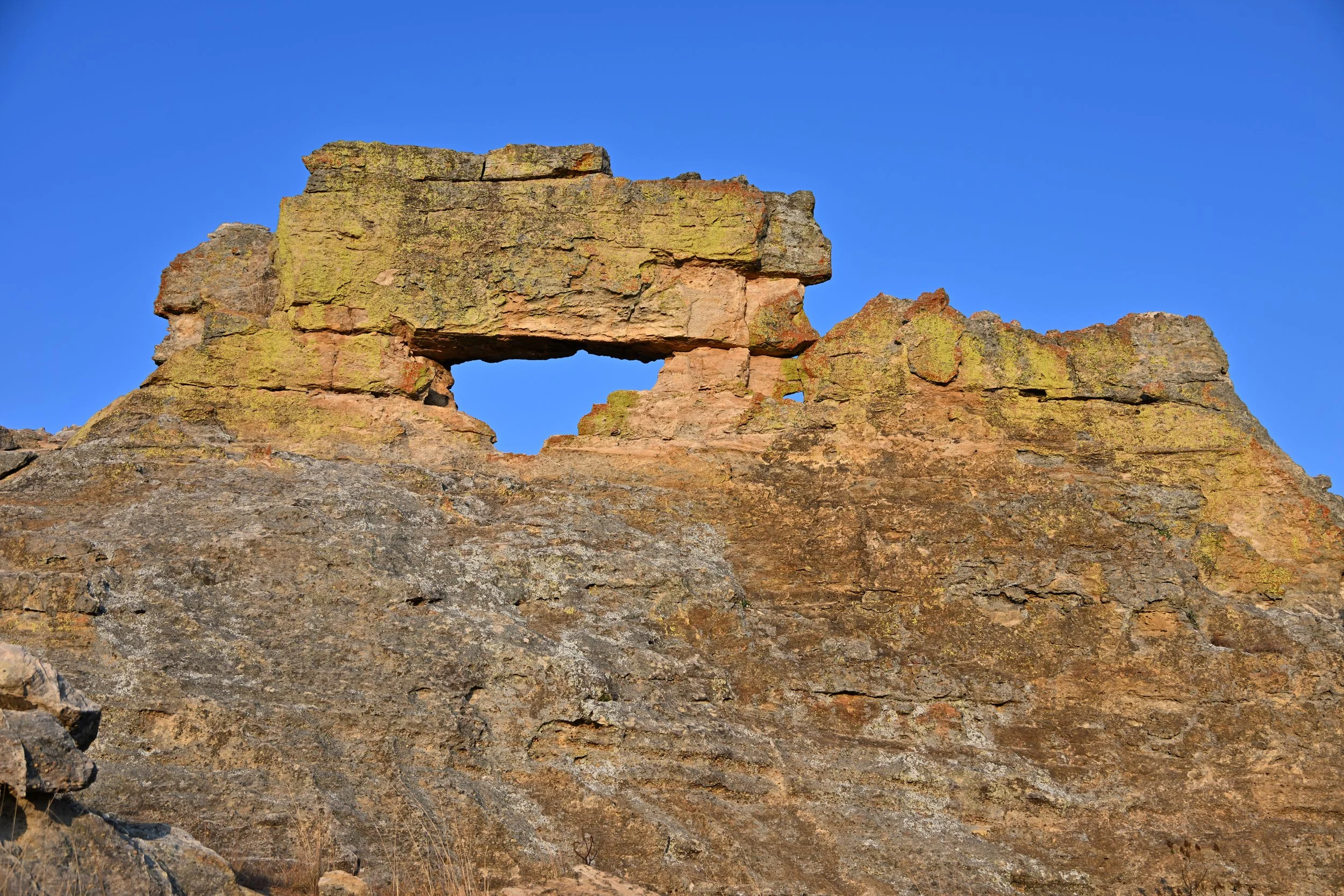
… at sunset -

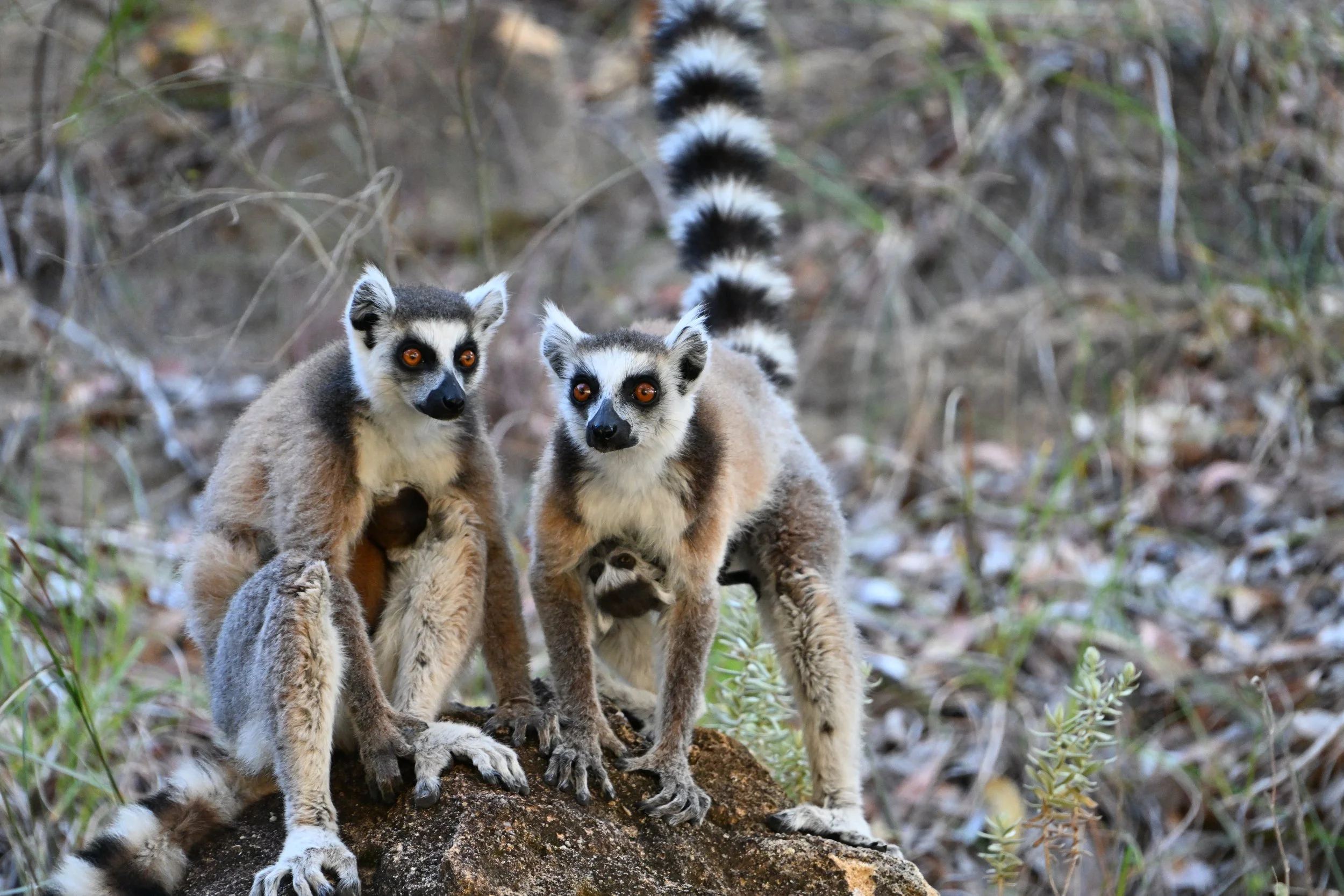
The next morning we met a local guide for the park, who took us on a 5 hour hike. We got to see some Ring-tailed Lemurs with babies…
…Stick insects…
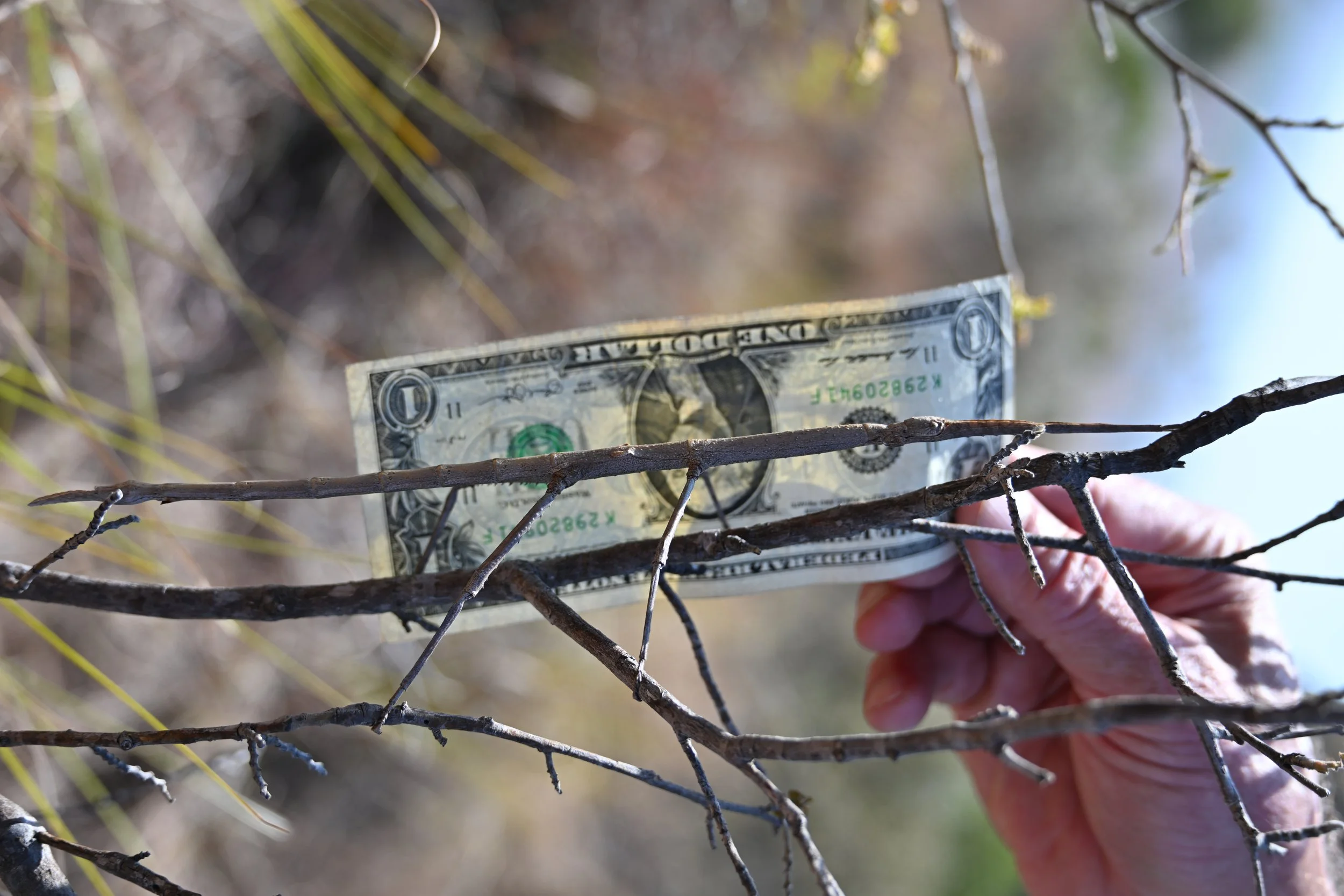
this was a massive example; the eye and teeny-tiny mouth are on the right

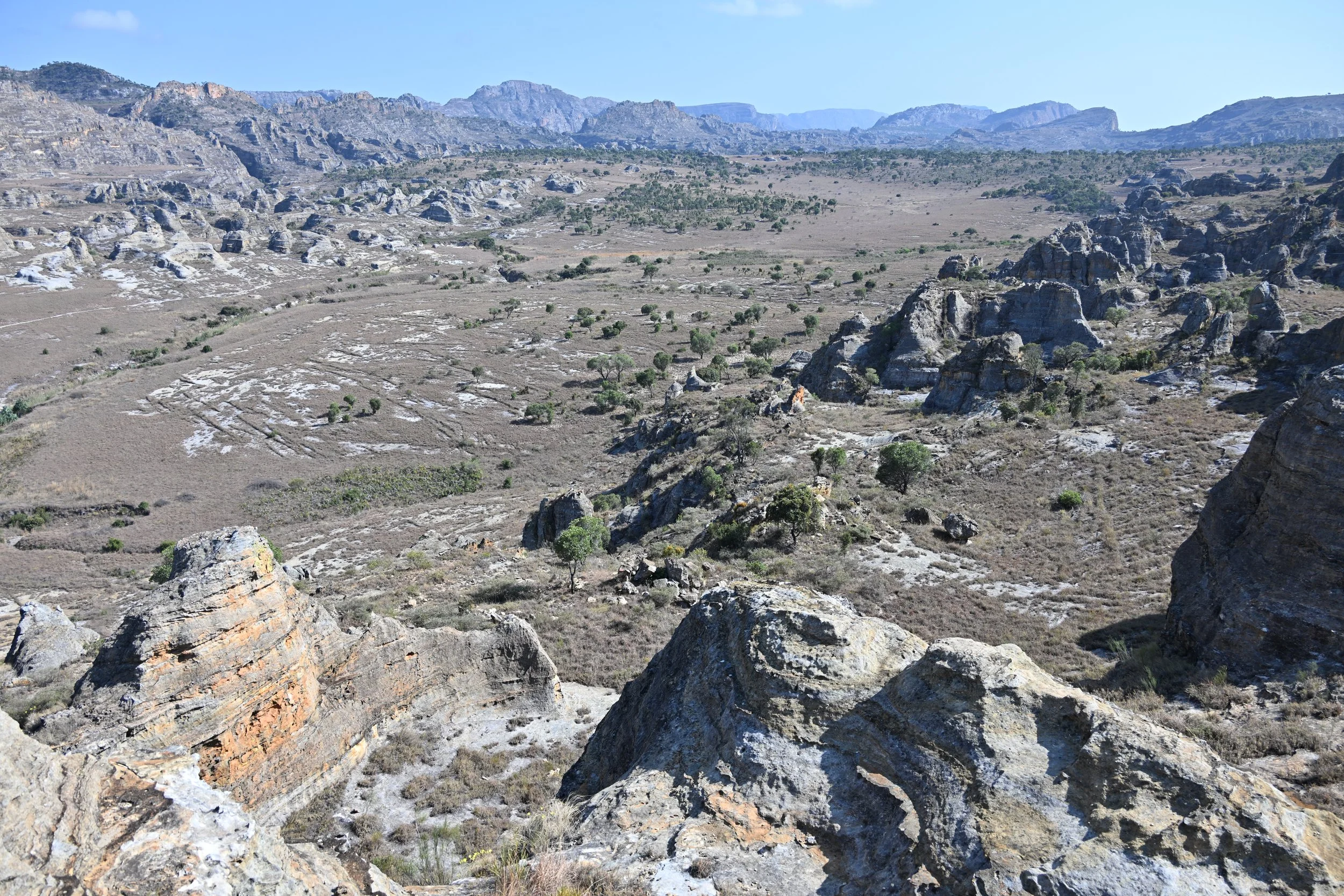
… grand vistas…
… and unique plants -
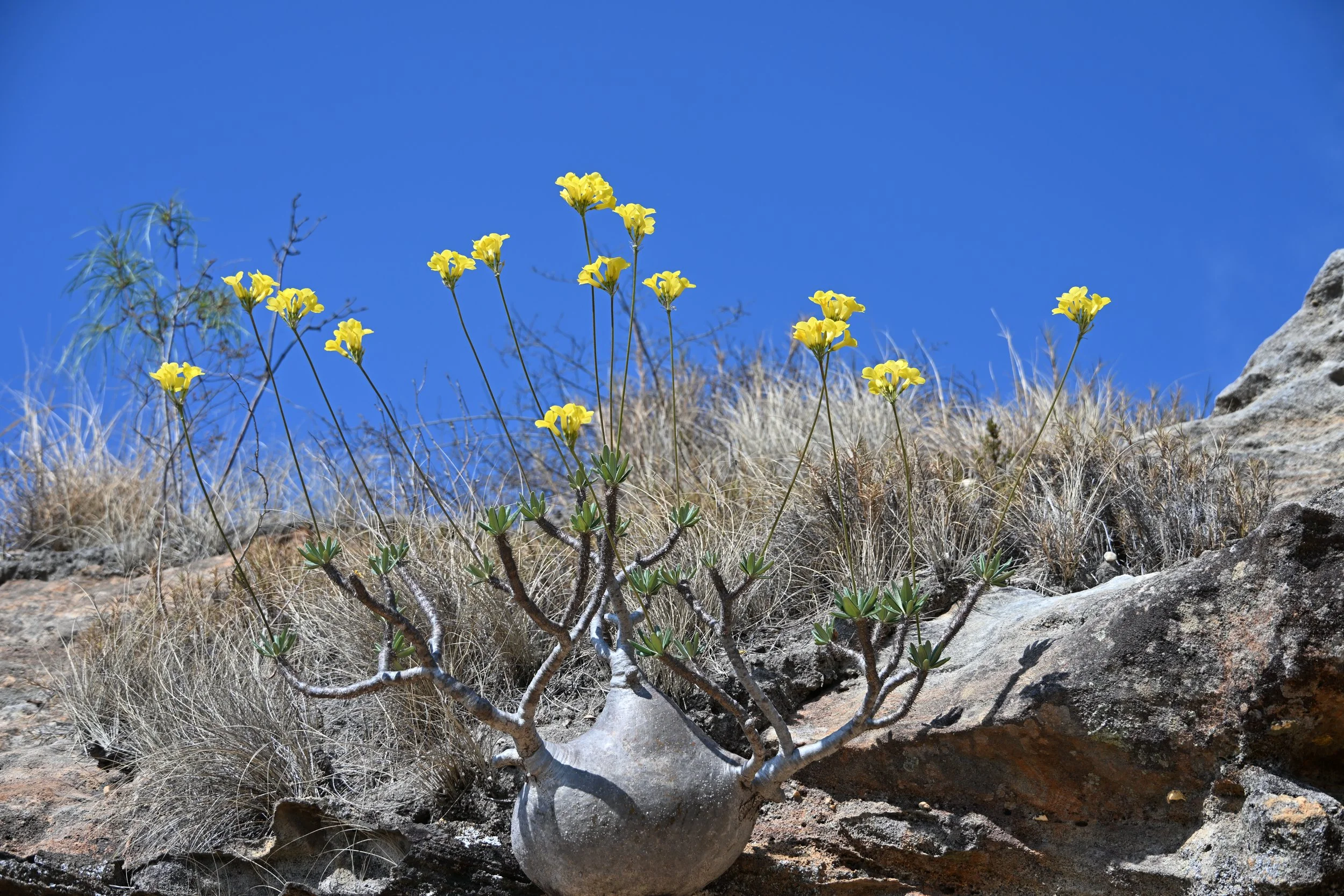
Pachypodium - mistakenly called “dwarf baobab”

The trail headed down to a stream…

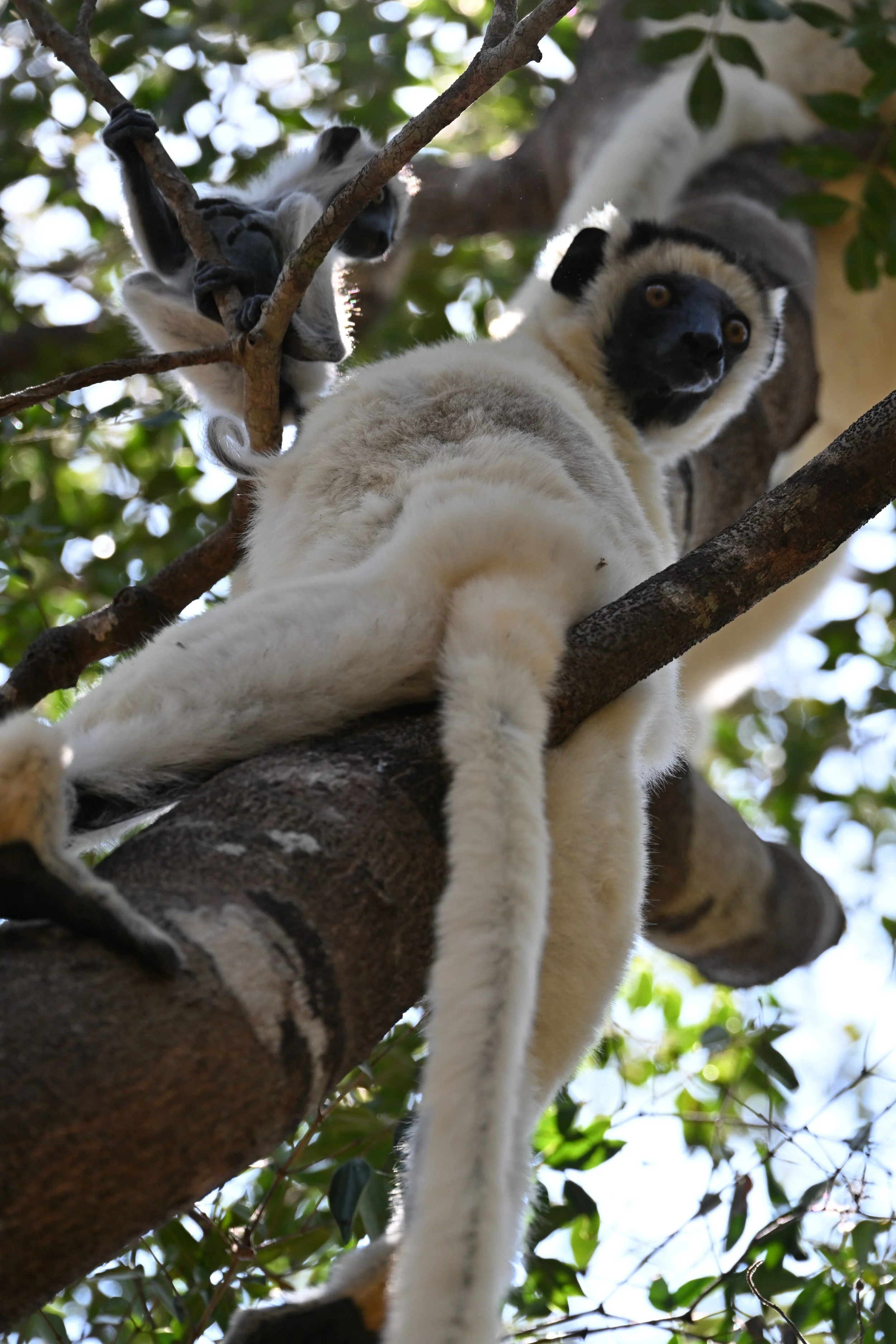
… where we met more lemurs in the woods, including a Sifaka with a baby -
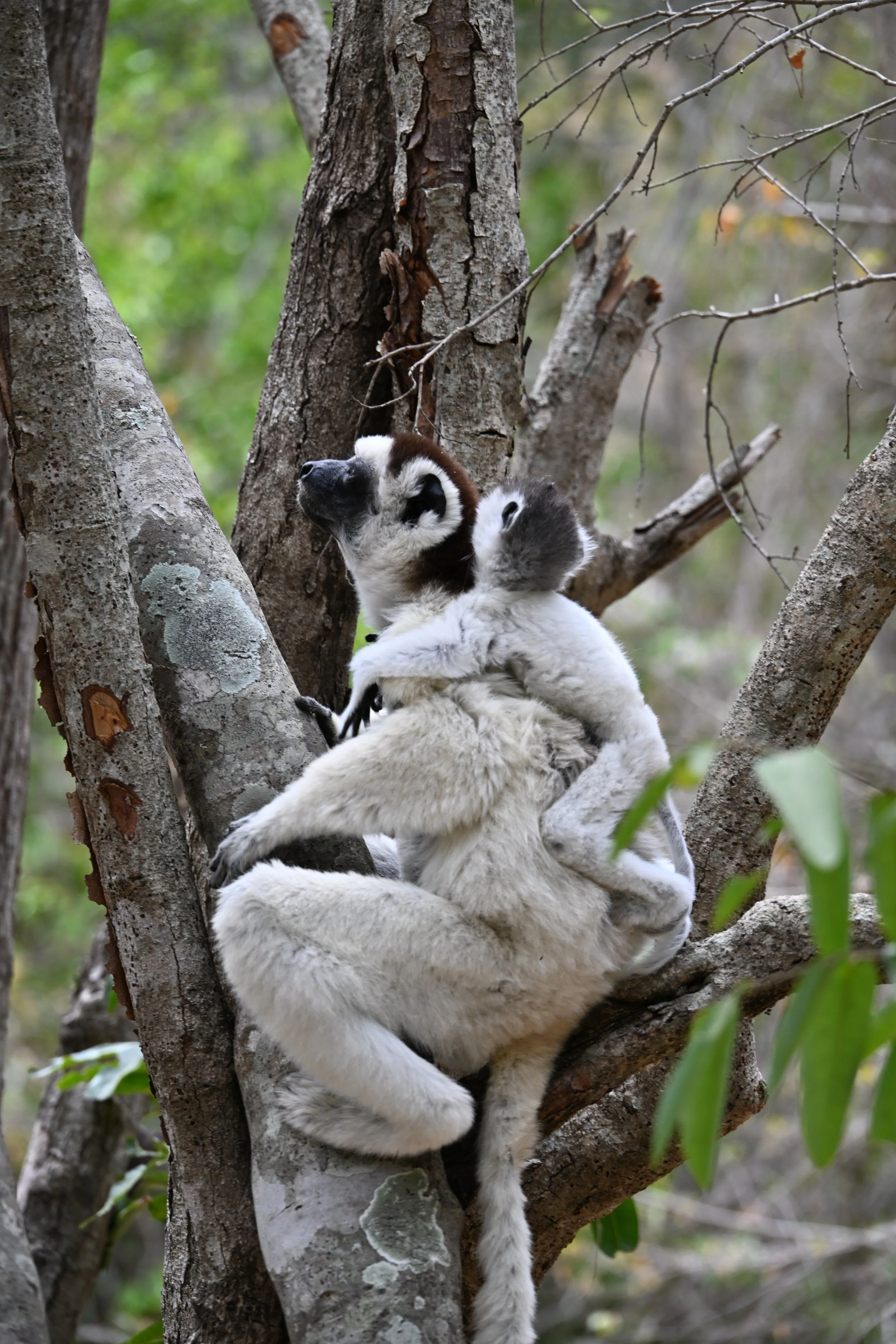
Then a pair of Sifakas showed why they’re dubbed “dancing lemurs” (video alert - open this post in a browser by clicking the link at the end of the email) -

We dropped down to the stream and were transported into a very different micro-climate from the hot, dry desert we’d hiked across. Suddenly everything was cool, shady and moist -

And there was even a refreshing waterfall and pool -

Coming back out into the dry forest, I was mesmerized by this chameleon’s movement -

So to close this post…on the previous night, after the crowd around us got their sunset shots, they all took off. But we know that the most beautiful light is about 15-20 minutes after sunset -
Southwest coast

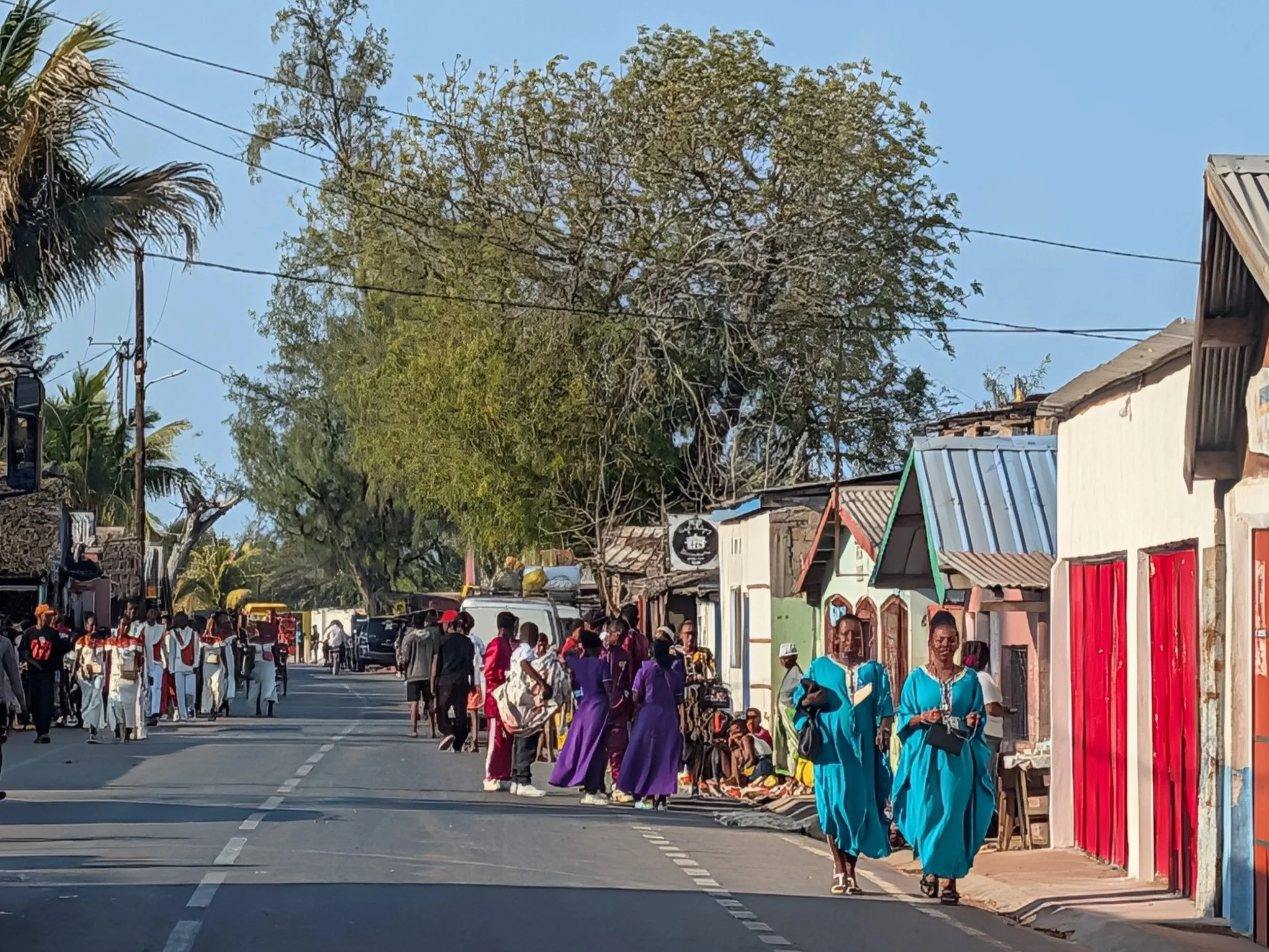
To get to our next destination, we needed to catch a speedboat across a large bay. As we drove through town on a Sunday, everybody was dressed in their best. We’re guessing the matching clothes probably signified singing groups?

At the “office” of the boat company, we found that the tide was way out -

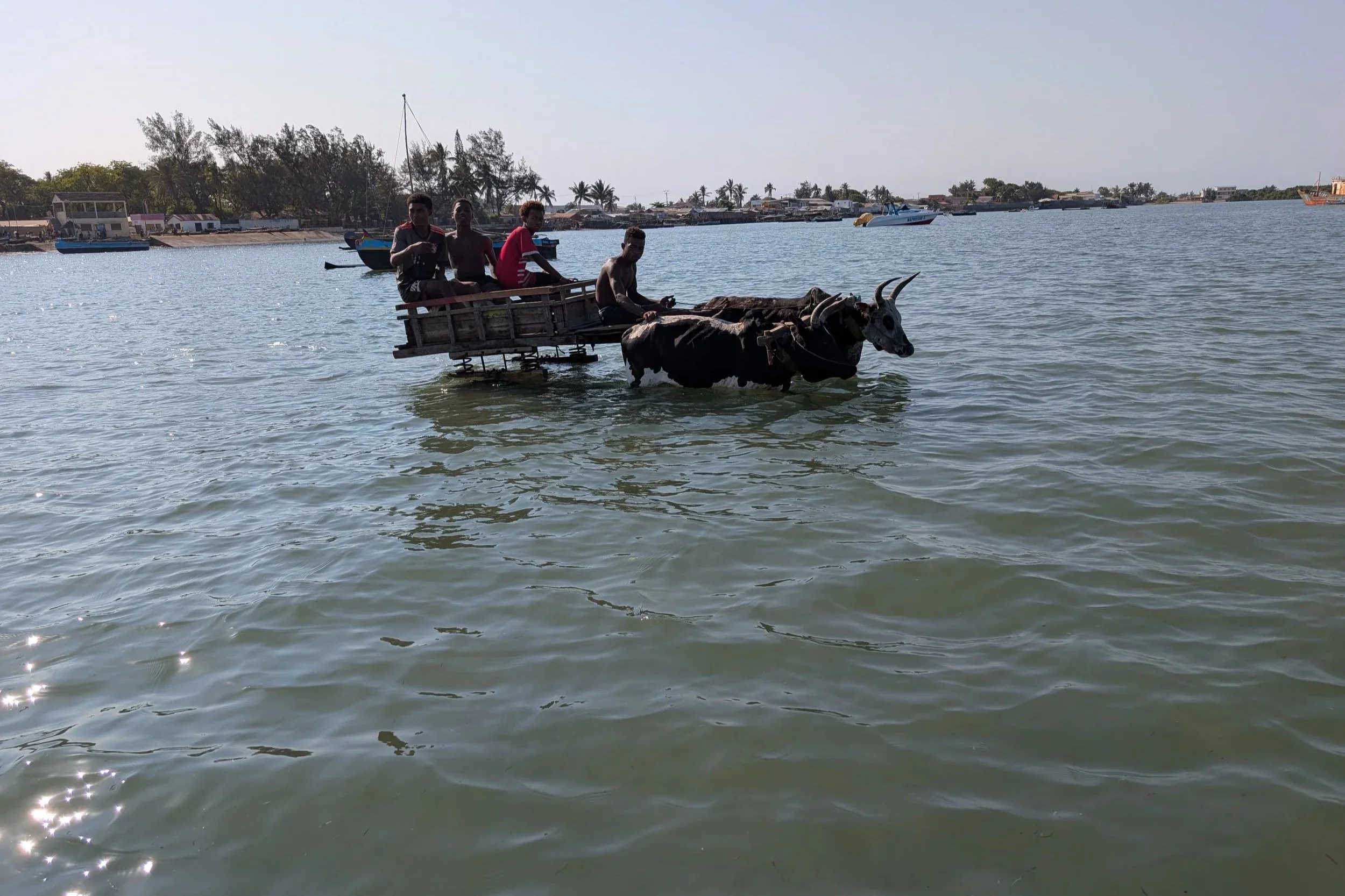
I didn’t get a picture of it, but the wheel in the bottom R corner above belonged to a tractor that pulled a large cart in which all of us passengers and our luggage rode out to the speedboat. The zebu carts were used to ferry goods and locals.

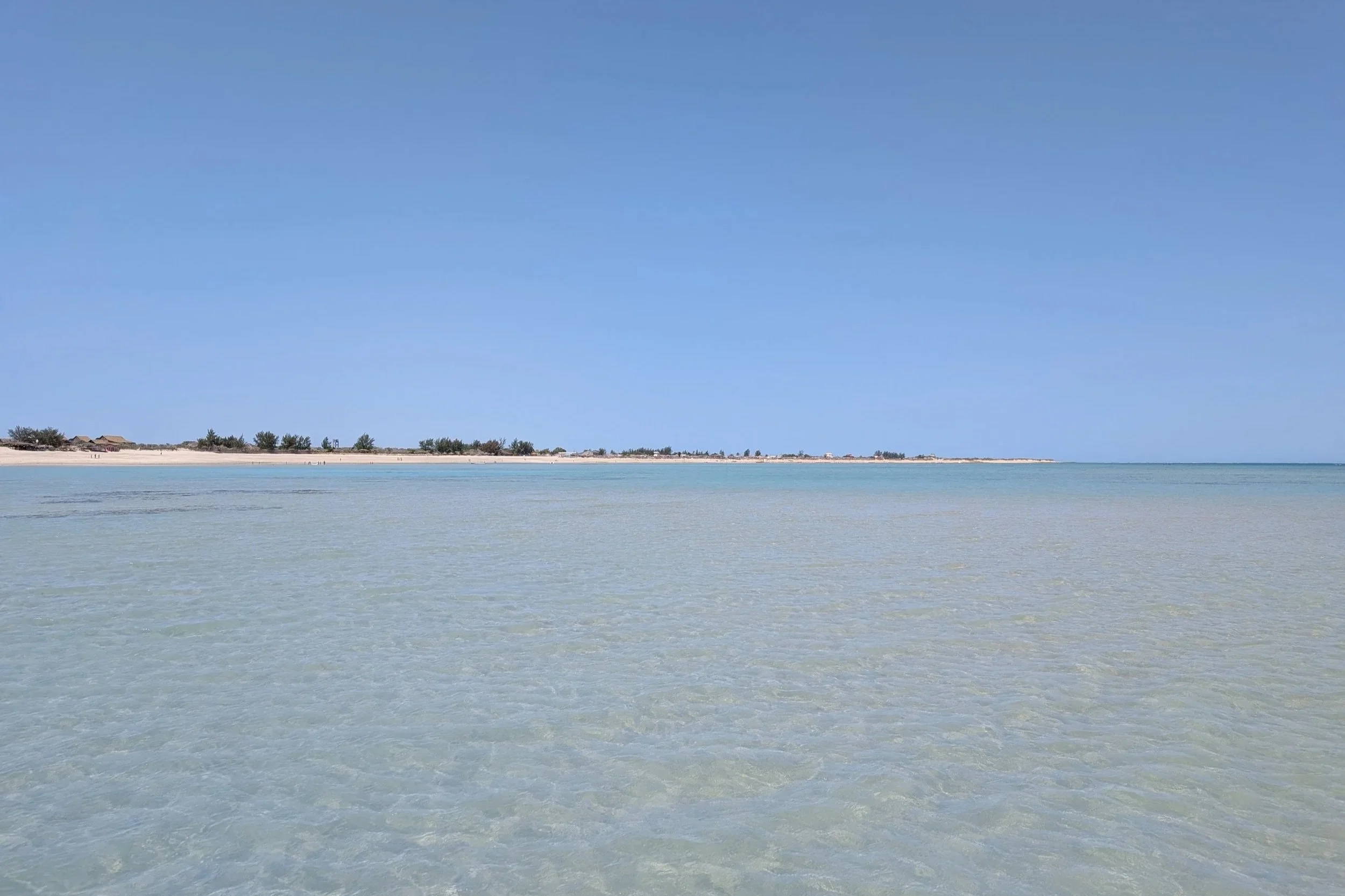
As we neared the beach where we were meeting the car to take us to our hotel…

… the water was really shallow, and the boat had to stop short of the beach. Guess how we met our car?

Luckily we were wearing shorts and sandals!

As we drove down the coast to our hotel, we could see we were definitely in desert country, and the housing was much simpler than it had been up north -

The local vehicles were even more packed (I didn’t think that was possible!) -

We arrived at our beachfront hotel to find that we were the only guests! (we didn’t complain)

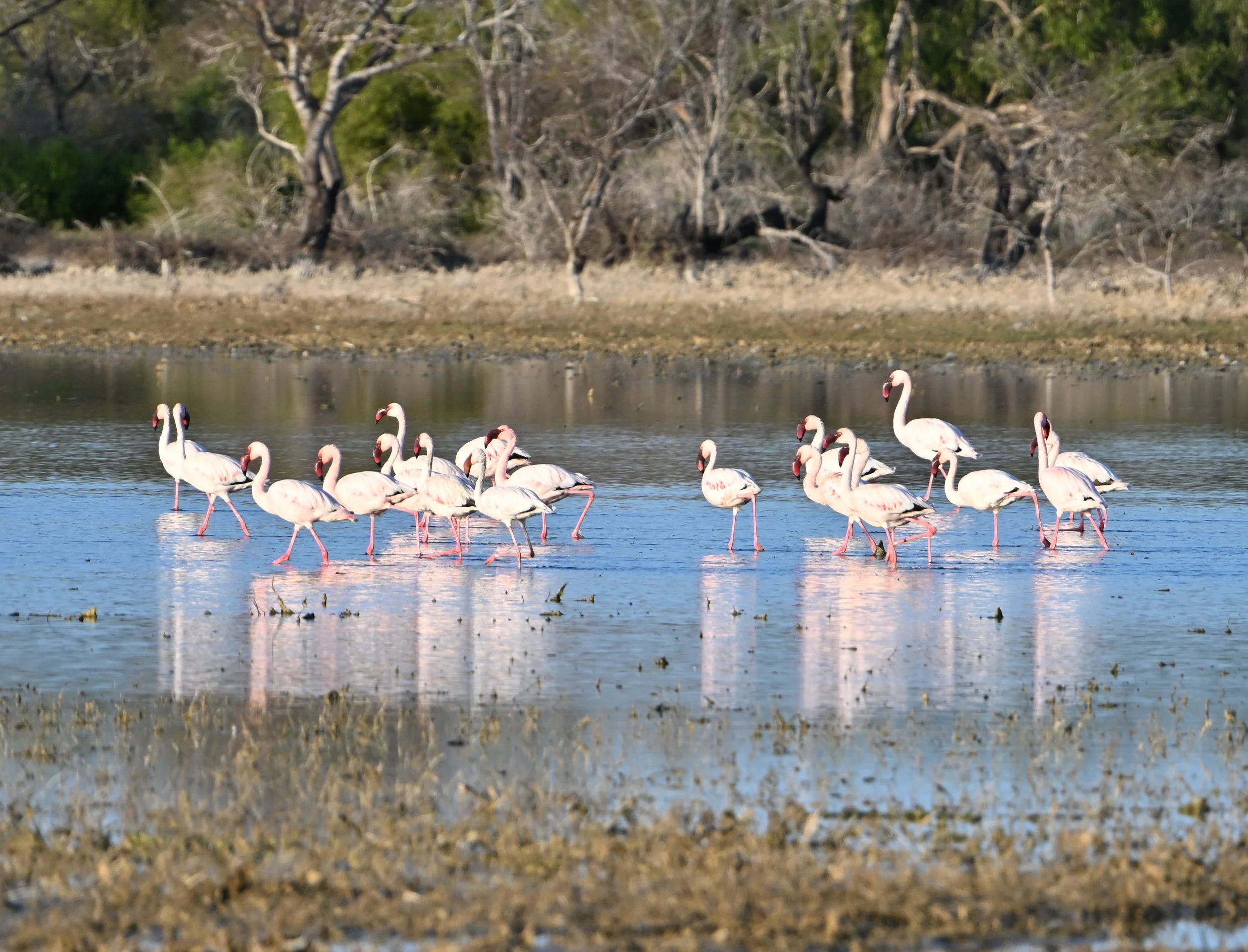
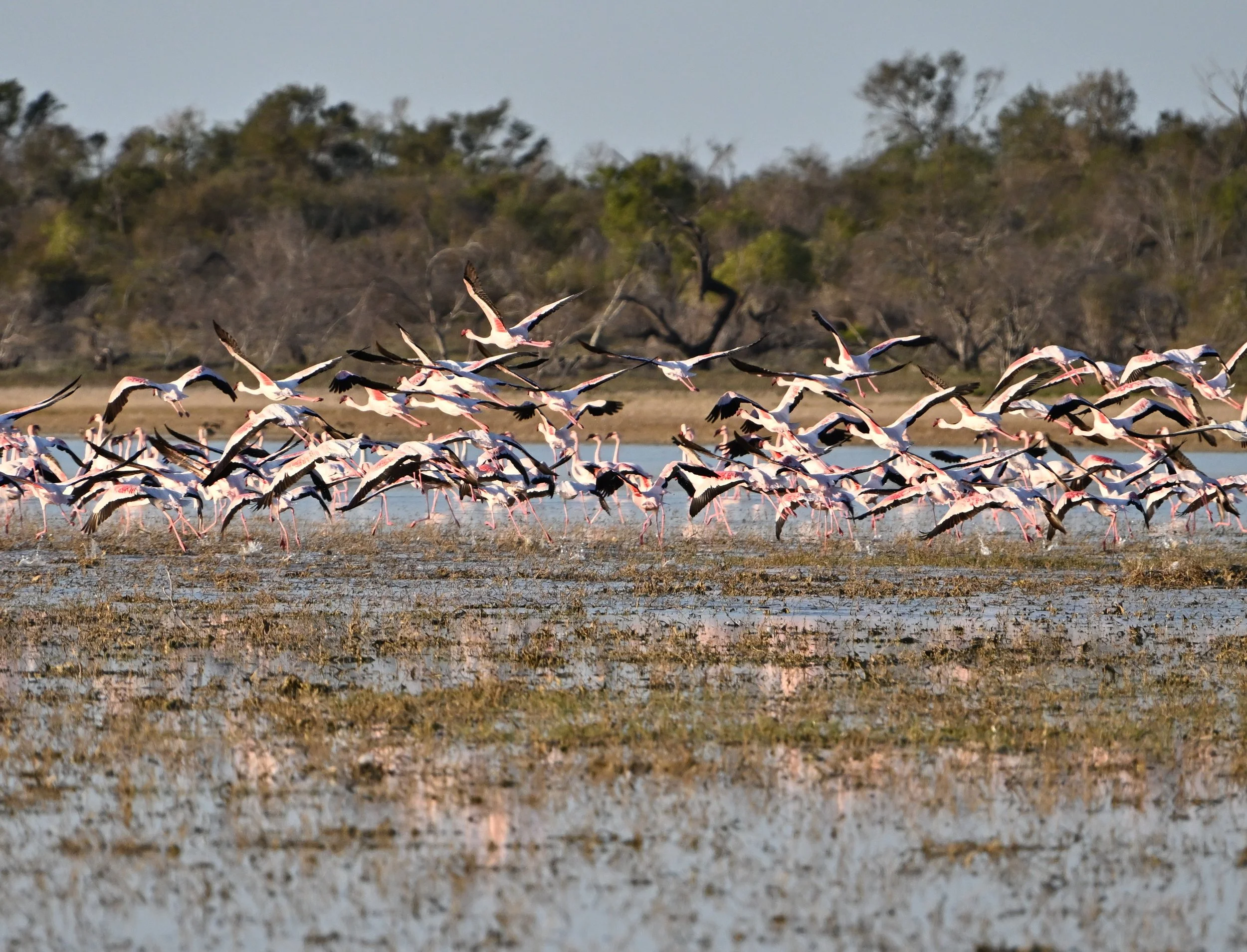
The next morning we visited a large salt lake (Tsimanampetsotsa) because it is home to a large population of Lesser Flamingos…

… that migrates here to breed and bear young before returning to Tanzania in October, after the rainy season arrives.

We saw the “Grandmother” Baobab, which is said to be 1,600 years old. Here in the desert south, baobabs don’t grow as tall as they do in the north, but they have a mighty girth.

did you notice our guide?

We also visited a massive Banyan tree (from India)…

… that was next to a sinkhole, connecting to a cave system -

We then moved to a different hotel up the coast, where we watched our dinner of tuna brought in…

… from this boat -

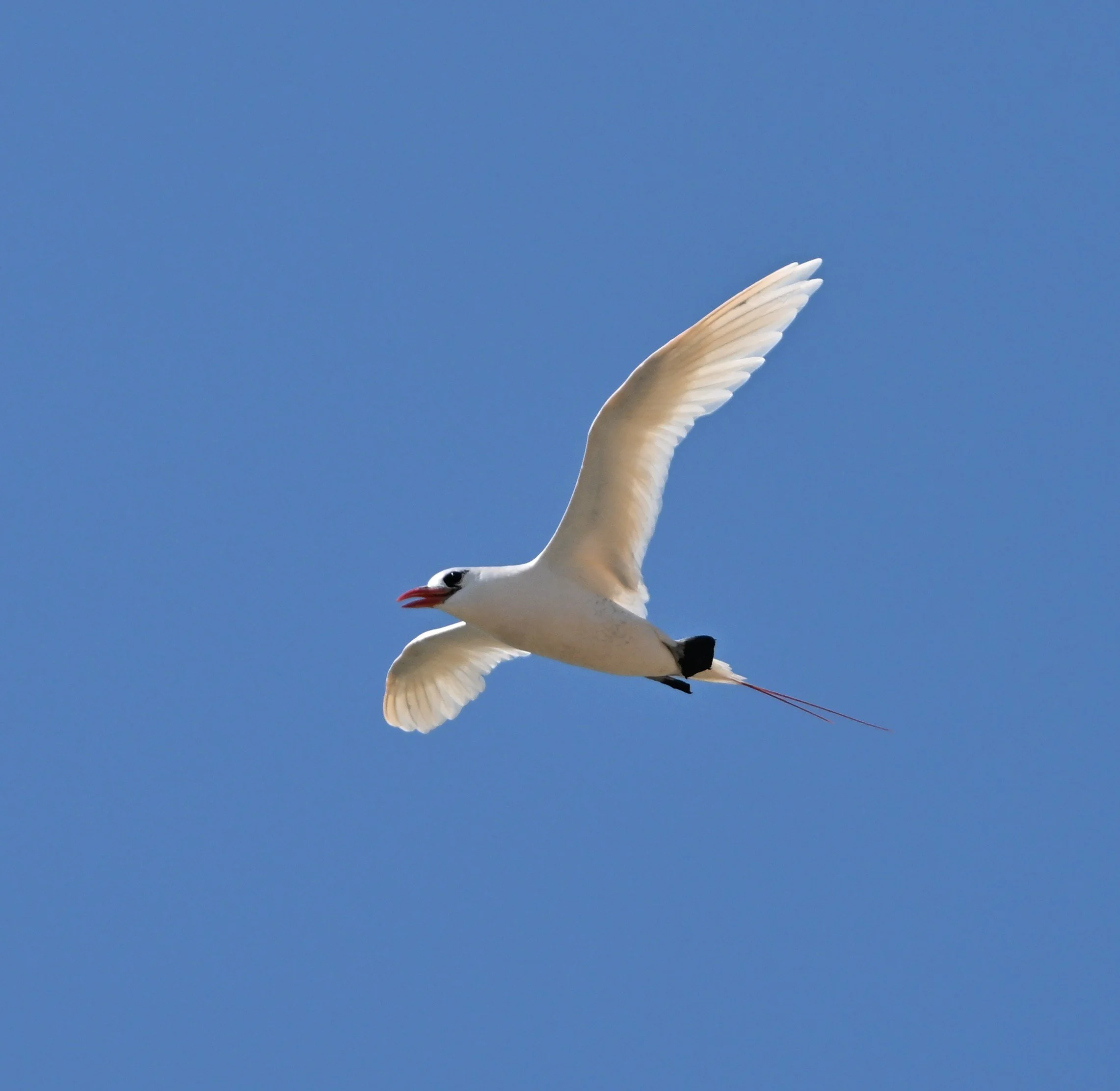
We had switched hotels so we could visit Nosy Ve, which is an island about 3 km off the coast and is home to nesting Red-tailed Tropicbirds -

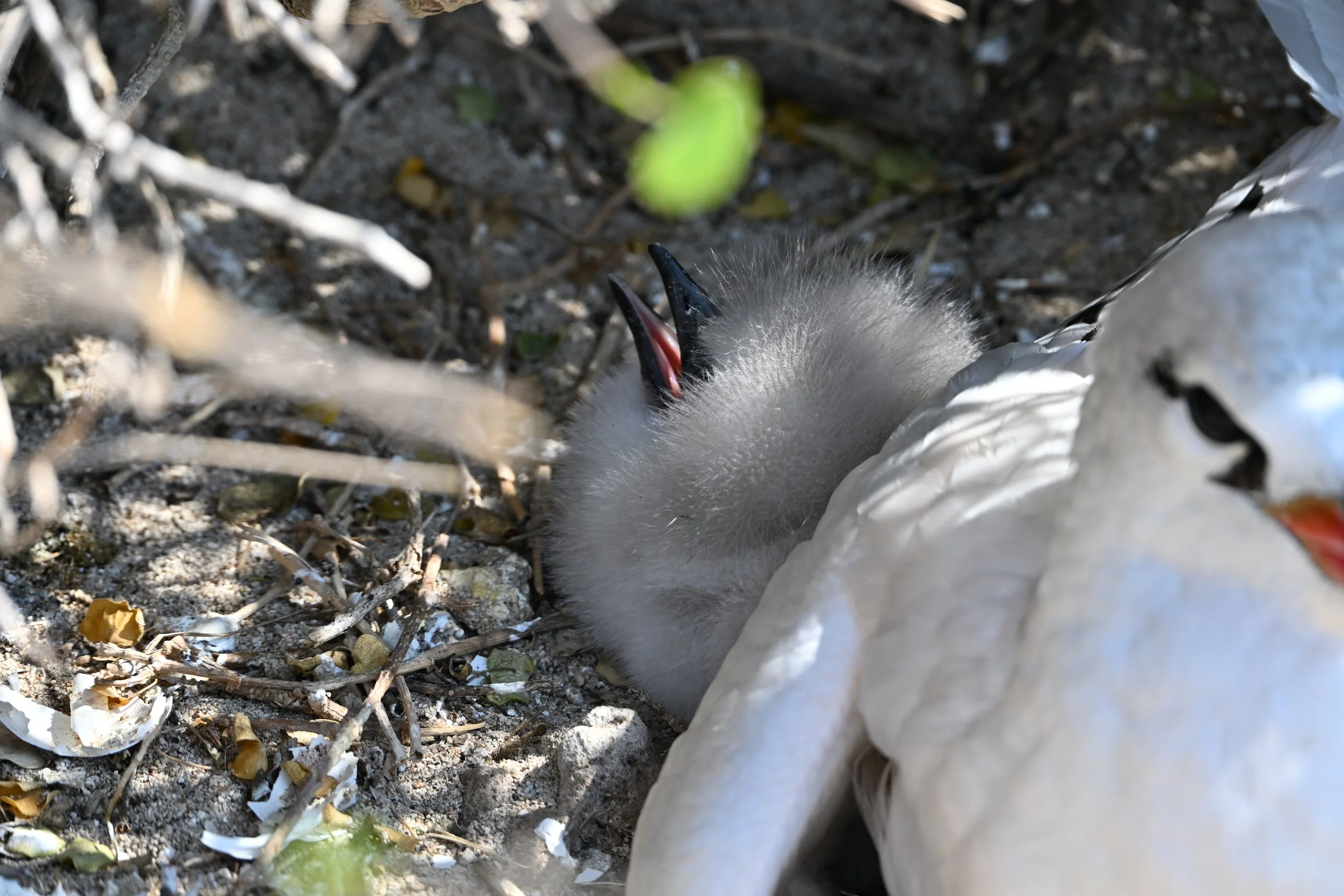
They can nest on the ground because the island is uninhabited and they have no predators here. This ball of fluff was 3 days old -

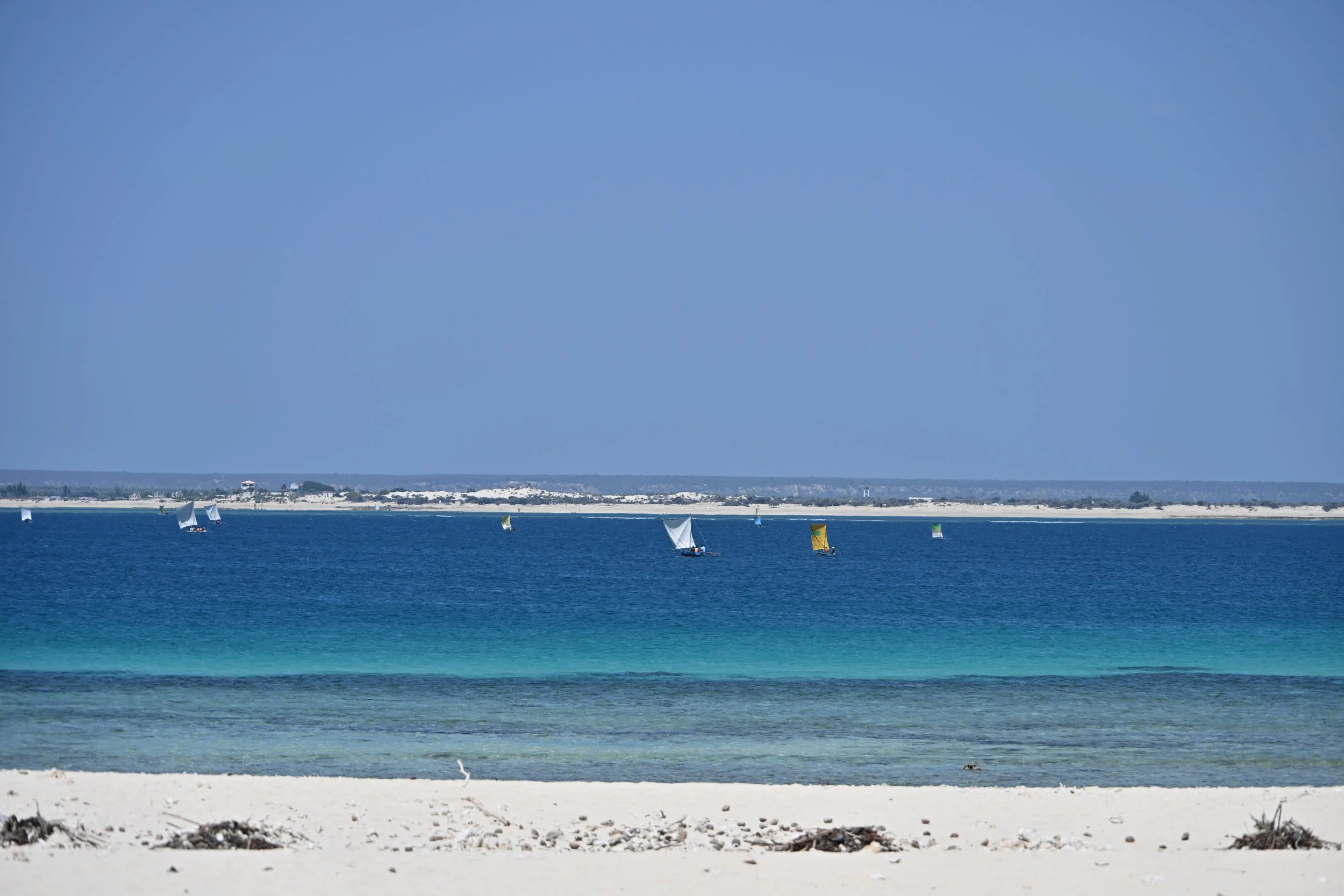
We enjoyed a grilled fish lunch on the beach, watching the locals sail by -

We took the speedboat back to the other side of the bay the next morning, and it was quite a different look as we came in during high tide -

I will close as I often do -

A very long day...

On the second long day of driving, we needed to be on the road for nearly 12 hours (!) to reach our next resting point. Remember the type of roads I shared with you in the last post? Well, they didn’t get much better; the water crossings continued and we had many miles of bumpy dirt road to contend with. We passed through many traditional villages…

… with house construction varying from brick (rare) to walls of bamboo…

… topped with a thatch roof, that is replaced every 2-3 years.

Some houses were surrounded by bamboo fences -

Kids waved to us all day as we passed…

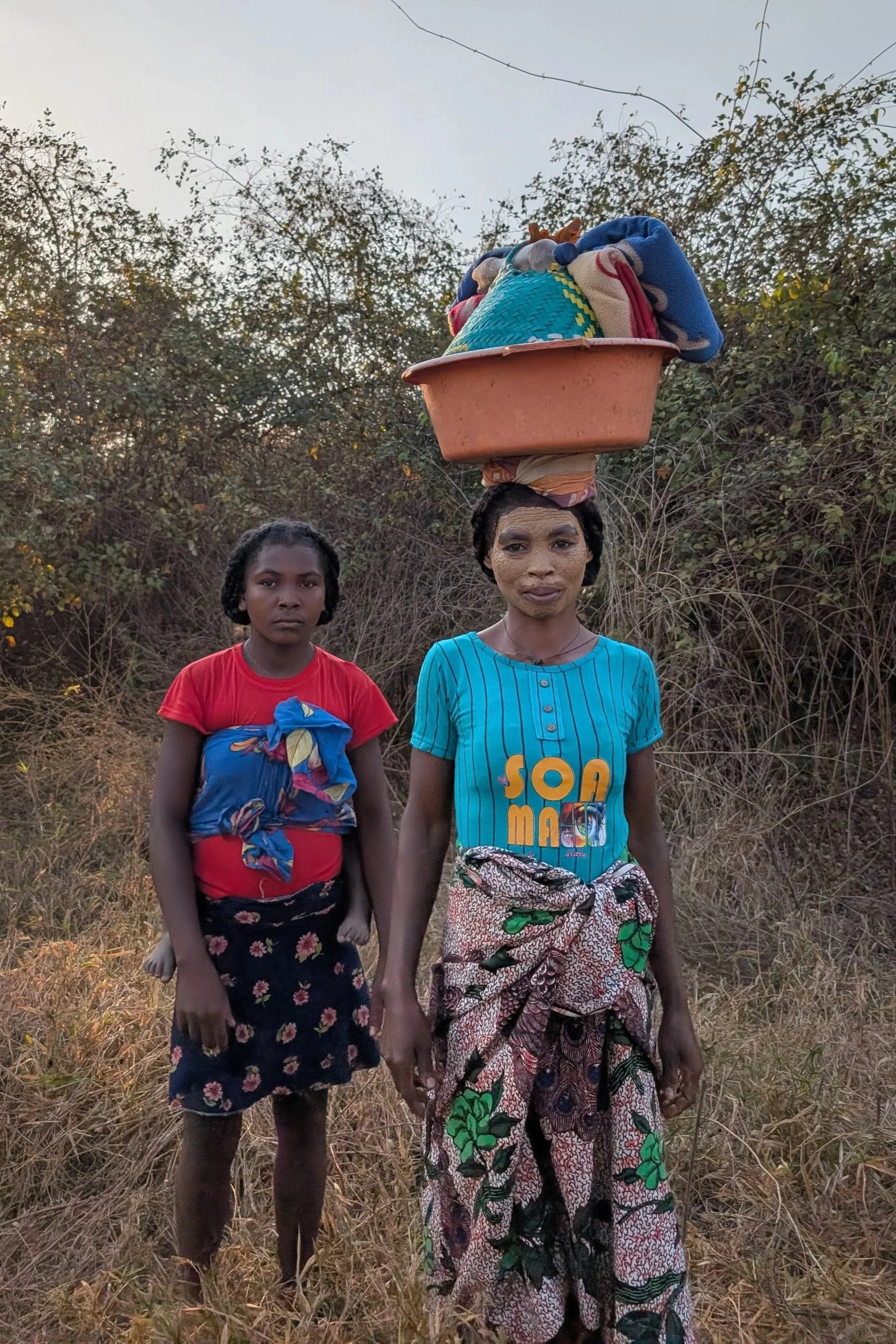
… and it was very interesting to see the young ladies with dried paste on their faces. This is made from aloe or tamarind and is used as a sunscreen (lighter skin color is desirable) as well as a skin treatment (for acne, etc.) -

The young woman on the left in the picture above has a young child wrapped up against her back, like this -

Most women wear a T-shirt and then a brightly colored cloth tied as a long skirt. I loved the chaos of color in this market scene -

An interesting sight was the braiding of tobacco leaves into ropes:

As I had noted at the end of the last post, we caught the baobabs at sunset, but before we got there, we passed through a village with some massive specimens -

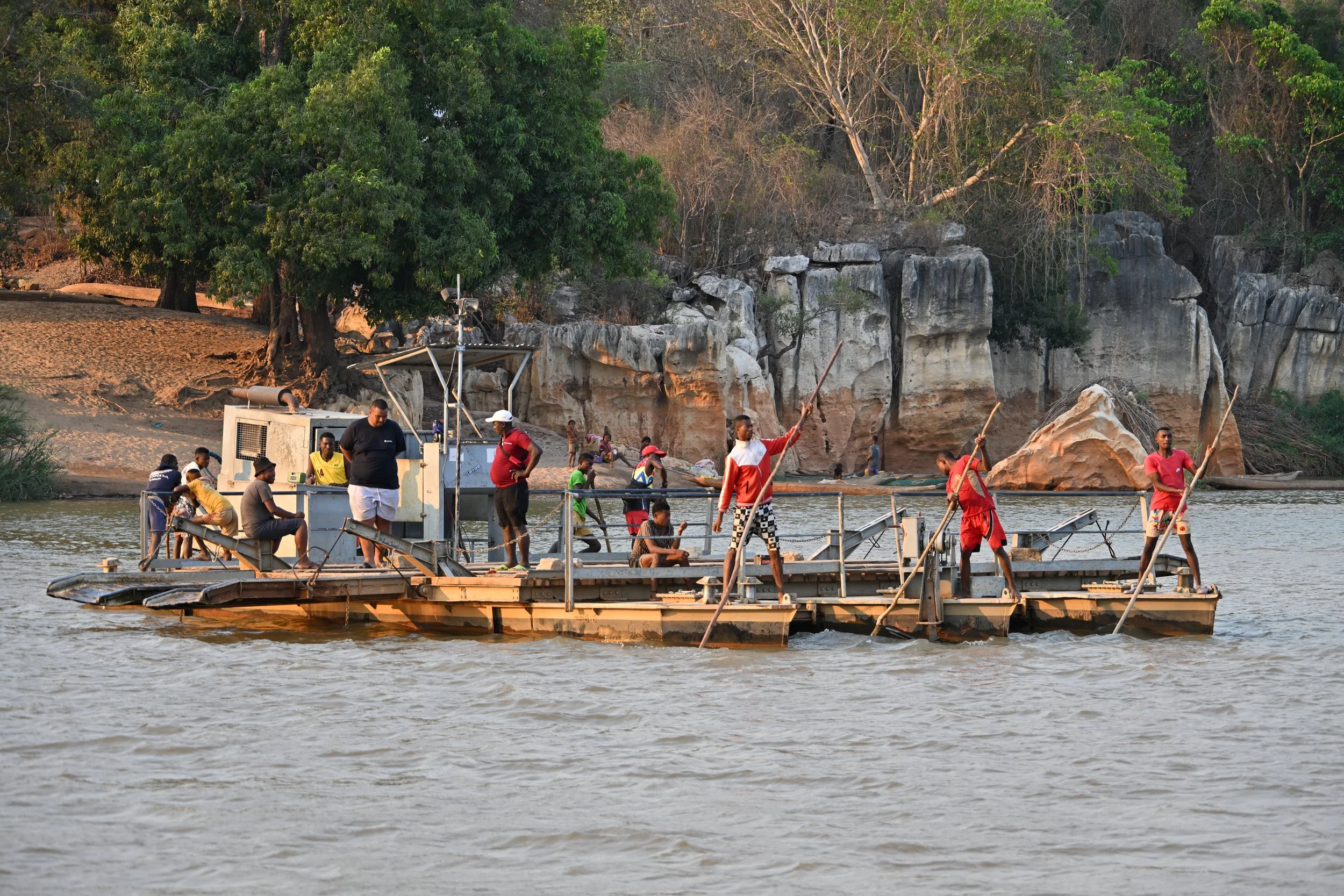
We did have another deep water crossing as we headed south, but this ferry didn’t have a working motor, so the locals made do -

We were leaving the giant baobabs behind…

… and entering the (mostly) desert area of the SW of the country that had many termite mounds -

Then some of the bigger towns showed off the variety of transportation used -

The orange van above is an example of the local buses, where belongings and bags of goods bought at the weekly market are piled on top, and people are crammed inside. The zebu cart was a very common sight throughout our travels. Zebu are the only “beasts of burden” in Madagascar, but they also provide meat, and are sacrificed for village celebrations like funerals and marriages.

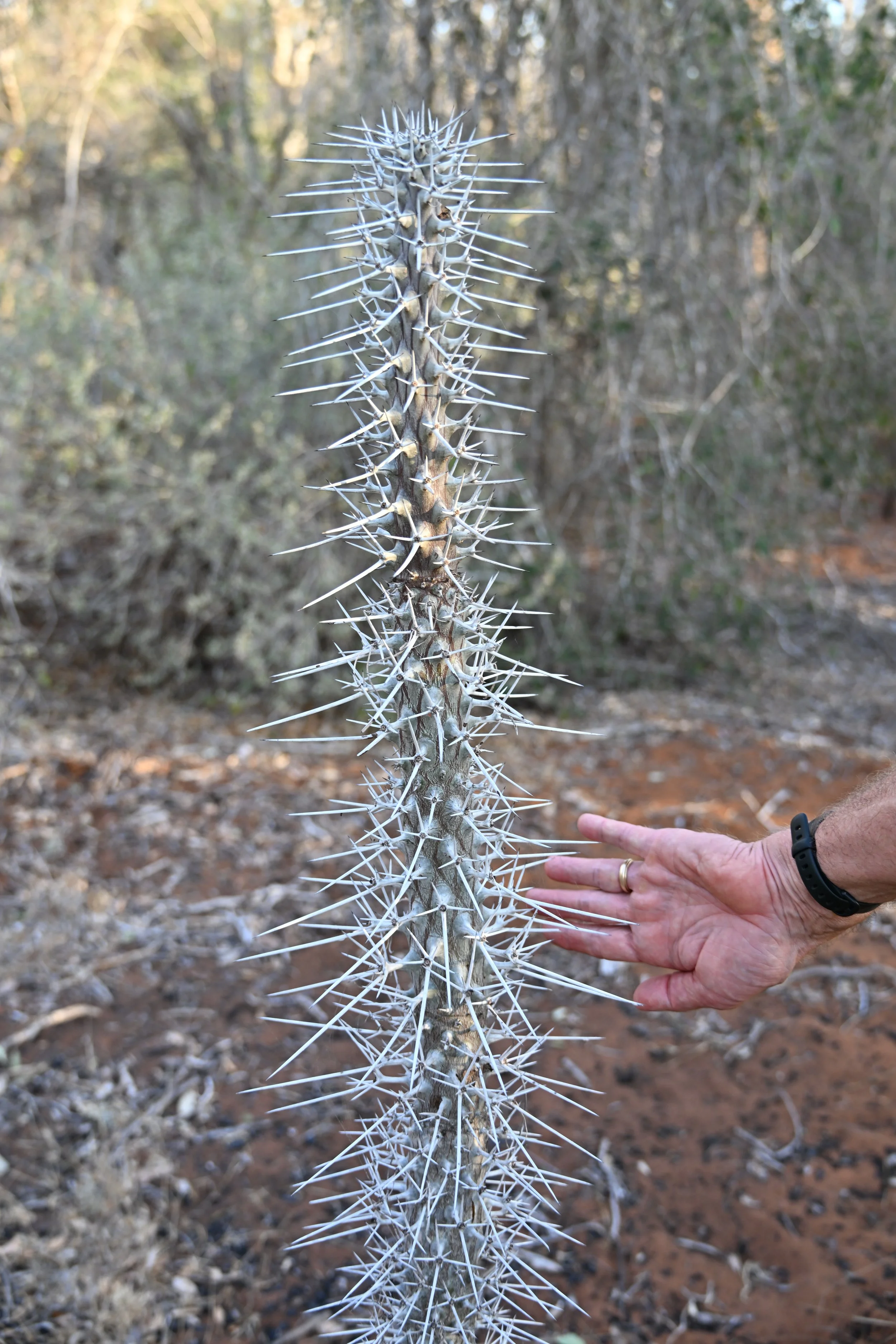
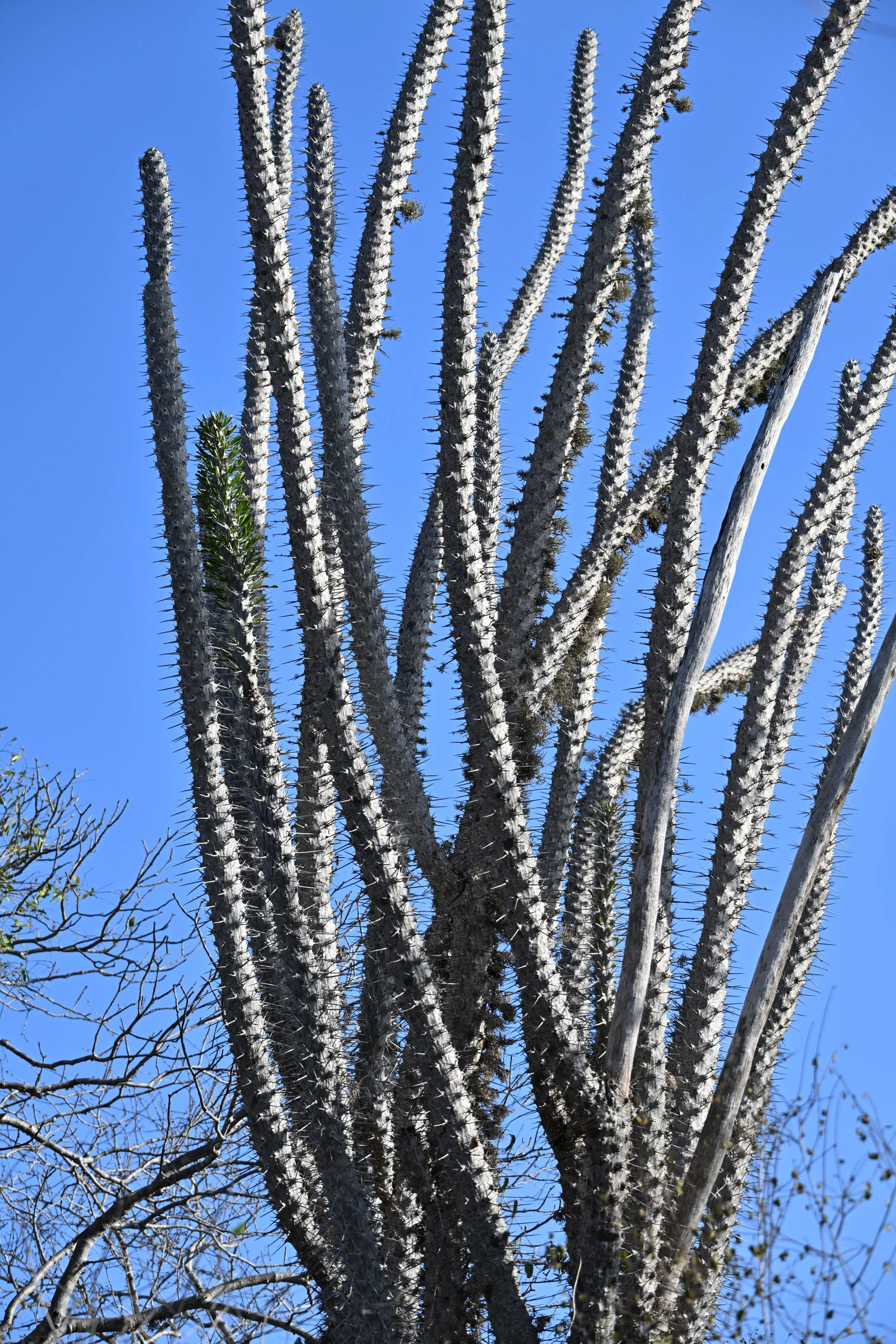
Before we stopped for the night, we visited a reserve of a Spiny Forest. No explanation needed -

This is an Ocotillo, or “octopus tree” to the locals -

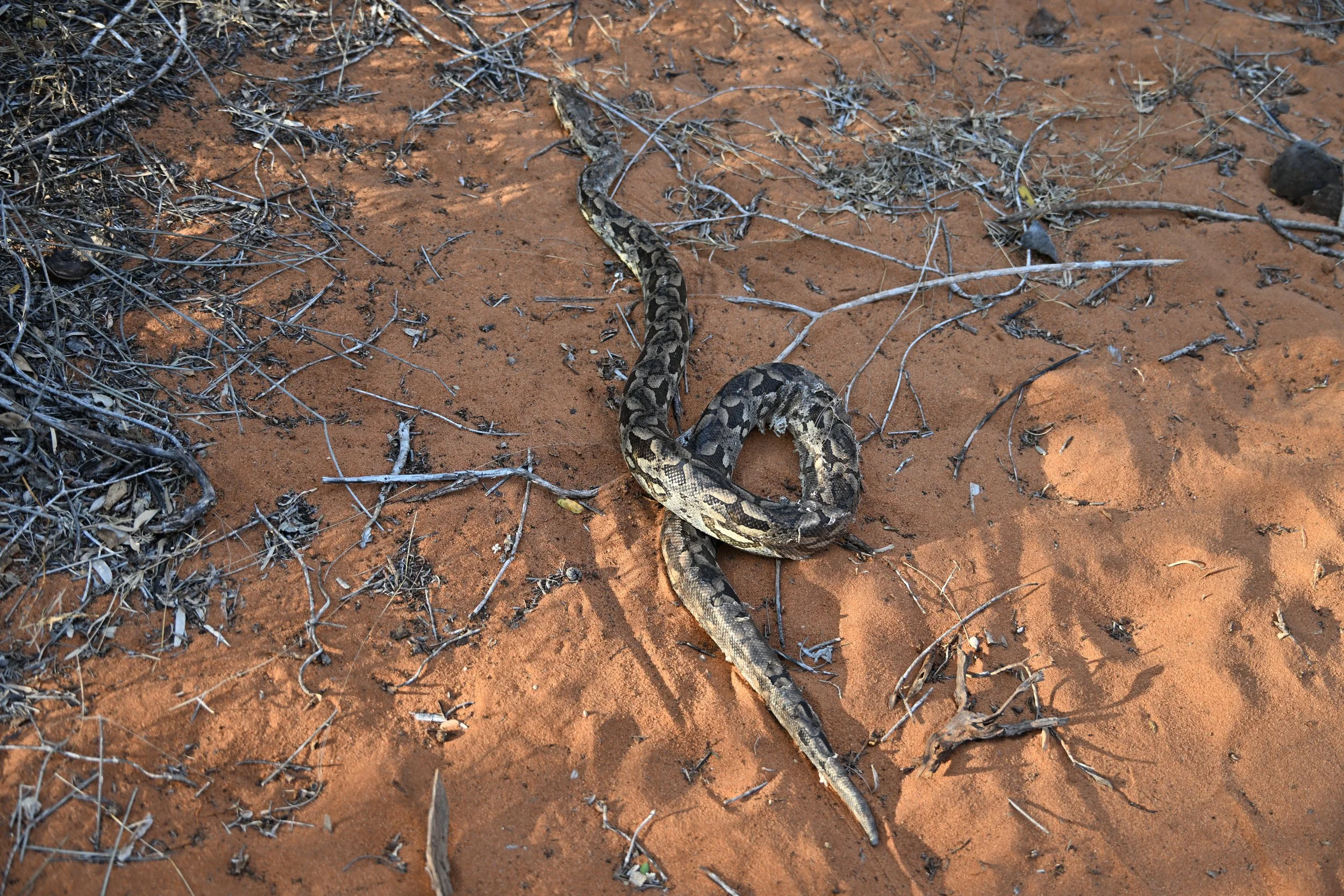
We also were treated to some special denizens of the forest; a Ground Boa…

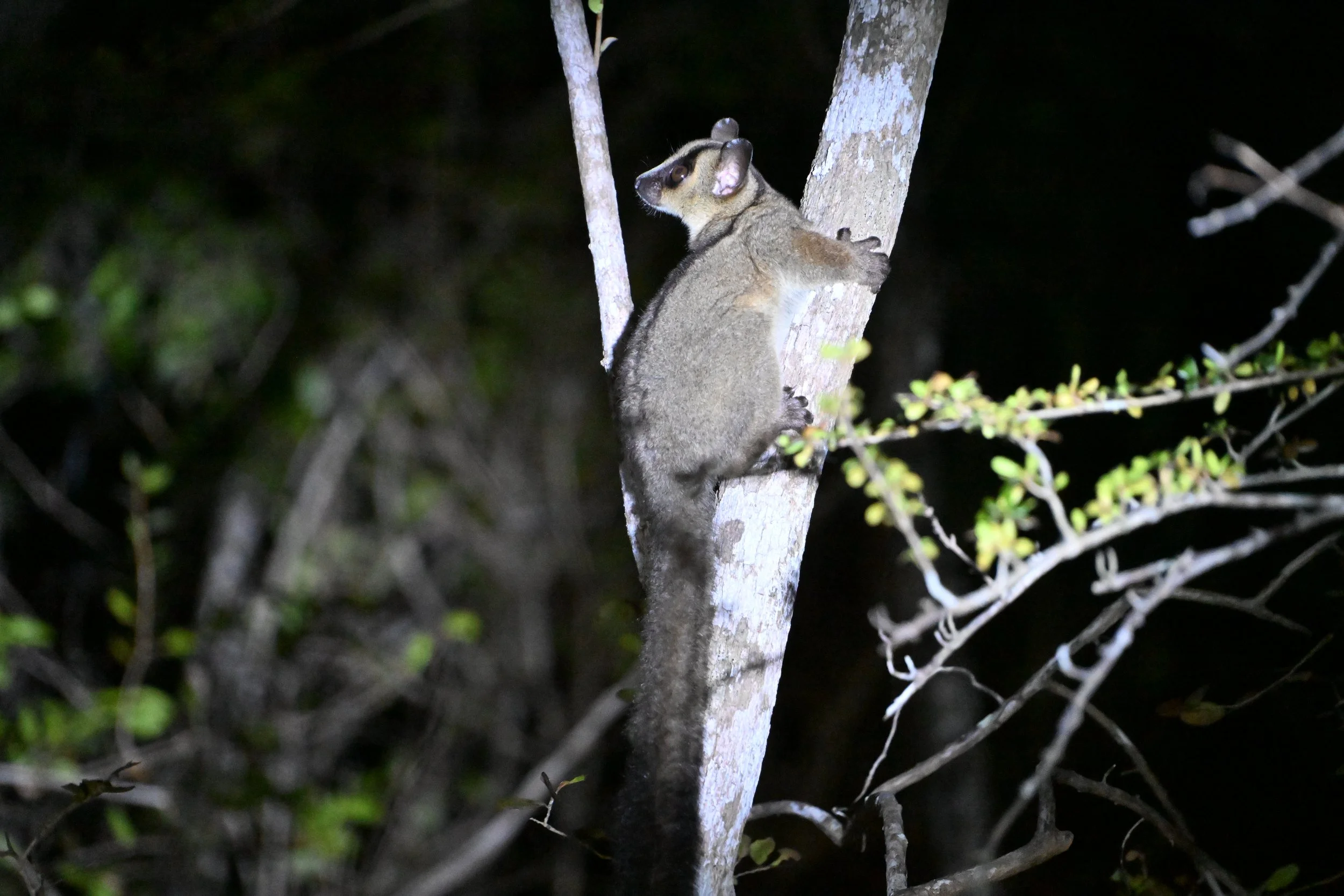
… a White-footed Sportive Lemur…

…. a Warty Chameleon…

… a Kung-Fu Cricket..

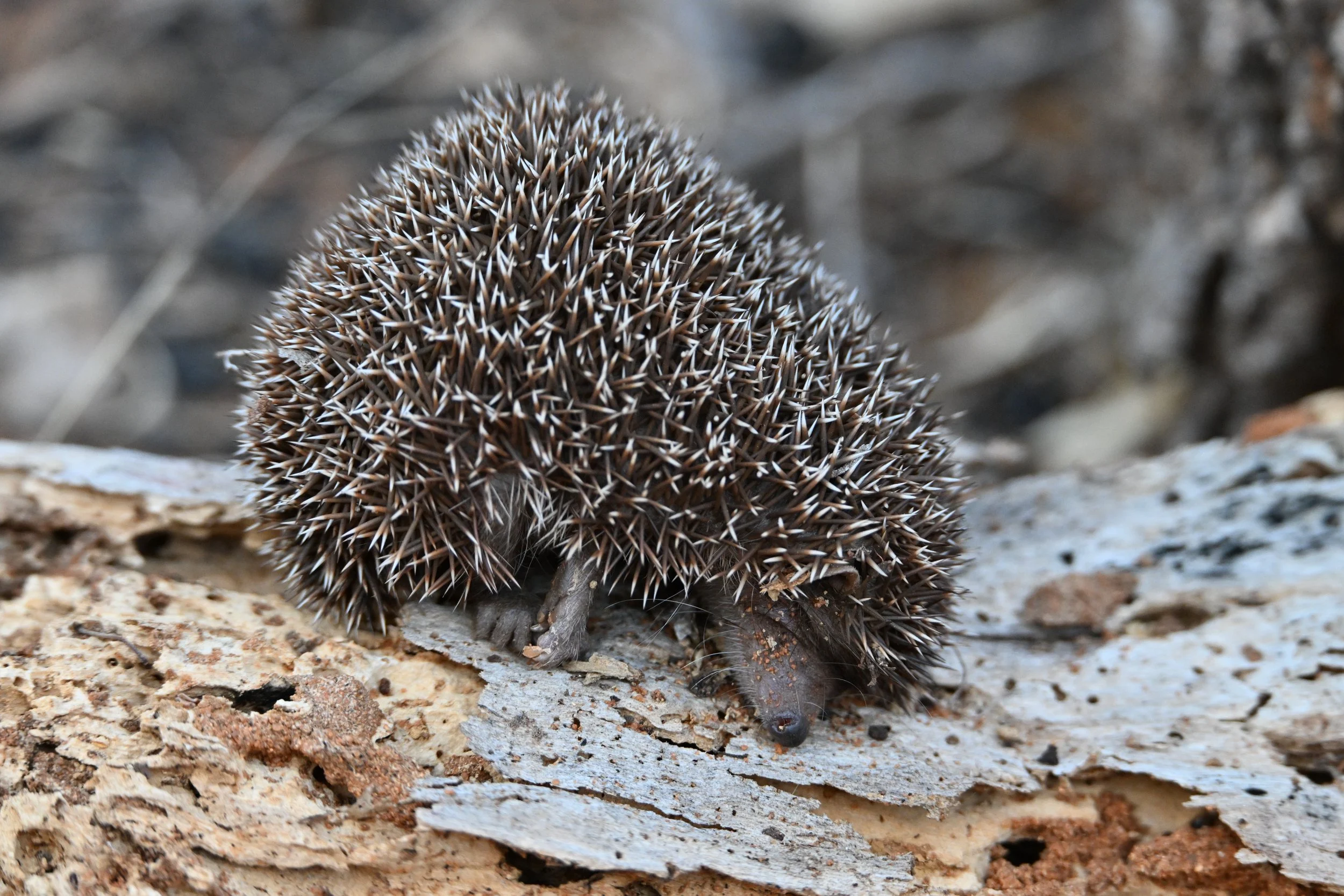
… and to finish off this long day, with a picture of how we felt… a Madagascar Tenrec -

not a hedgehog; he’s more closely related to shrews and elephants!

Big Tsingy

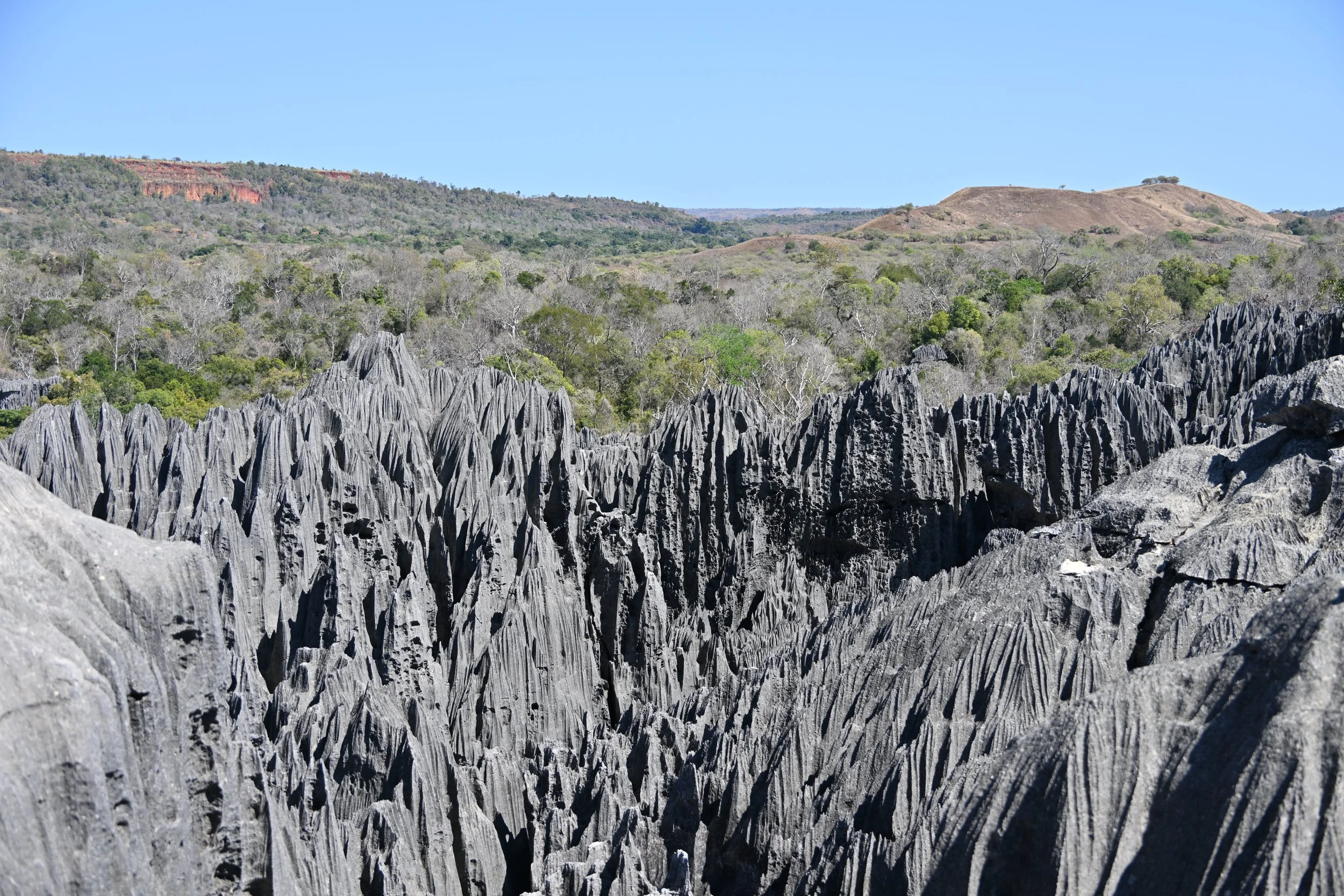
That’s not a typo. Tsingy is a Malagasy word meaning “the place where one cannot walk barefoot” or “walking on tiptoes”.

That picture was from the top of the hike we did, and those limestone needles and sharp edges are every bit as painful to walk on as you suspect. The full name of the park is Tsingy de Bemaraha National Park and it is located in NW Madagascar, about 2/3 the way up the west side of the island.

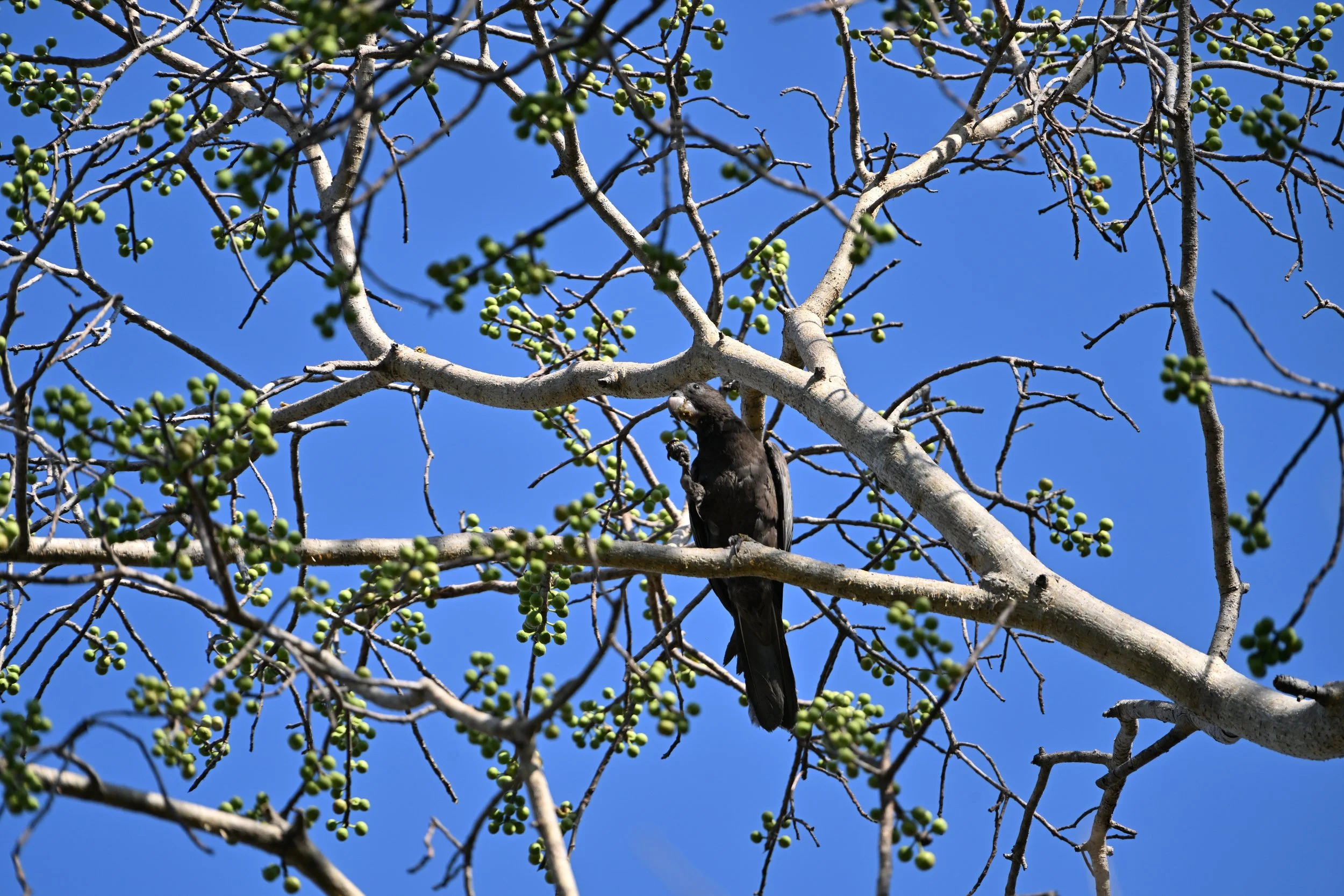
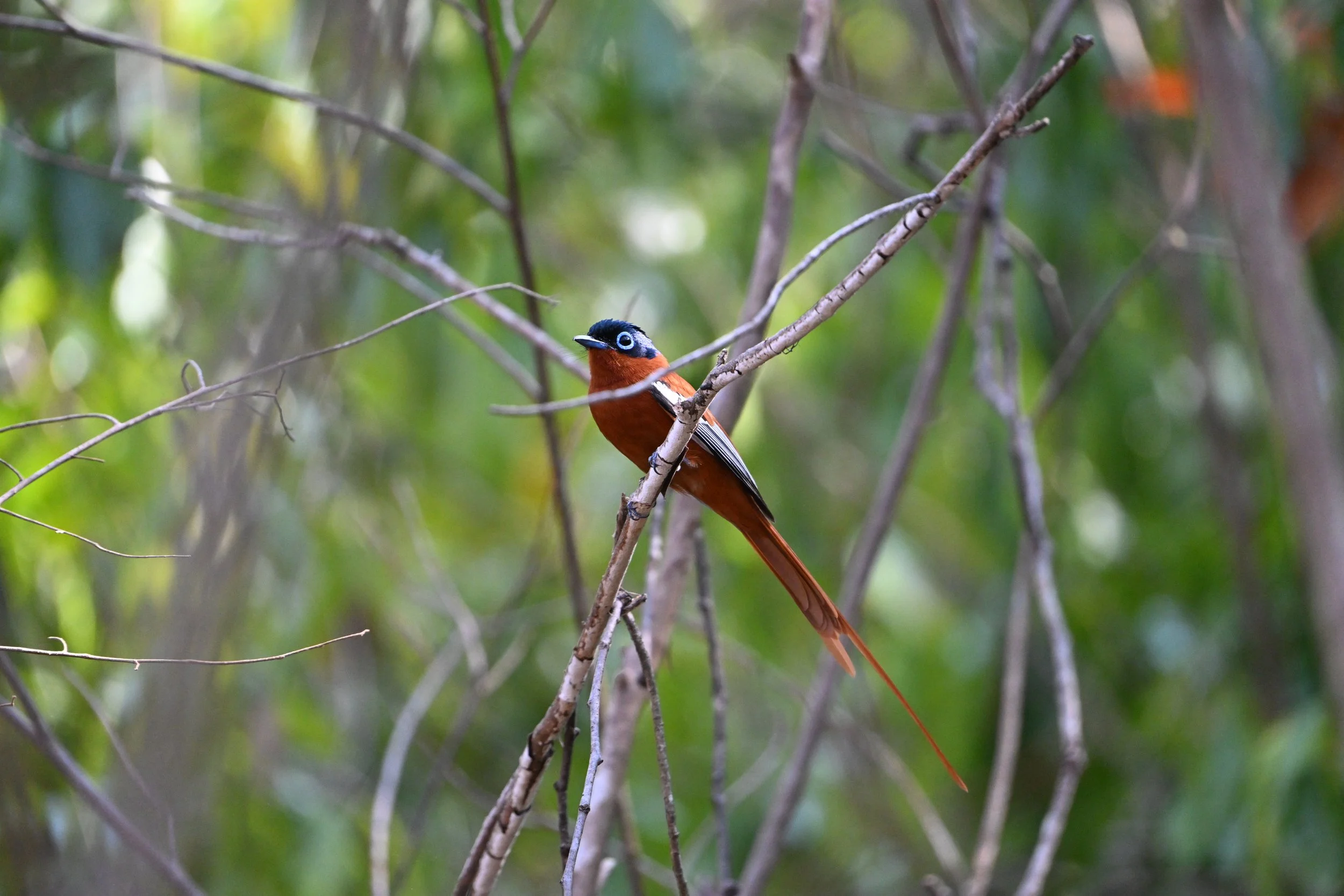
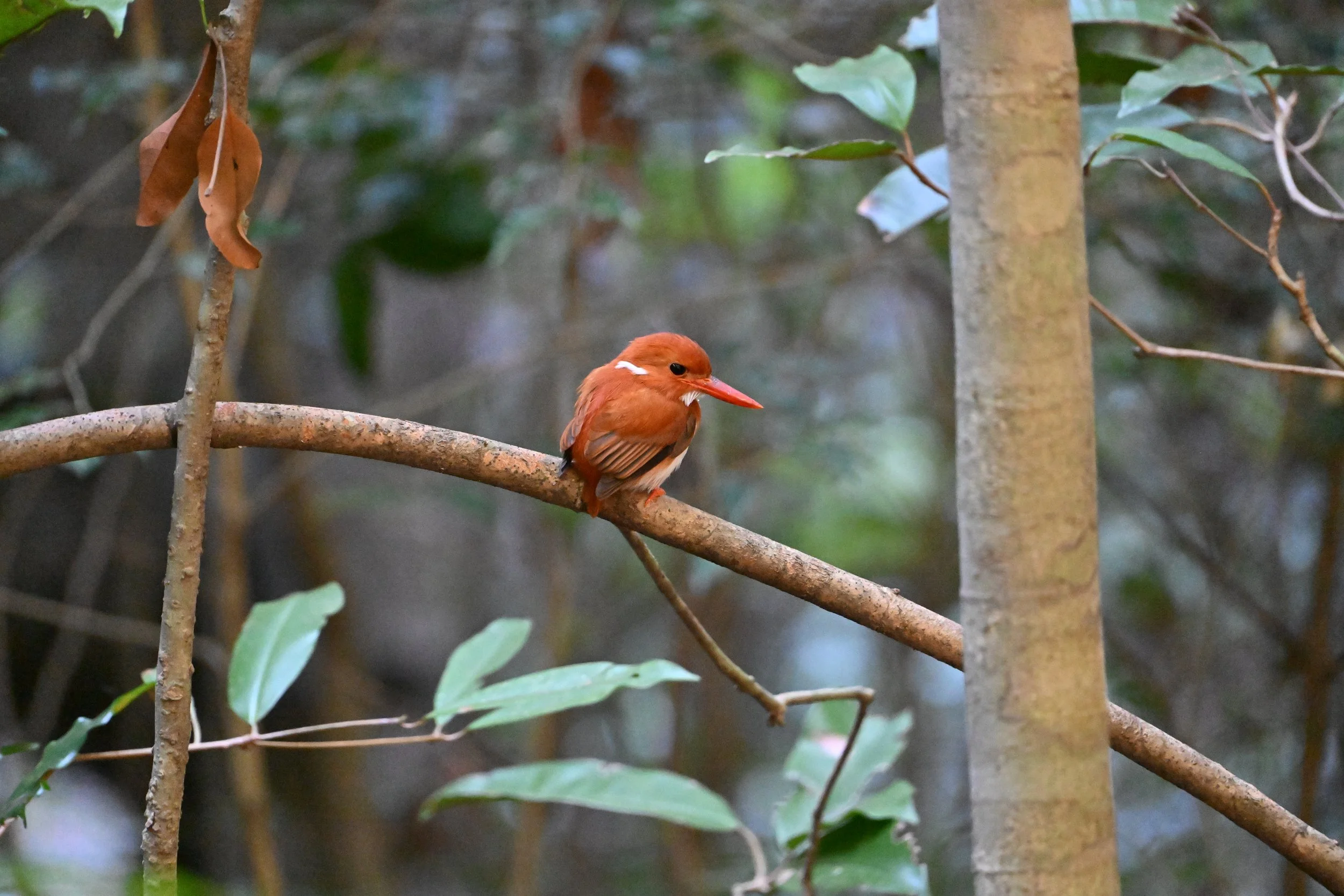
To get to that viewpoint above, we first climbed through a dry forest, and found some unique birds. Sorry, you’re just going to have to be patient…

Madagascar Parrot (yes, it’s black)

Malagasy Paradise-Flycatcher

And the neatest to me was a forest Madagascar Pygmy Kingfisher. I thought kingfishers always lived by water -

He’s 5 inches long and weighs less than an ounce. I find his stubby little tail adorable. :)

Before we could climb up to the top, we passed through a cave, walking by tree roots…

… and some beautiful formations on the walls…

… and nearly crawling on all fours, before we reached the ladder and cables section -

Steve enjoys snapping pics of me at work -

Once on top, everywhere we turned we saw “stone forest” interspersed with green trees -

Climbing on down continued to be interesting…

… but the swinging bridge really wasn’t as scary as many others we’ve crossed. ;-)

I really liked the horizontal cuts that made the rocks look like they were floating

Continuing on…

… through the rocks…

… we arrived in the forest again, to find another species of lemur -

Von der Decken’s Sifaka -

(this species doesn’t have the black cap of the other Sifaka we saw)

The next day, we started our two longest days of driving. This first one was “only” 8 hours, on roads like this…

… and this….

… that Steve aptly described as “steeplechase” -

(this was taken from the middle of the shallow but wide stream we were crossing)

There were some water crossings where you couldn’t be sure which was the safest way through, but the sticks were there to guide you (and you paid the guy working in the river, who put them up) -

We made it safely through the steeplechase course to arrive back at the Avenue of the Baobabs in time for sunset…

… and a sundowner of rum punch.

Kirindy Forest

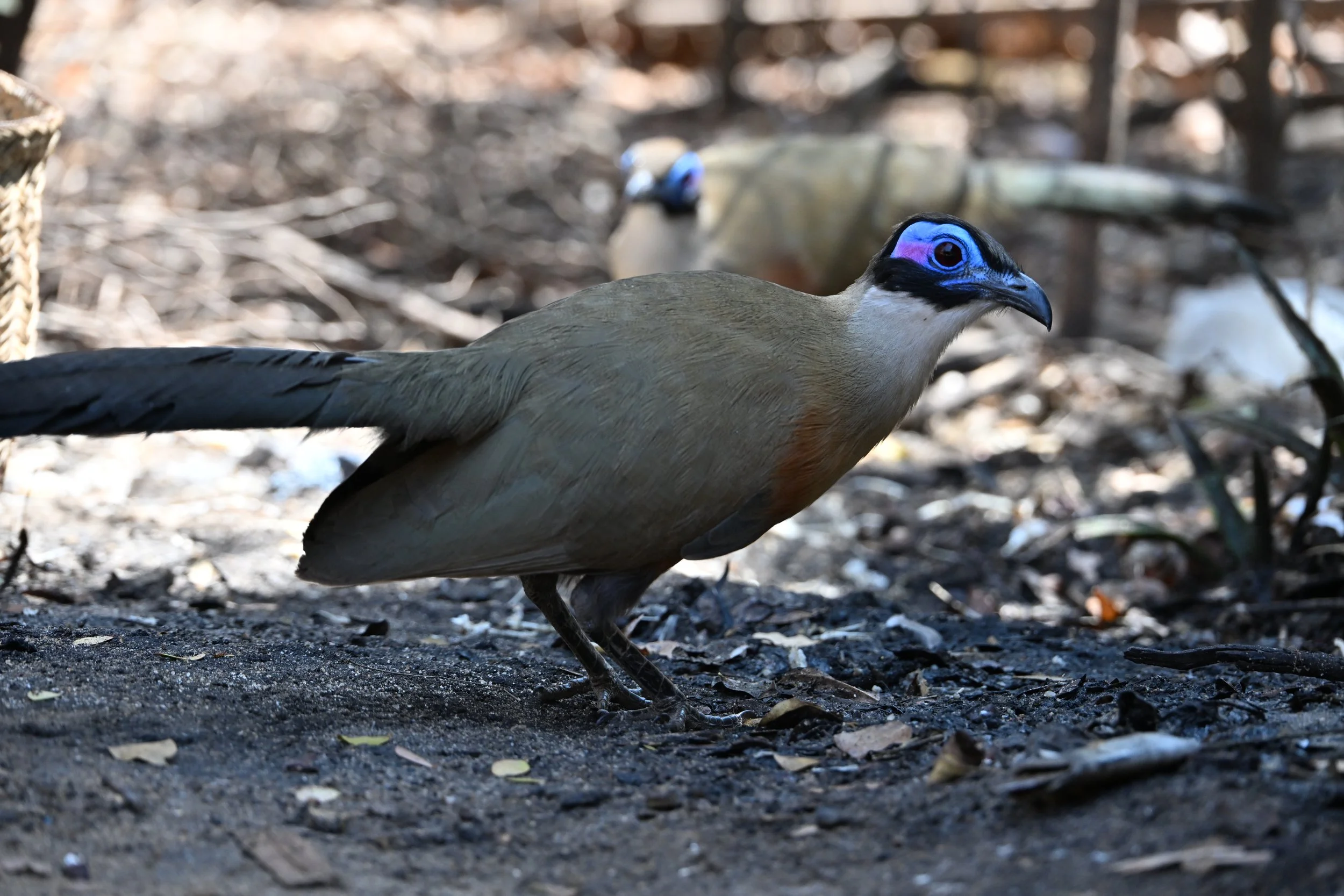
Along the west coast, north of Morondava, is an area of deciduous dry forest that’s loaded with unique bird and animal life. I will try to keep the bird pictures to a minimum, but they are so beautiful! :)

Giant Coua

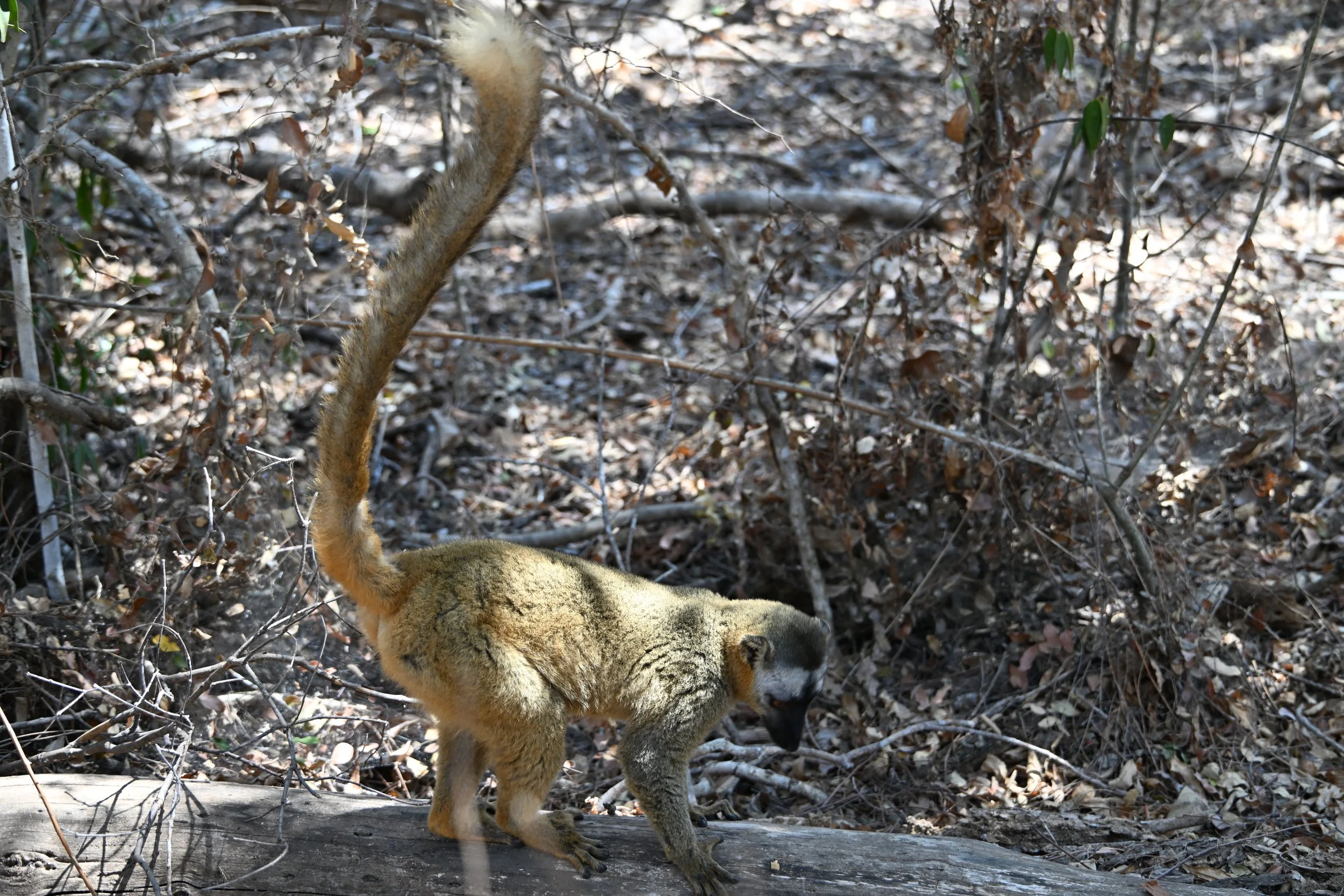
The afternoon that we arrived, we went on a walk in the woods (when it was about 90 degrees and without any breeze). It was definitely worth it, for all the wildlife we saw. First up were some Red-fronted Brown Lemurs…

… which were quite thirsty (be sure and open the email in your browser to see the videos) -

(apparently it’s ok to give the lemurs water in a snail shell, but not to feed them)

A Verreaux’s Sifaka and her little baby really moved around right in front of us -

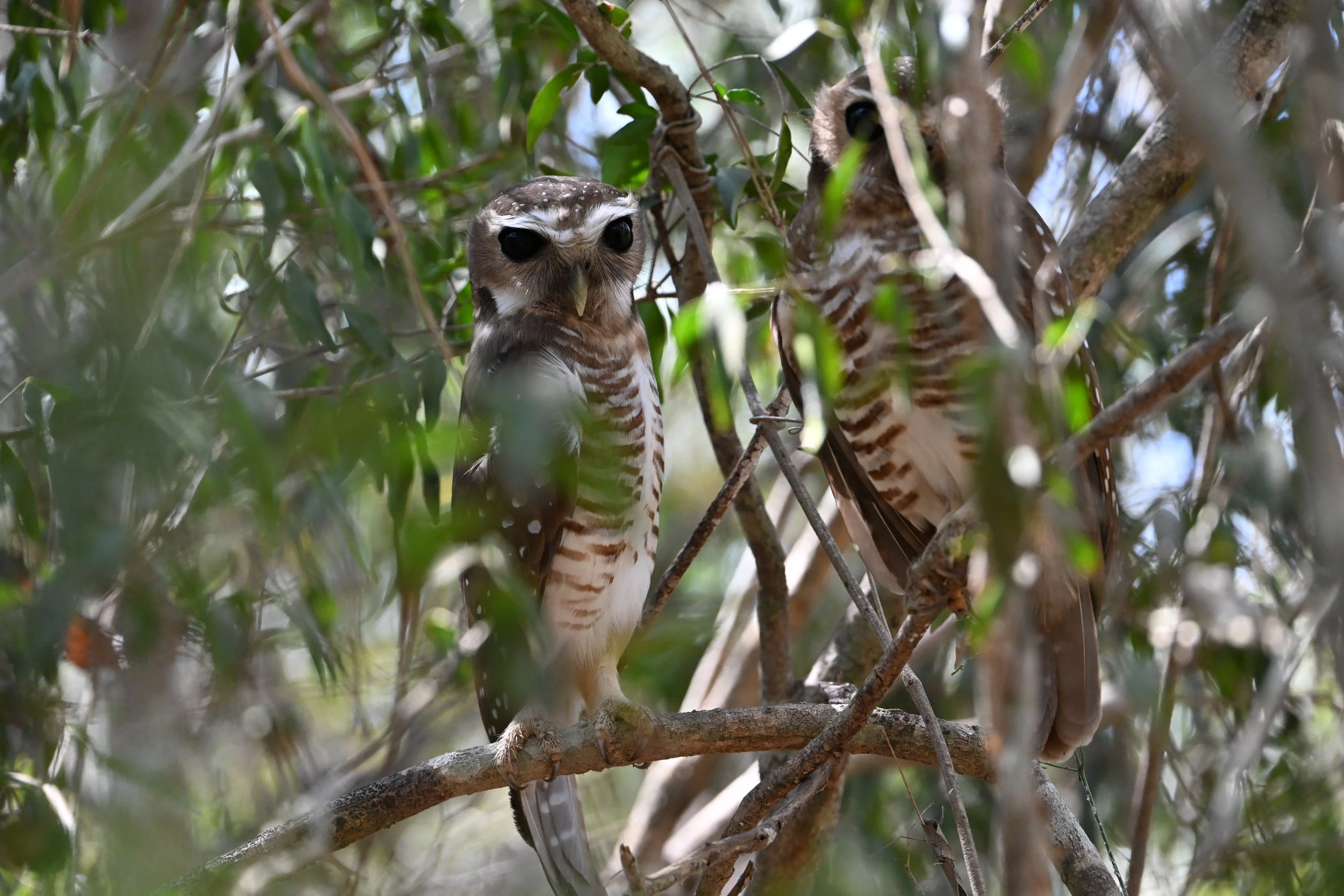
A pair of White-browed Owls were just chillin’…

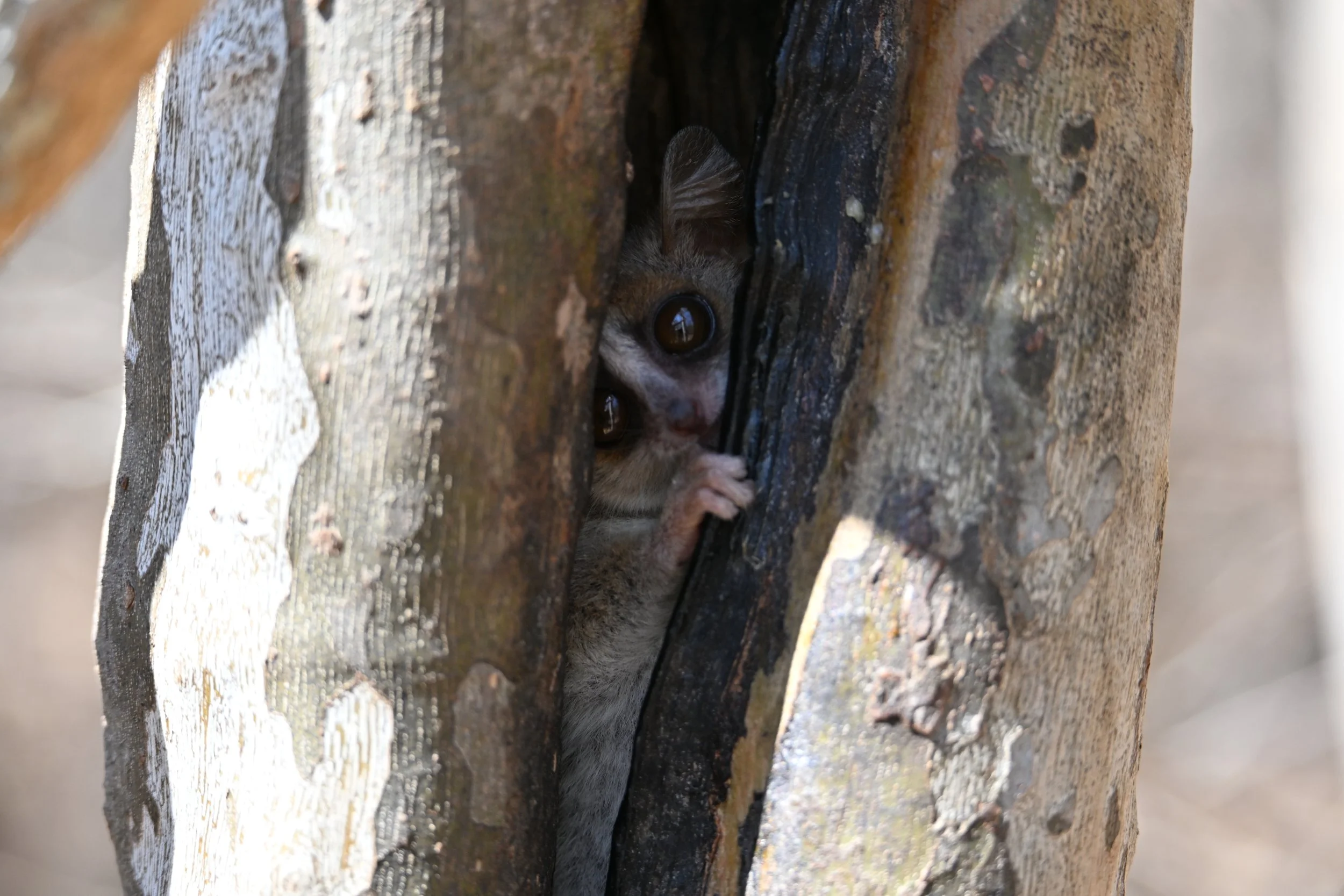
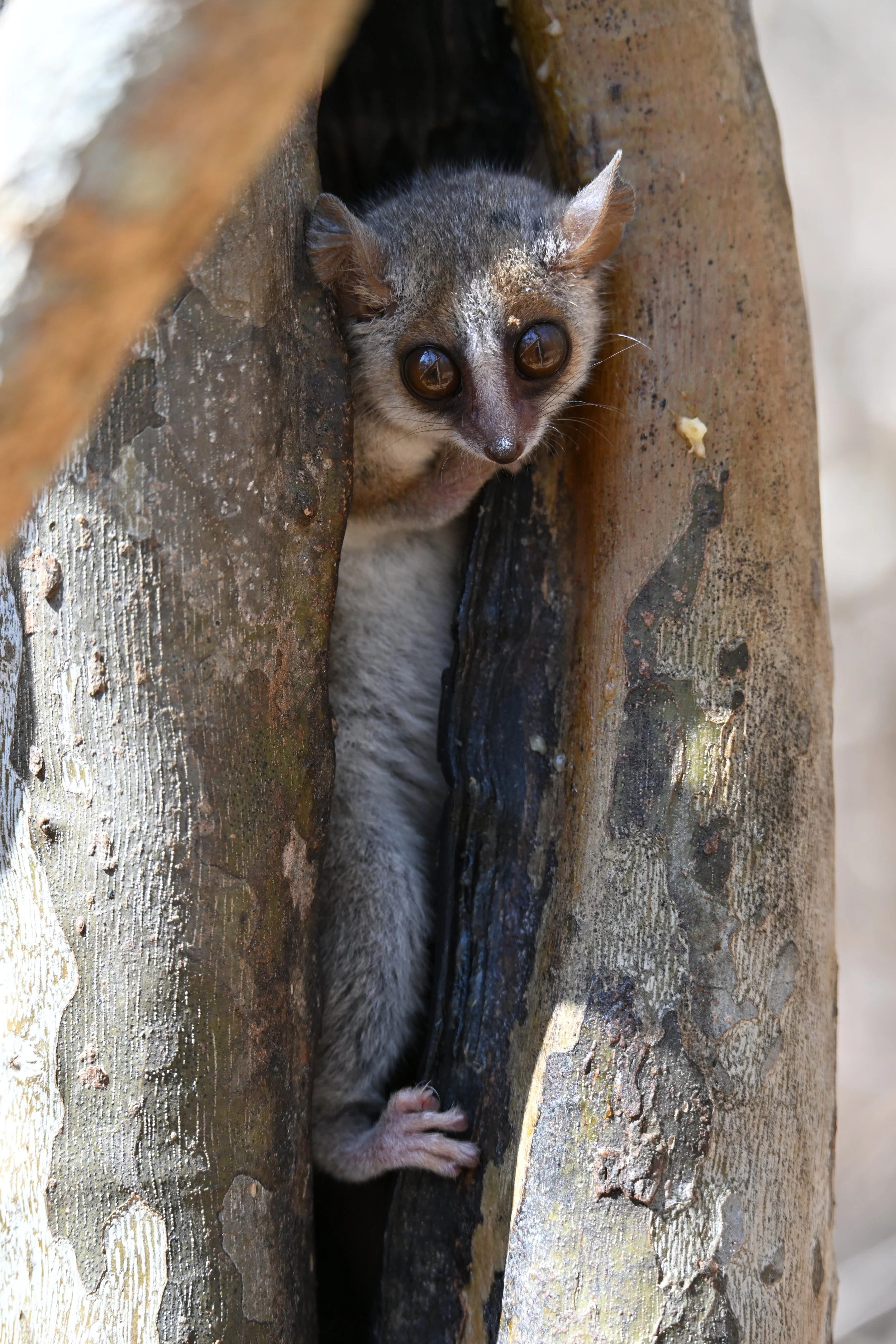
… and a usually nocturnal Gray Mouse Lemur peeked out at us from his den…

… and then got bolder -

He is about 5 inches long and weighs about 2 ounces.

The guide rubbed a twig along the edge of the hole, causing sap to be extruded:

Then just after dark, we went on a night hike, and saw even more lemurs, like the Fork-marked Lemur…

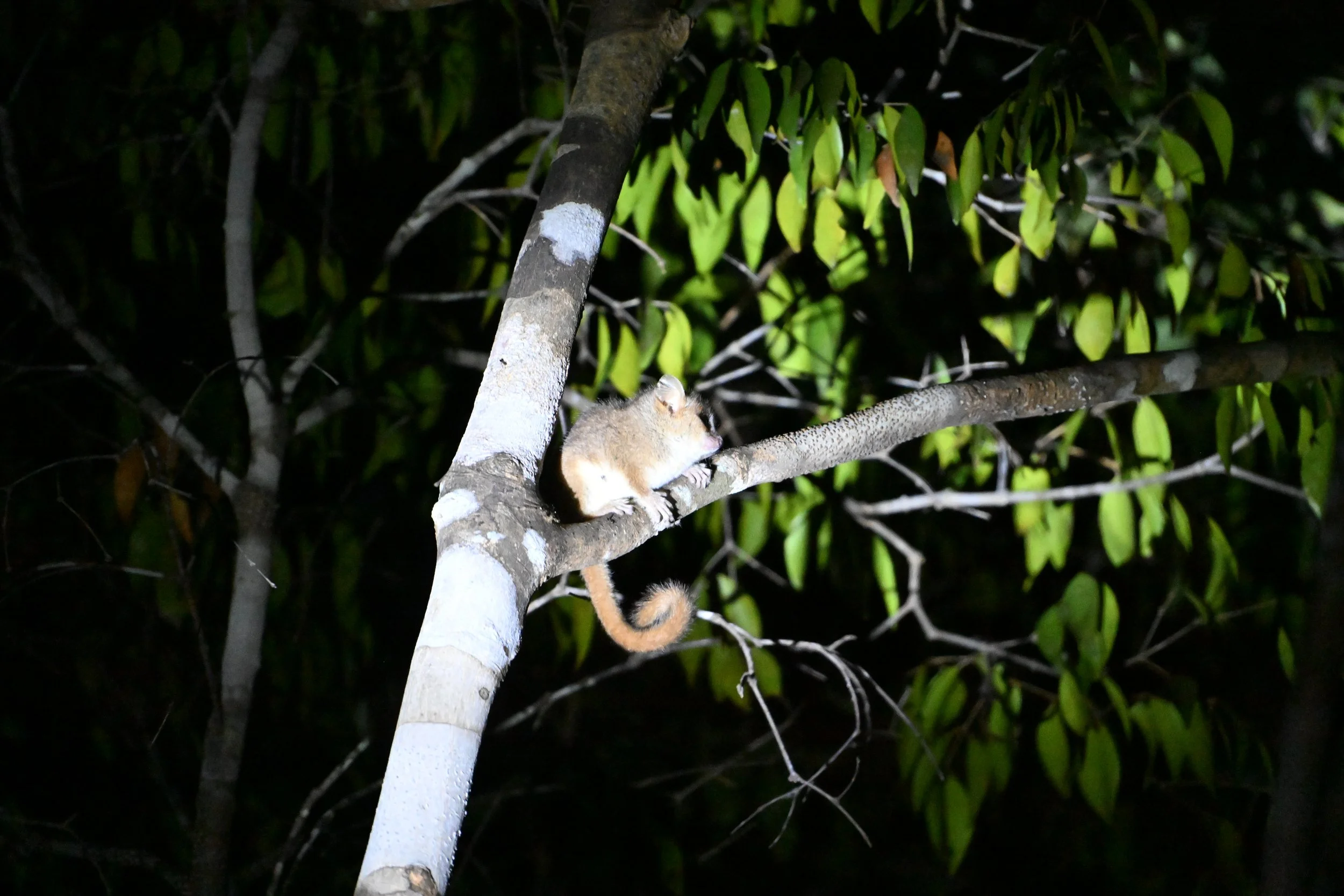
…and the Pygmy Mouse Lemur (which is smaller than the Gray by 1/2 inch & 1/2 oz) to be the smallest lemur in the world -

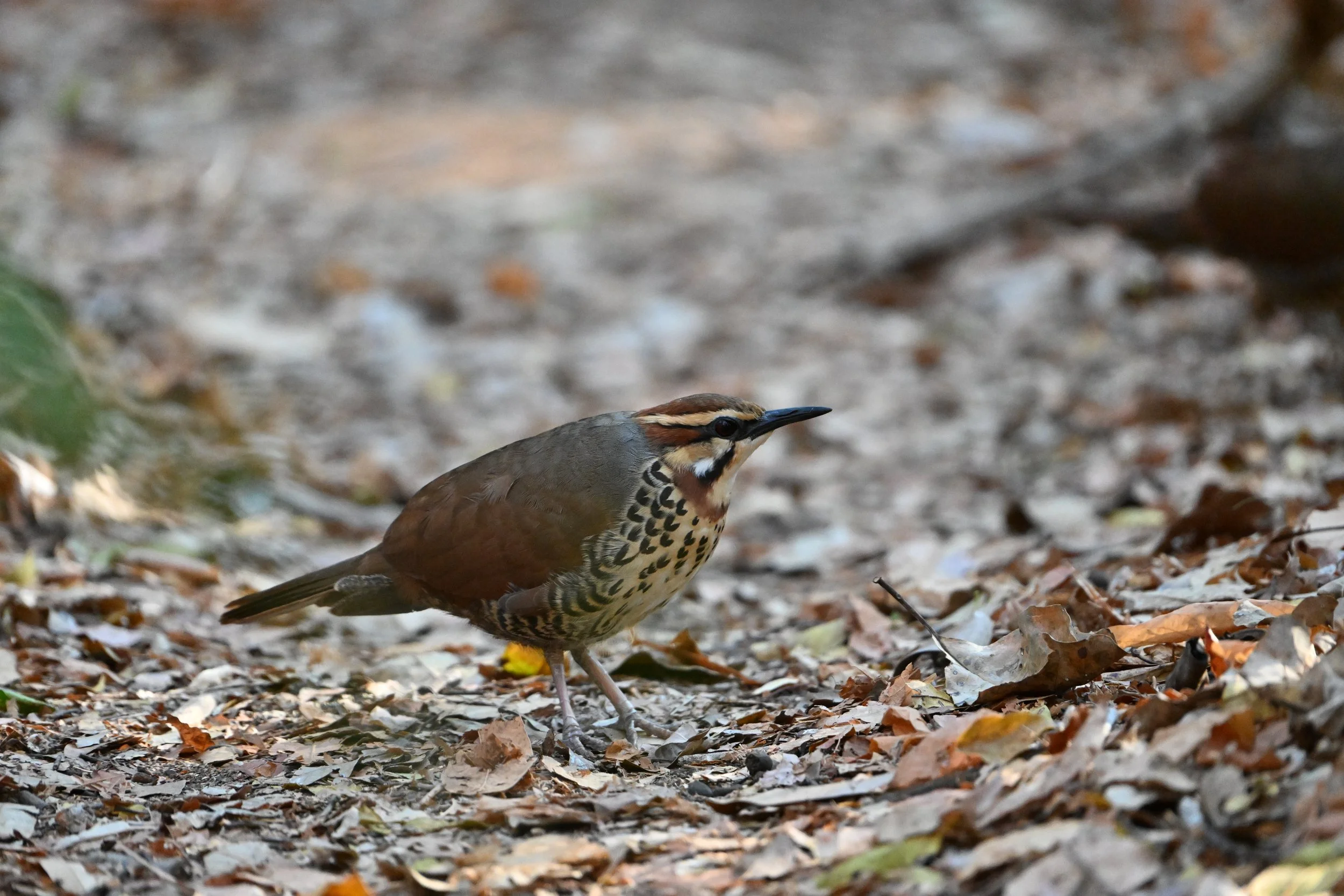
After staying in a very rustic cabin in the eco-lodge in the private reserve, we got up early for a bird-watching walk, and I definitely won’t bore you with all the unique and beautiful birds we saw. But I just have to show you the White-breasted Mesite that had all the birders with their long lenses agog around us. Apparently these are fairly rare, even in Madagascar, which is the only place in the world that they live -

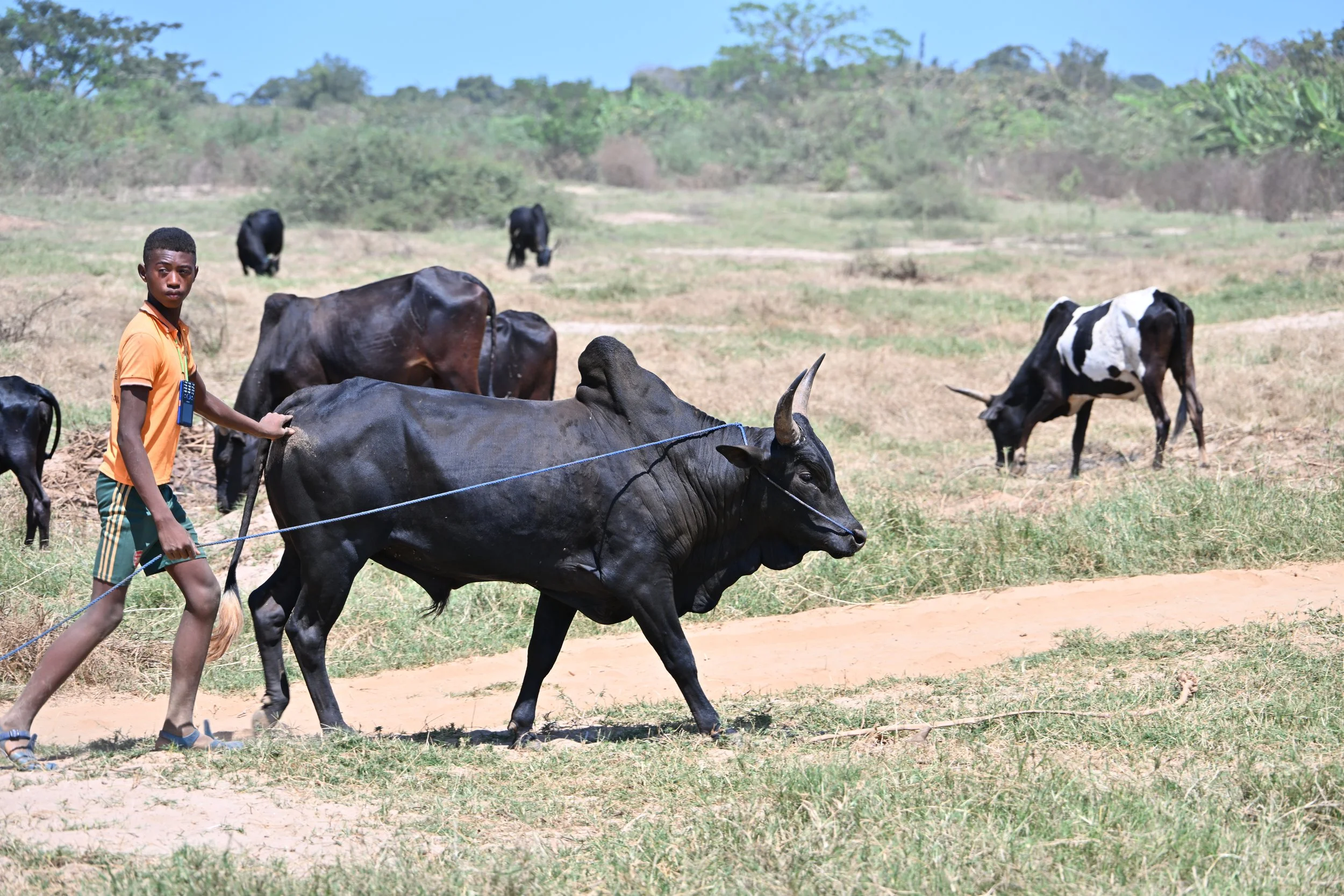
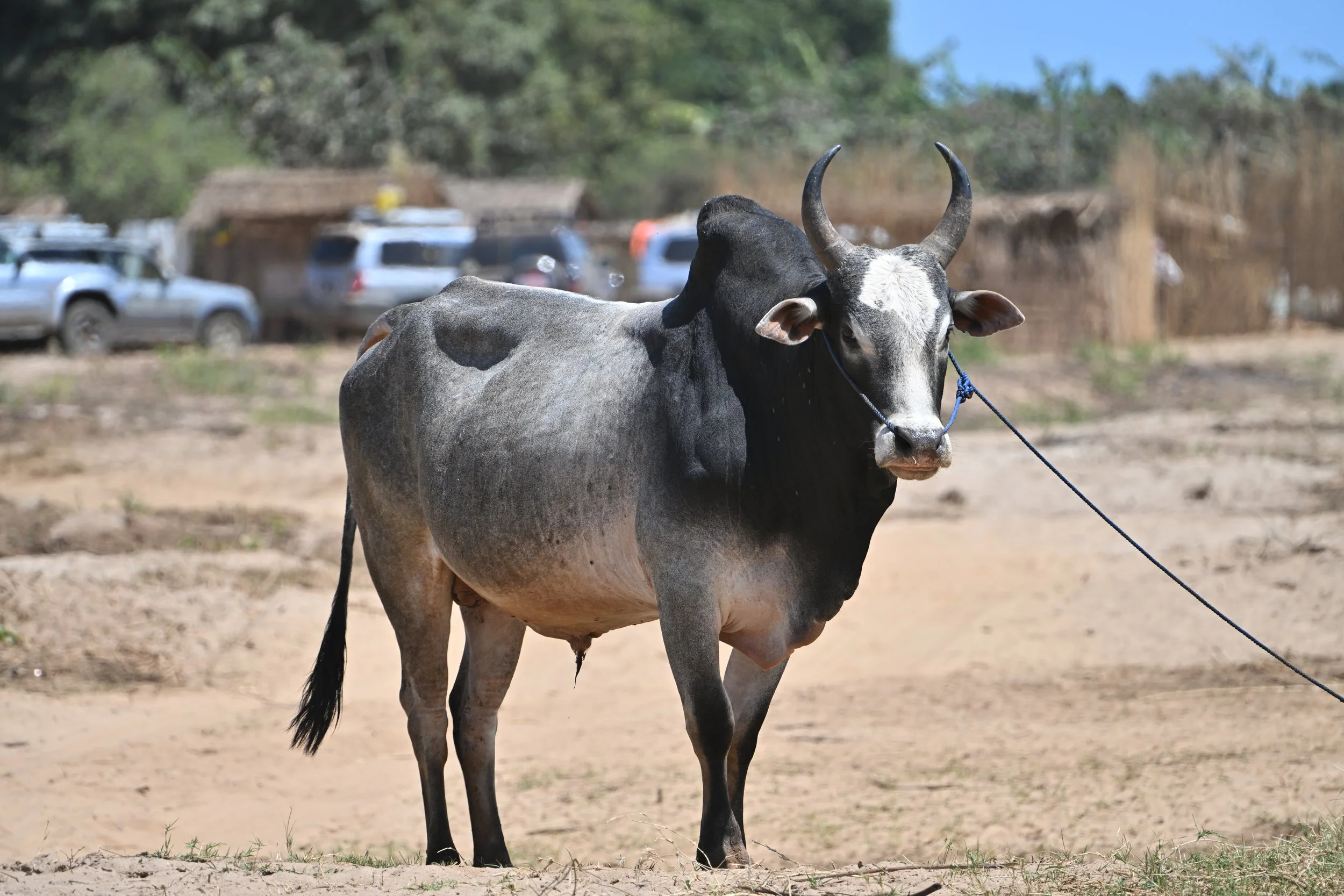
Anyway… we moved on north from here, and had a very interesting river crossing. First we got to ogle a herd of Zebu, which are the local cattle (both genders have horns, but the males’ are much more impressive)…

… including this gorgeous guy -

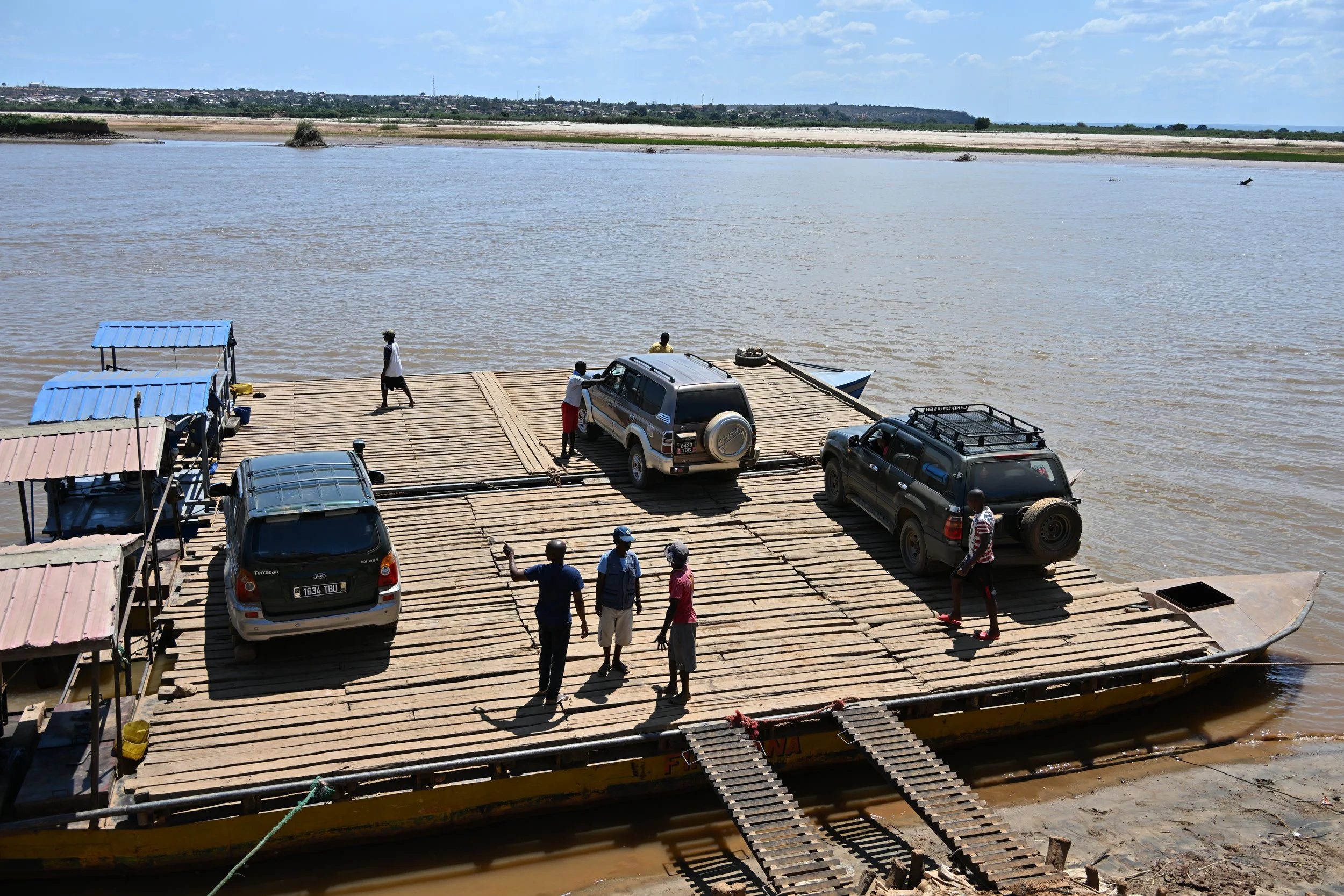
We were able to watch as the car ferry loaded…

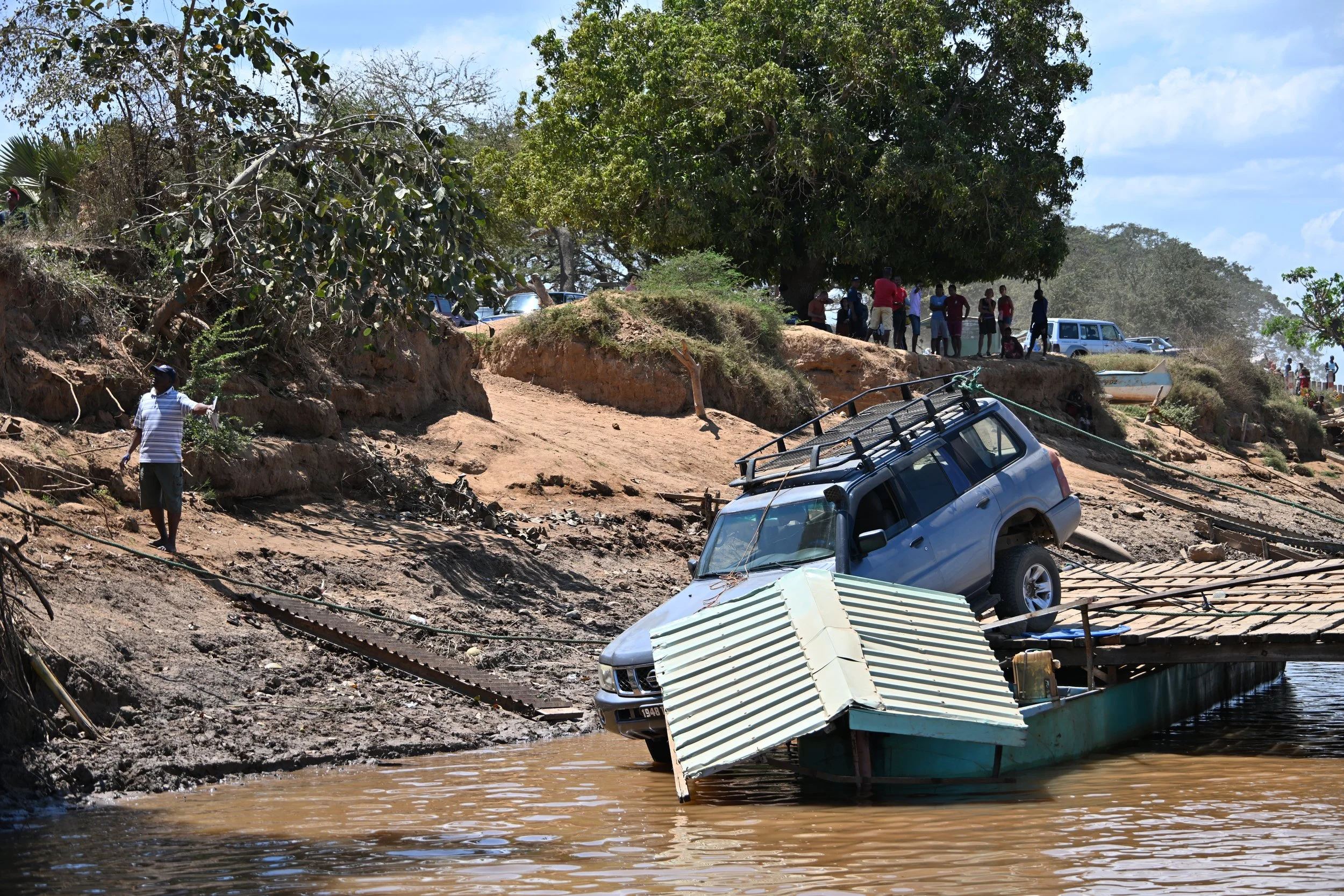
… and luckily, this didn’t happen to us -

this was on the far side of the river, which we were treated to as we arrived and drove off the car ferry safely

The second river crossing of the afternoon was much smaller, which was good, because the ferries didn’t have working motors:

This was our reward after arriving safely after a long day. G’night!

Madagascar!

On our journey to this island nation off the SE coast of Africa, we spent a night in Johannesburg, South Africa. I mention this because we had a very interesting and delicious dinner there. We sought out the restaurant - Tribes African Grill - because the menu featured all manner of grilled meats. We greatly enjoyed the Mixed Grill that included ostrich, warthog, impala and kudu. Rather than posting a stock photo of a kudu, I urge you to search online and check out this beautiful animal. Of the four meats, we enjoyed ostrich and kudu the most - they were moist, tender and had very pleasing flavors. We don’t know for a fact that these animals are farmed, rather than hunted in the wild, but we strongly suspect that.

Now on to Madagascar…

As we approached the airport, you could see lots of red dirt, agricultural patches and mostly dirt roads. On the ground, we found that the capital of Antananarivo was well into the spring season of planting rice:

Anywhere there was flat land and a way to get a lot of water to it, rice is grown. It is the staple crop of the country -

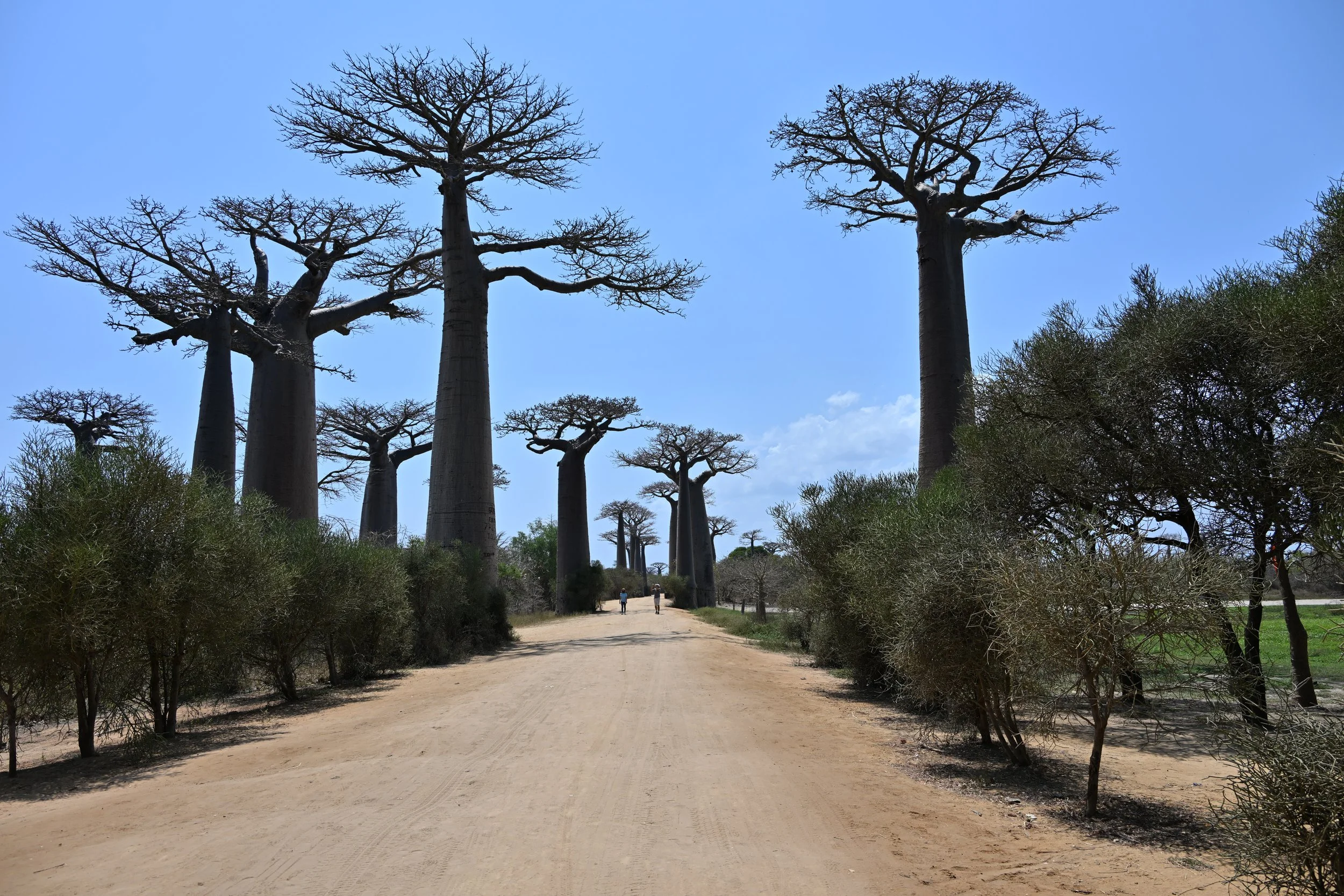
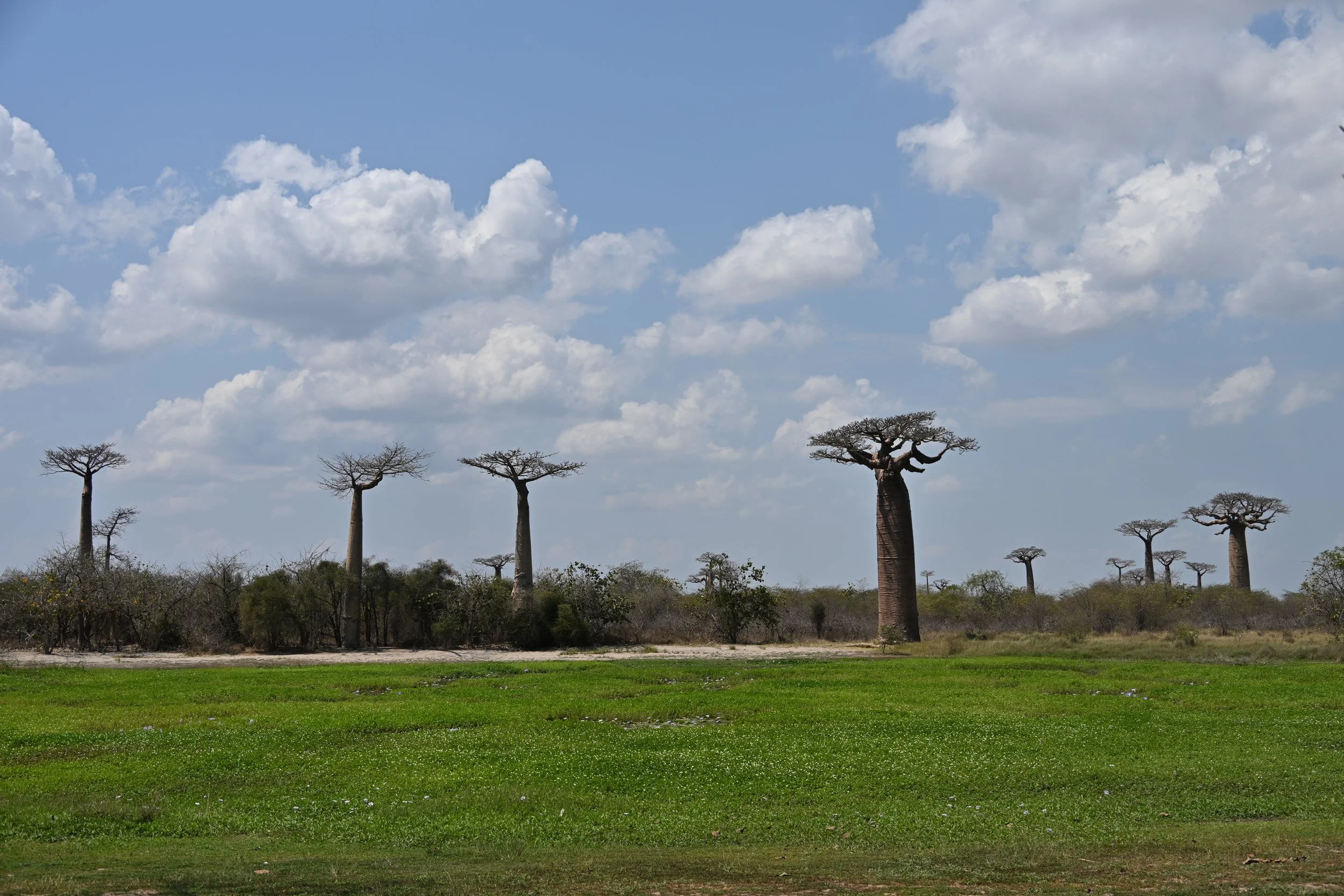
Our flight to Morondava was cancelled at the last minute due to equipment problems, so we spent an unscheduled extra night in “Tana”. [That’s a much easier way to refer to the capital than its full name.] The next day we arrived safely on the west coast and the home of the “famous” Avenue of the Baobabs -

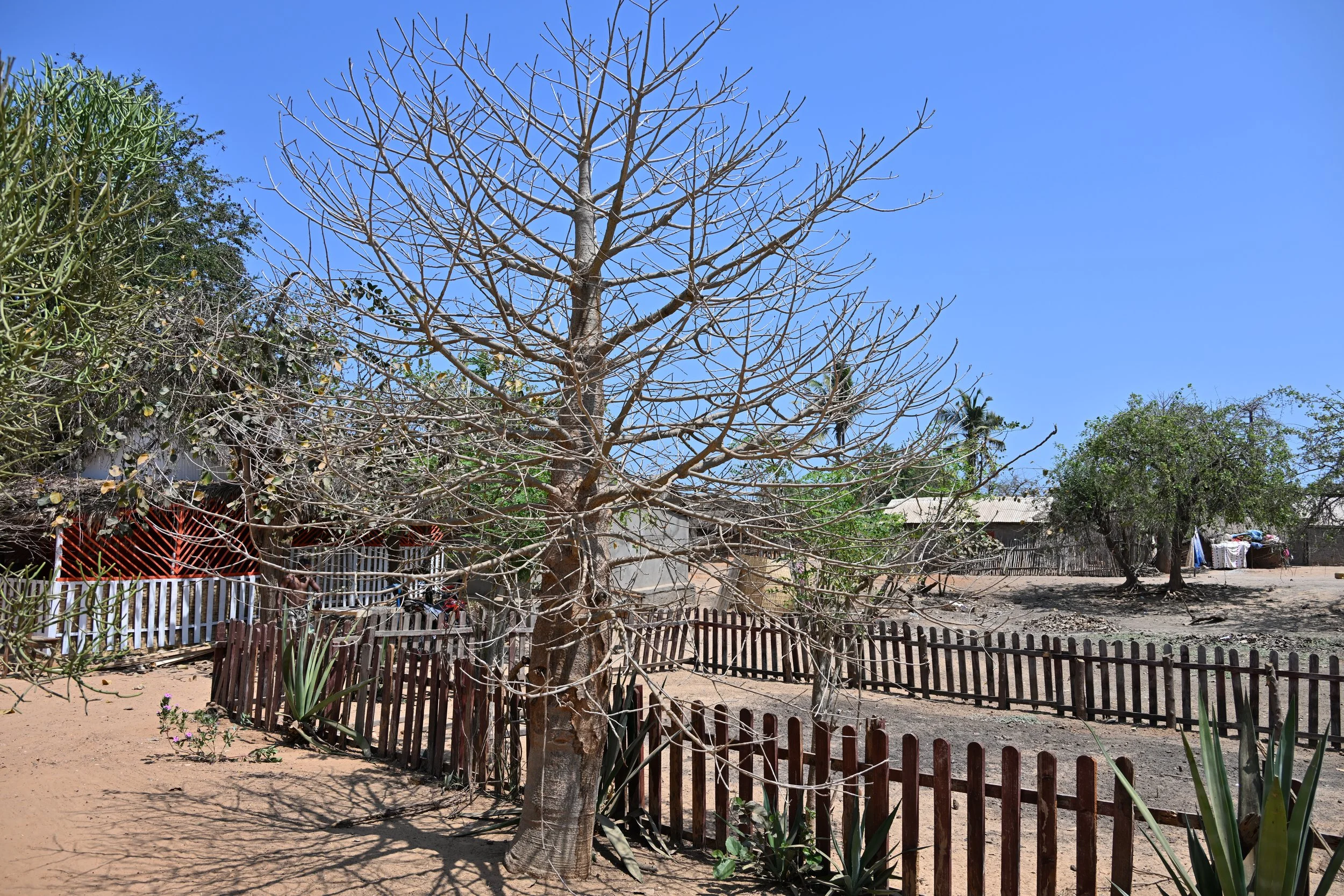
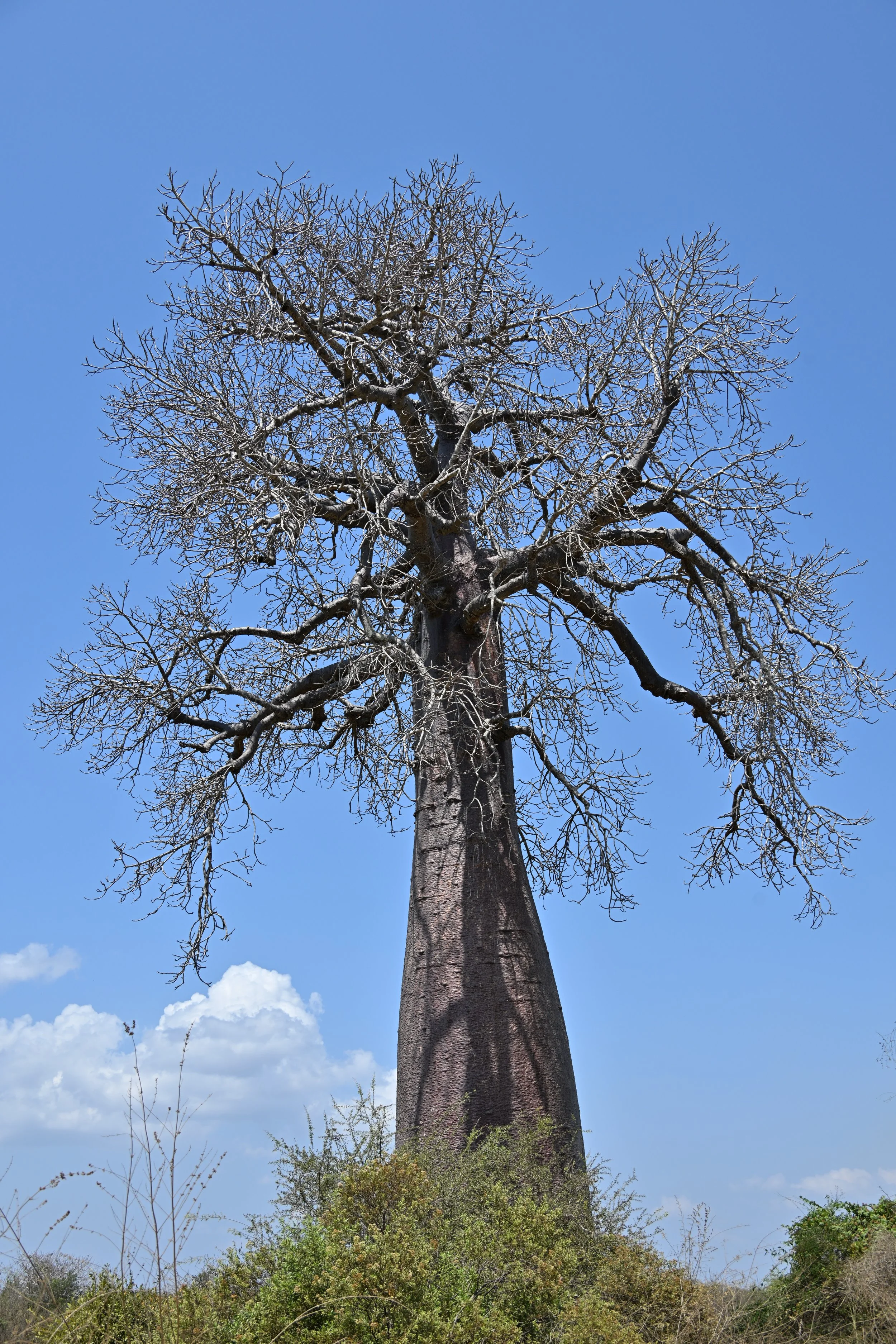
There are 7 species of baobab in the world and 5 are endemic to Madagascar. A sixth occurs in both Madagascar and Africa, while the seventh is in Australia. When they are young…

… they have a lot of branches. As they grow older and bigger, the branches become so heavy that they break off, giving the trees their distinctive shape -

A baobab is essentially an enormous sponge surrounded by bark. The local people cut into them to reach the stored water, but they are not cut down, as they are protected by law. They also harvest the bark for use as roofing materials. The trees have remarkable regenerative properties, so the bark grows back, somewhat like cork trees.

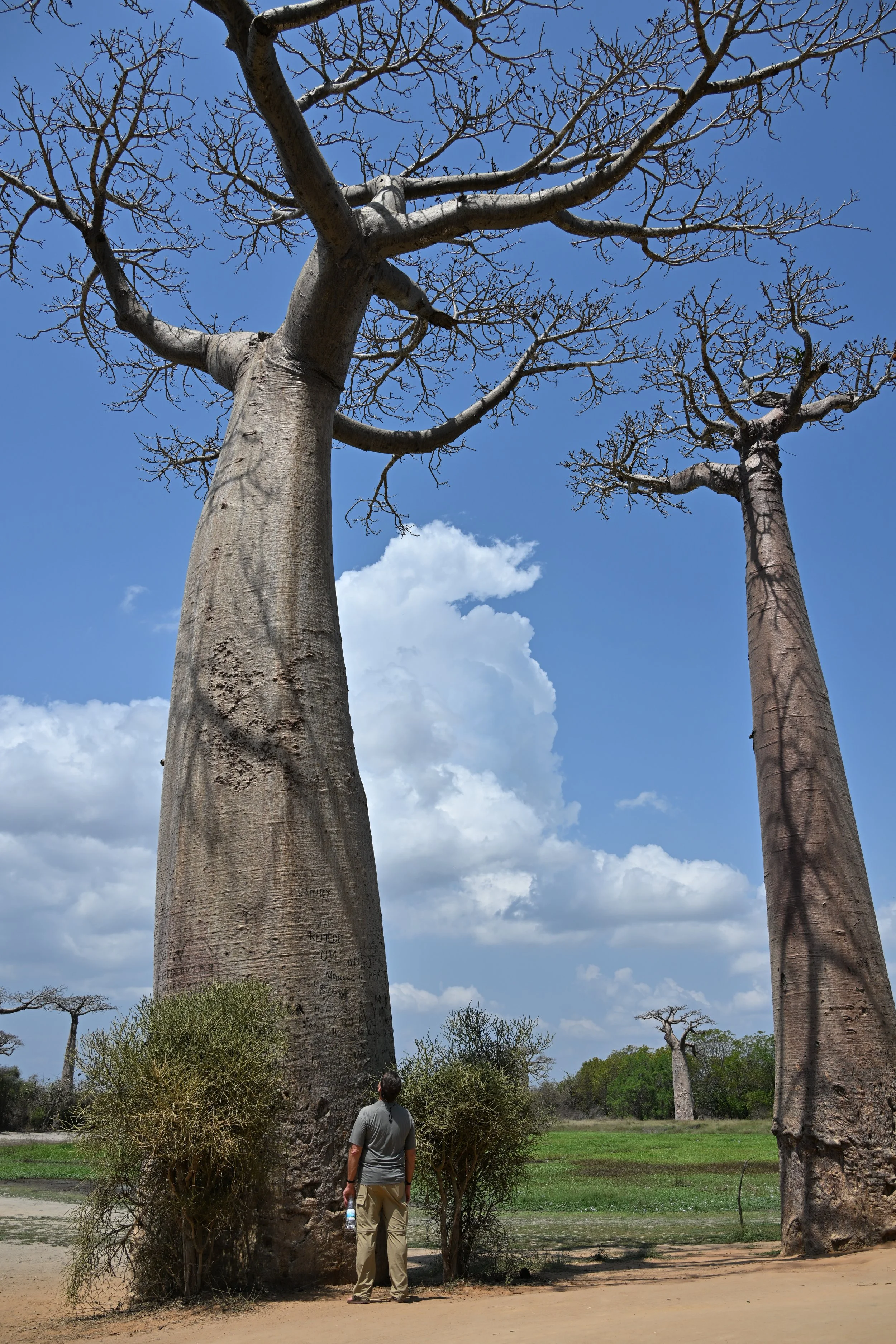
I repeatedly put Steve up against trees that I was photographing, to show just how massive they are -

Those were the common species, while this next one is frequently referred to as the “Rasta” one (with so many branches hanging down) -

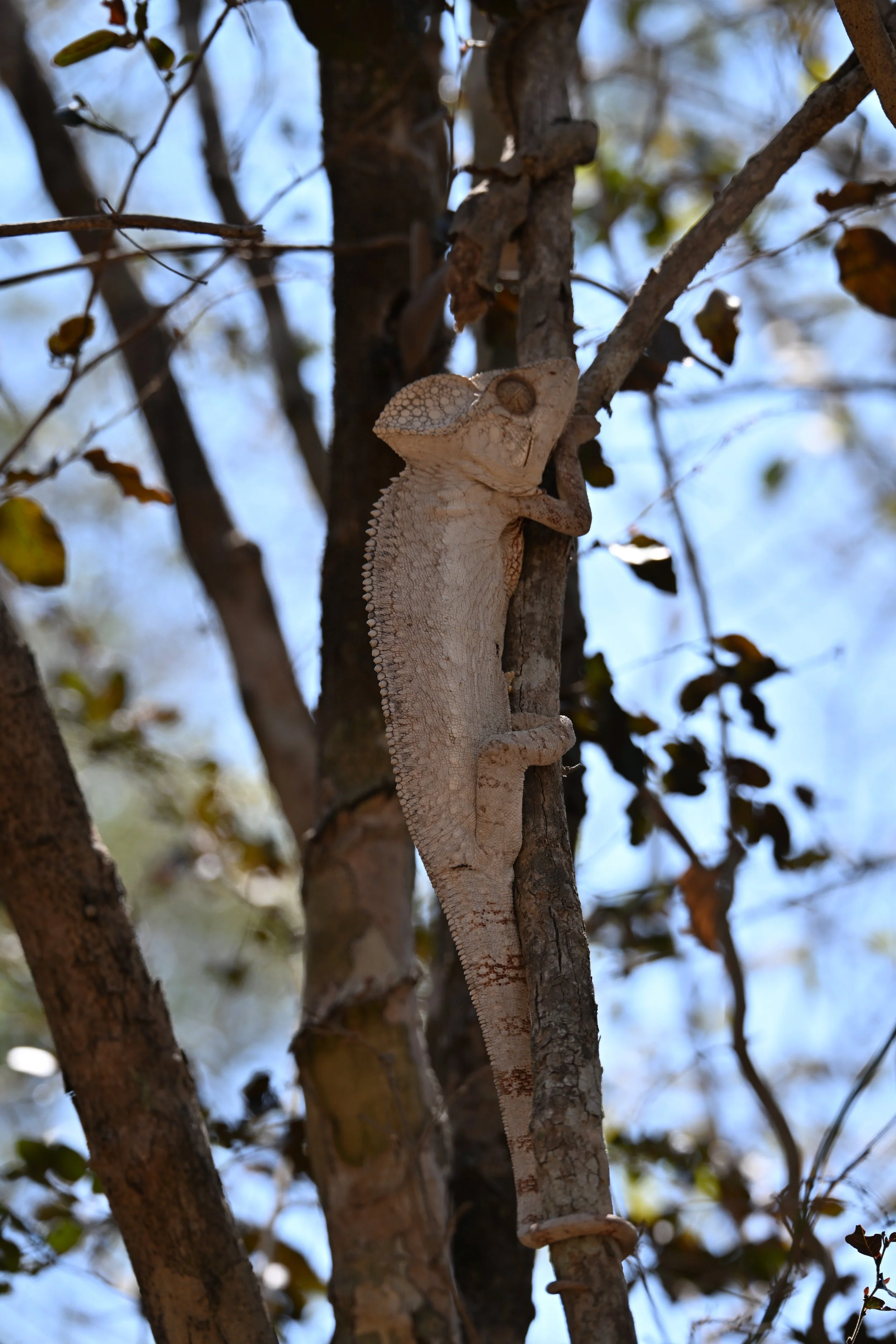
Other famous residents of the island include chameleons…

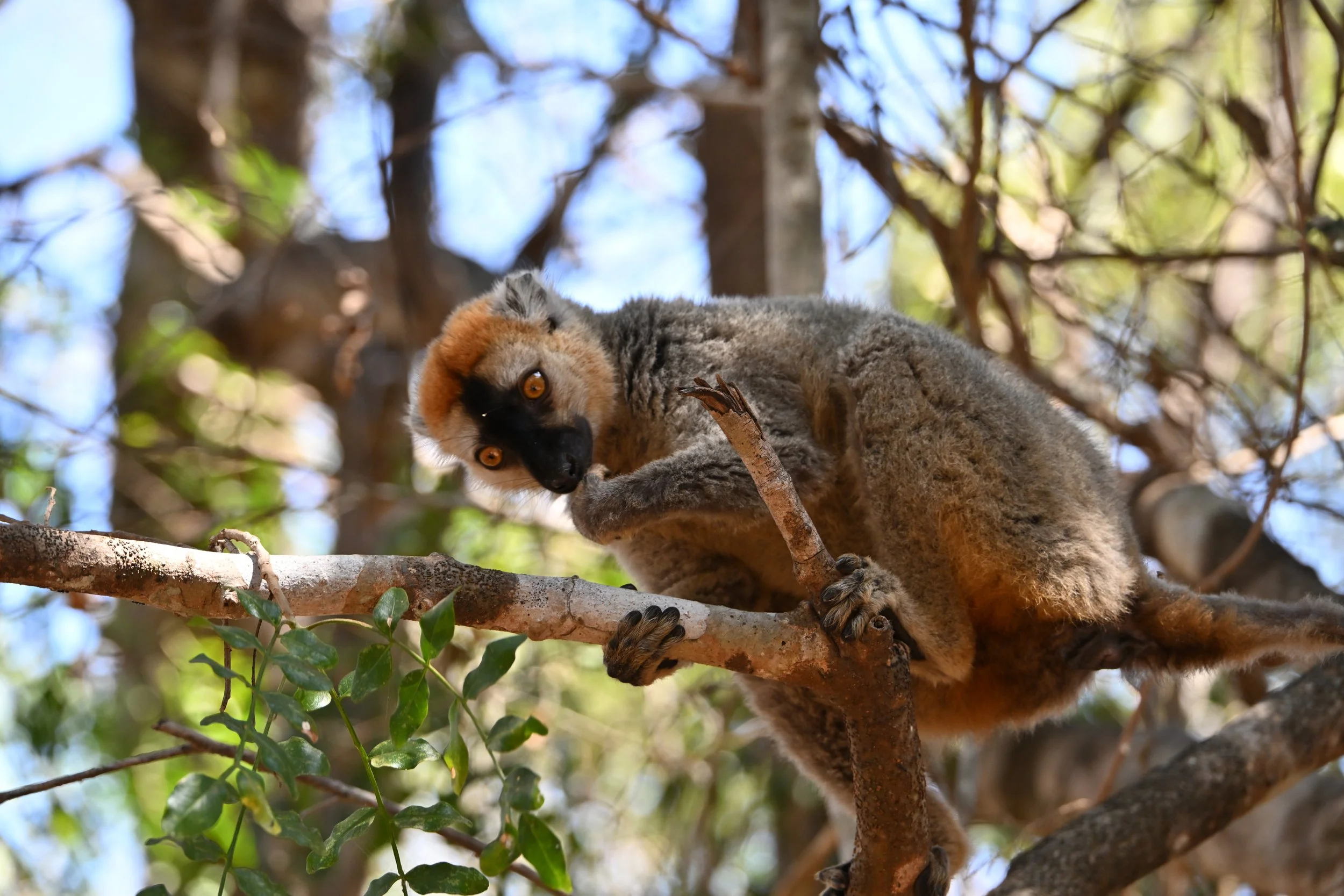
… and lemurs -

Red-fronted Brown Lemur

I plan to be sharing with you all the different species of lemurs especially that we saw on our travels here. I think my favorite family is the Sifaka, because of their striking coloration. These are Verreaux’s sifakas…

… and the baby was really cute to watch. As usual, to see the video, you’ll need to open this post in your browser by clicking on the link at the end of the post -

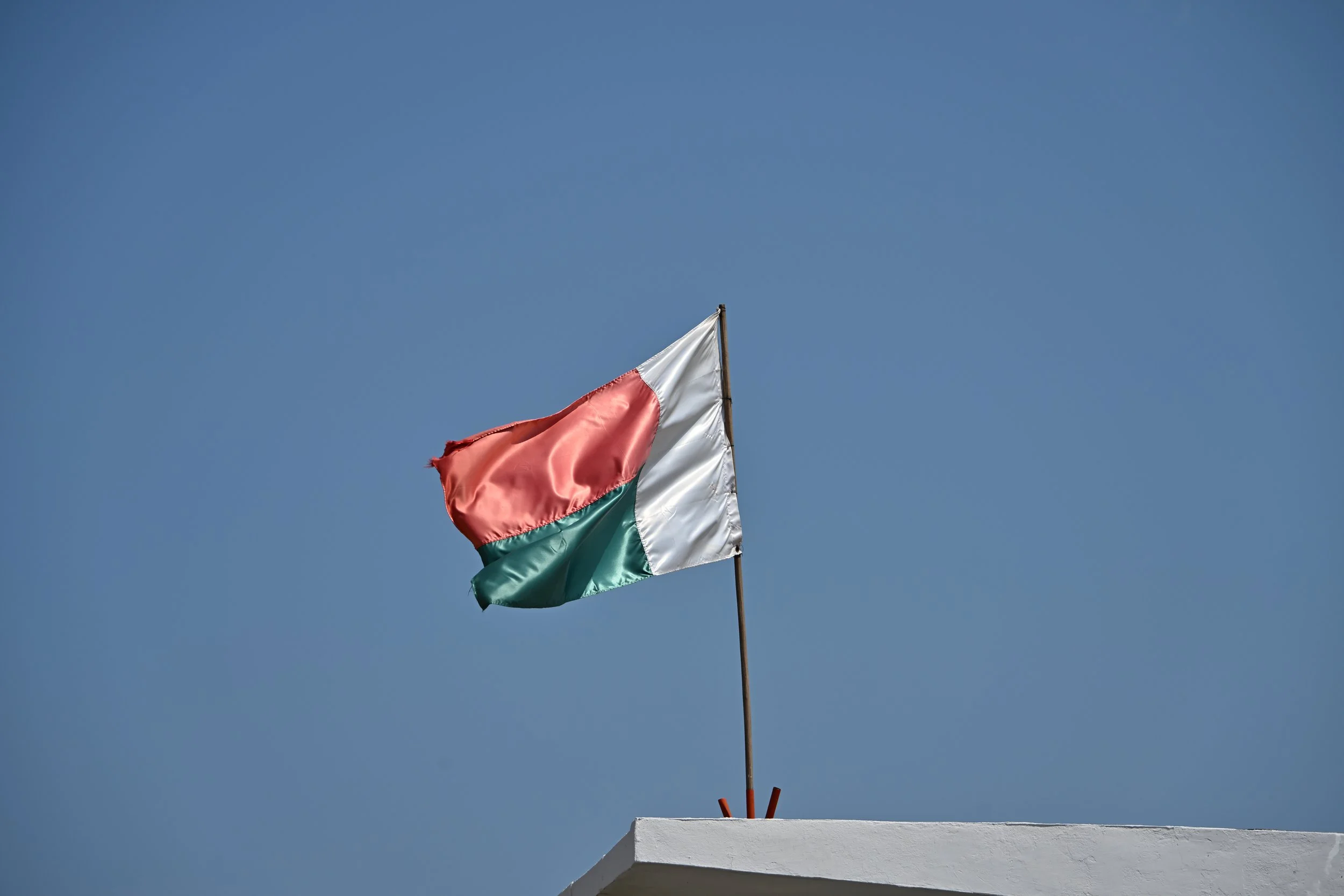
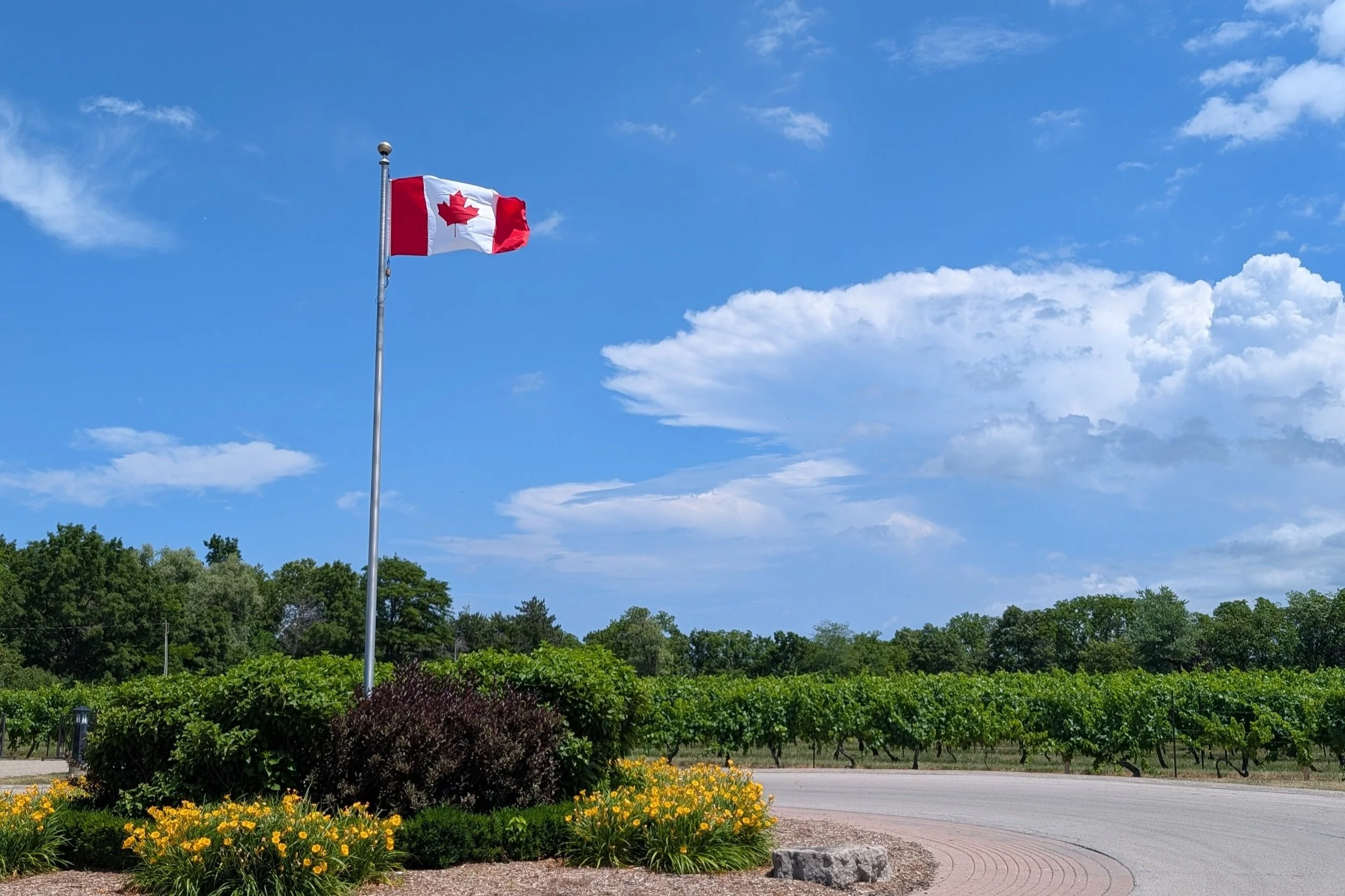
I think I’ll wrap up this post, a little on the short side, because I just wanted to give you a quick overview of this very diverse country (and internet is very spotty). As I have before, I try to get a picture of a country’s flag, so here’s Madagascar’s -

Cuyahoga Valley NP & Steve's Wrap-Up Notes

Cuyahoga Valley is the only National Park in Ohio, and this was a state we hadn’t officially visited yet, so we plotted our return to Nashville from NY via Ohio. There was an interesting hike here and a waterfall (singular, in both instances).

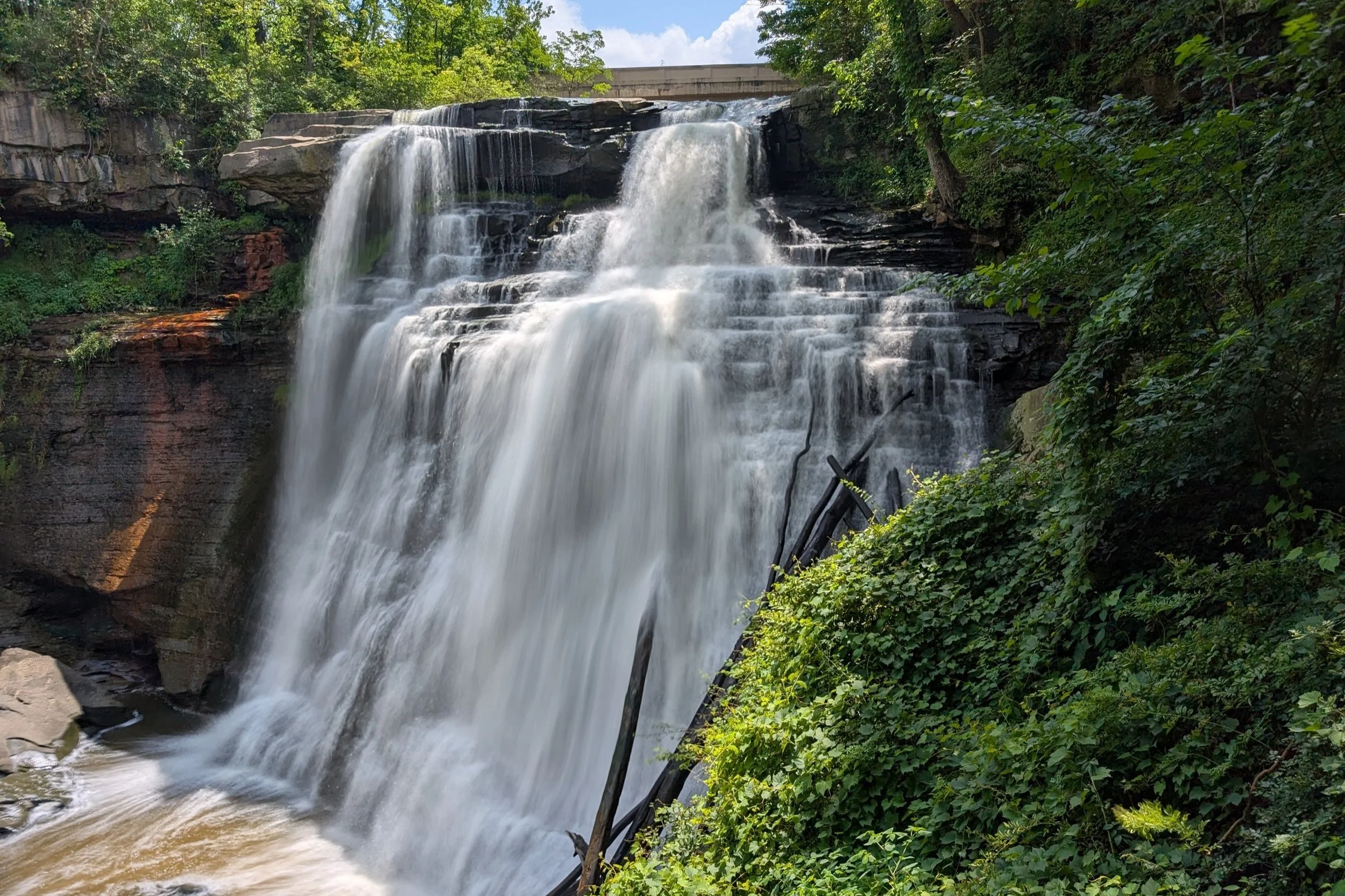
Brandywine Falls was nice enough. Compared to NY waterfalls, there was at least a decent amount of water to make it nicely full.

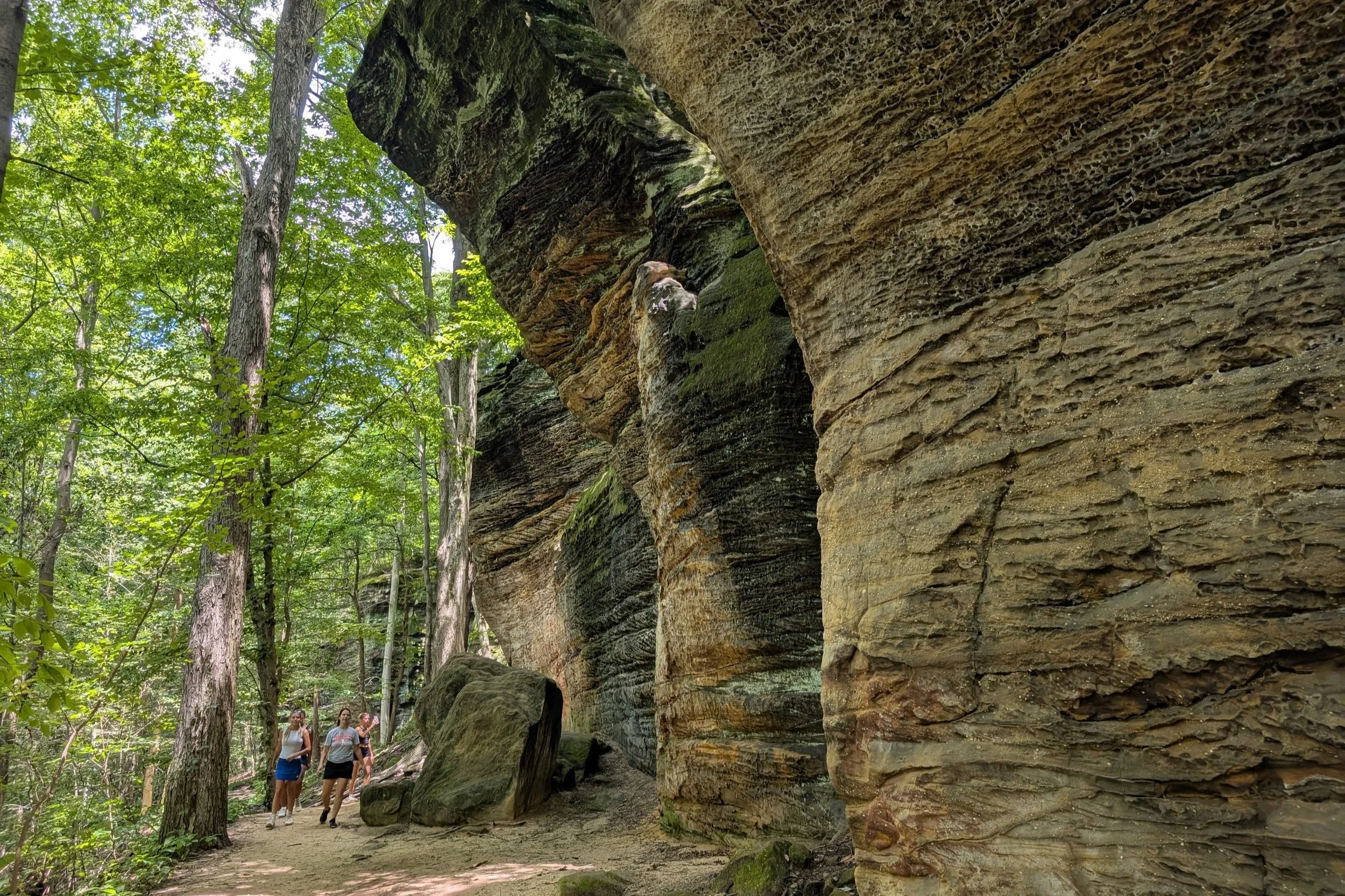
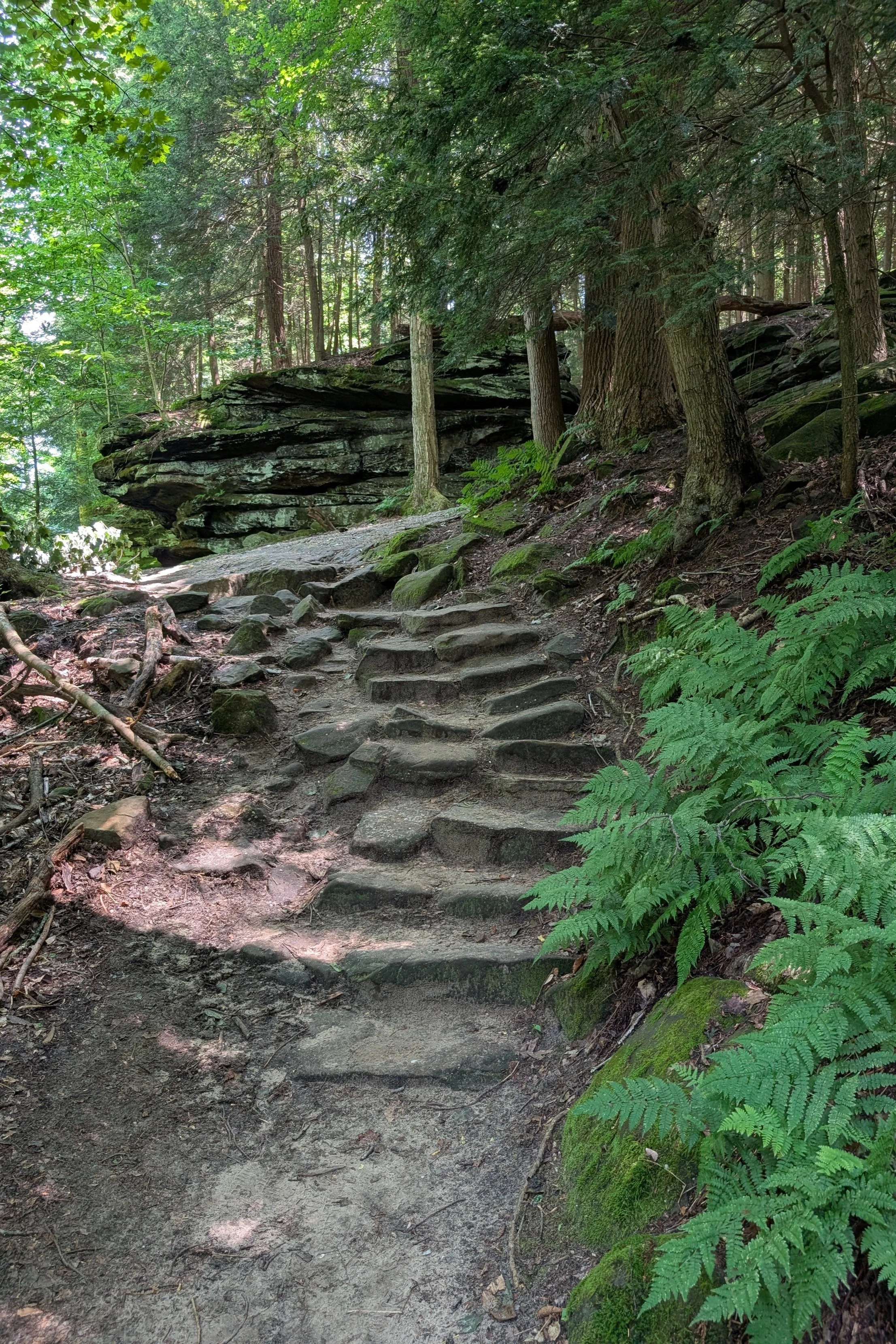
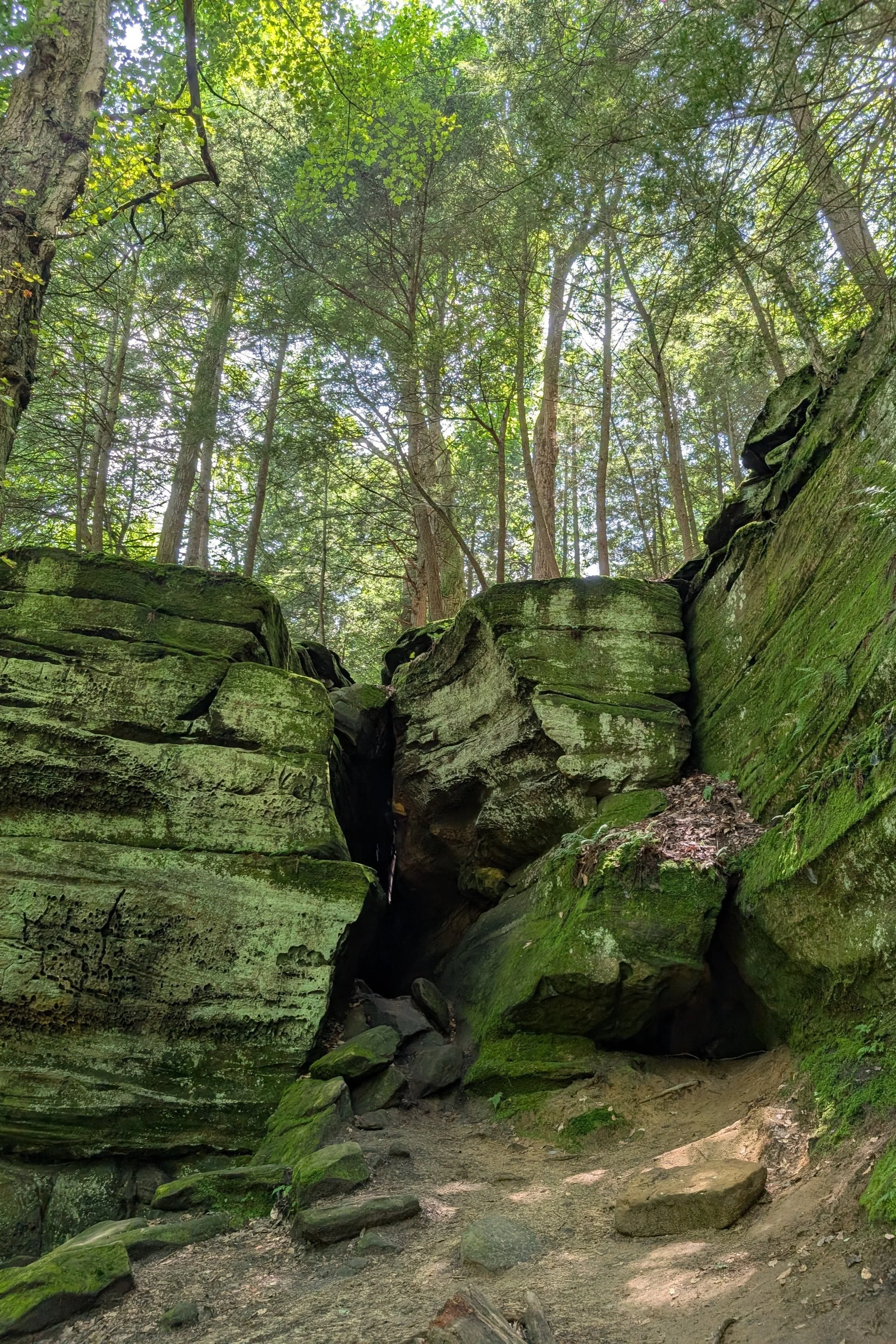
The hike was called The Ledges, and that was quite apropos -

Even though we were deep into summer, the trail was very shaded, so it wasn’t onerous to hike the 2 mile loop at all.

It was gorgeously green…

… and peaceful…

… and with neat erosions -

Steve is going to offer a summary and his notes on our epic road trip in the second half of this post. Suffice it to say that we visited 7 new states for us - bringing our total of US states explored to 46 - as well as 6 new Canadian provinces. We’ve also visited 48 US National Parks, out of a total of 63 (currently). Other stats for us… since retirement 8 years ago now (!), we have set foot on all 7 continents and, so far, have explored 54 countries (including “protectorates” like French Polynesia, Aruba, and the Cayman Islands).

Steve Enters the Conversation:

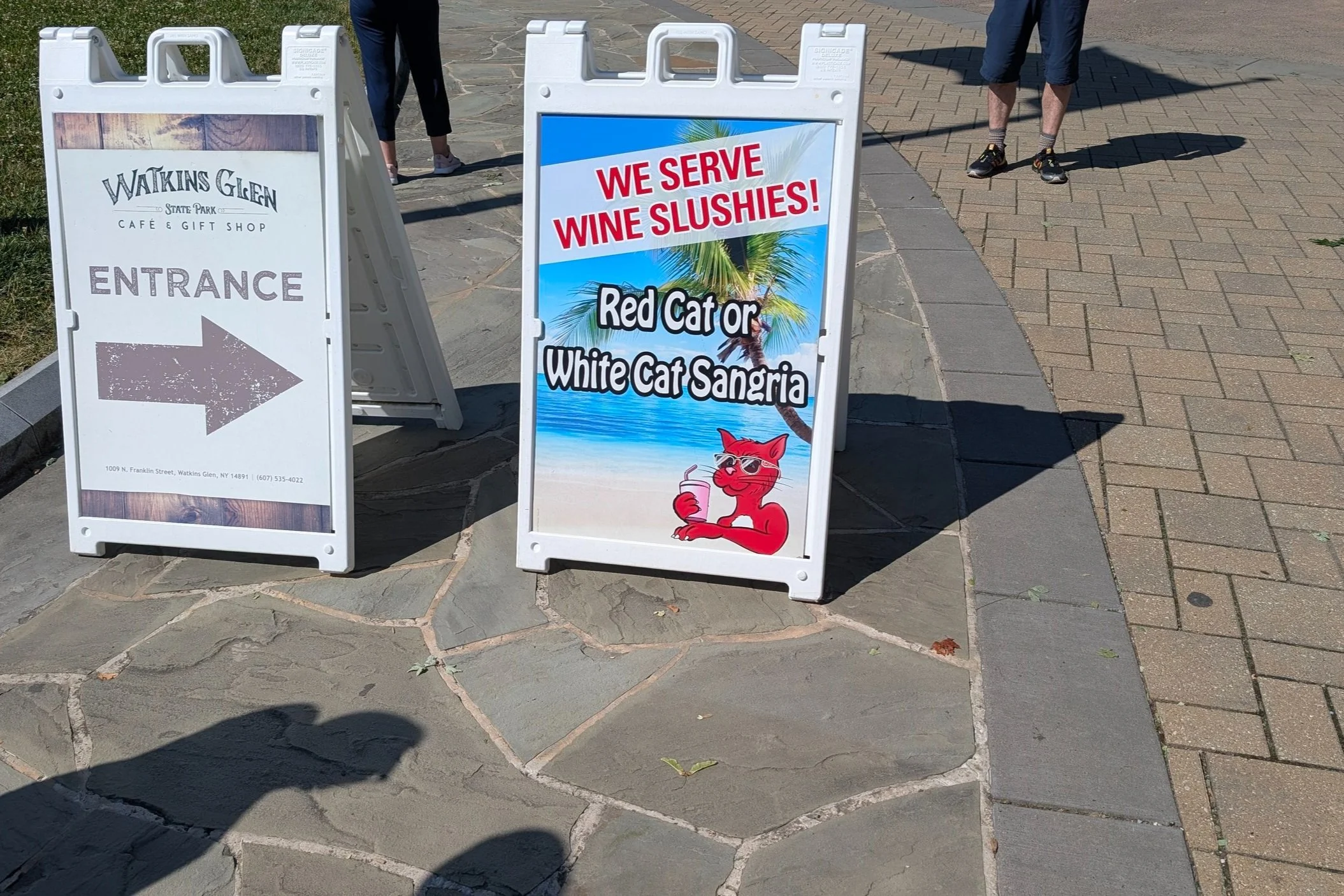
As always, we saw some interesting signs on this trip. This one apparently means that they don’t want anyone doing this hike!

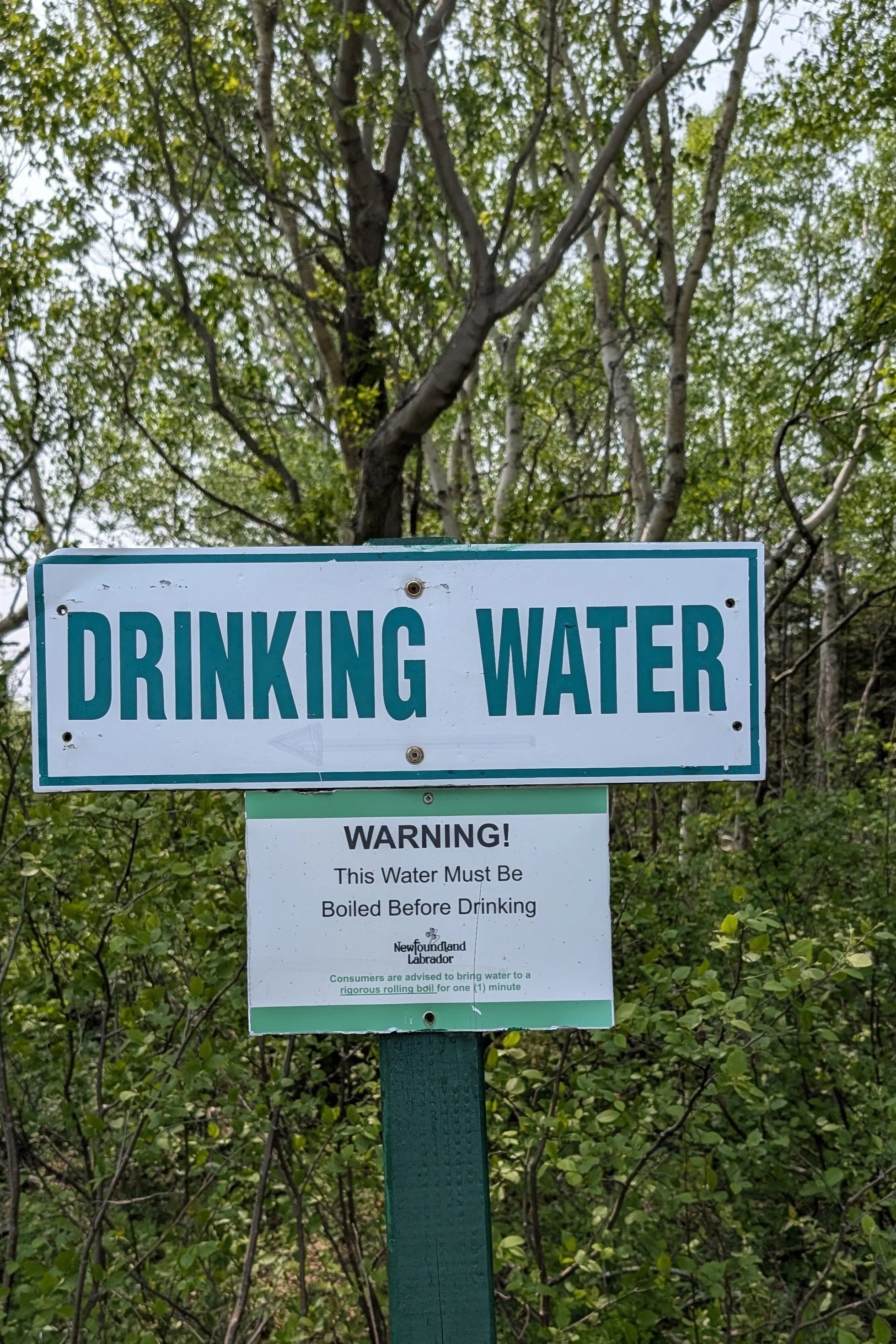
This one, at our last hike in Newfoundland, seemed a bit contradictory:

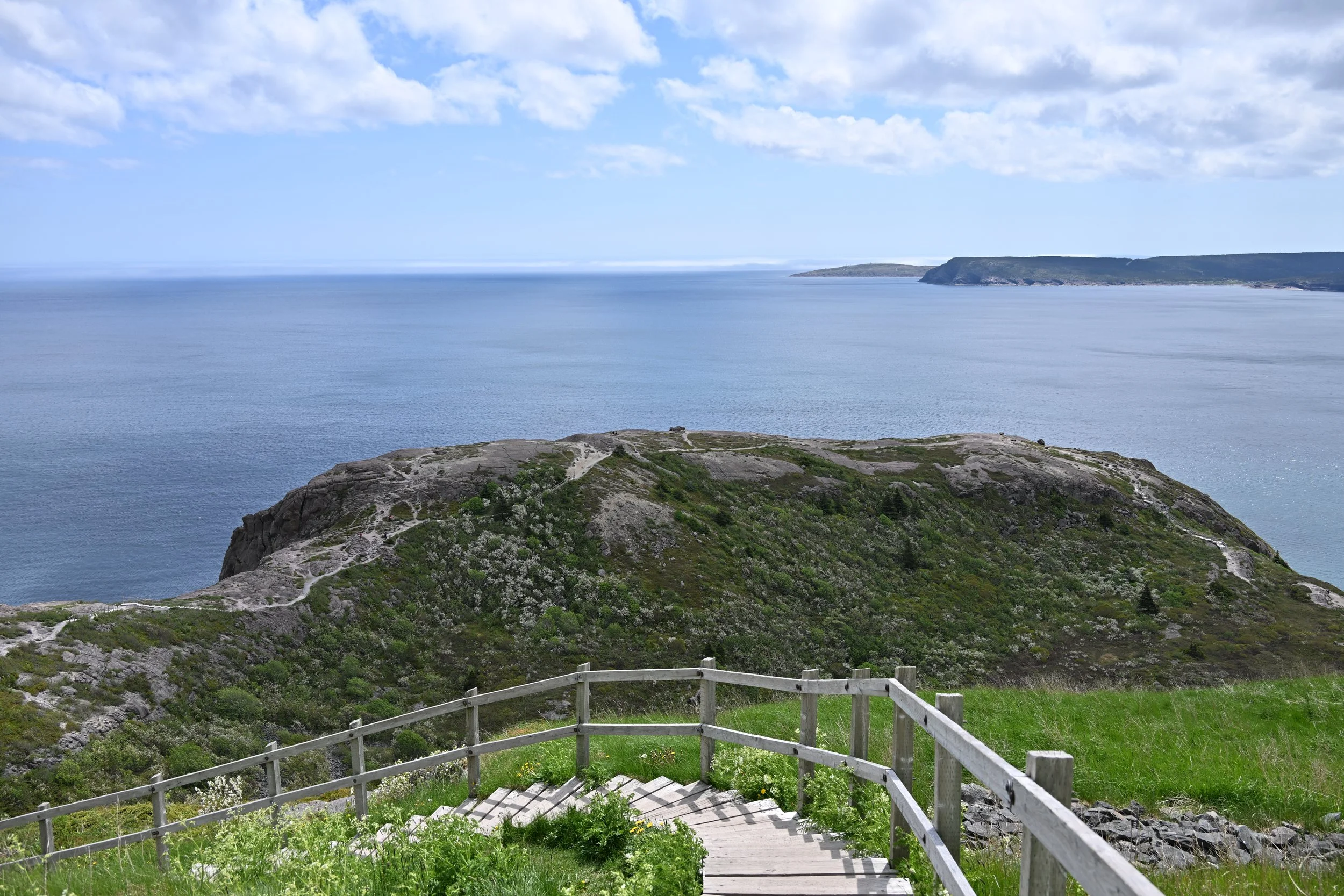
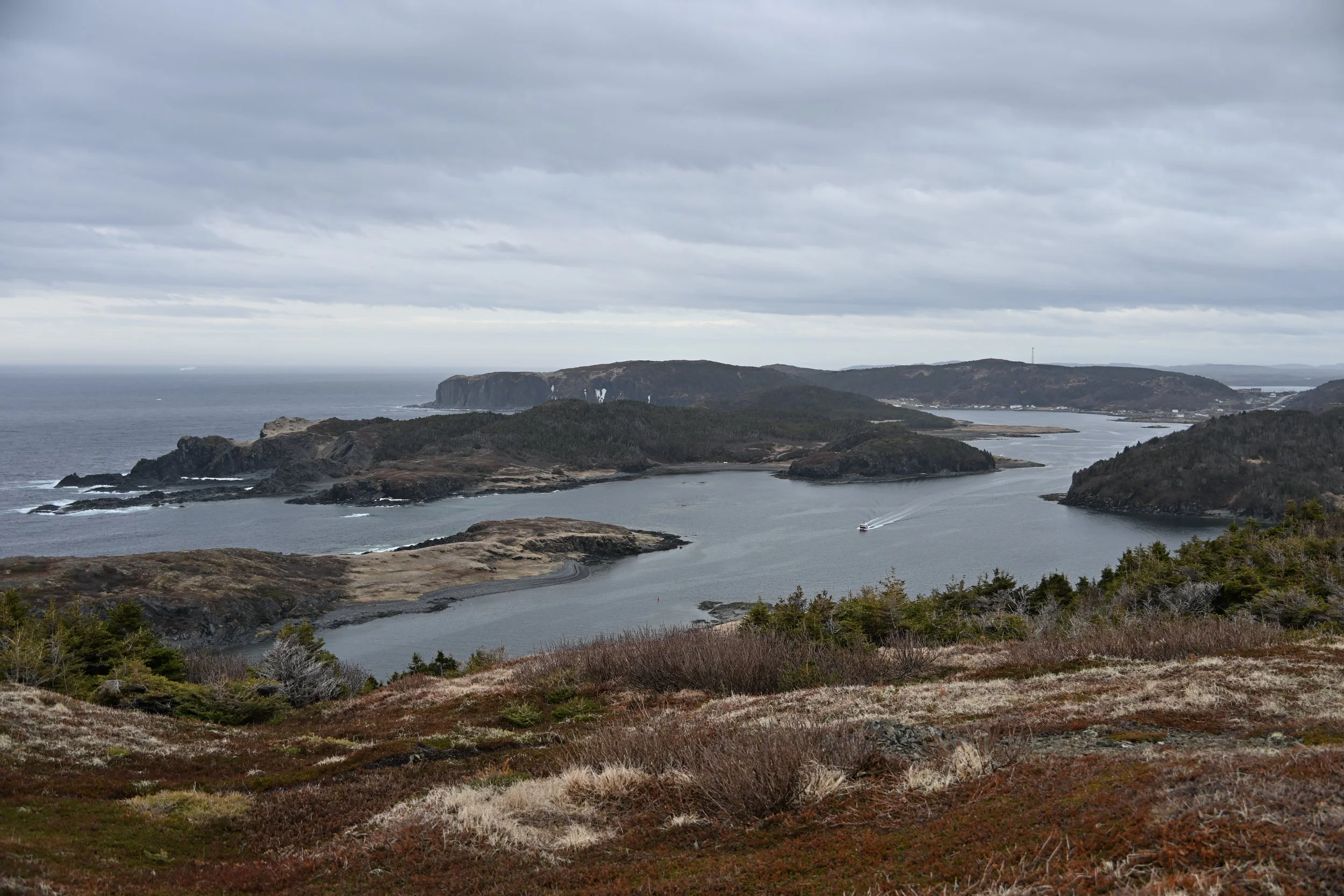
Speaking of the last hike in Newfoundland, I thought this picture really showed the scope of the view from up top:

And this sign didn’t really tempt us before our hike:

We were warmly welcomed to Maine:

We quickly got used to the question of “do you need a machine?,” rather than “are you paying by card?” We had not heard that usage before, but it was the common approach beginning in Maine and continuing throughout the Atlantic Provinces.

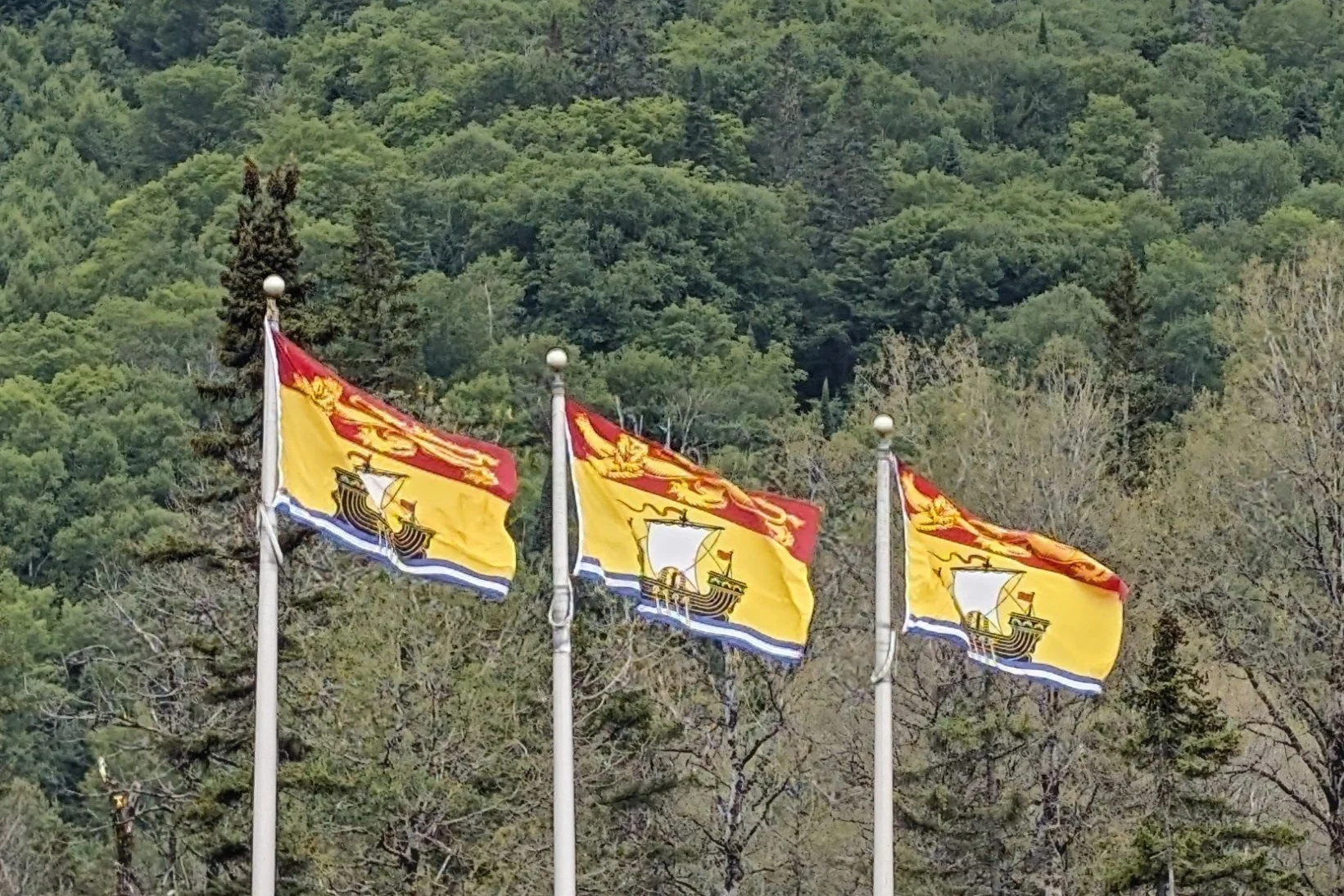
After Maine, our first stop was the Province of New Brunswick, one of the original four provinces of Canada:

New Brunswick provides the northwestern shore of the Bay of Fundy, and is the location of the Hopewell Rocks Provincial Park, where Lisa got her neat pictures of the range of the tides. It also is where we experienced a high-end variation on Quebec’s best known contribution to Canadian cuisine, Lobster Poutine:

After New Brunswick, we journeyed to Prince Edward Island:

PEI and its capital of Charlottetown are known as the birthplace of Canada, as it was the location of the first 1864 meeting of colonial delegates on the subject of confederation. Ironically, it was not one of the first four confederated provinces (in 1867), and didn’t join Canada until 1873—after both Manitoba and British Columbia.

Another thing for which the island is known is, perhaps, the draw for most of its tourists: it was the setting for the Anne of Green Gables books. (Unfortunately, neither of us has read them, so we missed out on what most people see!)

Next stop was Nova Scotia (“New Scotland”), another of the original four provinces:

Our favorite part of Nova Scotia was Cape Breton Island.  The hiking paths and driving scenery were fantastic. Scottish influence remains strong; indeed, “the Gaelic College” off the Cabot Trail offers year round courses in the culture, music, and language of the immigrants from the Scottish Highlands.  For those of you who are golfers, Cape Breton apparently has 2 of the top 6 golf courses in Canada—including the best links course.

The Alexander Graham Bell National Historic Site is also on Cape Breton. The inventor and his family established a home in Braddeck, Nova Scotia, after inventing the telephone. The museum near their estate has interesting exhibits focused on his life and work, including airplanes, high performance hydrofoils, and transmission of conversations via light beams (the “photophone”). The exhibit that most caught our intention though consisted of a typewriter, accompanied by a very detailed explanation of what it was, and how it worked.  Boy, that sure made us feel old!!

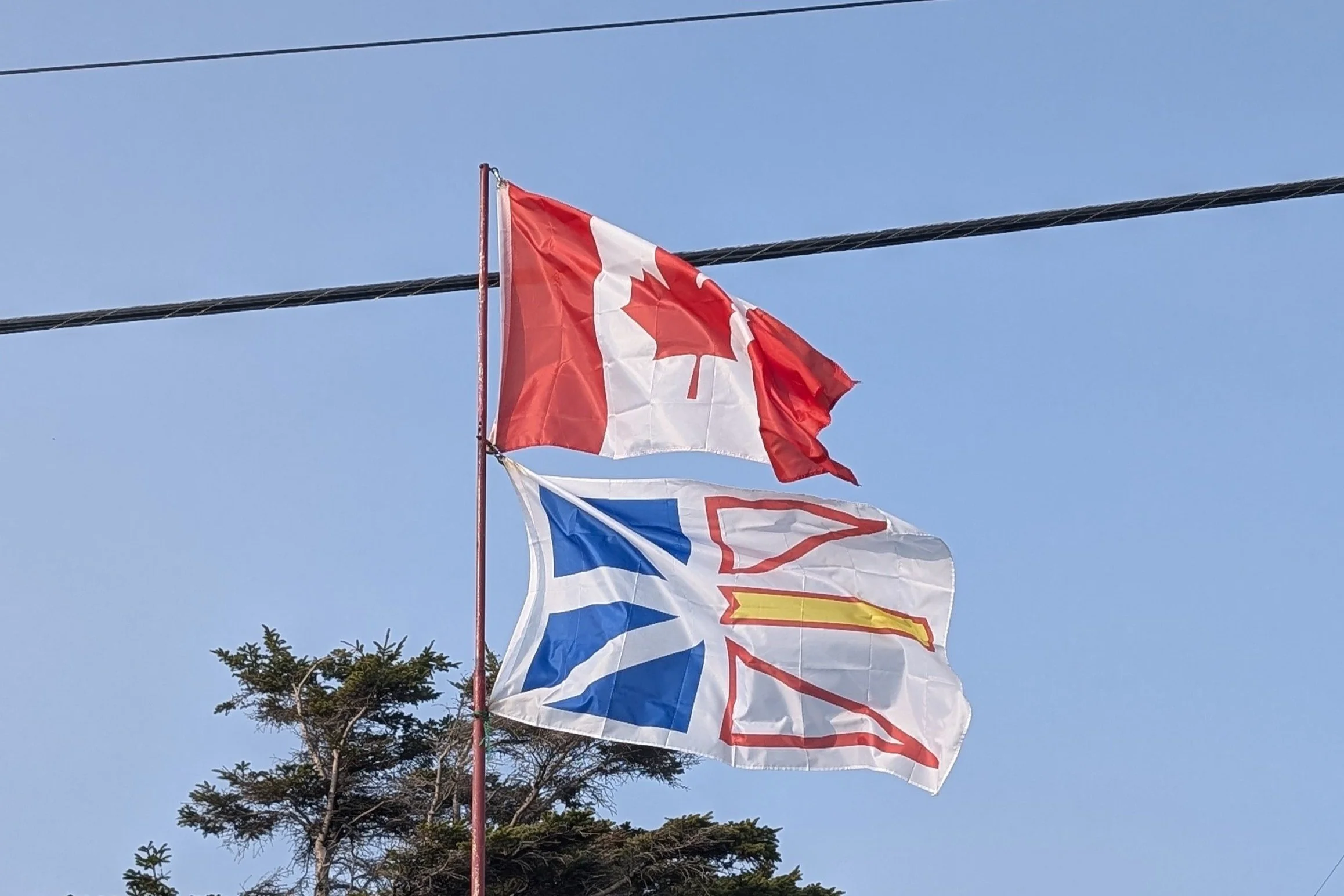
After Cape Breton, we started our week on the Island of Newfoundland—which has 95% of the population, but only 37% of the land, of the Province of Newfoundland and Labrador:

The Norse settled in Newfoundland for a short sojourn circa 1000 A.D., and it was heavily visited by European fishermen beginning shortly after 1500. Nonetheless, it didn’t become part of Canada until 1949 (and even then only after a great deal of political machinations, as Canada and England worked to prevent it from becoming too close to the United States).

In the US we tend to pronounce the name of the province with the stress on the first syllable, but locals stress the second syllable (newFOUNDland). Their accents varied as we made our way across the island, from general Canadian (oot and aboot) in the west, to nearly sounding Irish in St. John’s (the capital city on the east coast).  The differing accents are attributable to the settlement patterns of the island—and to the fact that villages were easily accessible only by sea.  Apparently, even today, natives can determine by accents where their fellow residents grew up—and, therefore, even which religion they were raised in (Protestant and Catholic villages). 

Finally, one piece of trivia about Newfoundland. Just off its southern coast is the 8 island archipelago of Saint Pierre and Miquelon, which is still part of France. Despite having a population of less than 6,000, it has a delegate in France’s National Assembly. Unfortunately, we ran out of time and were unable to go to this part of France….

Speaking of France, we had an enjoyable stay in Quebec City, the capital of another of the four founding provinces of Canada:

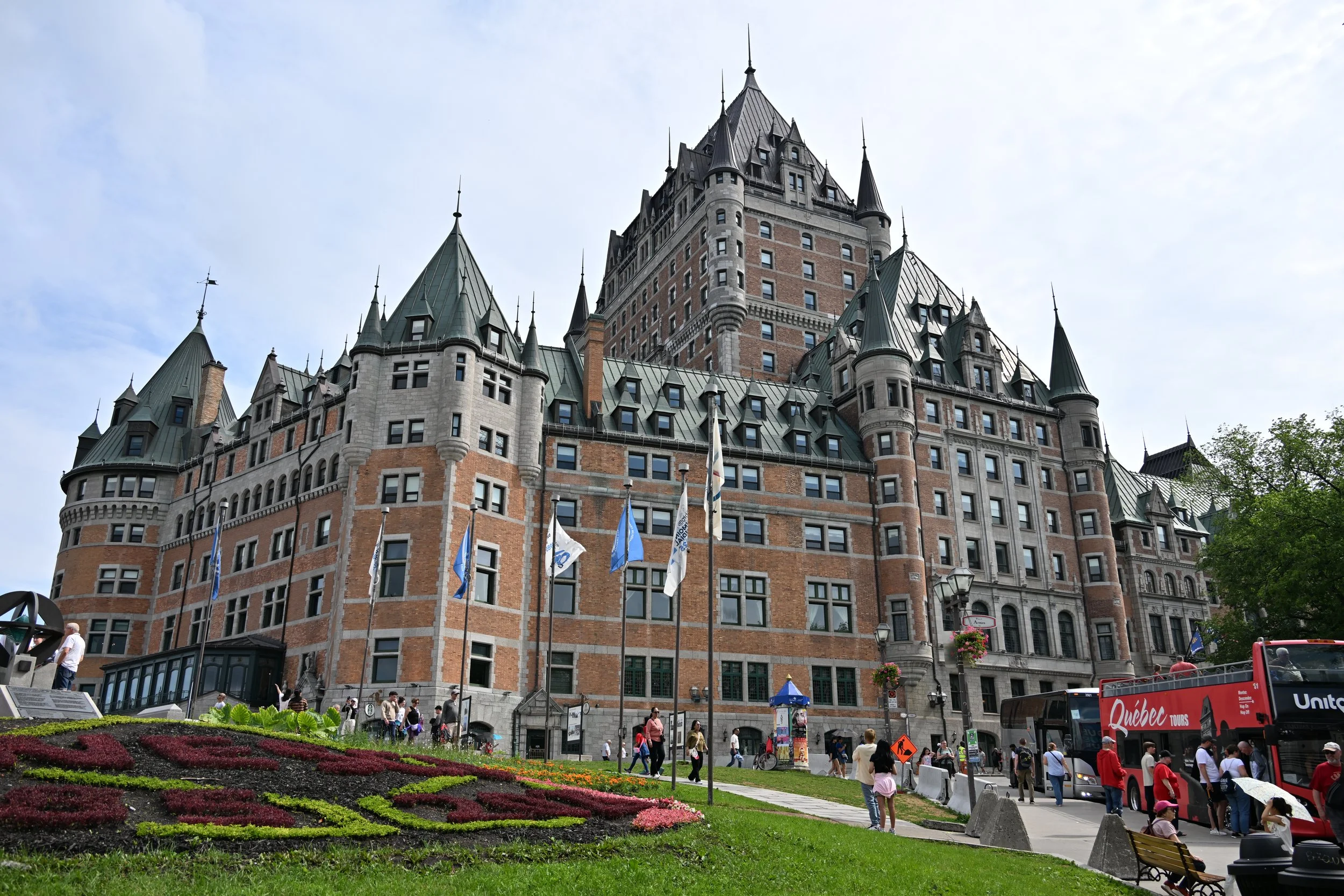
As Lisa indicated, in Quebec City, we stayed at a far less expensive place than the famous Chateau Frontenac Hotel, but we did walk the couple of blocks one night to visit their renowned bar. Once there, we found that even the mailboxes were fancy:

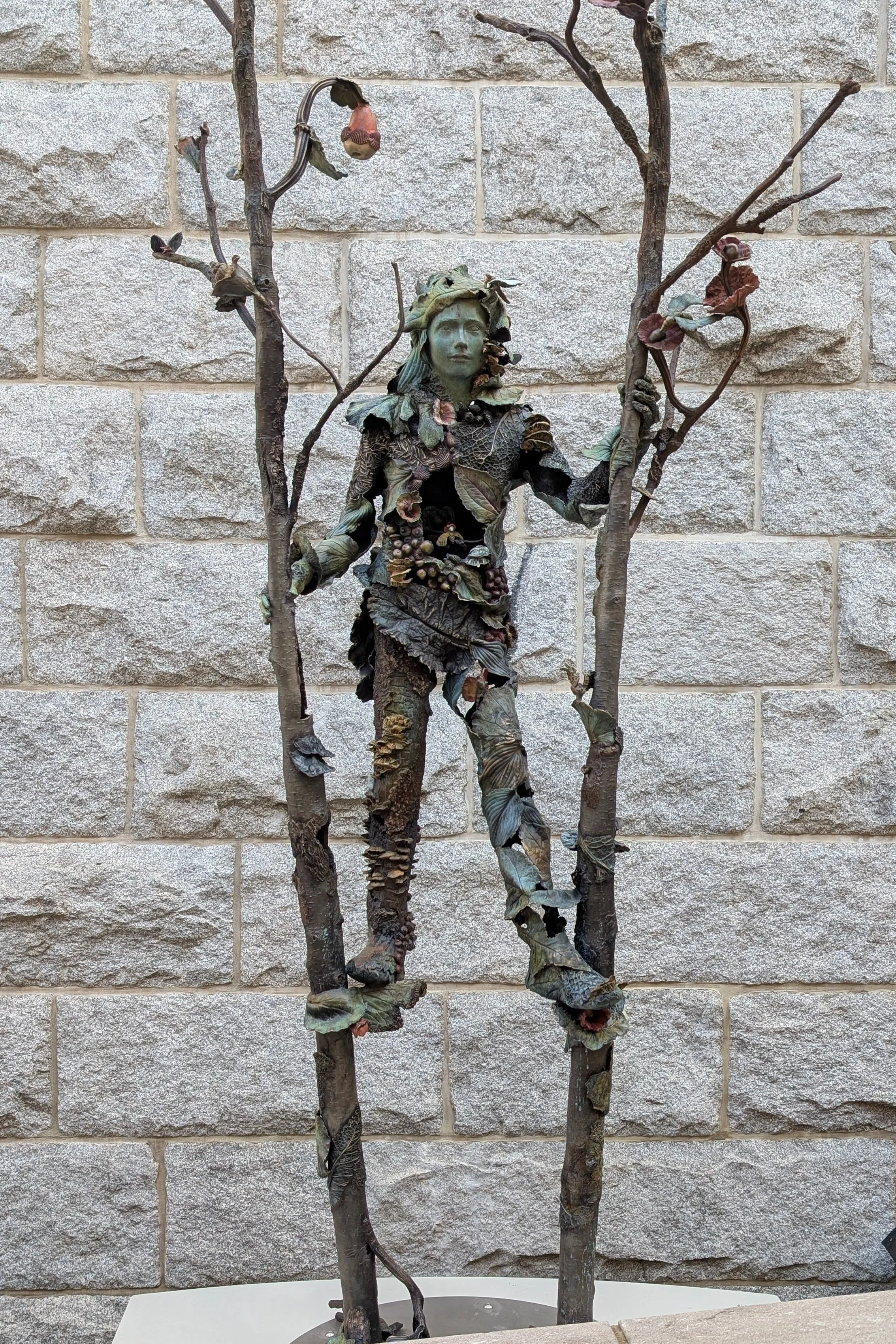
As a bonus for spending almost as much on drinks as for the cost per night of our nearby 4th floor walkup, we noticed a party two tables over included a familiar looking older gentleman—the singer Rod Stewart! It didn’t seem appropriate to take his picture in a bar, but I did stumble across this nice sculpture the next day:

After our stay in Quebec, we headed back to the USA, passing through Ontario on our way to the Finger Lakes region of New York. We really enjoyed the Konstantin Frank winery there. After the Finger Lakes, we spent two nights at Niagara Falls, with most of our waking time in the Province of Ontario, the fourth original Canadian Province:

Crossing the Rainbow bridge to look at the falls was our first time walking into Canada, and gave us our fourth method of crossing that border in less than a year (car, plane, bicycle, and on foot).

As Lisa noted, the views of the falls from Canada were outstanding. Equally outstanding are the wineries around Niagara-on-the-Lake. Especially if you are a fan of ice wines, this is a can’t miss wine destination!

This was our first real trip to the Northeast US, and our first time in Eastern Canada.  Over the course of 2 months, we drove almost 8000 miles, did a bunch of hikes, enjoyed three separate winemaking regions (of course), and took in some amazing food and scenery.  We’d definitely recommend taking a look at these destinations!

New York state

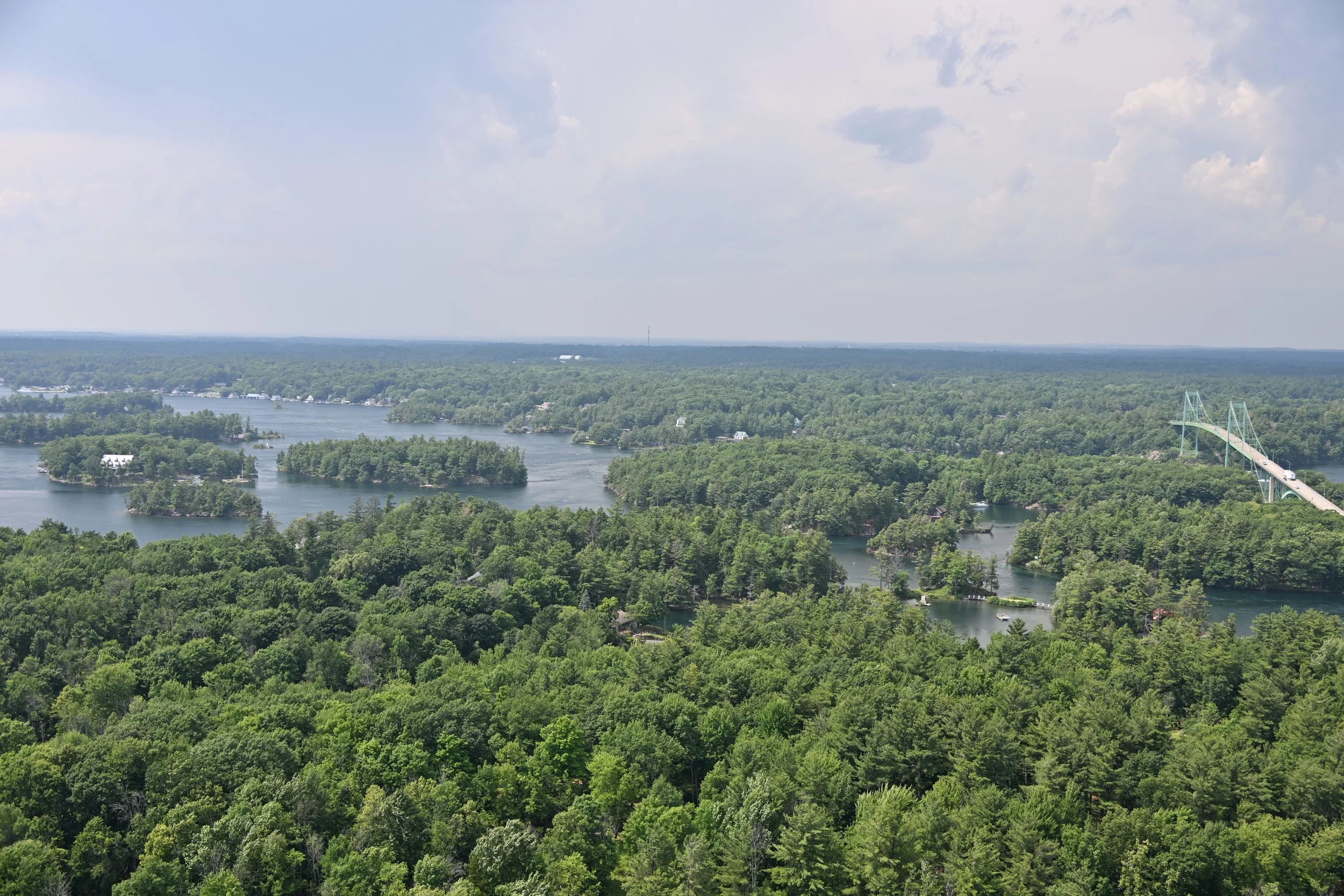
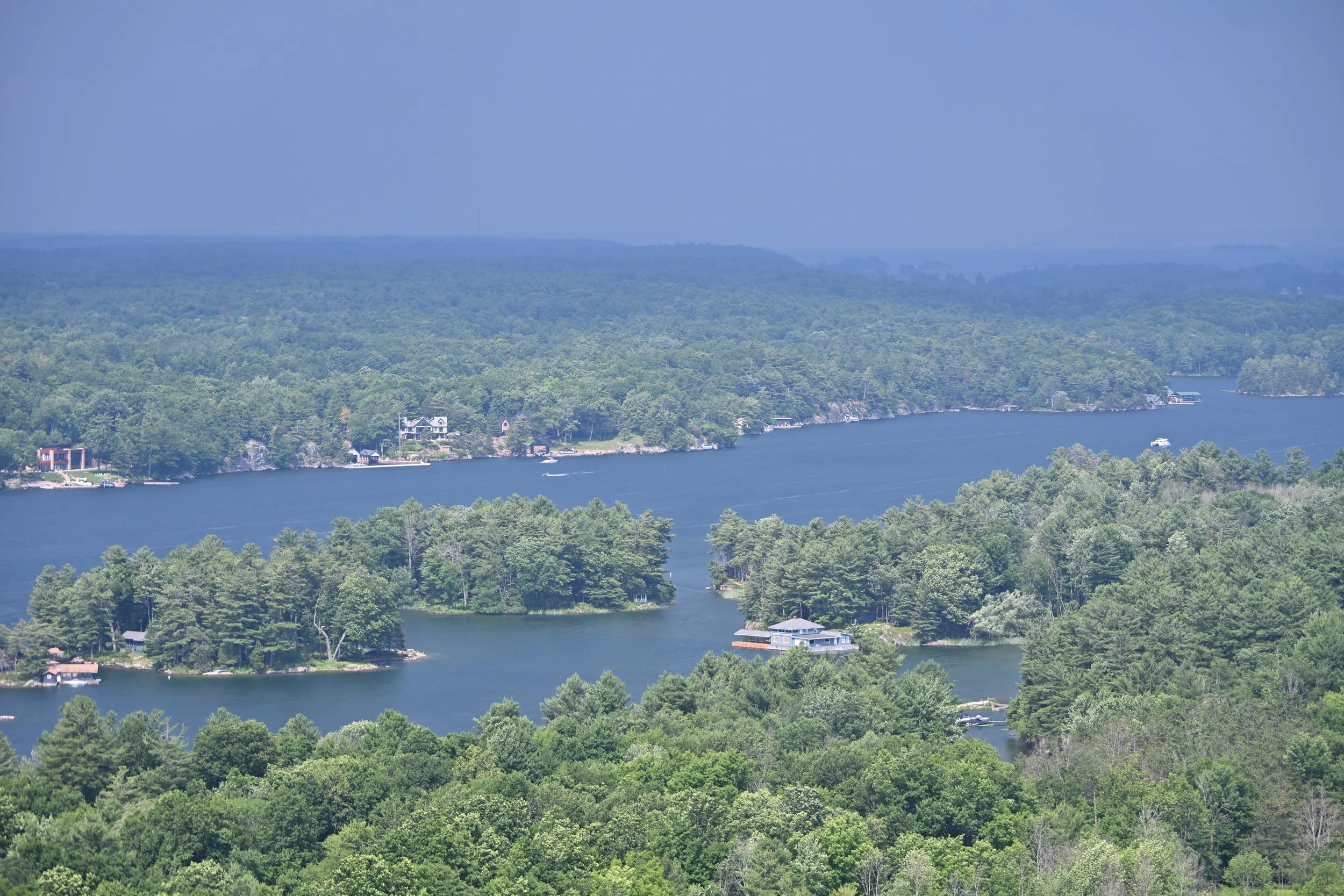
We had a long day of driving when we left Quebec City. We stopped about 4 hours into it to go up in the Thousand Islands Tower. This was a very touristic thing to do, but it was pretty cool to get a bird’s eye view of this unique area on the US - Canadian border.

These 1,864 islands scattered in the St. Lawrence River for about 50 miles was a fashionable retreat in the late 19th century.

Our goal for the day was to get to Ithaca, NY where we hung out for 3 days to relax, hike and wine taste. ;)

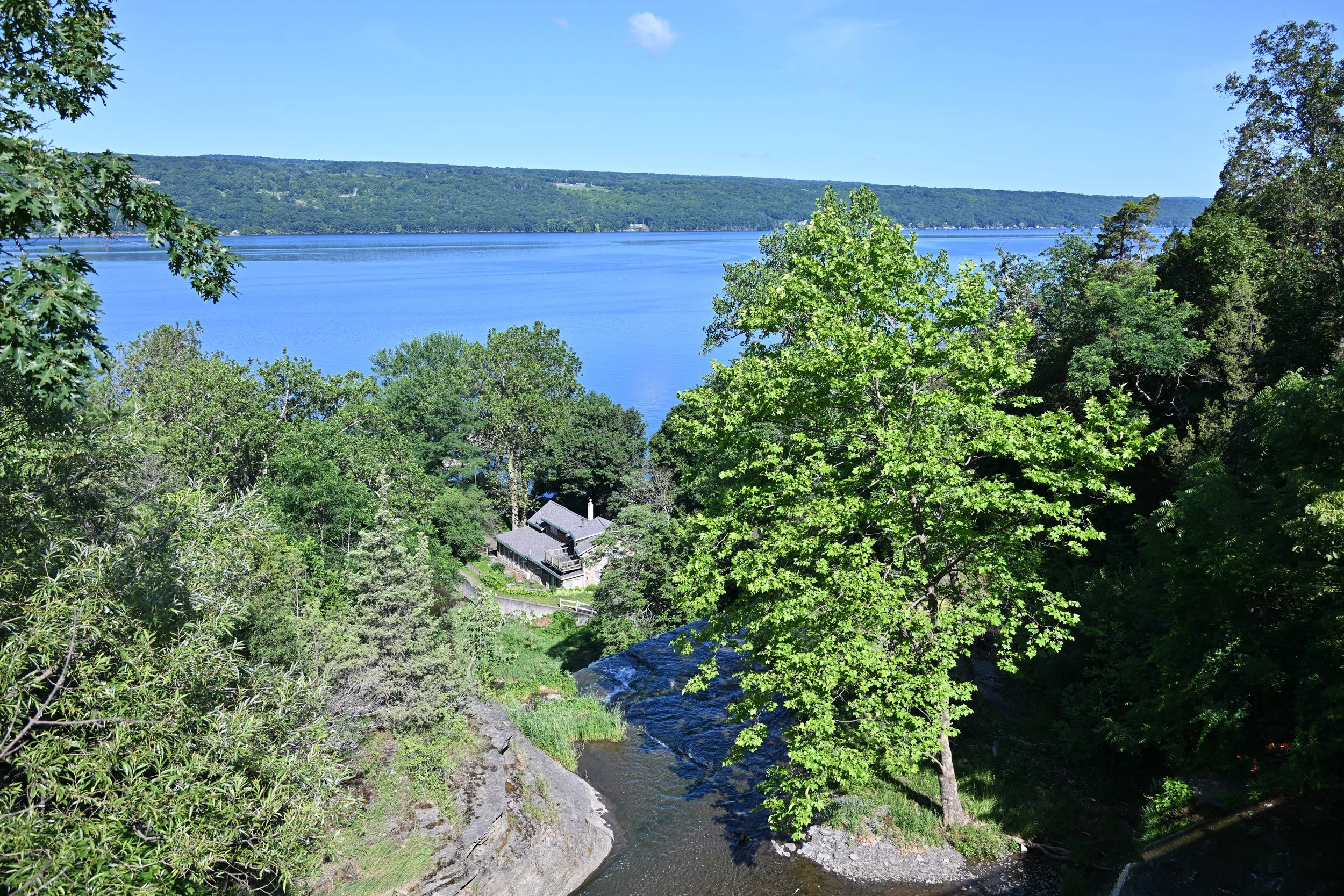
Ithaca sits at the southern end of Cayuga Lake, which is one of the Finger Lakes. If you look at a map of western NY, you’ll see why they are called ‘finger lakes’.

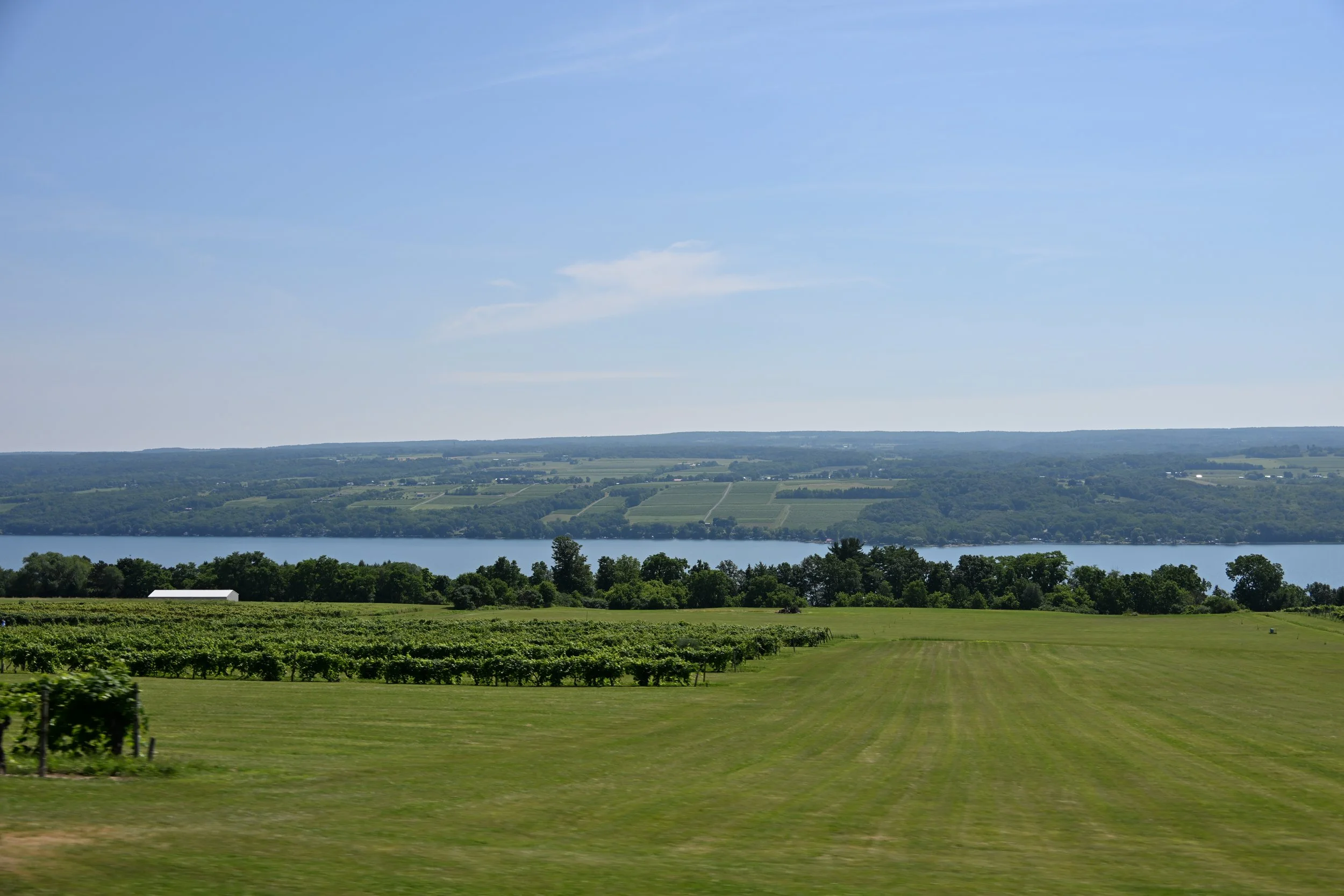
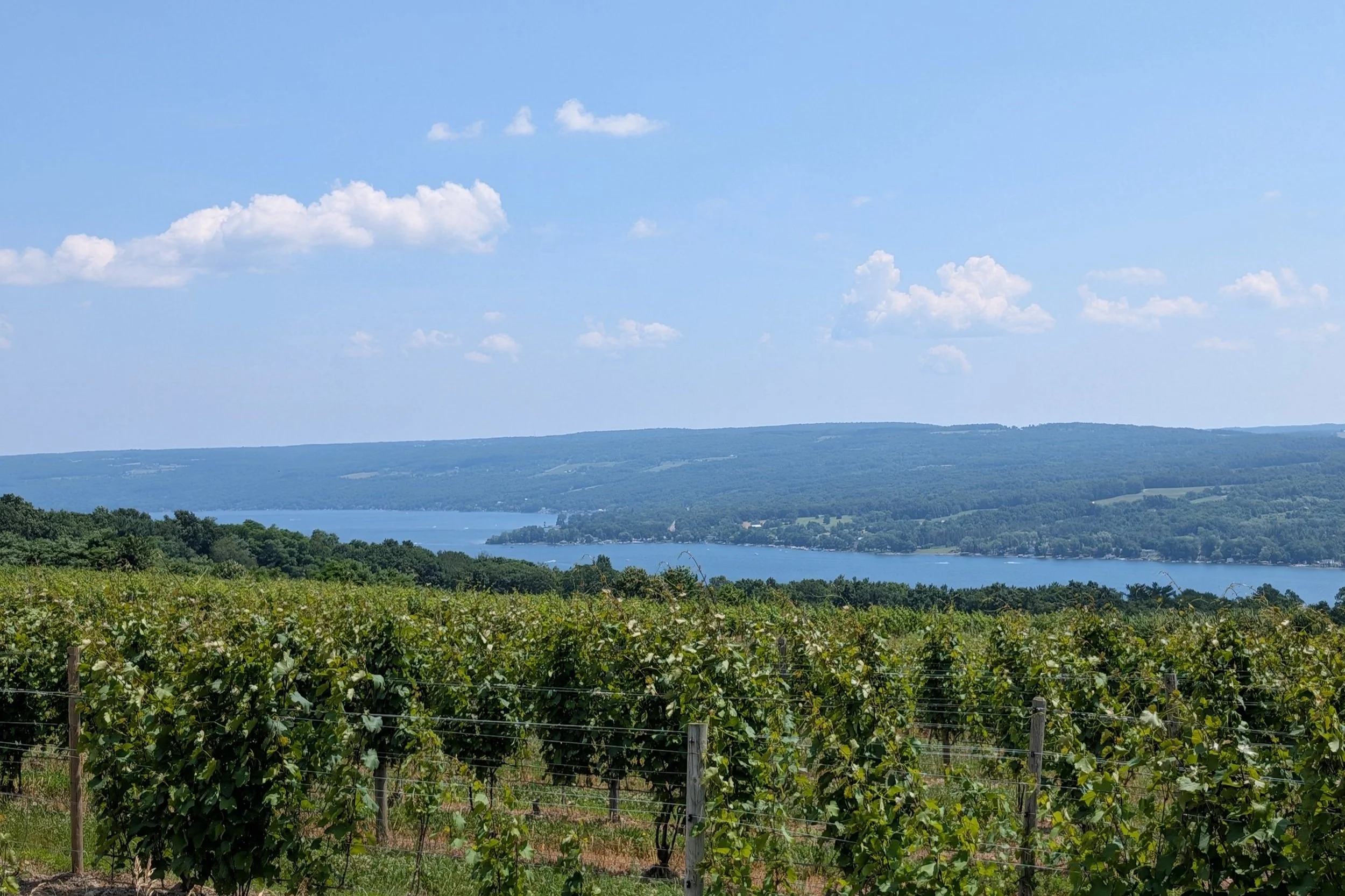
Both sides of most lakes are lined with vineyards, and we did our fair share of tasting at various vineyards in the area. They definitely specialize in white wines, and we bought several bottles to enjoy this summer.

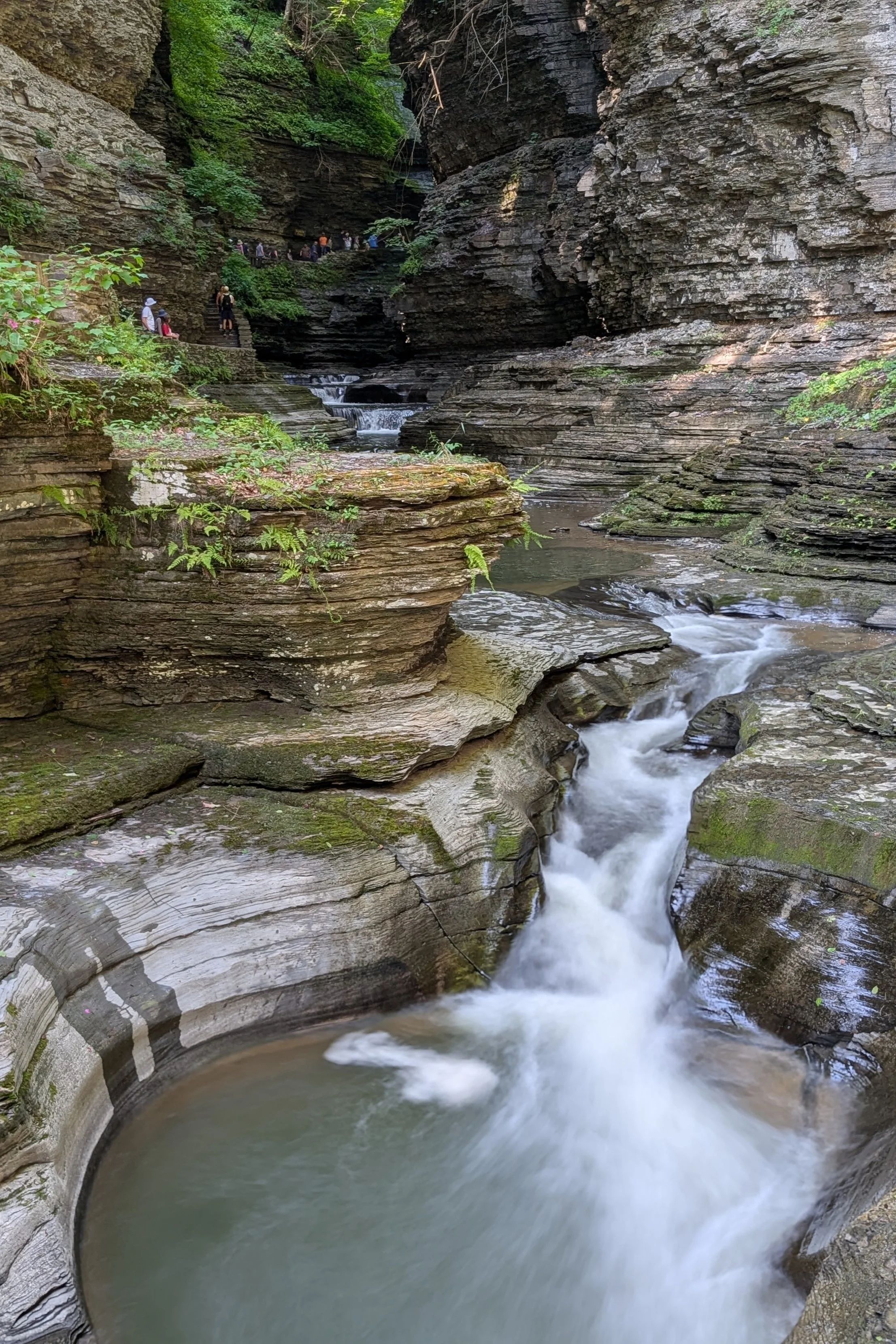
My favorite hike in this area was at Watkins Glen.

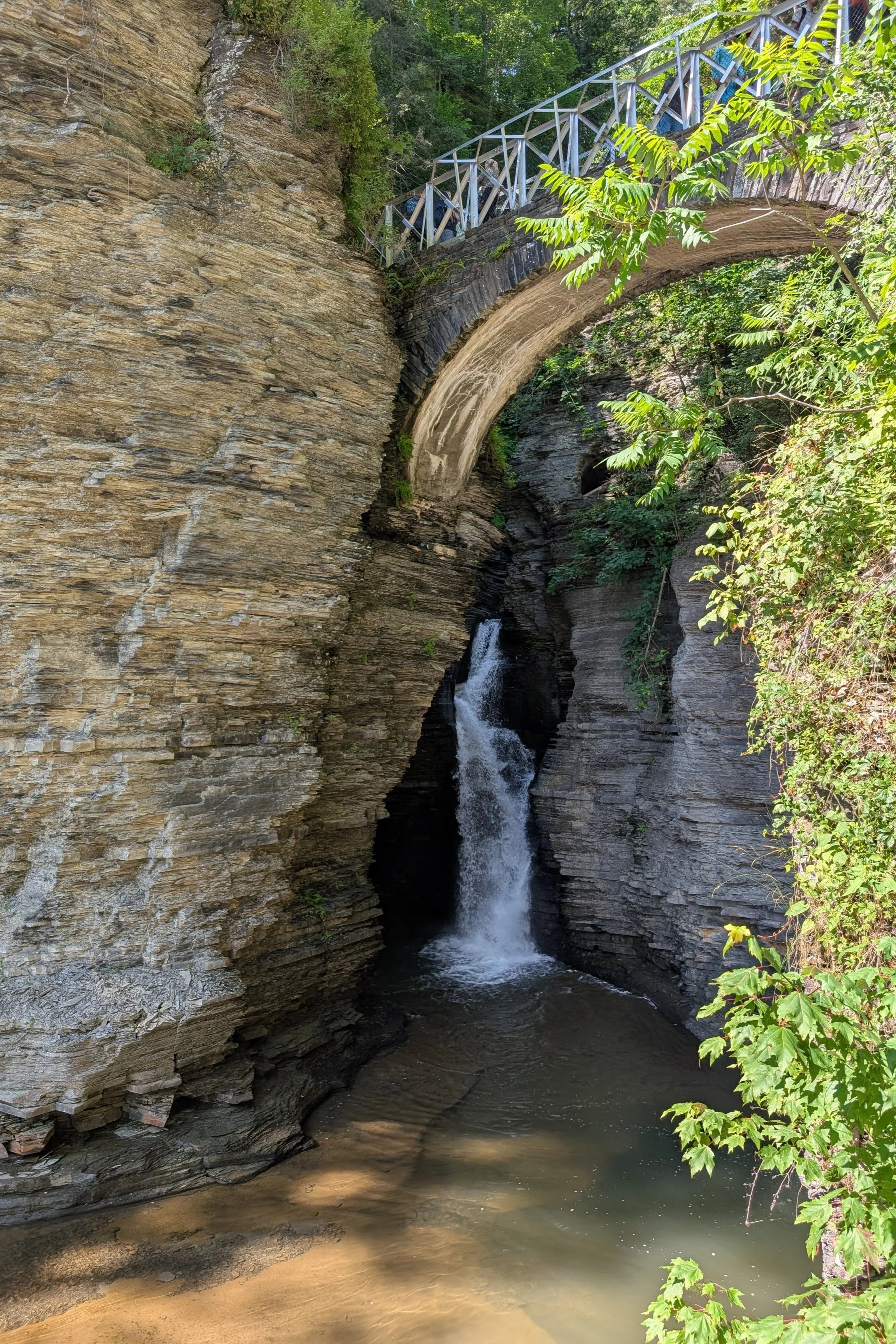
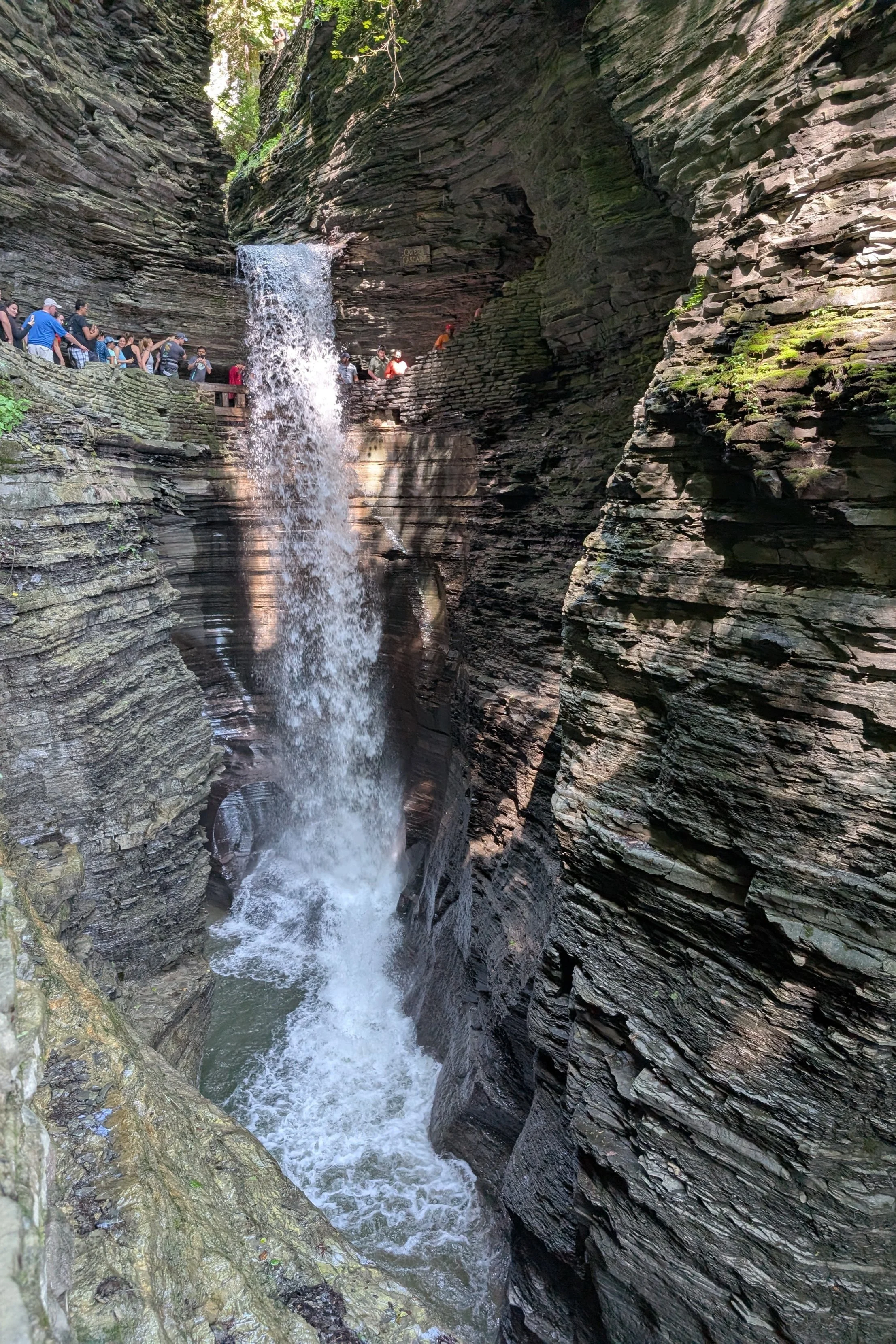
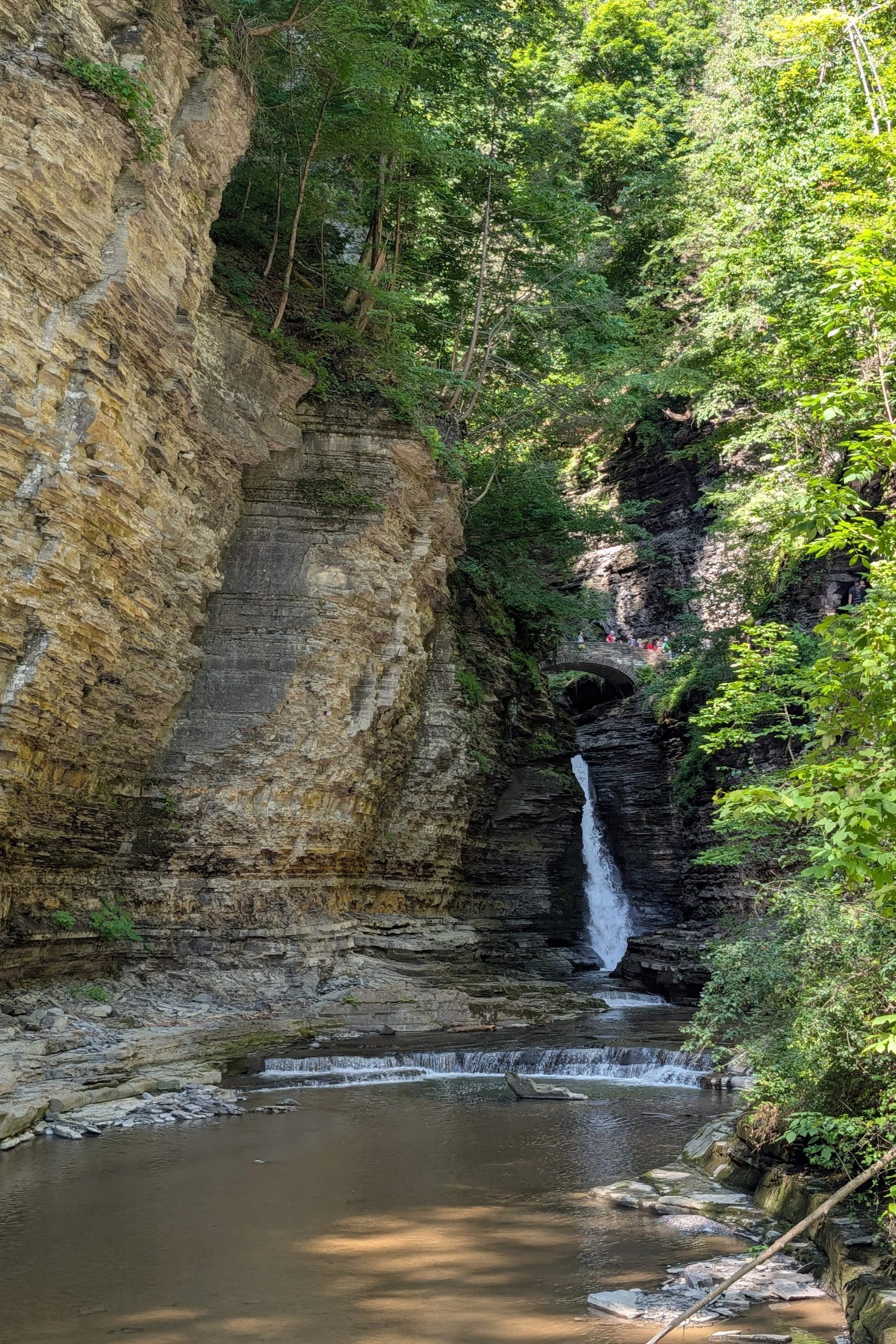
There were numerous waterfalls…

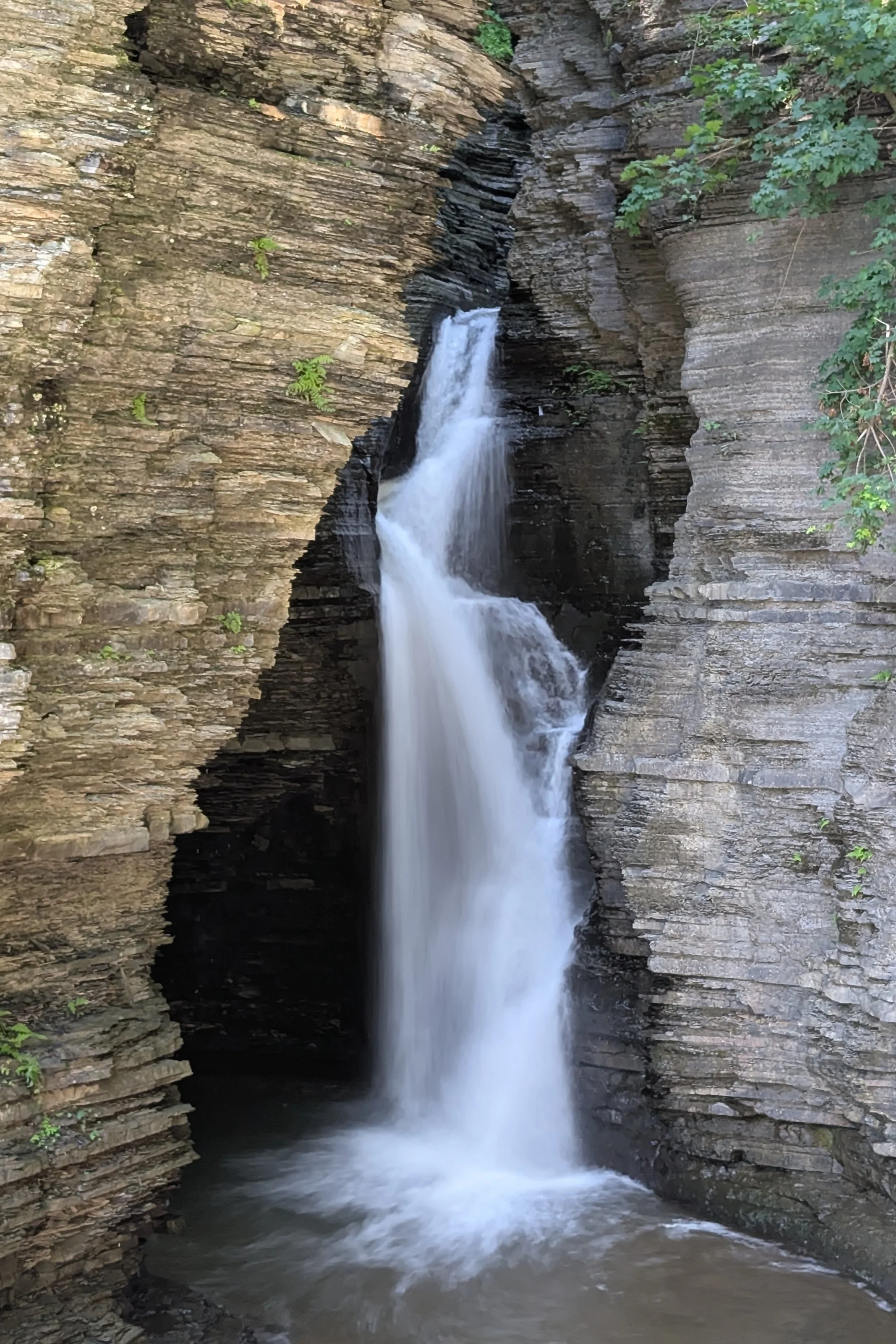
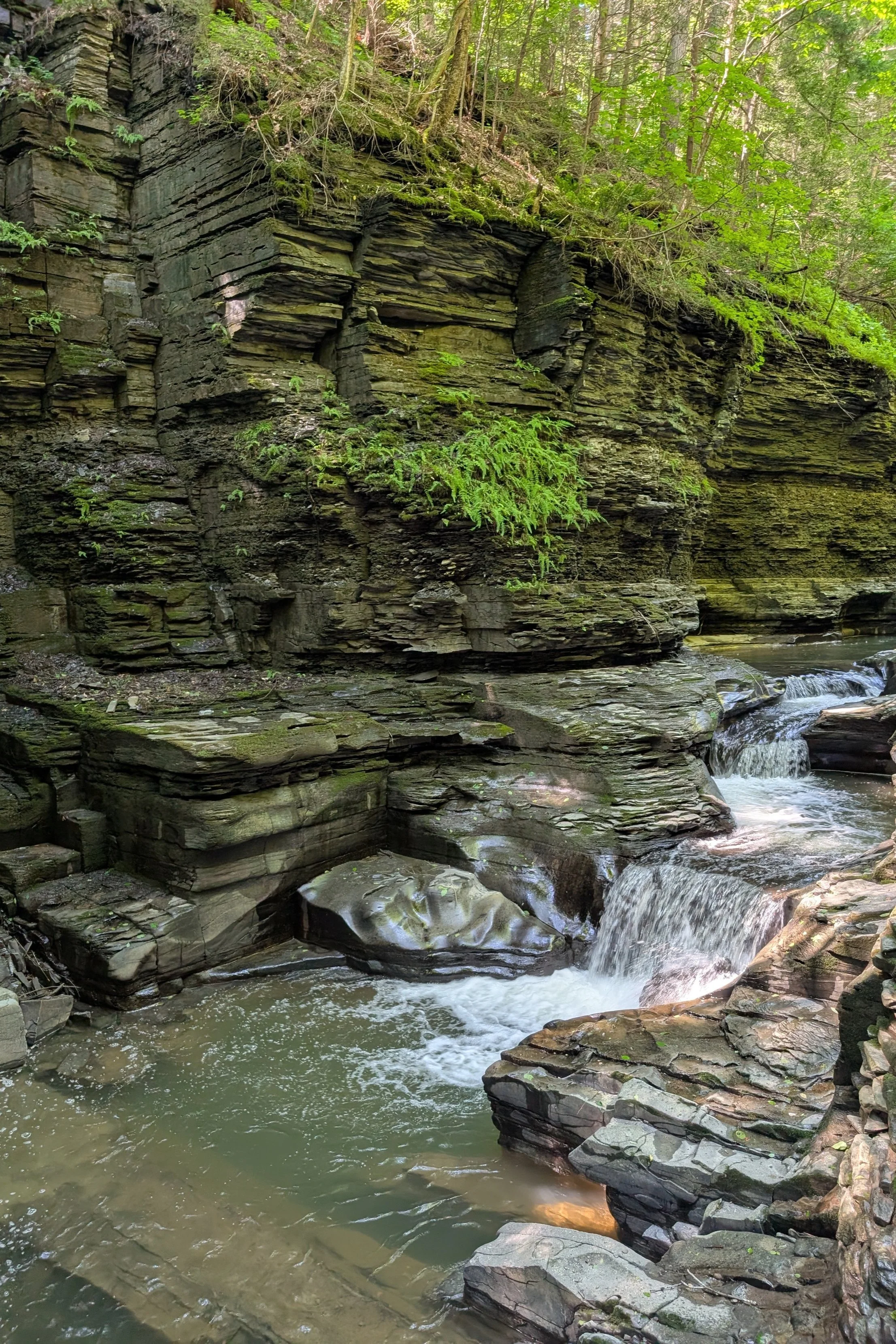
… with this one near the beginning of the hike being a favorite, because you can easily see the surrounding rock layers, and not have mobs of people in the way.

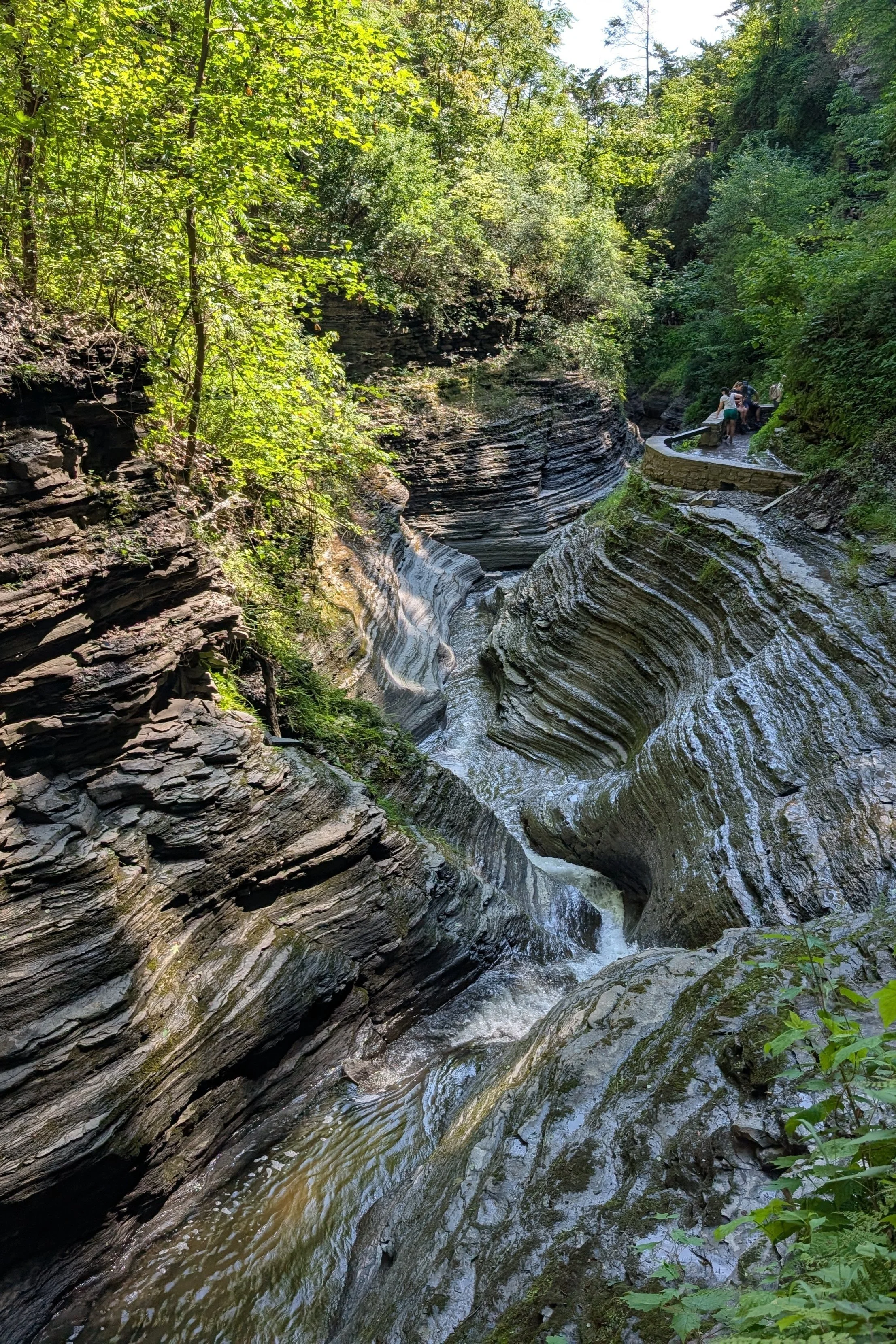
The gorgeous carving the water has done in the walls was extraordinary. Unfortunately, the best day for us to visit Watkins Glen state park was on July 4.

We walked up the gorge about a mile and a half…

… with constantly changing views…

… and bottlenecks…

Steve chafed at having to snake along in a long line of people, but I really enjoyed all the views -

When we reached the end of the gorge…

… we returned back to our car via the Rim Trail, with hardly any other hikers.

We stopped by a few other waterfalls, but they had disappointing (summer) water flow. Lucifer Falls was in an impressive amphitheater -

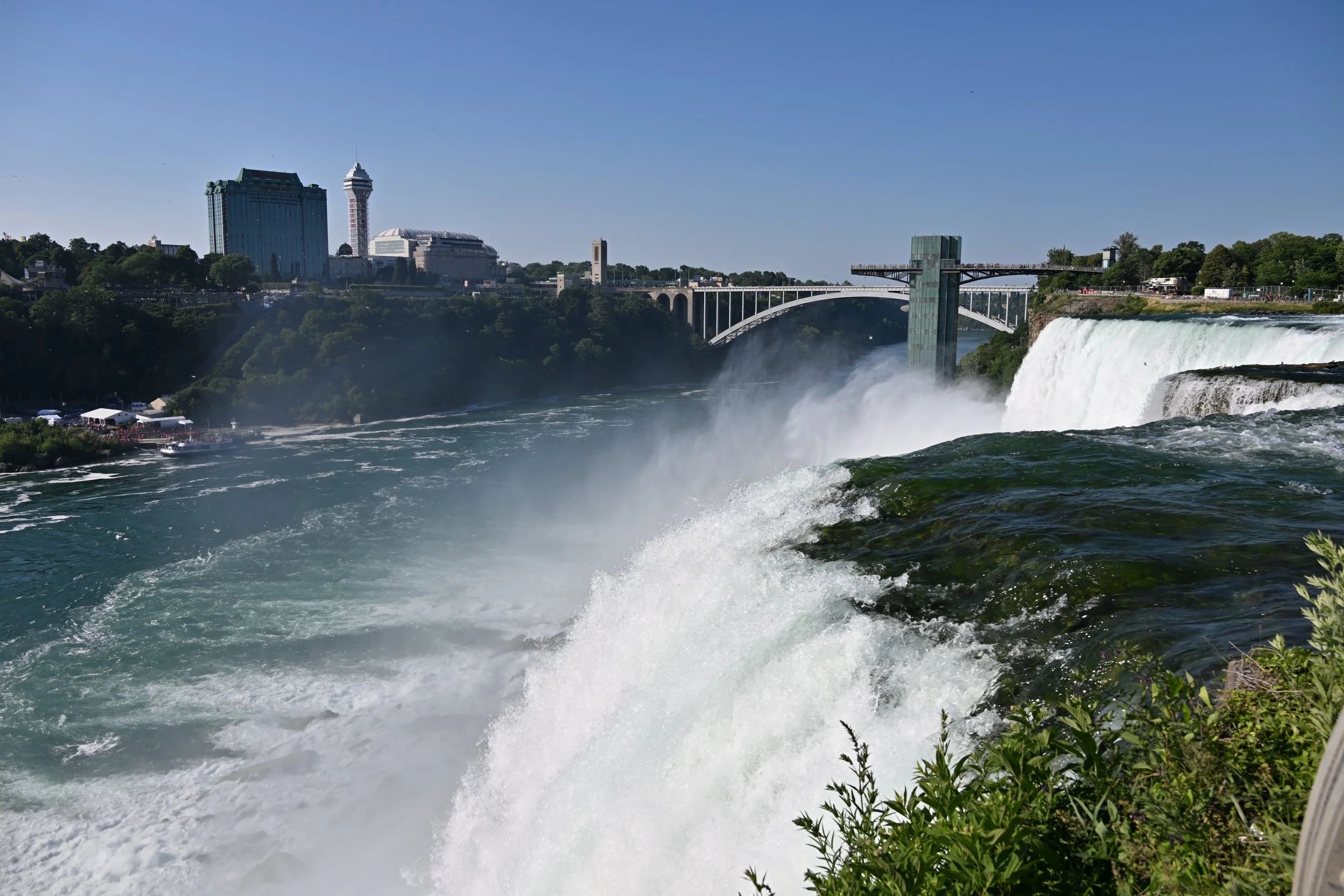
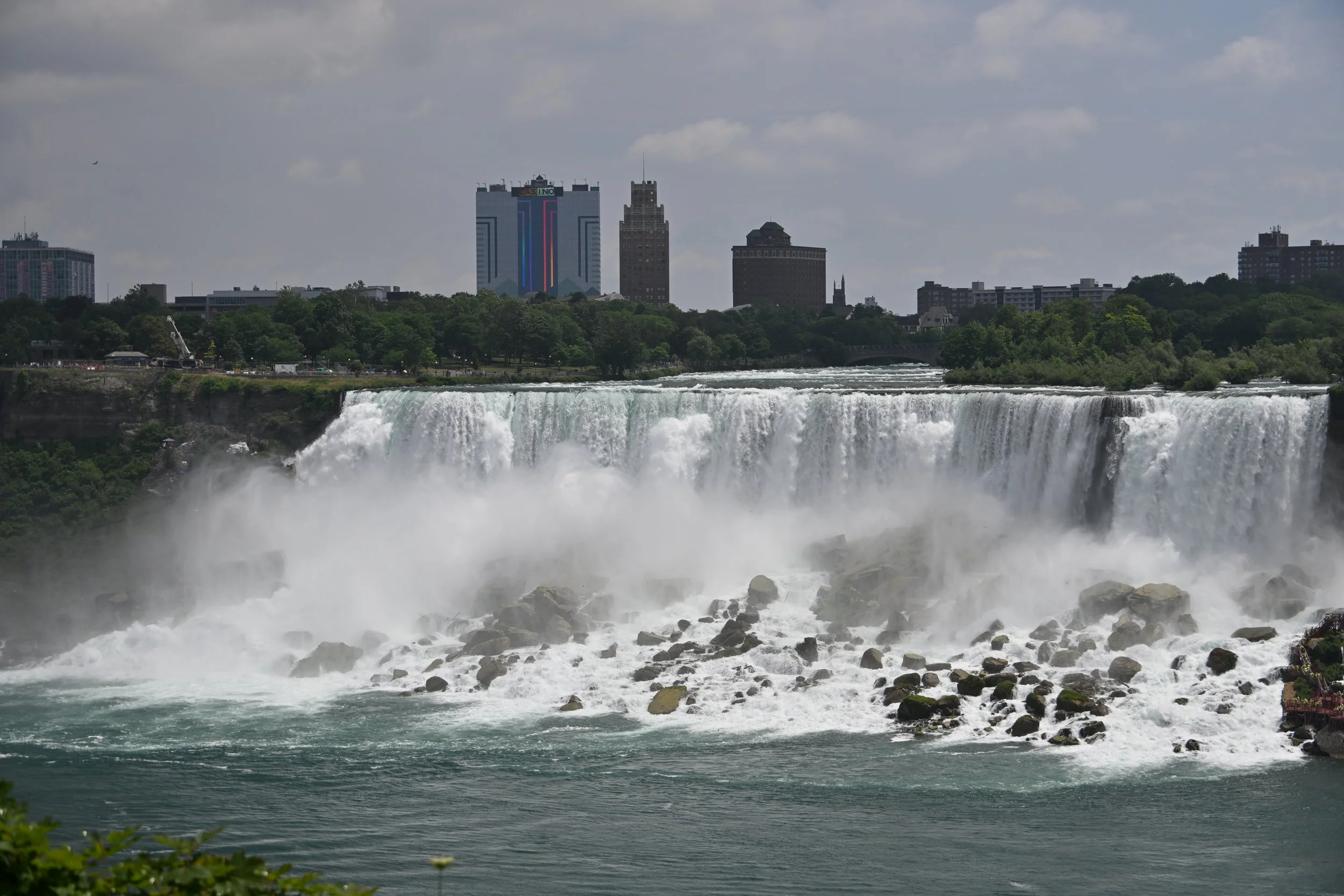
Our next stop was Niagara Falls. We first visited the American side…

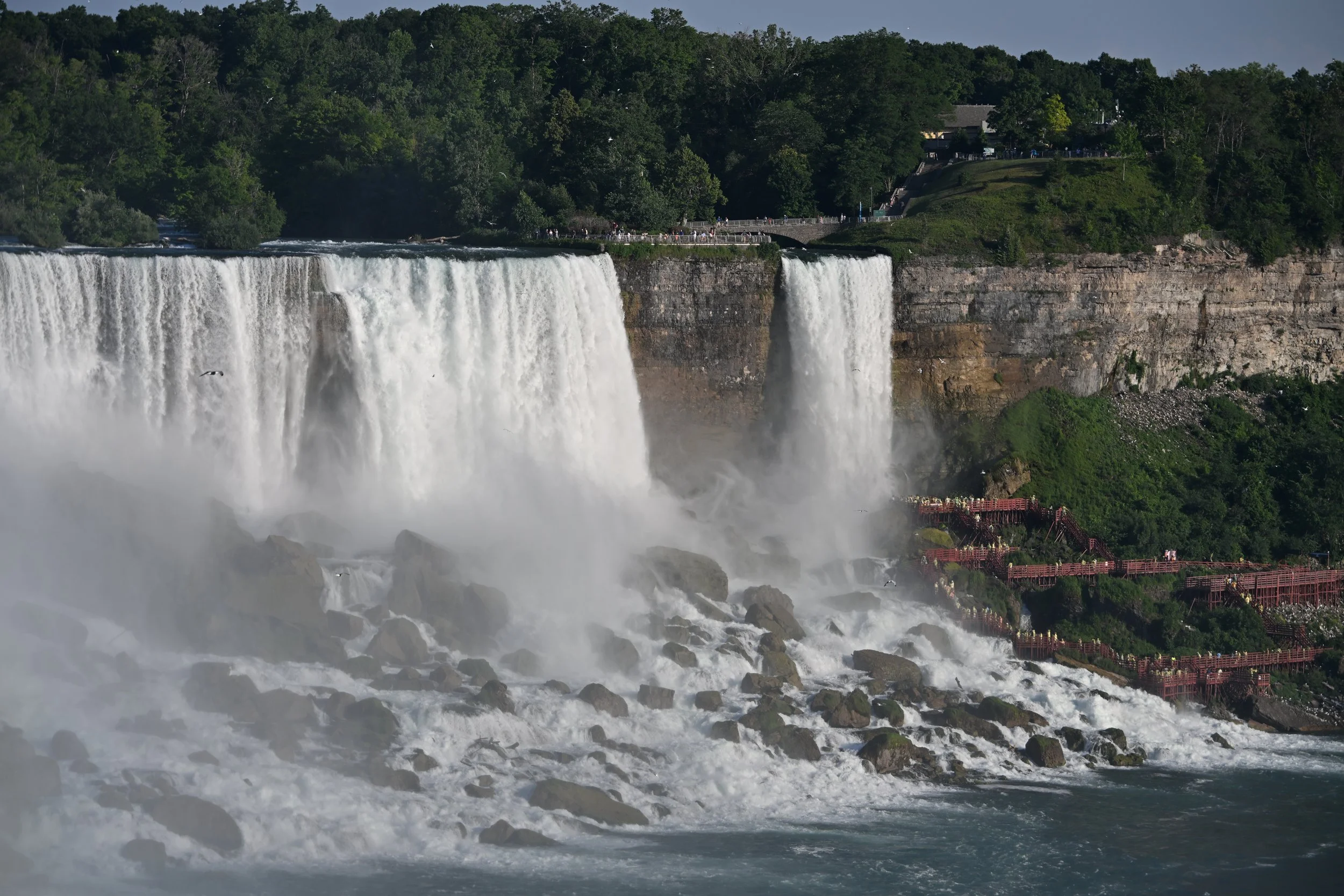
… where you can really appreciate the power and thunder of the falling water -

The picture above is of Horseshoe Falls, which was my favorite due to the scope and configuration, but it always had large amounts of spray, so was hard to photograph cleanly.

We walked across the Rainbow Bridge into Canada…

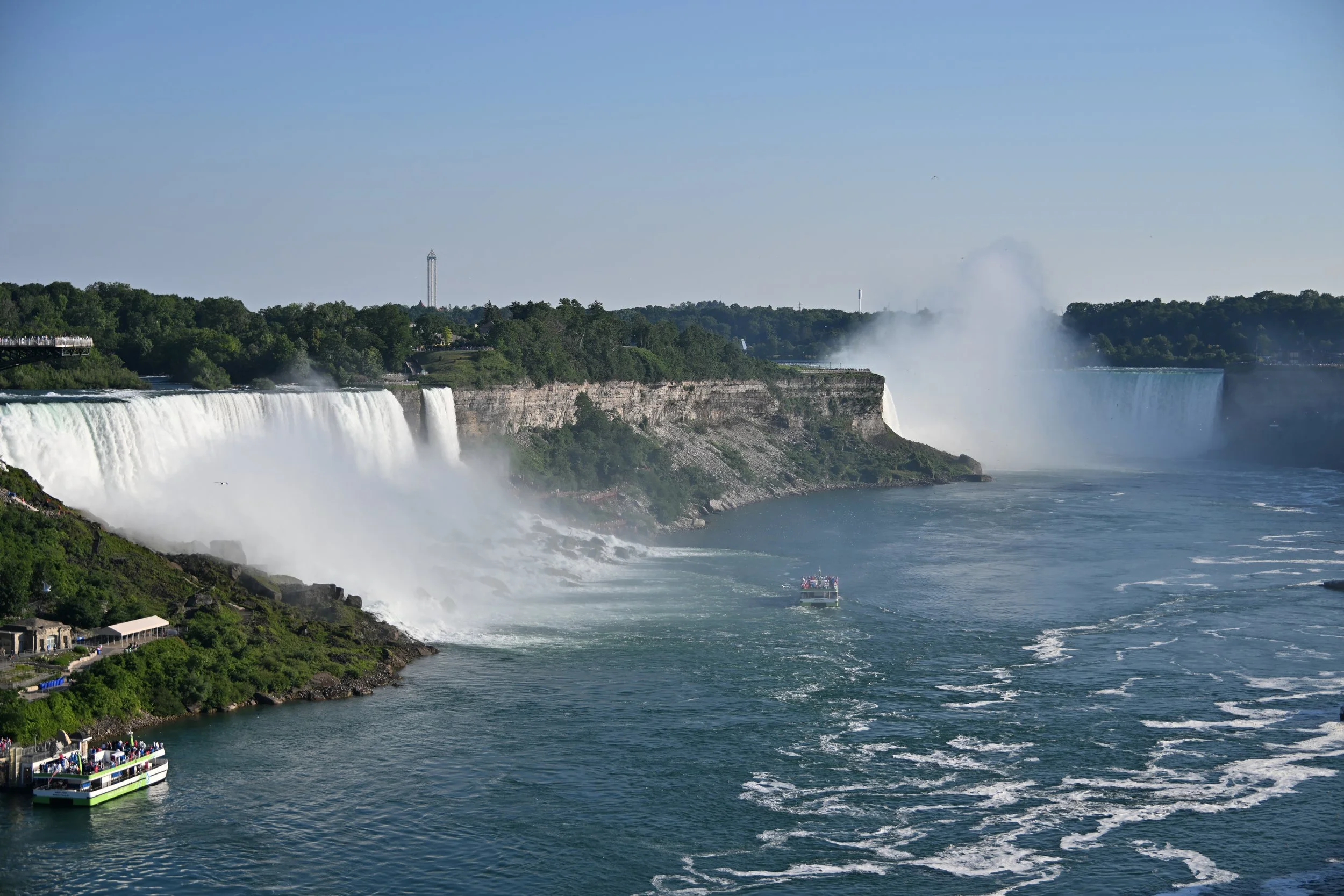
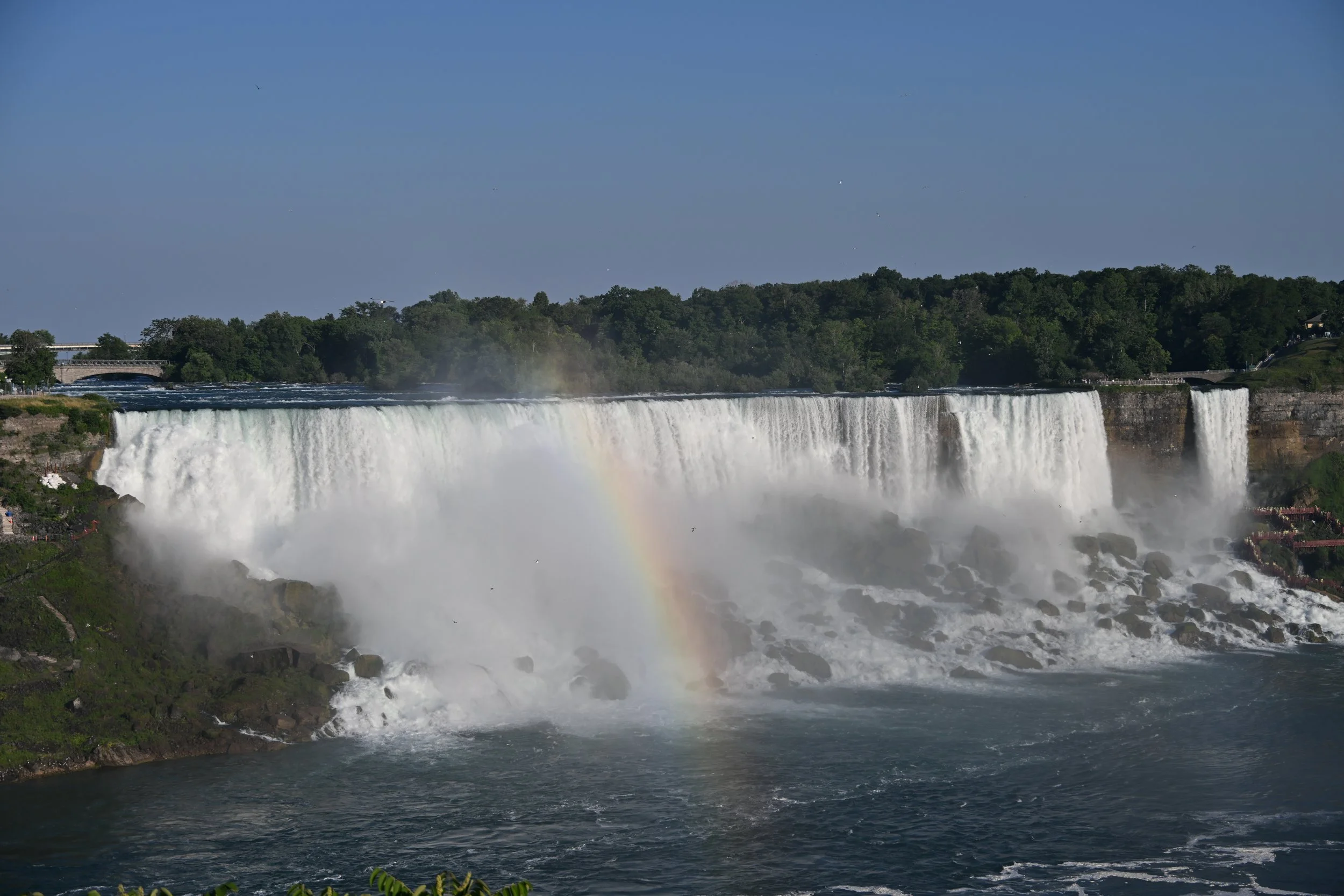
… and were able to get a panoramic view of the entire falls complex -

The American Falls is on the left, with Bridal Veil Falls as the small separate fall next to it, and in the background is Horseshoe (Canadian) Falls.

The people on the walkways are visiting the Cave of the Winds, getting soaked in the hurricane-force winds at the base of Bridal Veil Falls.

Walking along the Canadian side gives you the best views of all the falls…

… from numerous perspectives.

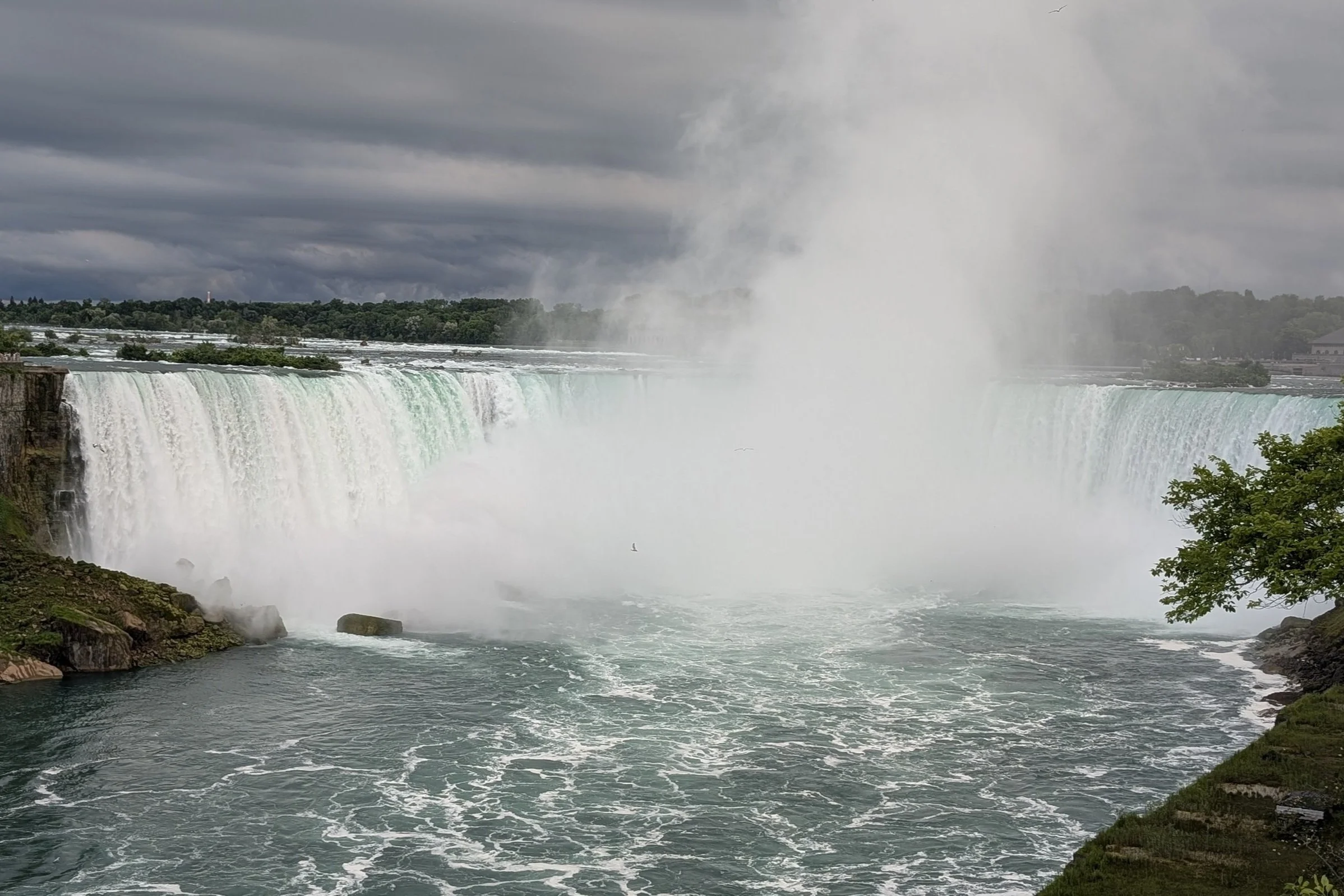
Steve got our best shot of Horseshoe Falls on our last day there, as the storm clouds were rolling in.

We visited a few wineries in Ontario near Niagara-on-the-Lake, specifically to sample their ice wines. I’ll bring this post to a close with a neat cloud formation -

New Brunswick & Québec

After returning to Nova Scotia, we drove northwest to head up along the east coast of New Brunswick. We stopped to visit Kouchibouguac NP and hike…

… near the coast…

… before heading inland to spend the night in Edmundston (on the northern border of Maine). I had a very enjoyable evening…

… with the reflections -

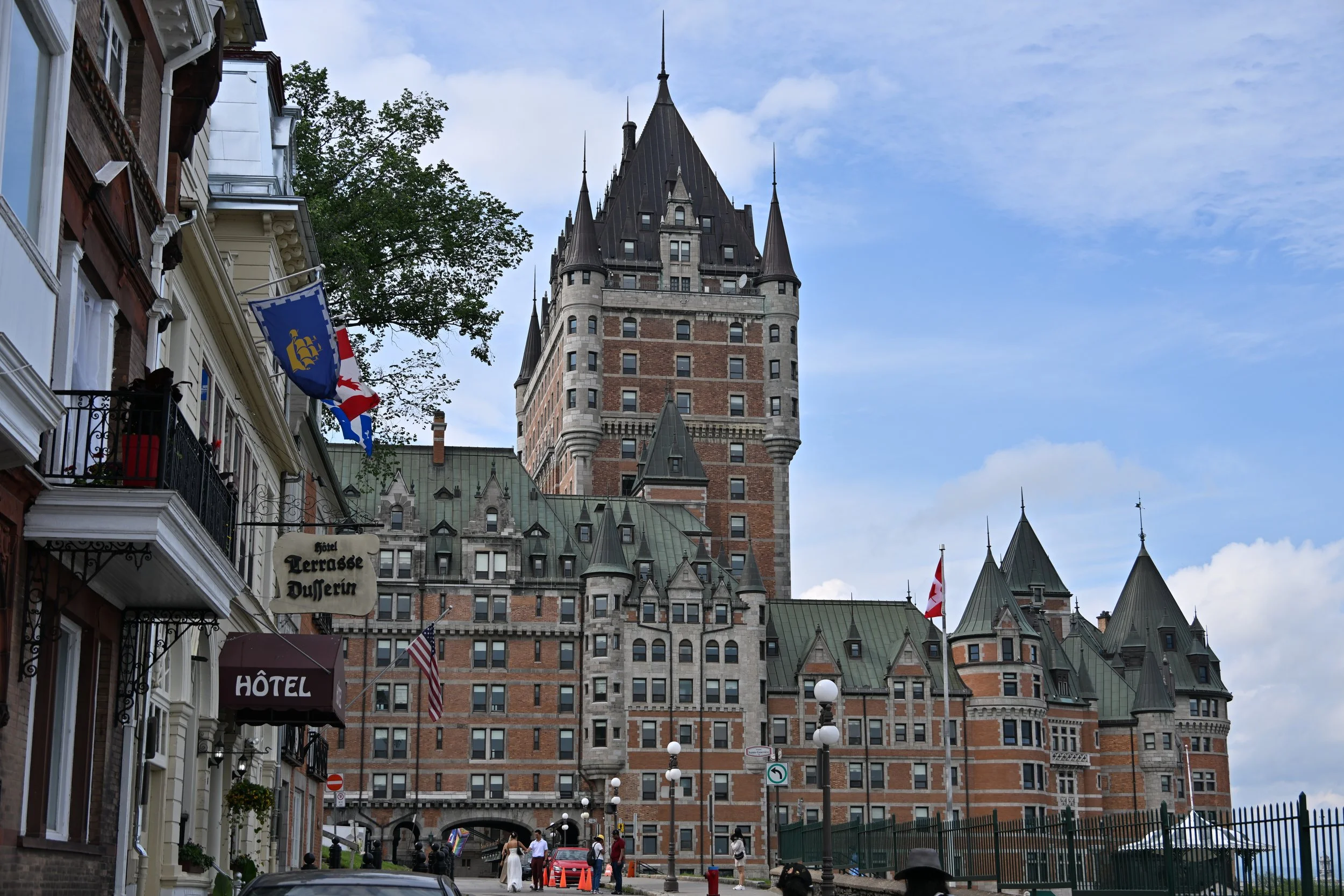
Our hotel in Quebec City was right in the heart of the Old City. We were only a couple of blocks from the impressive Chateau Frontenac Hotel…

… and I couldn’t stop taking pictures…

… from all angles -

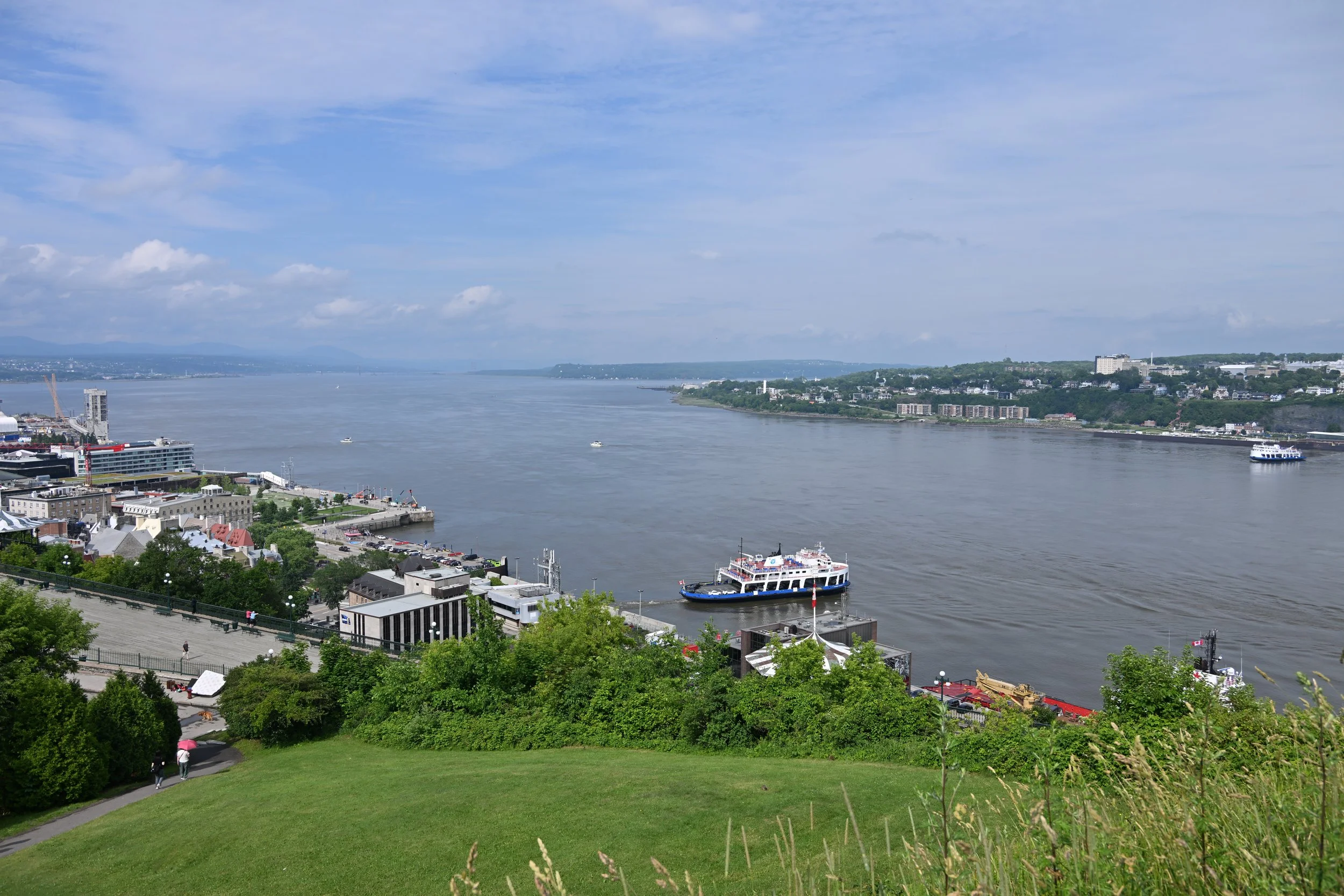
From the Citadel on the hill overlooking the city, we had a great view of the St. Lawrence River -

We didn’t take a tour of the Citadel, but did wander for miles…

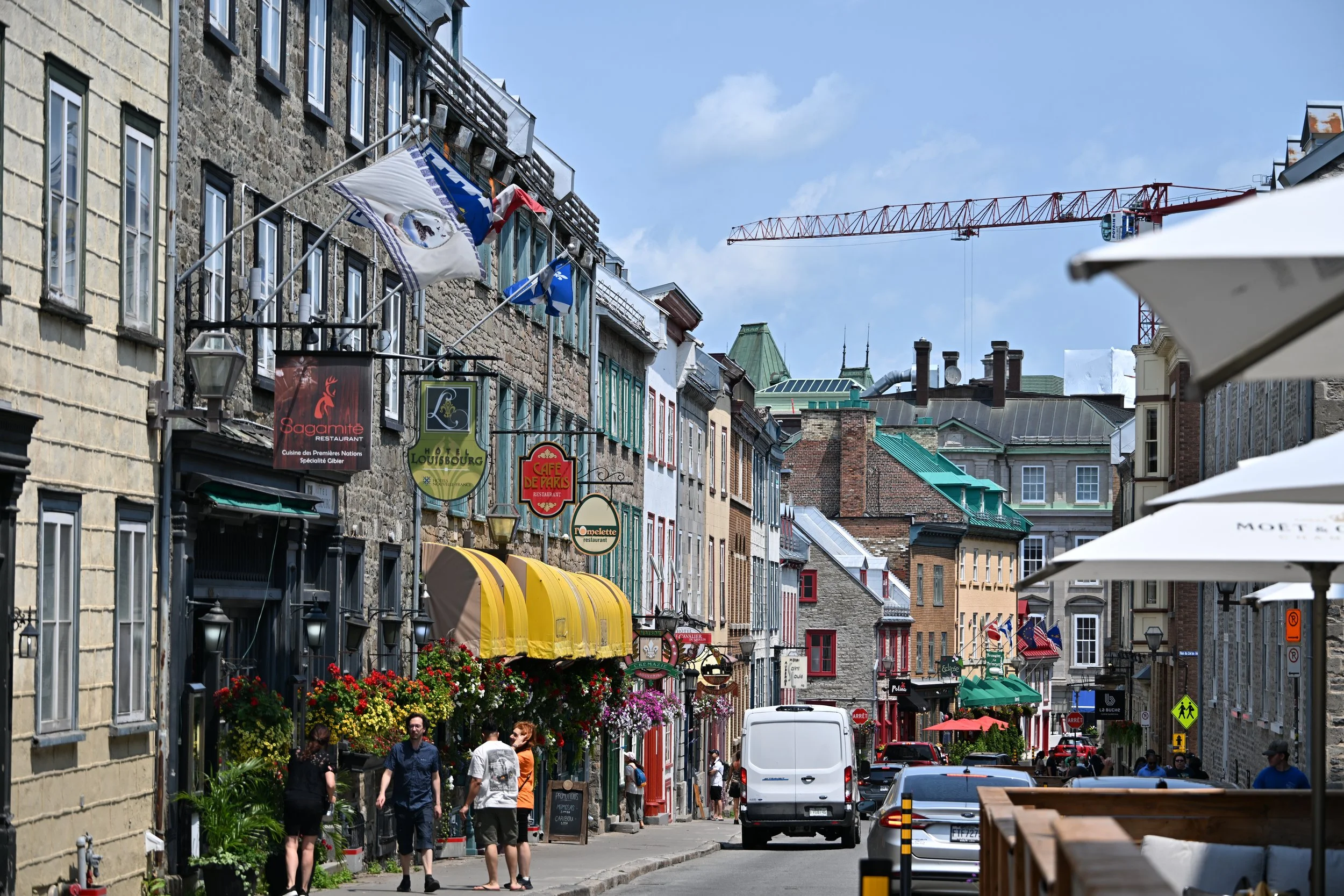
Rue Saint-Louis

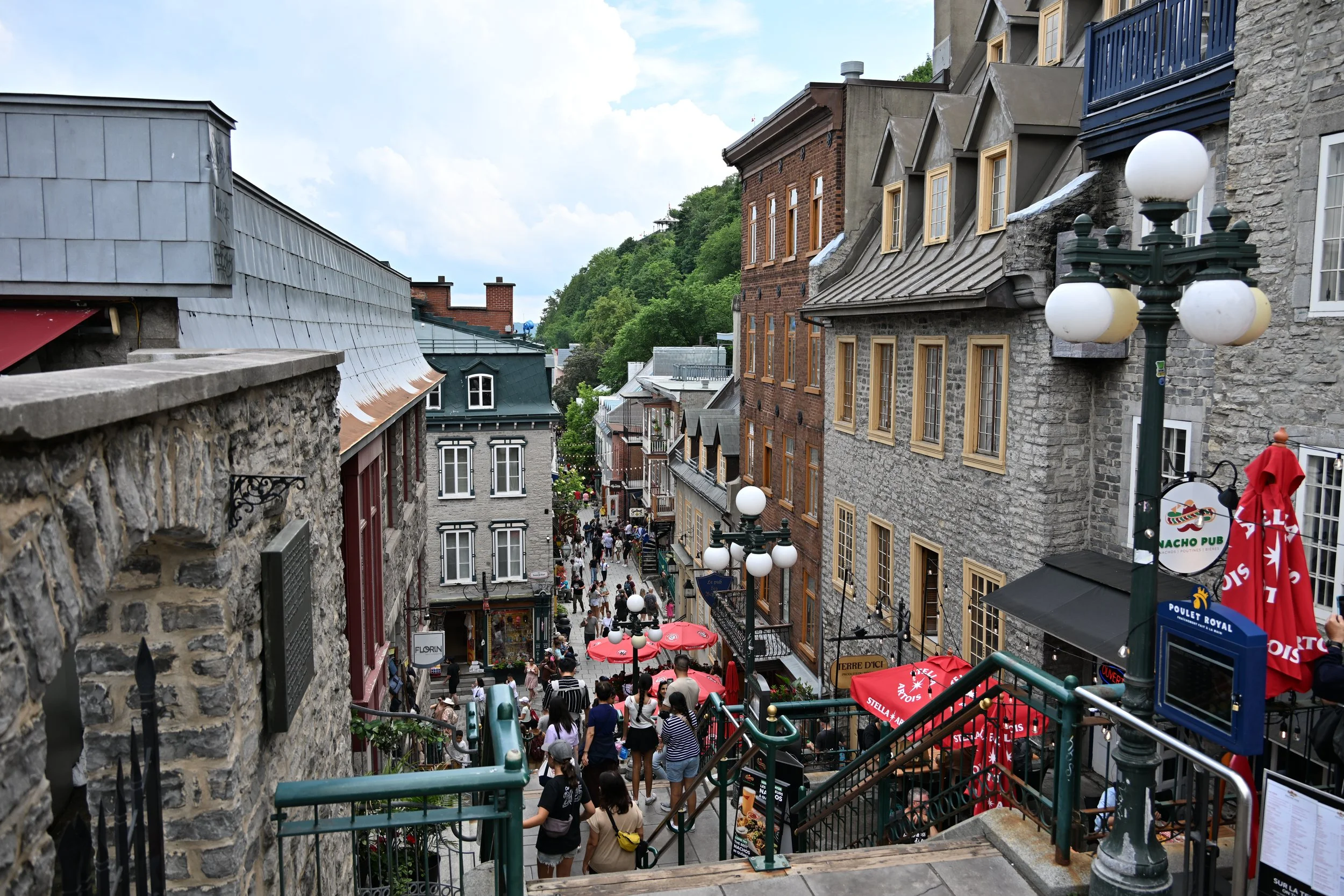
… through the old streets…

Rue du Petit-Champlain

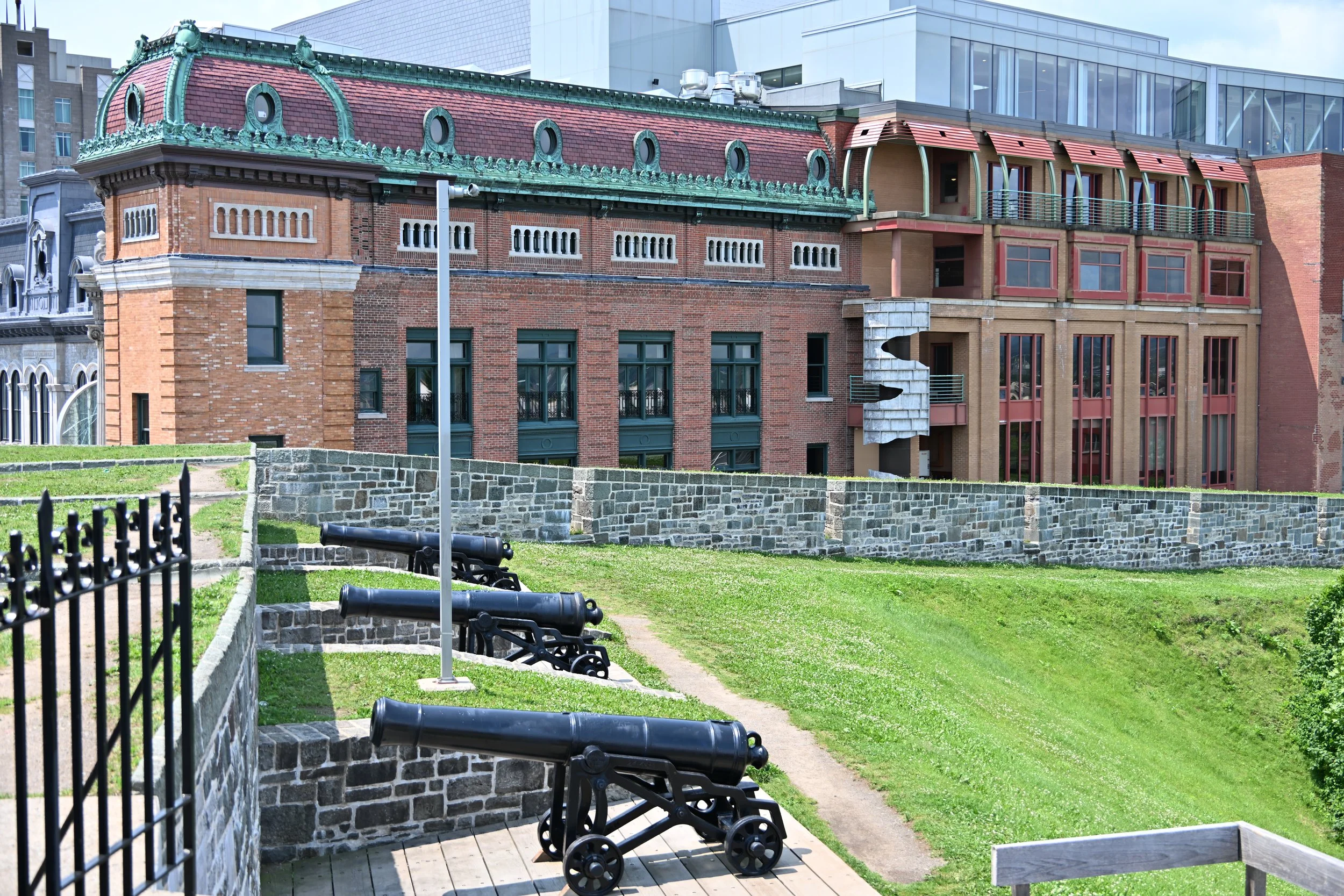
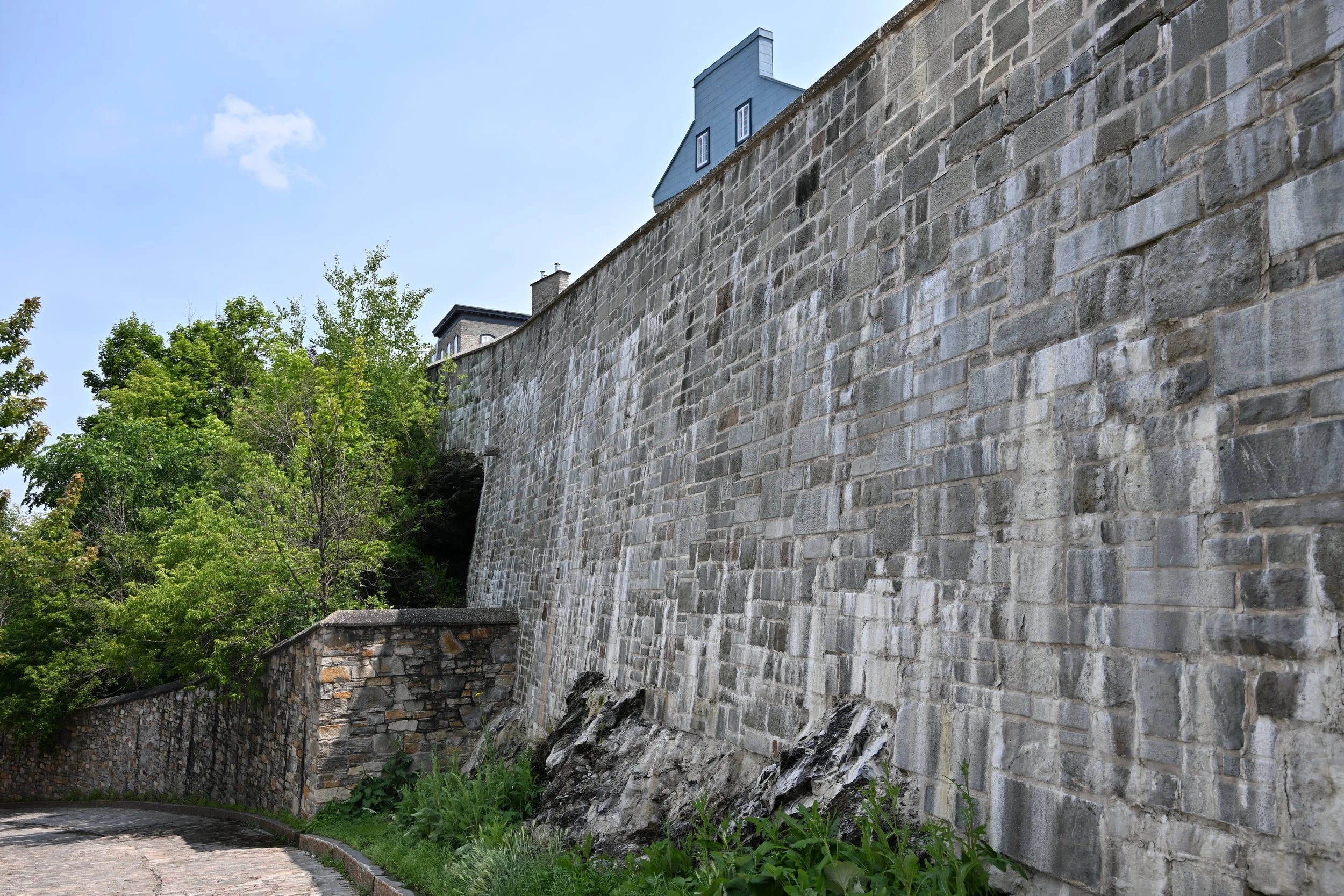
… admiring the restored city walls…

… and the juxtaposition of old and new -

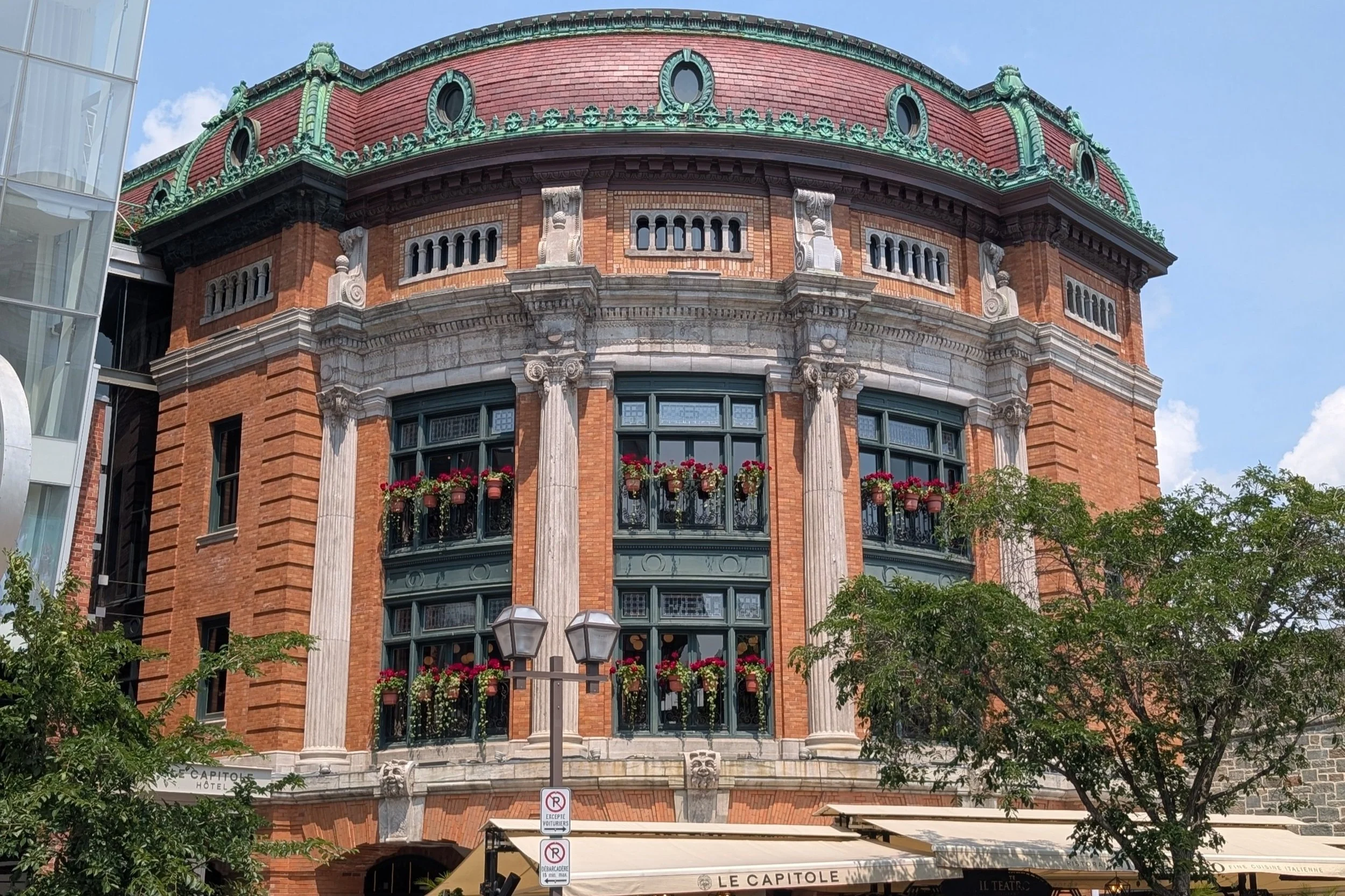
I fell in love with Le Capitole, which started life as a theater, and is now a hotel -

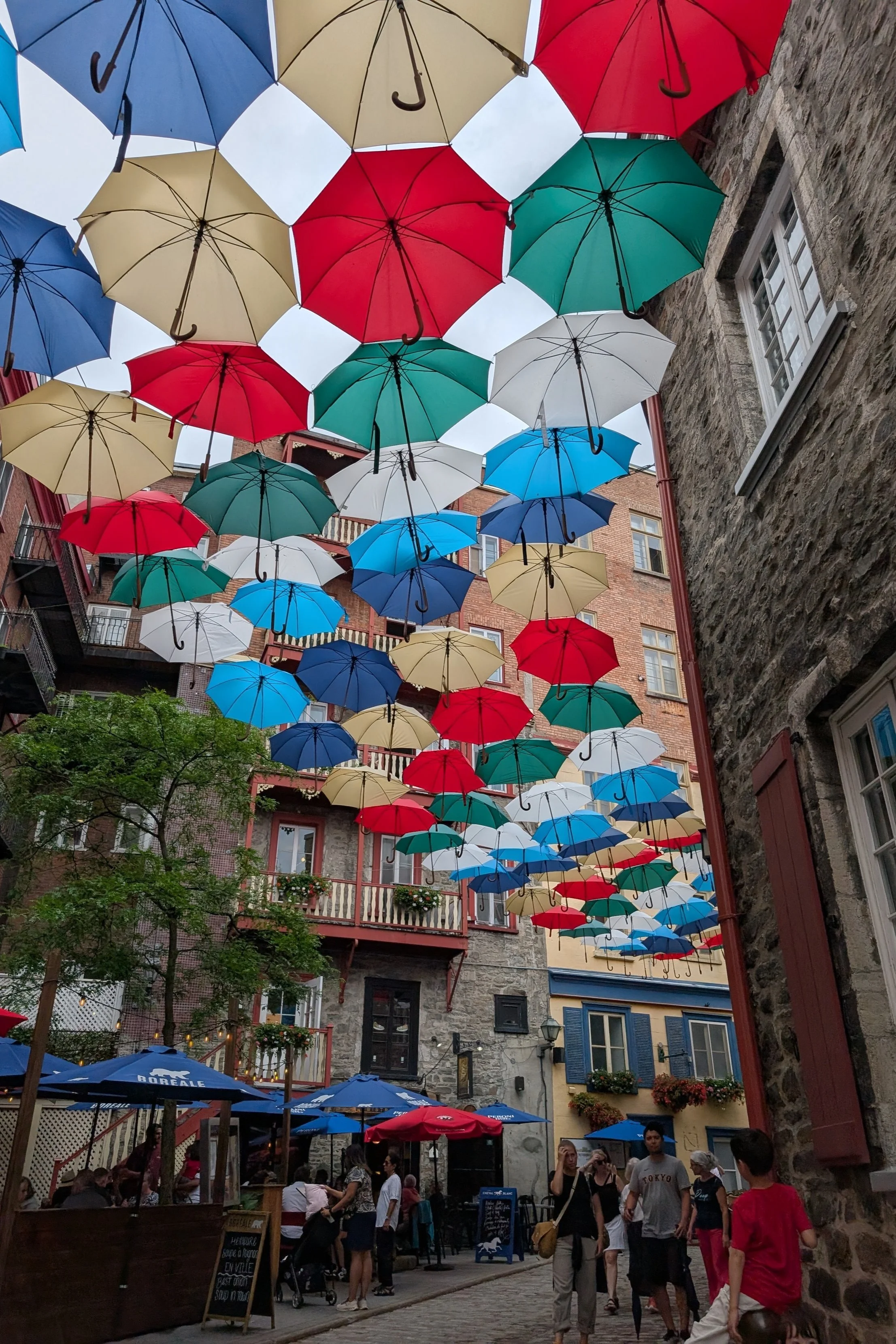
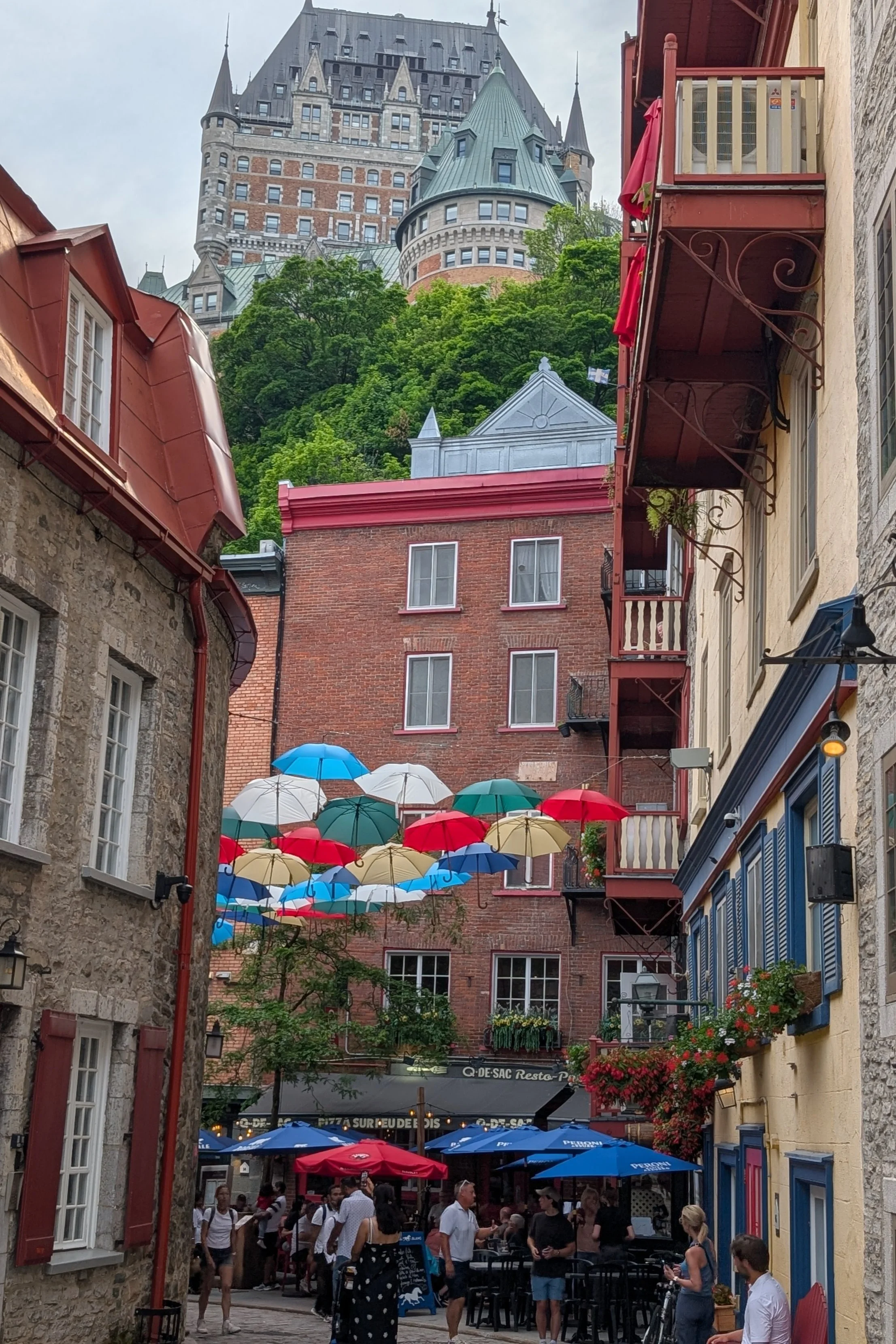
After I found a blog that featured “the 15 prettiest streets in Old Quebec,” I was off on a scavenger hunt. I was led to Rue du Cul-de-Sac…

… with the Chateau Frontenac looming over it…

… to the old city walls…

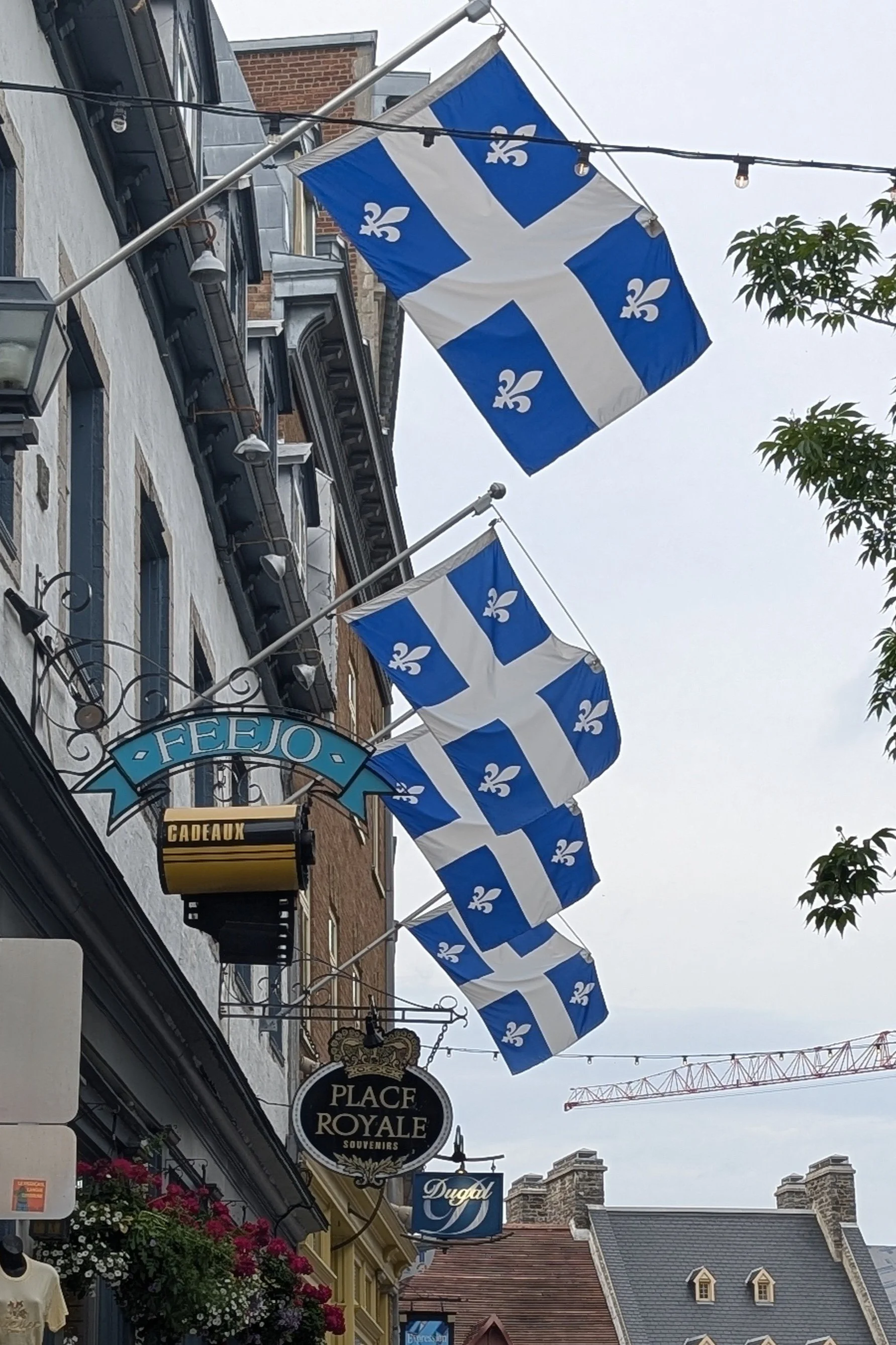
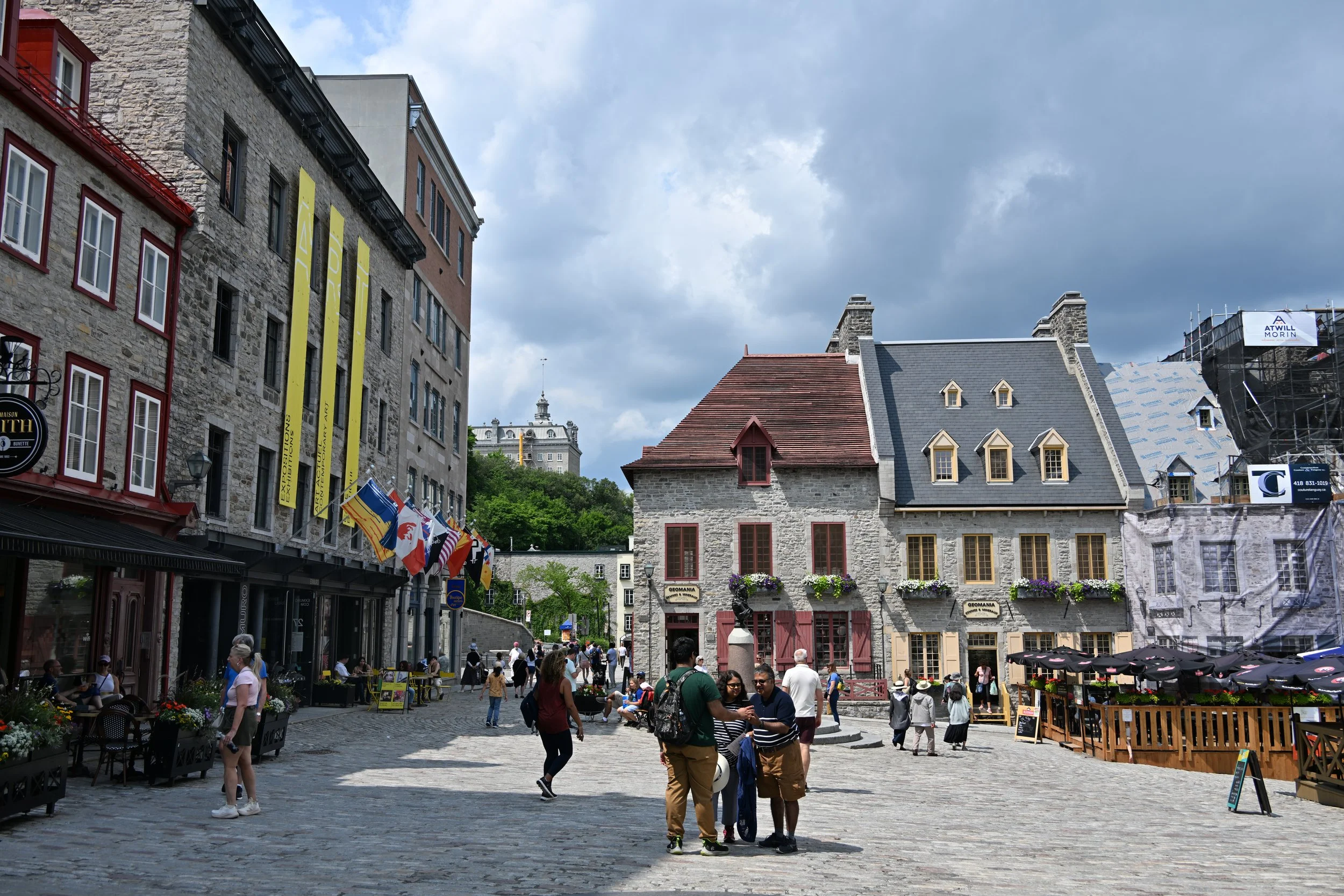
… and the Place Royale -

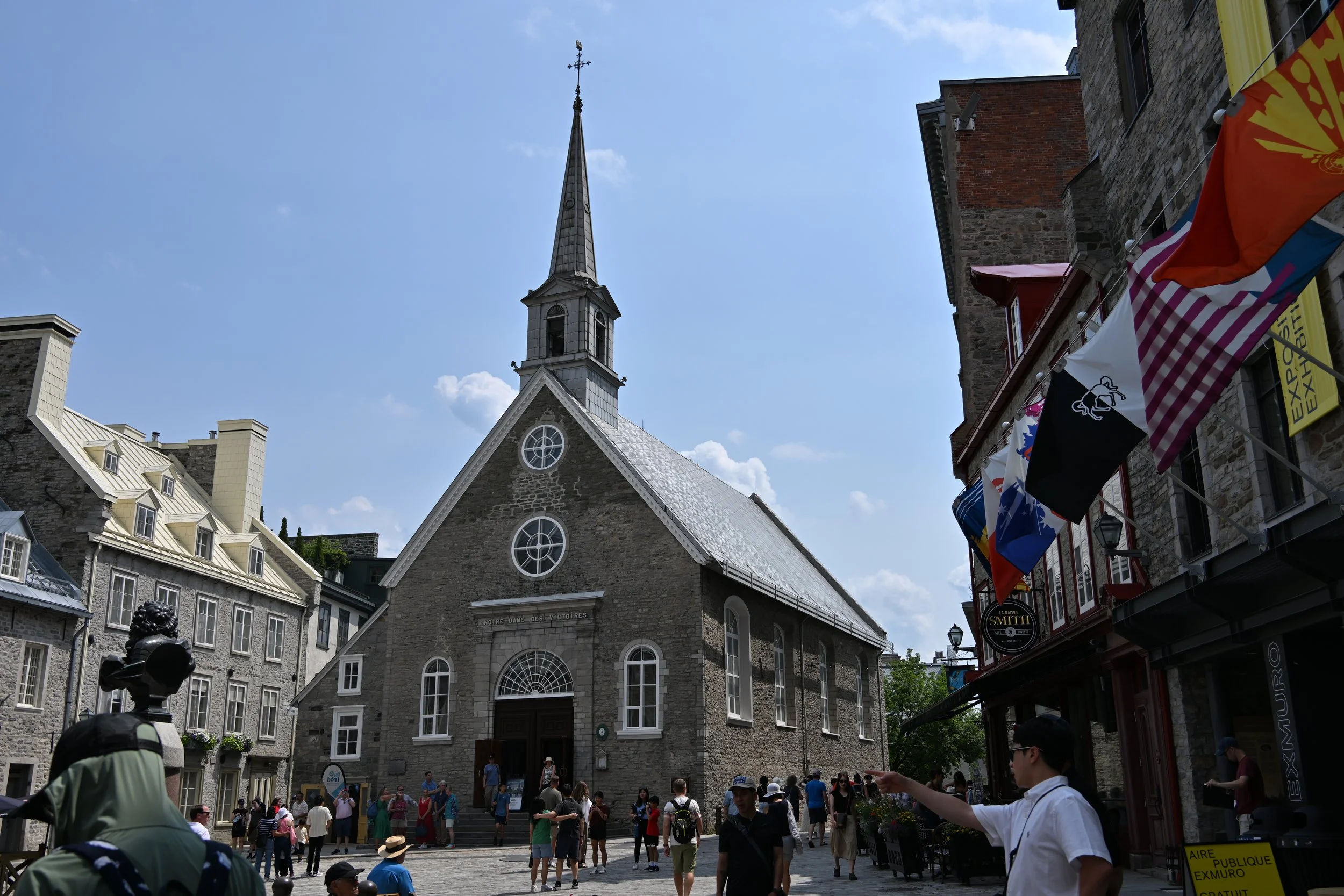
This is the square where Samuel de Champlain founded the city of Quebec in 1608. The oldest stone church in North America is here also (erected in 1688) …

Notre-Dame-des-Victoires

… with a very unique altarpiece -

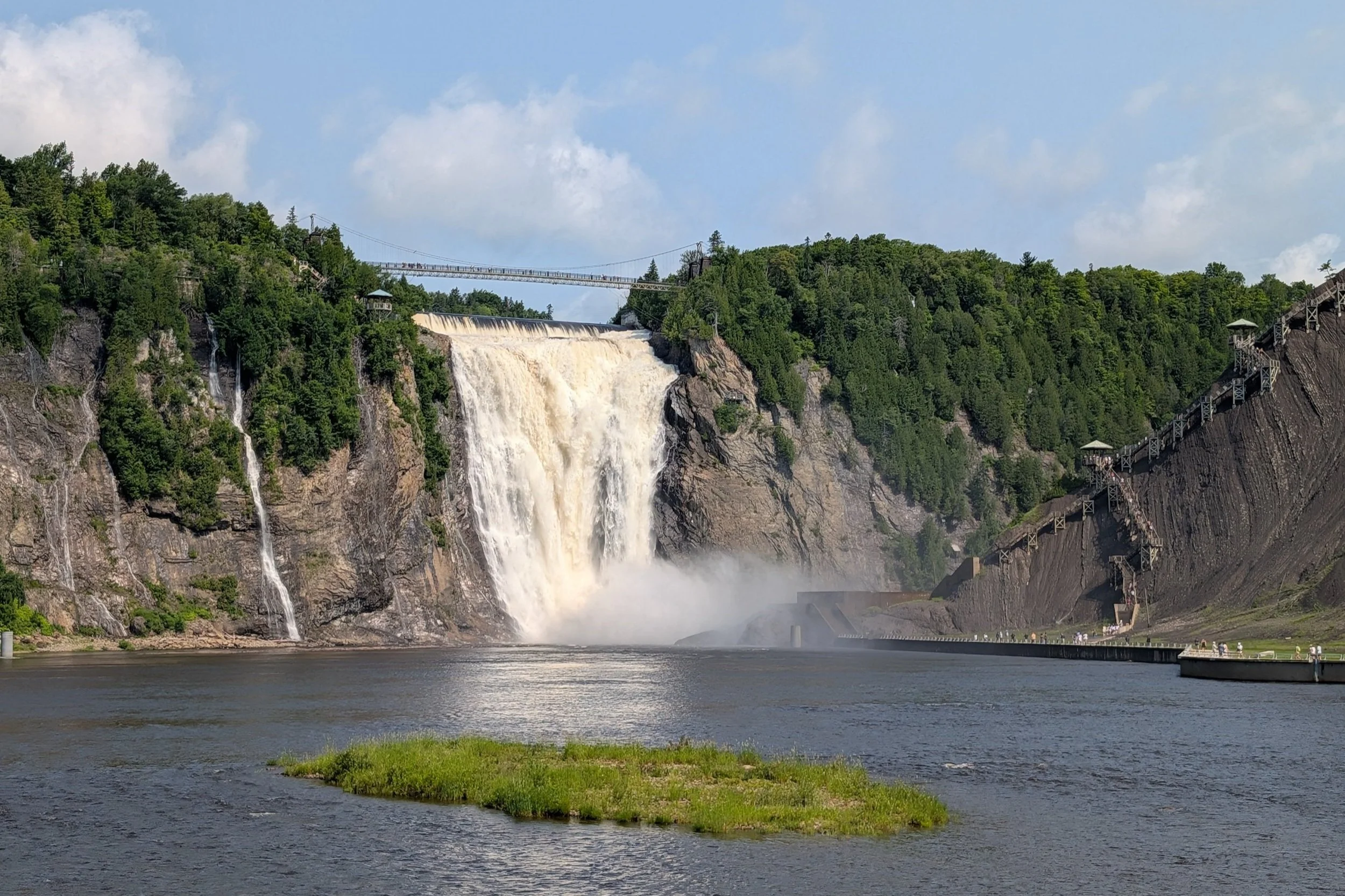
On our second day in the area, we drove just 15 minutes from Old Quebec to Montmorency Falls -

This waterfall is nearly 100 ft taller than Niagara Falls…

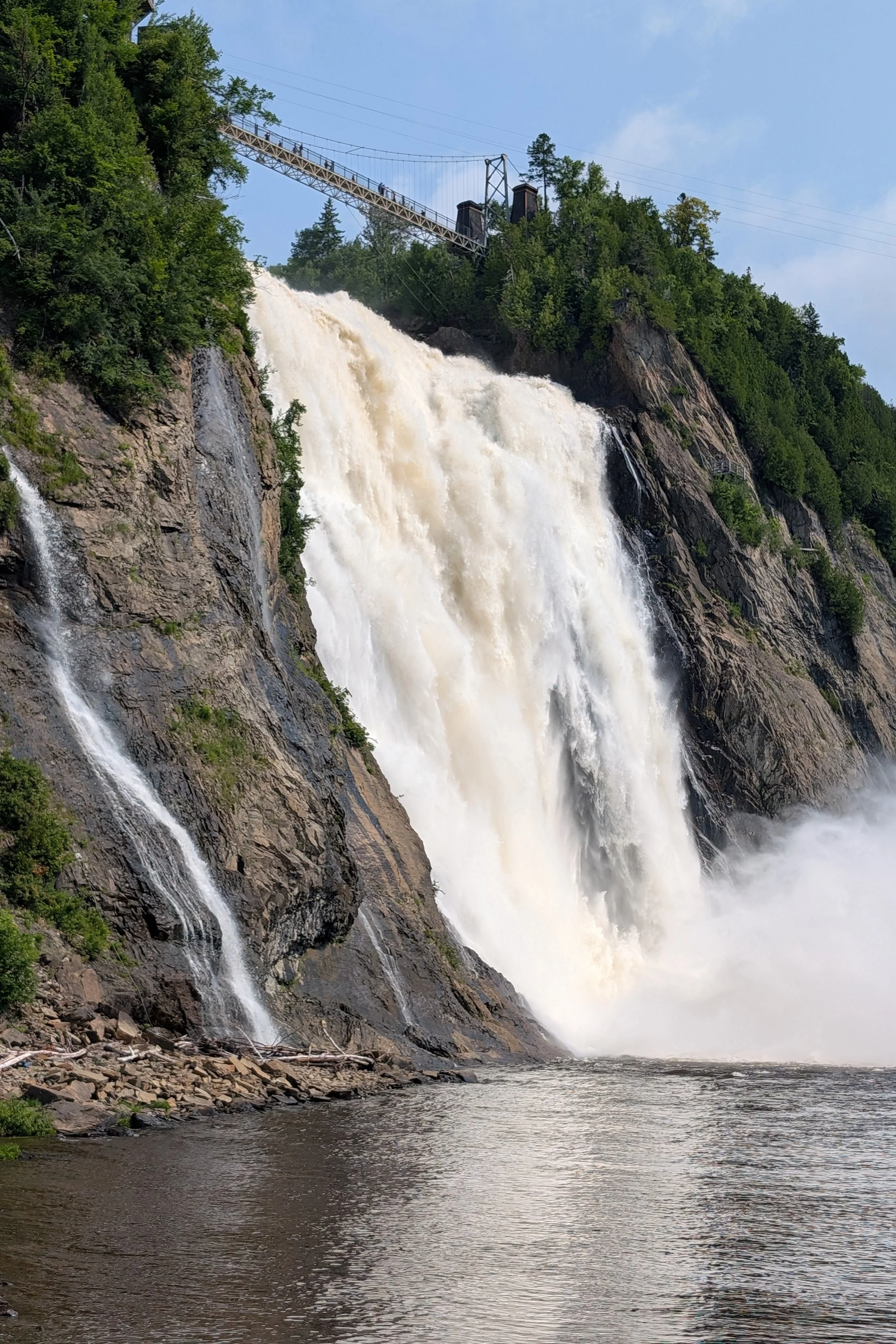
… and we could explore it from a number of angles…

… and vantage points -

Of course we climbed the 487 steps next to the falls, rather than take a cable car -

I don’t have a smooth finish for this post, so I’ll just end with a shot from our stay in Edmundston -

Yosemite National Park

We interrupted our East coast driving trip to fly across the continent to join our family for a reunion near Yosemite in northern California. We spent an energizing 2 weeks with 4 young granddaughters (aged 4+, 3+ and twin 2 year-olds) and their families. Our eldest son also was determined to get us out on a hike to “one of my favorite places in the world,” “before you can’t.”

Even though we’ve been there several times with family, I’ve never featured Yosemite in a blog, so now’s the time to share some of the beauty and majesty:

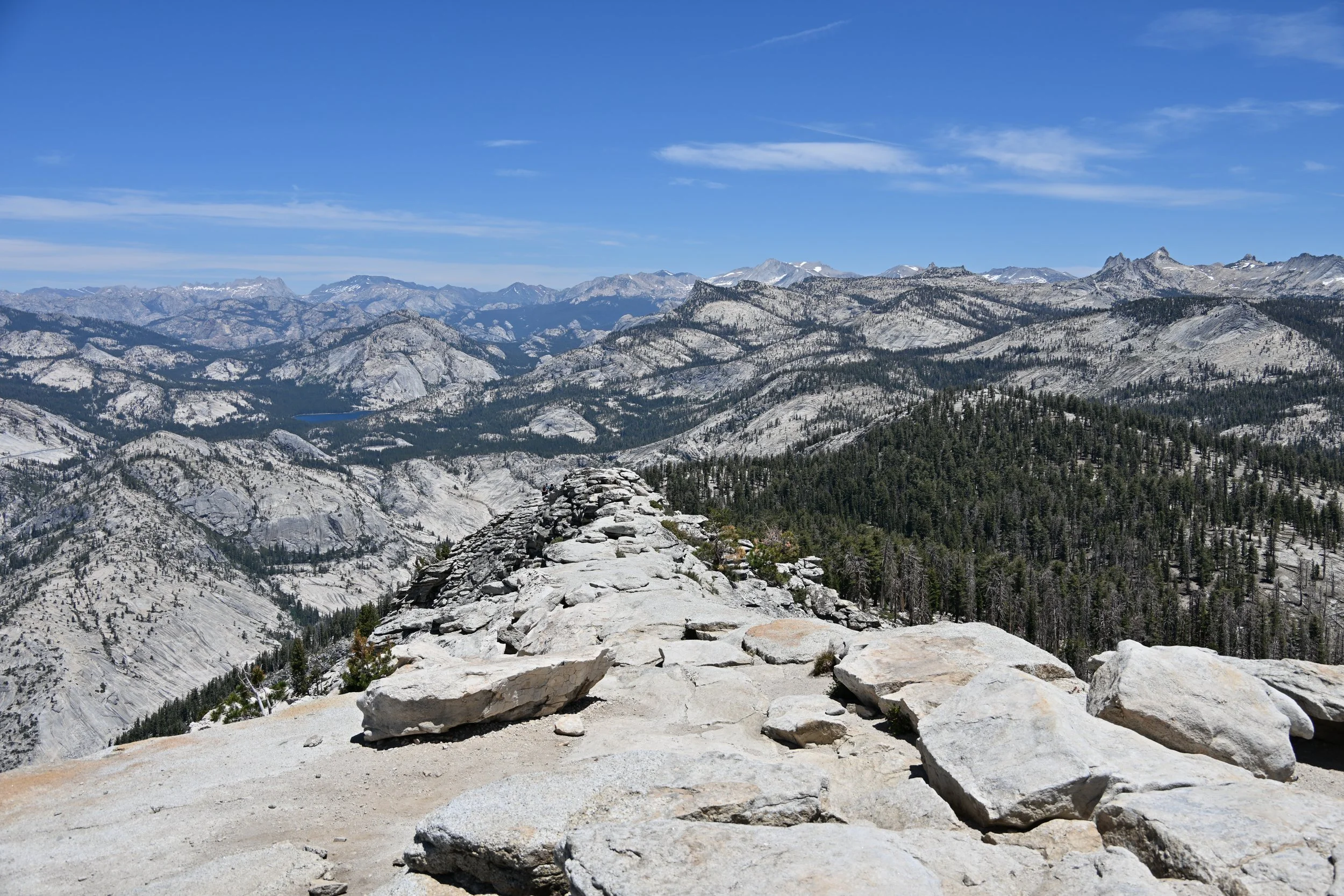
The trail is Cloud’s Rest, and it started out quite well -

As we climbed higher…

… the views expanded -

I’ve hiked Angel’s Landing in Zion NP, with its really narrow section, and I think this trail compares…

… but actually has more jaw-dropping views:

That’s Yosemite Valley off to the right of the trail along the ridge, in the picture above.

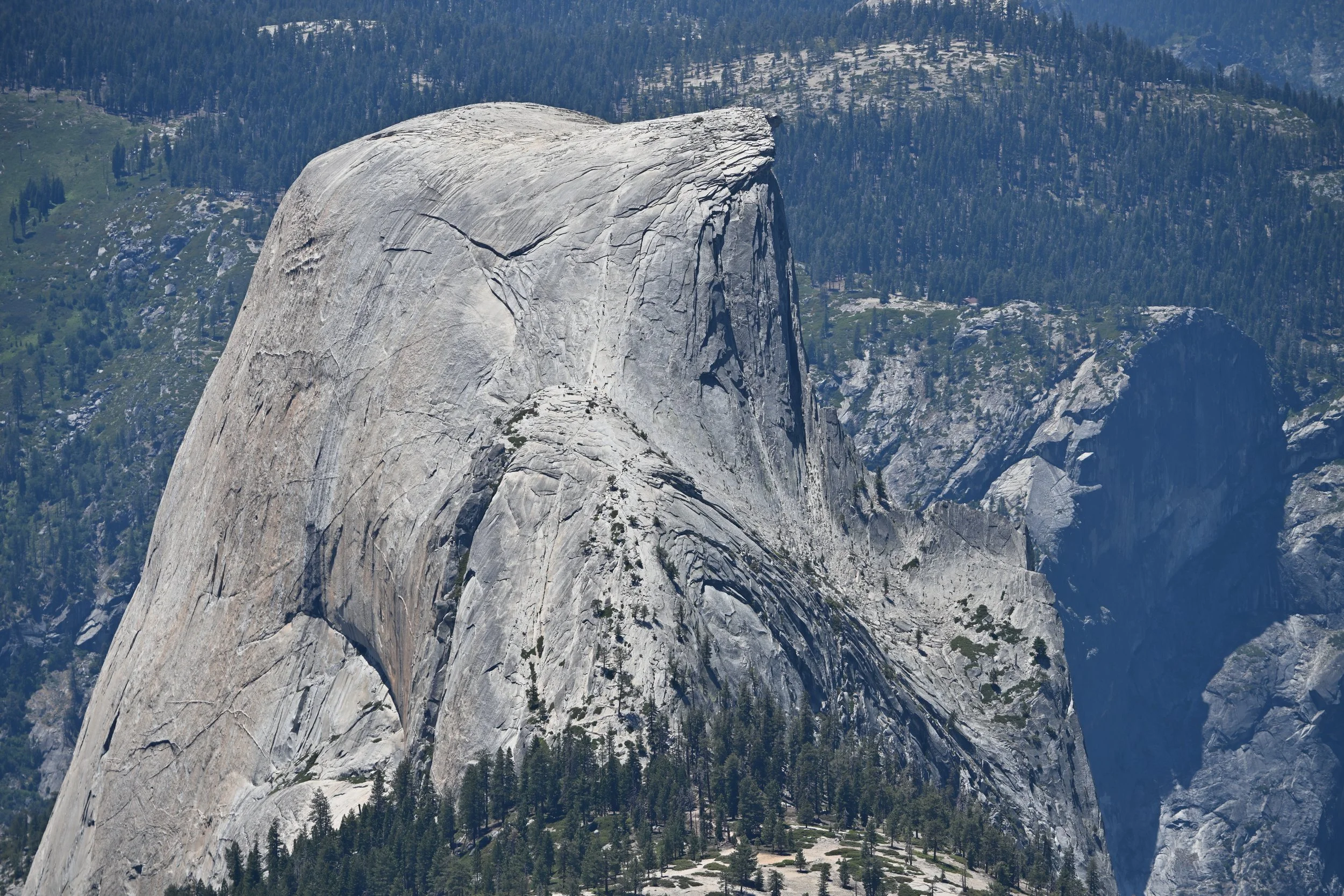
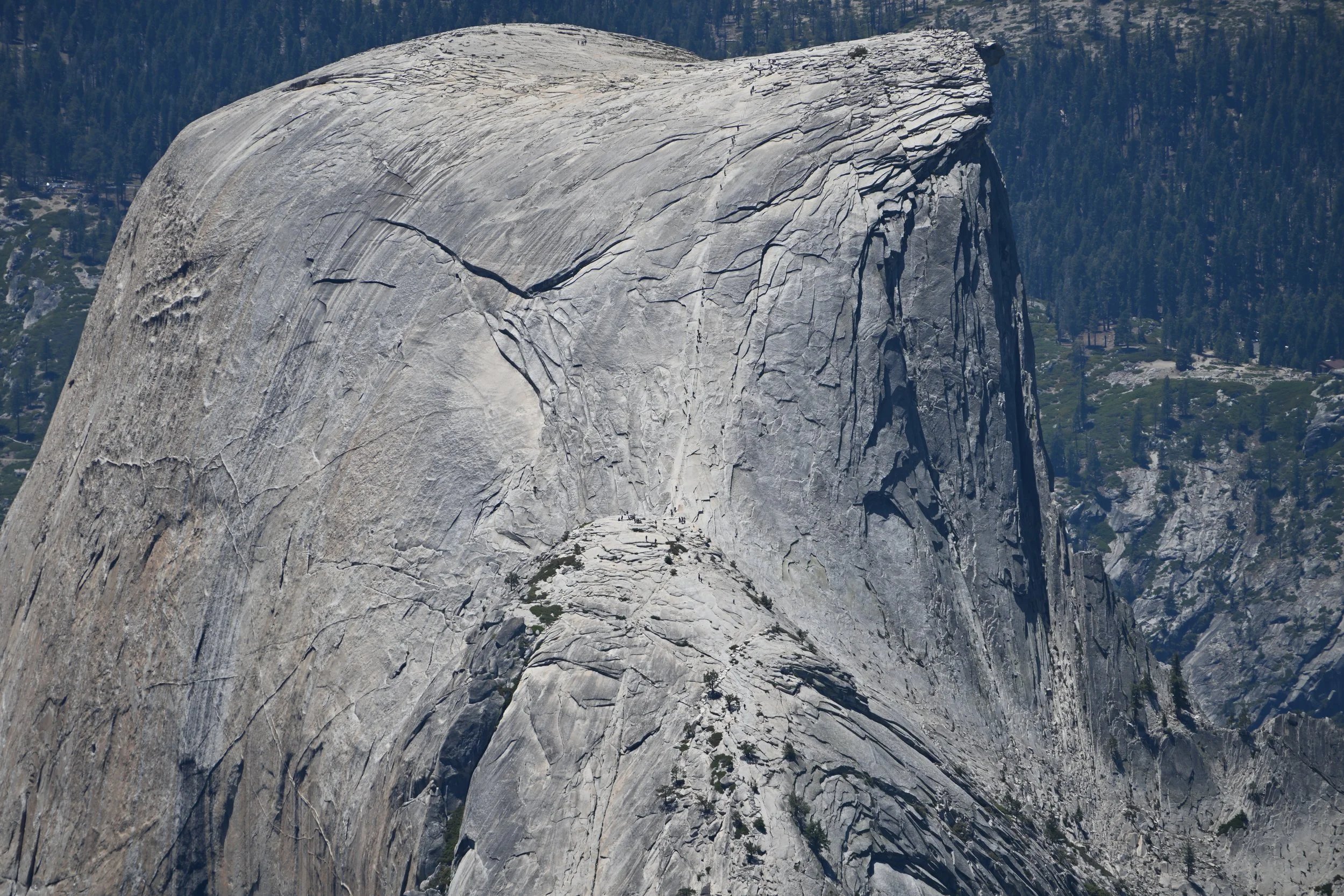
We could also see Half Dome…

… and the trail of ‘ant people’ climbing up the cables -

The view looking back down the trail -

Cloud’s Rest Trail was 13+ miles with over 3,000 ft elevation gain, and included crossing a stream in bare feet at the beginning (and end). We took 7 1/2 hours, and were very glad we had recently hiked in Nepal. :)

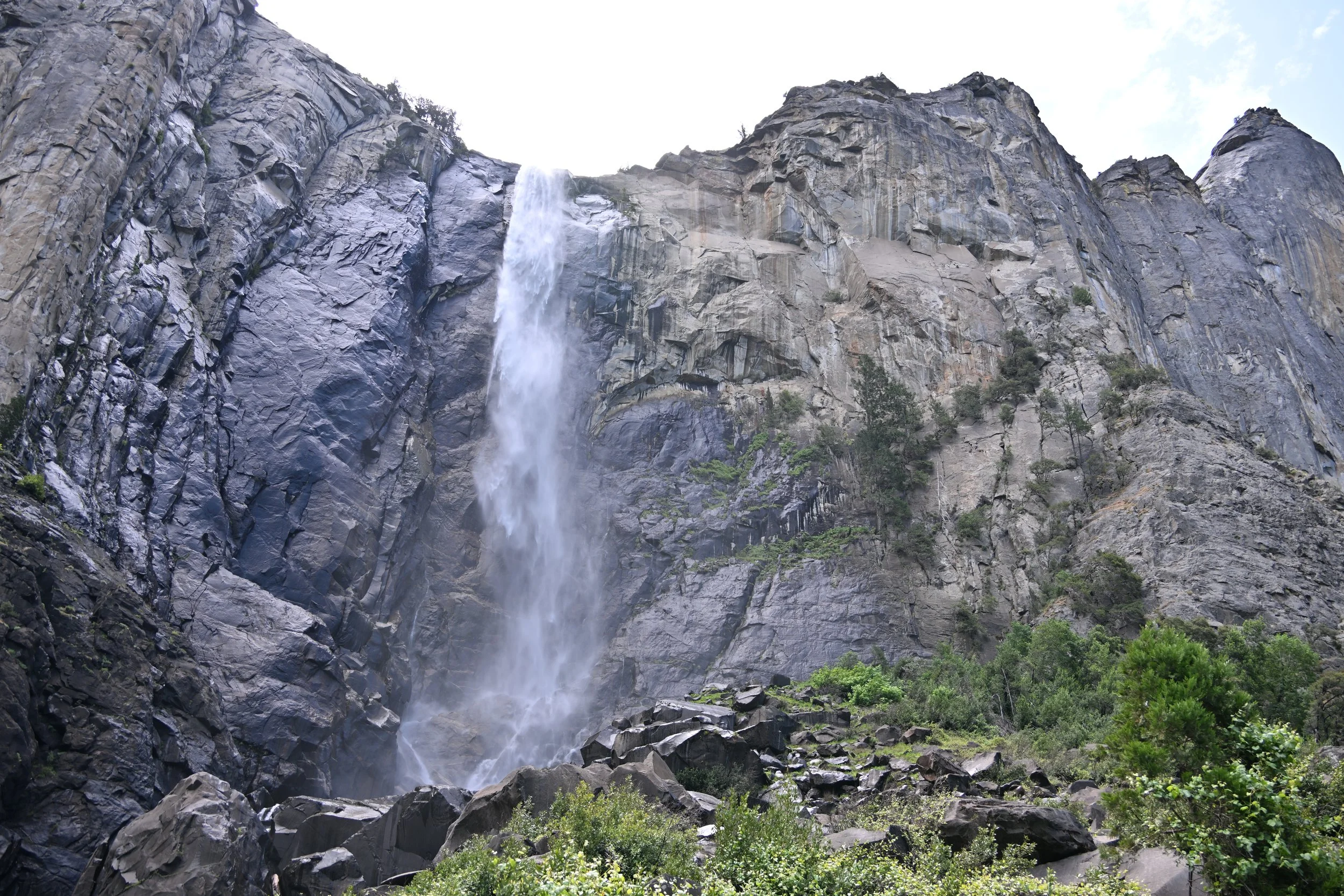
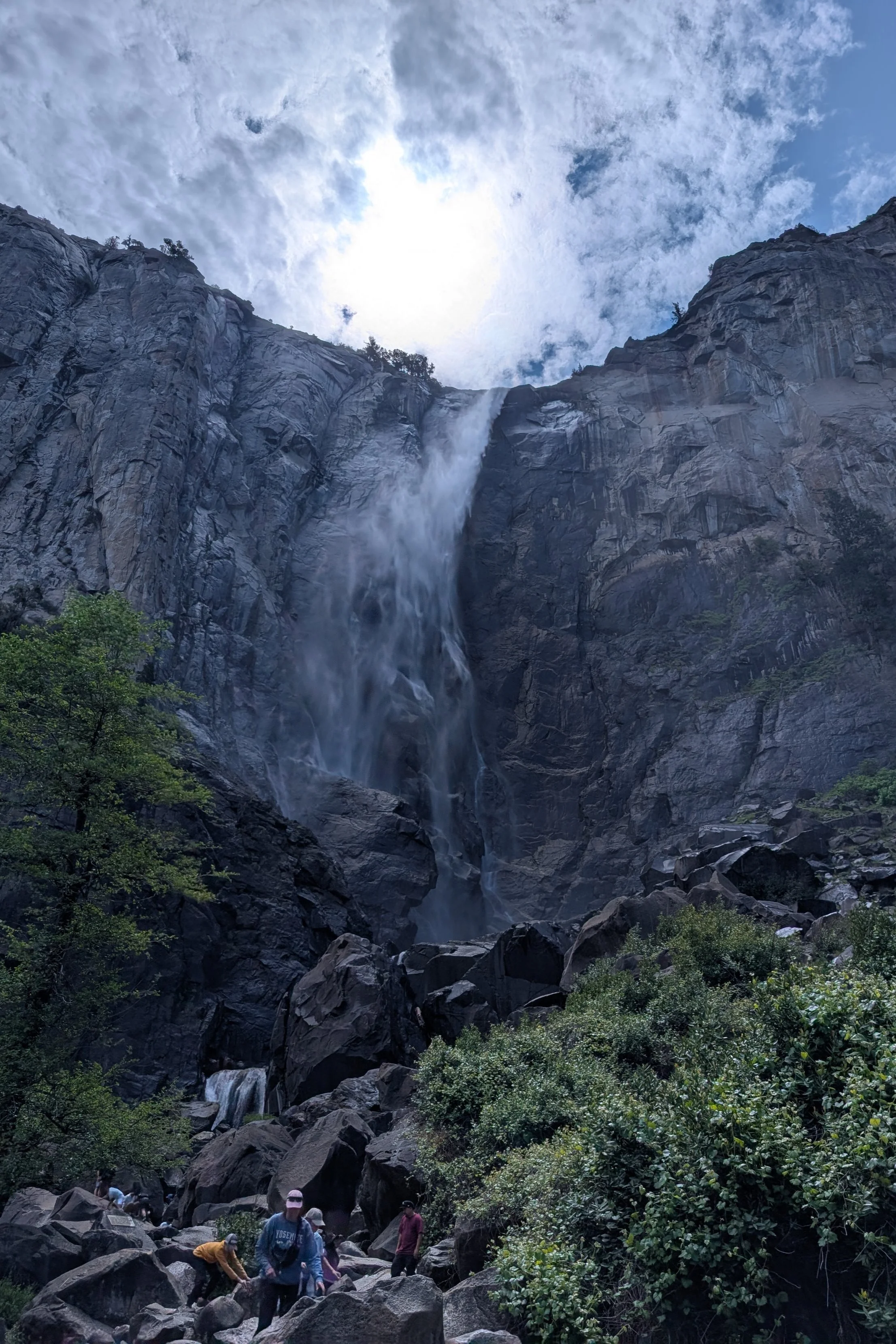
We also visited the Valley one day with our whole crew, enjoying Bridal Veil Falls…

… from various angles and cameras -

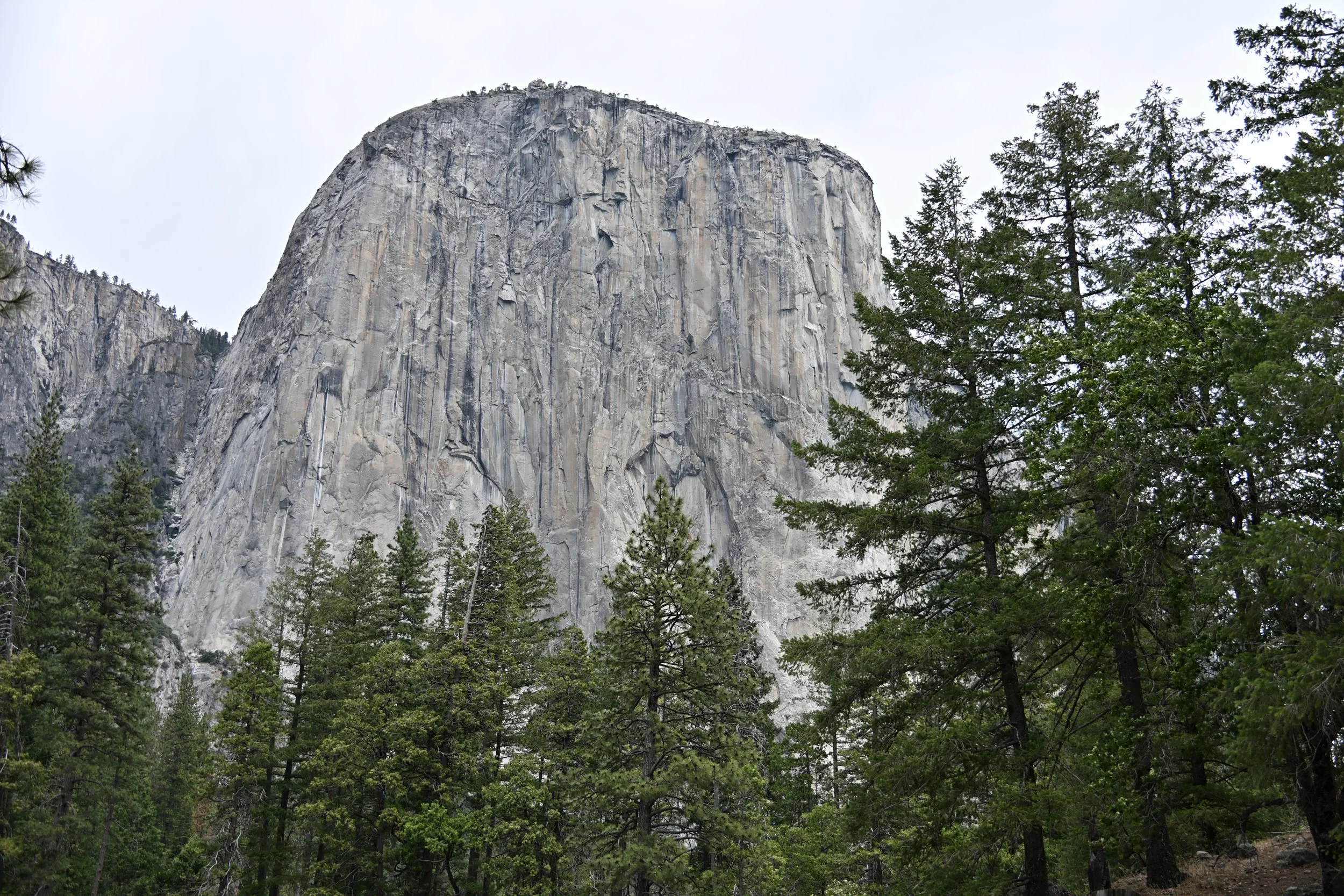
We also admired El Capitan -

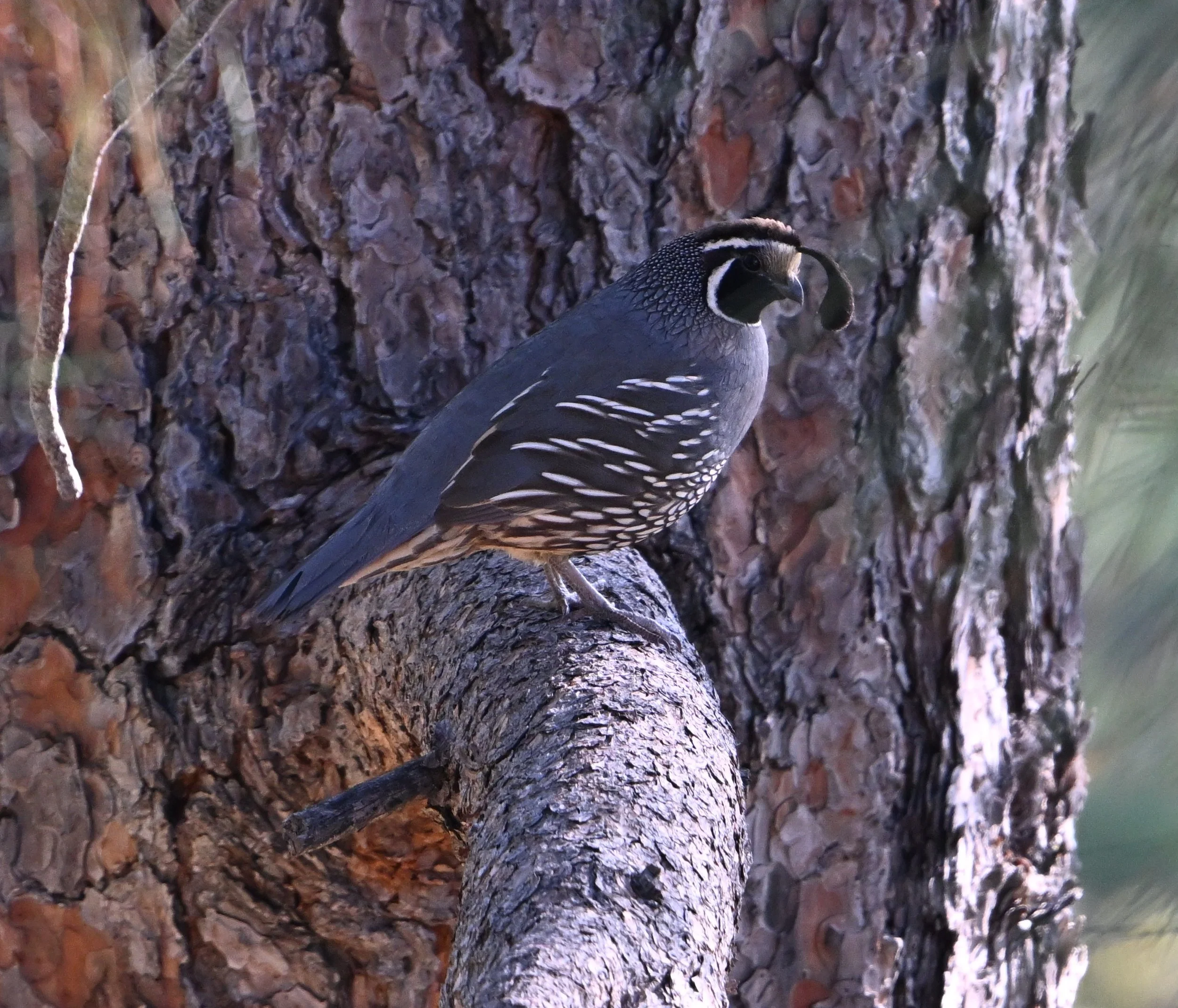
Oh! I mustn’t forget the requisite bird shot -

California Quail

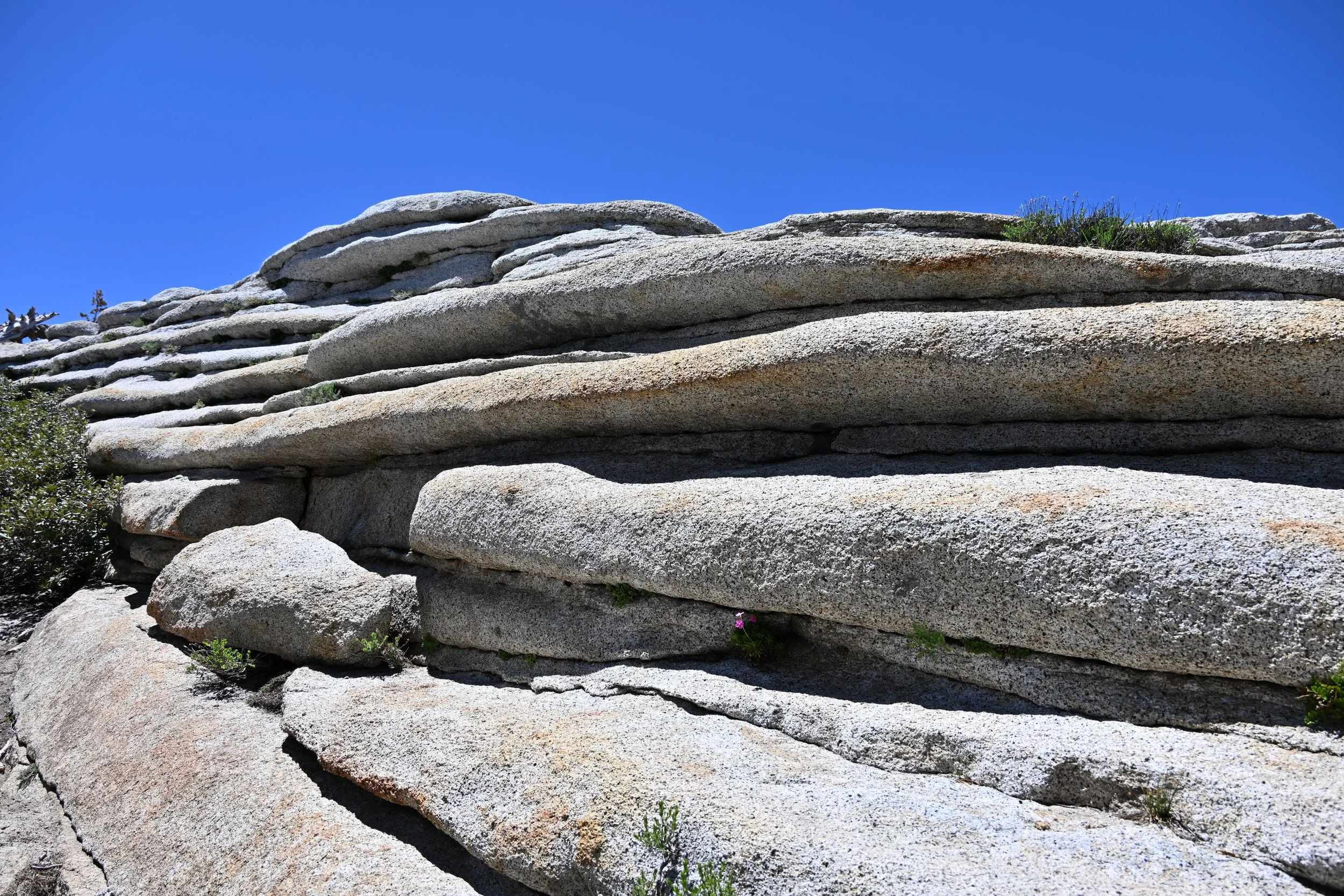
A last rock formation…

… before we leave -

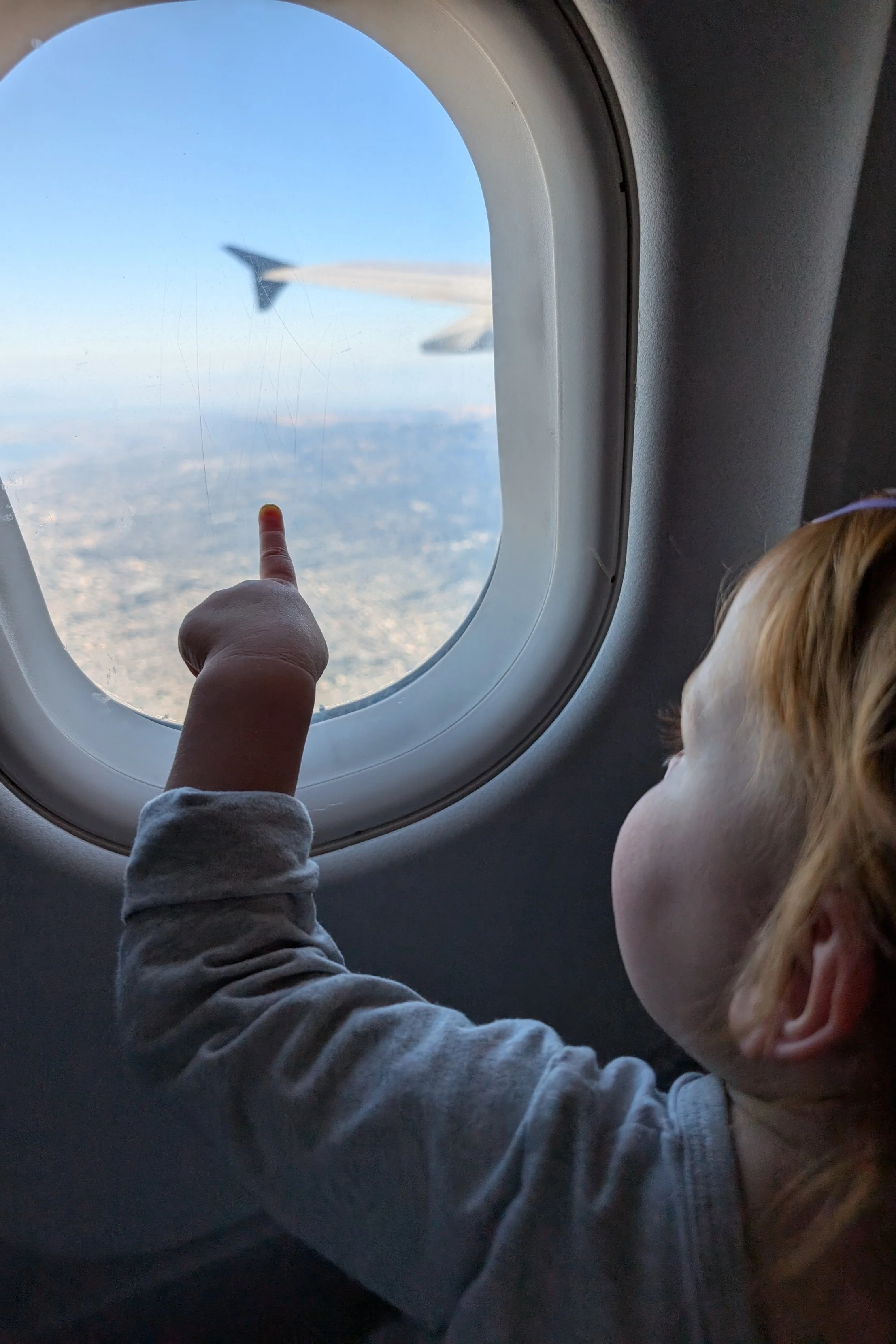
We helped ferry 3 of the granddaughters and their parents to Toronto and handed them off to the other set of grandparents, before returning to Halifax and our car, to continue our road trip.

Nova Scotia

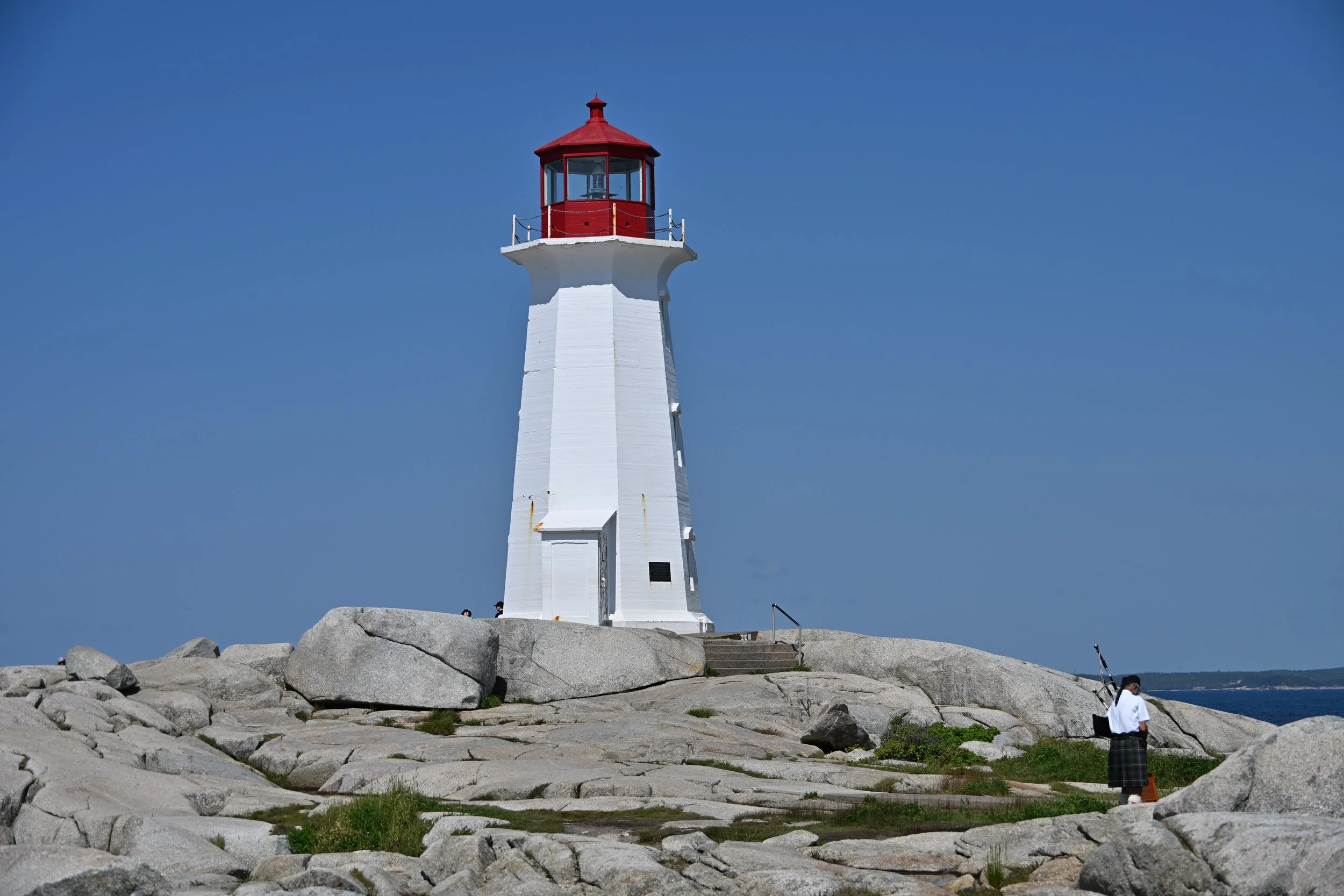
We returned to N.S. on the overnight ferry from Newfoundland and headed to our next base of Halifax. We first ventured south to explore Peggy’s Cove…

… with its “famous” lighthouse. Apparently this may be the most photographed lighthouse in Canada. Check out my video, complete with bagpiper, by clicking on the link at the end of the post to open it in your browser -

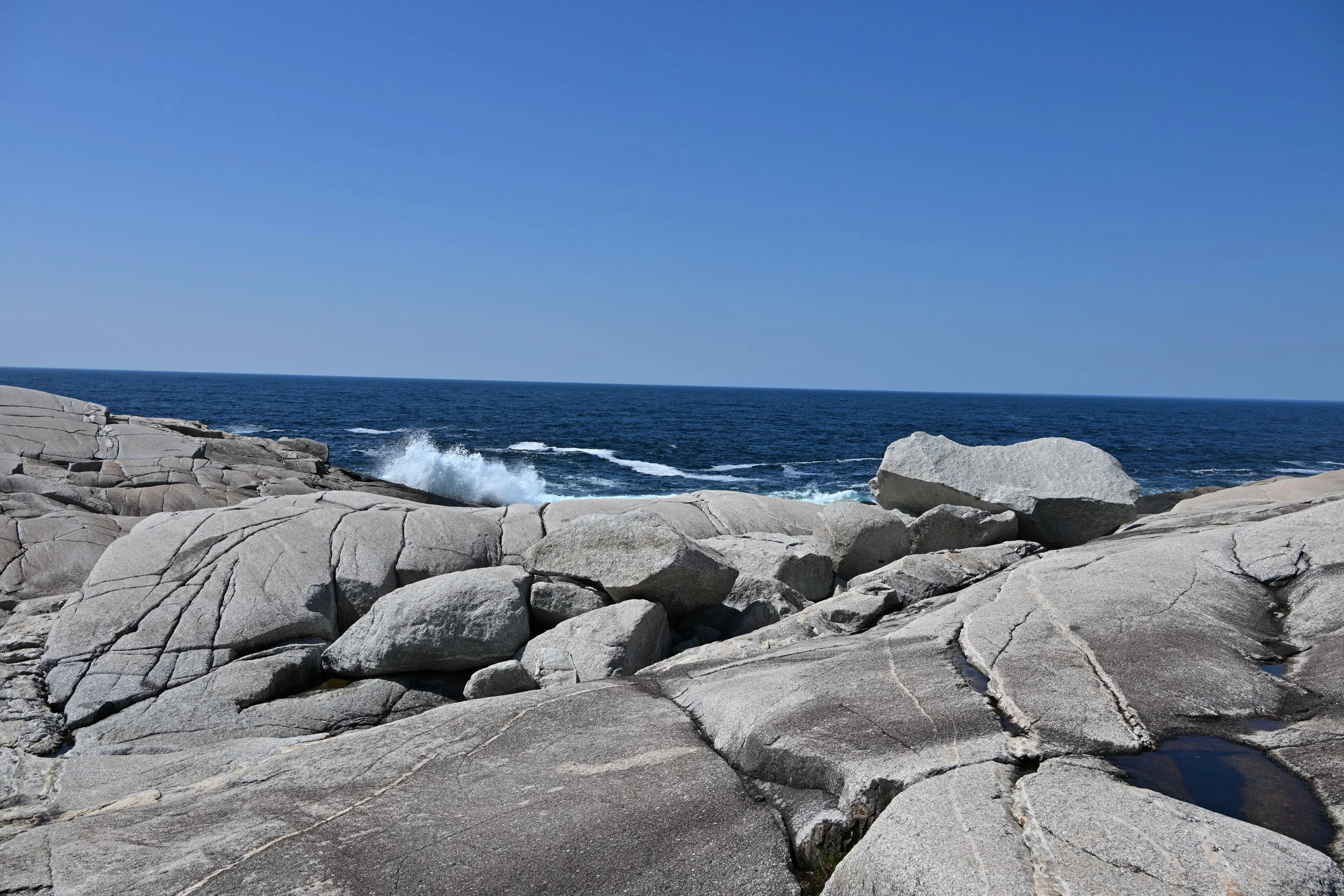
I thoroughly enjoyed wandering over the rocks…

… and watching the ocean -

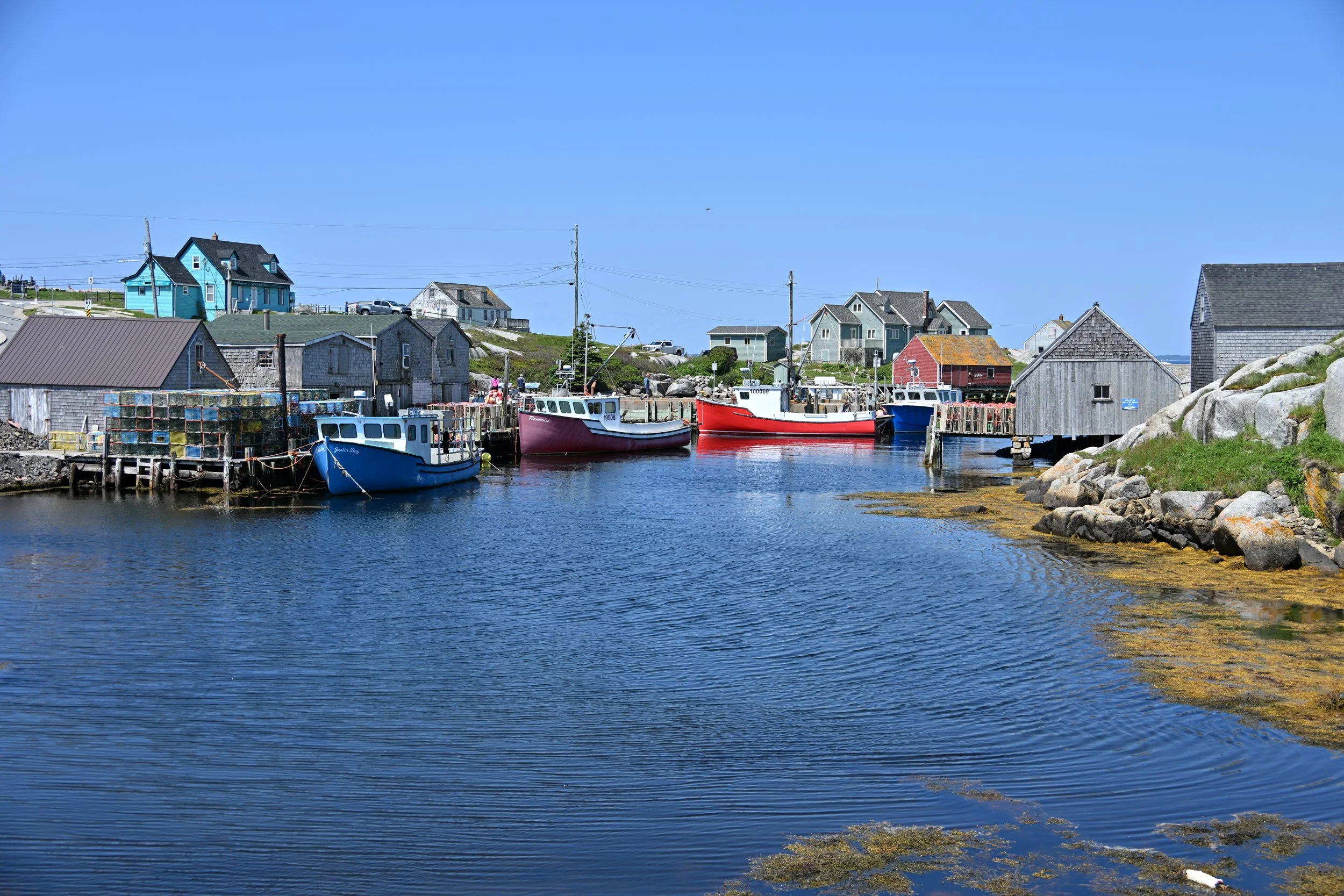
The town itself was charming with picturesque coves -

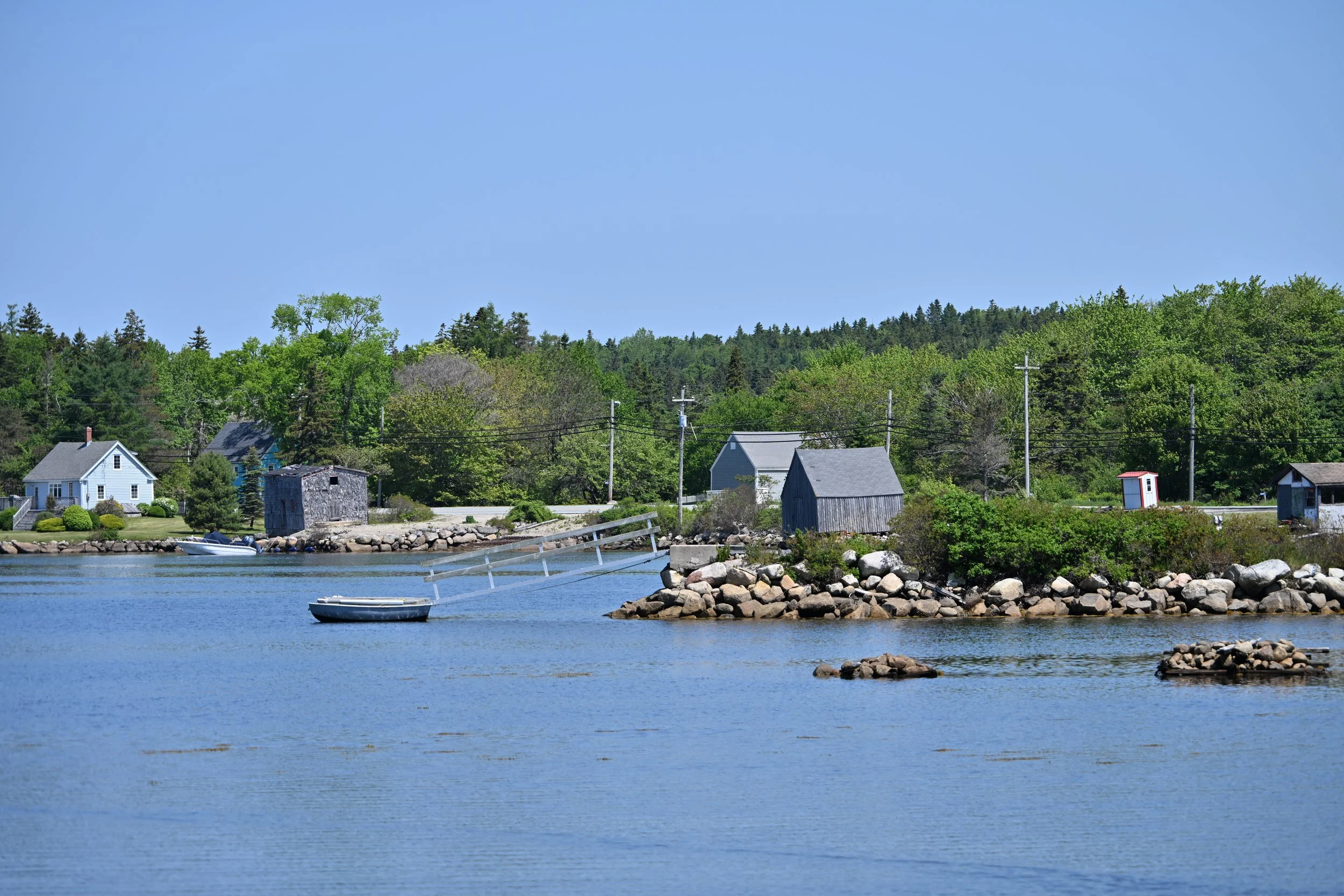
… as were other small towns along the east coast -

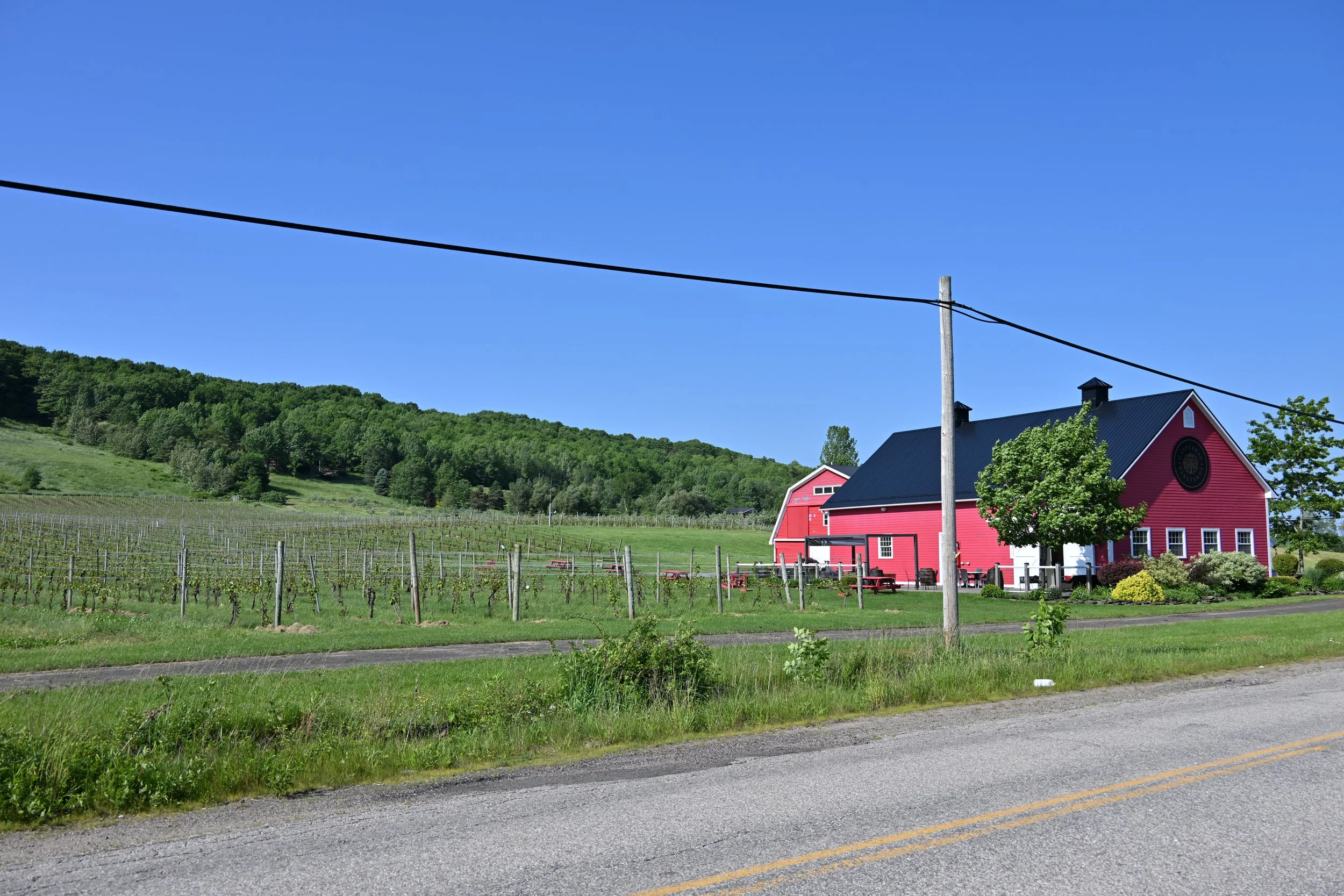
Guess what we found? Wineries! Leave it to us to find wines to taste just about everywhere we go. They were located in the interior of the province and near the west coast.

Back to Halifax…this is the provincial capital and it lies on the east coast. We visited the Botanical Gardens…

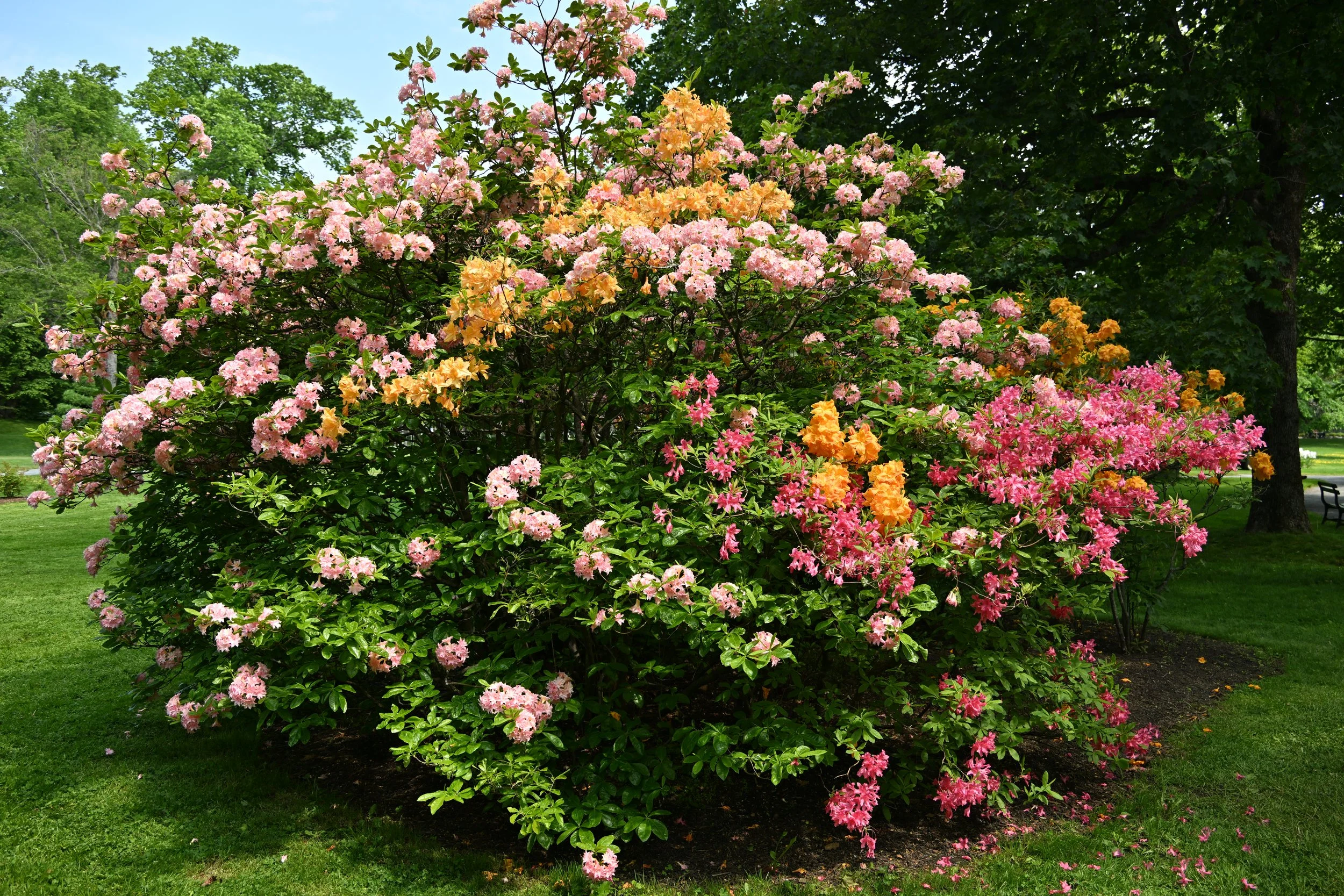
… getting our fill of rhododendrons -

We also checked out The Citadel (not too exciting)…

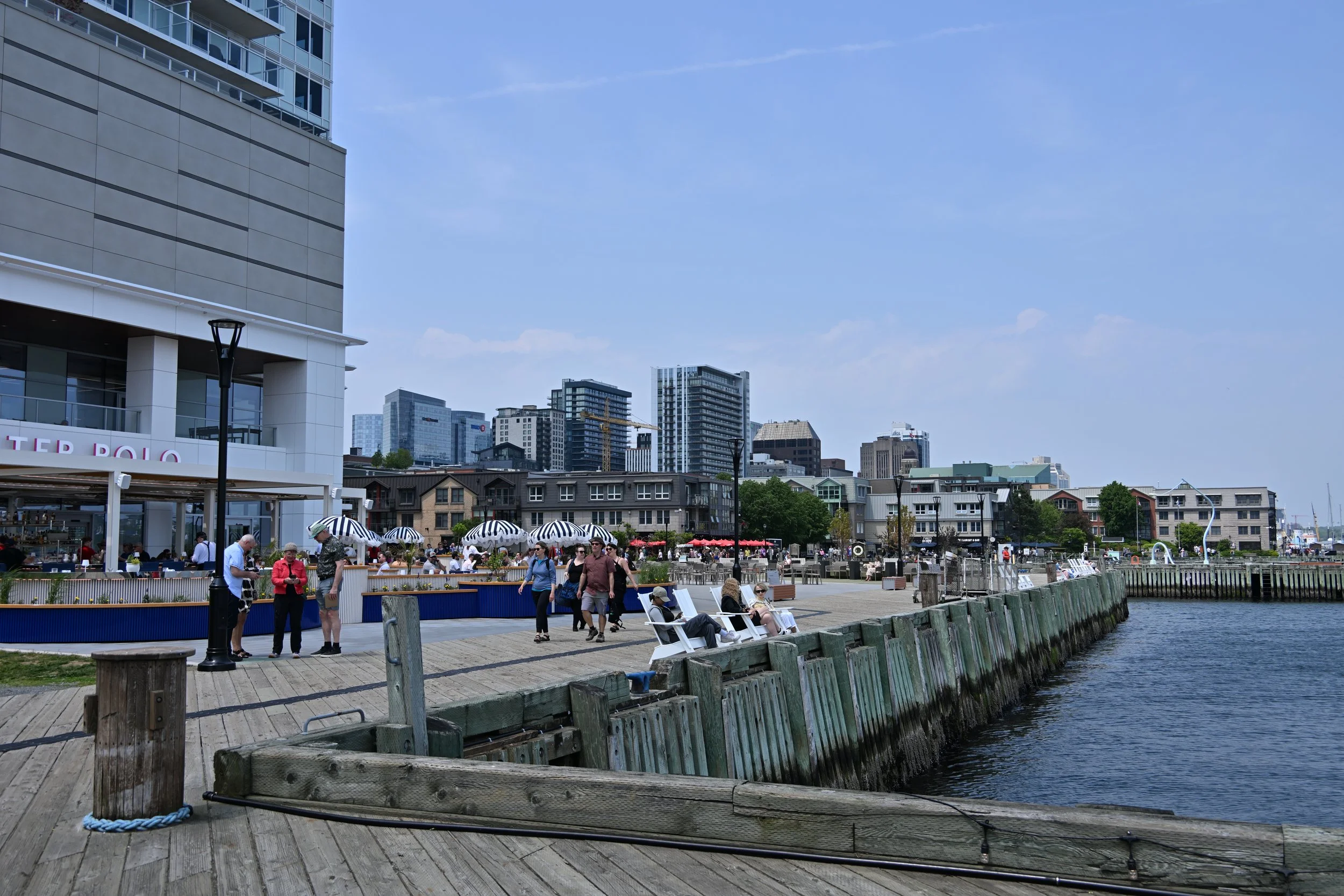
… and walked along the waterfront…

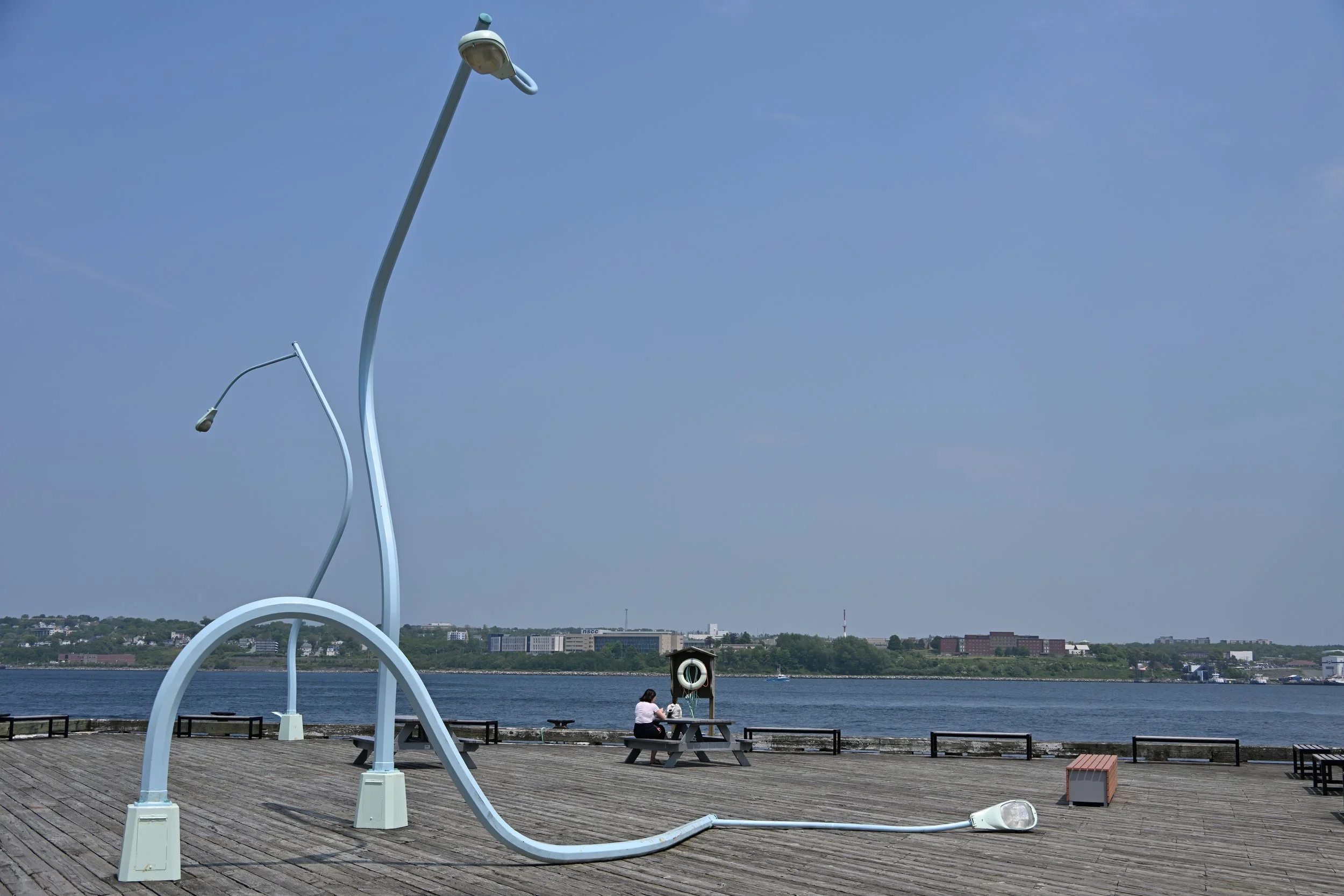
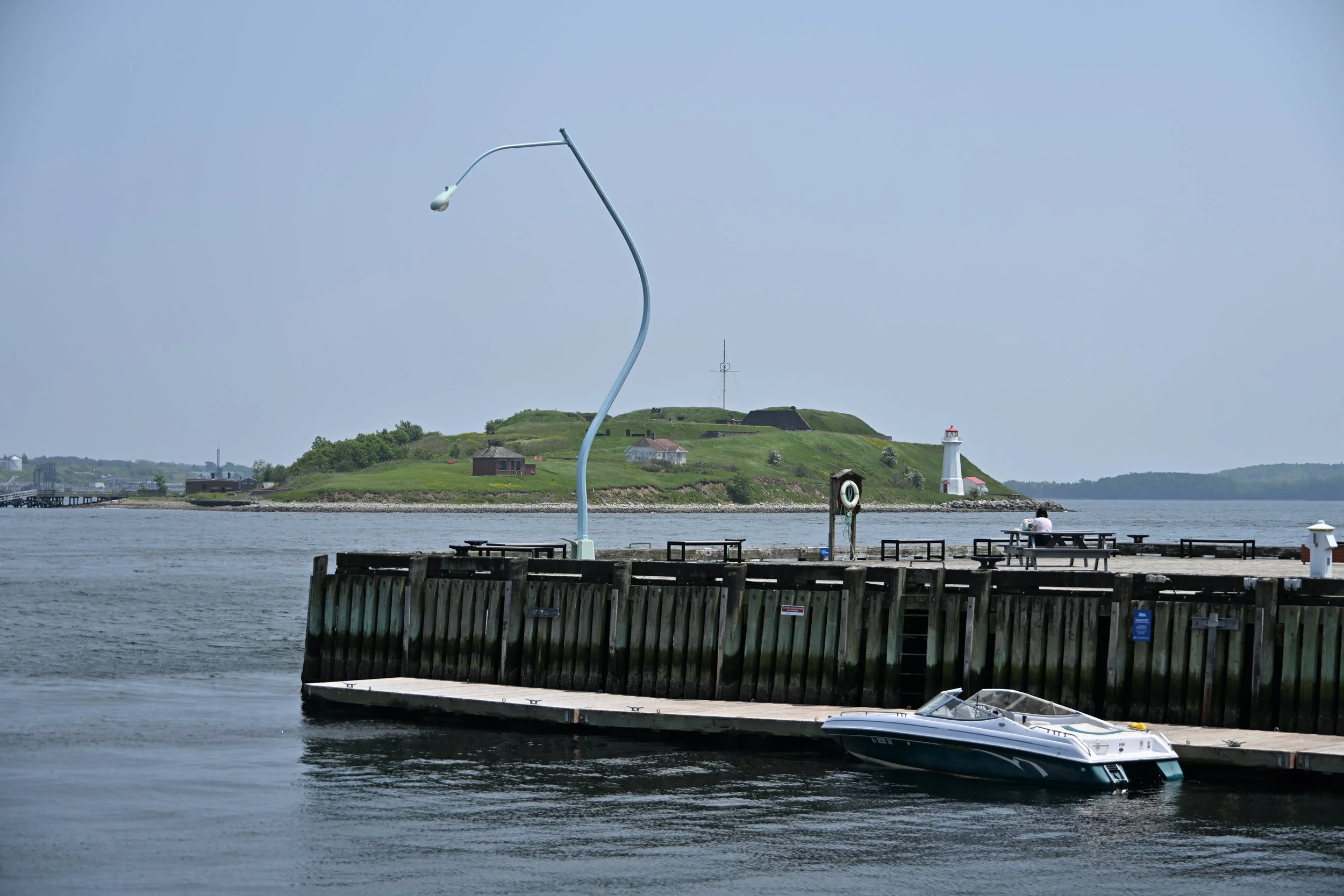
… where I found this whimsical art piece -

And I liked the juxtaposition -

Probably one of the highlights of our entire Maritime driving tour was getting to experience the tidal bore coming into the Bay of Fundy up close and personal. This helps explain it a little (from the website of the company we rode with) -

“The water from the Bay of Fundy gets funneled into the shallow Shubenacadie River channels to create a surge of water. The front wave of this surge is known as the Tidal Bore. There are very few places in the world that have a tidal bore and even fewer that can compare in size! After the tidal bore goes by the river reverses direction and starts flowing inland at nearly 30km/hr. It is because of the huge volume of water forcing its way into the shallow waters that creates our rapids ranging from 4-12ft standing waves!” (We were there on an “extreme” high tide day, and the waves were truly 10-12 ft high.)

Because of the conditions, Steve did all our filming on his GoPro, so there will be a series of short videos. First, here’s a pan of the river (and how low it was) just before we headed out to the zodiacs -

You may want to watch the next video a couple of times to see how fast the water was rising, and to notice the white line of the tidal bore in the background. Also, notice where the sand bar is still visible (to contrast with the video after this one) -

Steve and I had been standing on the huge sand bar, watching the tidal bore coming in (seemingly still very far away) when our zodiac driver called us back in. The next video shows how fast the water was coming in (and the complete disappearance of the sand bar), as our driver struggled a little to join the rest of us already in the boat -

In a little out of order, this video shows the river back where we put in, just a couple of hours earlier…

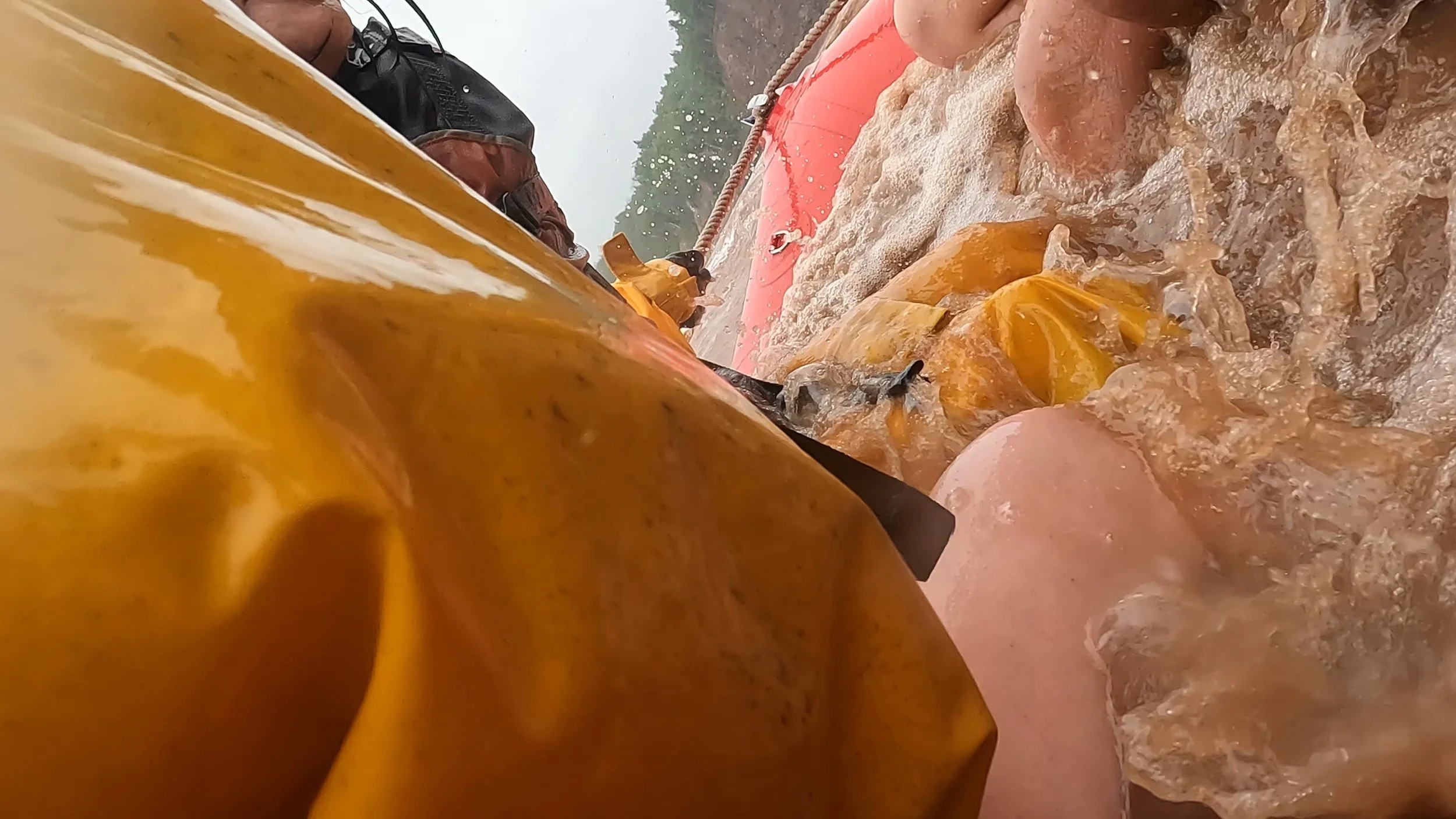
… and a still showing what it was like inside the zodiac -

There were 2 drains in the bottom of the raft, with one-way valves to let the water out. After a series of standing waves calmed down around us, the boat driver would speed back down the river to catch another group of them to roller-coaster through them. I’ll end this post with the video showing the highest waves we rode -

We had a blast!!

St. John's, Newfoundland

St. John’s lies on the east coast of the island and is the province’s capital. We found a hike - the North Head Trail…

see the people as tiny black dots our on the trail?

… that gave us great coastal views…

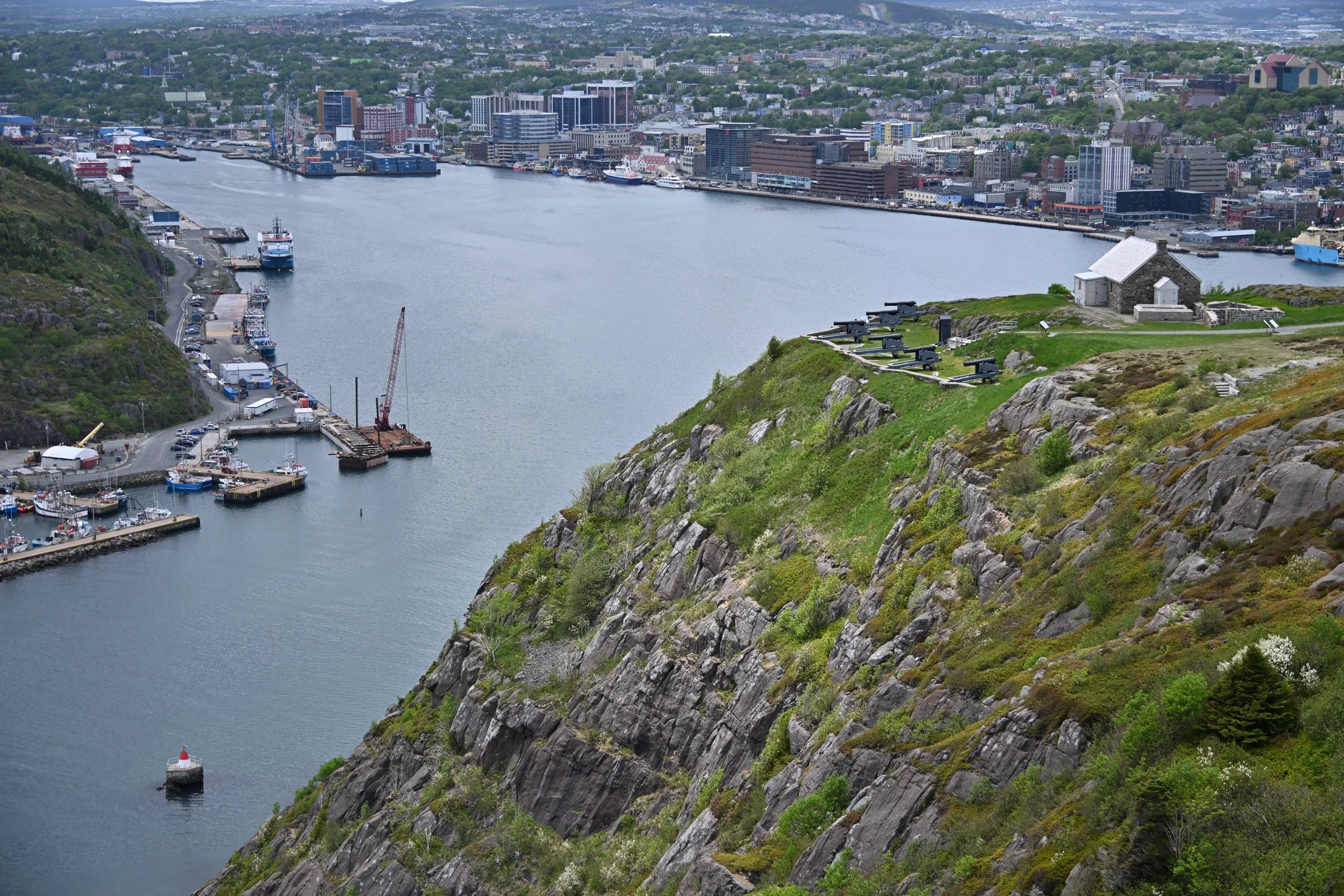
… as well as views of the harbor -

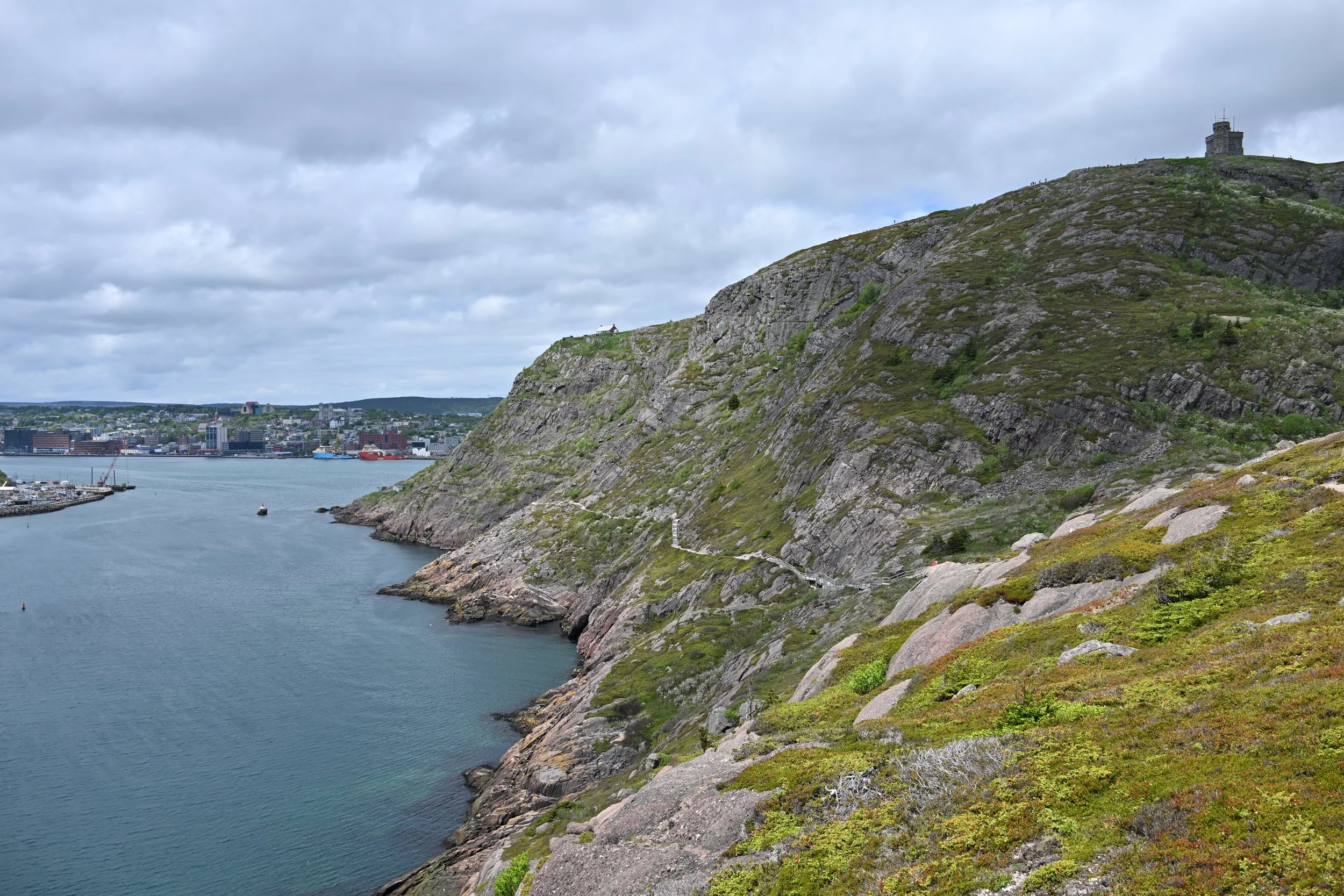
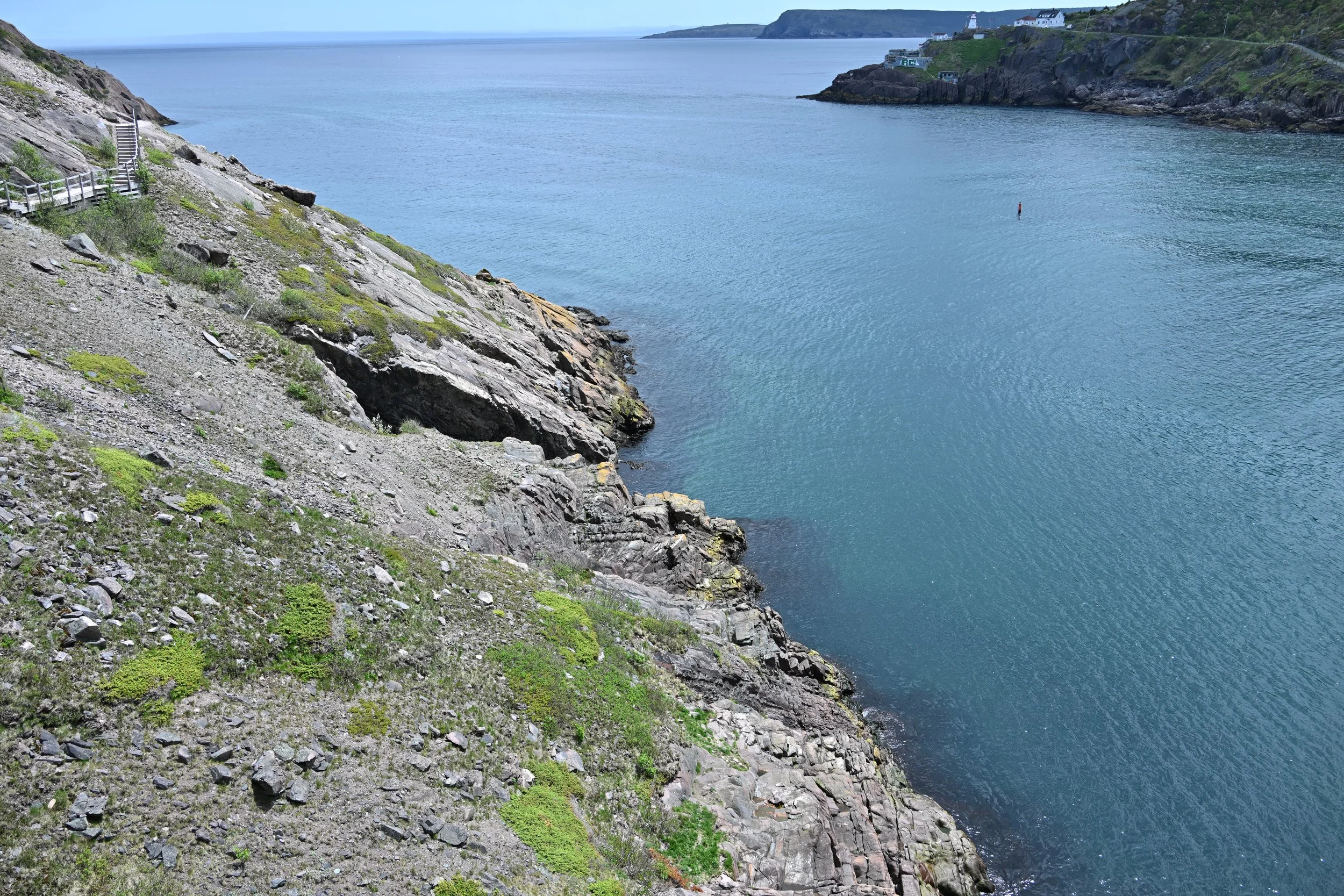
You can see why the British chose this area to settle in the 1600’s, as the mouth of the harbor is so narrow and easily defensible. The trail clung to the wall..

… so that we had great views all along -

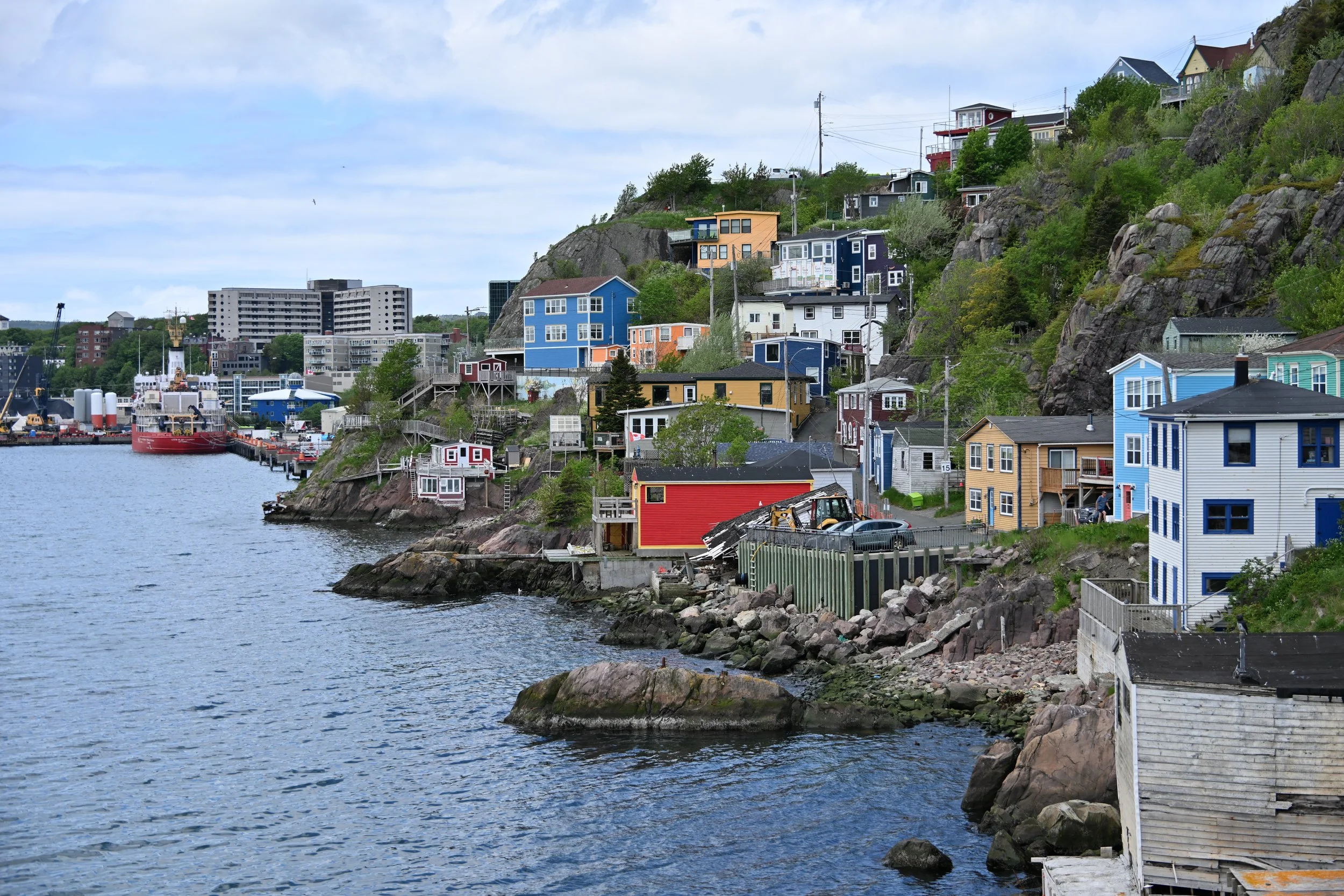
About halfway back, we came to The Battery, a neighborhood that sits at the mouth of the harbor -

As we walked through the narrow streets…

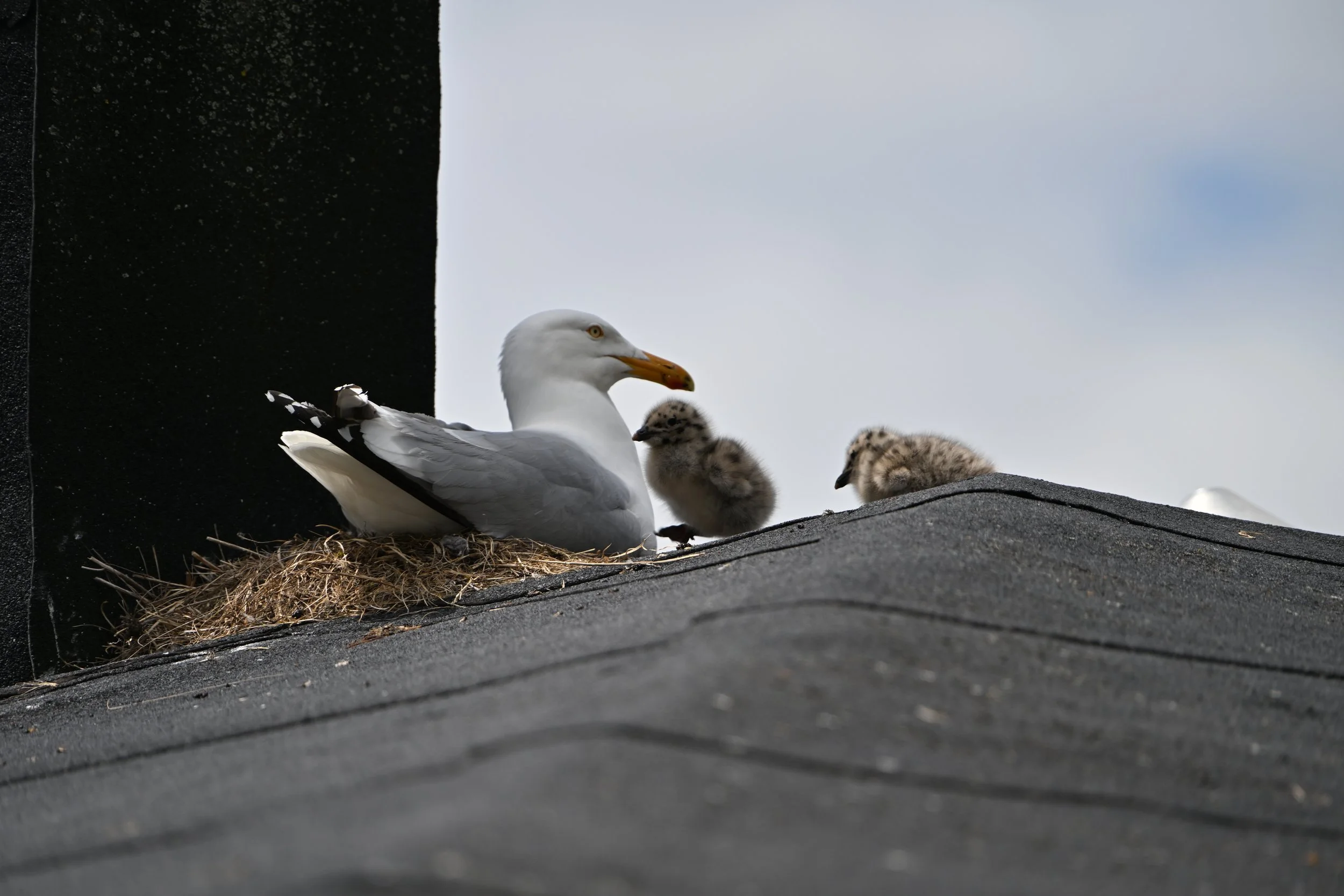
… I spotted an American Herring Gull and her chicks -

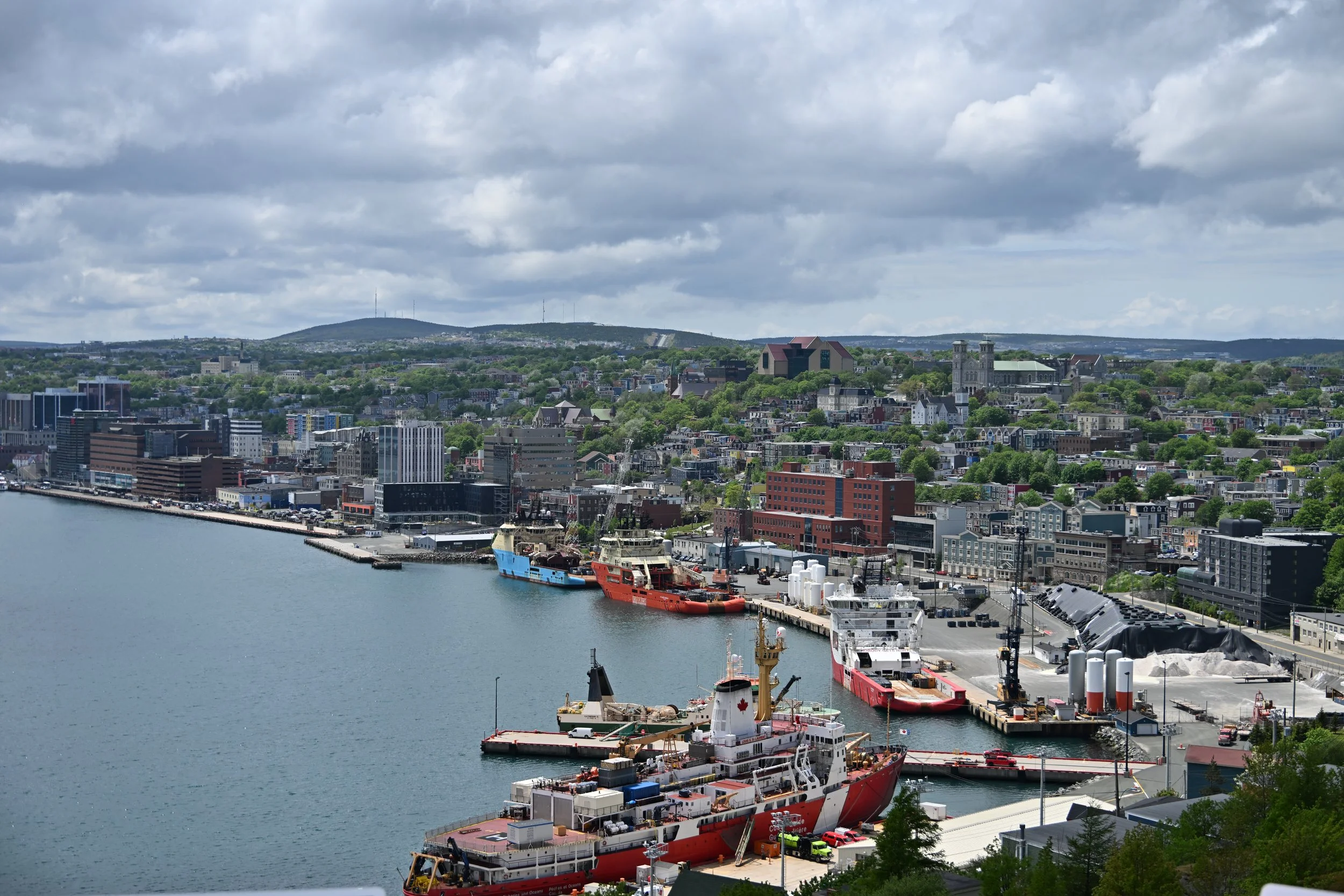
It’s not that photogenic, but it was cool to see the city spread out before us, as we climbed Signal Hill -

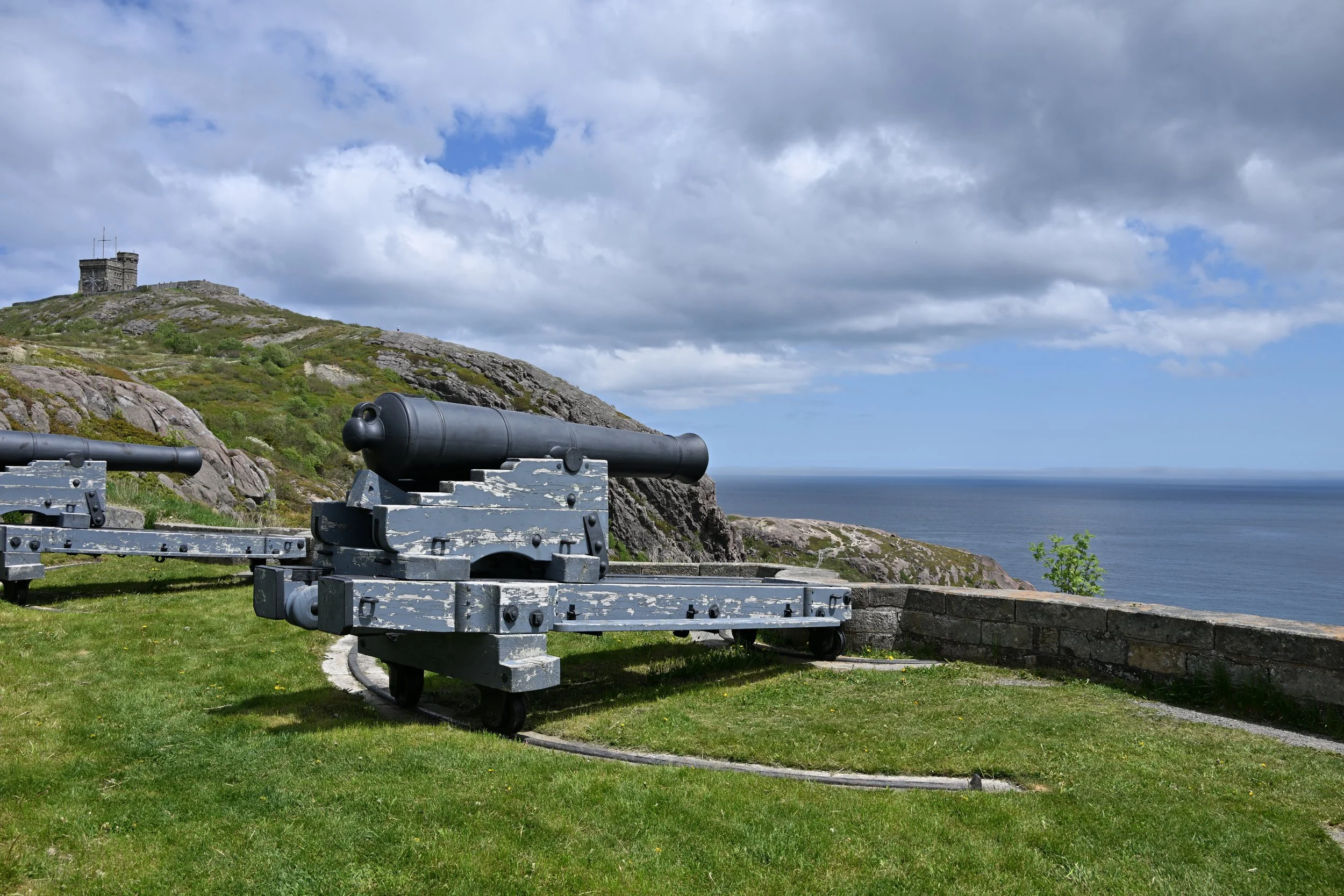
You can definitely see how it was used for defense -

What a fantastic military position!

The next day we wandered in the city, admiring the “big piles” of stone…

… and brick…

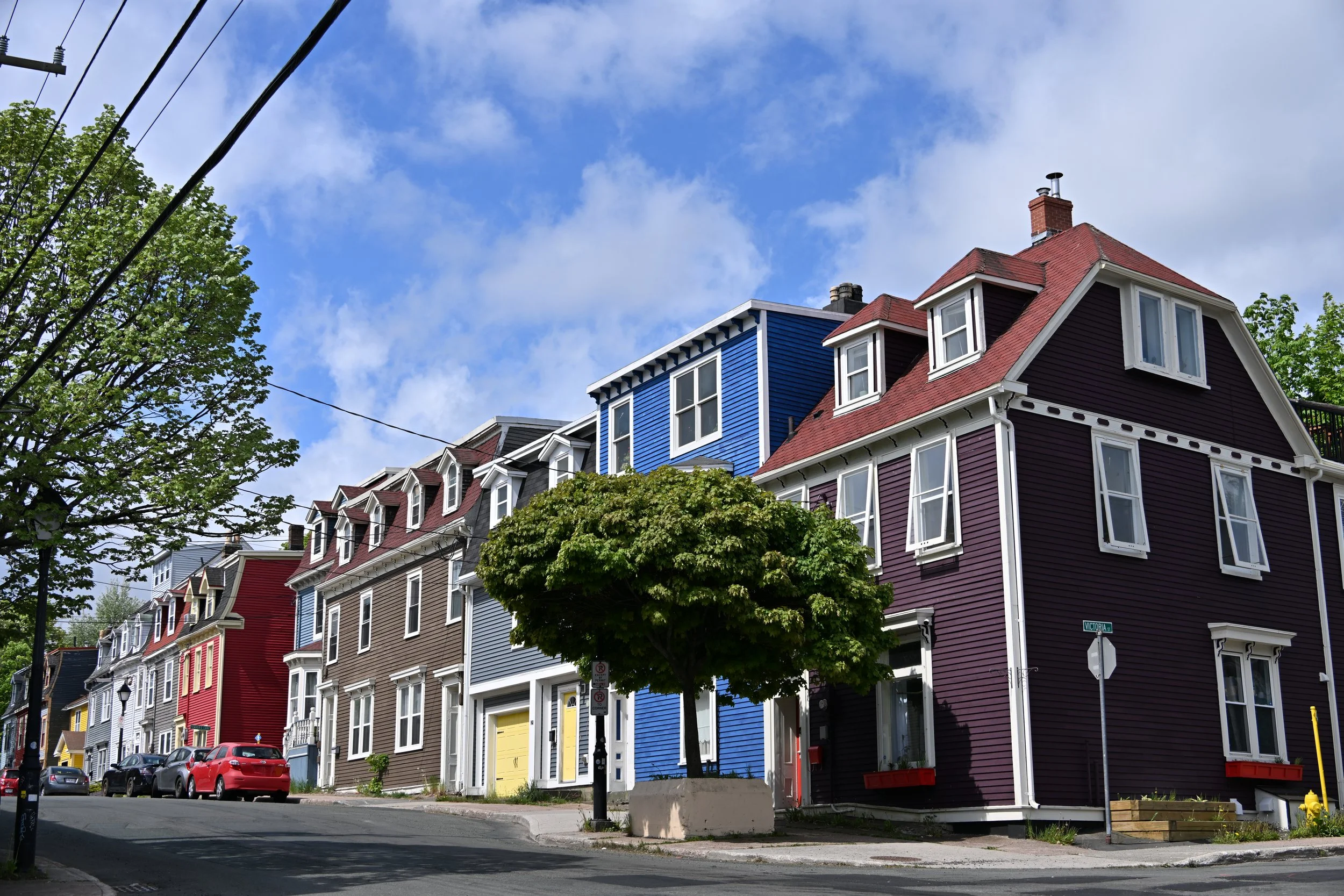
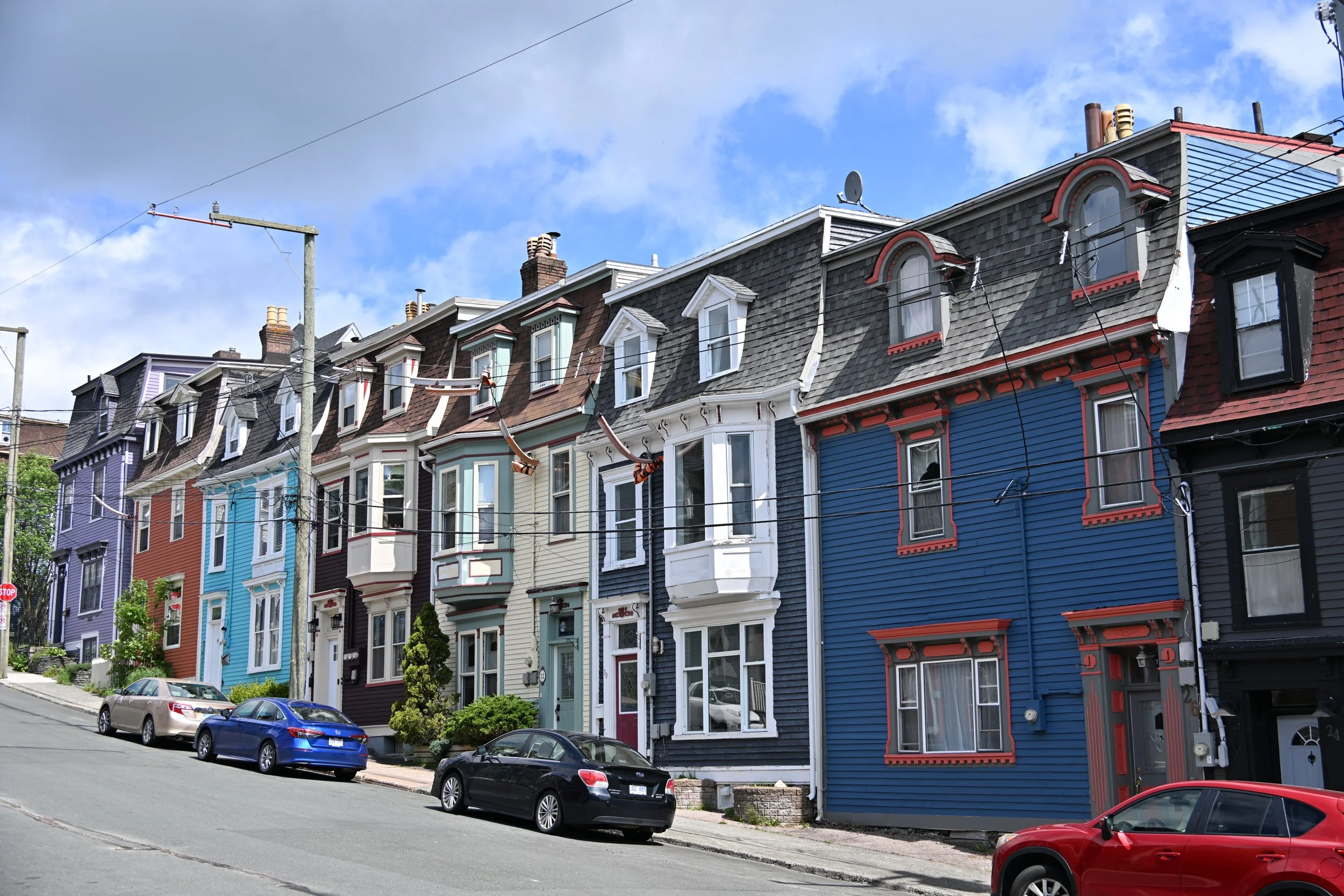
… as well as admiring the brightly painted houses..

… including “Jelly Bean Row” -

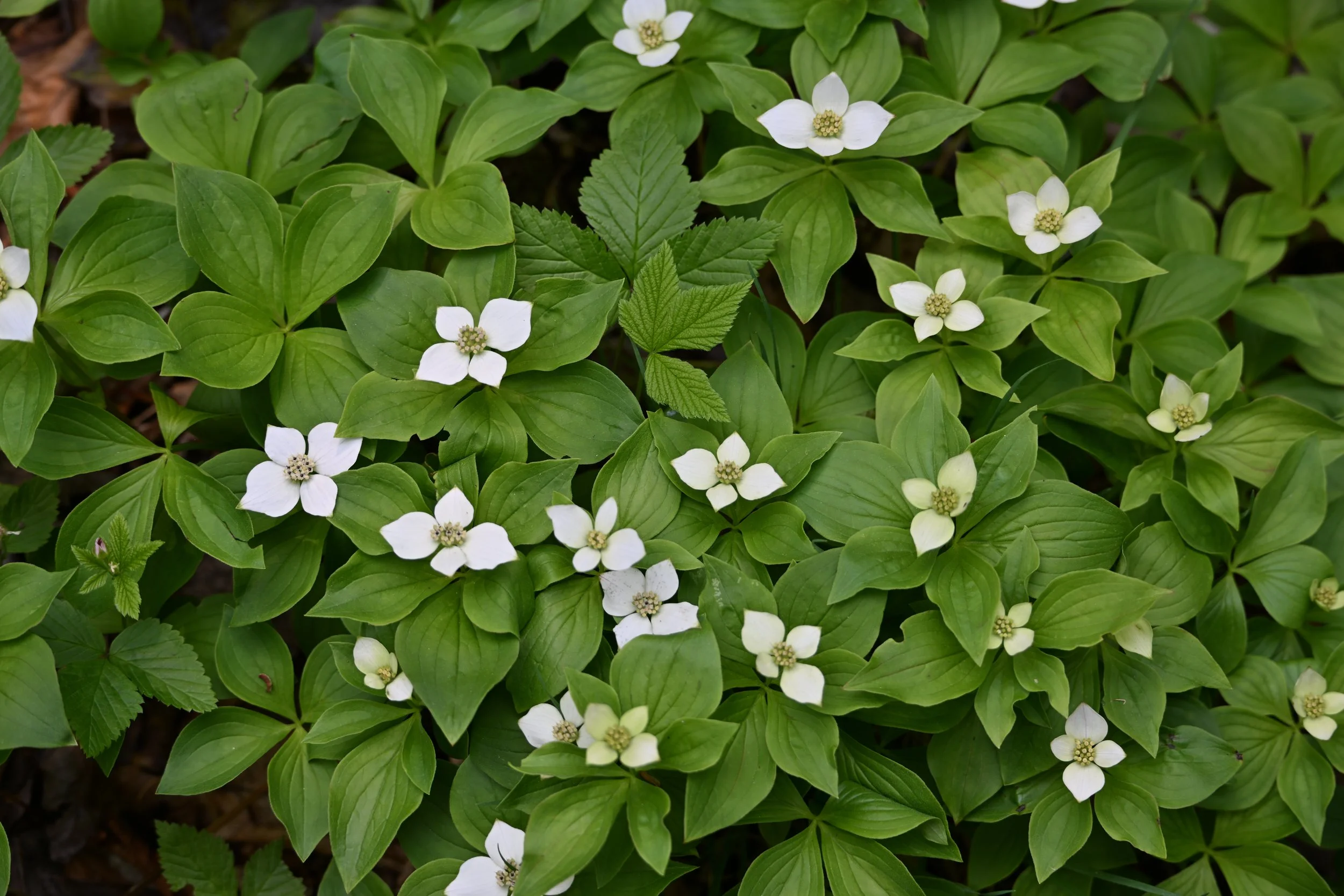
We left St. John’s to drive all the way back across Newfoundland (a day and a half!), to get back to the port to catch the overnight car ferry again back to Nova Scotia. Before we said goodbye to this beautiful island, we took one last hike near the west coast. It was the Erin Mountain Trail. On our way up, we saw a number of wildflowers blooming, including Canadian Bunchberry…

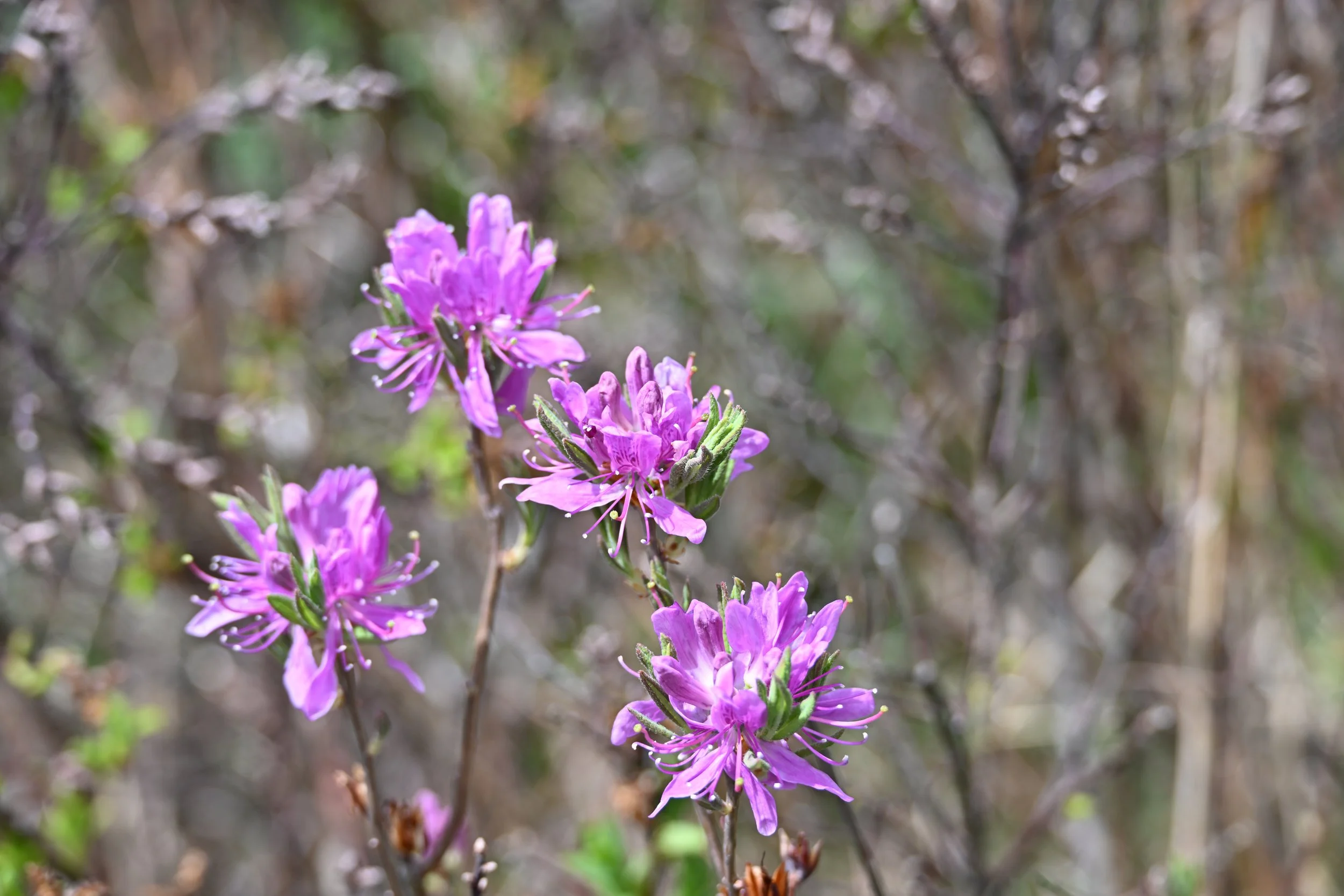
… Rhodora…

… which is in the rhododendron family -

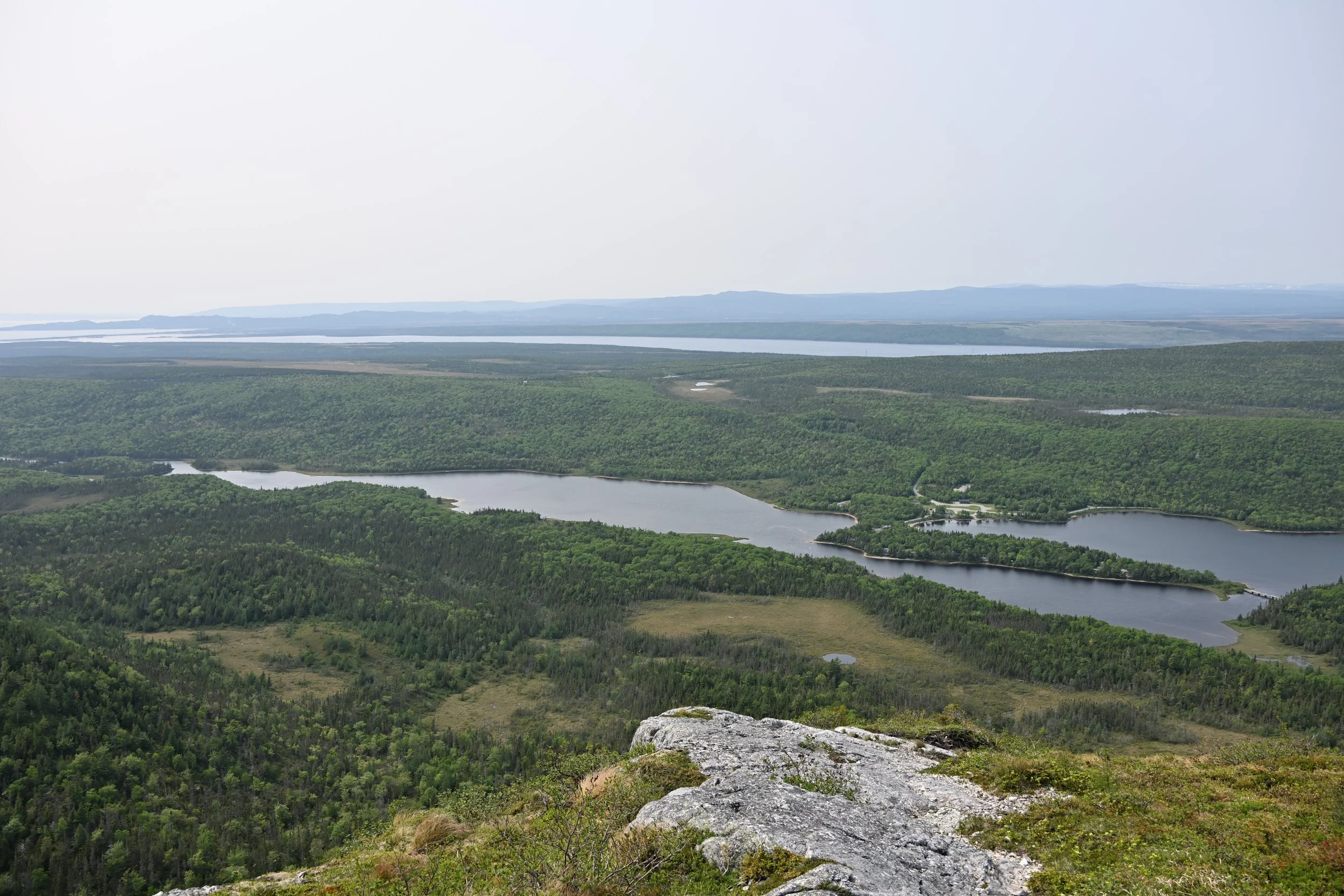
The views on top were expansive…

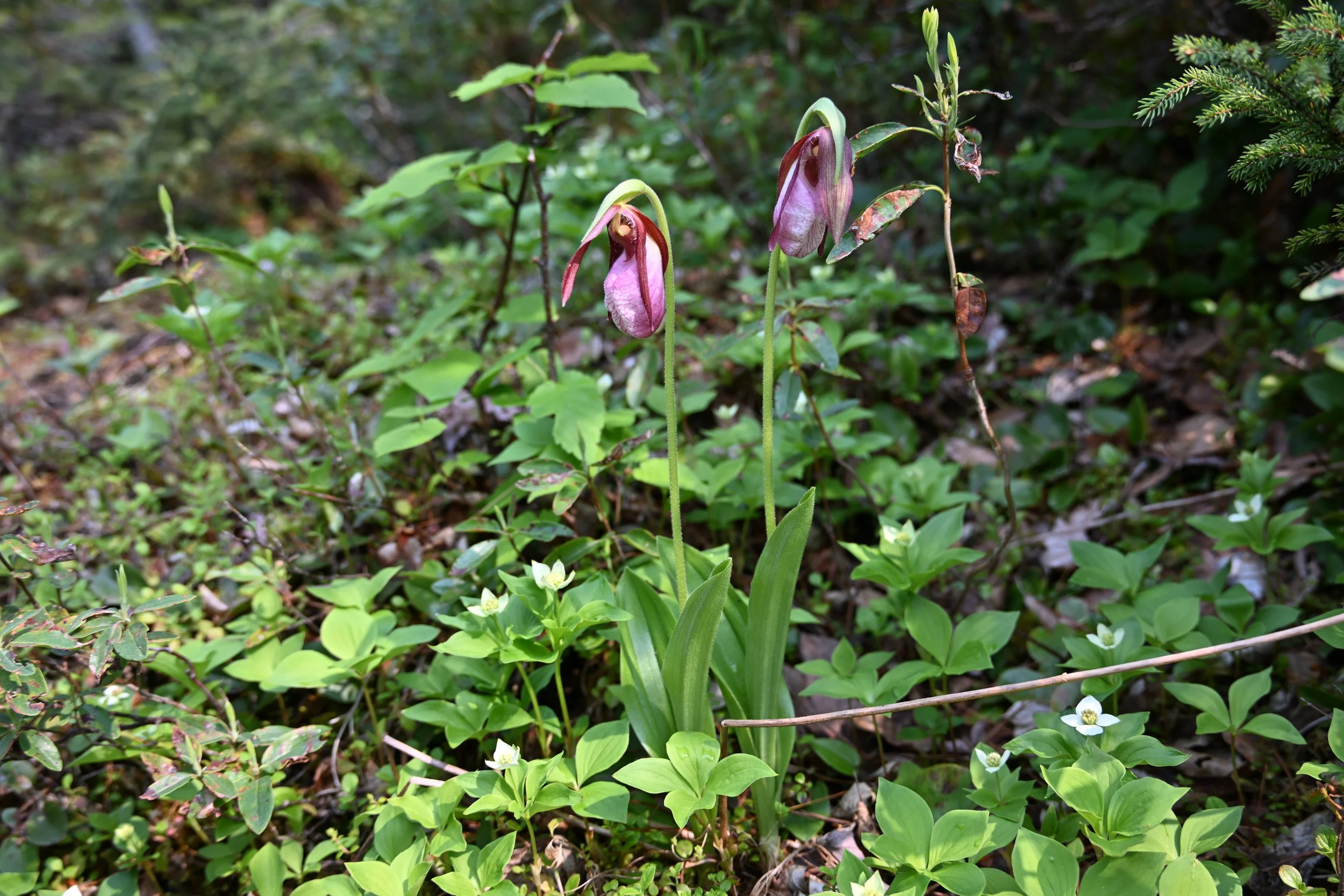
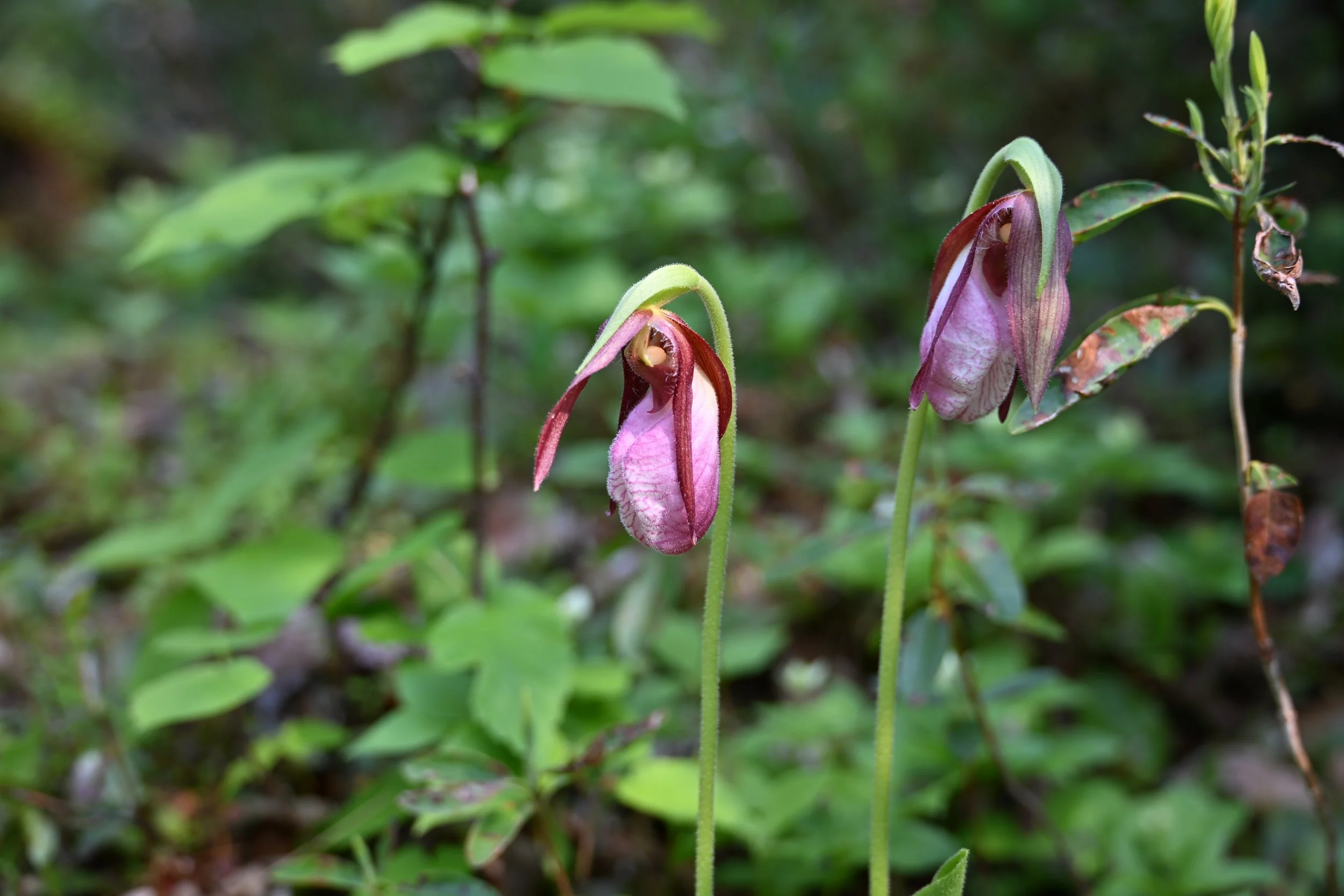
… but not as great as the Pink Lady’s Slipper orchids I found!

Next up — Nova Scotia.

A Third Newfoundland Post

We headed east, reluctantly leaving the gorgeous west coast…

… but soon got to marvel at the birches (that we hadn’t been seeing because the moose eat all the seedlings) interspersed with the firs -

We were headed for one of the peninsulas that constitute the northern coast, and stayed in the town of Bonavista -

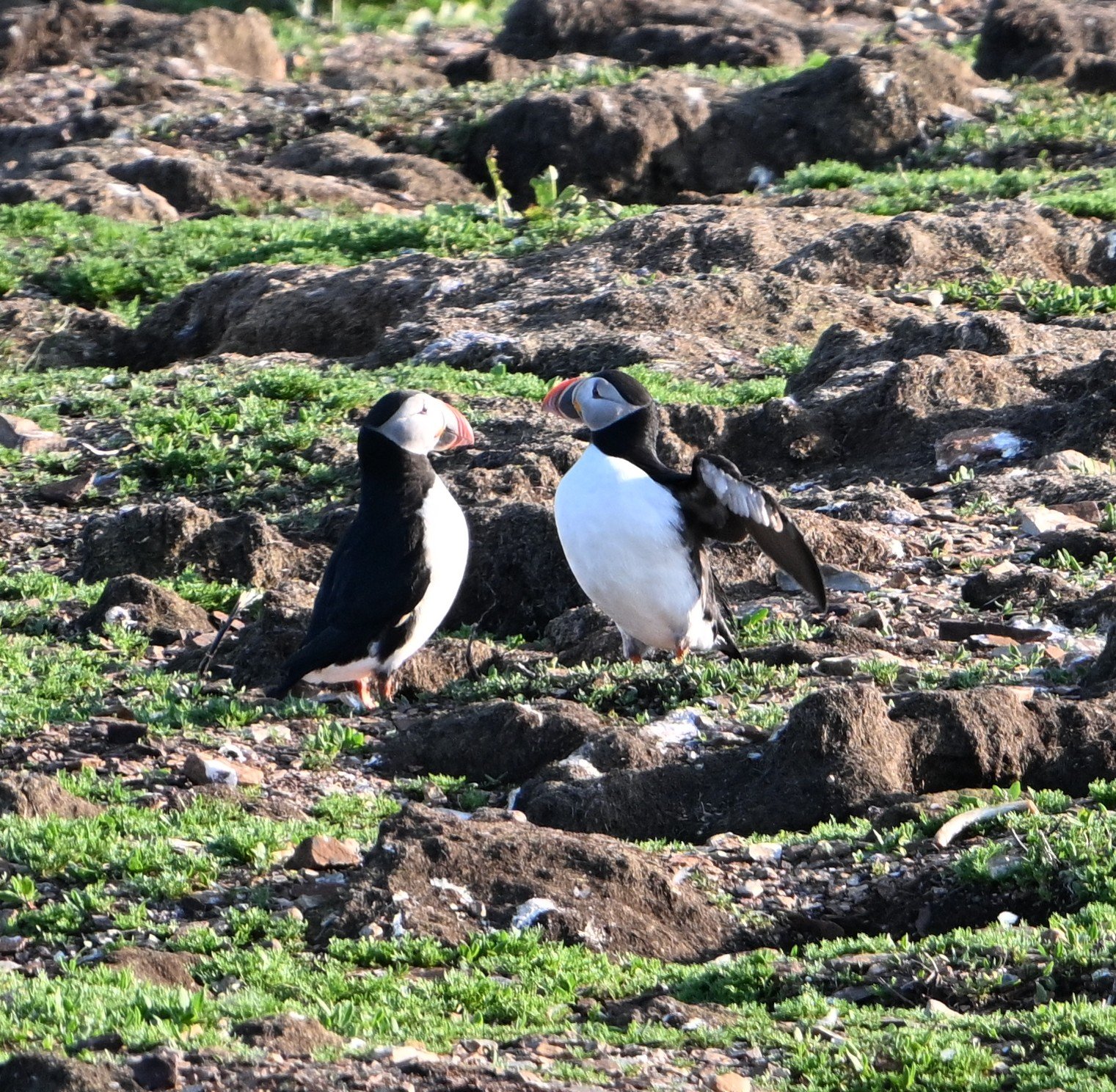
The big draw for me was the Atlantic Puffin nesting site near here -

I first visited early in the morning, hoping for good light and large numbers of birds…

… but was a little disappointed in my pictures as I reviewed them. The puffins are on an offshore island, and that picture above was taken with my 400m zoom lens and then enlarged on my computer. However, the morning light was nice on the rocky coast -

The root cellars nearby were interesting…

… and one even gave me a beautiful fox sighting -

Also, on the way back into town, the resident iceberg showed off nicely -

So I visited the puffins again around noon…

… with much better light…

… and just as many birds on shore -

Their small size (only about 8 inches tall) was surprising…

… and notable in contrast to the Herring Gull, at twice their height and weight! (You can appreciate this better if you enlarge the picture above.)

We went on a hike to nearby Spillar’s Cove in the afternoon…

… getting to see some cool sea stacks…

…and wandering along the seaside cliffs -

This was a unique plant we found -

Roseroot Stonecrop

The “Dungeon” made a nice detour -

(did you happen to notice the iceberg out to sea that photobombed the picture - in the left upper corner?)

I’ll need one more post to finish showing you why we really enjoyed our time on Newfoundland. As is common, I’ll close with sunset -

Iceberg on the left!

Newfoundland (continued)

In the US we tend to pronounce the name of the province with the stress on the first syllable, but locals stress the second syllable (newFOUNDland). Their accents varied as we made our way across the island, from general Canadian (oot and aboot) in the west, to nearly sounding Irish in St. John’s (on the east coast). I won’t belabor this now, as Steve will summarize our trip as usual, with interesting tidbits later.

Now, back to Gros Morne National Park. One of the main things tourists visiting this area do is take a boat ride into the Western Brook Pond. You should know that in Newfoundland, any body of fresh water is called a pond - even this 16km long lake:

As we had recently taken a boat ride into a fjord on the South Island of New Zealand, we passed on this activity. However, we did enjoy the stroll to get to the Pond…

… where we were kindly directed by some other tourists to take a side trail through a lovely woods. There, we found a cute Swamp Sparrow…

… tiny Scottish Primrose…

… and frogs…

… lots of frogs -

As usual, to watch the video above, tap the link at the end of this post to open it in your browser. We couldn’t really capture all the multitude of frogs hopping off the trail in front of us as we walked, but Steve captured a small representation there.

So before we proceeded up to the northern end of the Great Northern Peninsula, we had a nice last evening at the Lobster Cove Lighthouse -

With Steve’s love of history, we had to make the significant detour to the northernmost point of Newfoundland to visit L’Anse aux Meadows. This is the only known site of a Viking settlement in North America, dating to around 1,000 years ago. As we got near, the fog was rolling in…

… but hadn’t yet obscured the remains of icebergs in a cove -

I’m not sure what this sculpture had to do with Vikings, but I liked it -
That was at the beginning of the boardwalk trail through the replica of the settlement -
I included the picture above because it sets the scene of bleakness and fog, but you may want to enlarge it to see more details of the layout.

We both enjoyed our visit very much, and were thrilled to be there on the first day they started offering guided tours (June 1). Yay! We’re finally in tourist season.

We spent the night nearby, finding a nice iceberg in the cove beneath the B&B -

The next morning we did a short hike up to a hilltop overlooking the ocean…

… and coves around us -

All the little iceberg remnants were gorgeous -

As we drove back south, we passed a number of garden plots next to the highway…

… that were being readied for planting, but I couldn’t figure out how that little wooden fence would keep out moose. These plots would increase in number as we neared towns, then dwindle away after we passed through.

There were also huge stacks of wood along the highway…

… but my eye was always caught by the icebergs we drove by -

So I’ll end this note as we head east across the island province, with a reminder of the gorgeous sunsets we had on the west coast -
Newfoundland

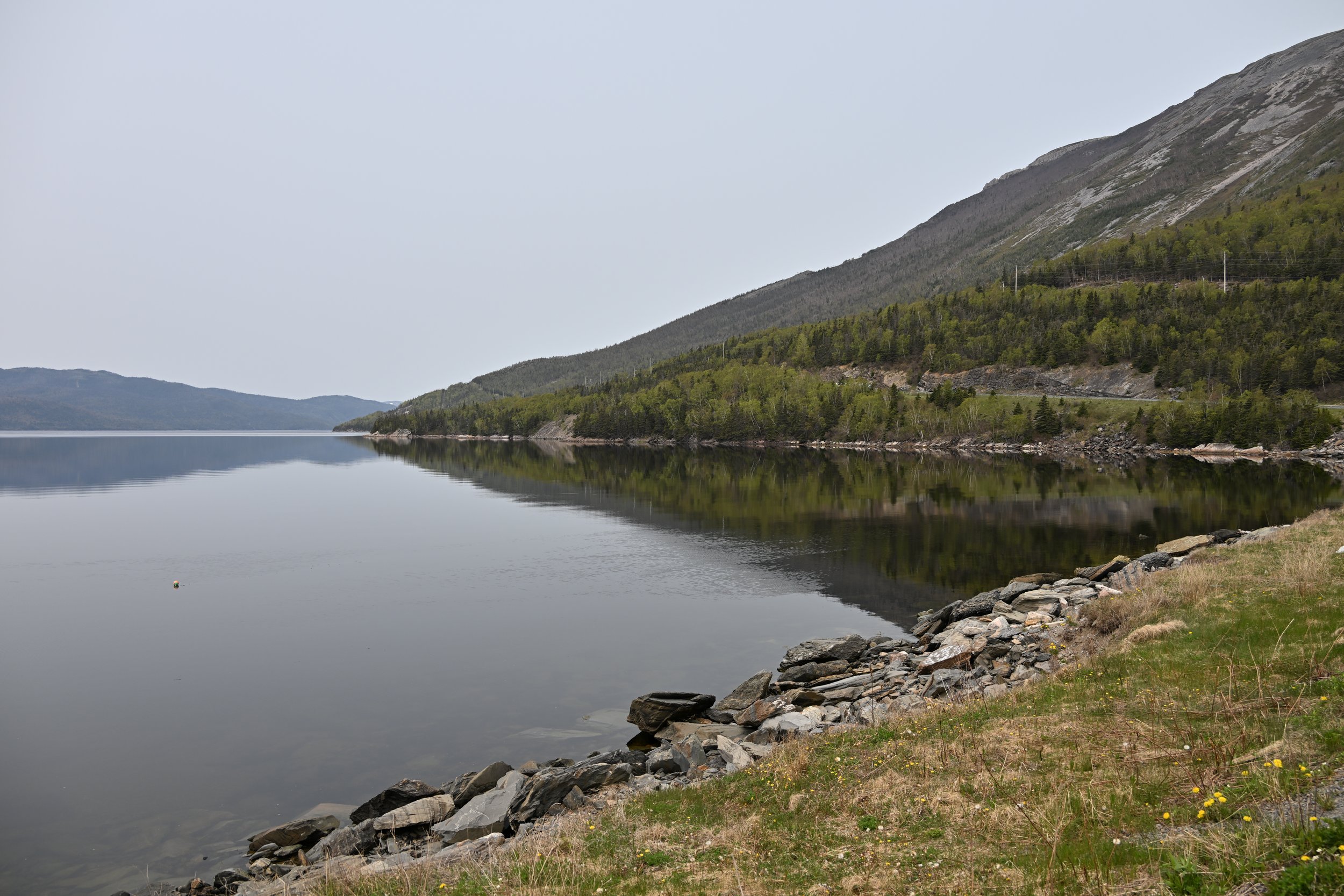
It takes a 7-8 hr ferry ride (bringing the car) to get here, from North Sydney, Cape Breton. We booked a room on the overnight ferry, and slept remarkably well. We both wanted to visit Newfoundland because it’s definitely off the beaten track for visitors to Atlantic Canada, and it’s a mix of different ecosystems. There are lakes and mountains…

… but also bogs…

Marsh Marigold

… icebergs…

… puffins(!)…

… caribou…

… and moose, which we saw 2 of, but with no photographic proof. :(

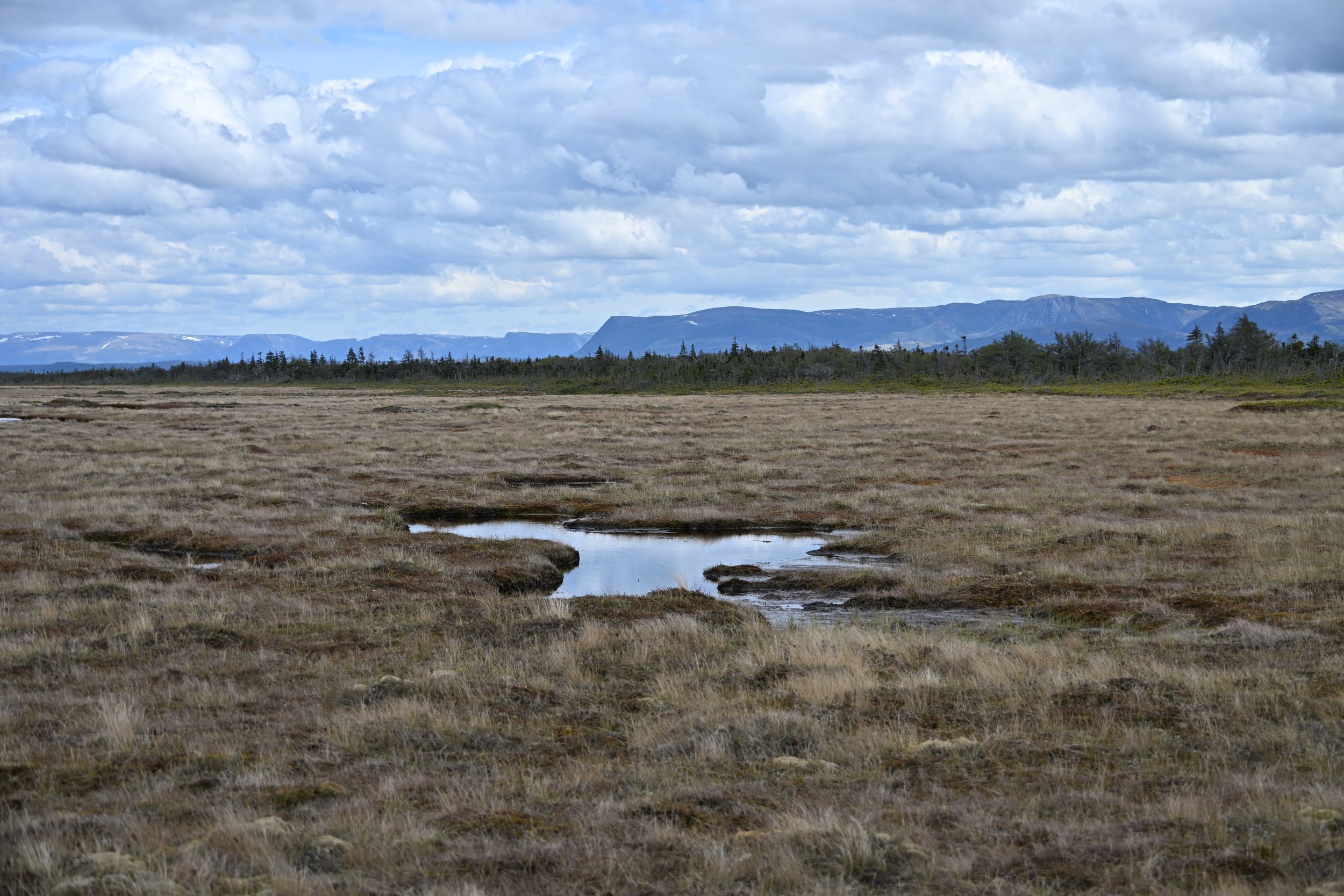
The ferry arrived at the SW corner of the island, and after a hearty breakfast at a local cafe, we headed north. The first area we were going to explore was Gros Morne National Park. This lies along the western coast in the Great Northern Peninsula and extends east to the Long Range of mountains, which is the northern end of the Appalachians! A lot of this area is a boggy plain, dotted with innumerable bodies of water…

… that sometimes have cute inhabitants -

Apparently, moose are commonly seen on this peninsula, but no matter how far we tramped through the woods, or drove from one end of the island to the other, we were not fortunate enough to photograph one on this trip. I have yet to capture a photo of a full grown male with antlers, but Steve tried to help me out -
Gros Morne has beautiful territory for hiking, so we were definitely in our element here. The first trek we took on was to Baker’s Brook Falls (and included the Little Pond).  We walked through a bog area on boardwalks and saw the remains of Pitcher Plants just off to the side -

The official Provincial Flower is carnivorous!

I was amazed that they would have survived the winter, and not just got completely broken down.  There wasn't much for us to see, as far as vistas go...

(the ocean is that blue blur at the horizon)

... so we focused on birds (imagine that!) like this cute Black-and-white Warbler...

... and the Spruce Grouse beautifully posing...

... along with multicolored fungi -

The Brook’s Falls…

... were definitely worth the hike -

We stayed three nights in the town of Rocky Harbour (note the Canadian spelling), to easily access Gros Morne park.  So the next day we hiked to the base of Gros Morne Mountain.

Gros Morne is on the right

Table Mountain was a pretty mosaic -

We crossed a brook near a nice waterfall...

... on the way to the plateau...

... with several streams and ponds -

We thought the catkins of the Speckled Alder (you can see on the bottom right of that picture above) were quite pretty -

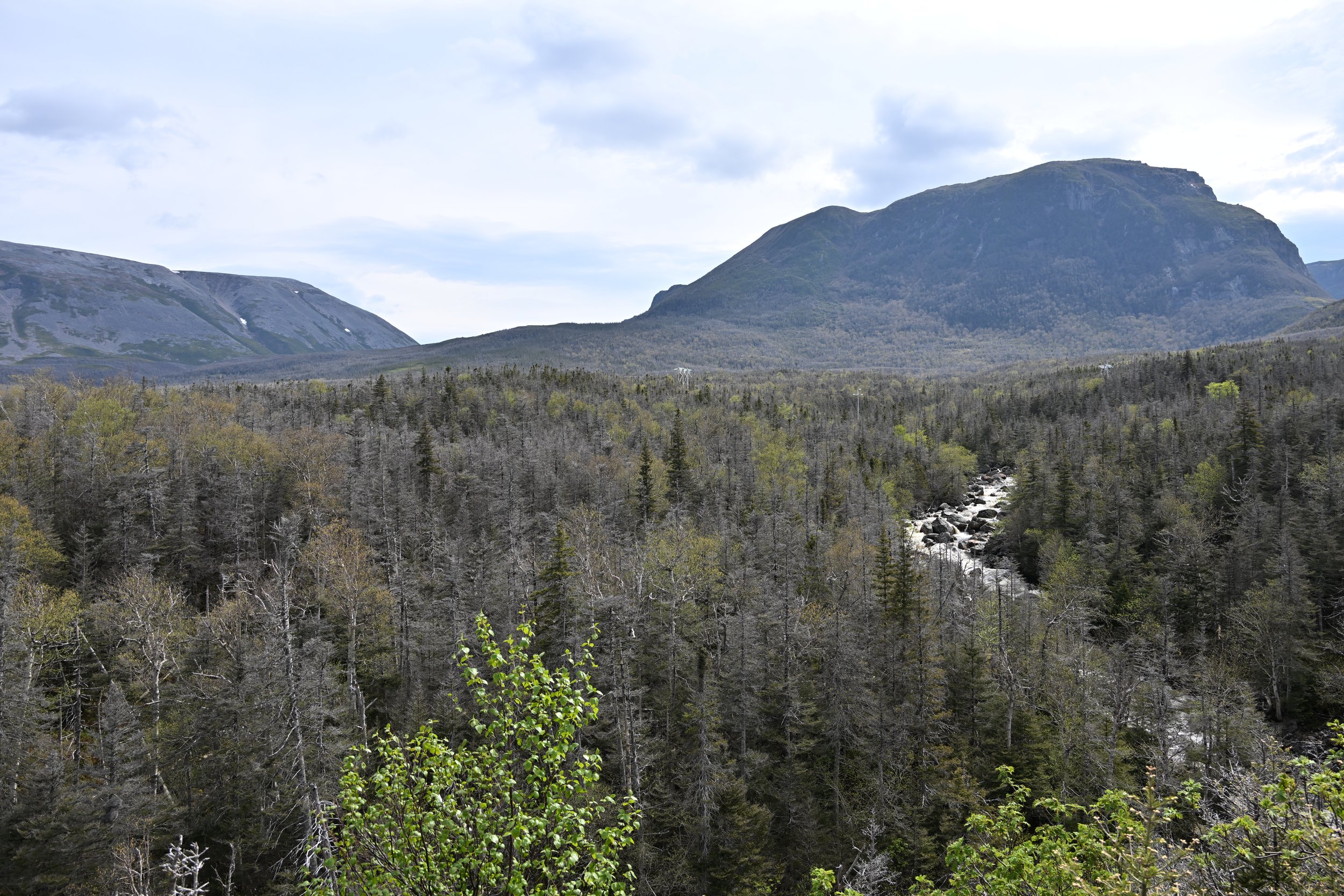
We needed to turn around at this valley because the route to the top was closed for a month. This was for the births and growth of the young of several species of birds and mammals.  So we enjoyed the expansive views on our way back down -

We did one more hike in the national park, but I'll cover that (and more) in the next post.  This sunset in Rocky Harbour will close out this one nicely -

Cape Breton Island

Cape Breton makes up the eastern end of Nova Scotia, and is ruggedly beautiful. Our first activity was a short hike to Egypt Falls -

I wanted the people there so you could appreciate just how wide it was. It was challenging to photograph for that reason -

Our first evening was spent at a lovely little country inn that gave us this view from our room:

At breakfast the next morning, the fog was so thick, we could only see the reflection -

We then started driving the Cabot Trail, which is a 185 mile loop around the northern portion of the island. There was astounding coastal scenery…

… and the birch trees were just starting to leaf out -

The area is known for its stunning hikes, so you can guess what we did! This was a view from the Middle Head Trail on the east coast (we drove the Cabot Trail counterclockwise) -

It was reminiscent of Acadia…

As you can see, the weather had finally cleared up. I was SO happy!

Can you see all the buoys in the cove? They mark lobster traps.

As we hiked out to the point, we happened upon…

This was the first of many that we saw on our traversing of the Maritimes. Adirondack chairs were on every porch and patio, as well as tucked along trails at viewpoints.

Remember the red sands of PEI? Well, a lot of rocks here were strikingly pink -

I like to remind you occasionally that I don’t use any filters when photographing or do any color editing of my pictures. It really looked like that! And the water was that blue.

If you “google” the Cabot Trail, you’ll probably find some version of this scene -

This was taken from a very popular scenic viewpoint on the west coast.

One of the most popular hiking trails along the Cabot Trail is the Skyline Trail. I was a little leery of having to share it with tons of other hikers, but because we were so early in the season, we were the fifth car in the enormous lot (which was nearly full when we finished our hike).

Unfortunately, the first 3 miles of the hike was pretty flat and very boring for us, so we focused on interesting small things like the lichen above, which grew all over dead branches on otherwise green spruce trees. And, surprise, we admired lots of beautiful birds and their songs -

Magnolia Warbler

When we got out to the boardwalk, we finally understood why everyone raves…

… over the views -

We also found out, as we finished the trail, that you can go out and back just to the boardwalk and only have to hike a total of 2 miles, rather than the 6 we did.

One disadvantage of visiting here in the shoulder season was that some places weren’t open. We missed hearing live Celtic music (which the island is known for); the one pub in a little town we stayed in specifically for this was to open 3 days after we left. And on a personal note, my late father’s favorite single-malt distillery was also closed and scheduled to open for the summer season the week after our visit.

I don’t have anything spectacular to close out this blog, other than the vast expanse of the Atlantic Ocean -

New Brunswick and PEI

For the longest time, I would see PEI in front of mussels or oysters on menus and wonder what it meant. For those of you pondering like I did, it stands for Prince Edward Island. This is the smallest in both land and population of the 13 Canadian provinces and territories. I just wanted to give that bit of explanation before I continue the story of our travels.

Driving north from Maine we entered Canada…

… in the province of New Brunswick. Our main destination was the Bay of Fundy. Steve had first read of the enormous tide changes when he was in grade school, so this was definitely on our list to see. This information sign explained the reasons well, so I’ll let you read it from here:

The Hopewell Rocks are sea stacks caused by water erosion, and they provide a natural measuring stick to be able to appreciate the tidal changes. We first saw them at high tide (41 feet that day)…

… and then were planning on going back near low tide to be able to “walk on the seafloor”, but the provincial park running the concession closed before we could get back from our hike (eyeroll). Obviously, we neglected to note this before we took off on our hike. So we made a quick stop the next morning, but the park didn’t open until a couple of hours after low tide (another eyeroll), so this was the best we could see at the time (it was also raining) -

I wasn’t able to get the exact same viewpoints, but this is easier to see the tide difference side-by-side:

Friends of ours who were visiting on the same day actually paid attention to the posted park hours and allowed me to “borrow” this picture, so you can see scale better -

Here’s another interesting manifestation of low tide -

As far as the hike that made us miss low tide at “the Rocks”, it was an easy walk through a lush woods…

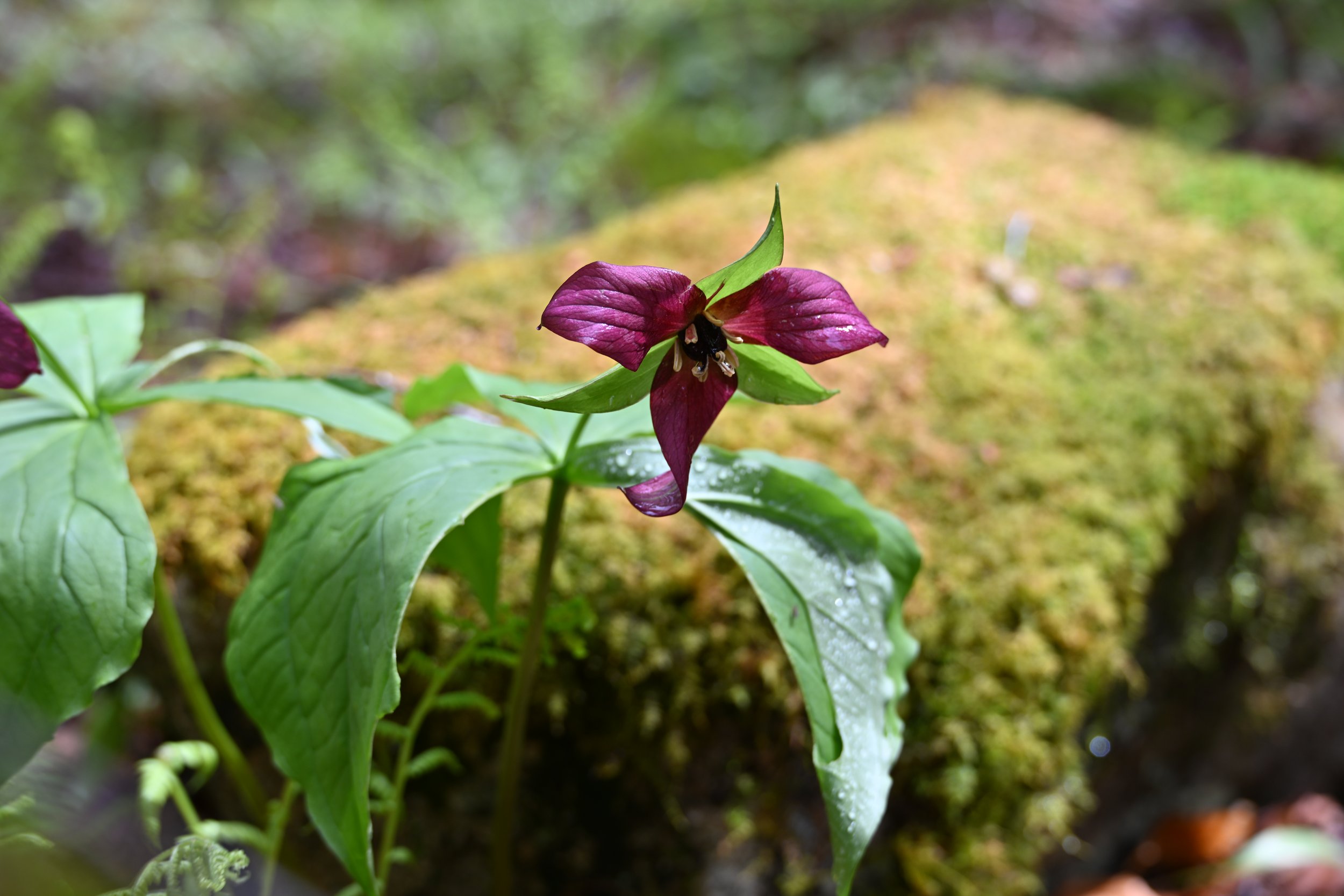
… with beautiful early-spring Trilliums…

… and a pretty stream…

… where our hike ended -

After we descended the staircase, this is what we found -

See the little blue sign attached to the tree above? That meant the trail was down that streambed, through the water on slick mossy rocks. No thank you. The waterfall that we were supposed to see at the end of the trail wasn’t worth slipping and falling, ruining ourselves or my camera. I settled for this mini version -

Okay… so now we’ll go on to PEI. It is connected to New Brunswick by a 13 km bridge…

… that is Canada’s longest bridge and the world’s longest bridge over ice-covered water.

As we drove through the center of the island, we were surprised at how much of the acreage was farmland. The dirt is very red…

… due to its high iron-oxide content. It is sandy and well drained, making it very suitable for agriculture—in fact, little PEI is Canada’s largest potato producer! As we drove north across the island, we noticed fog coming in, and the ground began to “smoke” -

We reached the north shore, intending on checking out the red sand beaches and cliffs…

… but it was not your typical late May beach day weather -

Apparently, this is a popular place in warmer weather -

Because the weather was so nasty, we didn’t end up visiting any of the fifty lighthouses that PEI is known for. However, oysters are a big thing here, and we sampled several different kinds -

I read that PEI oysters exported today are all descended from ones originally from Malpeque Bay on the north coast, where the water is clear and cold. We were too early in the tourist season to be able to take a tour of an oyster farm, but we saw a number of bays filled with rafts for “suspended culture” (in contrast to traditional bottom harvesting) -

Oysters take 5-7 years to grow to market-size of 3 inches. There are 6.5 million pounds of oysters harvested annually from PEI.

Our last stop was Charlottetown, the provincial capital, with its quaint historic district…

The tulips were out in full force, letting us believe that spring was really here!

Acadia National Park

On the first day we visited Acadia, the weather wasn’t very cooperative. At least it wasn’t raining, but it was foggy -

That was at the top of Cadillac Mountain (we drove) and it was windy and freezing. We went back the next afternoon, and this is the type of view we were supposed to have -

So that first day, we opted to walk in the Sieur de Monts Spring area…

… which was lush and green. The Fiddlehead Ferns were coming up…

… the fungi were a riot of color…

… and the birches provided a nice background -

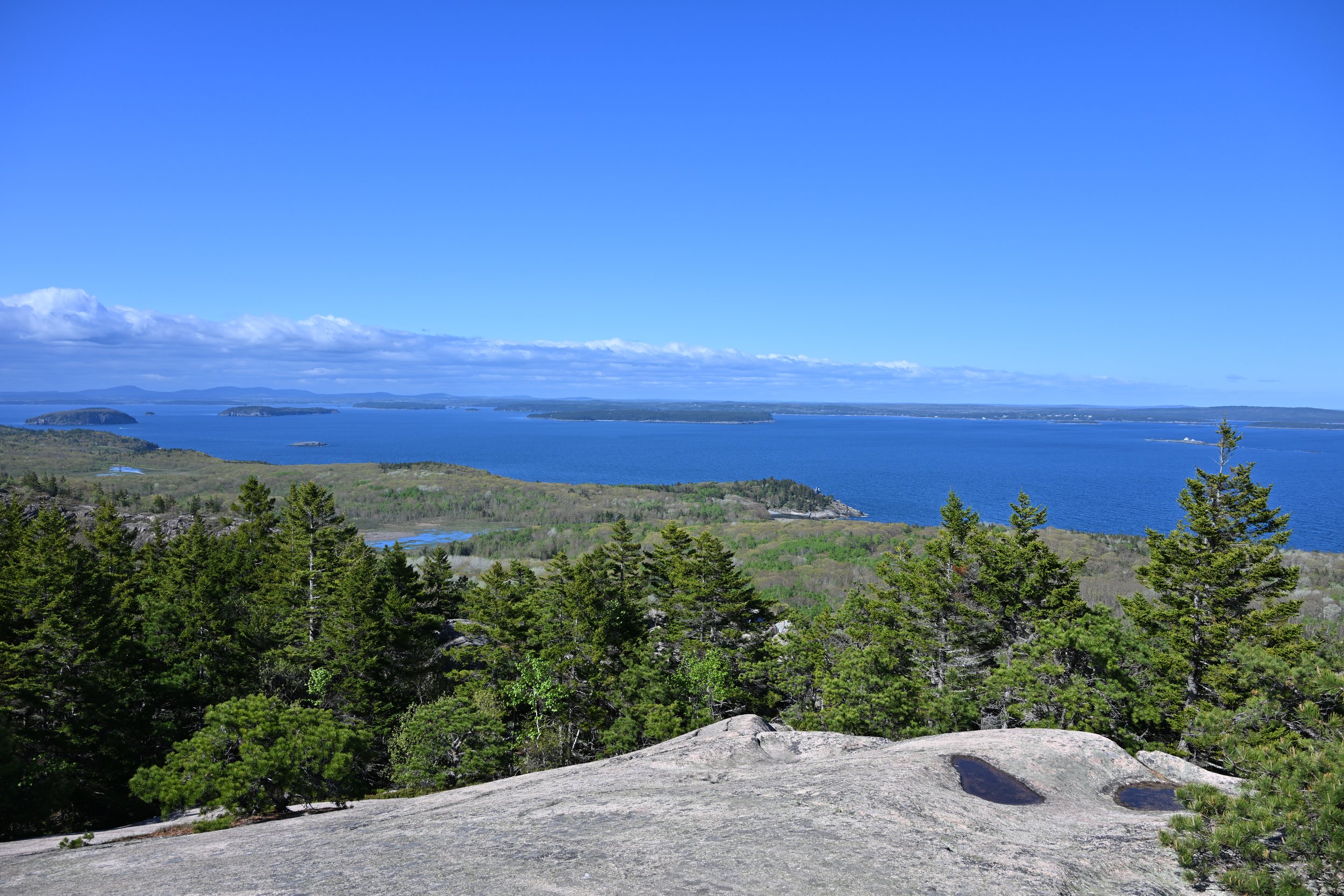
So now on to our second day in the park. From atop Cadillac Mountain you can see the string of Porcupine Islands, as well as the town of Bar Harbor -

The coast of Maine is dotted with innumerable islands -

That afternoon, we tackled a very interesting trail - the Beehive Trail. This was one of the markings that showed us where to go on the trail -

yes…straight up

It wasn’t a very long trail, but it was super fun to scramble up…

… and had great views from the top -

On our last full day in Acadia, we drove over to the Schoodic Peninsula, which is a small part of the park on the mainland (the main part of the park is on Mount Desert Island).

Schoodic Point had some really interesting rocks -

… that you could explore -

We kept seeing all this white stuff on the ground in the woods, so I had to get a close-up of it -

Reindeer Lichen

Now as we head north, we’ll bid the coast of Maine adieu -

Driving in New England

Now our next adventure is a late spring/early summer driving trip exploring a number of NE states we haven’t visited before, then heading up into the Maritime Provinces of Canada. The first new state for us was New Jersey. I had read that Cape May, on the southern tip, was a popular summer destination filled with Victorian mansions…

… and hotels just off the beach -

The weather wasn’t very cooperative for a beach walk -

We headed north and east to Connecticut…

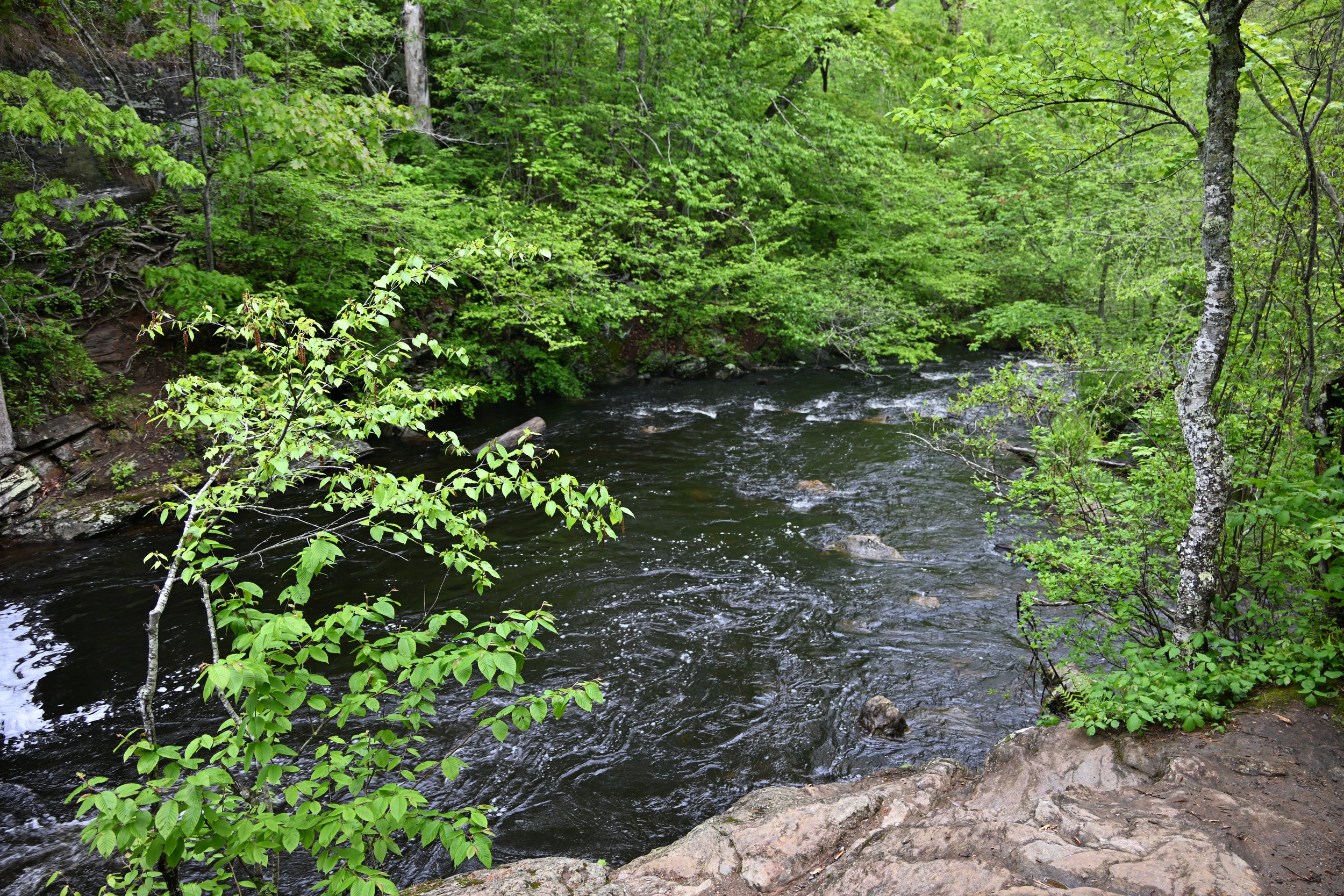
… where we found a nice hike along a river…

… that had a waterfall feeding it -

We then moved on to Narragansett, RI and spent a couple of nights in a cottage with the largest azalea bushes I’d ever seen!

We stayed here because it was near to Newport, RI where the “summer cottages” of the Vanderbilts and the like were built (around 1900)…

… and we wanted to tour the houses, as well as walk on the Cliff Trail behind them -

I was fascinated with the gorgeous color striations in the rocks -

After Rhode Island, we moved on to Massachusetts because I always thought Cape Cod looked cool, flexing its bicep into the Atlantic. :)

We did a quick marsh walk…

… and traversed a boardwalk through an Atlantic White Cedar swamp…

… before enjoying a lobster roll in a park -

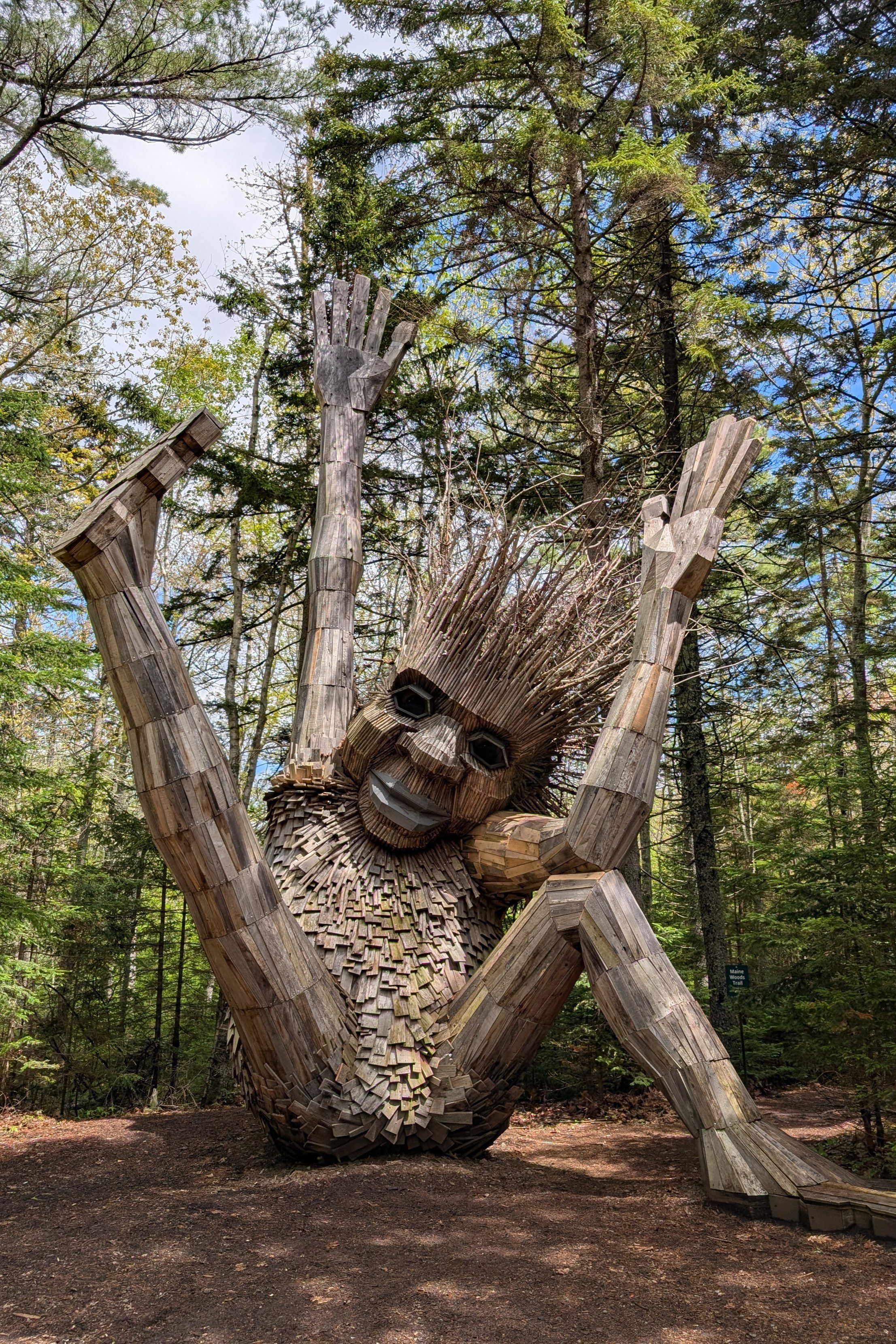
As we started driving along the coast of Maine, we stopped in to see the trolls of the Coastal Maine Botanical Gardens -

These were designed and constructed by the Danish artist, Thomas Dambo…

… using recycled wood…

… and scattered through the 300 acres of the park -

I had to throw this last one in with a human for scale -

The Fiddlehead Ferns were starting to unfurl -

I will leave you with a quintessential New England landscape -

Bhaktapur, Nepal & Trip Musings

So our last day in Nepal was spent in a town just outside of Kathmandu with a really neat “old town”. As I just found out from online research, Bhaktapur has been settled since around 1000 AD.

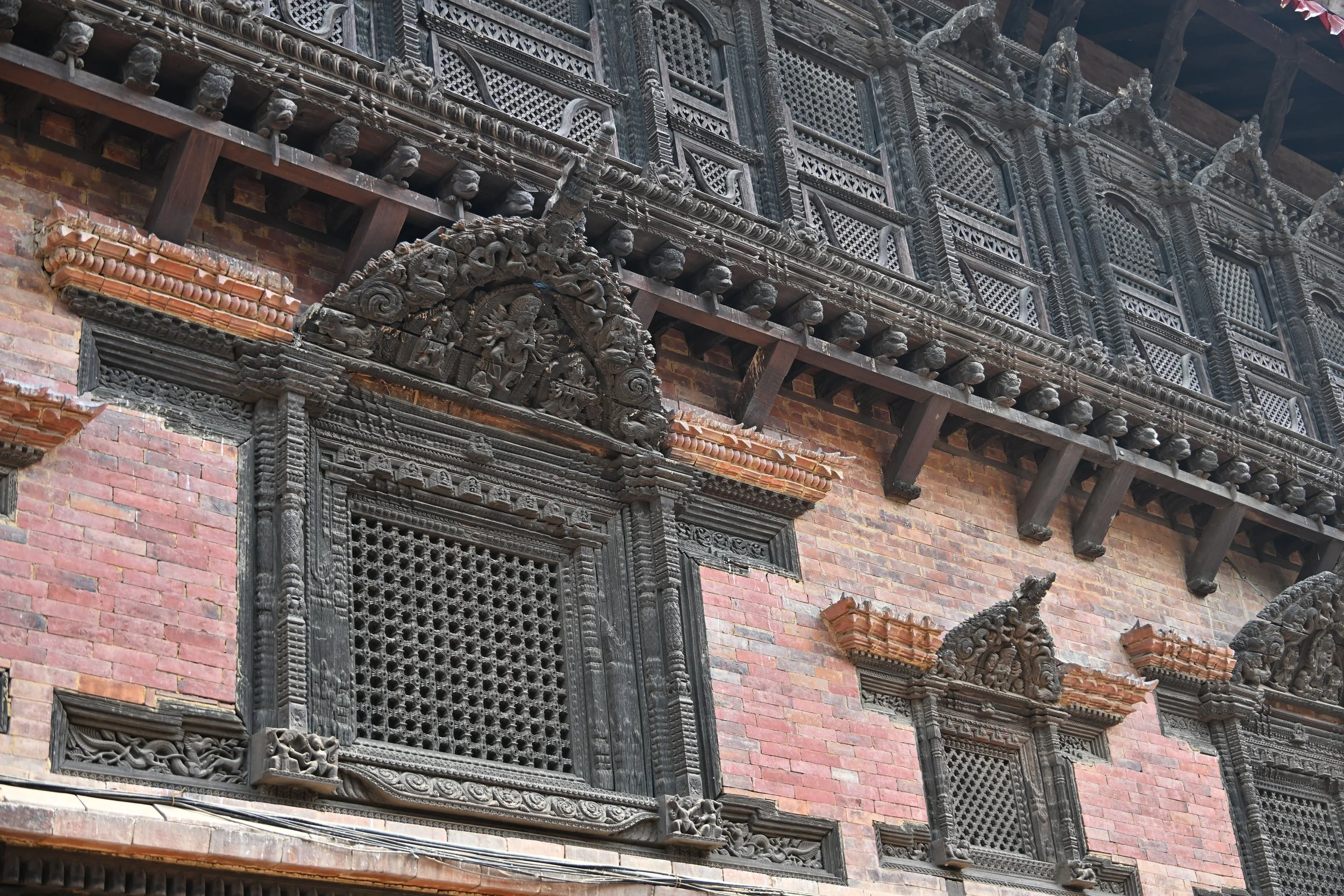
It is known for its woodcarving…

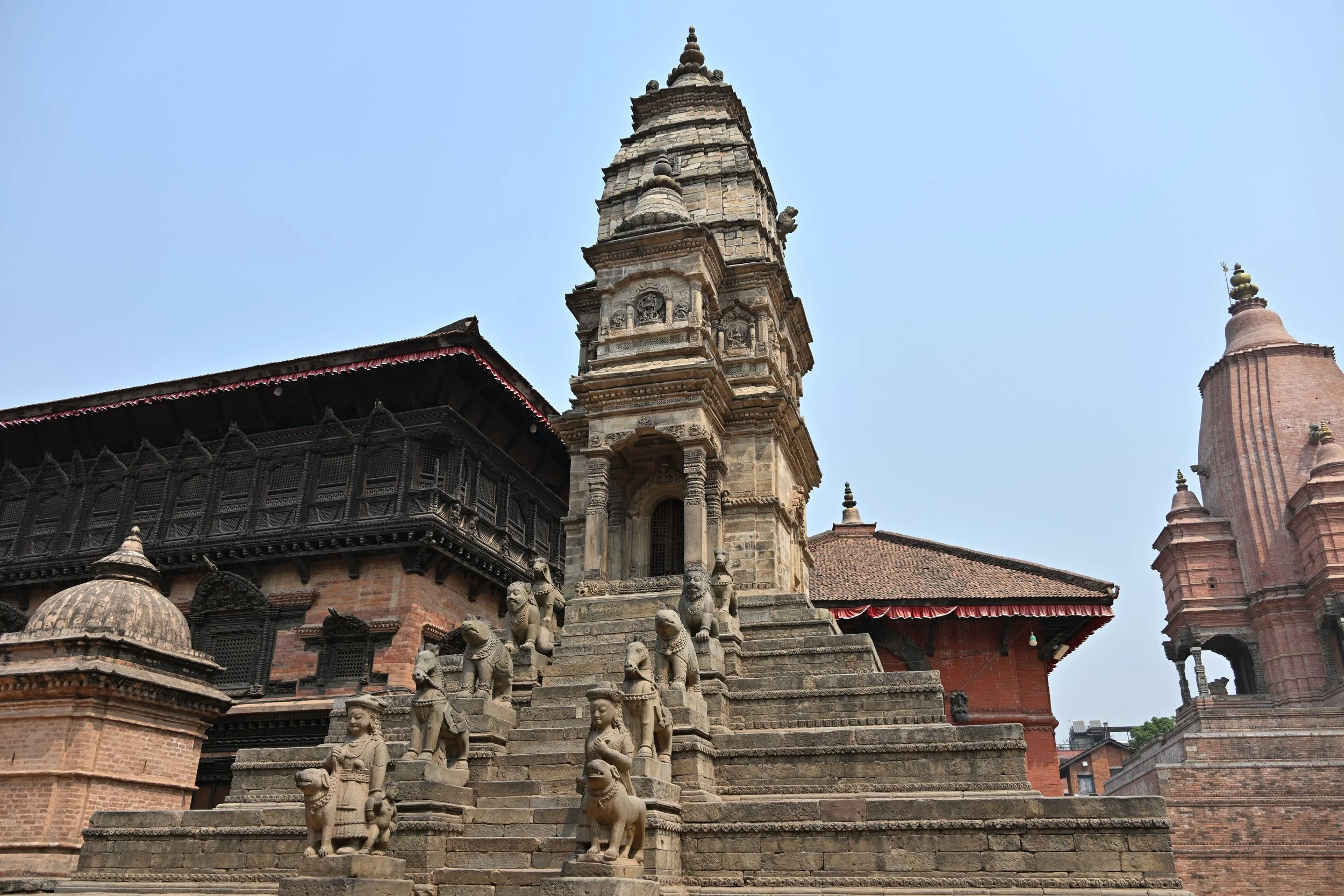
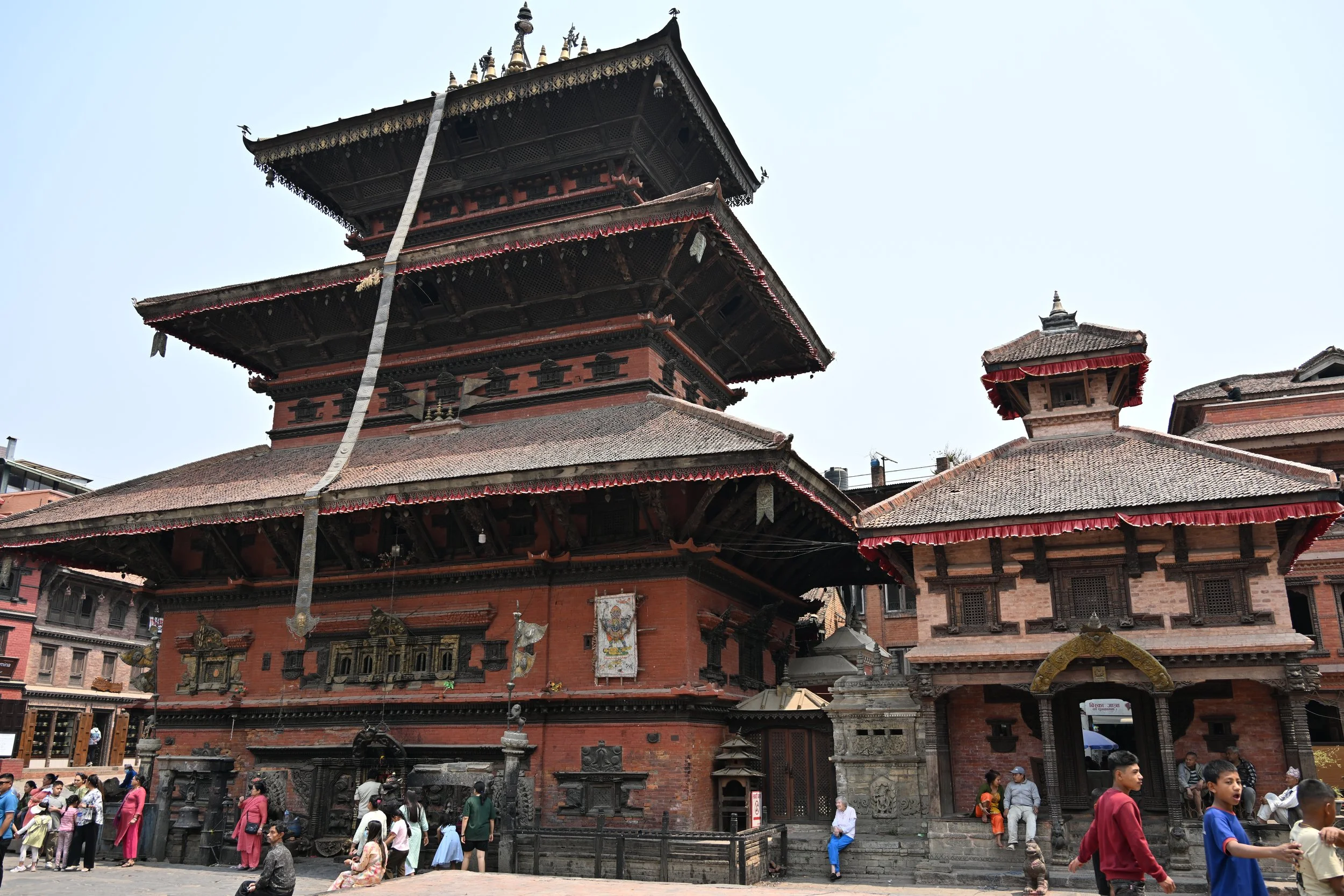
… and temples -

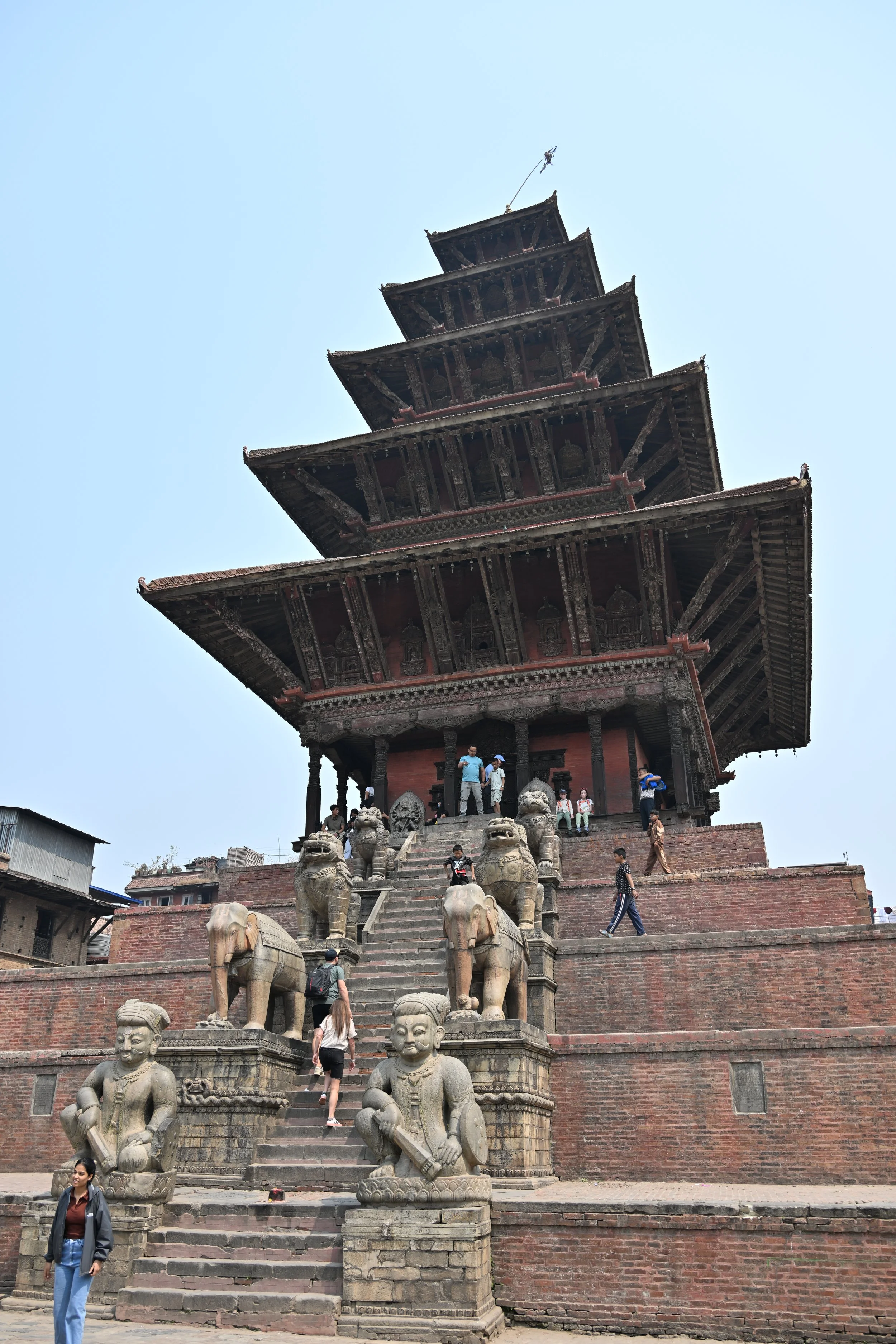
This Nyatapola Temple is one of only two five-story temples in the the Kathmandu Valley, and is the tallest building in Bhaktapur, as well as the tallest temple in Nepal, at 108 ft. It was built in 1702, and has withstood 4 major earthquakes.

Many temples and buildings in the various squares were unfortunately destroyed or damaged in both 1833 and 1934 by earthquakes…

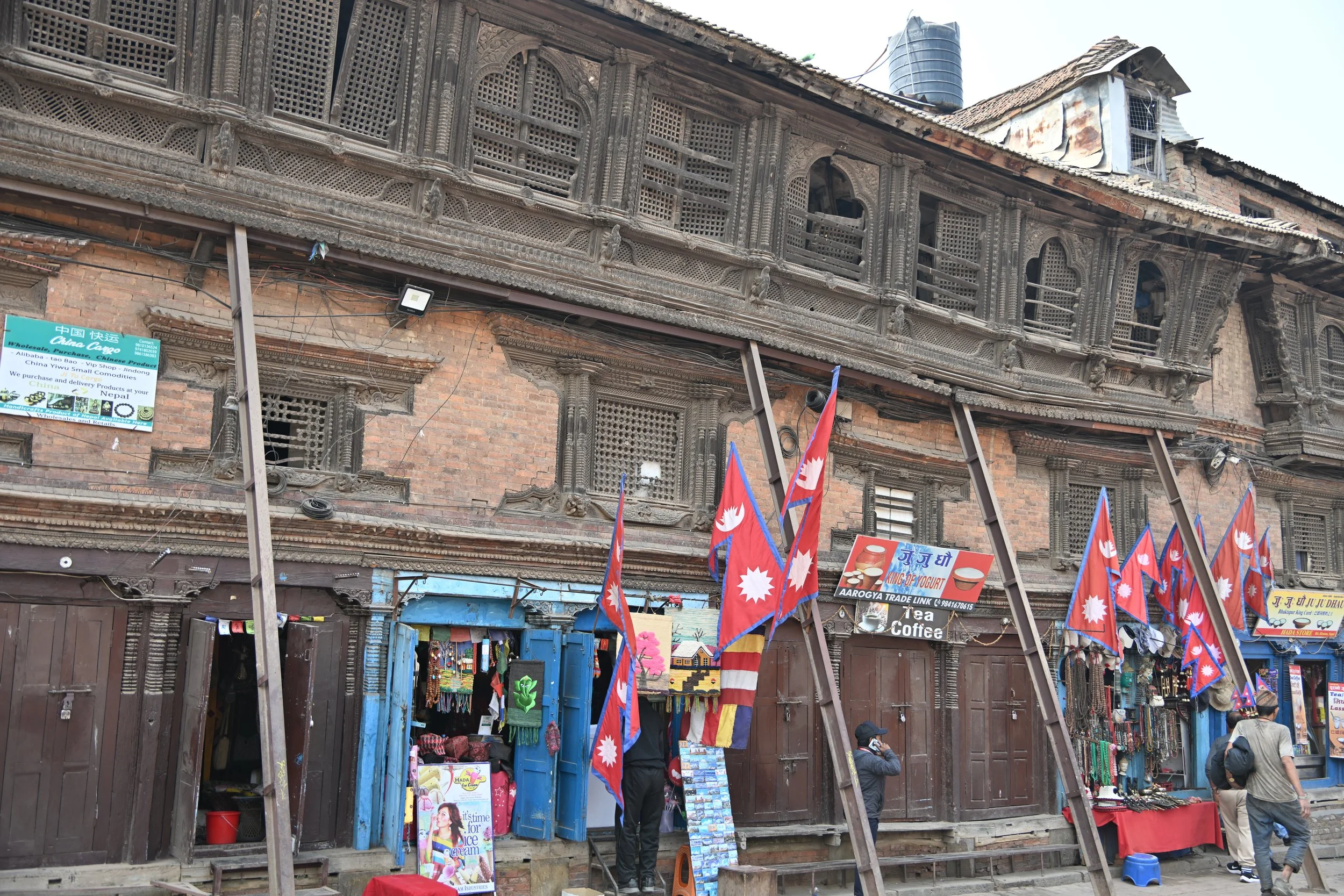
… and you can see both old and restored buildings side-by-side throughout the city -

There was also a major earthquake in 2015, and reconstruction continues…

I happened upon this neat shop during our wanderings -

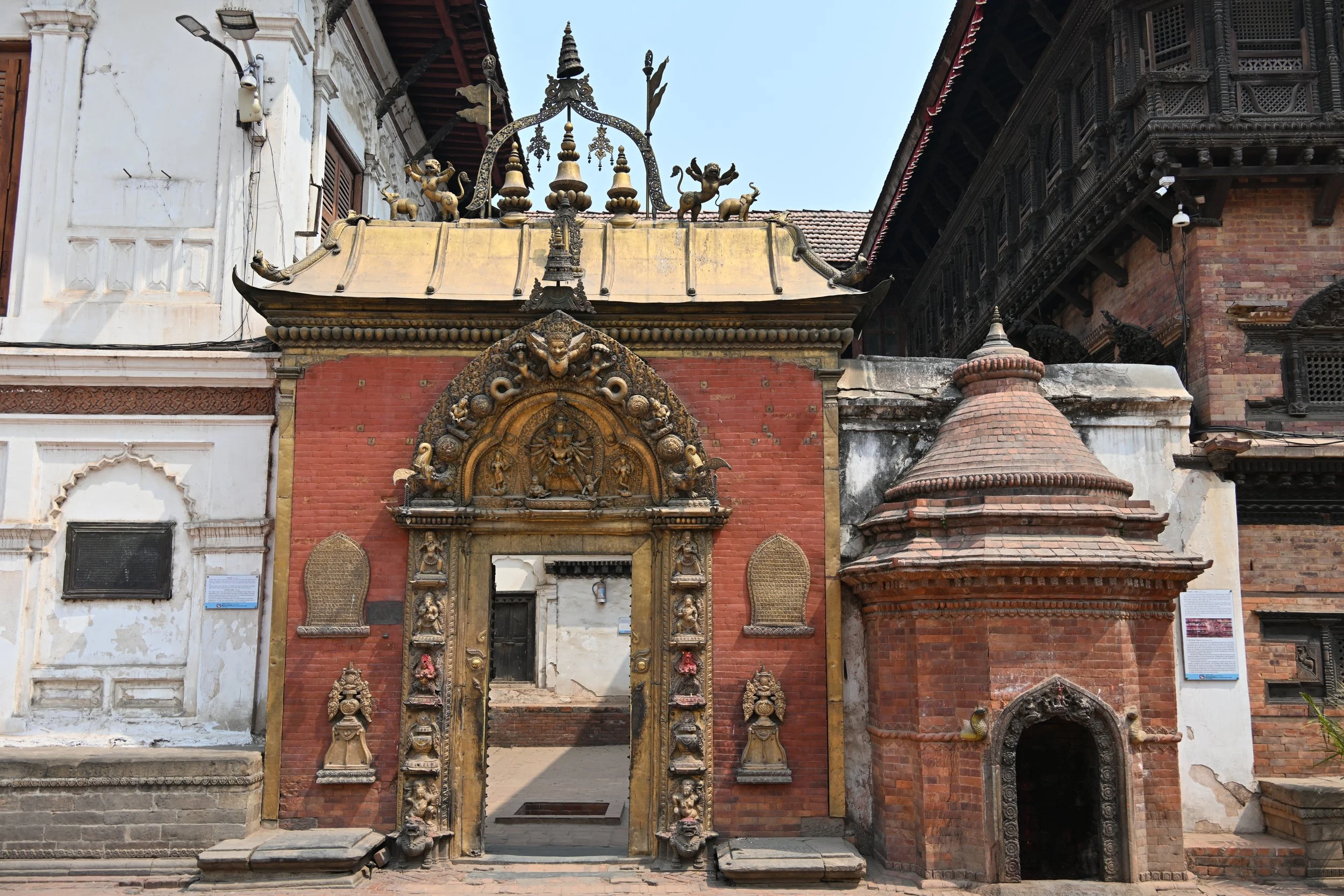
This Peacock Window dates from the early 15th century, and I found it by perusing Google Maps for places to see as we explored -

Speaking of earthquake damage, I’m not sure I’d visit this second story -

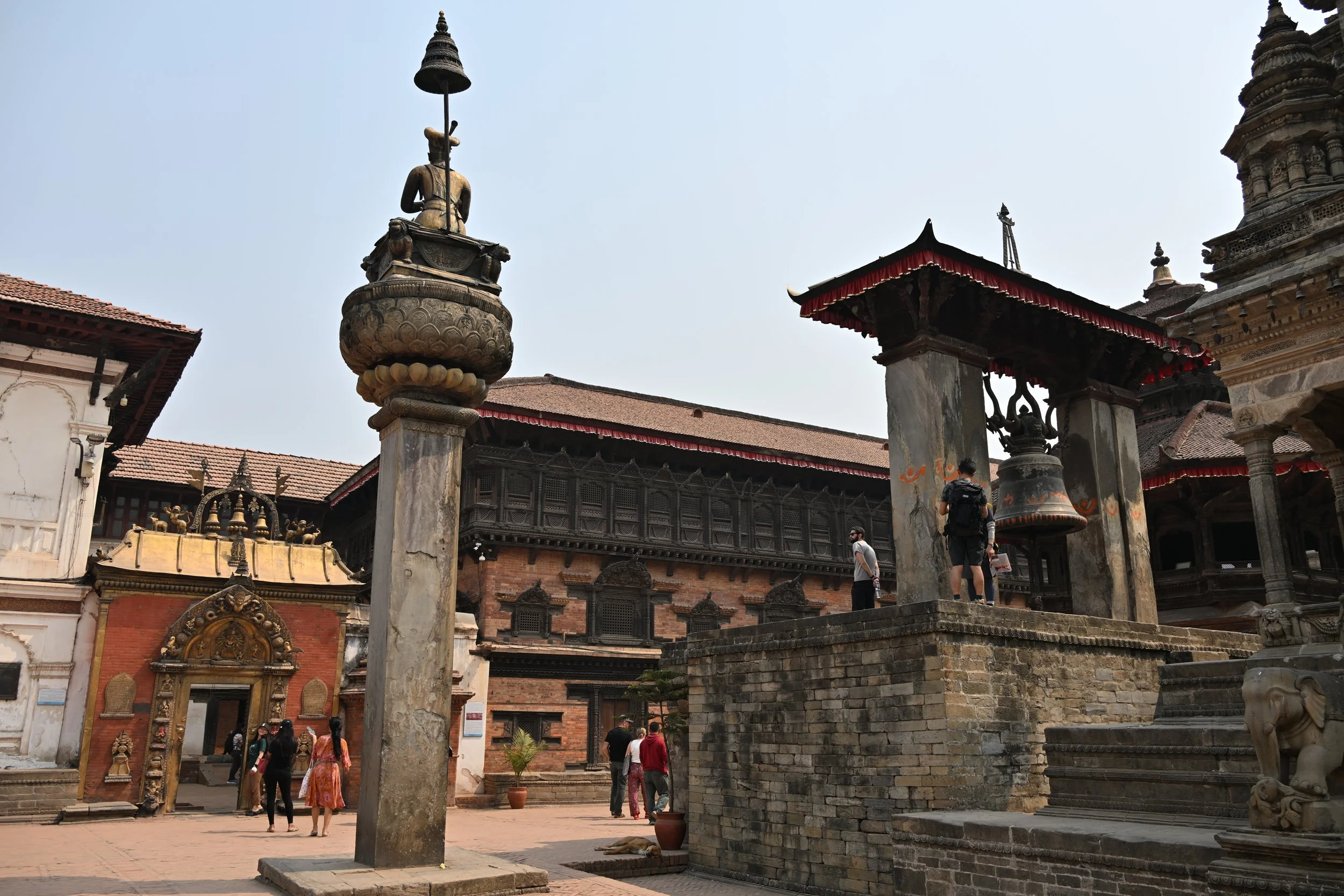
Some beautiful stone and bronze work -

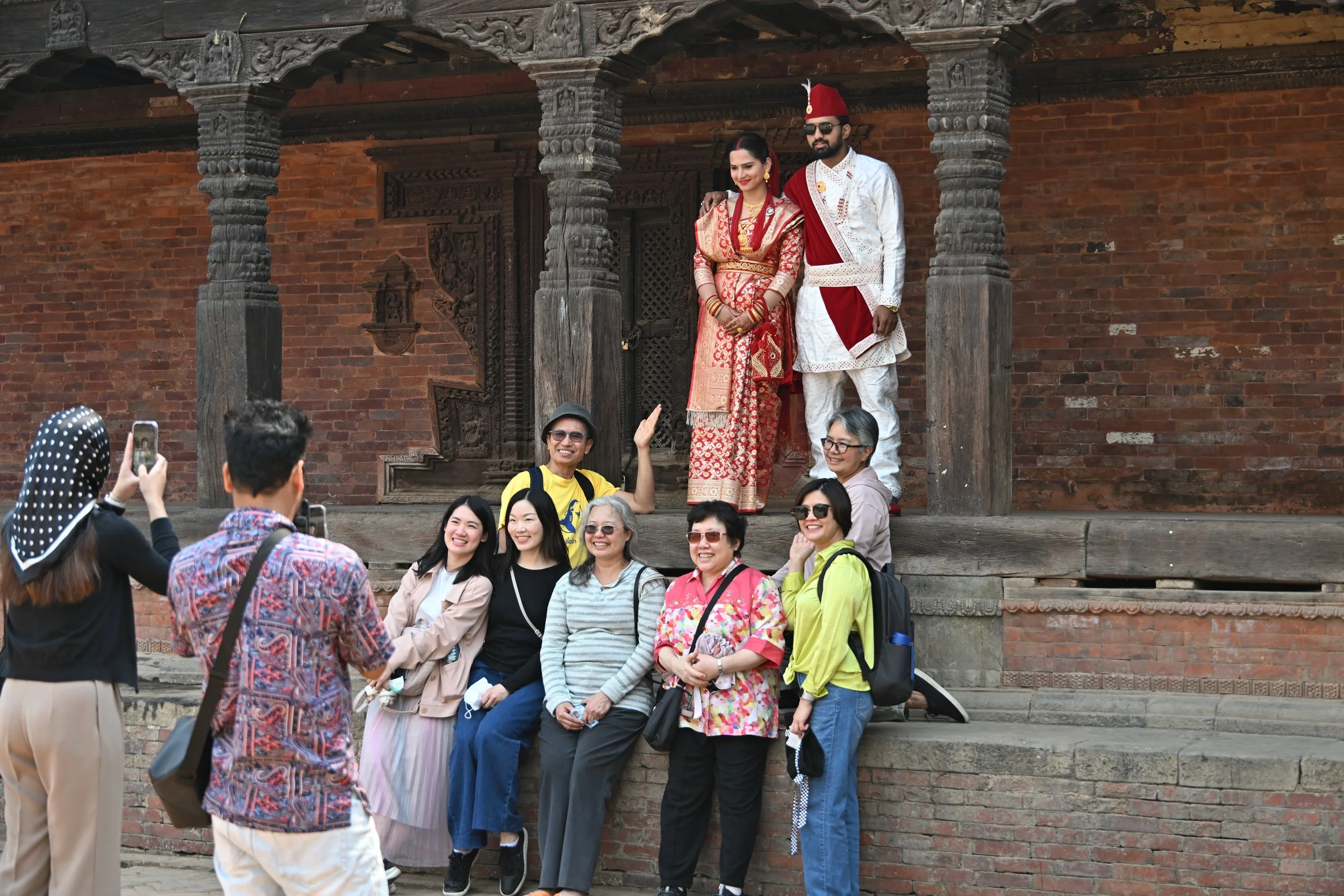
Here was something that made us laugh. This couple had their wedding photo engagement crashed by some Asian tourists! (so of course I had to grab a photo too)

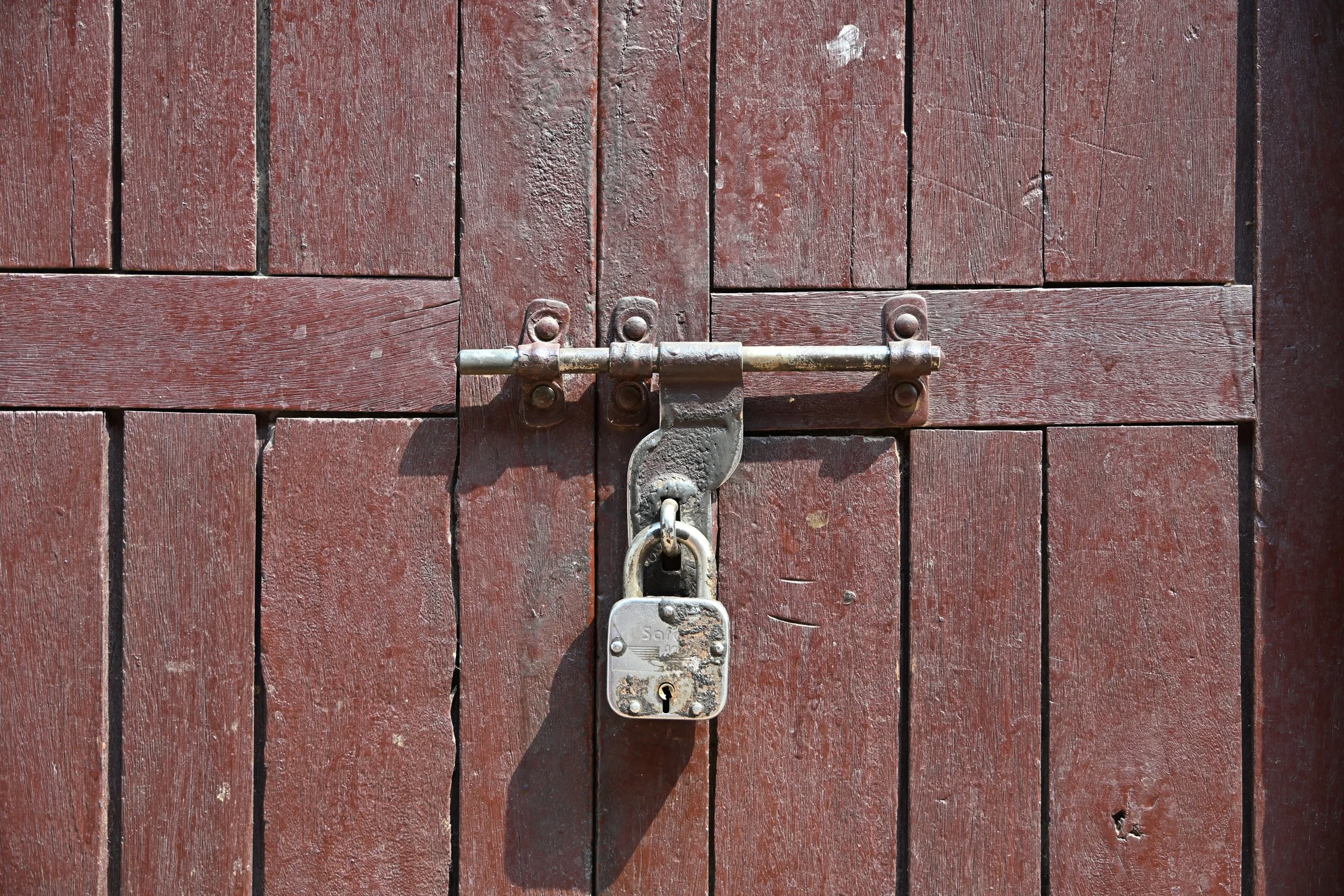
An interesting tidbit about Nepal — nearly all buildings, and even rooms in hotels and tea houses, are secured with a sliding bolt and padlock, from the very simple…

… to quite ornate -

Odds and Ends from the Trip 

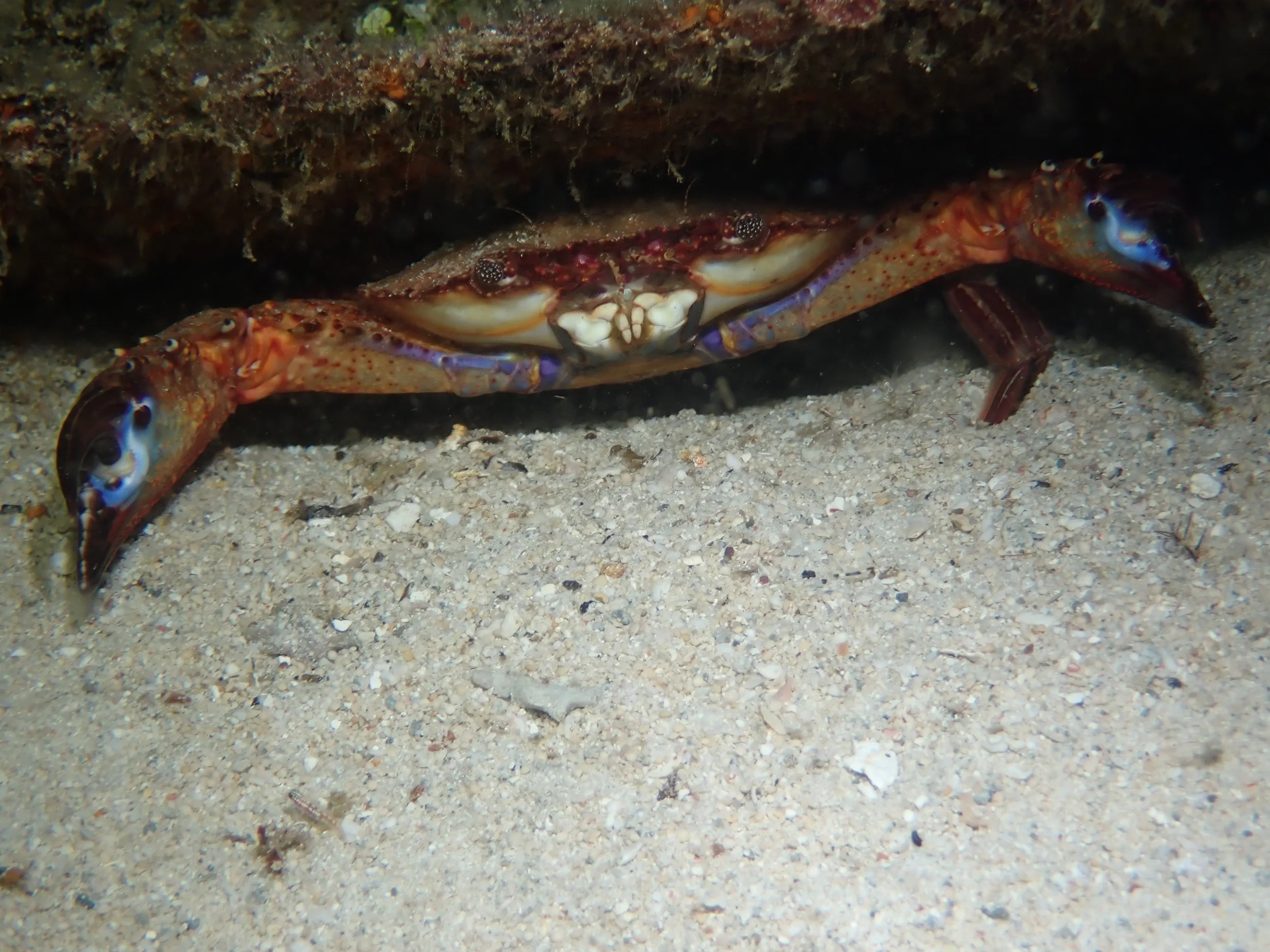
 With the extreme differences in altitude and geography during this trip, at times we forgot that we had started off by diving!  That made some folks a little bit crabby: 

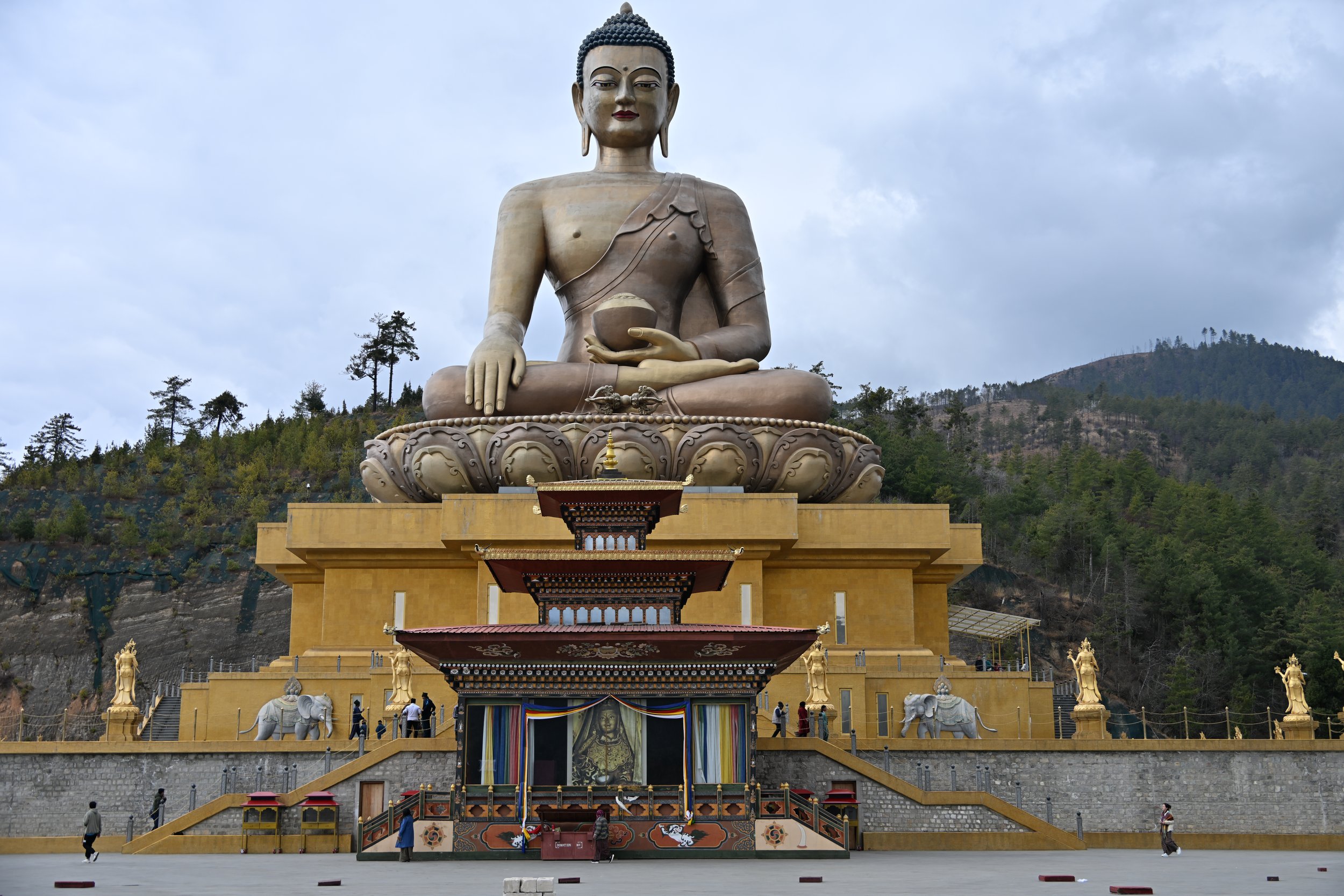
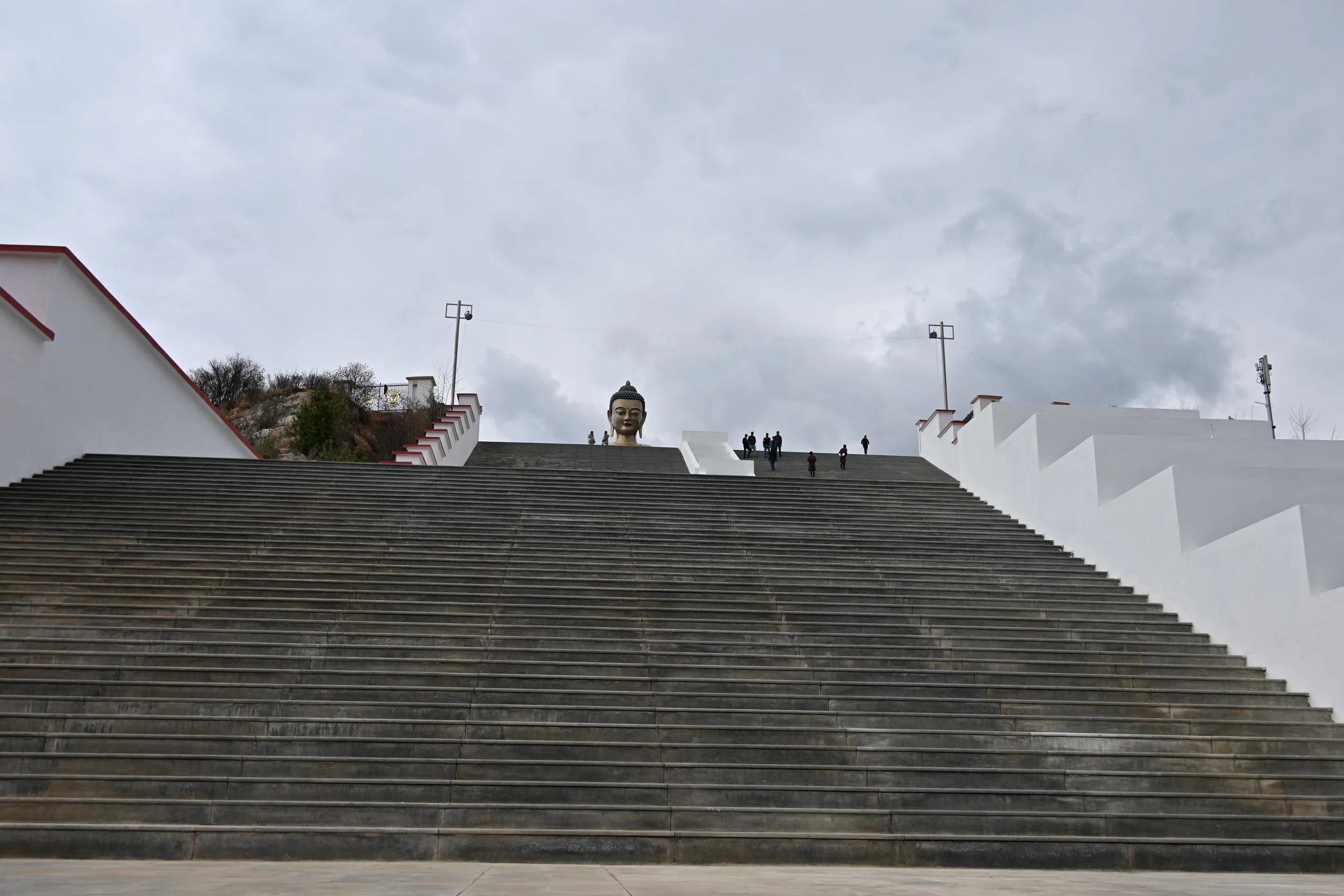
Midway through Bhutan, we visited the country’s tallest statue of Buddha, which is over 50 meters/170 feet tall, and watches over the capital of Thimphu:

Our flights on this trip were uneventful despite traveling in the Himalayas—albeit with one exception.  Our Bhutan domestic flight from Bumthang to Paro (as part of our return to Kathmandu for the trek) was cancelled due to wind concerns.  Thus, we unexpectedly received the opportunity to travel 300 kilometers by car that day—which was around 50% of the width of the country.  Between that and our other automotive travels, we are comfortable in agreeing with our guide that the country does not have a single traffic light!  Overall, Bhutanese roads were in good condition, and I don’t know that we heard more than a handful of horns over the 17 days we were there. (Nepal, on the other hand….)

Another interesting thing, which apparently is consistent with Indian practice as well, is that the people in both Bhutan and Nepal commonly eat without utensils—even when dinner consists of rice heavy meals with sauces.  At first, this struck us as a bit strange, but we quickly became used to it.

Lisa previously provided many beautiful pictures of towering mountains from our trek.  Just how high were they?  During the trek, we saw ten separate mountains that were at least 6500 meters (21,325 feet) tall--more than 1000 feet higher than Mount McKinley (Denali)!

The trek also made us realize how lucky we all are to live in wealthy countries.  As you could see by the previous pictures of porters carrying such things as construction supplies and water tanks up the mountain (and, in one unphotographed case, a queen size mattress!), mechanical assistance is at a premium in Nepal.  Even our guide, however, was surprised at one instance of human ingenuity overcoming the lack of a donkey or ox:

Two things that surprised me about this trip were: 1)Both Nepal and Bhutan have rhinos and elephants in their low-altitude southern regions (I’ve always just thought of them as being the home of towering mountains); and 2) Both countries, despite their snow-capped peaks are basically in the same latitude as Florida—with most of our travels ranging between the latitudes of Orlando and Tampa.

Finally, in a 2022 post, we remarked that because of the impact of tectonic forces under the Andes, the patron saint of Colombia should be “Our Lady of Perpetual Construction.”  To which Nepal says “Let me introduce you to Lord Vishwakarma, our god of engineering and construction.”  Between the forces uplifting the Himalayas and the annual monsoons that attack the most recent improvements, the roads all seem to be under repair and construction—and progress is slow.  Our 190 Km (118 Mile) trip from Chitwan National Park to Bhaktapur on the main highway took 6 hours…  And when you got off the main highway in the mountains, things became interesting:

 Luckily, the jeep driver in that video was a local who knew the road and his vehicle well.  Over the course of a 2 hour drive, we were comfortable even as he took phone calls, and drove with one hand in our seatbelt-less vehicle!  Perhaps someone was looking over us that day:

In any event, that is it for this trip, and we will be back with something completely different in the not too distant future.