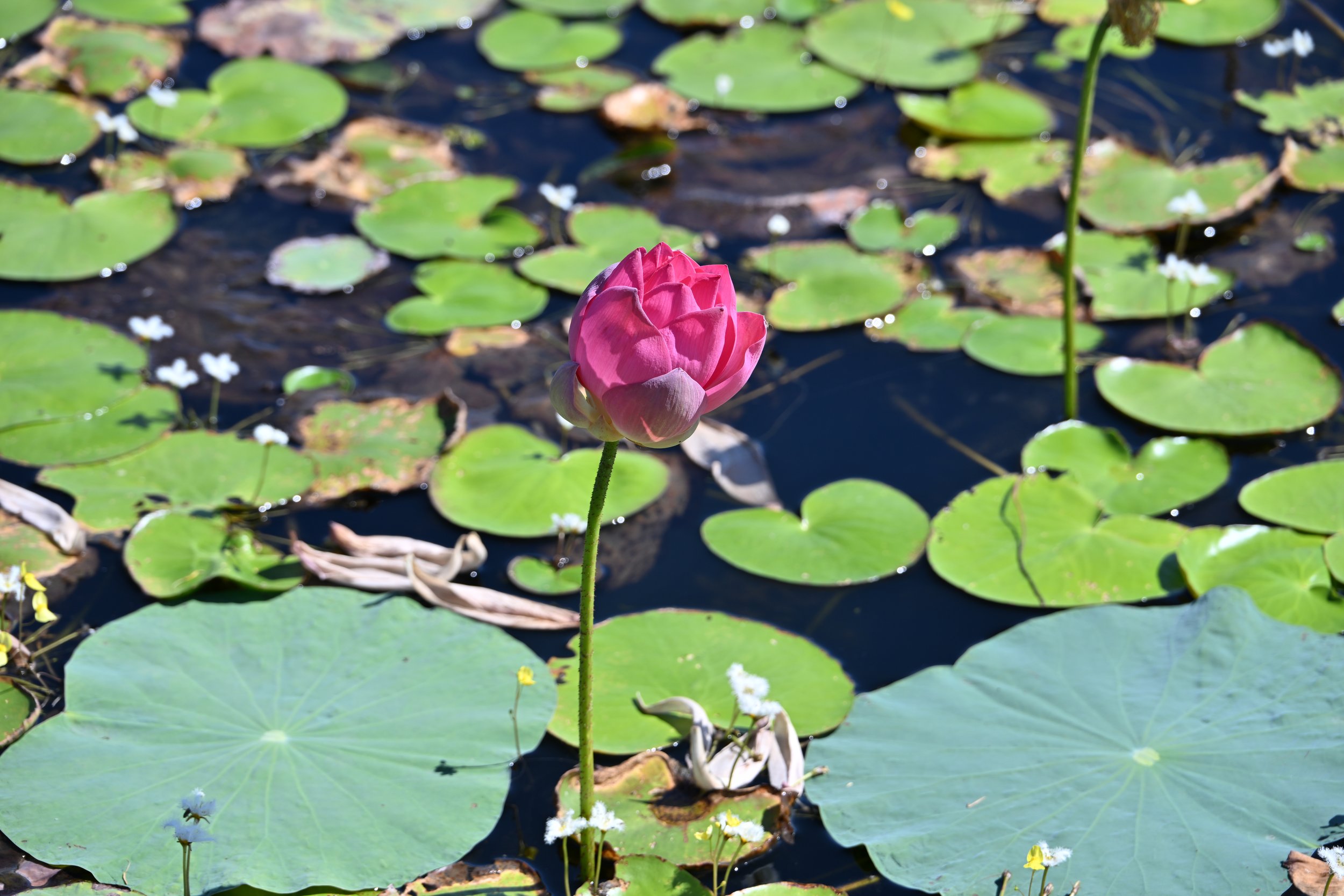
Siem Reap
Siem Reap is a city in NW Cambodia that has become known as the gateway to Angkor. This is a 400 square kilometer archeological park that is a UNESCO World Heritage Site, and still an active temple complex. We spent 6 nights here and saw tons of temples and ruins. There are 2 major tourist circuits - the Big and the Small. The names only refer to the amount of distance required to drive between the temple selections. The Small Circuit (17 km/10.6 mi) actually includes the more famous temples, while the Big/Grand Circuit (26 km/16.2 mi) links the quieter temples.
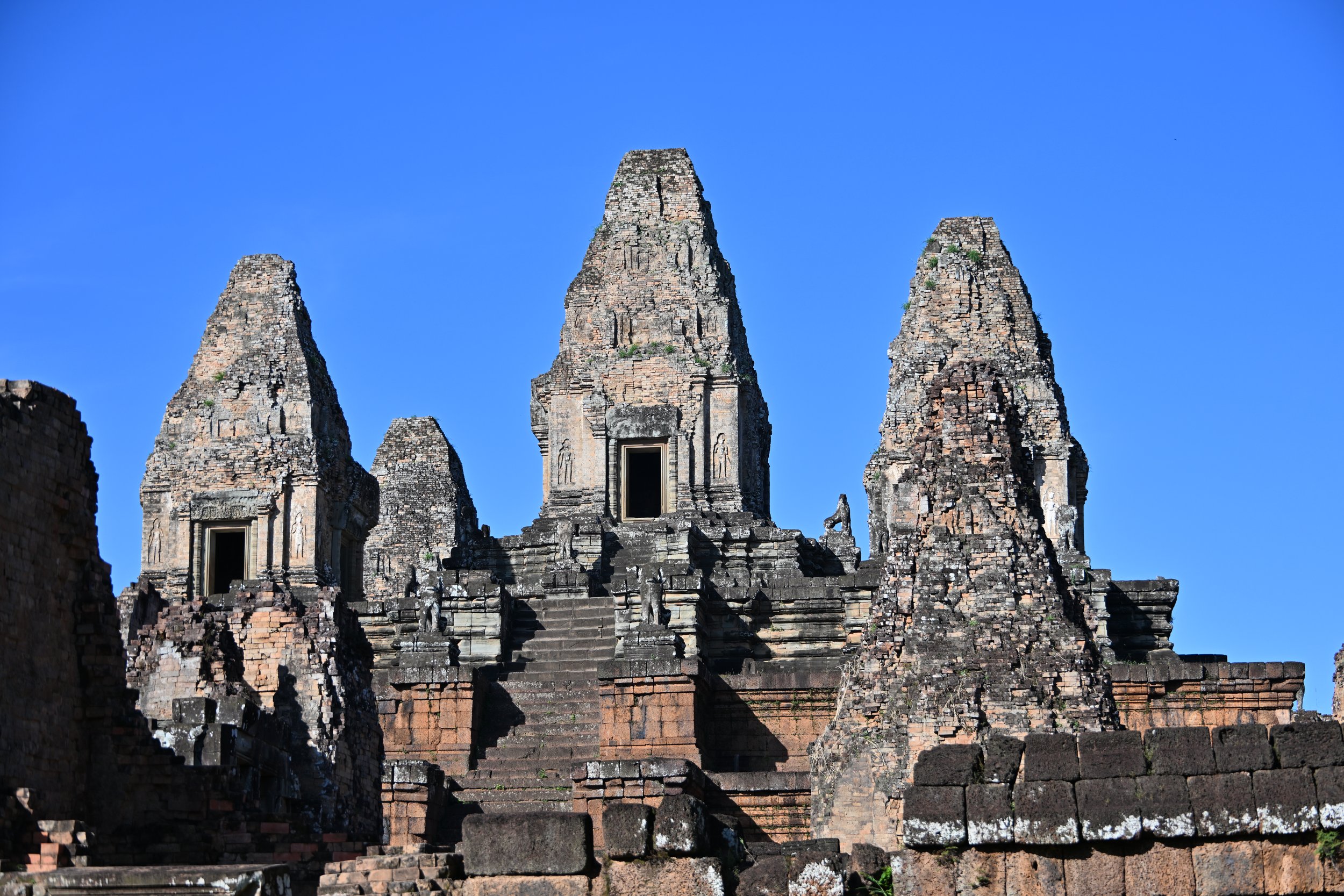
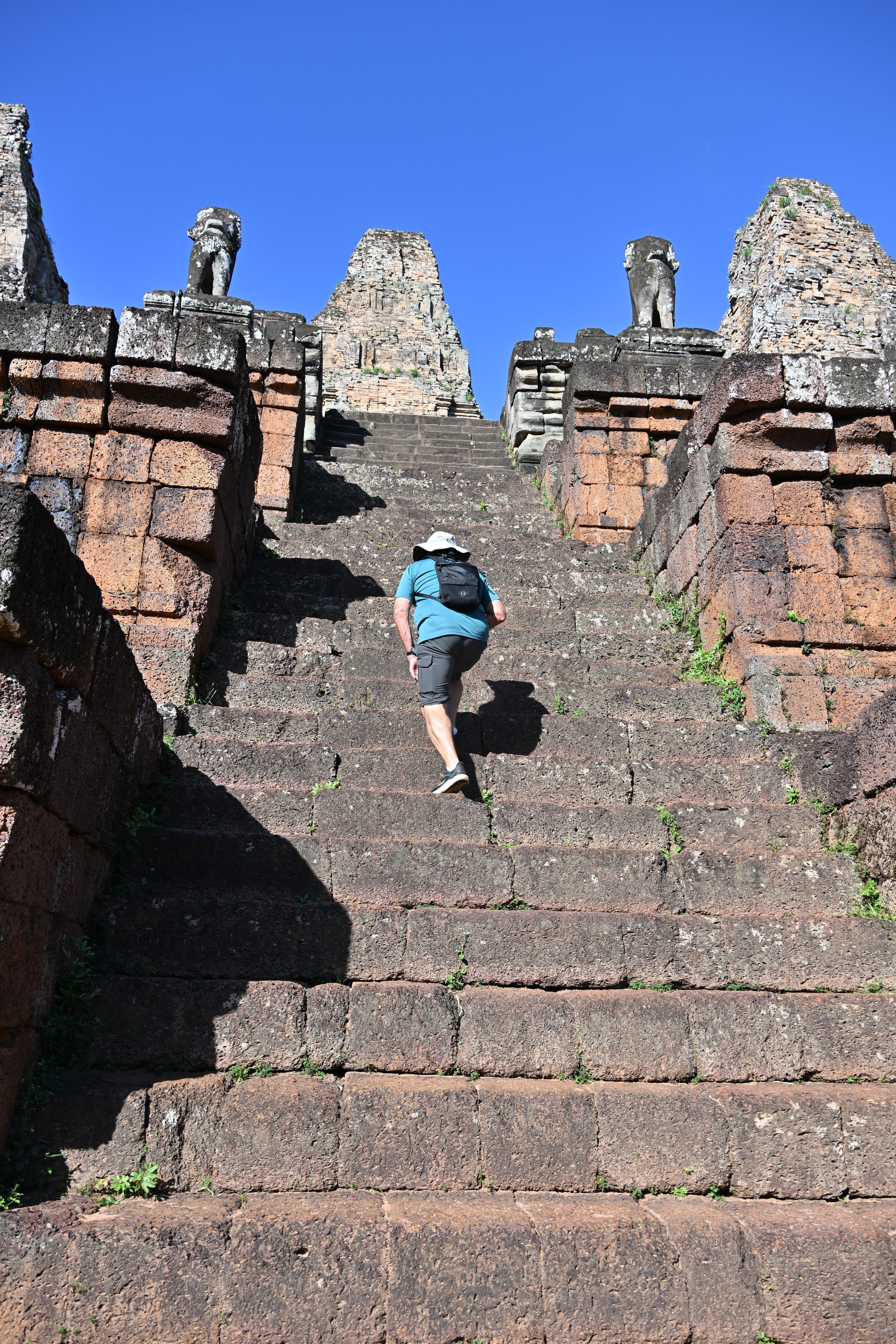
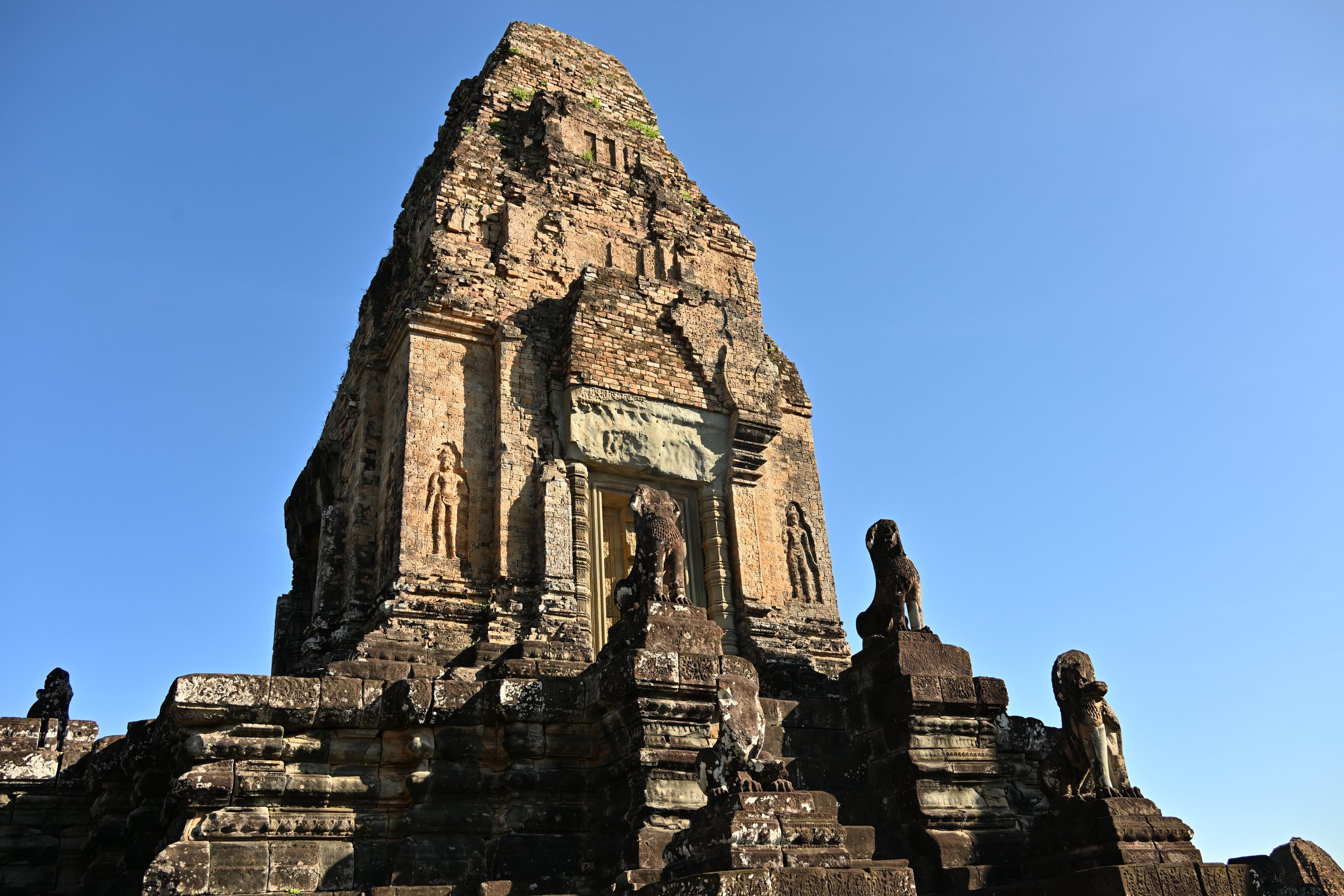
On our first full day, we toured the Big Circuit, and first visited Pre Rup (built in the mid 10th century) because it had the most stairs to climb -
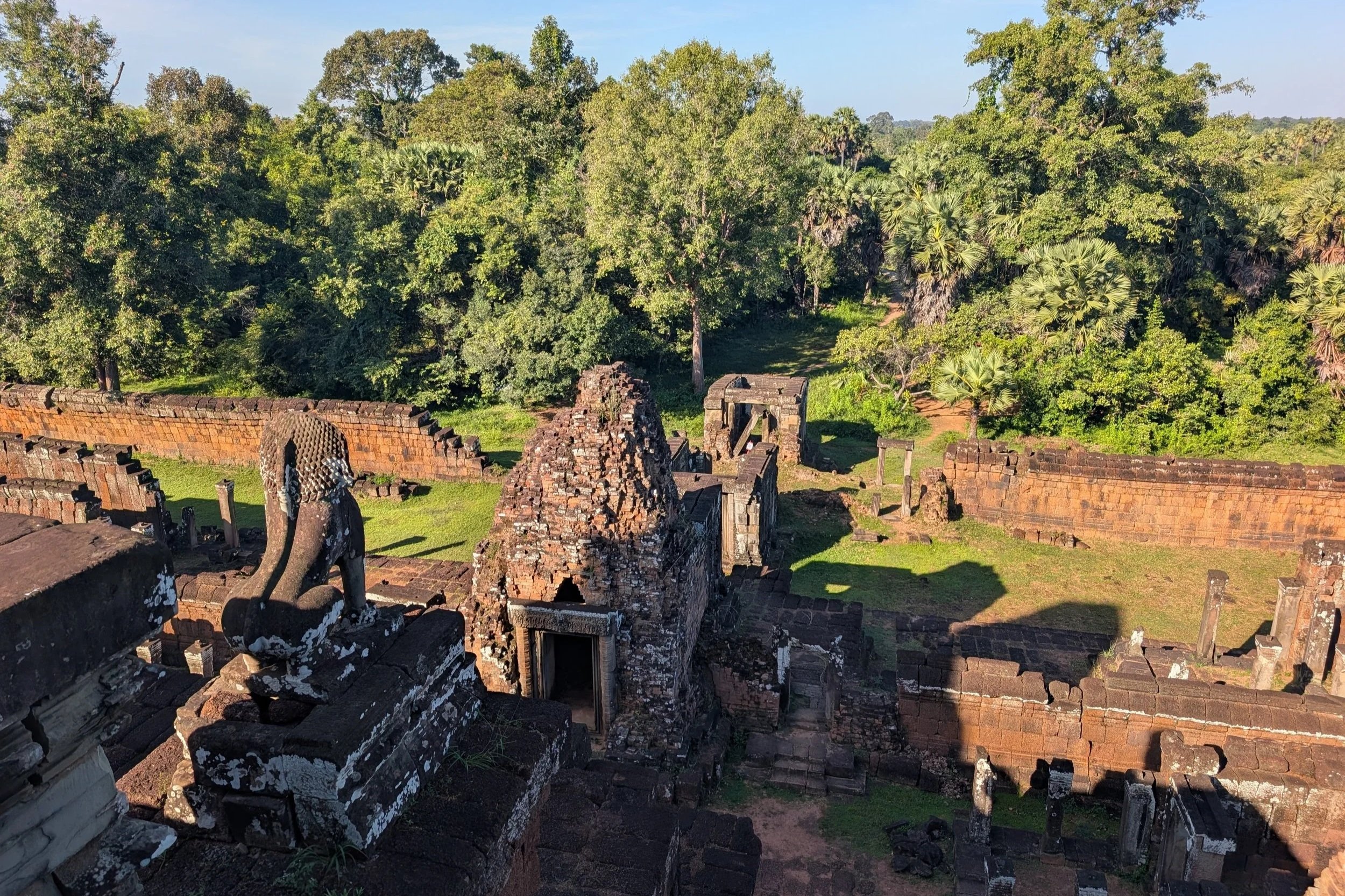
The view from the top -
I loved all the lions standing guard -
We saw several more that day, but you can breathe a sigh of relief that I won’t bore you with all the details, or even pictures from each one. We both agreed that our favorite of the day was Ta Som (built in the late 12th century).
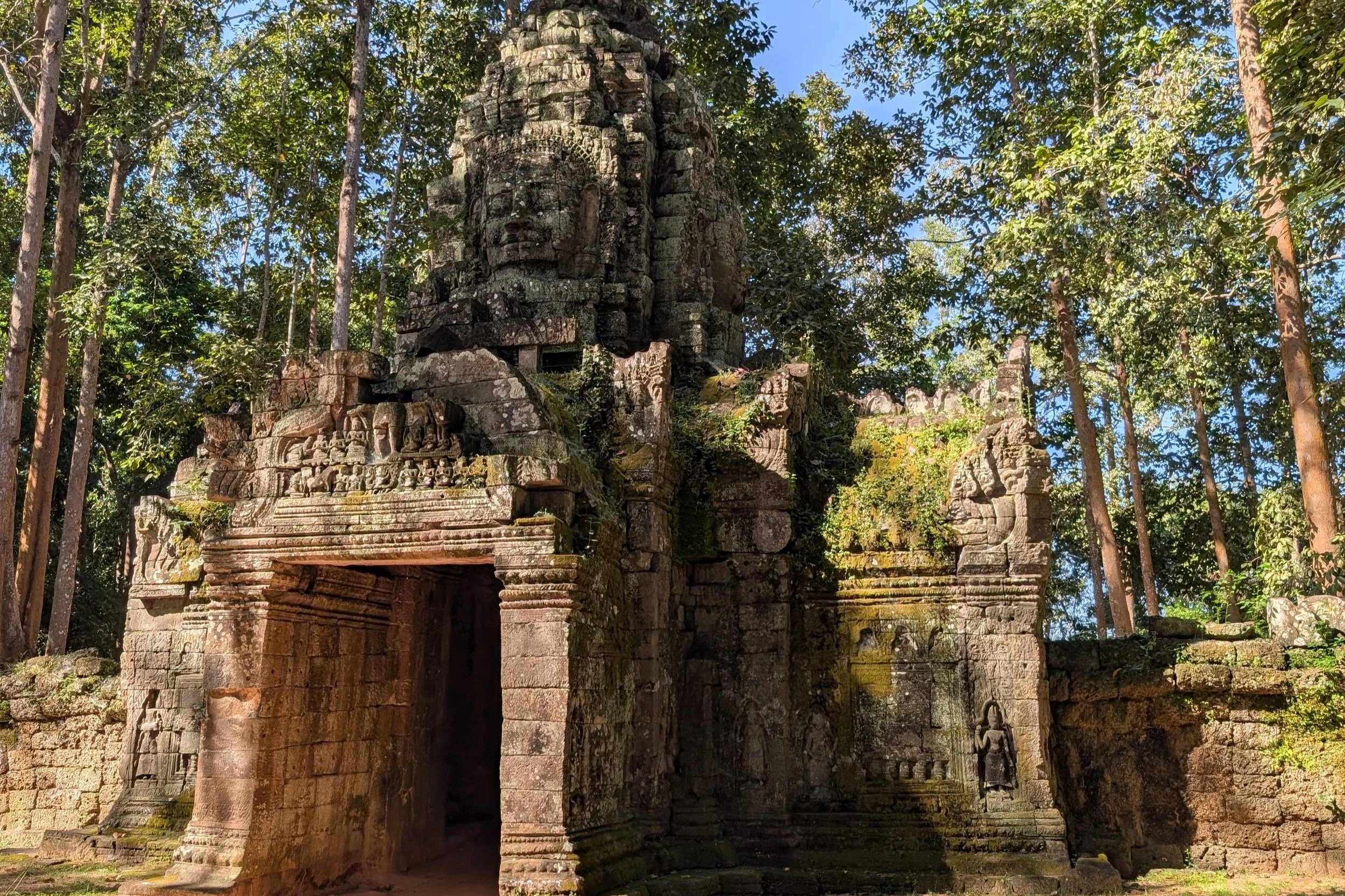
It has had some nice restoration work done and because it is one of the furthest from Siem Reap, it receives fewer visitors. It was shaded and cooler…
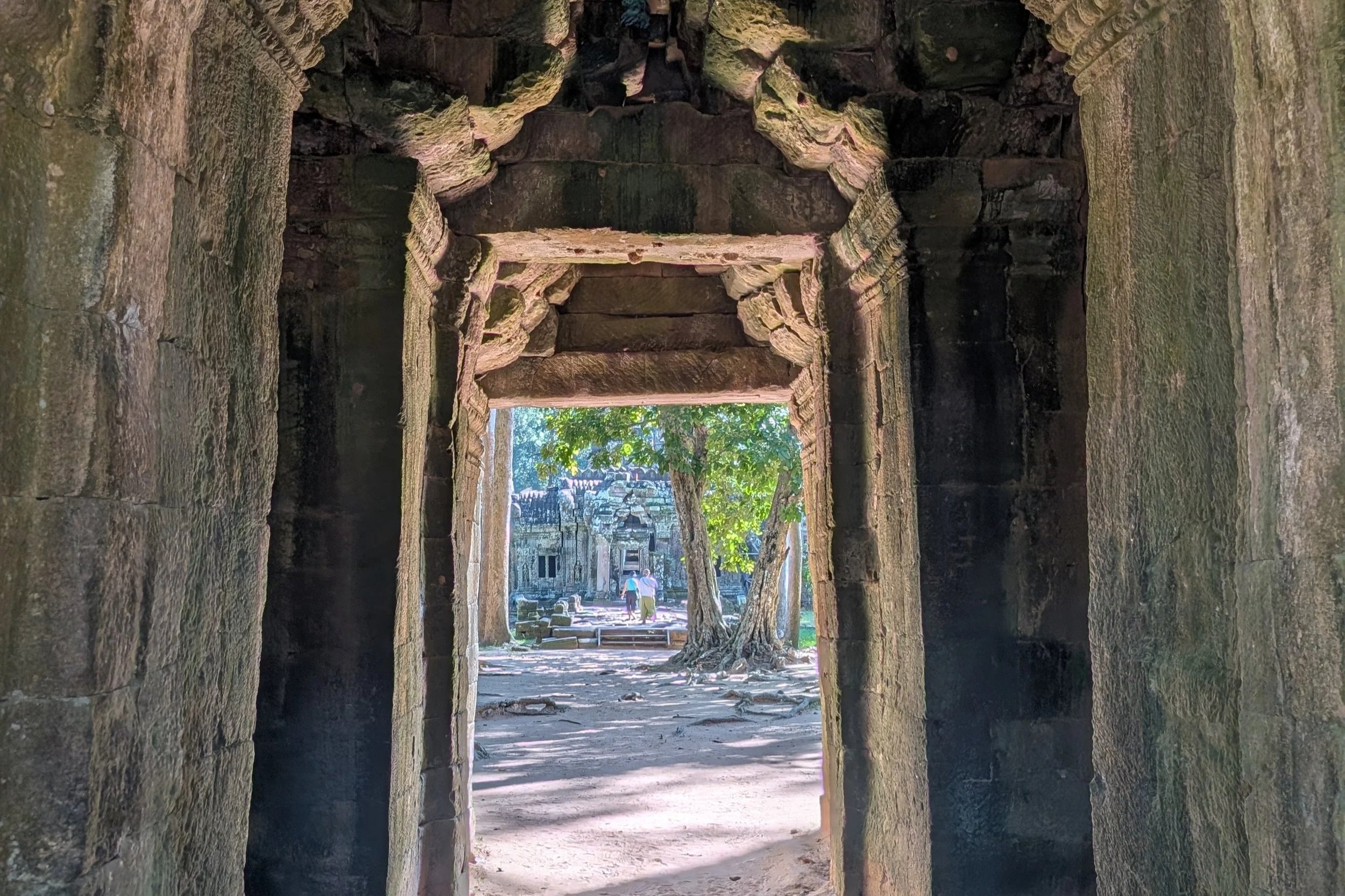
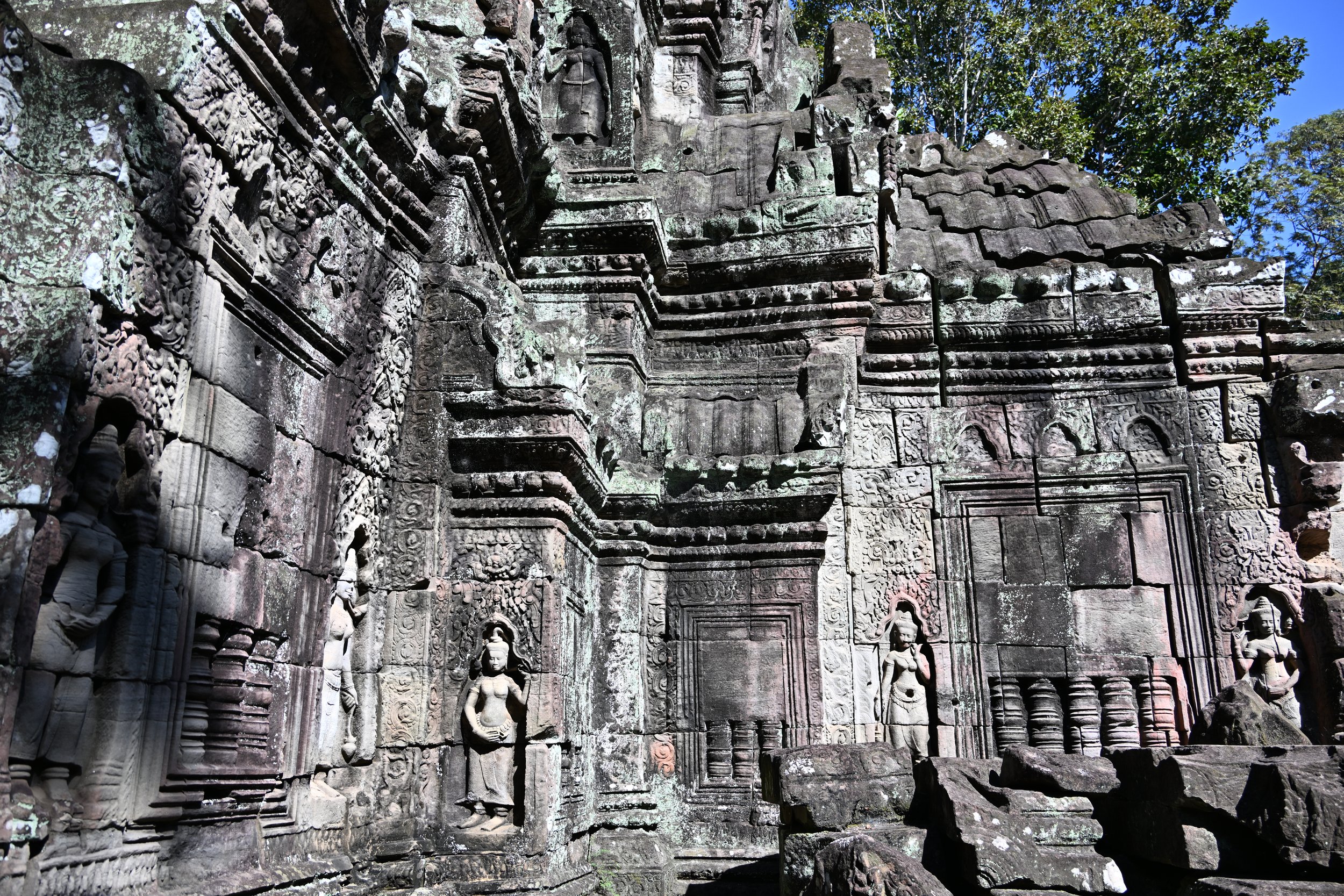
… so we could enjoy taking our time admiring the detailed carvings -
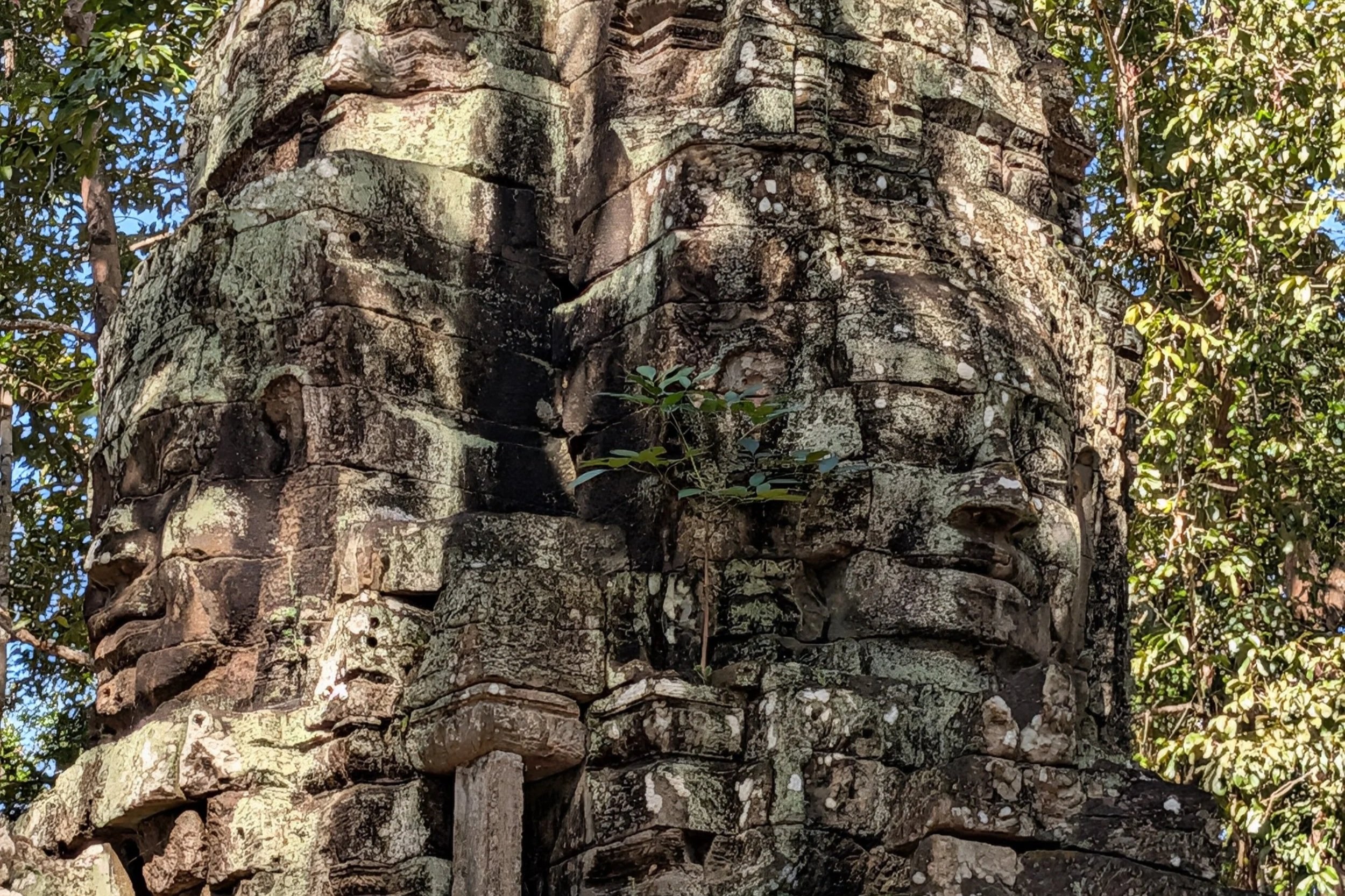
My favorites were the faces of the compassionate Buddhas adorning 2 of the gates in the wall surrounding the temple -
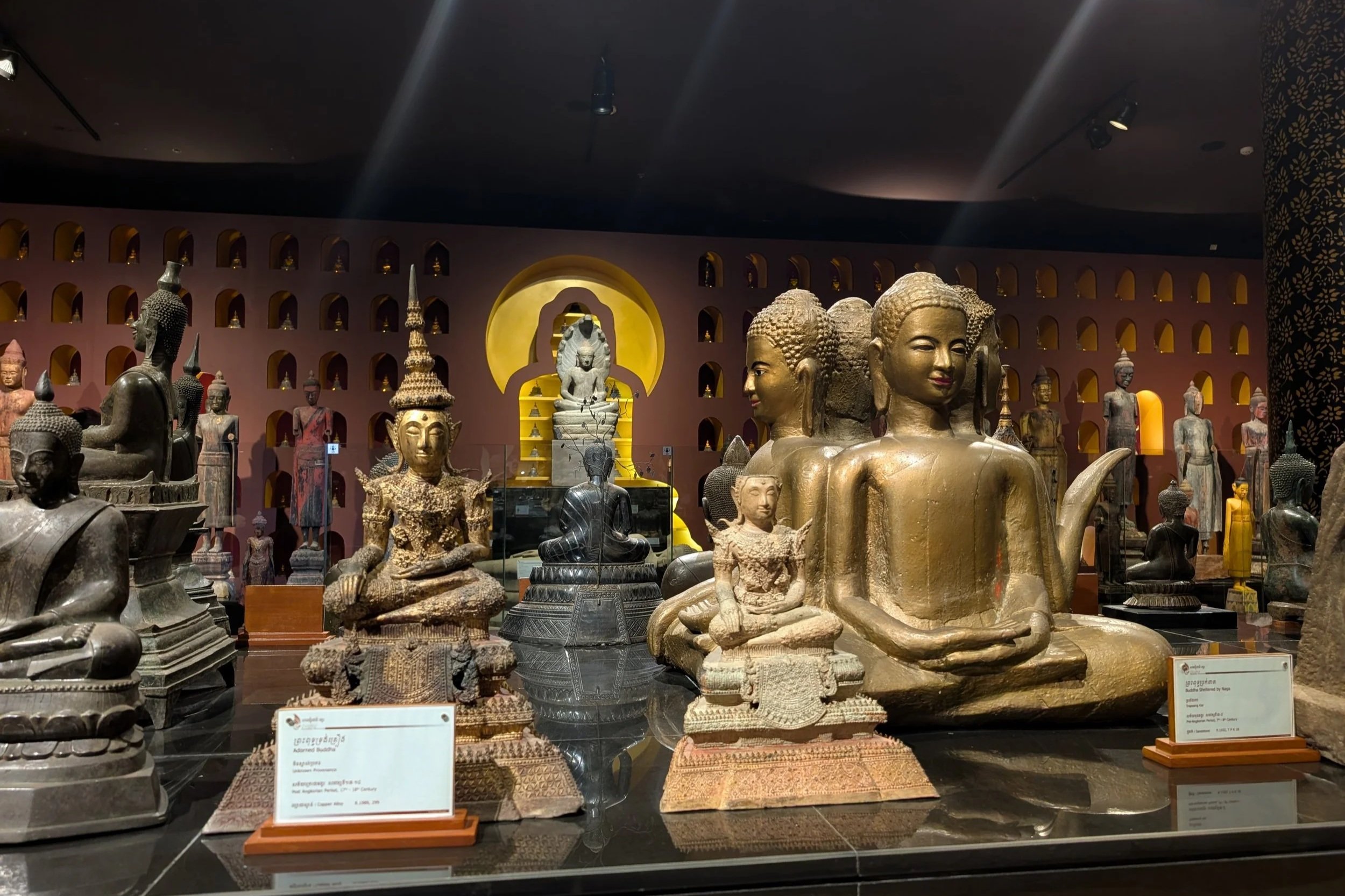
If you visit Siem Reap, we highly encourage you to stop at the Angkor National Museum on your arrival day. This will allow you to learn some of the history of the sites and see examples of different carvings and art styles. The Hall of 1,000 Buddhas had some exquisite pieces -
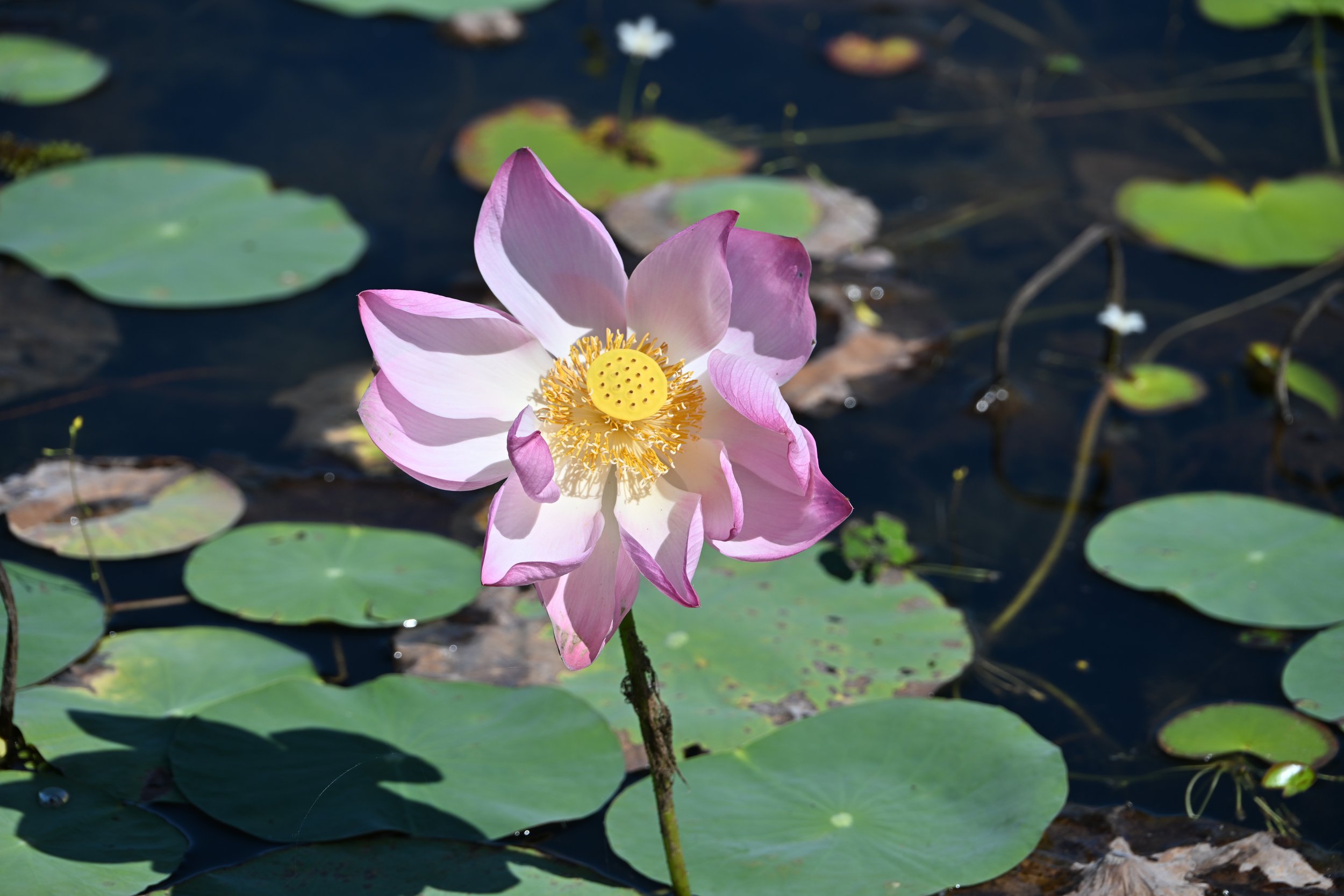
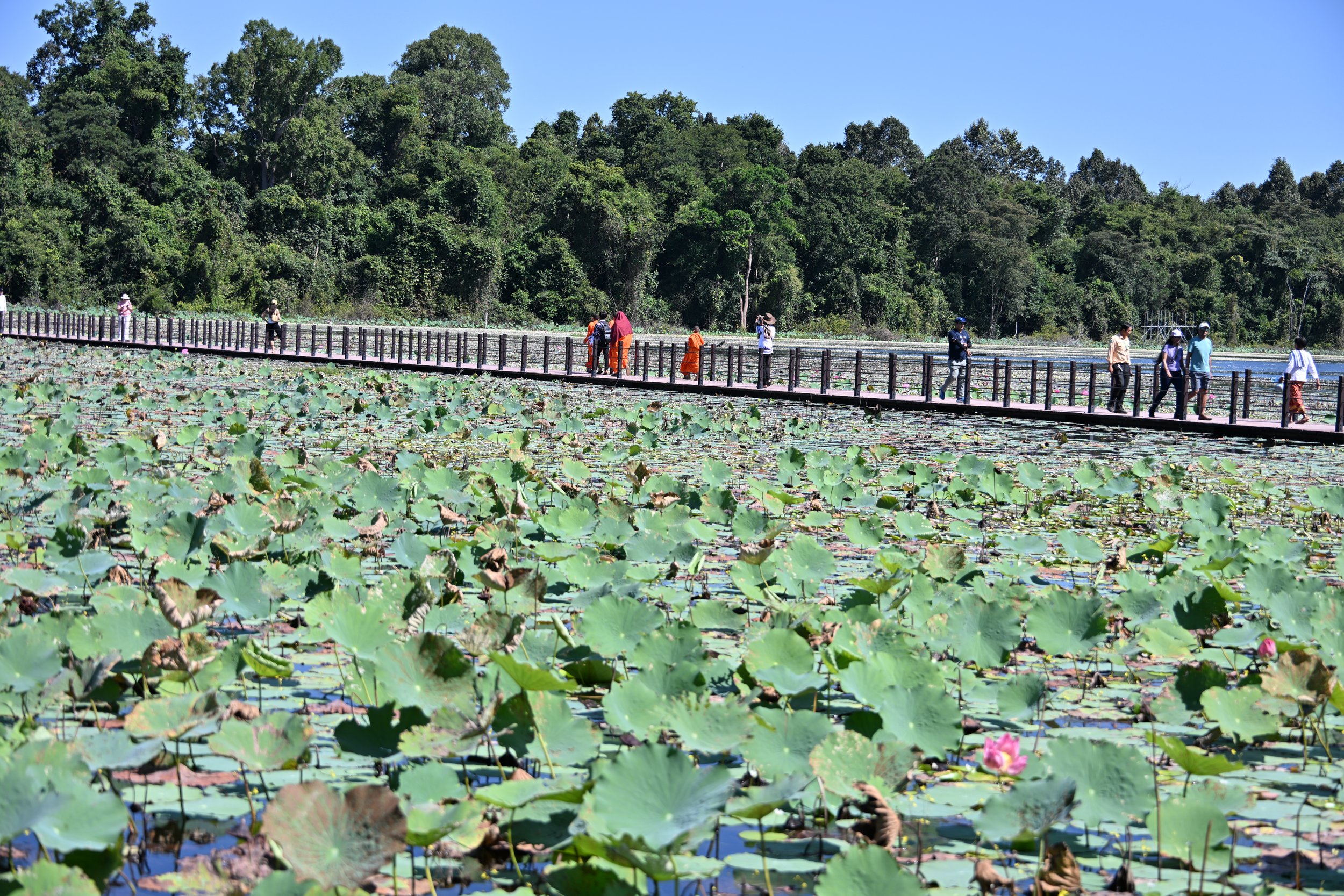
There is a small temple (Neak Poan) within a huge surrounding moat, which offered a chance to see lotus flowers up close…
… via a long causeway -
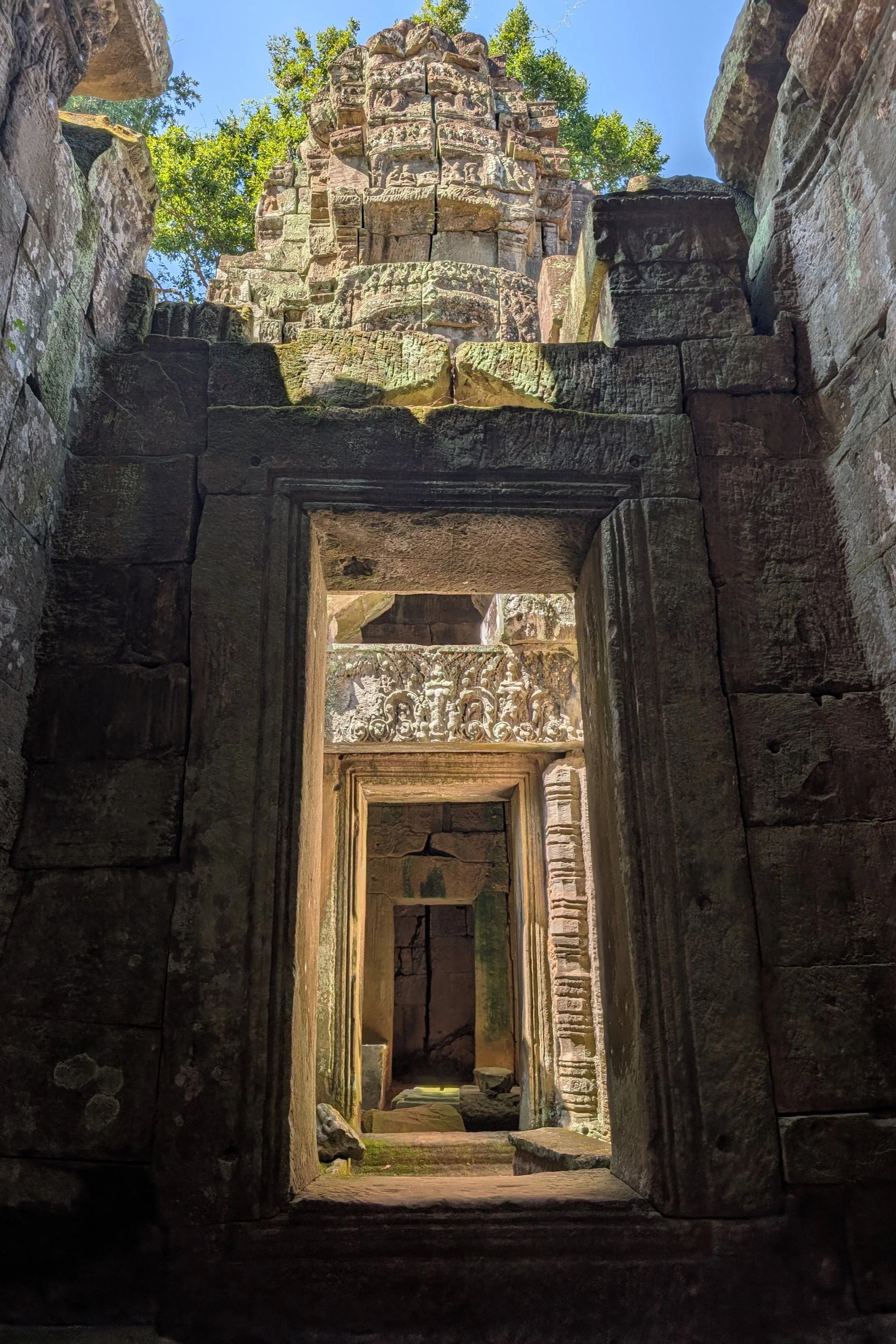
We had so many views like this at various temples, with endless doors opening up along corridors, intricate carvings on lintels, and the jungle just beyond -
Buddha has also been portrayed as an ascetic, with a thin frame and long beard -
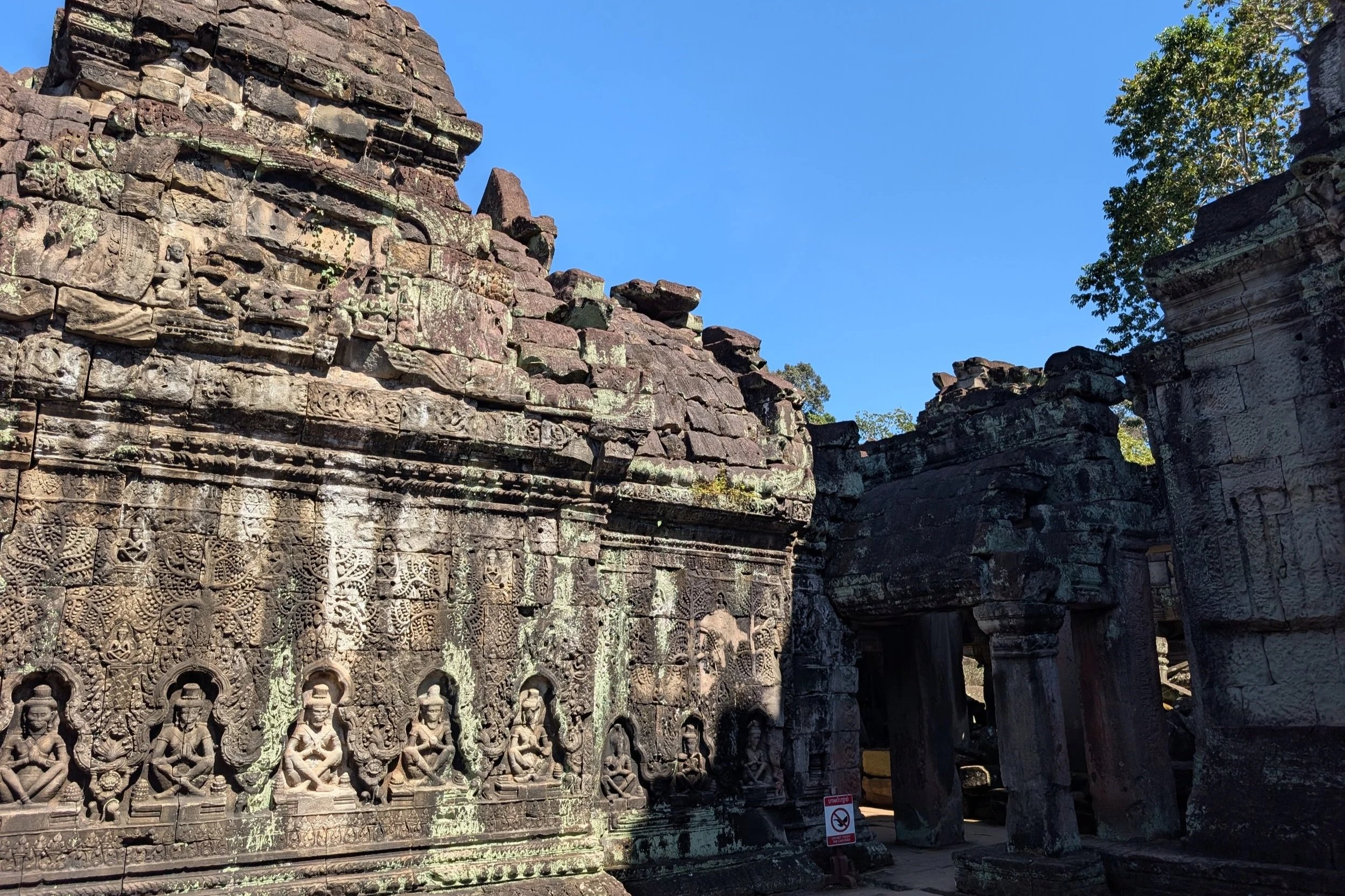
enlarge the picture to see the detail still remaining in the sandstone carvings
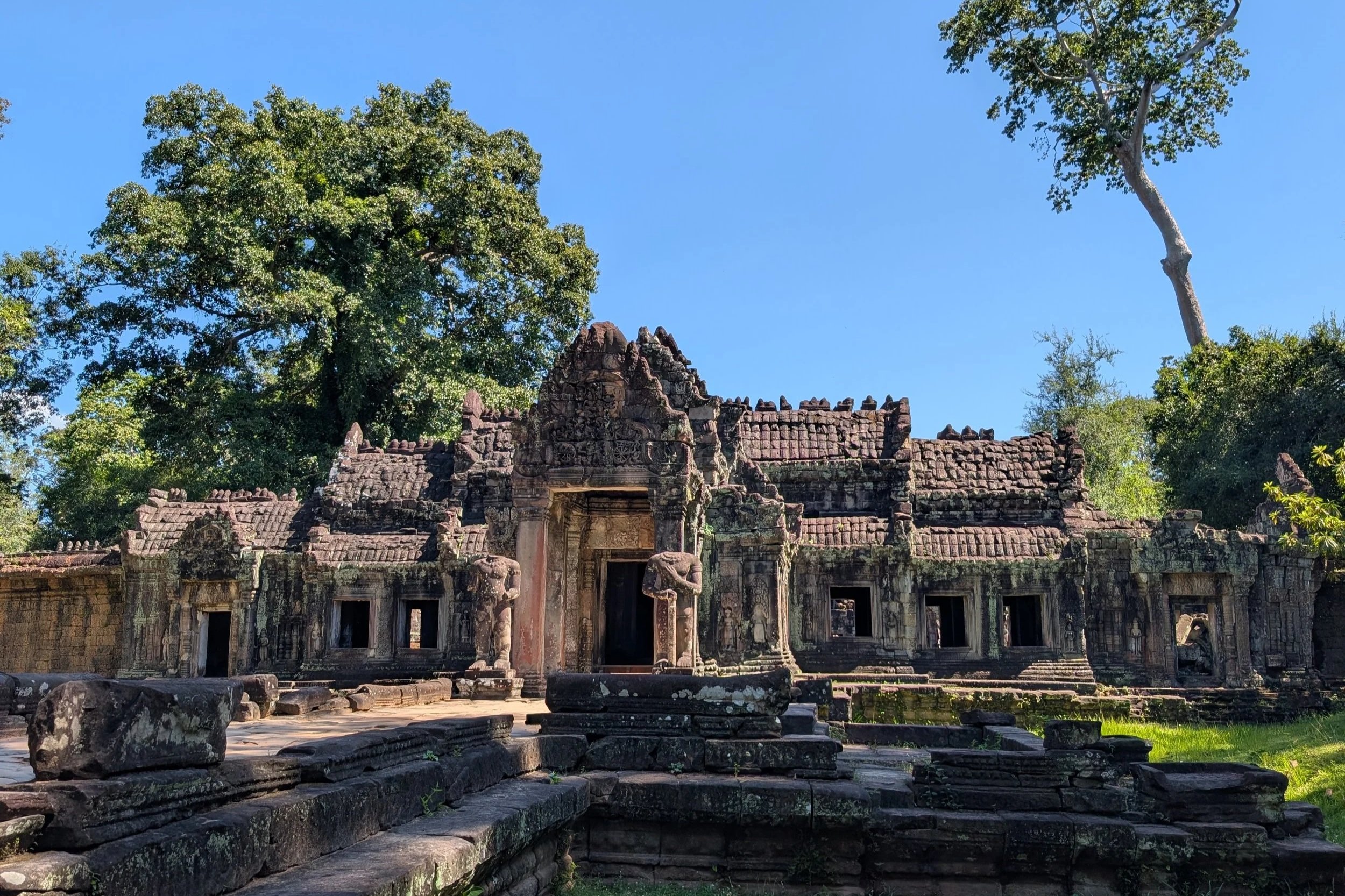
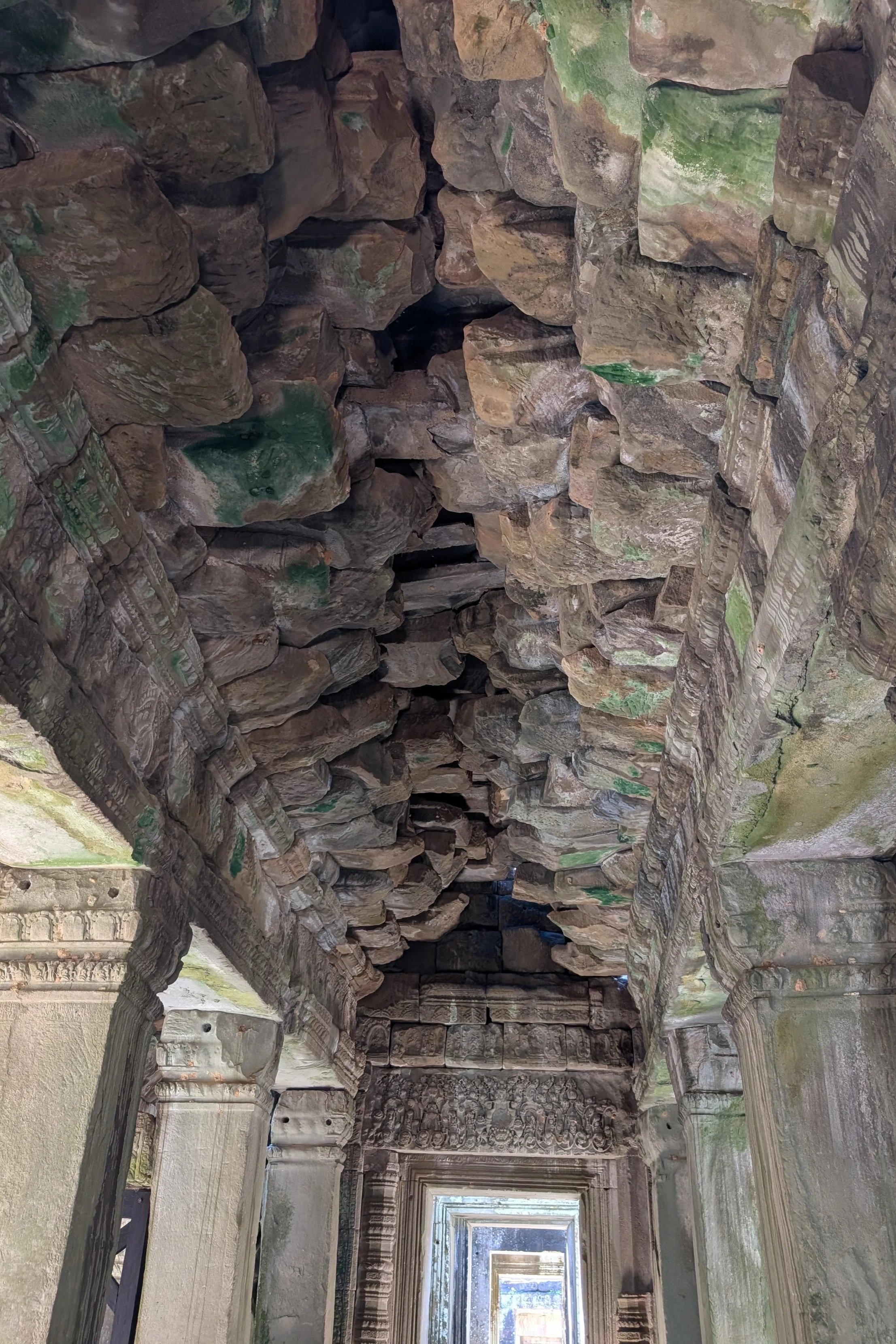
The barrel roofs on the lateral galleries in the next picture…
… have an interesting interior -
Changing topics… on one of our days off from temple touring, we visited the APOPO Visitor Center, where we learned about HeroRats that help clear land of landmines. These are Giant African Pouched Rats, which are nocturnal in the wild, but are used to clear land from 0600 - 0900, and then returned to their air-conditioned cages until the next day.
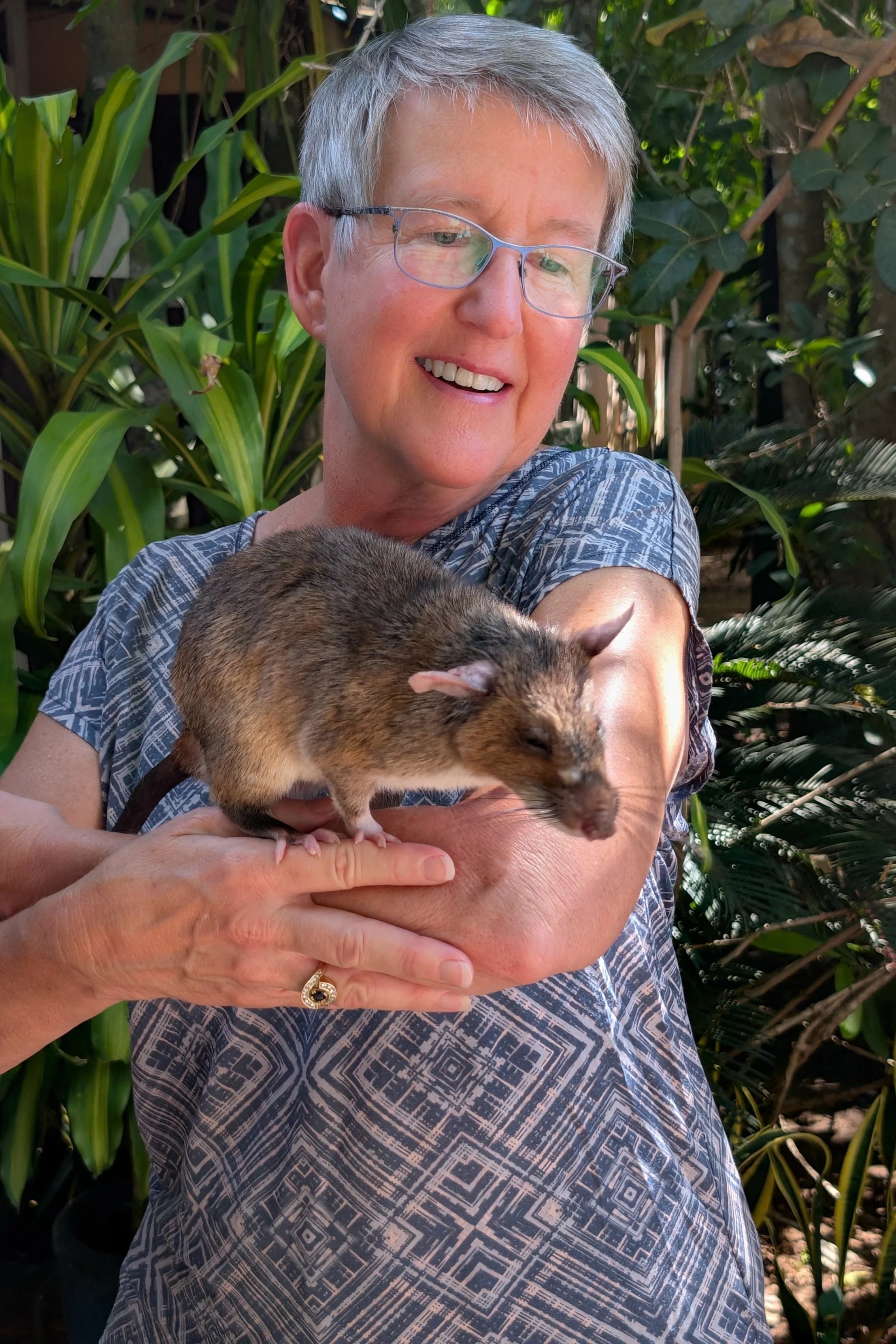
Here is a link to their site, if you are interested in learning more details about how an area of land is cleared of explosives: https://apopo.org/what-we-do/detecting-landmines-and-explosives/how-we-do-it/mine-clearance/
The following video was a demonstration on how the rats are used (as always, click the link at the end of the email if you need help in seeing the video) -
I will close with this Buddhist symbol of enlightenment, and promise to continue sharing my wisdom about Thailand in my next post. ;-)