Victoria Falls, Zimbabwe

This was an absolute must on our trip through southern Africa. After visiting Niagara Falls earlier this year, we were really looking forward to seeing another of the world’s greatest waterfalls on a third continent (Iguazu Falls in South America being the first).
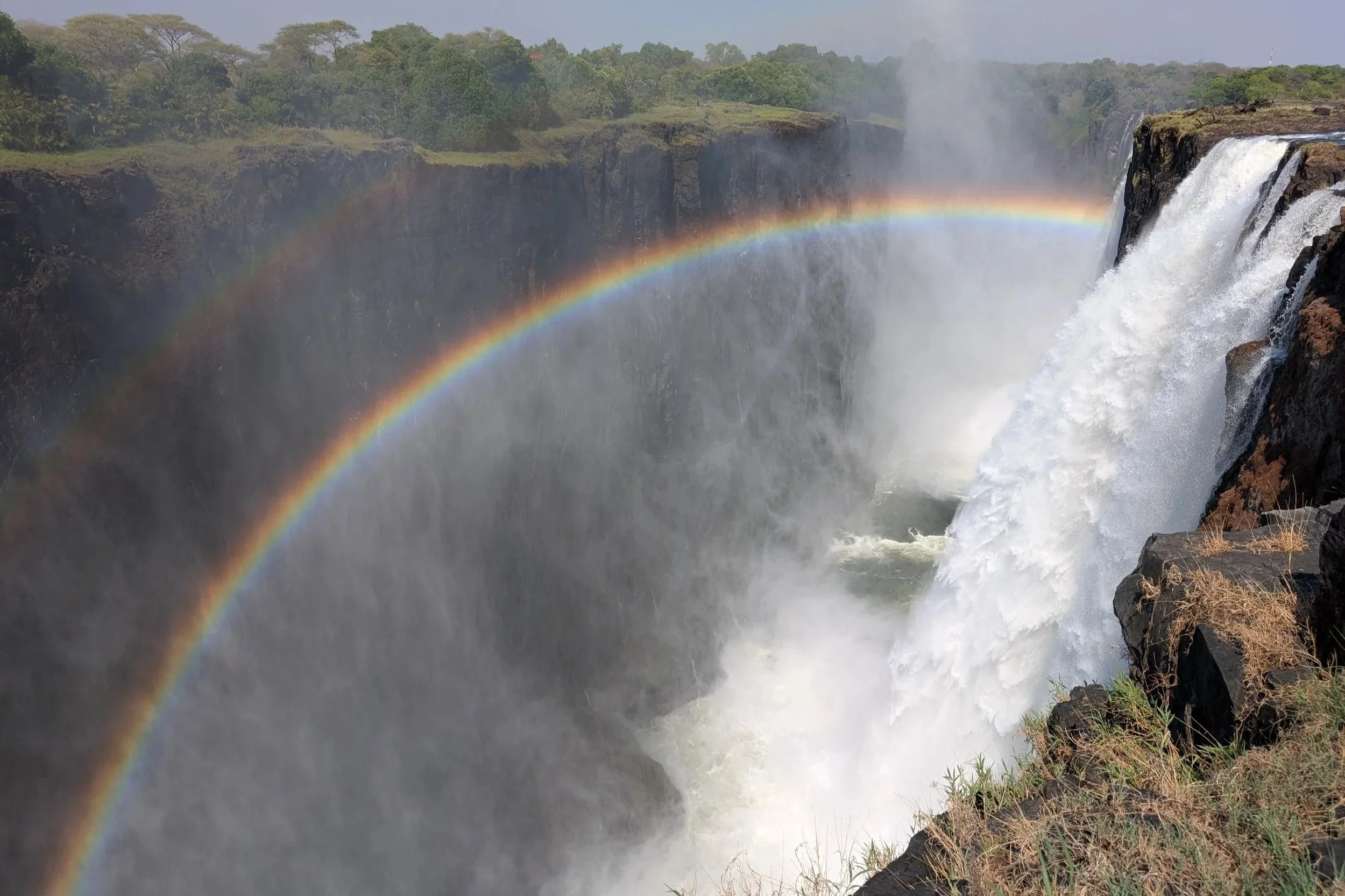
I like to lead off a post with a great picture, but it throws me ahead of myself in the story. ;)

We arrived in the town of Victoria Falls on a cloudy, potentially rainy afternoon. We decided to visit the falls that day, as it was also predicted to be raining the next. Our first glimpse of Victoria Falls was rather underwhelming -
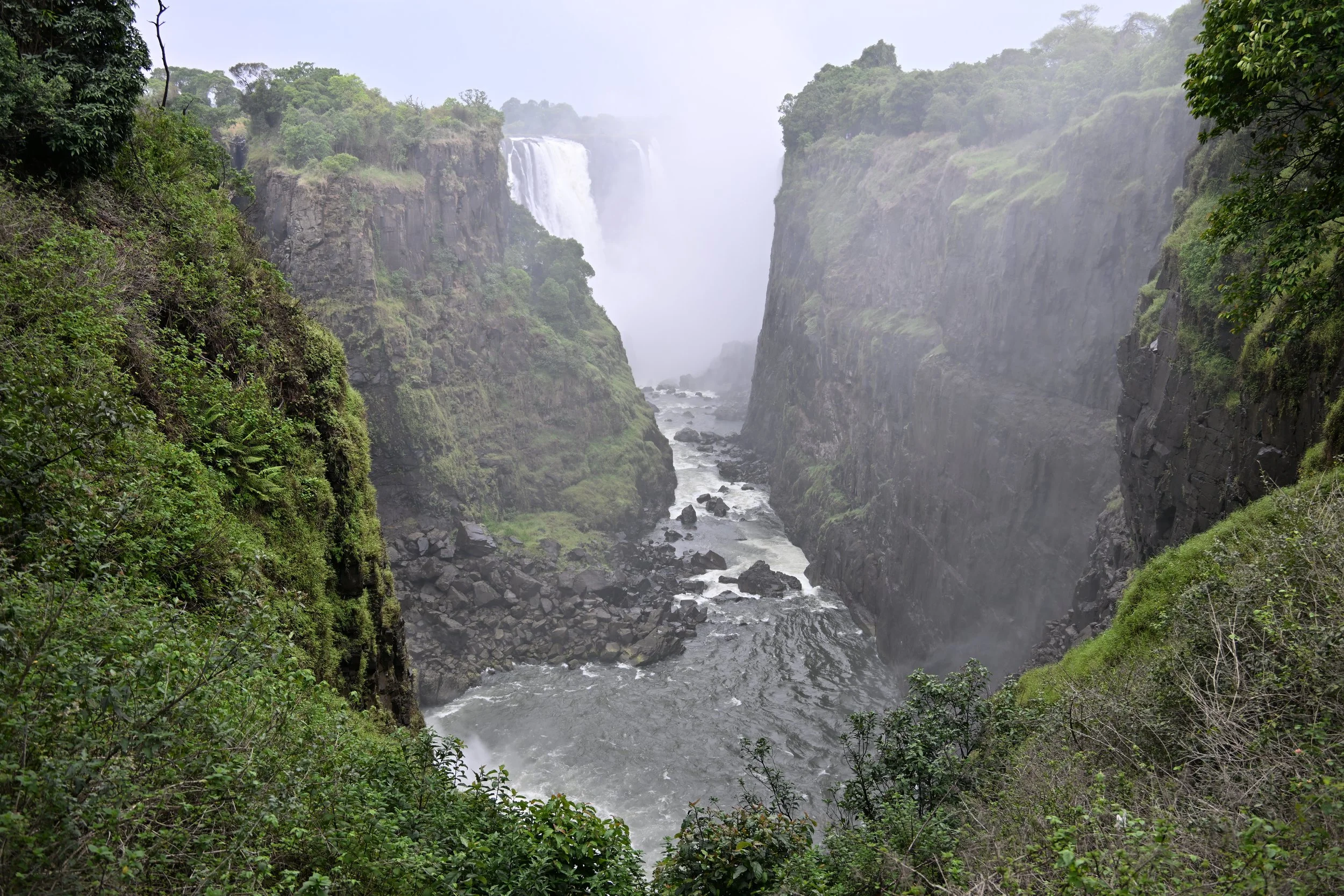
This first viewpoint was at the end of the canyon that contains the falls, and the overcast and mist created a gloomy atmosphere.

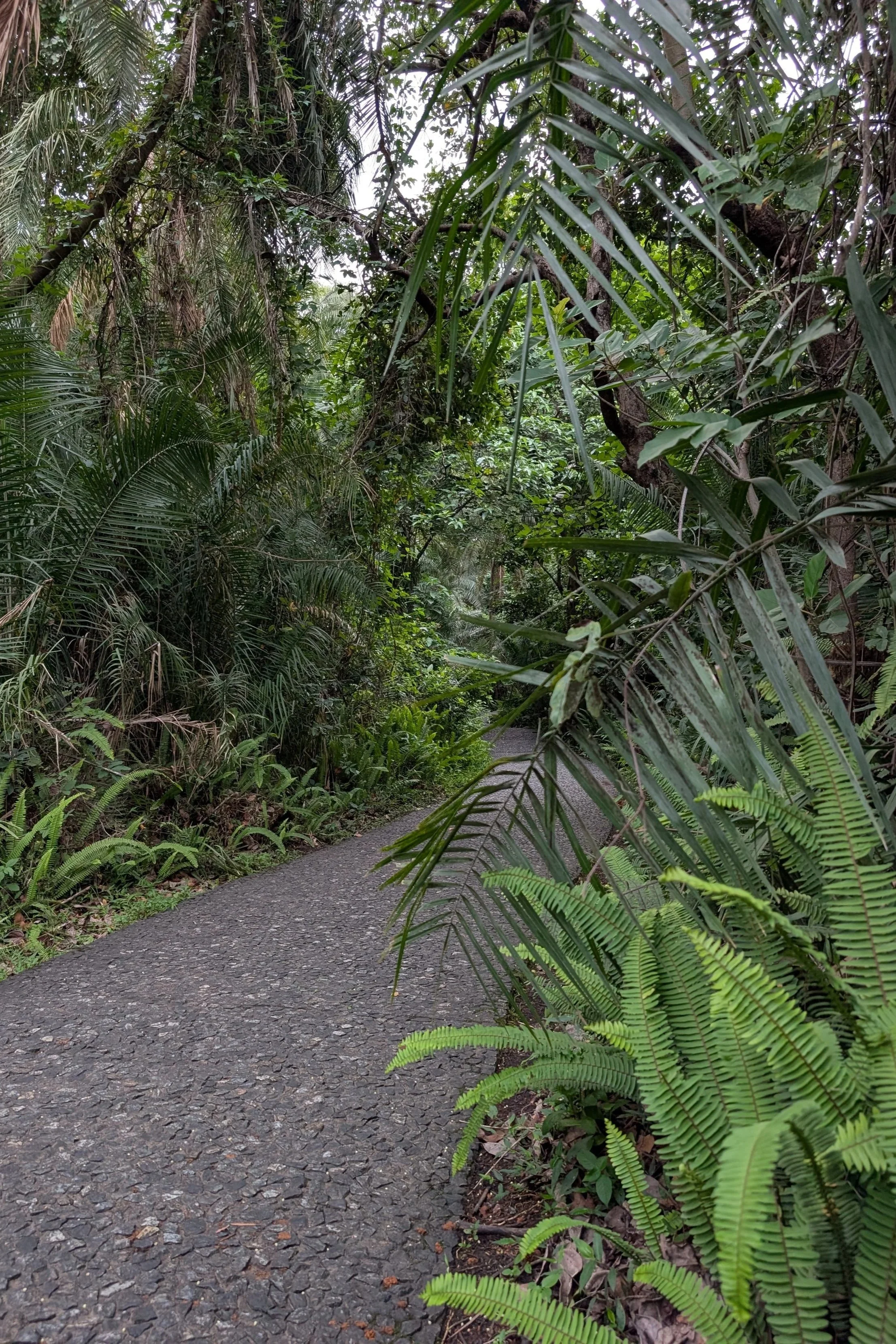
As we walked along the path…
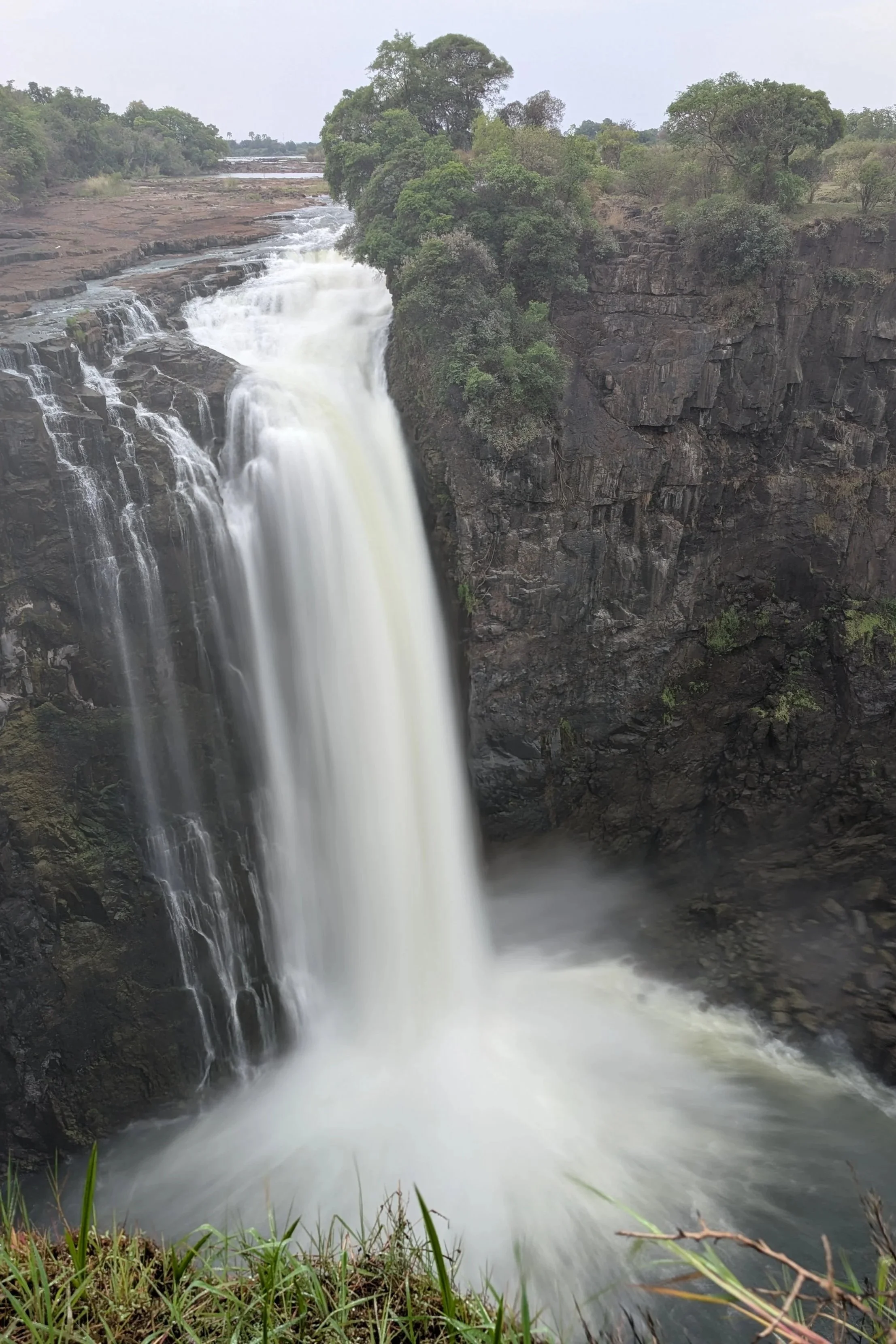
… we reached different views, like the Devil’s Cataract -
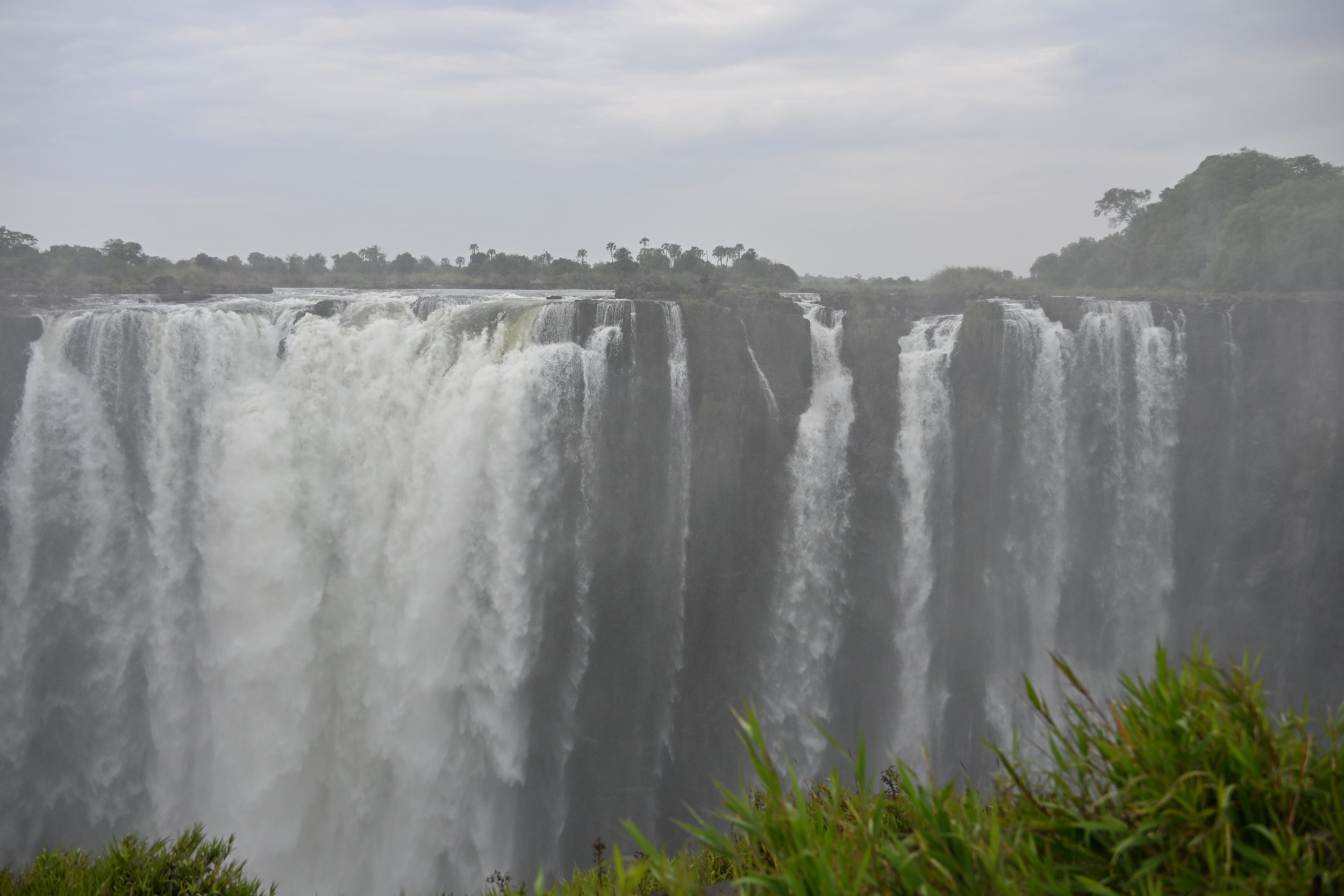
… and the main falls -
As we passed further along the canyon, we were able to get away from the mist and see clearer views -
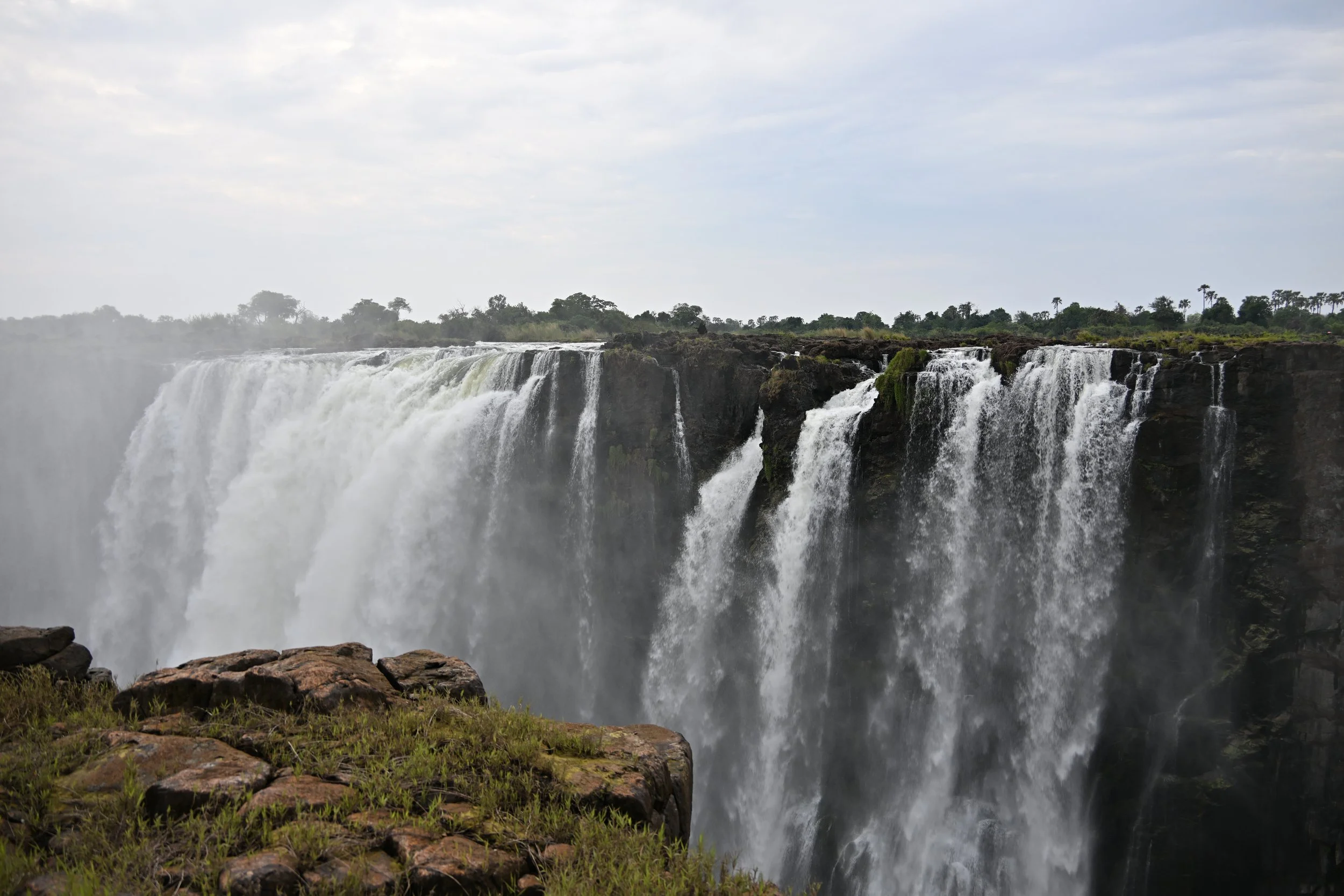
As you can see, there are a lot of rock edges visible, as we were there in early November (the end of dry season). Thus for us, this visit to see “the world’s largest waterfall” (1 mile wide and 350 ft high) was a bit disappointing -
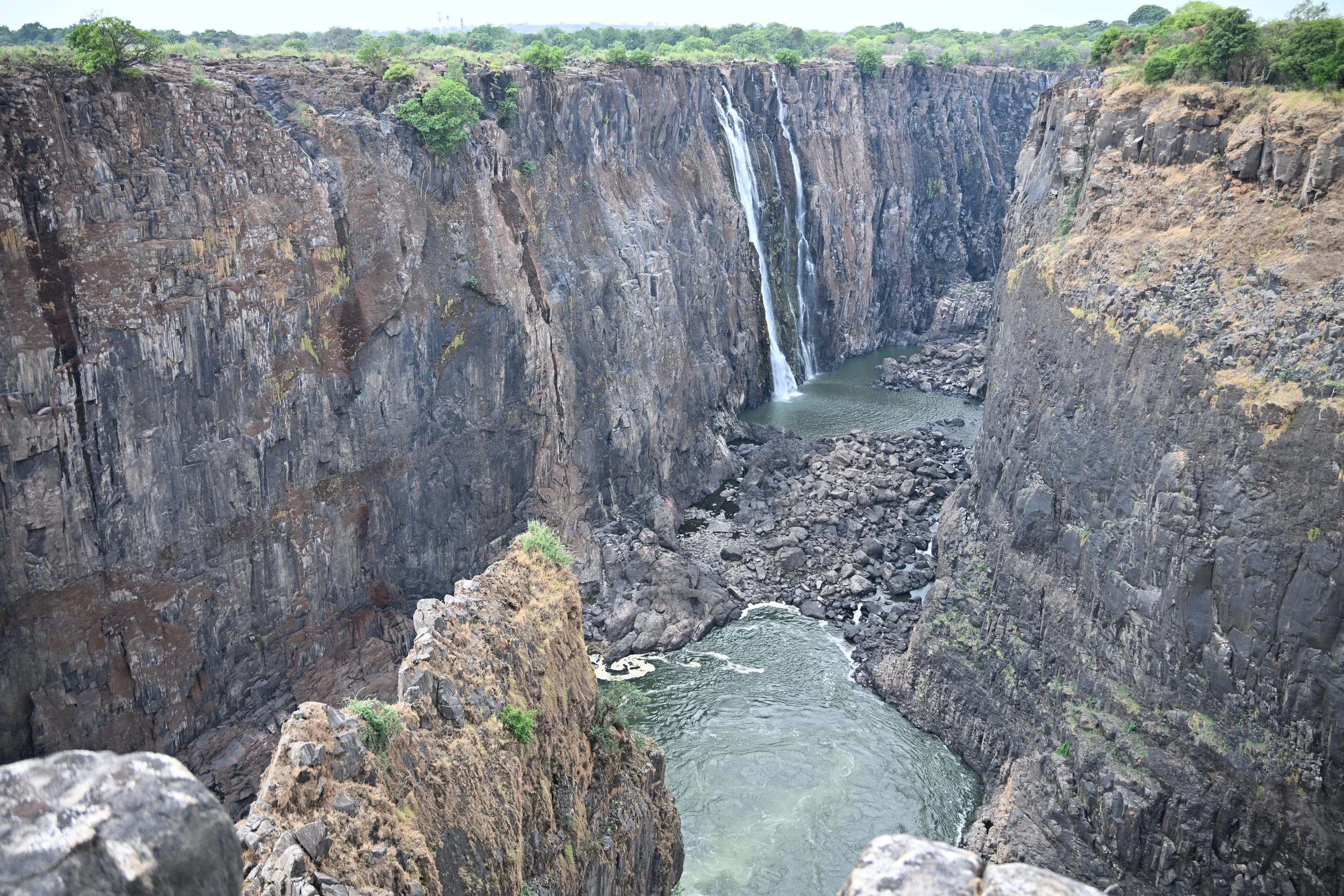
The picture above is showing the Zambia end of the falls. At high flow, that entire wall is covered with falls. The next picture shows where Horseshoe Falls would be (along the right wall where it bows away from the river) -
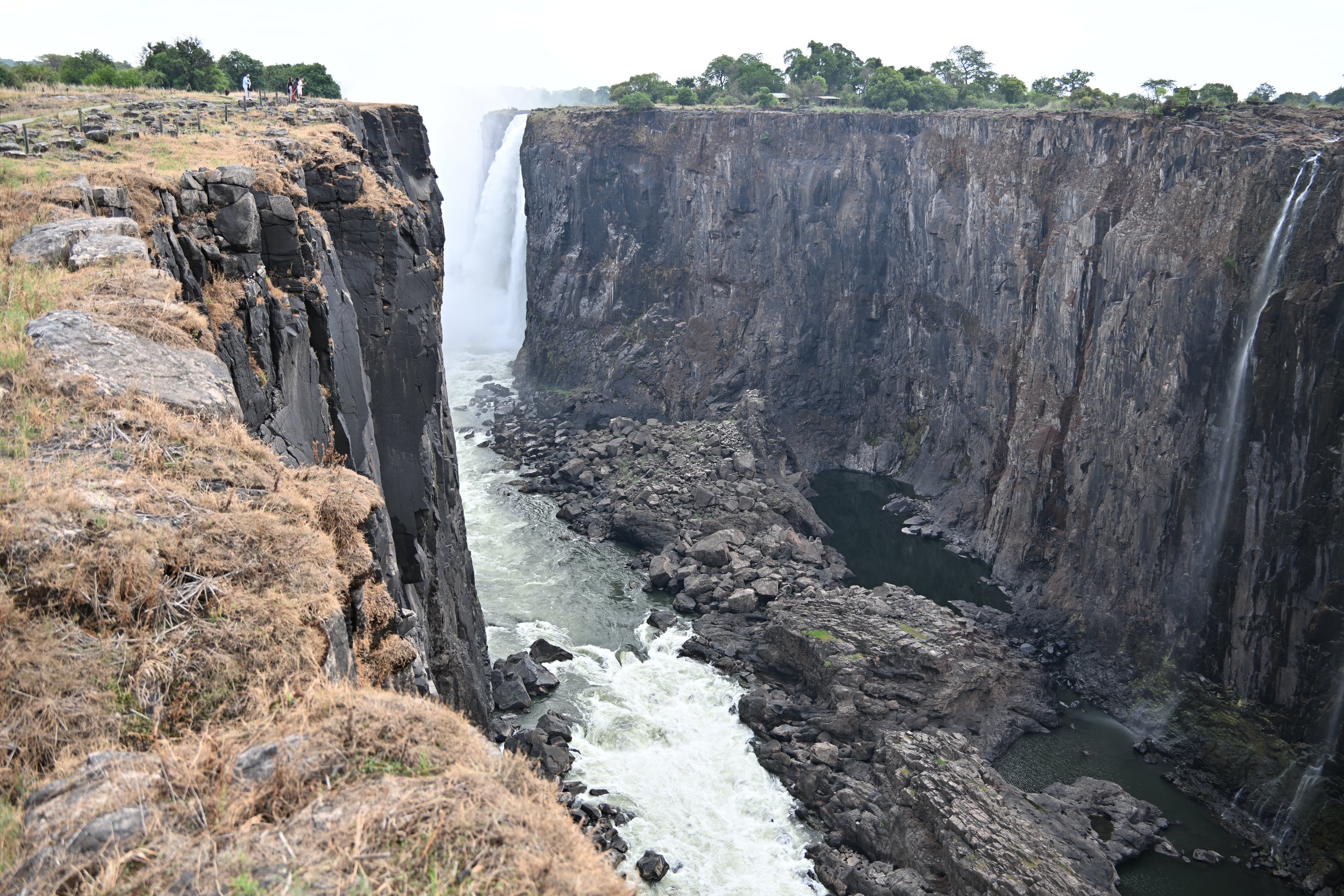
The timing of our trip was primarily aimed at seeing baby lemurs in Madagascar, so we just had to accept the low flow conditions of the falls. However, this did afford us the opportunity for an adventure! Video ahead (as usual, open this post in a browser by clicking the link at the end, if you can’t see the video already) -

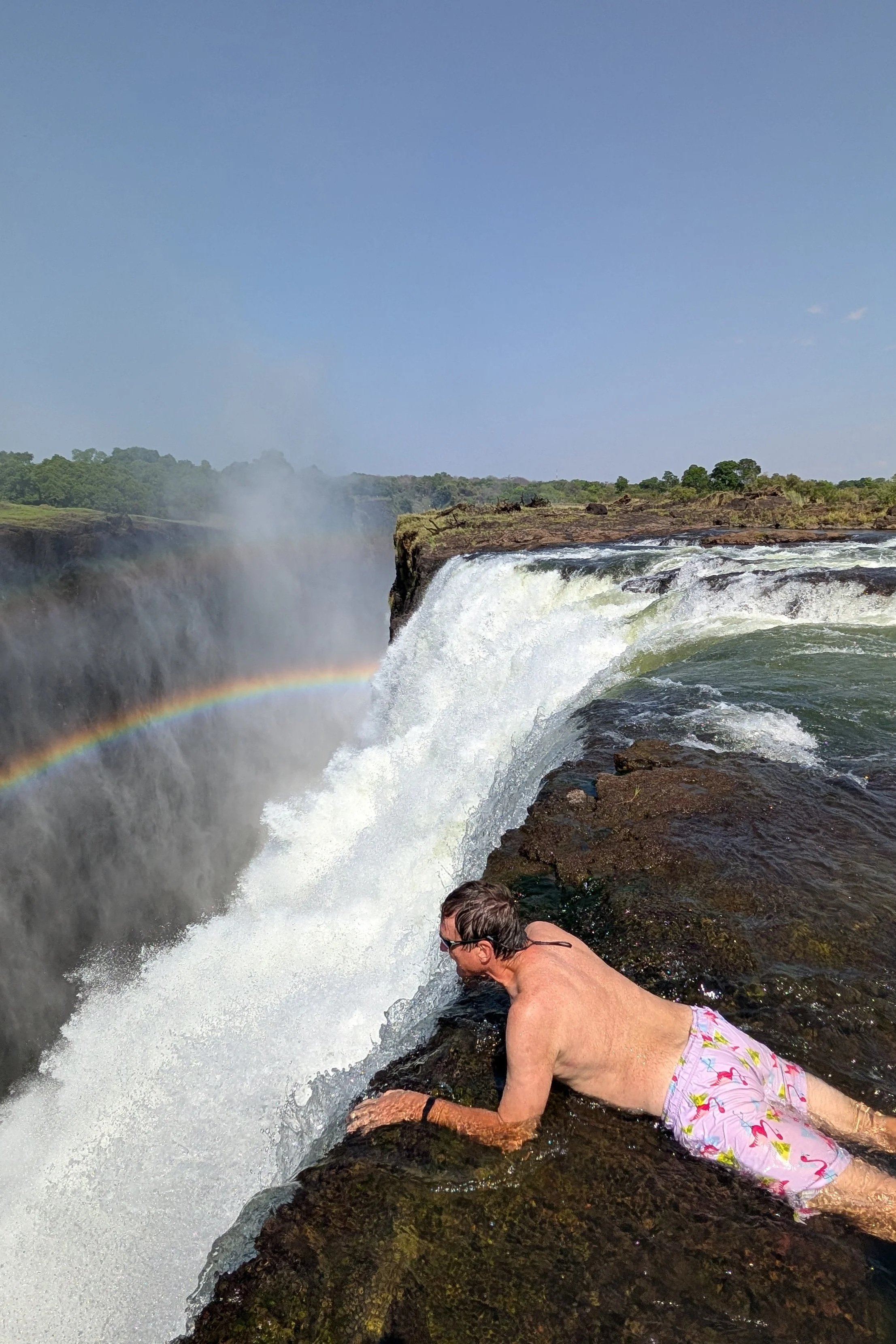
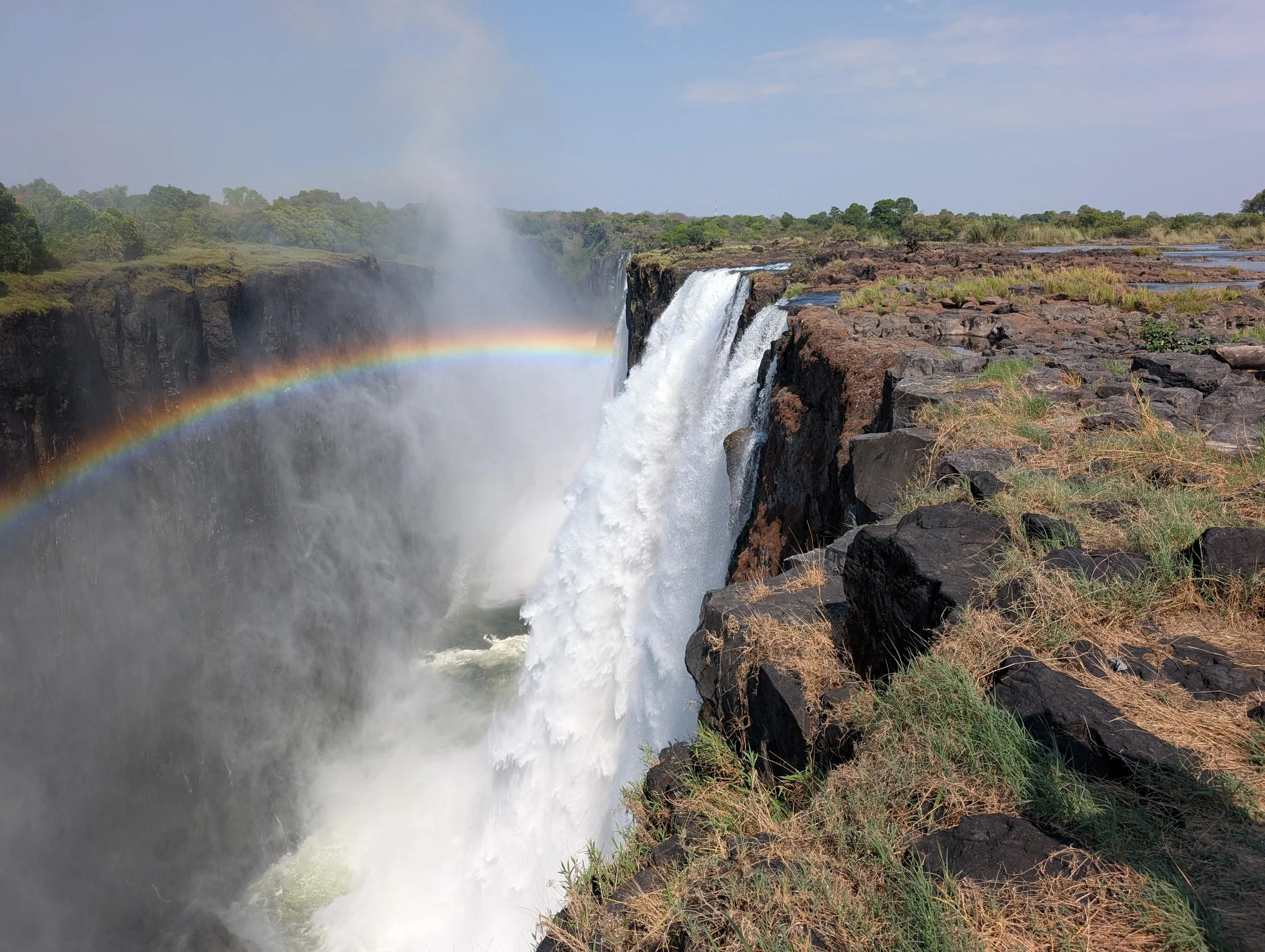
The mist in the distance is the edge of the falls we’re racing to! We went over to Zambia, so we could take a dip in the Devil’s Pool. We walked across those rocks at the right of the next picture to get in the river between that closest waterfall and the bigger one next to it -
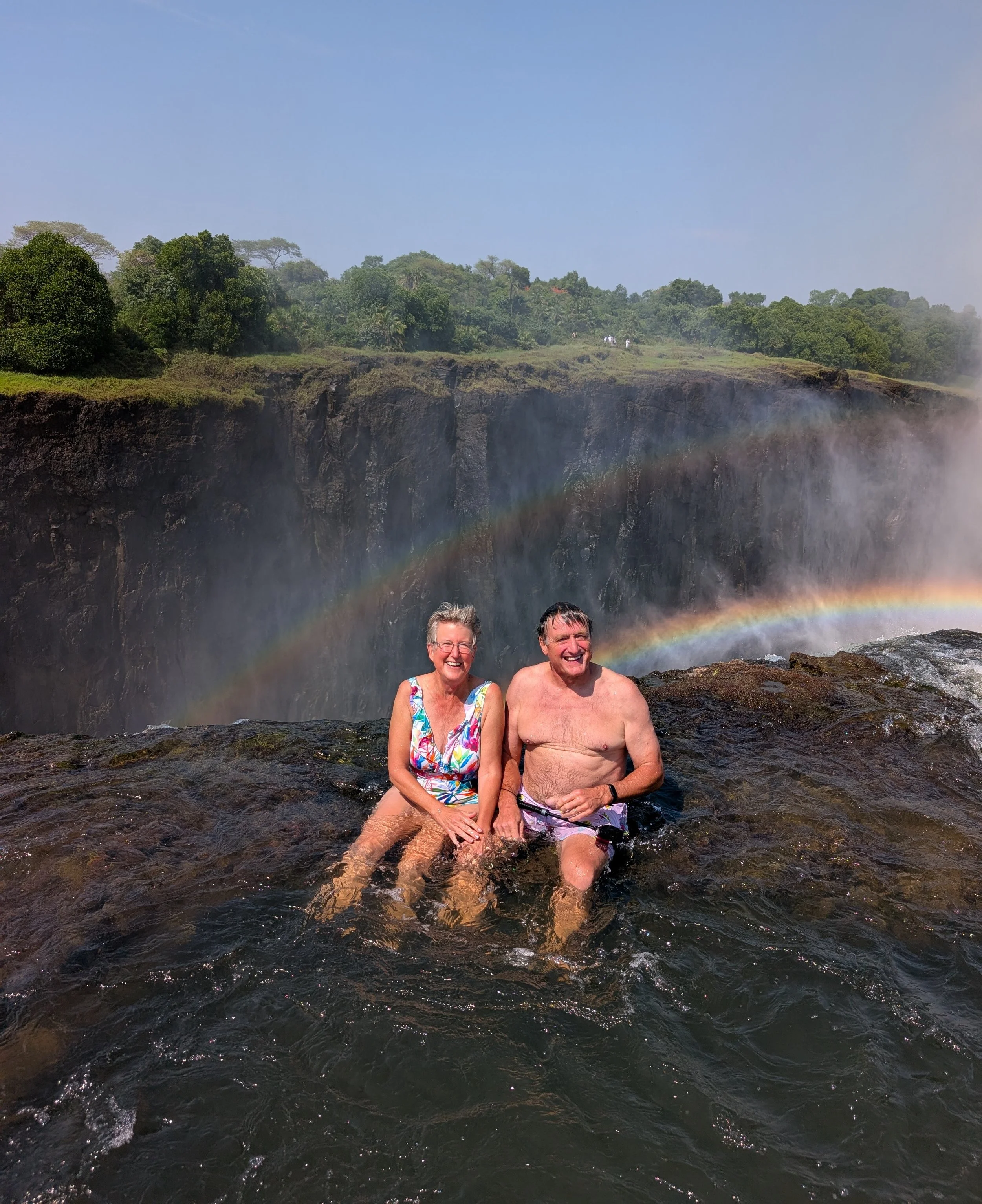
Then each of the tour participants had a photo shoot…
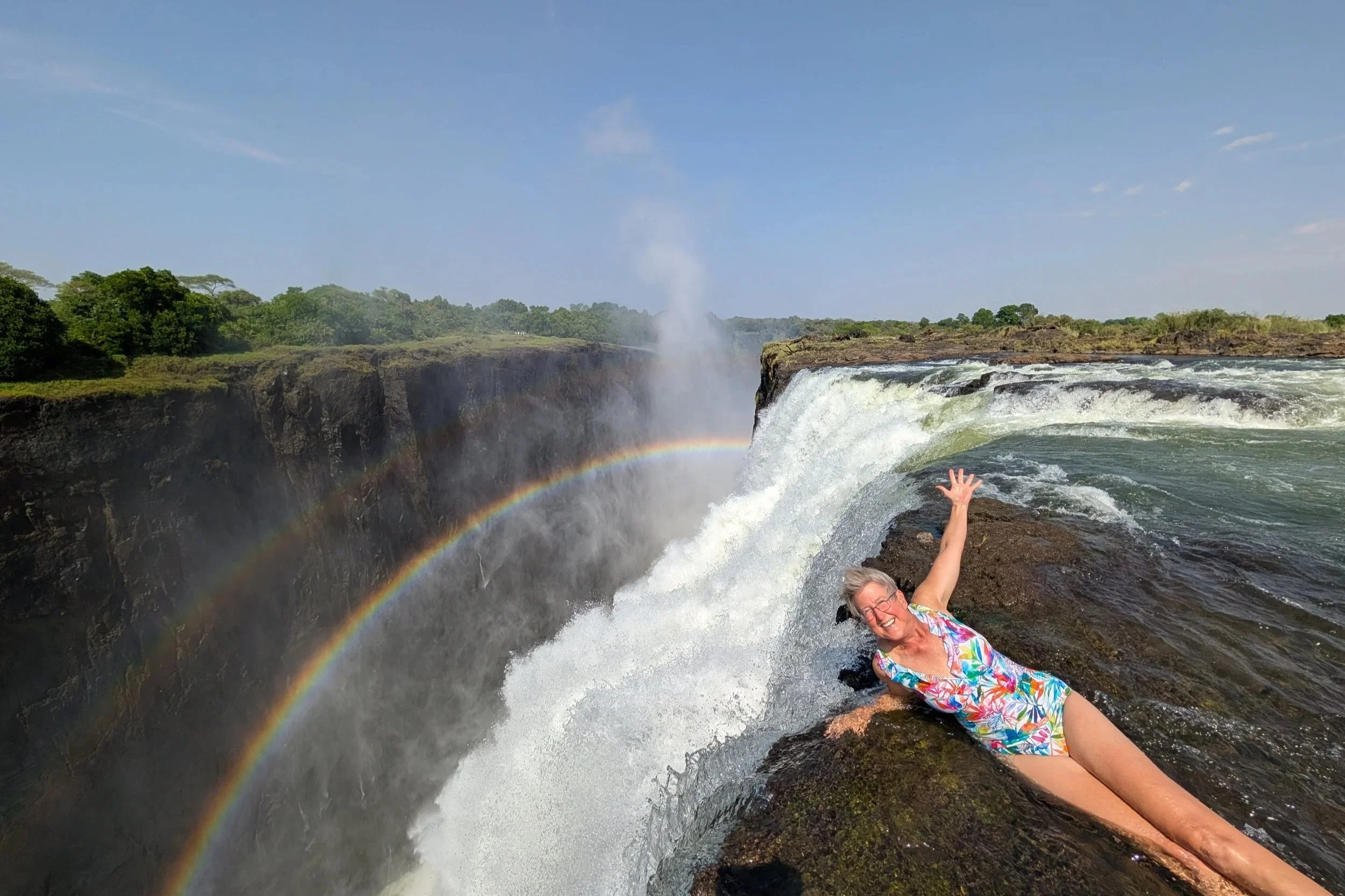
What you can’t see is the guide holding our ankles as we posed. :)

As we waited our turn, we sat on a ledge in the river, and were nibbled on by fish! Luckily the guide warned us of this before we got there.

We had a glorious morning for this outing…

… and we had even more fun than we thought we would.
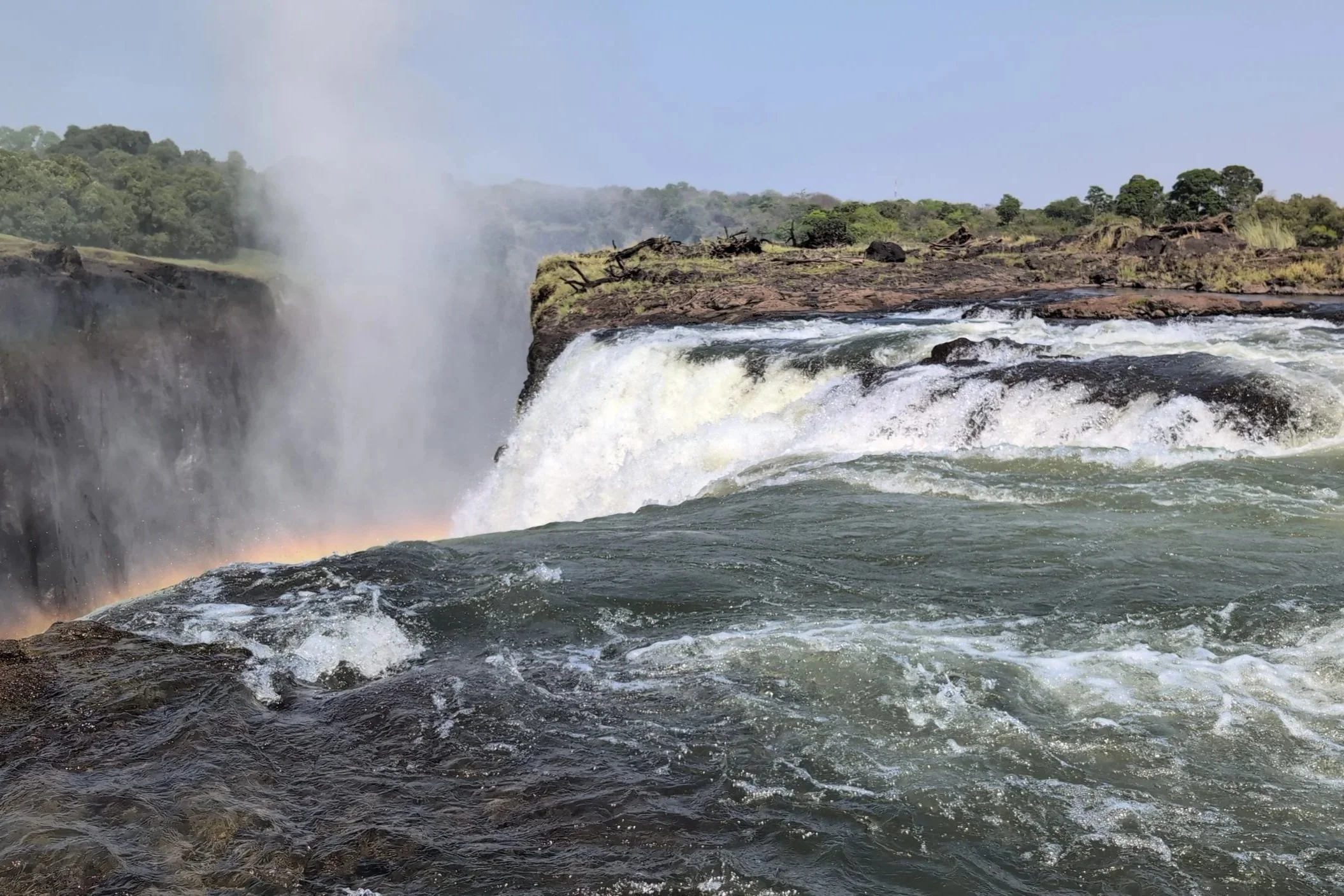
So we added 6 countries - Madagascar, South Africa, Namibia, Botswana, Zimbabwe and Zambia - to our total of countries visited list (now at 60) from this trip.

___________________________________________________

And now, for a few parting observations from Steve:

We drove a bit more than 3000 KM (~1850 miles) in Namibia and into Botswana, and found the roads to be excellent. Even the gravel roads were in good shape, albeit with some washboard areas. Apart from Mongolia, Namibia is the least densely populated country in the world, with an average density between that of Montana and North Dakota; thus, traffic was light to very light, even in the cities. Similarly, on the way from Swakopmund to the coastal sand dunes, our guide/driver grandly announced “This is a four-way stop,” which is apparently quite a rare thing!

To rent our car, we had to watch a video warning of the treacherous gravel and dirt roads, the need/requirement to stay below 70 KM per hour on unpaved roads, and the proper etiquette to allow people to pass …. But the speed limit was 100 on those roads…. And we never had anyone pass us…

Wide loads, like here, carry warning signs—albeit differently worded:
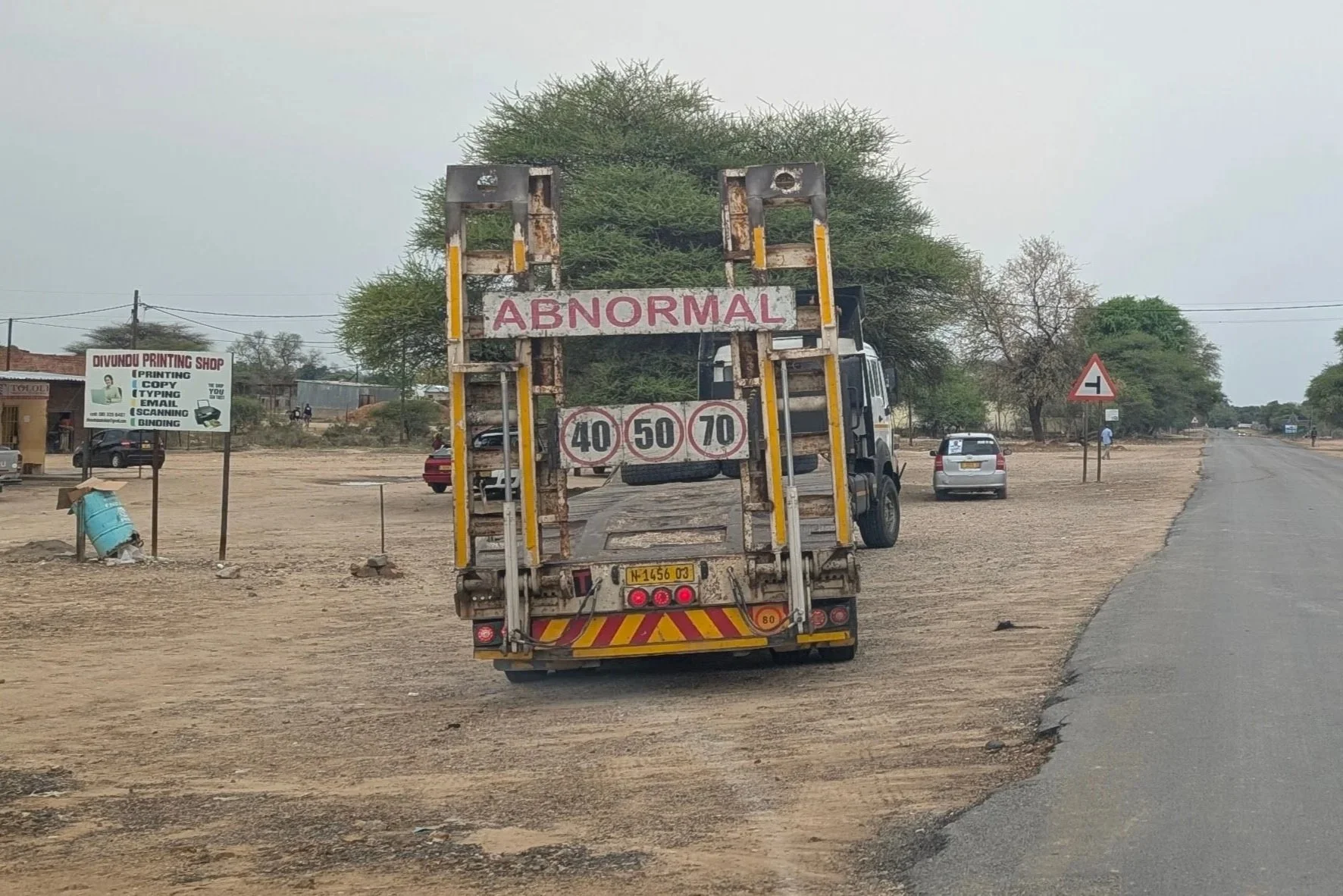
As you might infer from the picture, English is the official language of Namibia, even though very few people speak it in their homes. (The same is true of Botswana, Zambia, and Zimbabwe—which has 16 official languages.) Most people can communicate in English, which makes it easy for American visitors.

German is another language that one might run across, especially in Swakopmund, which was established by the Germans during their 30 year colonization of “South West Africa.” That colonization ended in World War I, but the poor Namibians went from the frying pan and into the fire when the League of Nations granted South Africa the mandate to govern Germany’s prior colony… Notwithstanding this ugly history, Swakopmund attracts many German tourists and retains a good deal of German cultural flavor:
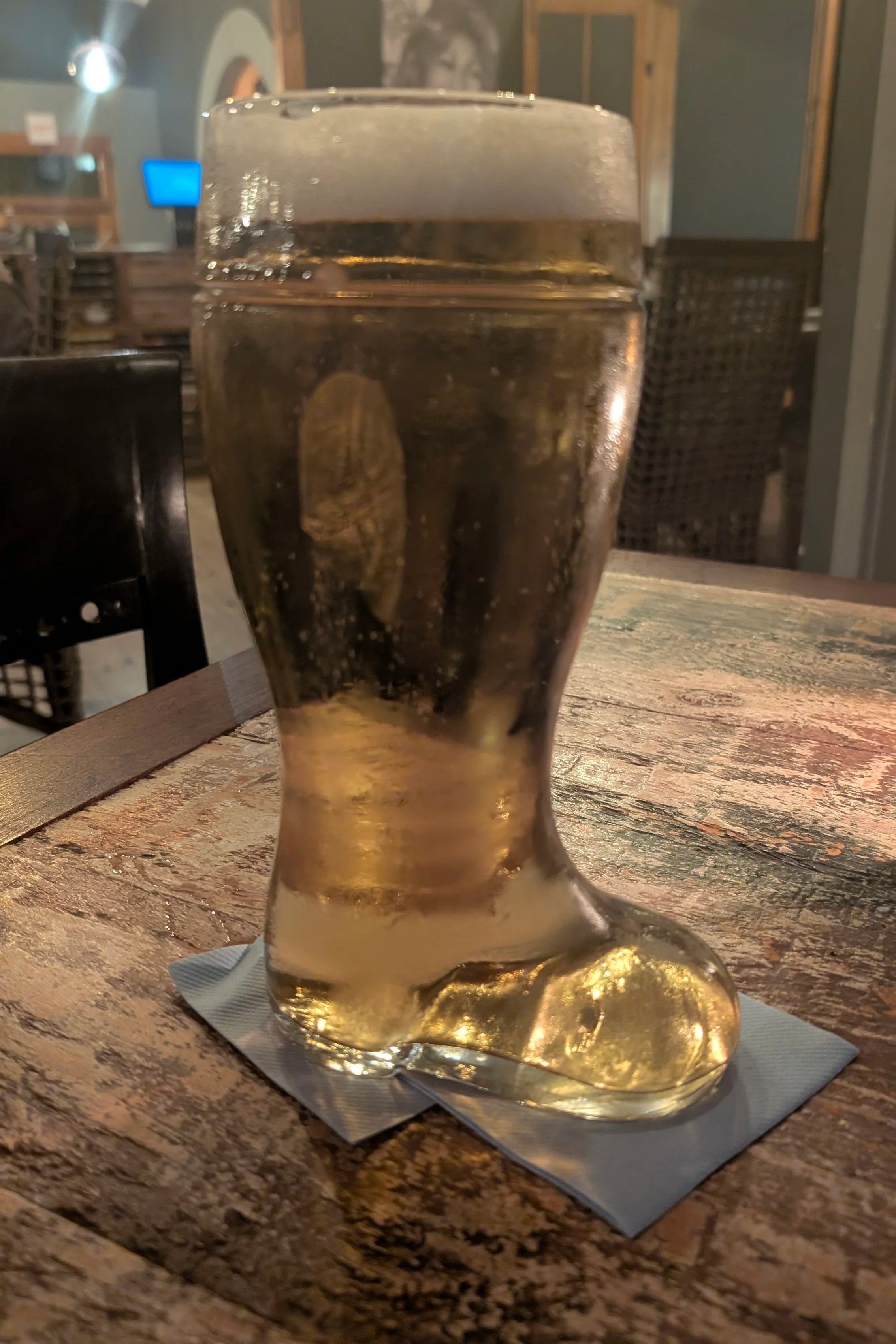
We were the only customers not speaking German in the restaurant where we had this beer.

All in all, we really enjoyed this trip and would highly recommend both Namibia and Botswana to anyone seeking a comfortable place to see African wildlife. Madagascar was also a great trip, but it definitely doesn’t have the amenities (and transportation!) available on the second half of our trip. In fact, anyone wanting a luxurious, comfortable trip might find the name of the Nosy Be, Madagascar, port city to be entirely apropos!
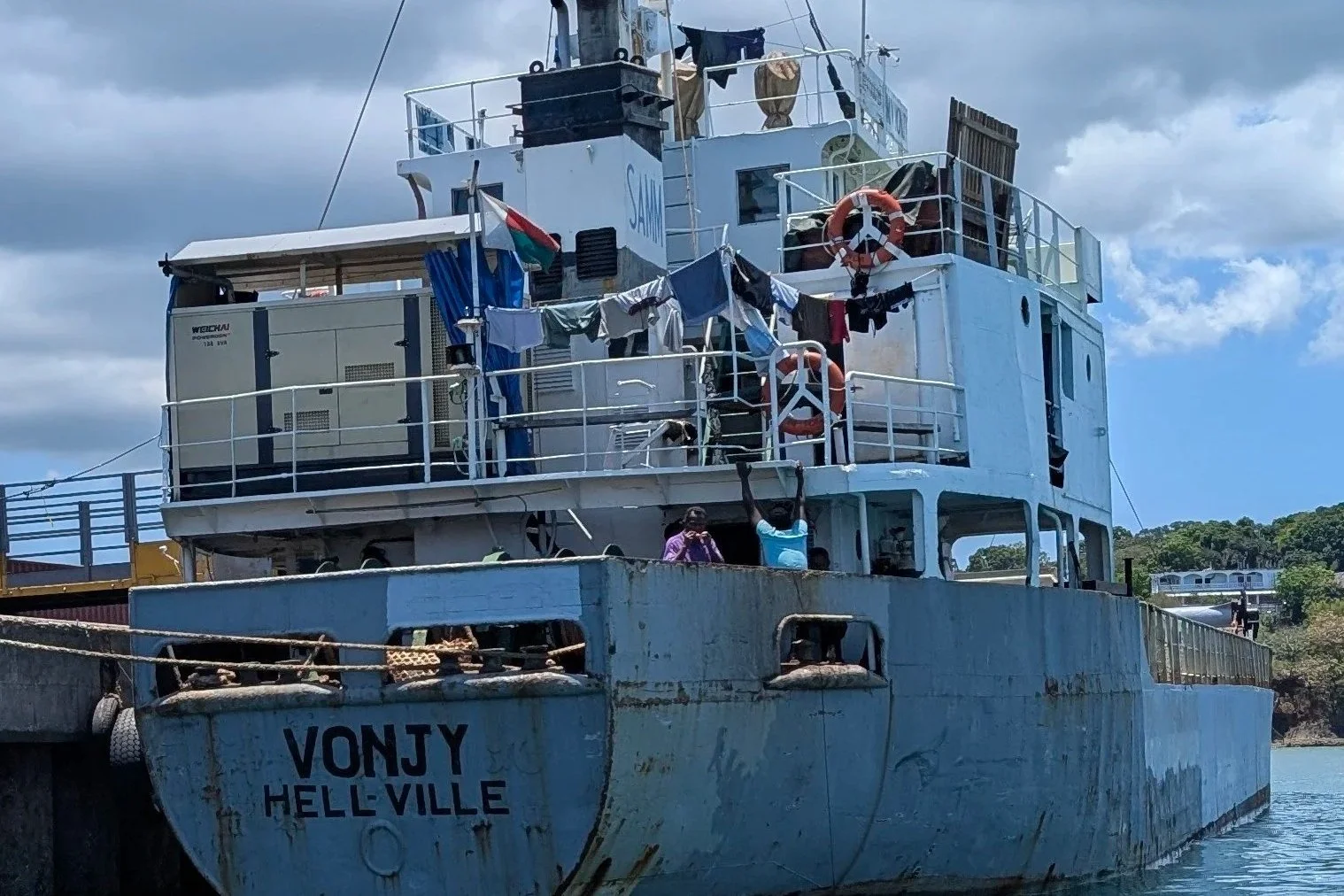
Our 2 month African adventure is now in the books (with the next post about 3 months from now).
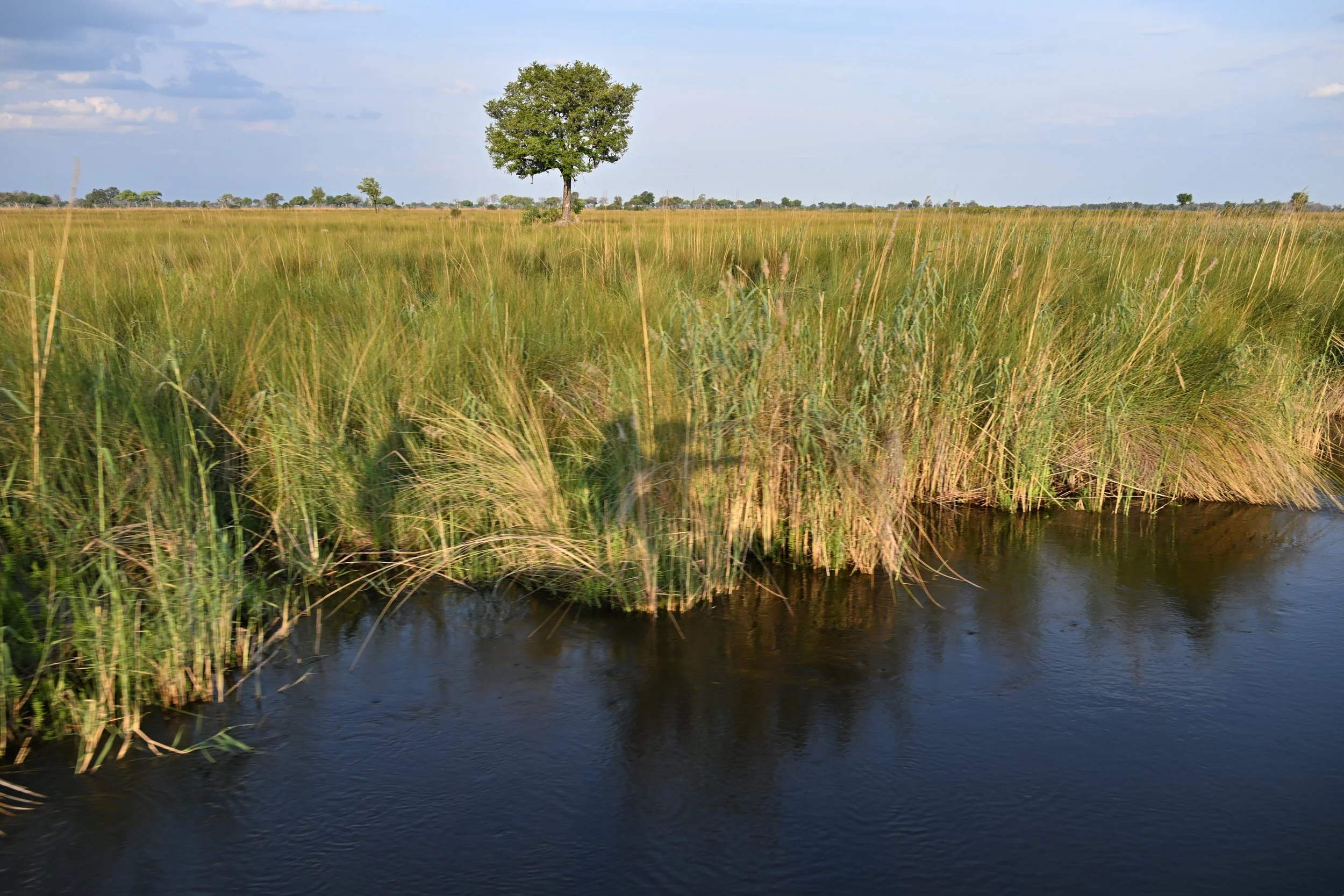
Okavango Delta continued

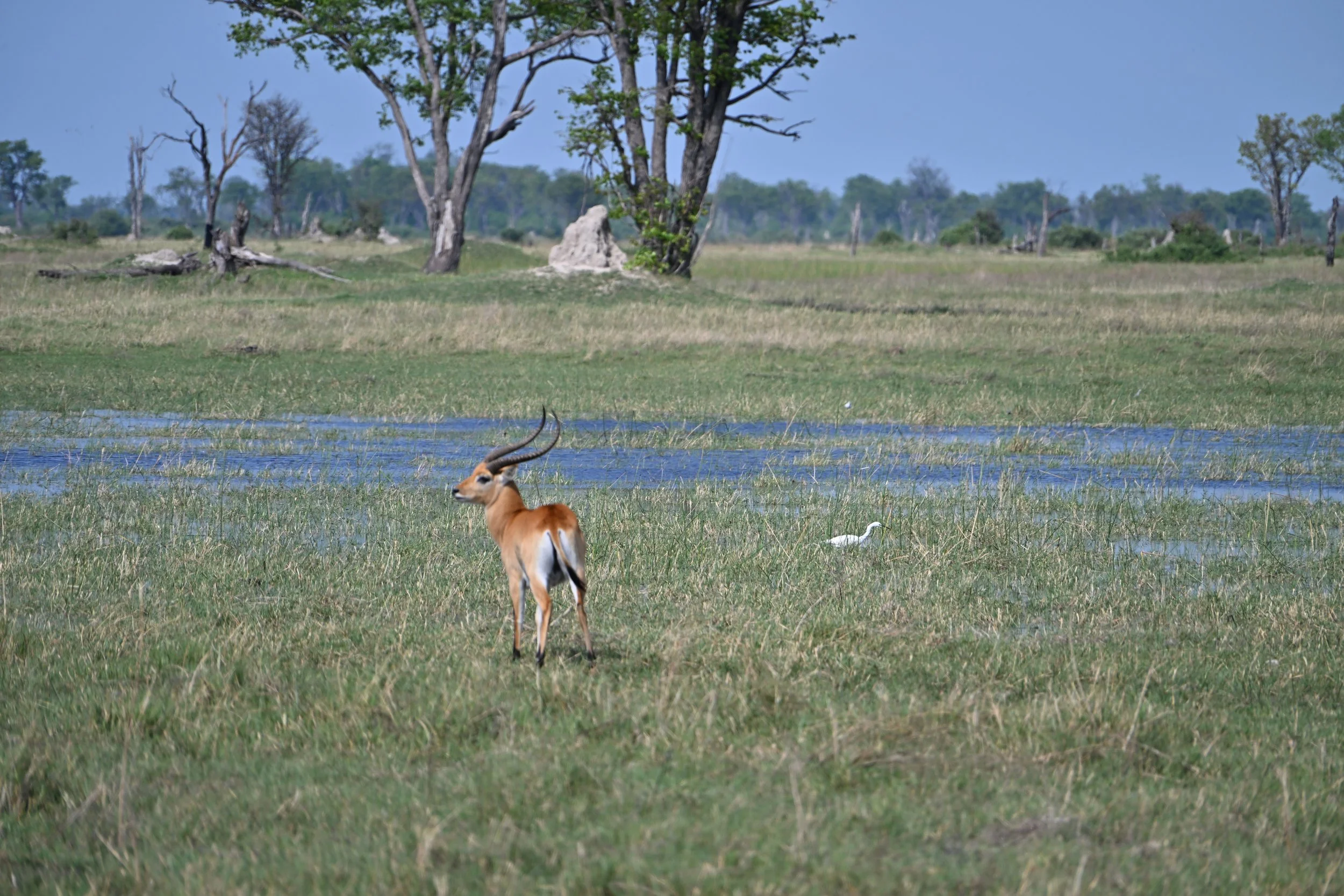
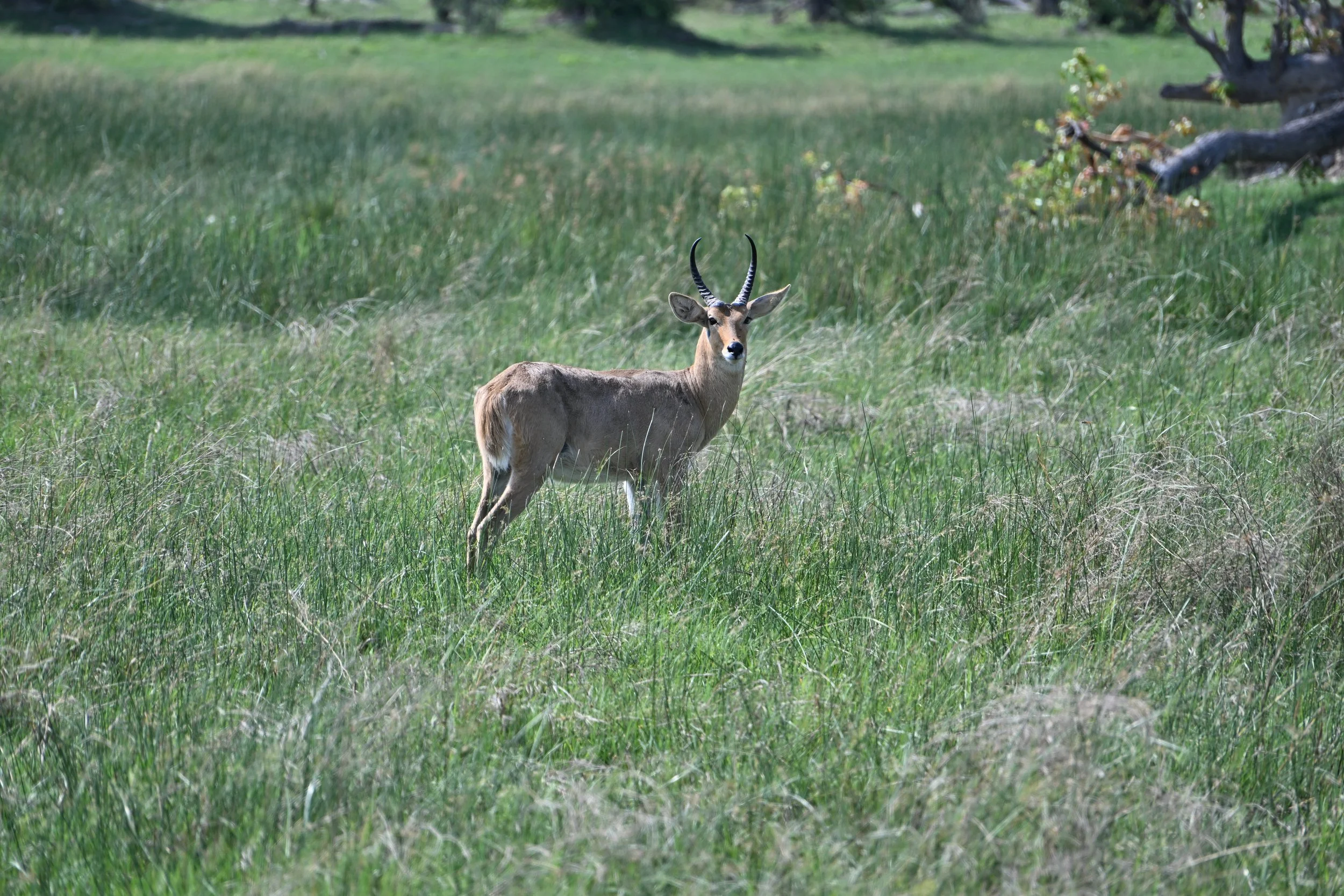
It was truly amazing how many different animals we saw every time we left camp. Here’s a Reedbuck…

… in contrast to the Red Lechwe, in coloration and horns -

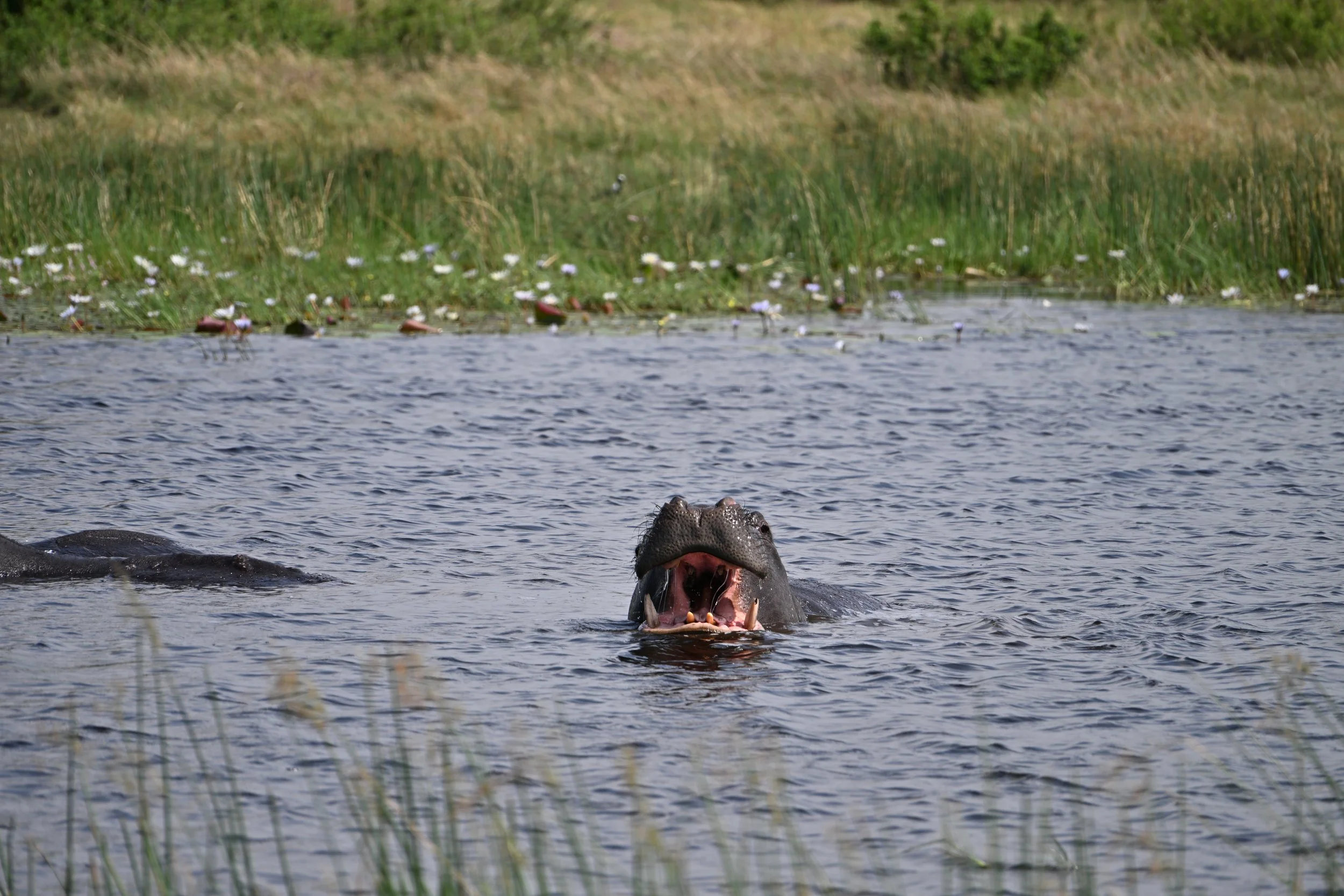
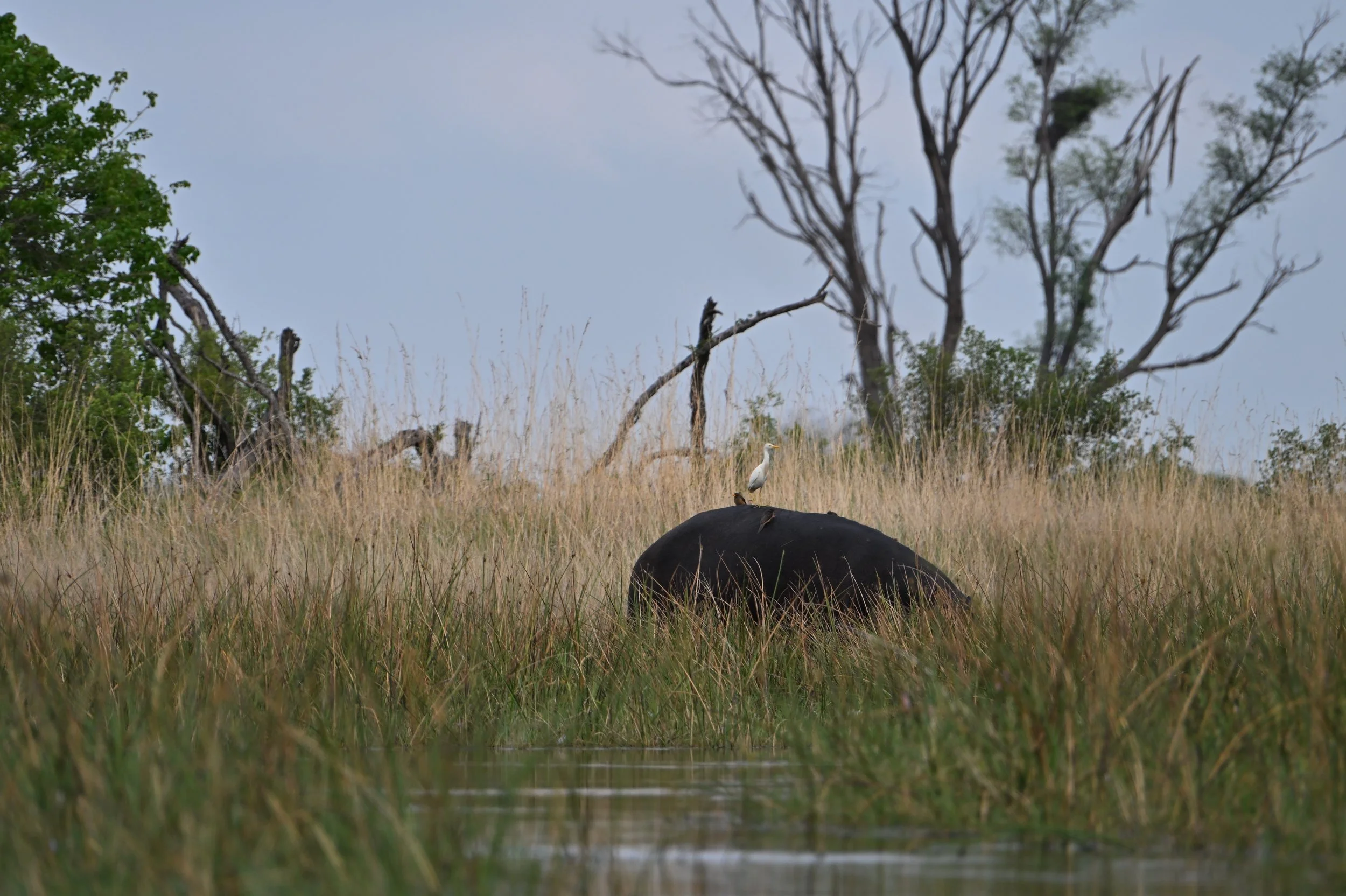
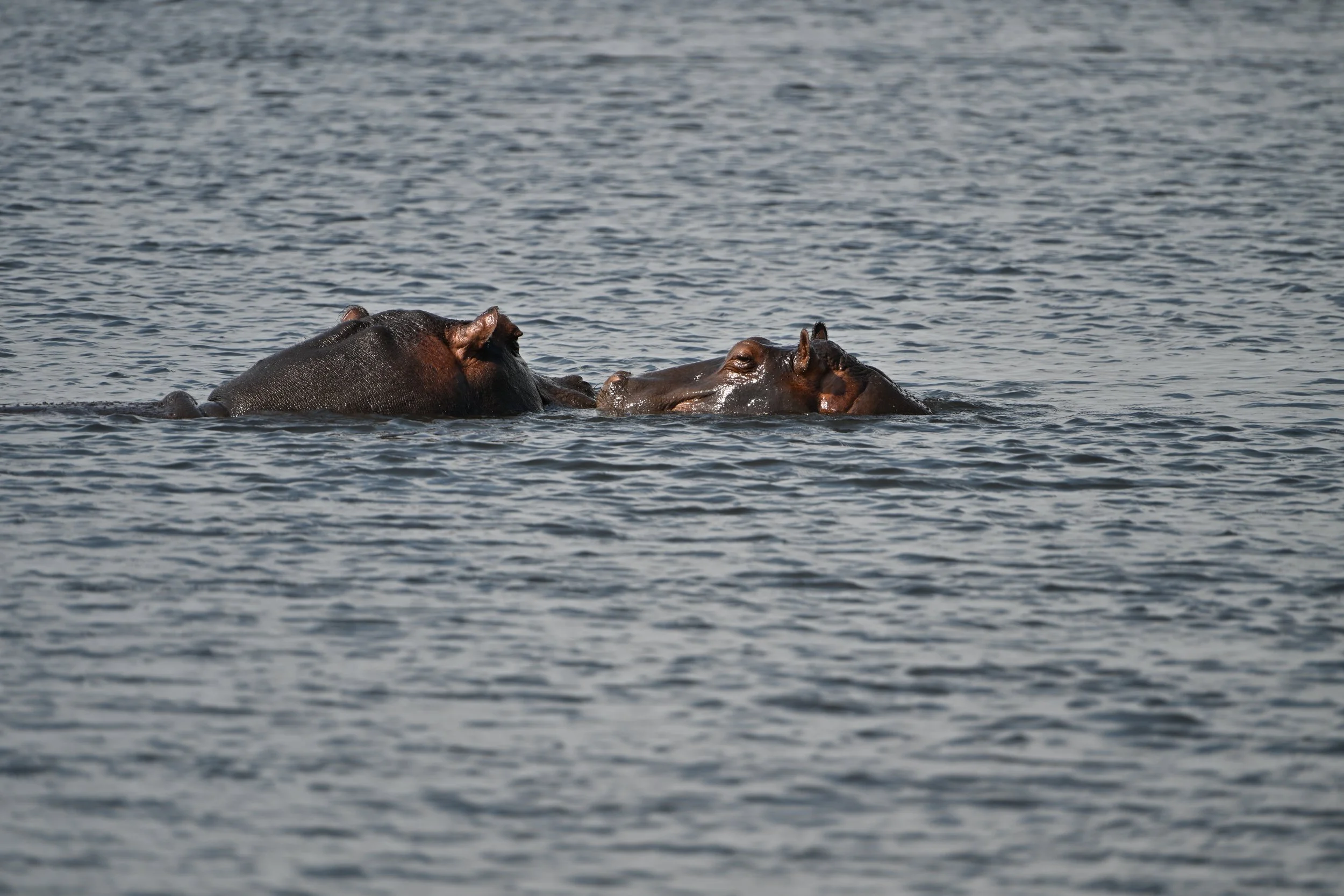
And practically every waterhole had one or more hippos -

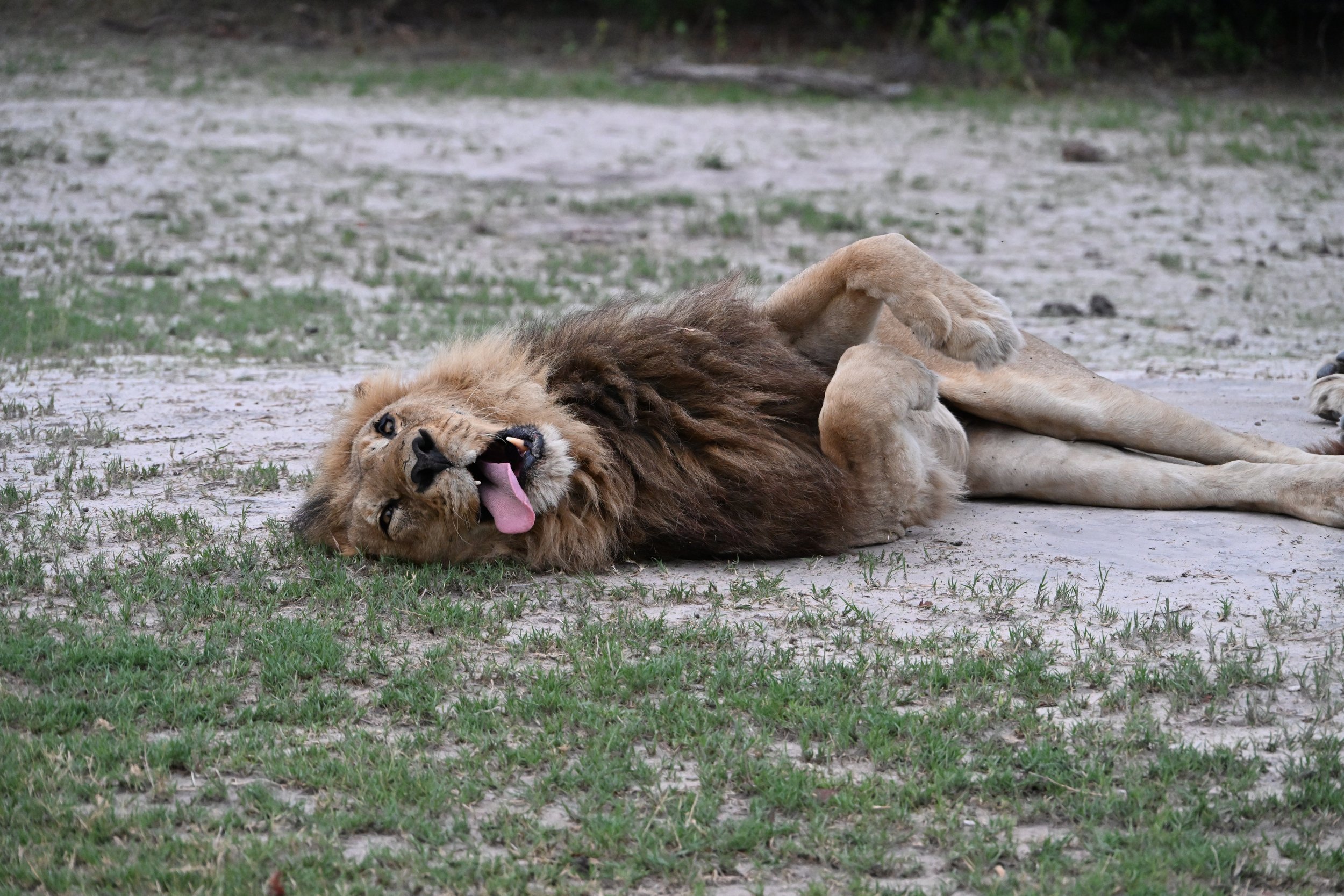
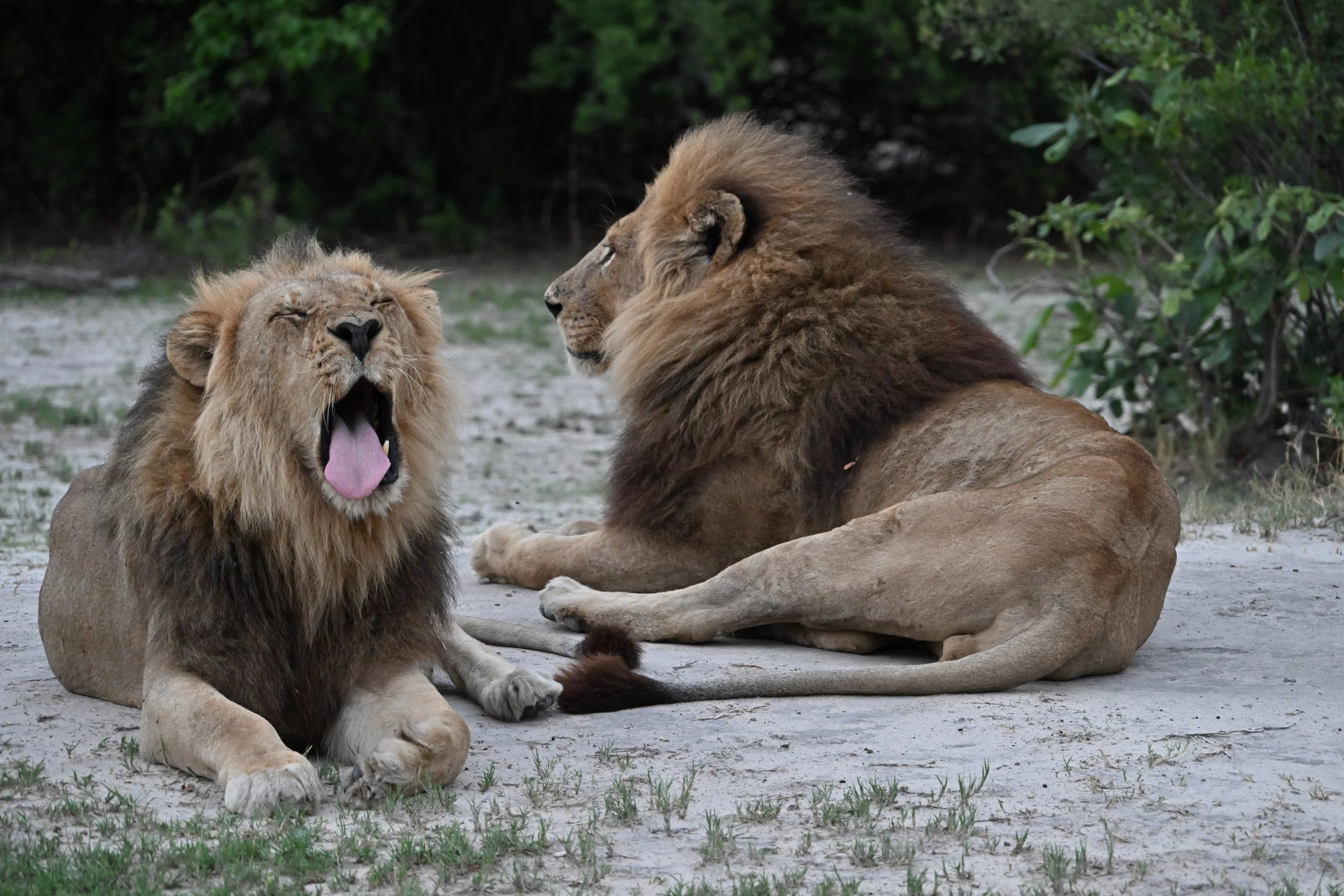
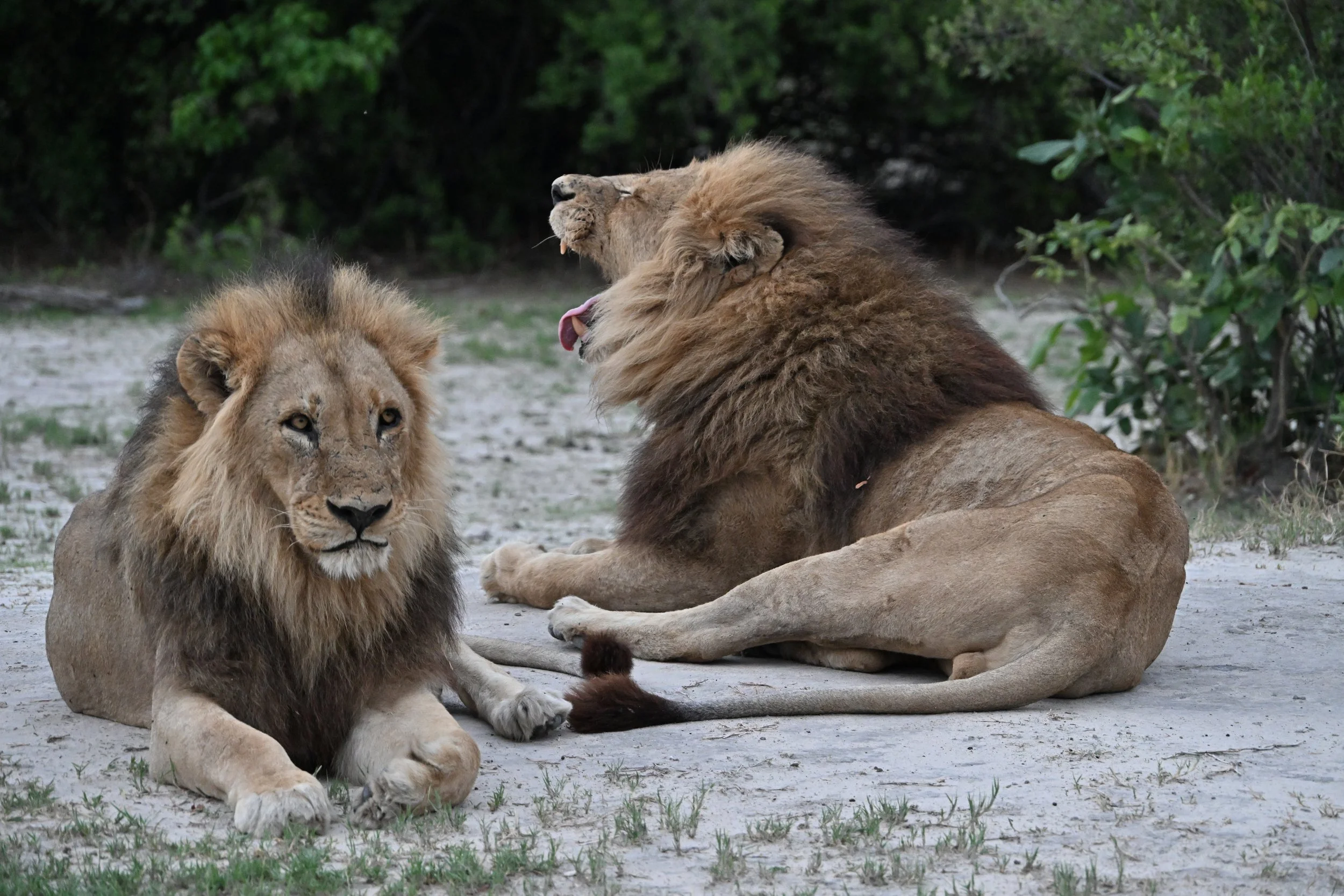
We happened on this pair…

… which were pretty sleepy -

Video ahead (have this post opened in your browser by clicking the link at the bottom) -

Whenever one yawned…

… the other soon followed -

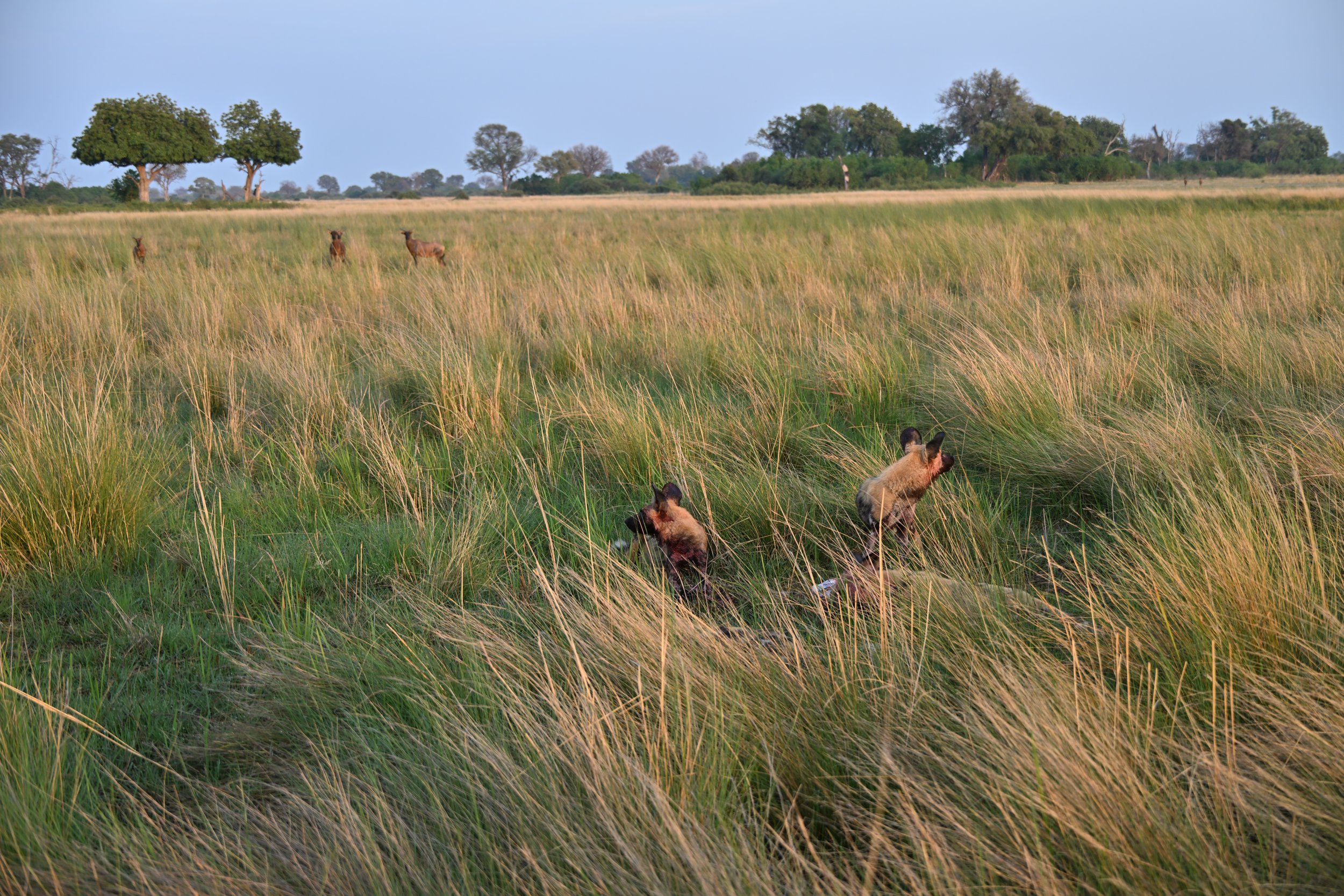
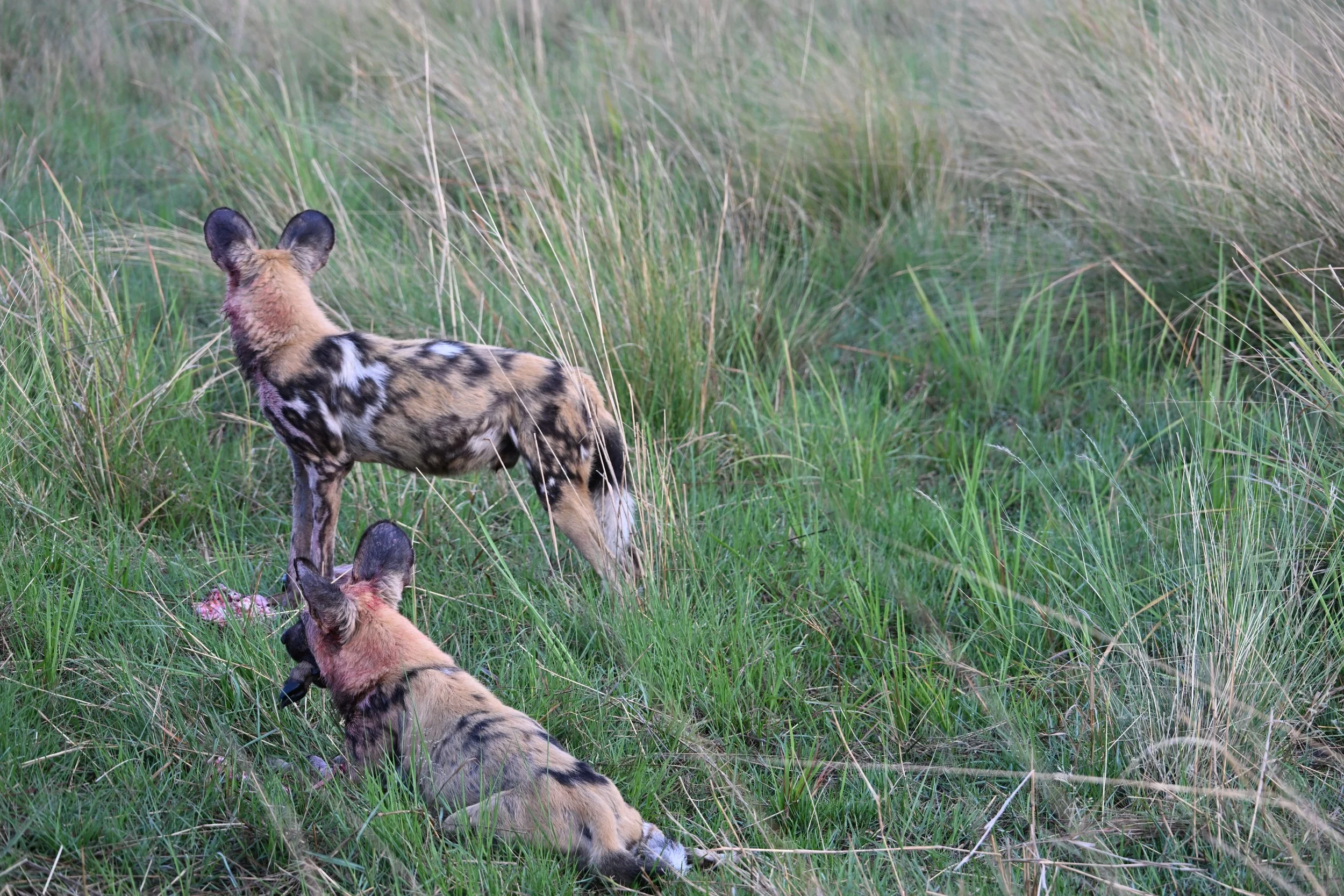
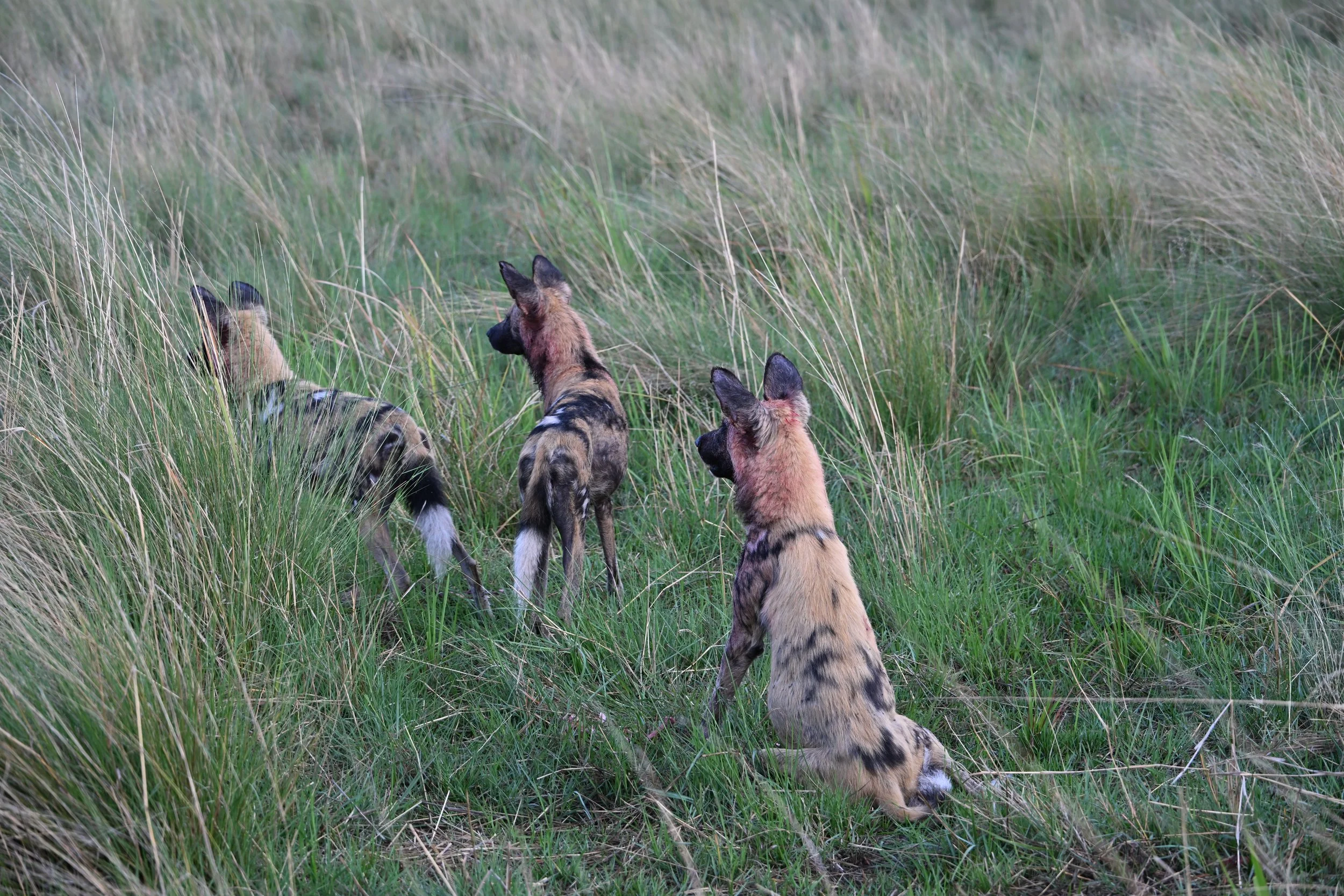
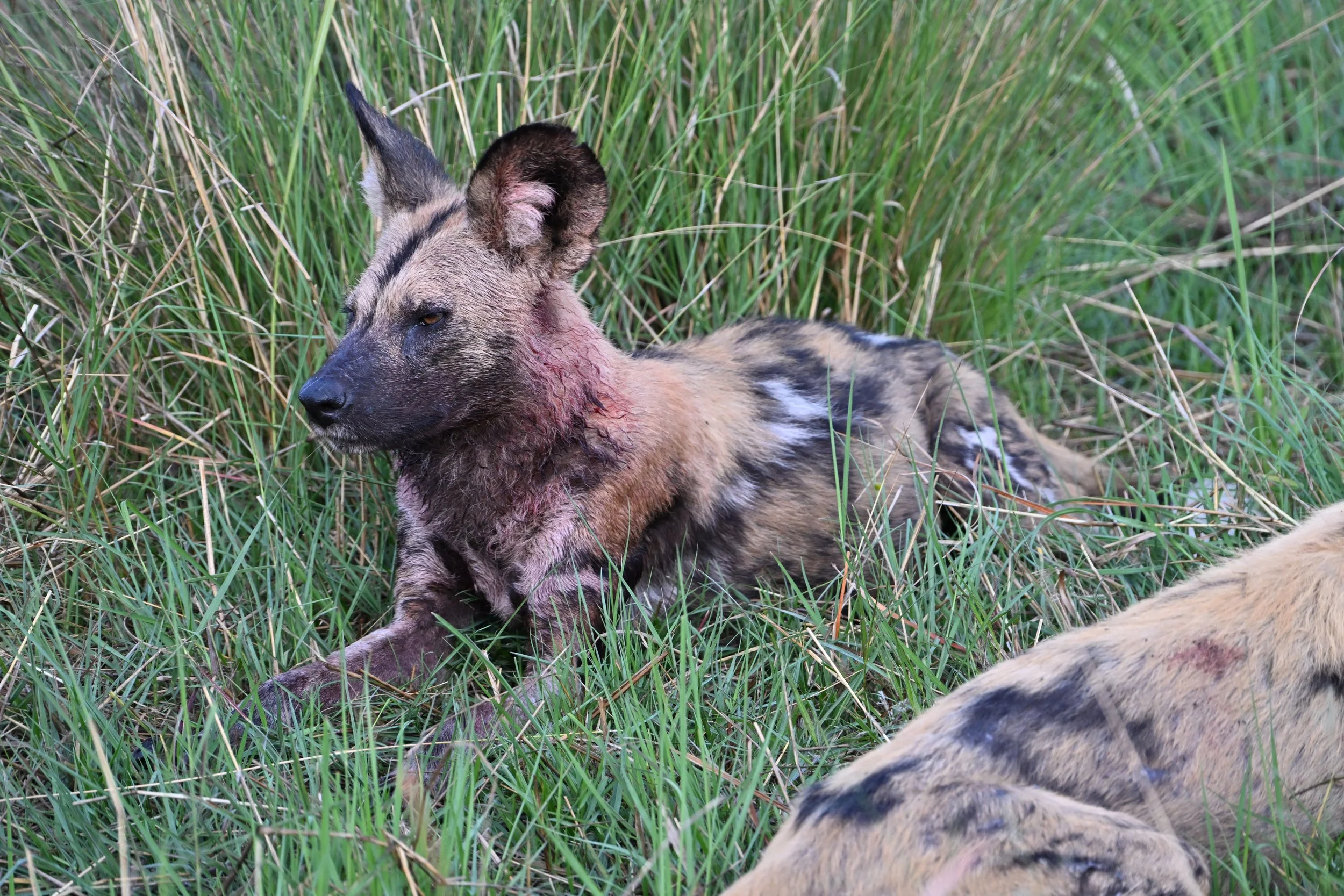
The next morning we headed to where a recent kill had occurred. This turned out to be the highlight of our entire safari trip - AFRICAN WILD DOGS!

These beautiful animals are considered endangered, because they only number about 1,400 individuals throughout southern Africa and the southern part of East Africa.

Their coat coloration is unique to each individual, and they are tracked this way by research groups. It was interesting that this pack was only 4 dogs, while most packs number 10 - 40 individuals.

In the first picture, you can see the Tsessebe watching the dogs. This is because they lost one of their babies to the carnivores. Video:

I didn’t end up taking many pictures of their faces…

… because they were mostly blood-covered -

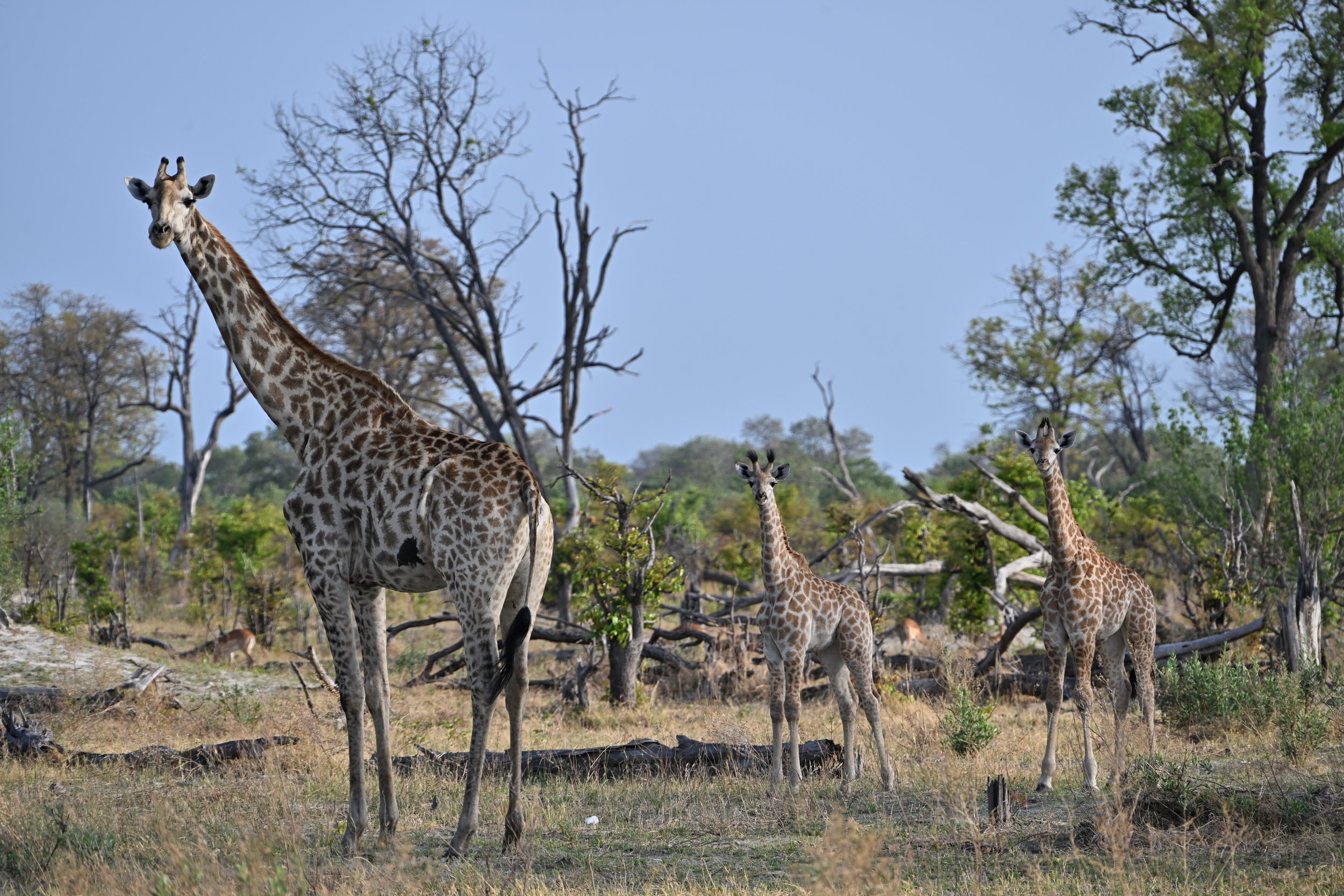
Moving on to more pleasant subjects… we were lucky to visit a giraffe creche…

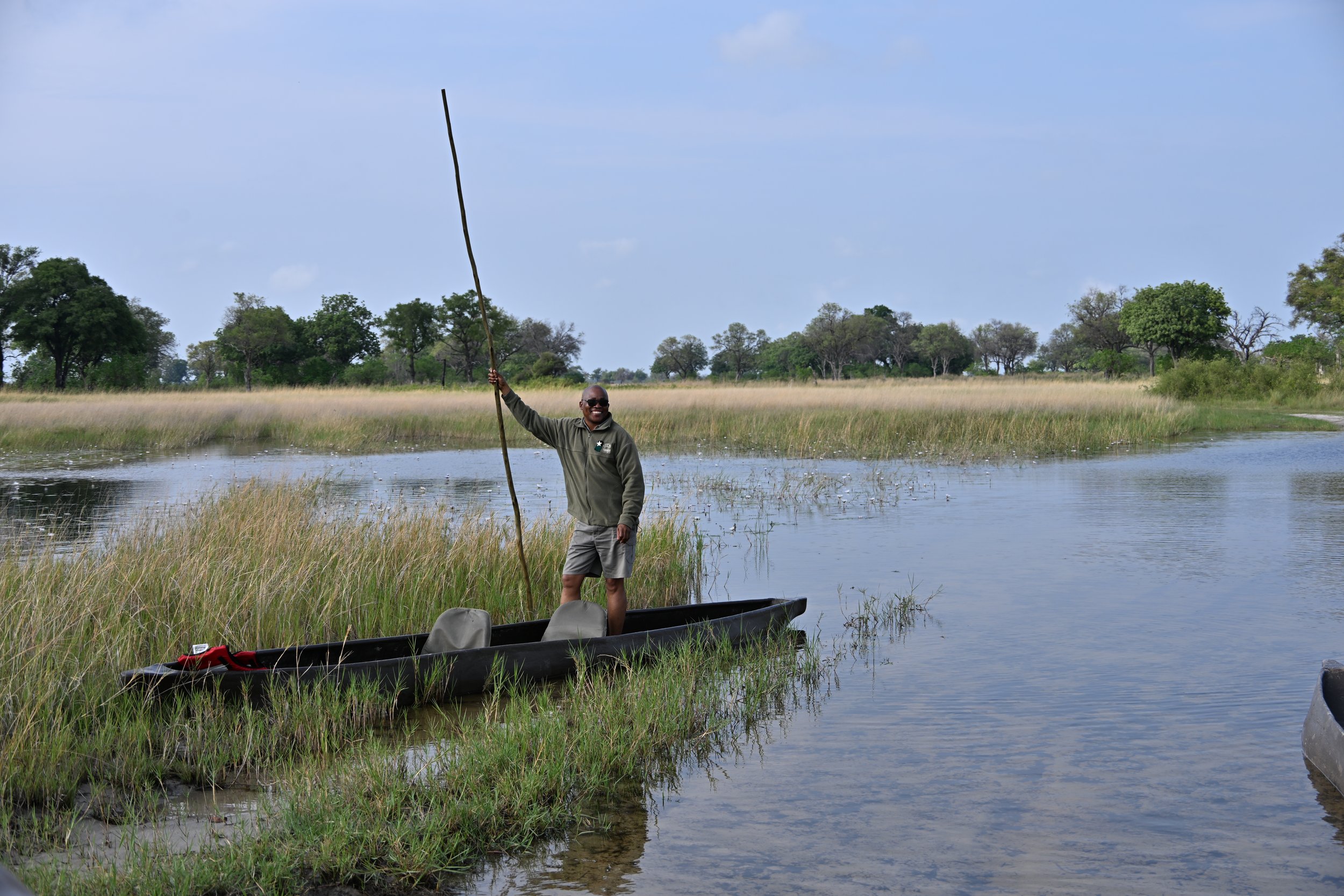
This was on our way to a Mokoro ride -

It was a very different viewpoint and pace for a “safari” -

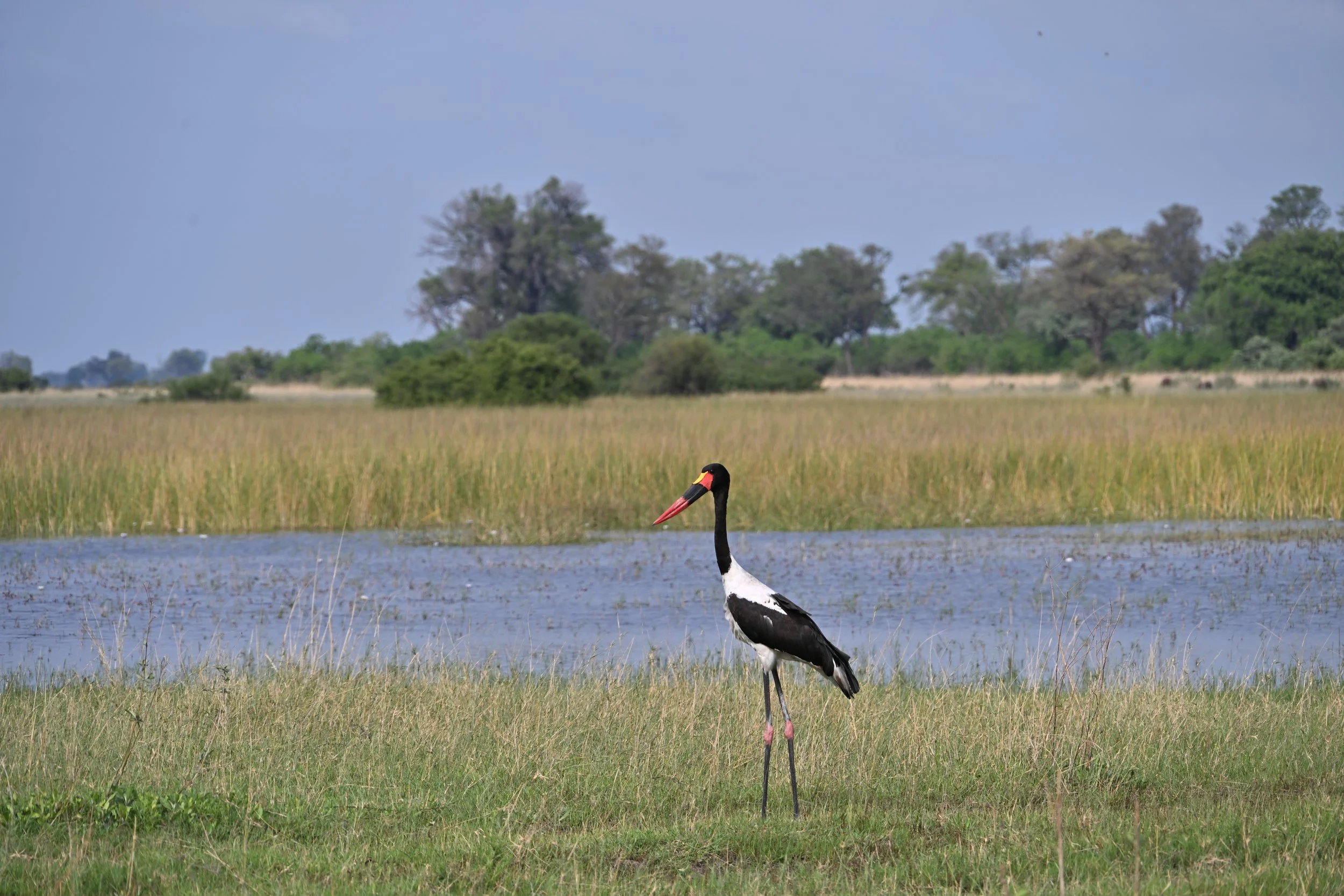
Driving back to camp we saw a Saddle-billed Stork…

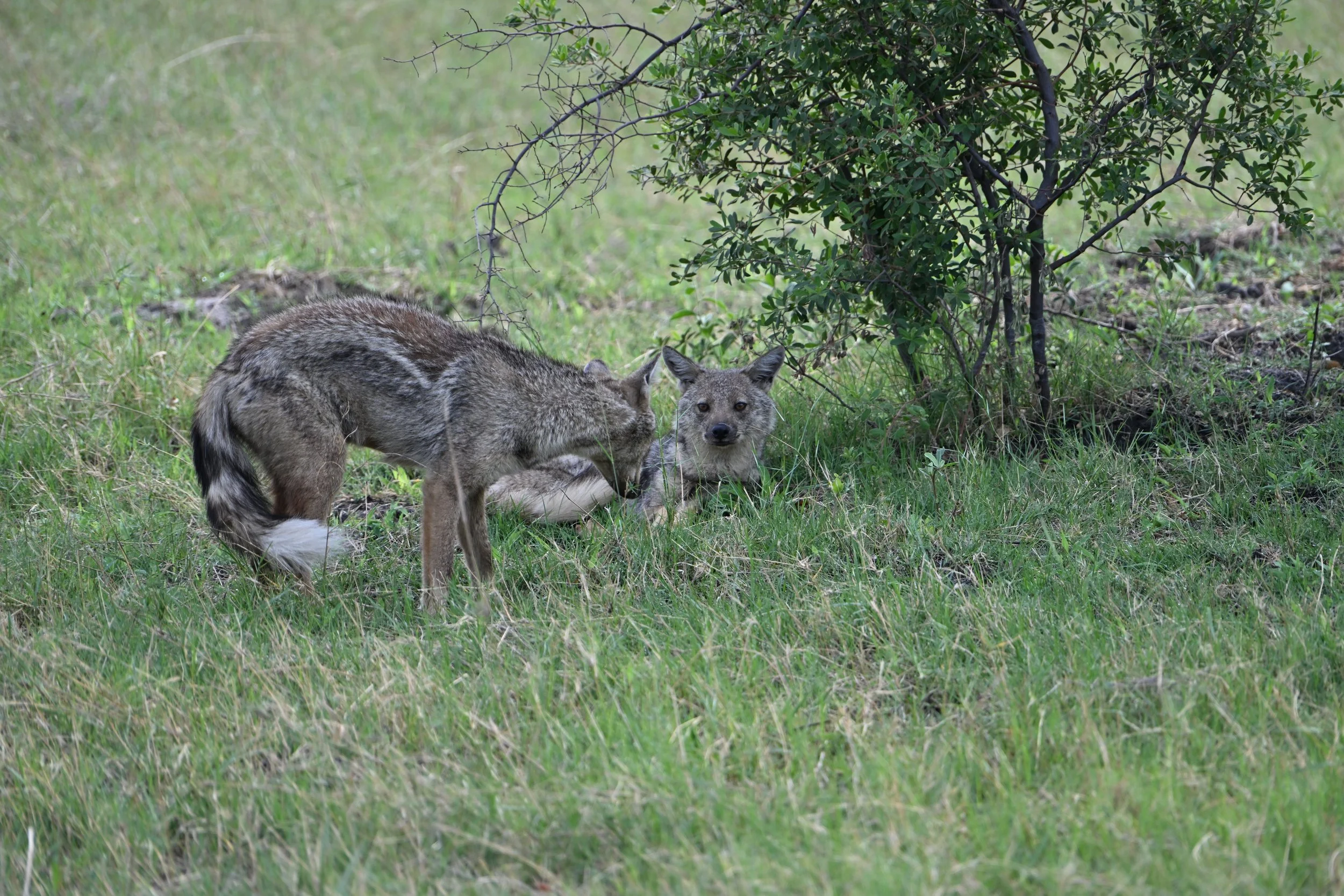
… a pair of Side-Striped Jackals…

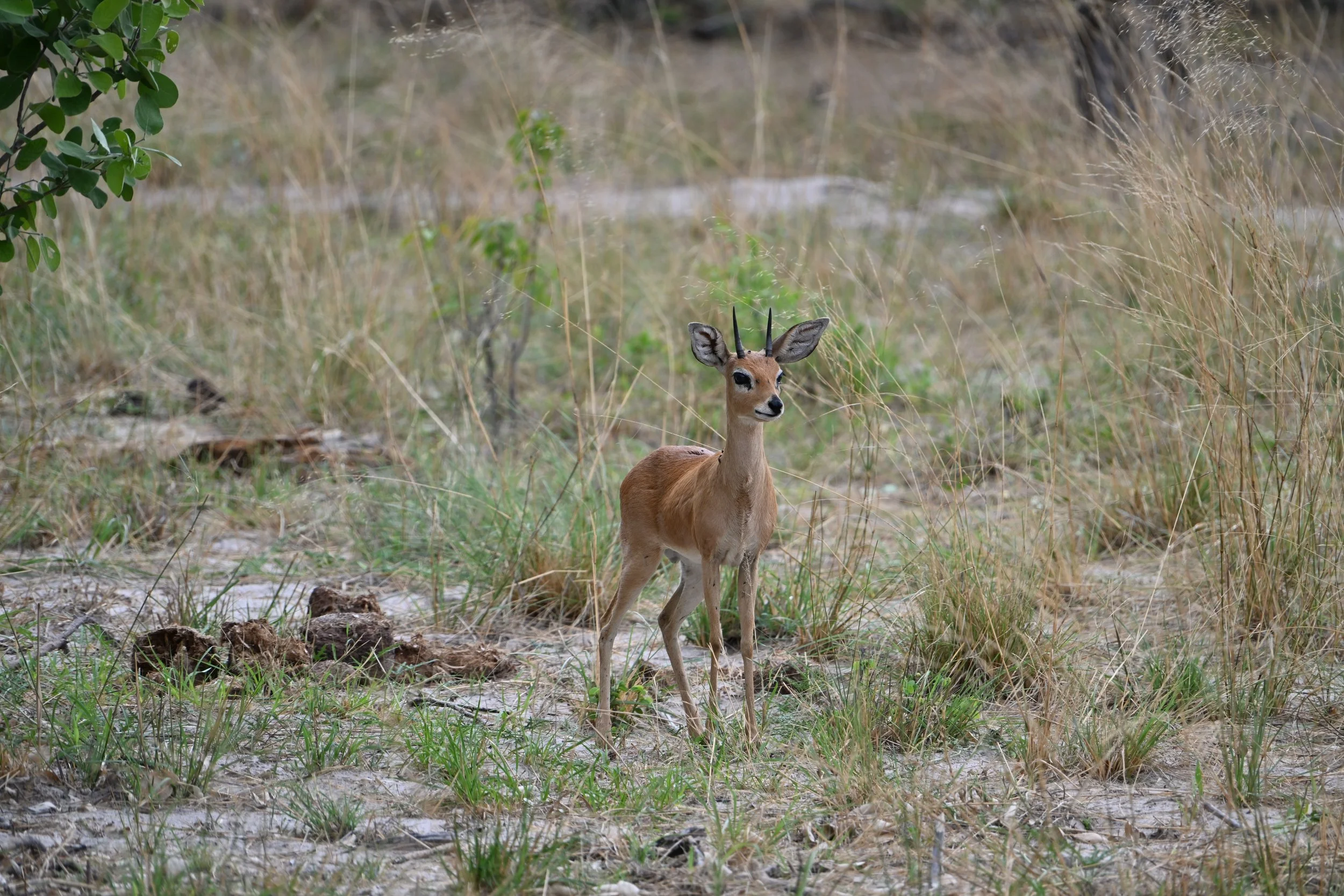
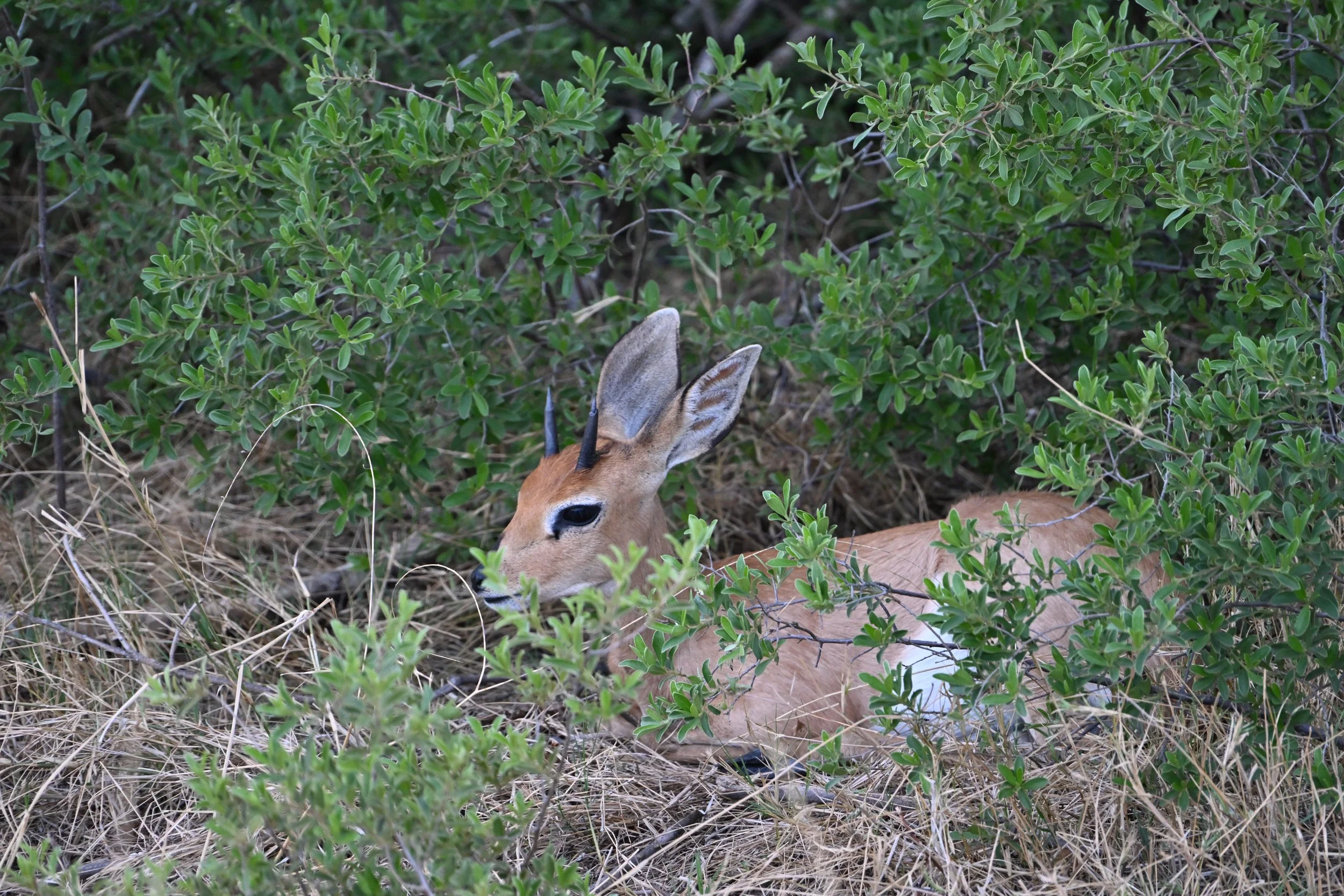
… a Steenbok out in the open…

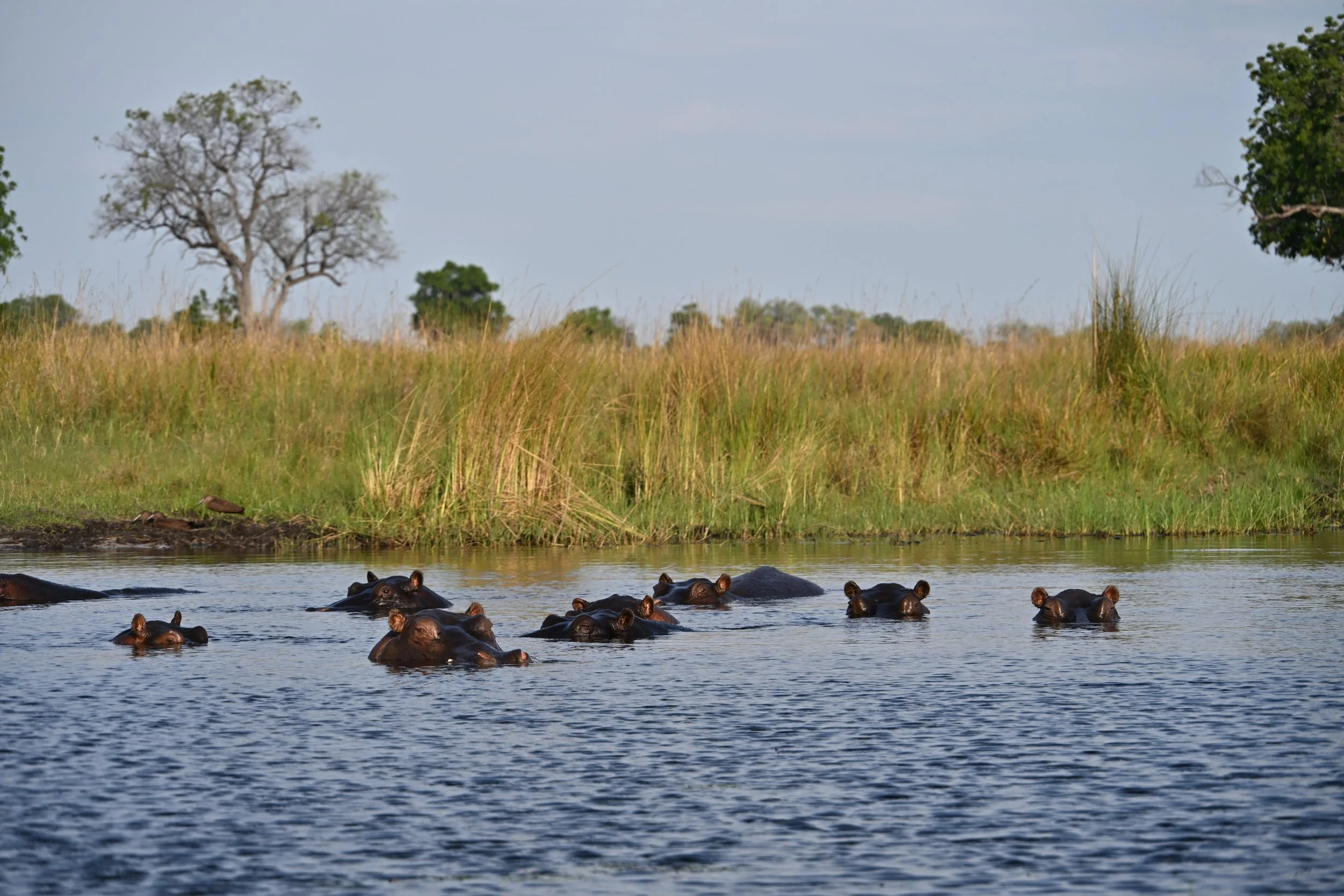
… and yes, more hippos -

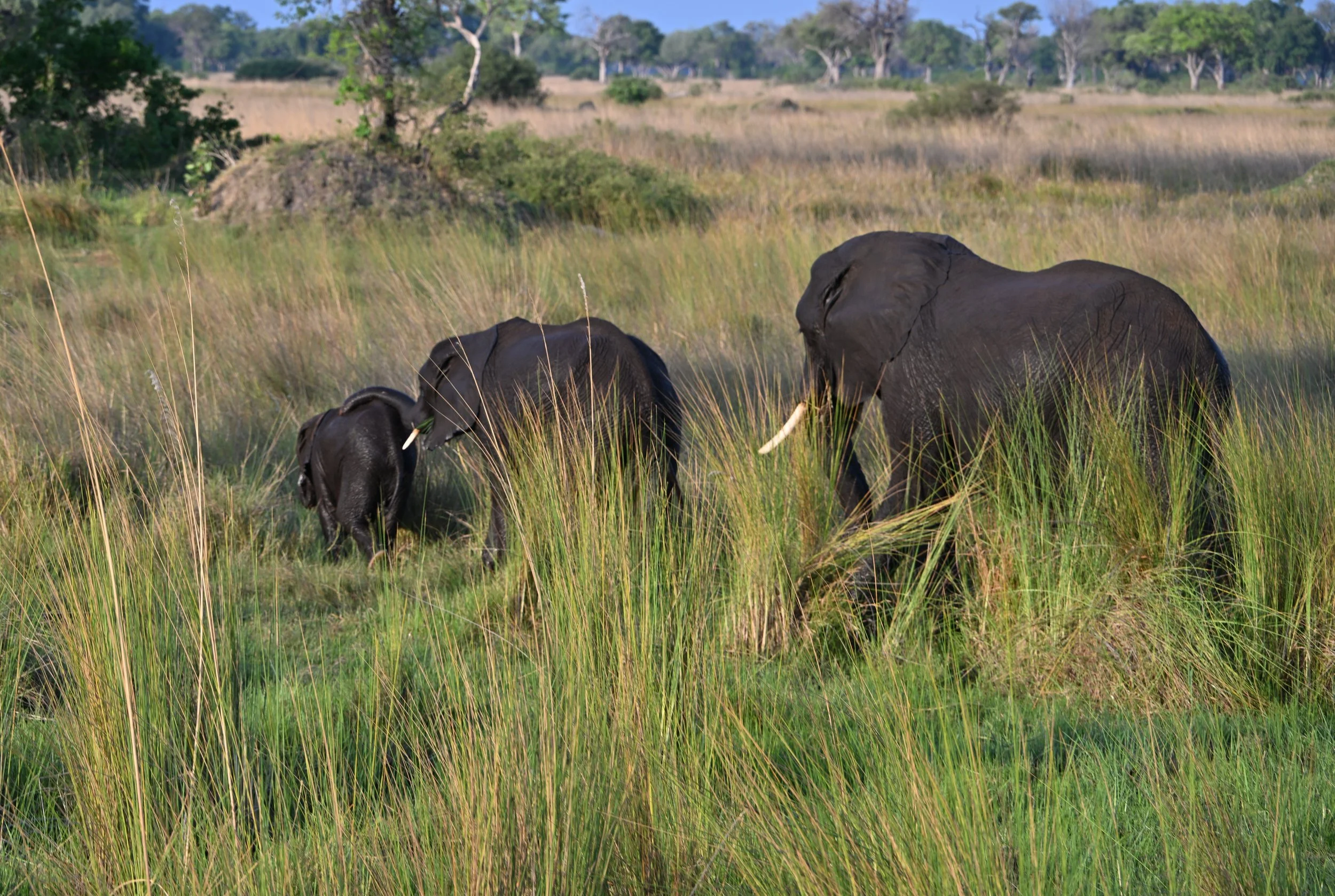
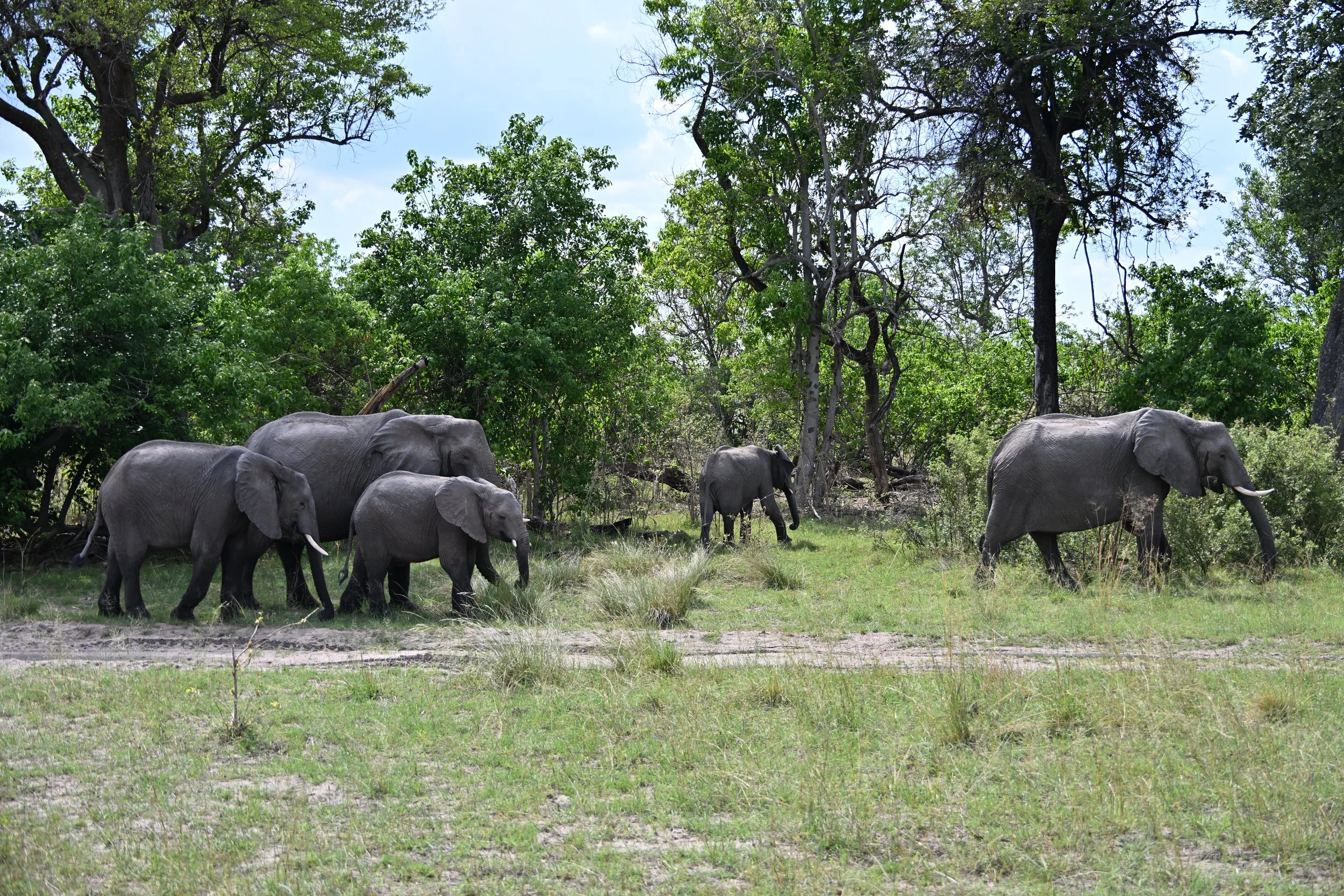
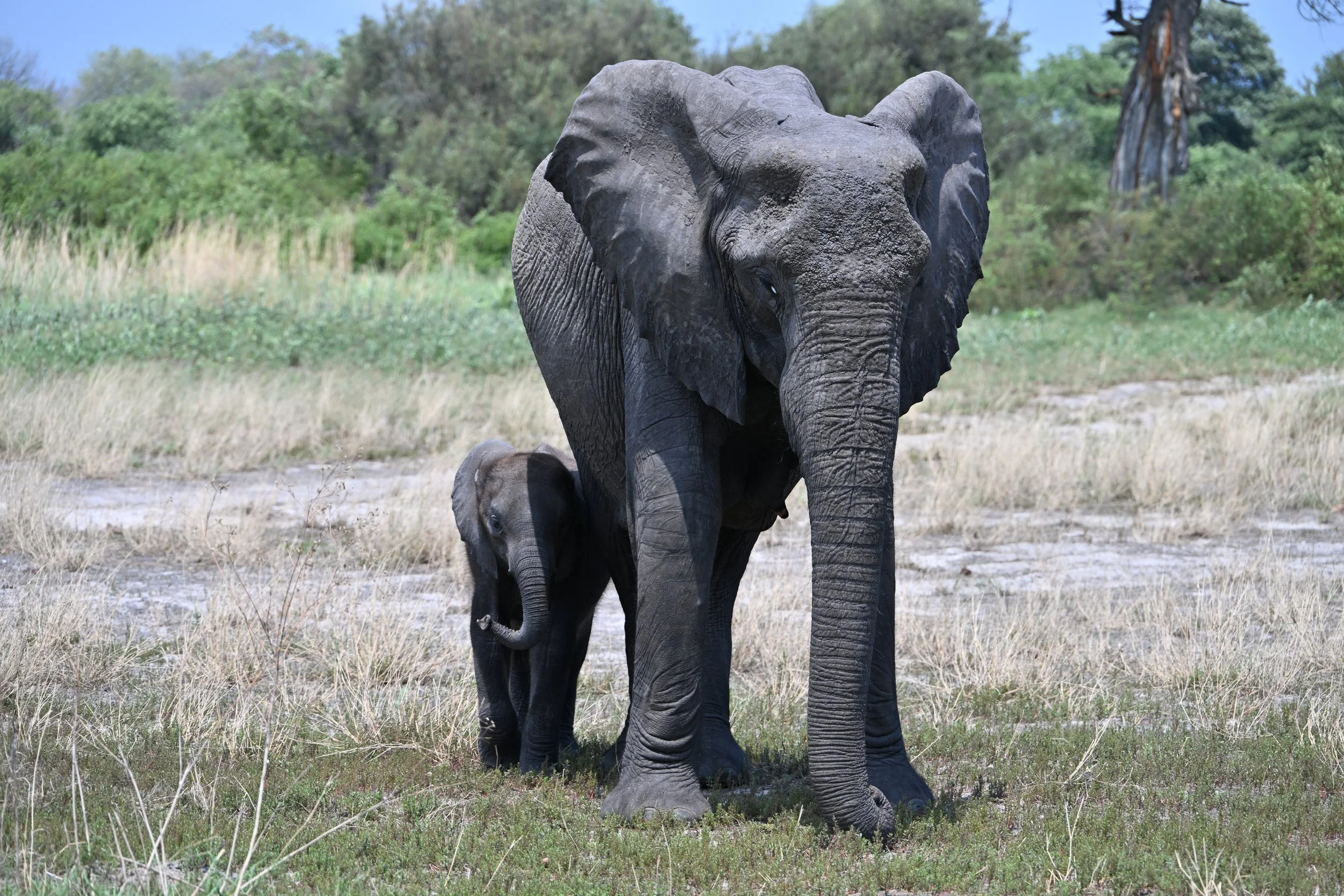
We took a sundown river cruise to see more of the Delta’s waterways, with an elephant family crossing in front of us…

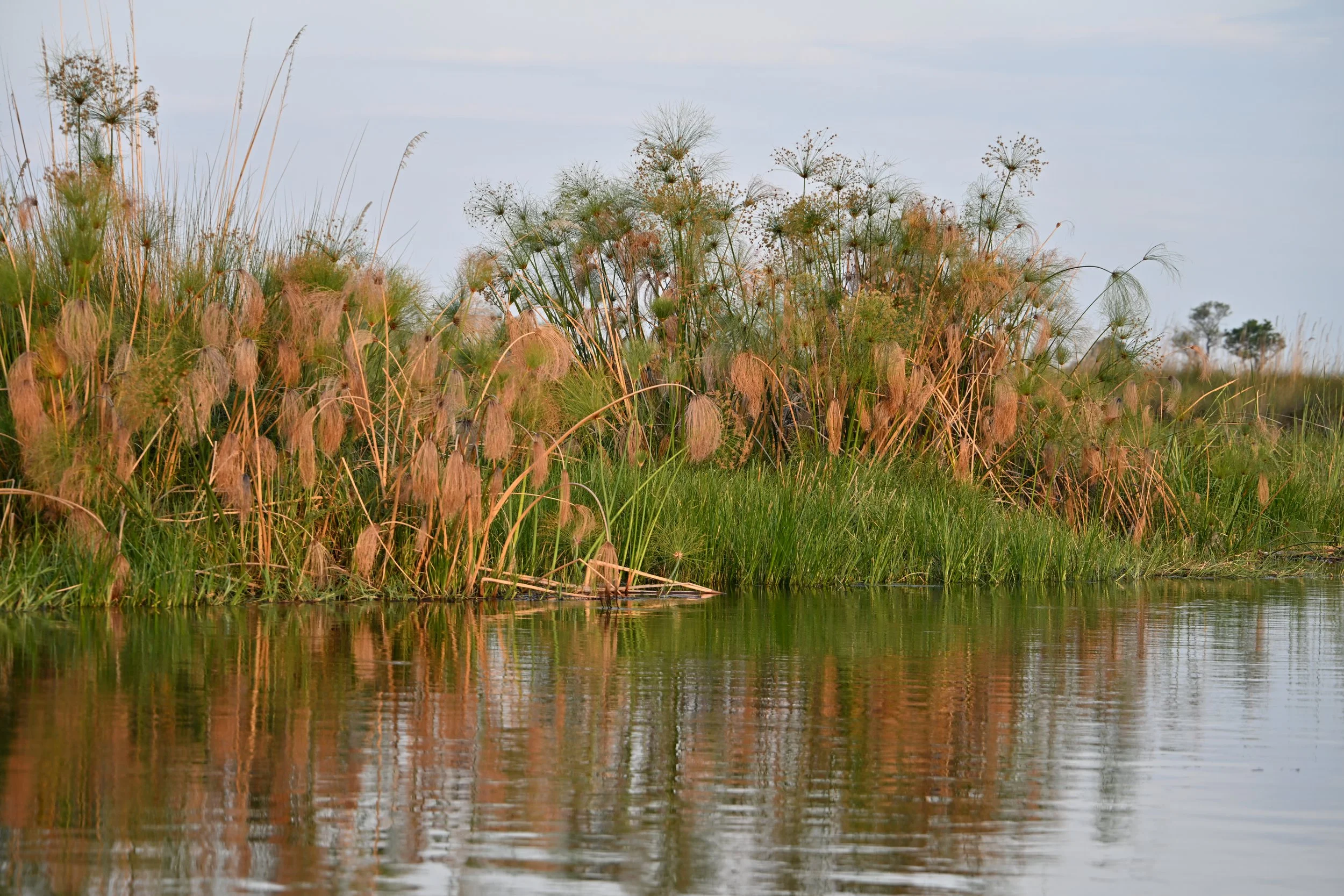
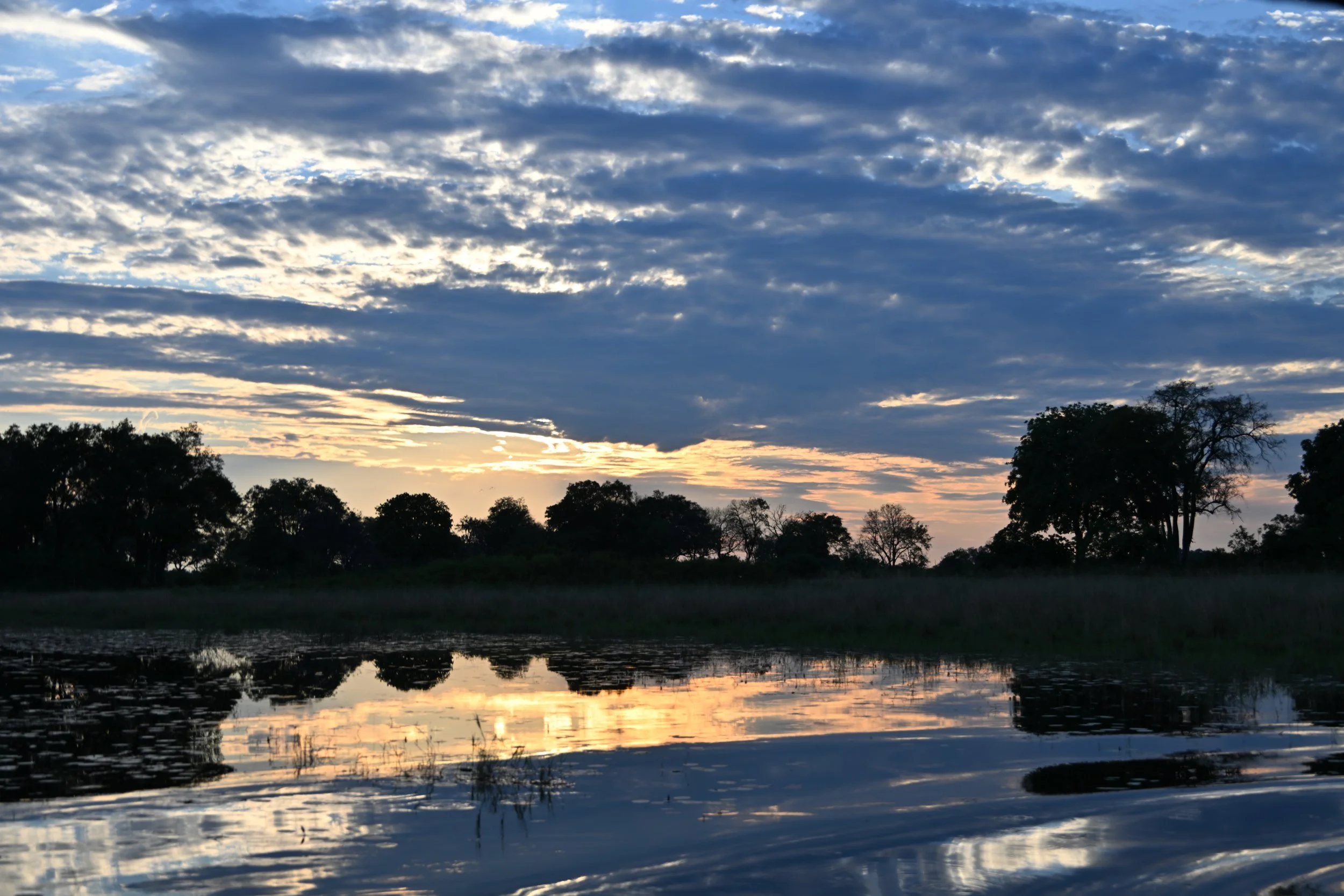
… and got to spend the golden hour with some papyrus -

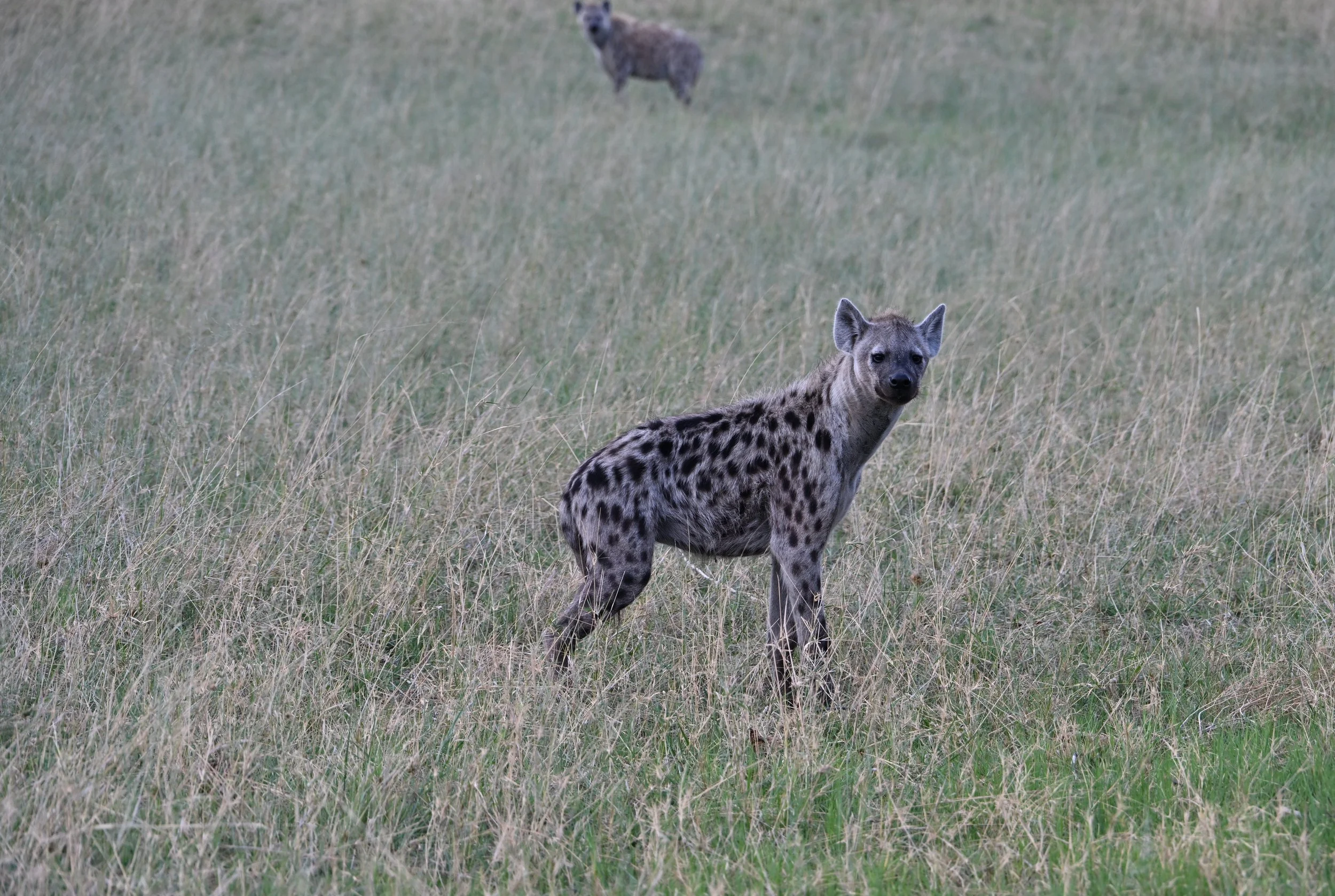
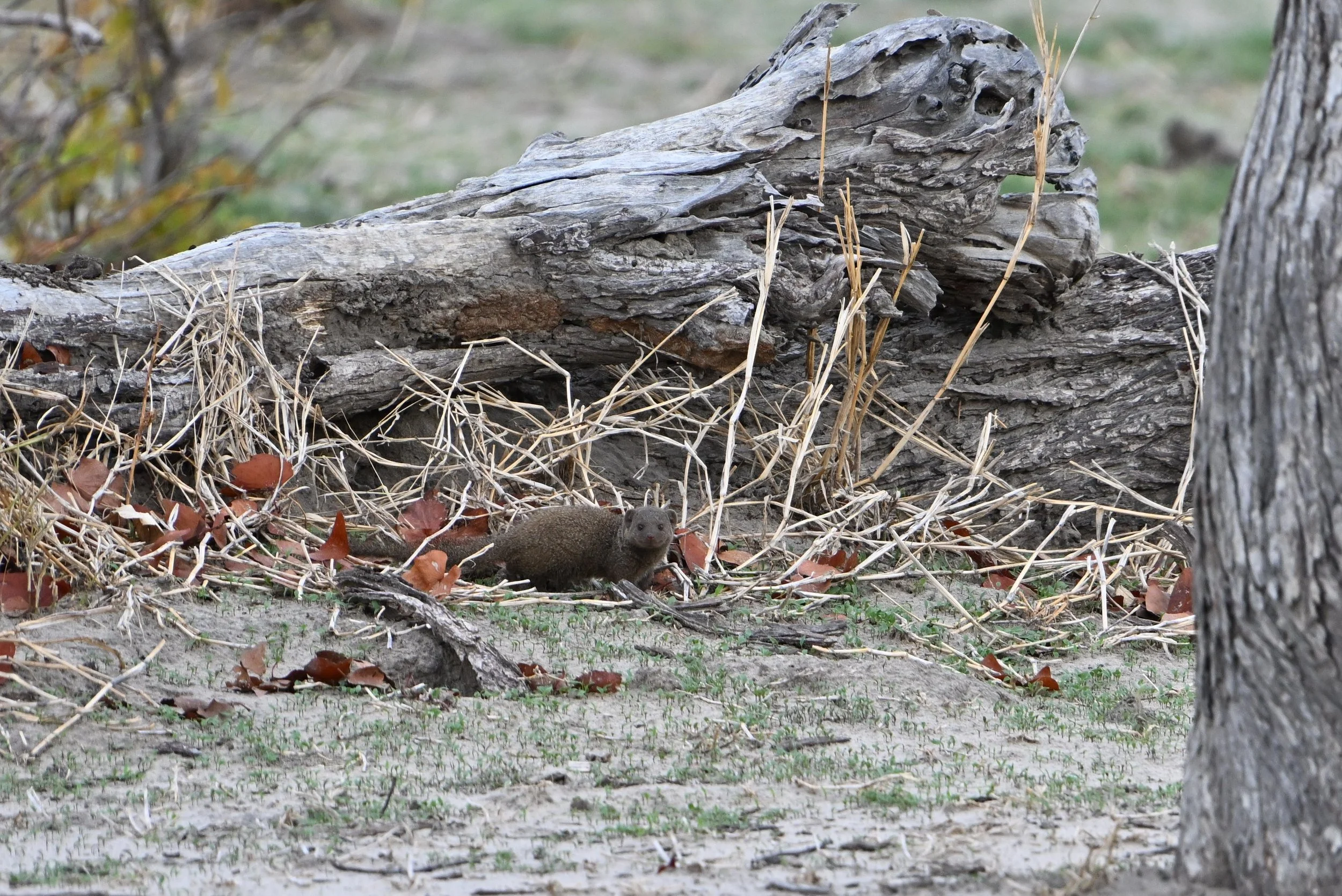
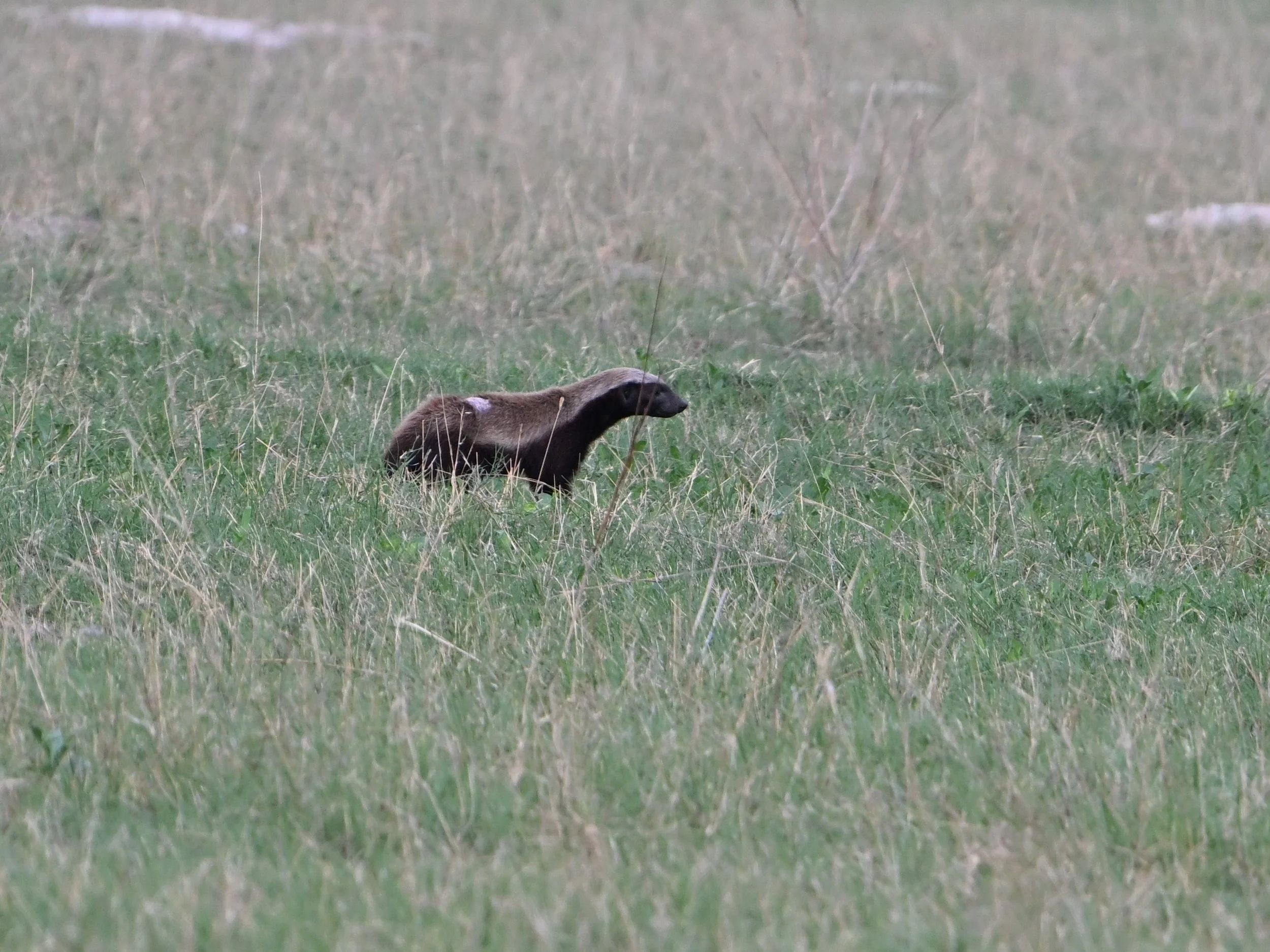
Even though we were leaving the next morning, we managed to fit in a fabulously productive game drive on the way to the “airport,” seeing still more species we hadn’t yet found!

Spotted Hyenas

Pygmy Mongoose

This Honey Badger was a real treat, as they are solitary, cover a lot of ground hunting, and are usually only out at night -

I’m going to finally close this post with 2 interesting videos. The first is an ostrich being pestered by flies…

… and I’m letting this fella say goodbye -

Okavango Delta

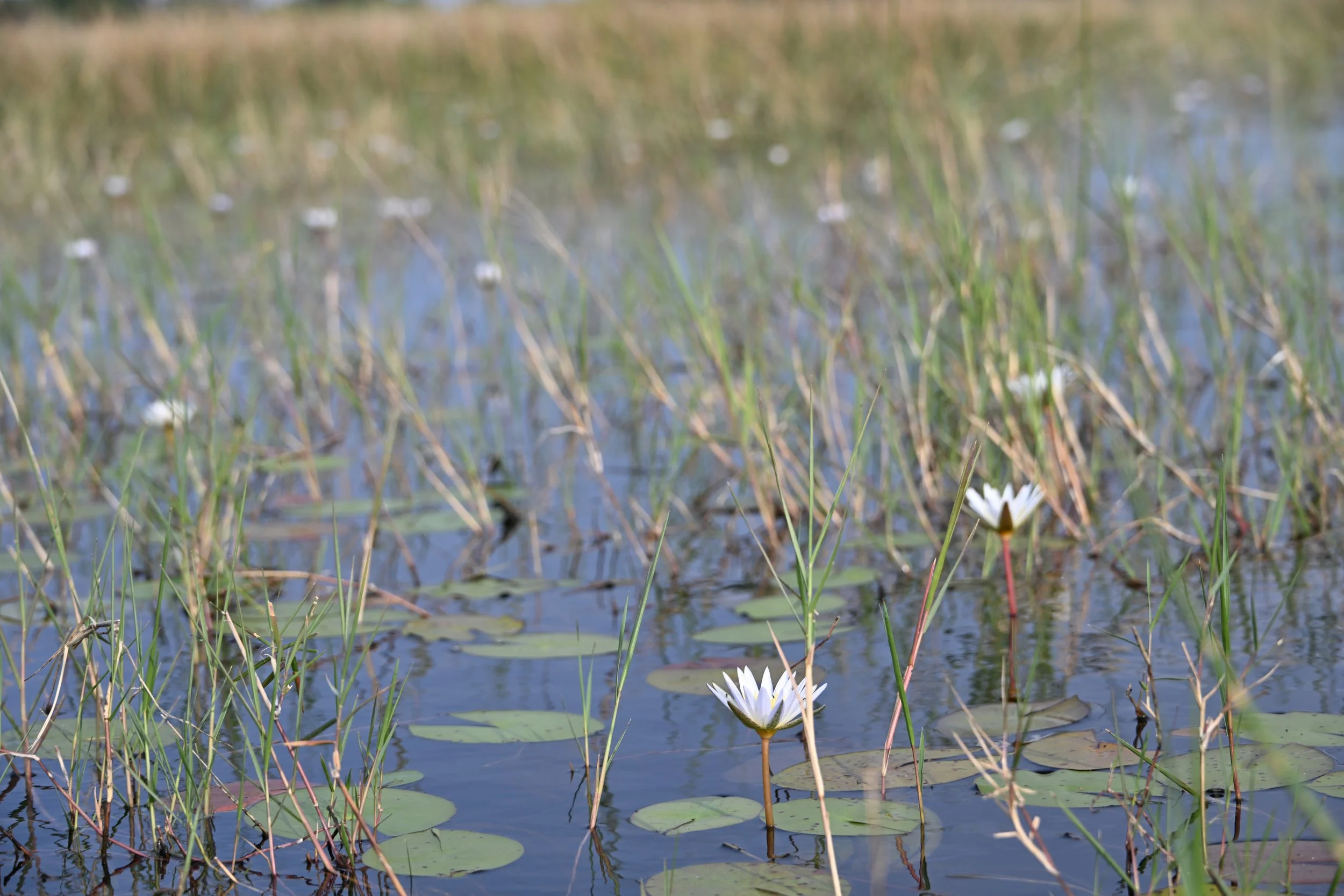
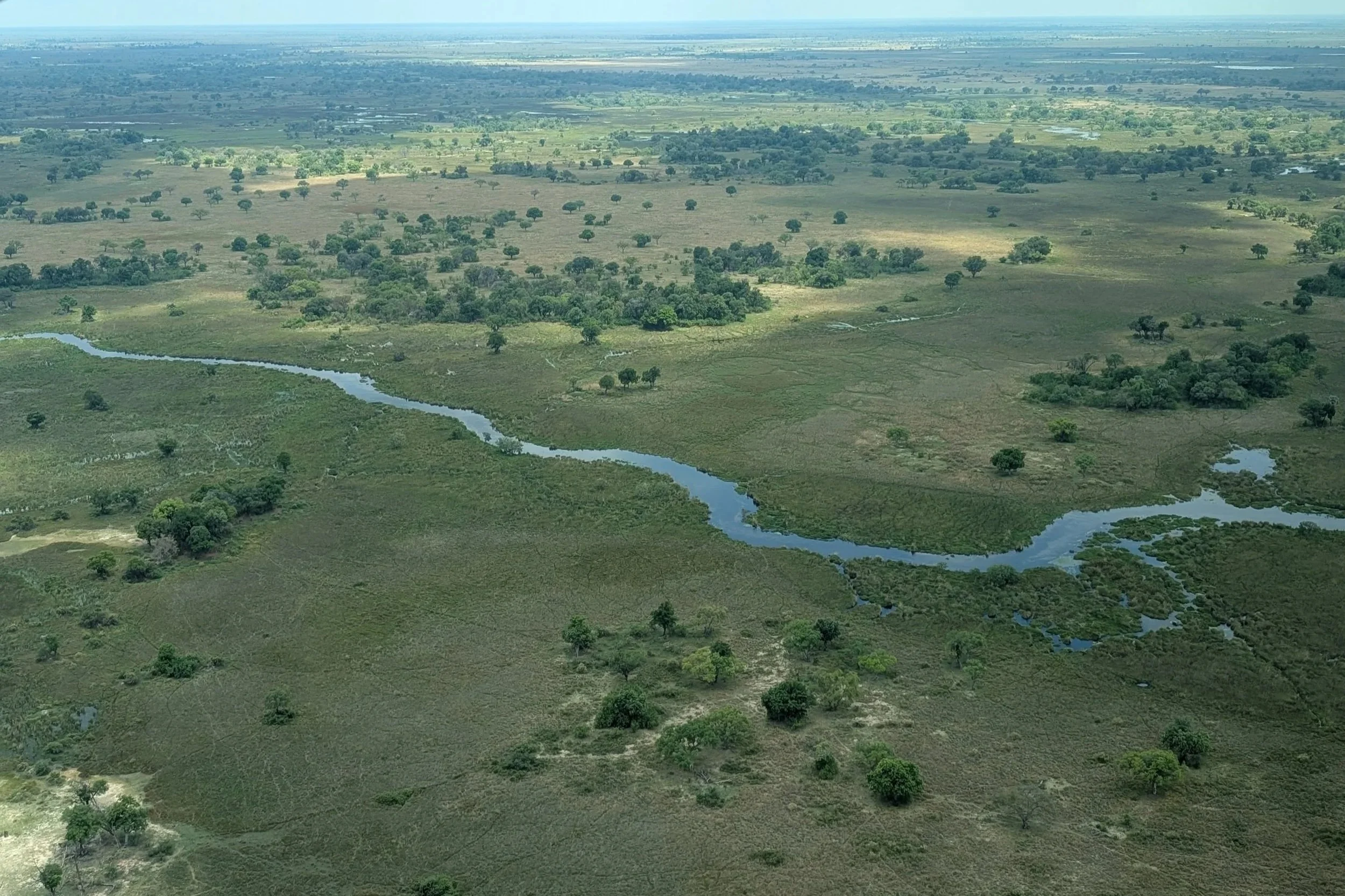
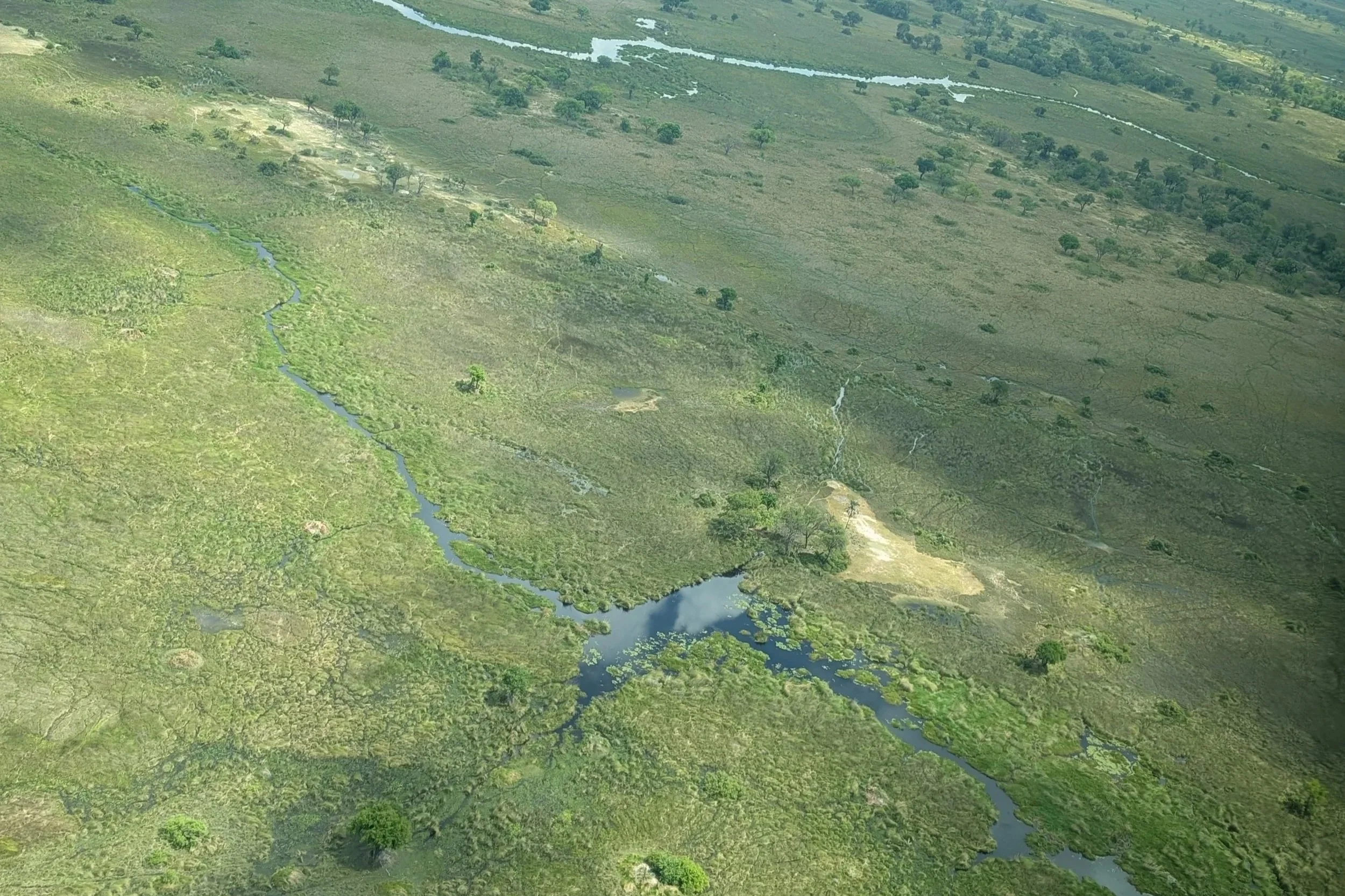
Ever since I pored over National Geographic magazines as a kid, I’ve thought the Delta was so cool. I never had a specific goal to visit it, but once this safari trip was taking shape, a visit here was a given. We took a small plane in to Splash Camp, where we stayed for 3 days, and the expansive views were gorgeous…

… and green and wet!

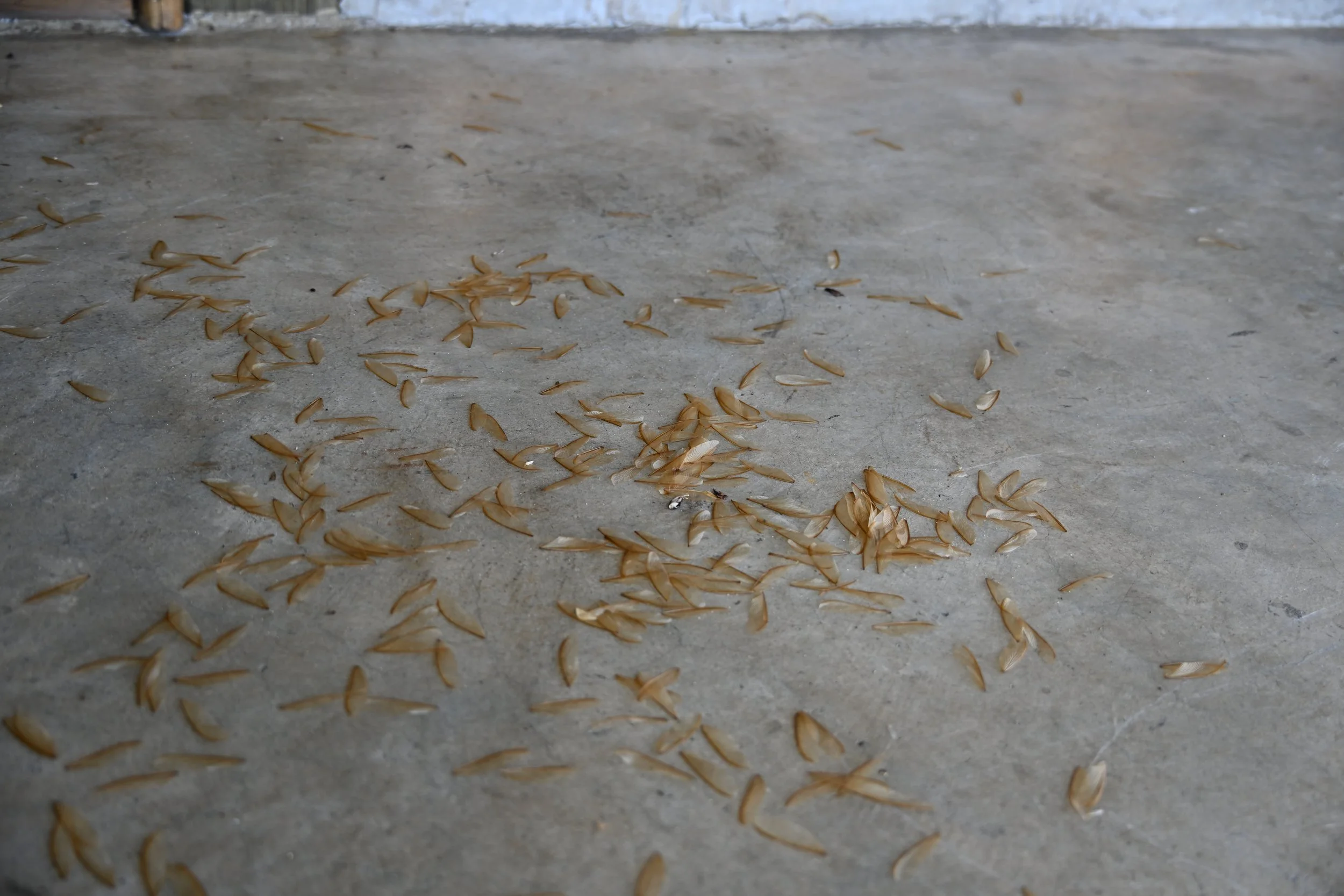
Before I continue further into our fantastic time in the Delta, I’d be remiss if I didn’t include this video of our last night in Chobe Elephant Camp. (usual video alert that you should open this post in a browser by clicking the link at the end, so you can see the video) As I had related, there was a pouring rain the first night we were there, and 2 nights later, we saw the fruits of this watering. Termites wait for just such a rain, to develop wings and disperse to start new colonies. This was our open air dining room, which we quickly abandoned as the dive-bombing was becoming unbearable -

The next morning I found the abandoned wings on our front porch -

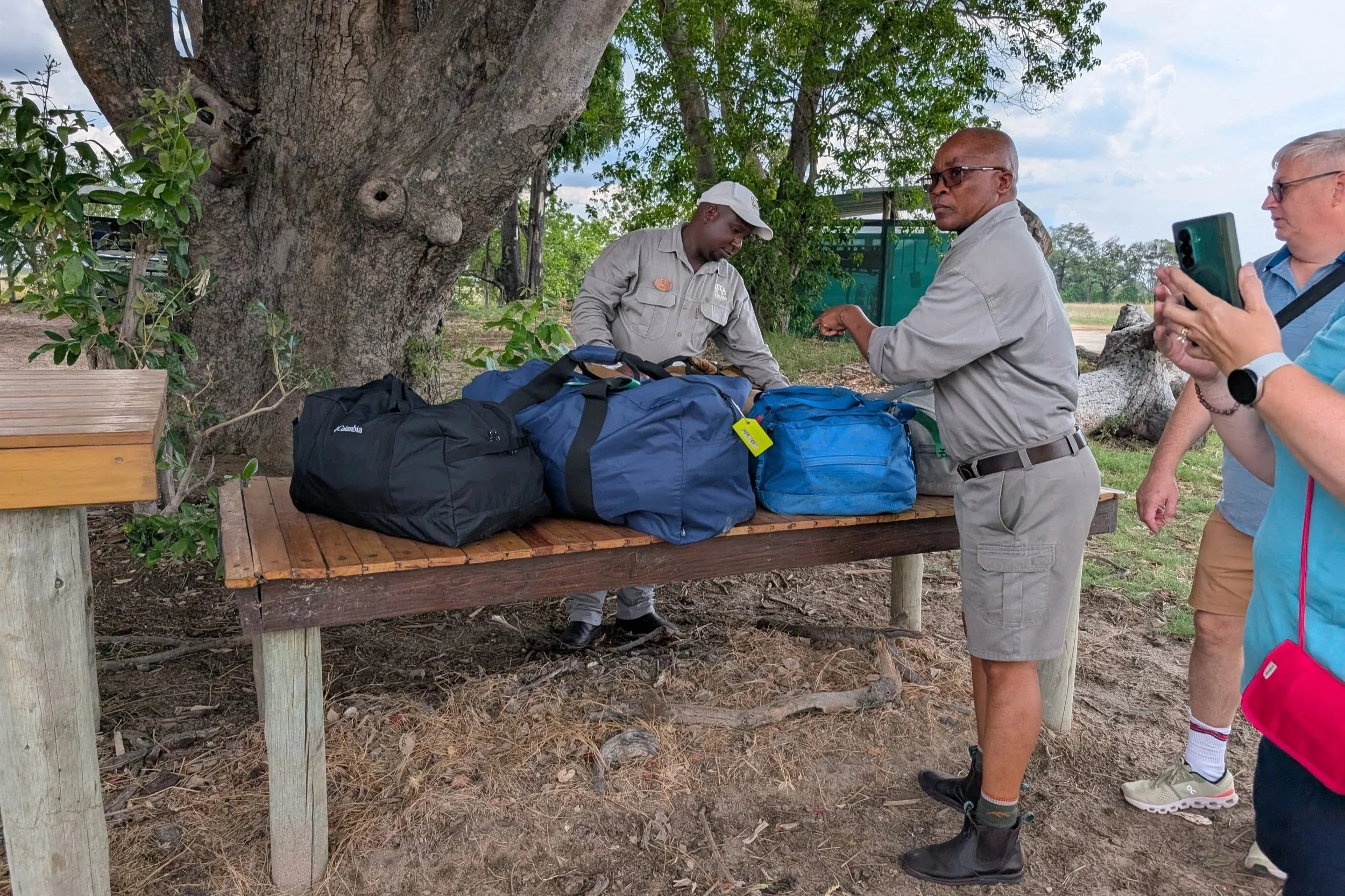
Okay… back to the Delta… We landed and collected our bags at Baggage Claim…

… and headed off toward camp…

So much water! And so many animals!

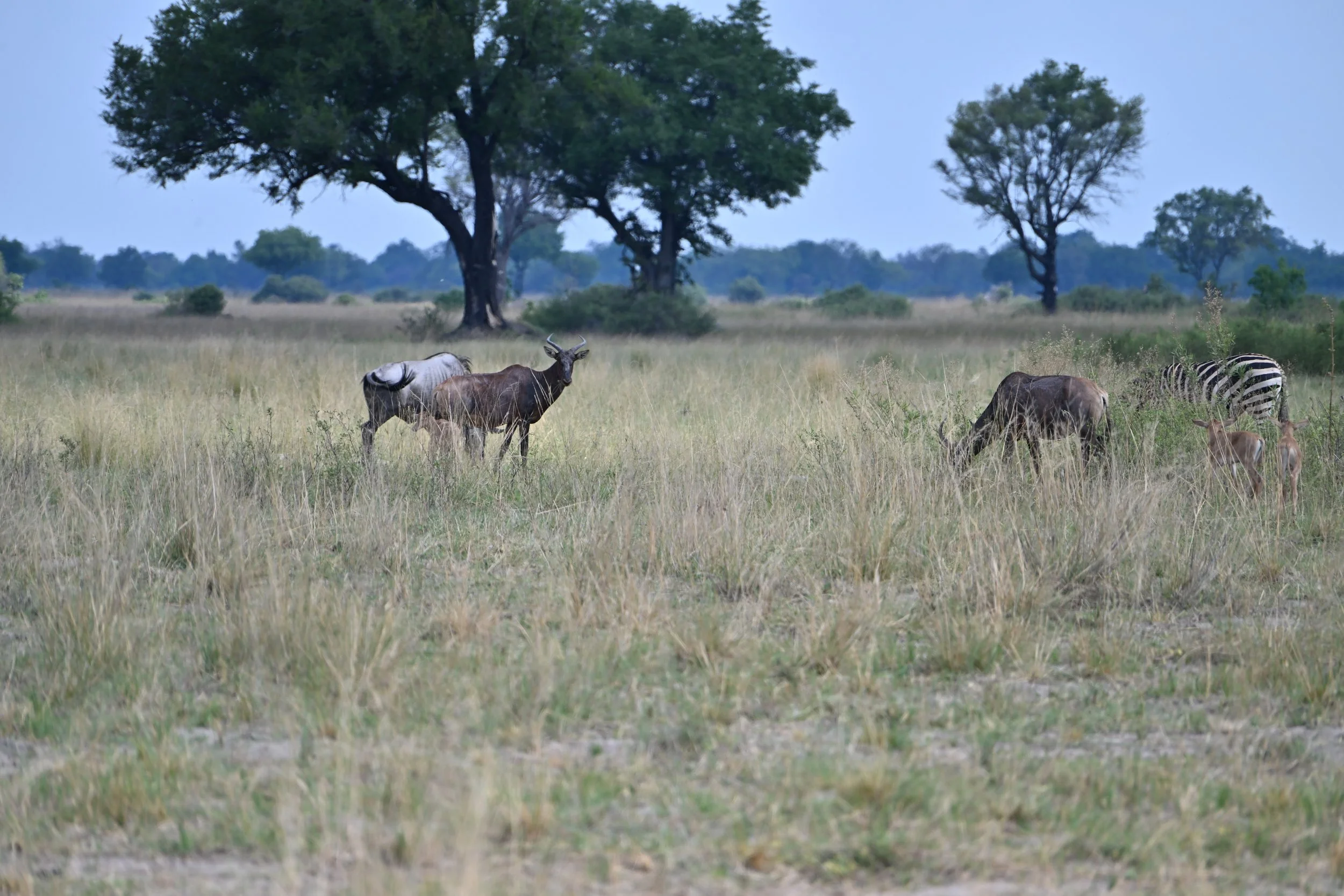
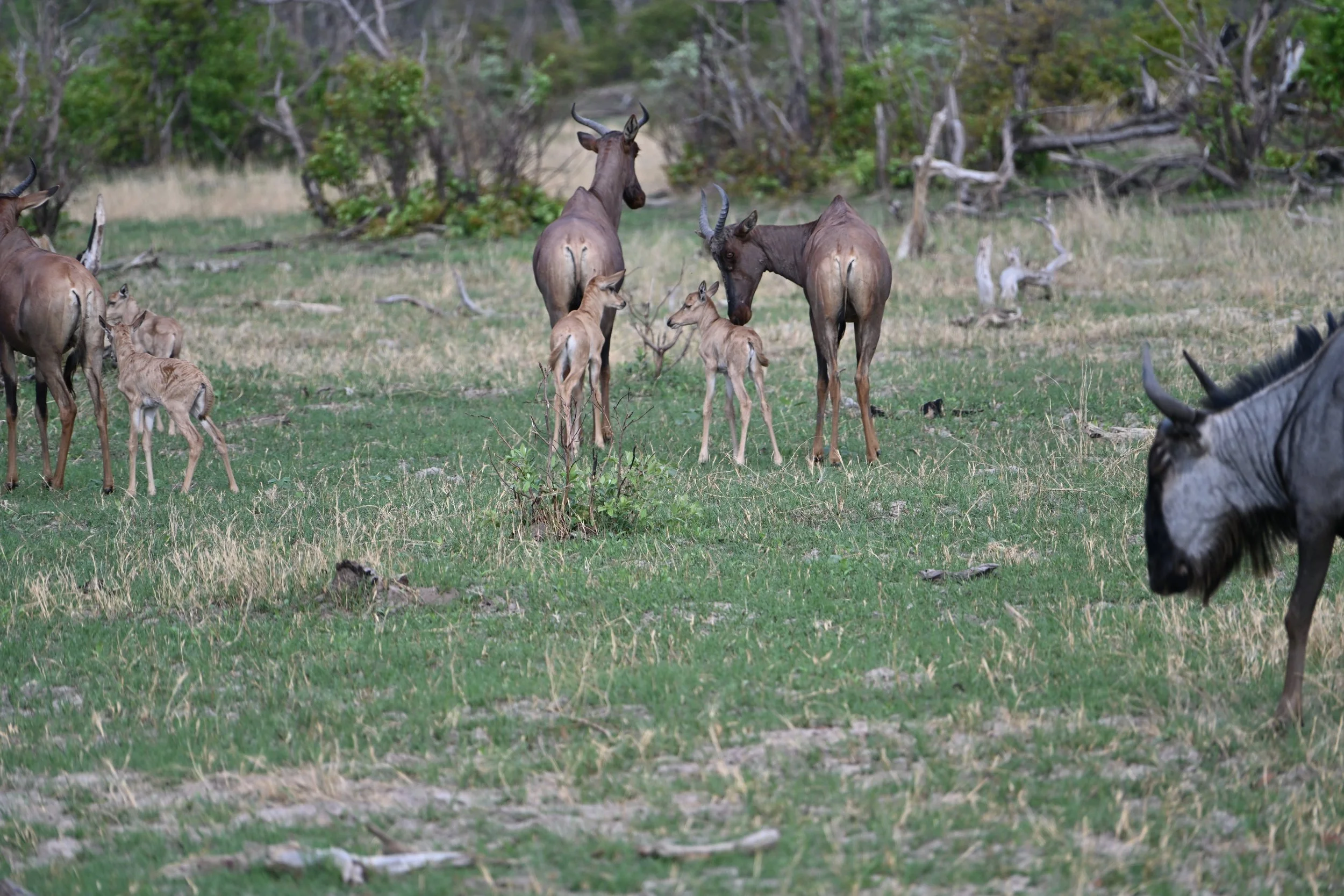
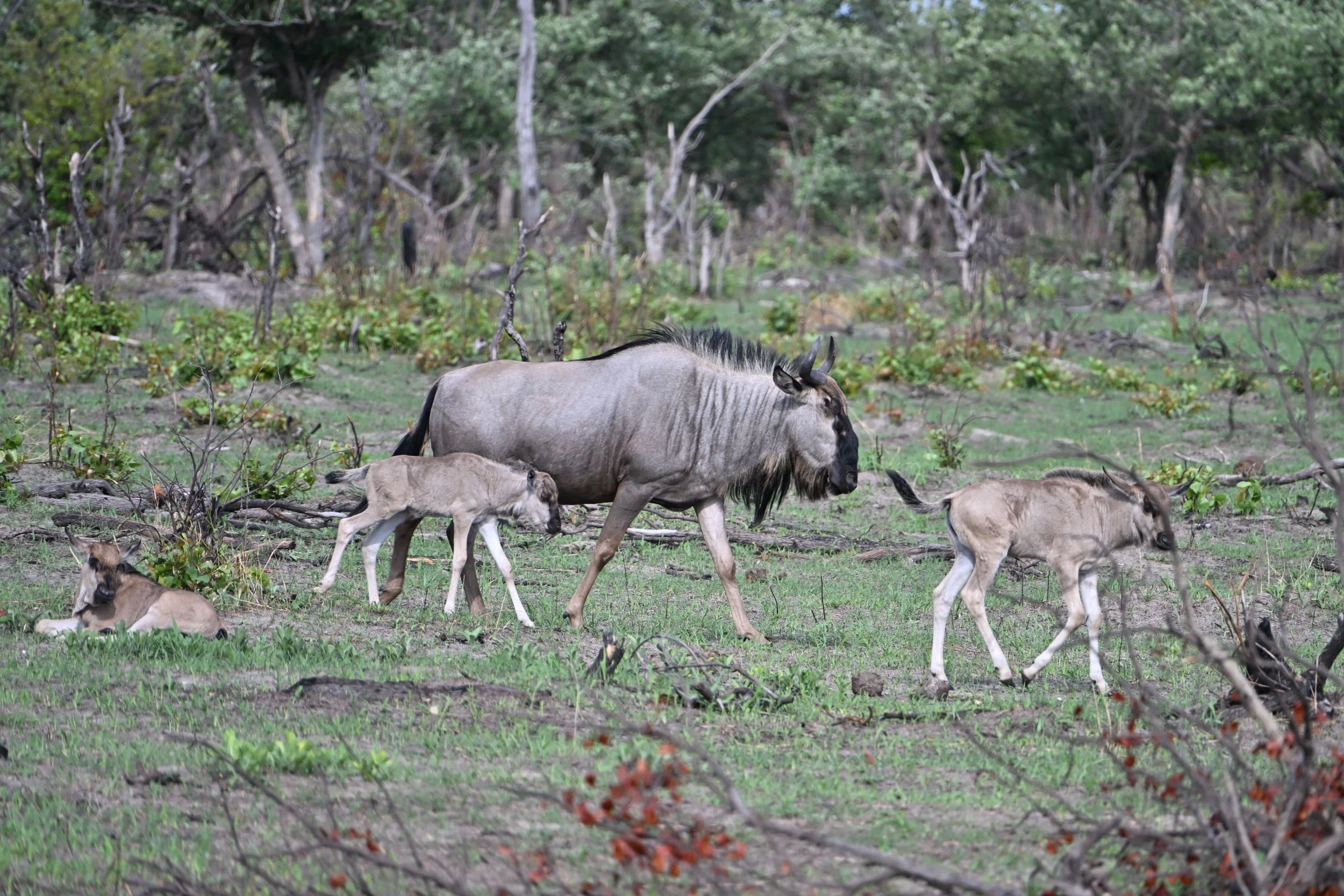
Wildebeest, Tsessebe (with babies) and Zebra

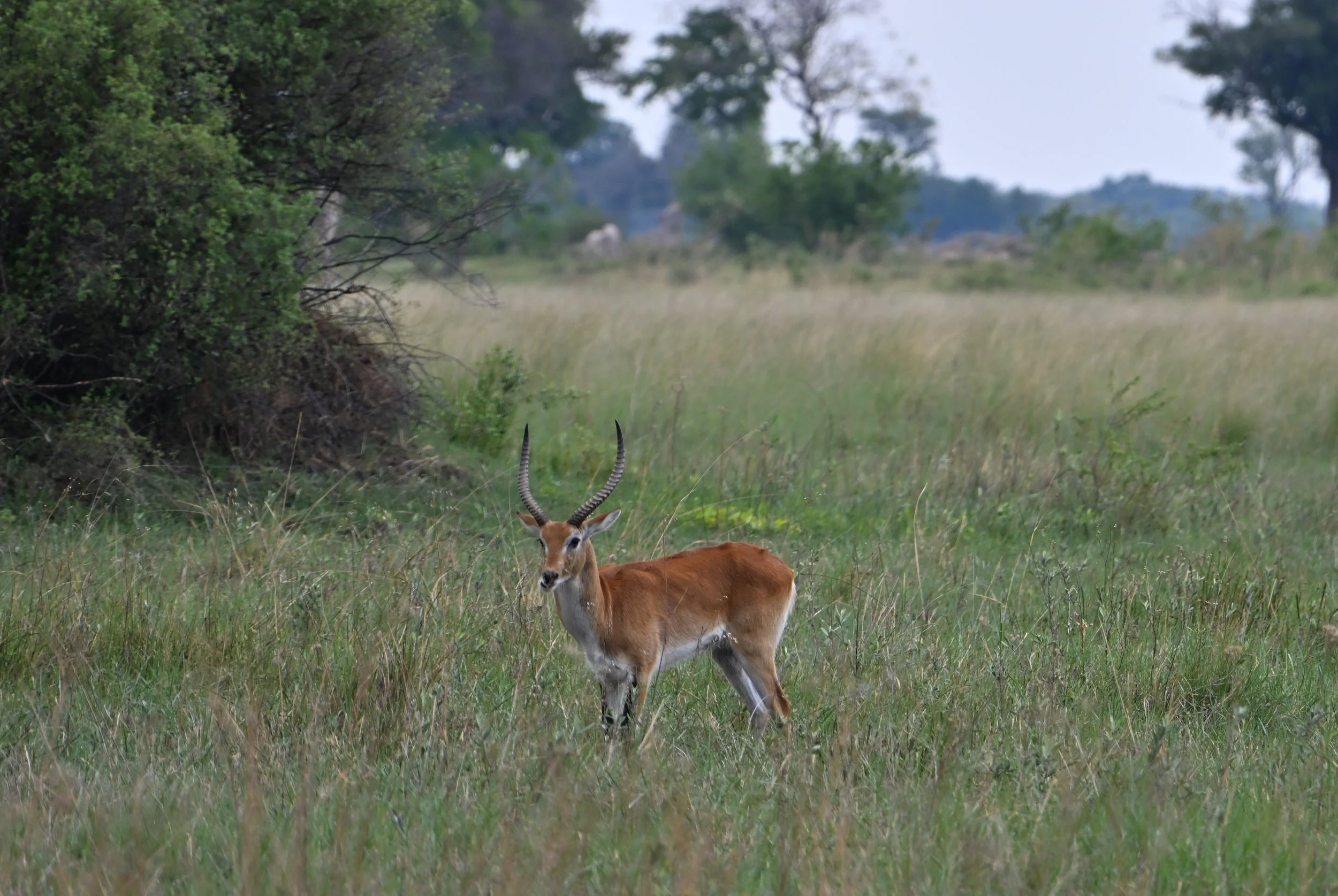
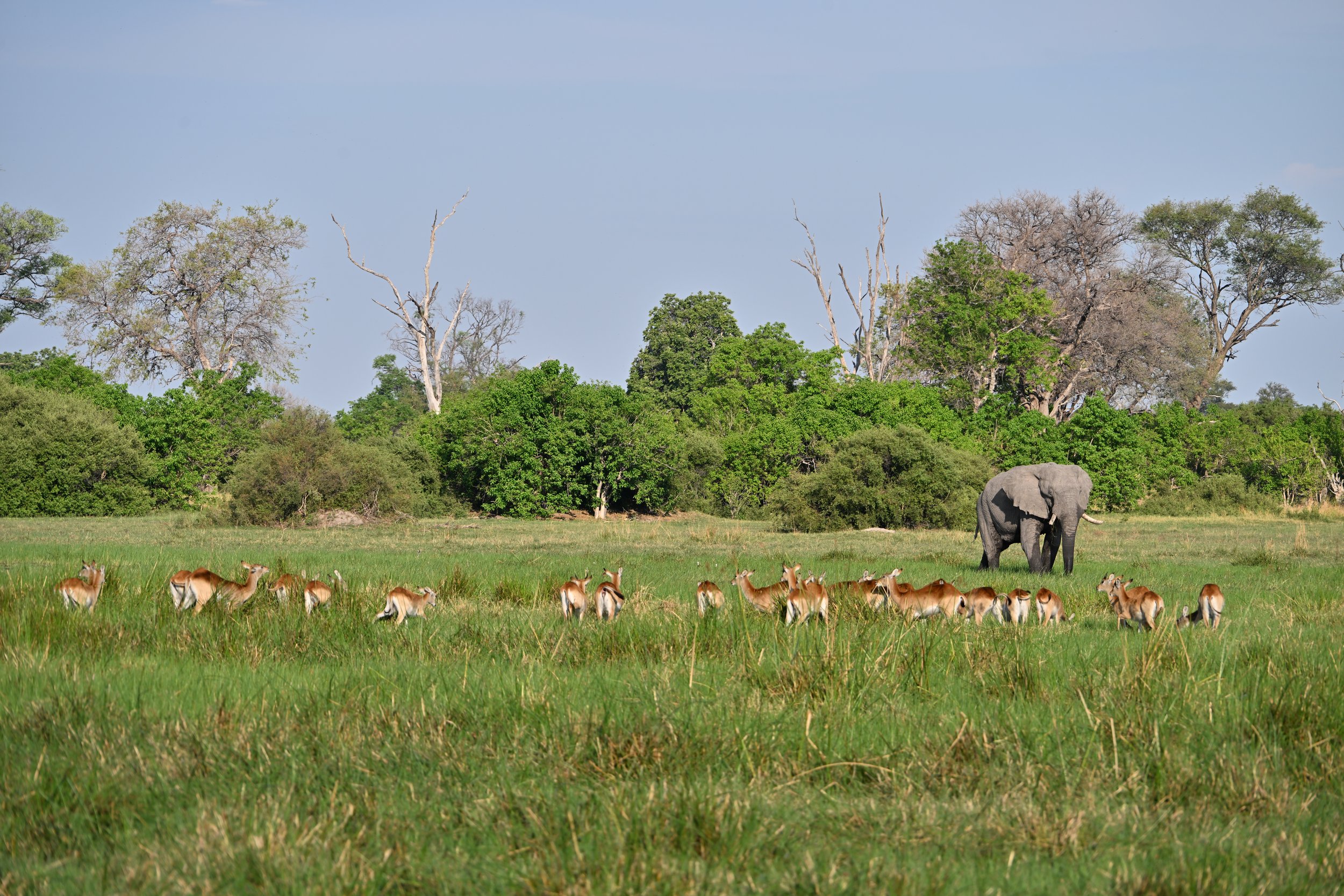
Red Lechwe

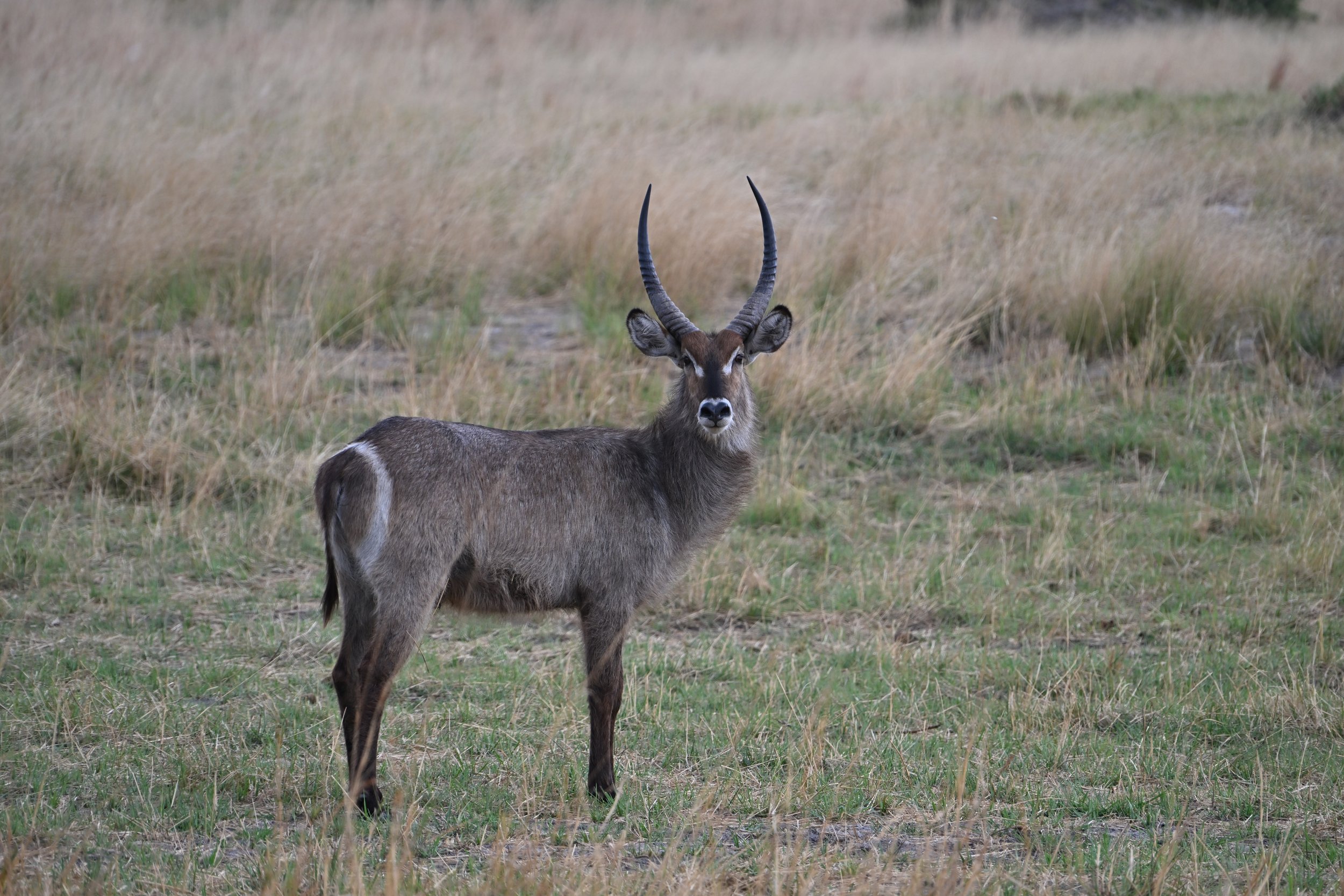
Waterbuck

And this was all just on the 45 minute drive to our camp from the “airport”. More Lechwe…

A Steenbok was hiding in some bushes -

We finally drove into camp for dinner…

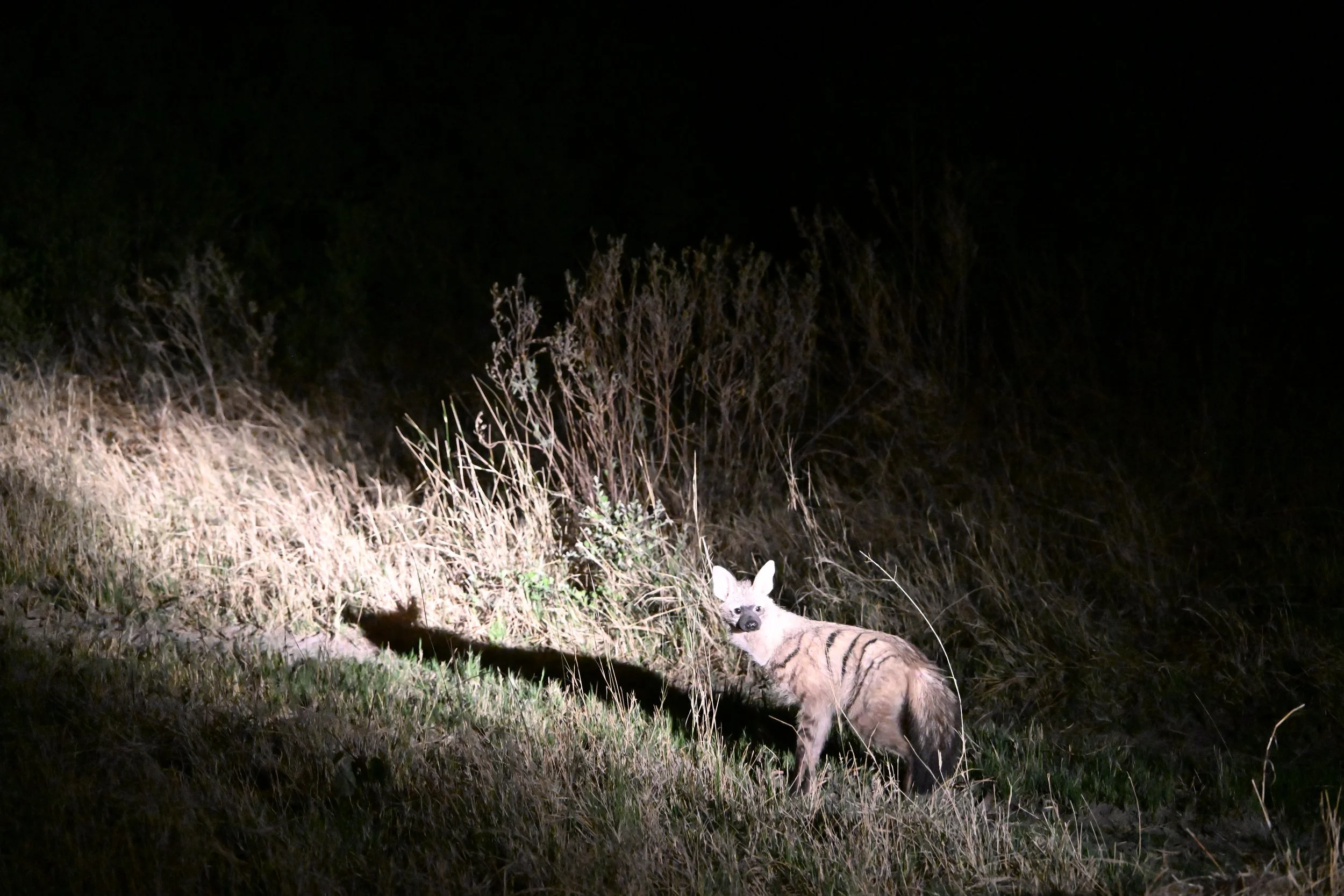
.. before we headed back out on a night drive. There we saw something I never in my life thought I’d see — an Aardwolf!

According to my research, this is “an insectivorous hyena-like mammal”, with its name meaning “earth-wolf” in Afrikaans and Dutch. Steve got a video of it, showing how difficult it is for us to try and photograph animals on a night drive.

A common sighting at night were the Spring Hares -

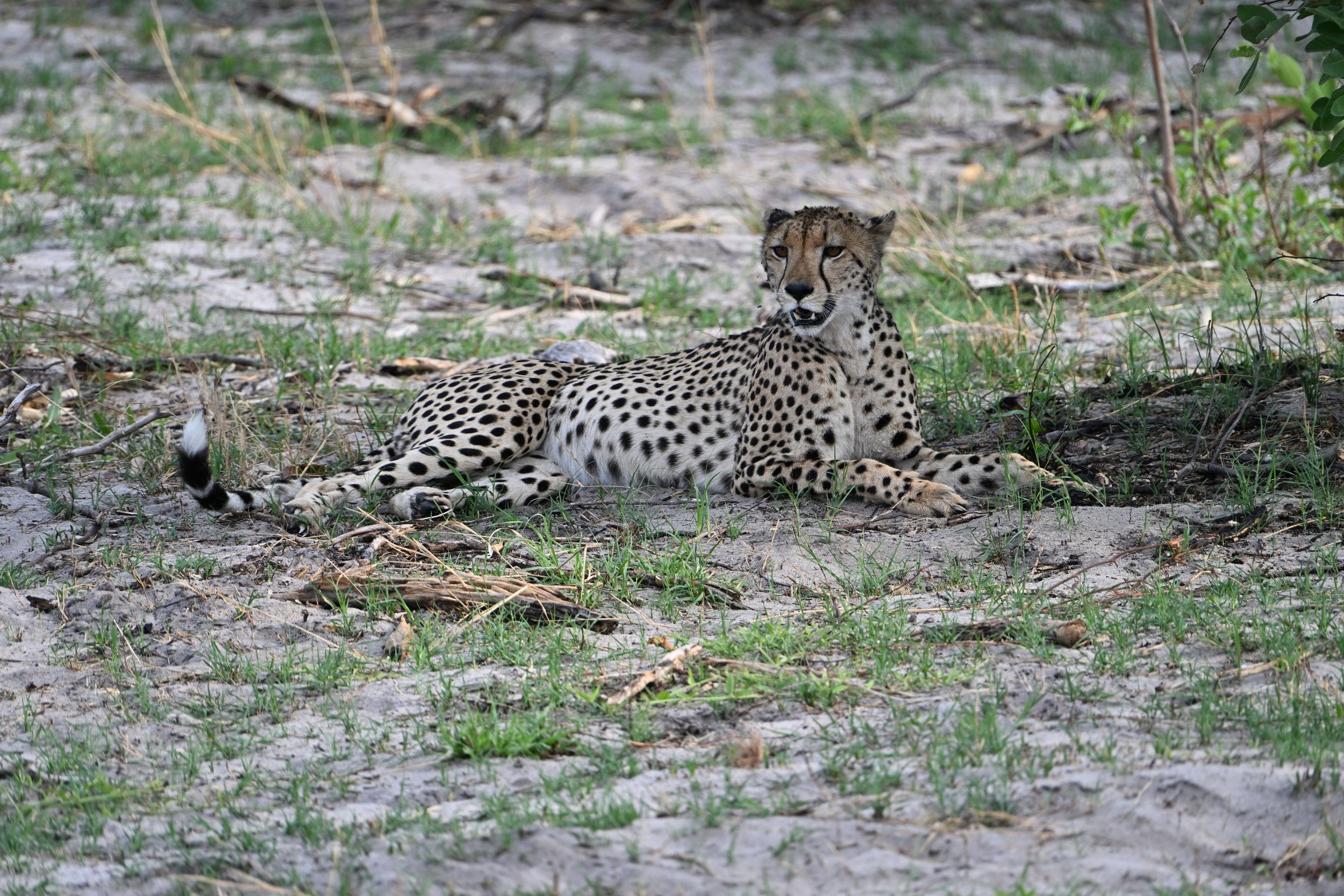
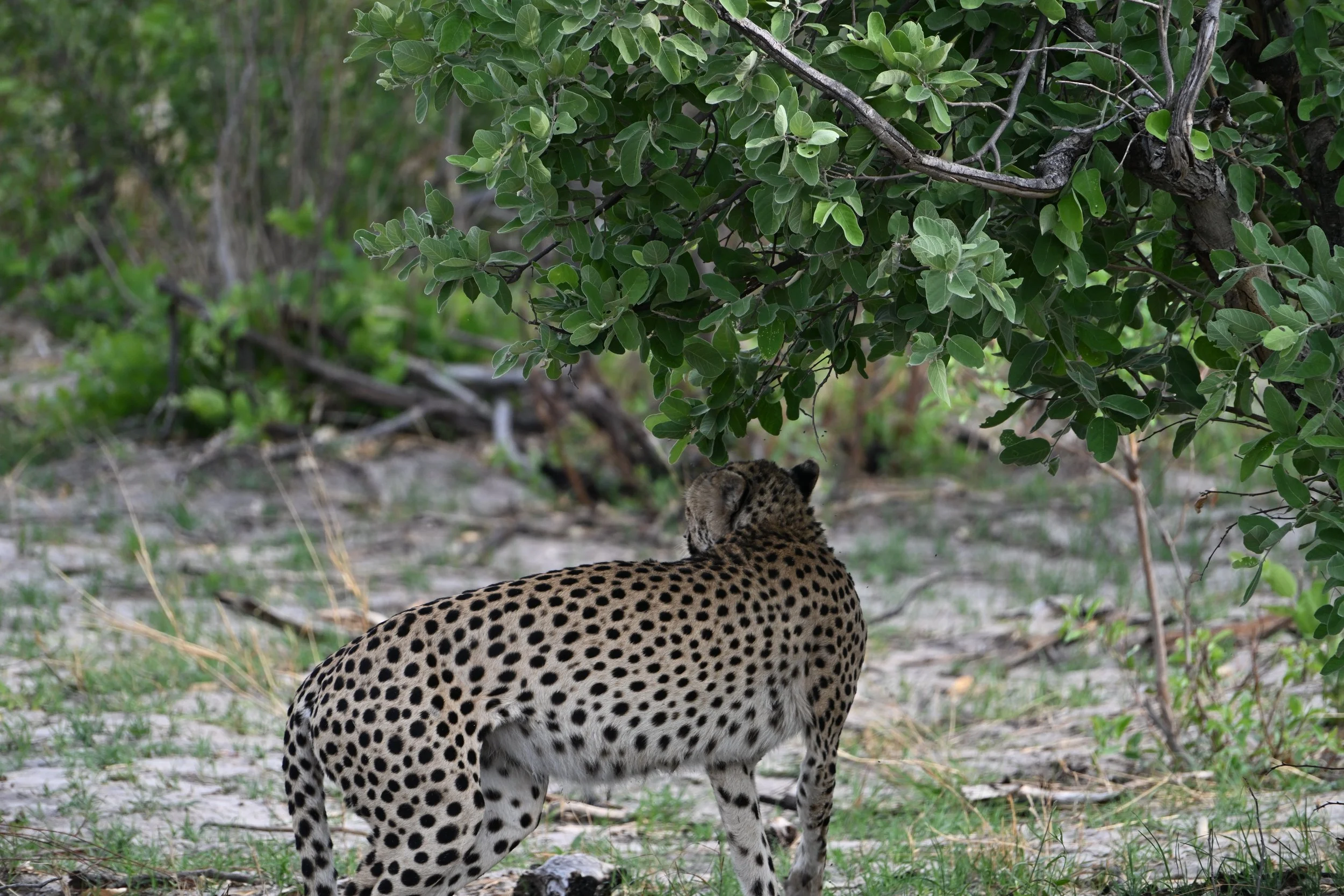
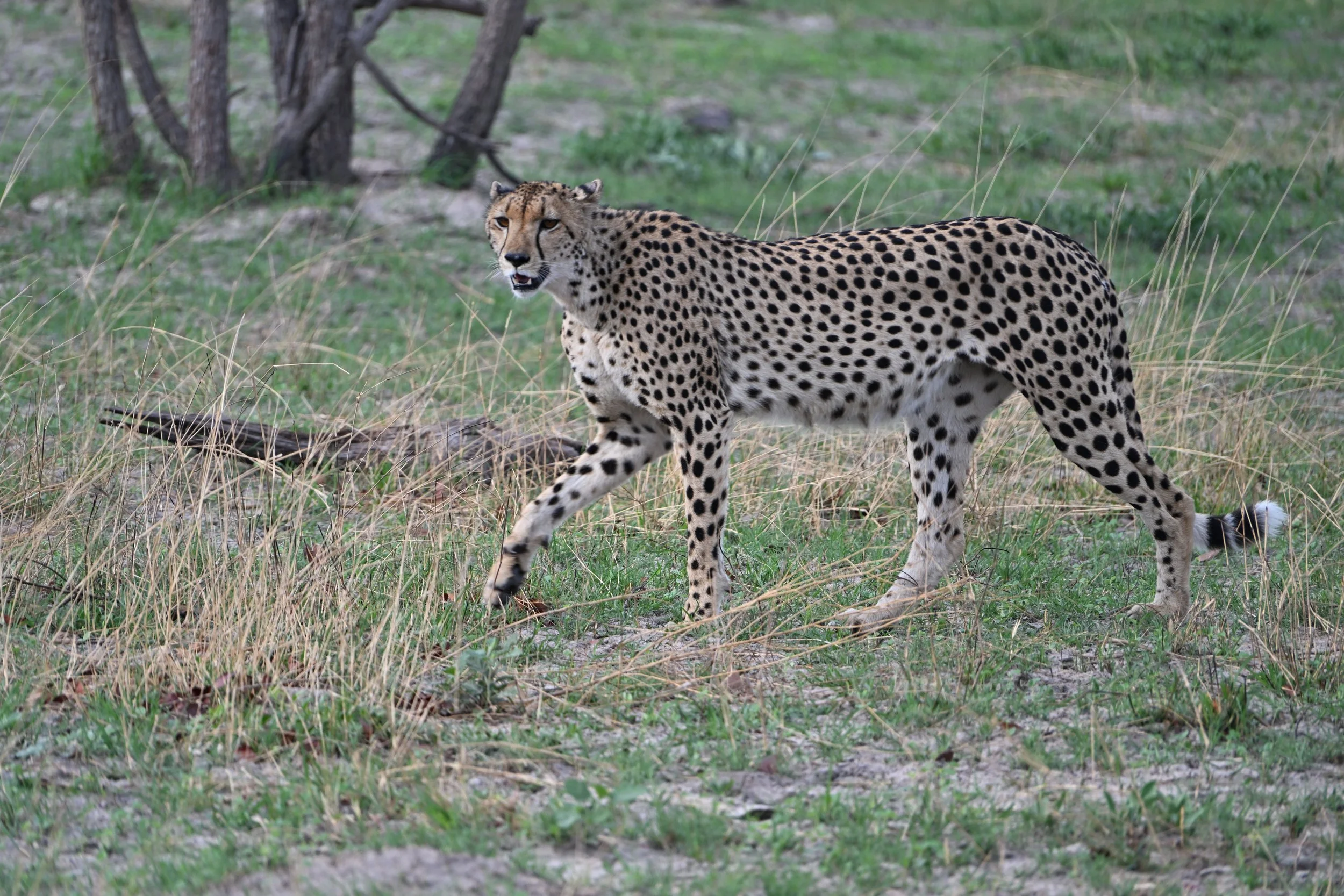
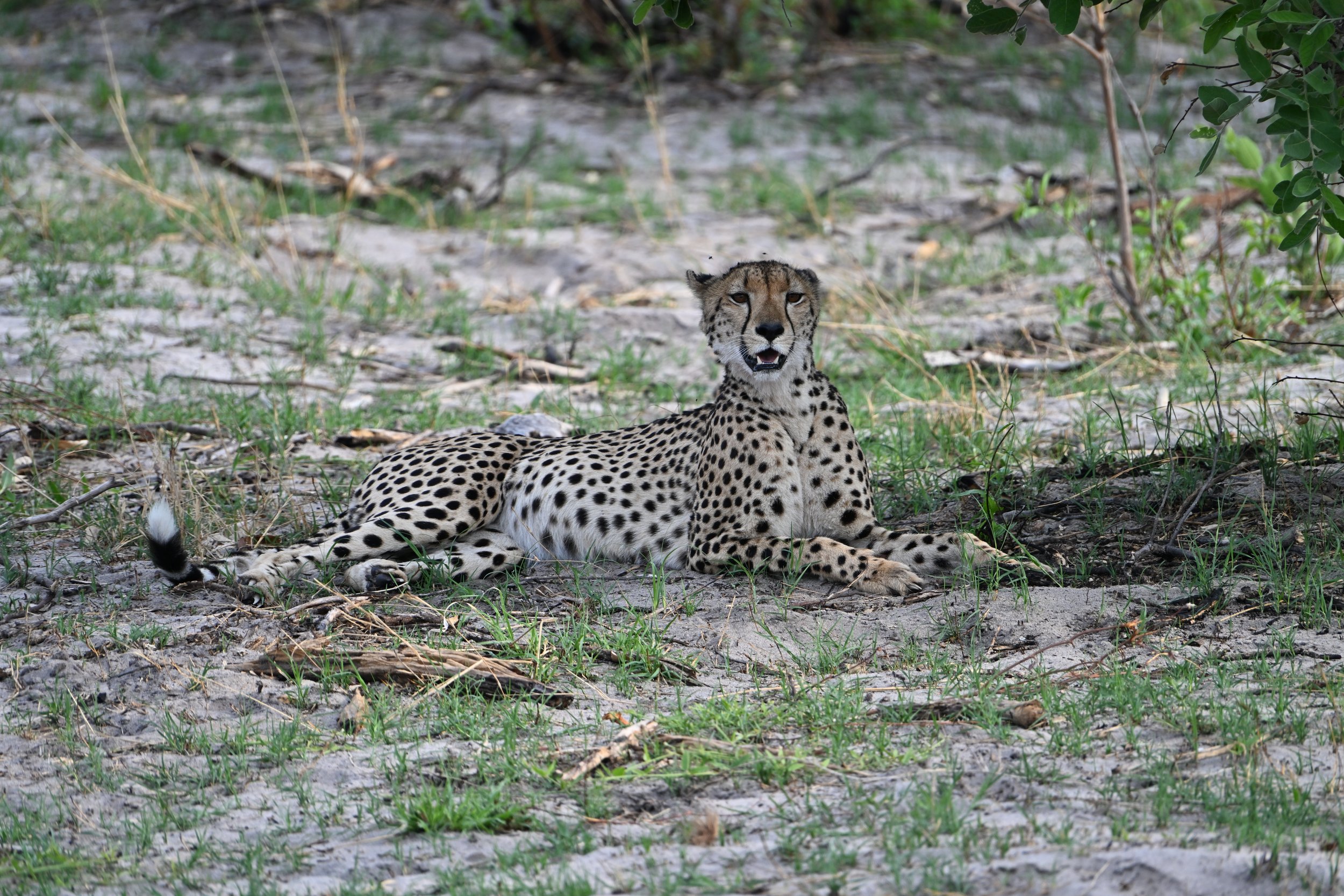
The next morning we went on a long game drive to try and pick up cheetah tracks, and see if we might be successful in finding him. Well, we found her as she kept wandering and spraying bushes and trees with urine, announcing her presence in the area for any males. She finally rested for a bit…

… so we could admire her beauty…

… and wonder why the top of her head looked dirty. Enlarge that picture above to see that it’s just the spots on top of her head looking more prominent at that angle. I loved being able to see that she has little lighter spots in between the bigger, darker, nearly perfectly circular ones -

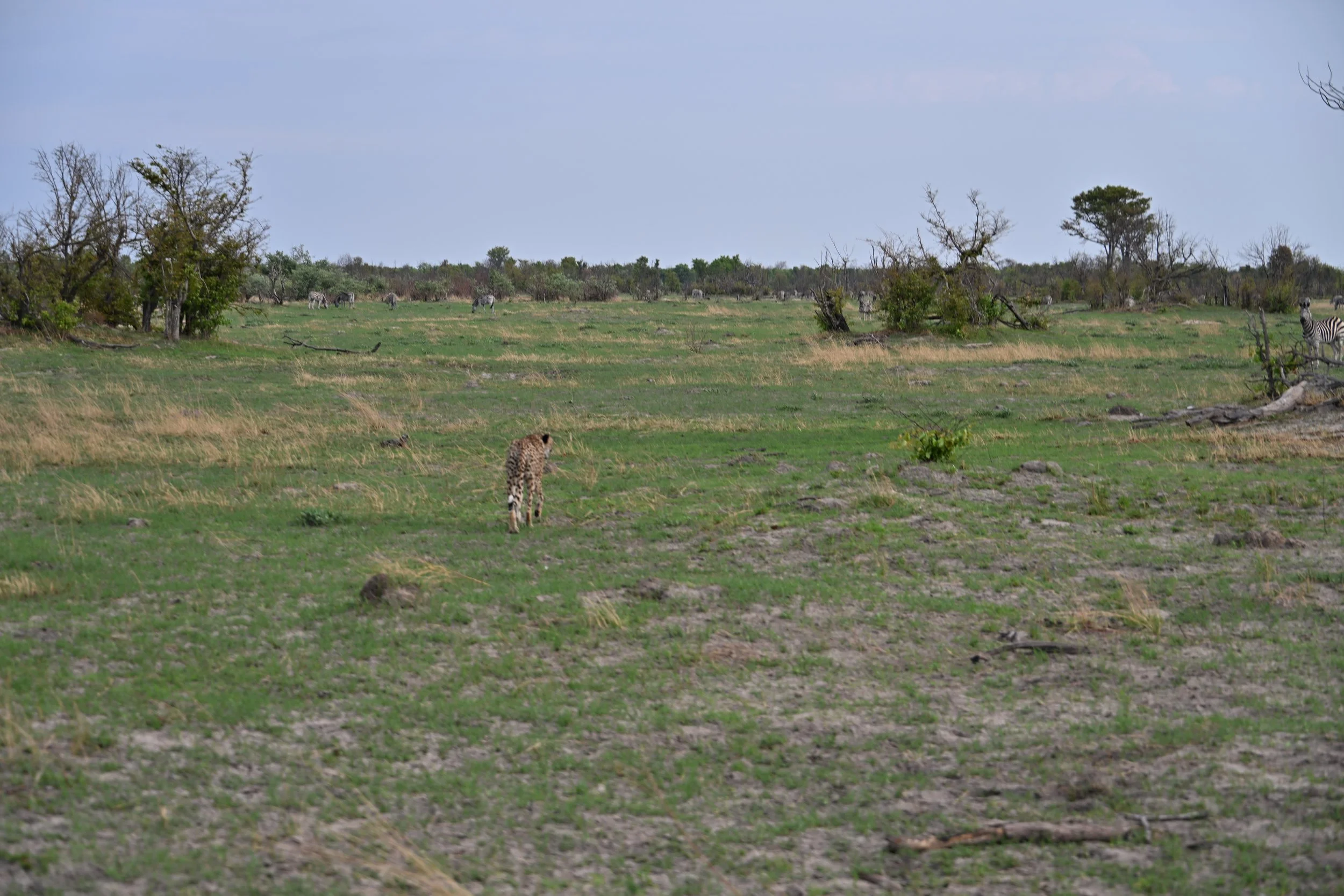
She then caught sight or wind of a zebra herd…

… but must not have been very hungry, since she just walked away -

I was thrilled to be able to spend such a length of time this close to such a beautiful creature, as this was one of my strong desires for sightings on this trip.

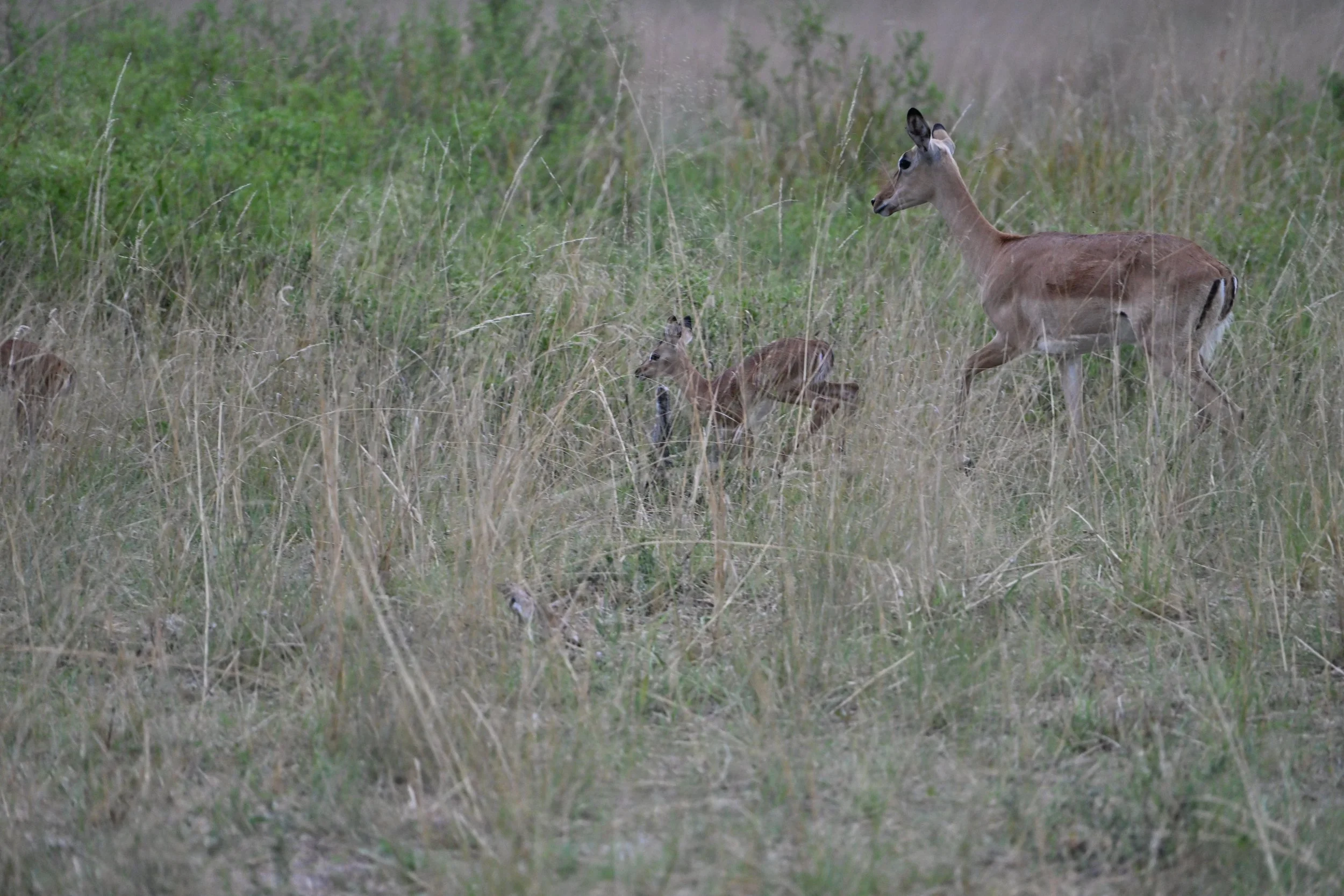
This was the beginning of baby season…

Tsessebees

Wildebeest

Red Lechwe

Be back soon…

Botswana

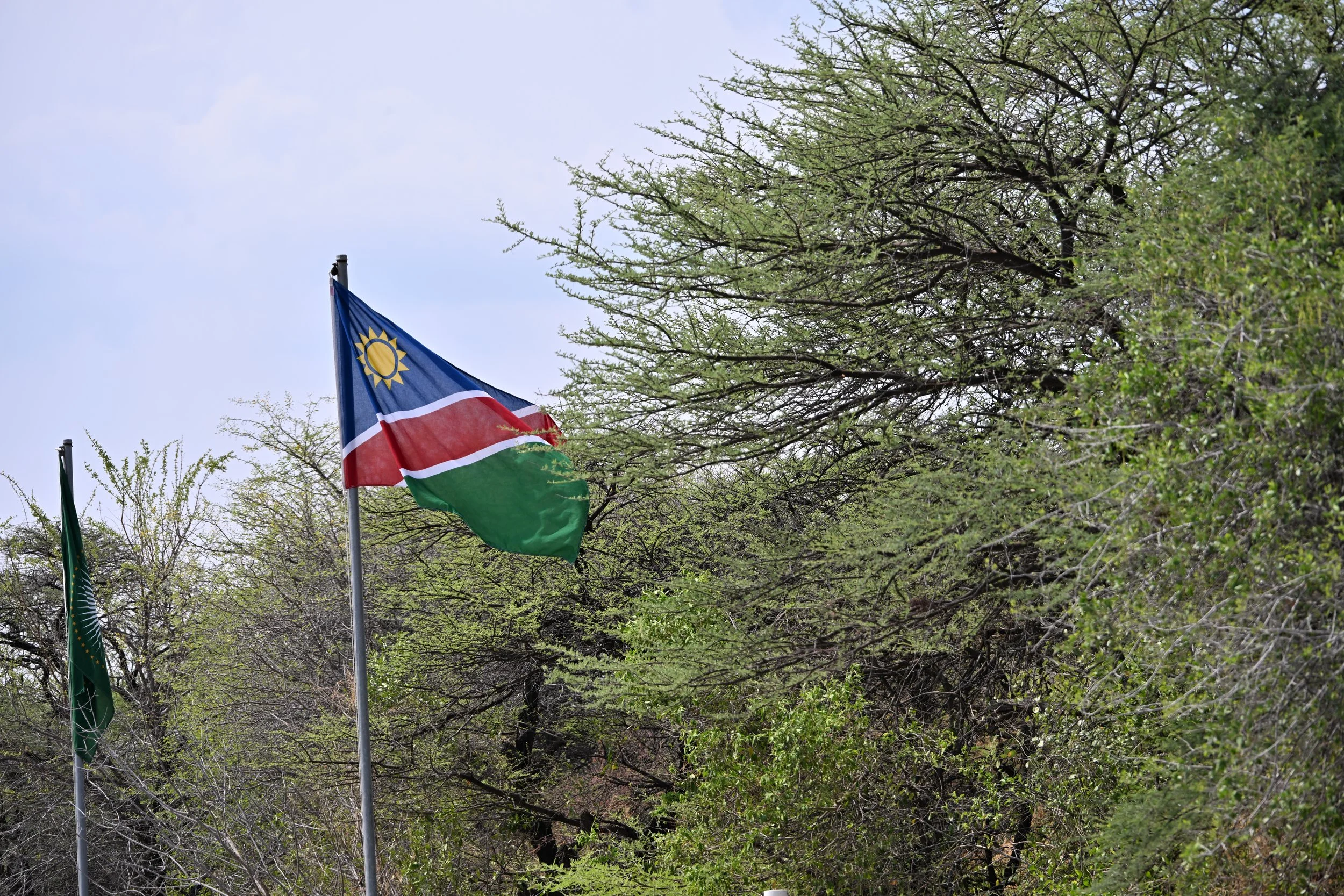
I just realized that I never put in a picture of the Namibian flag. Before we transition countries, here’s the flag of Namibia -

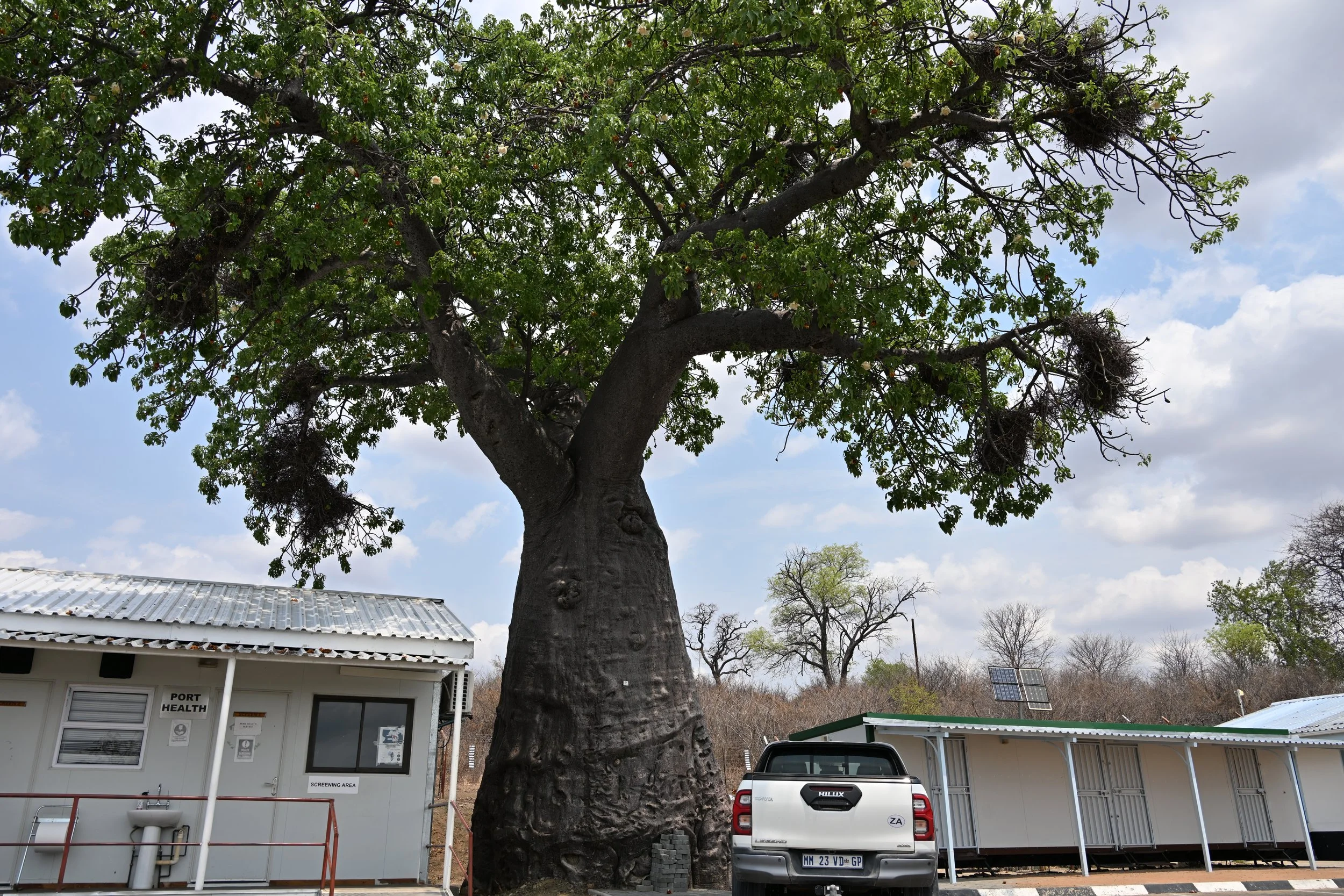
I never did see the flag of Botswana, but as we crossed the border, we were met by a gorgeous Baobab, which also gave me a chance to memorialize our trusty truck -

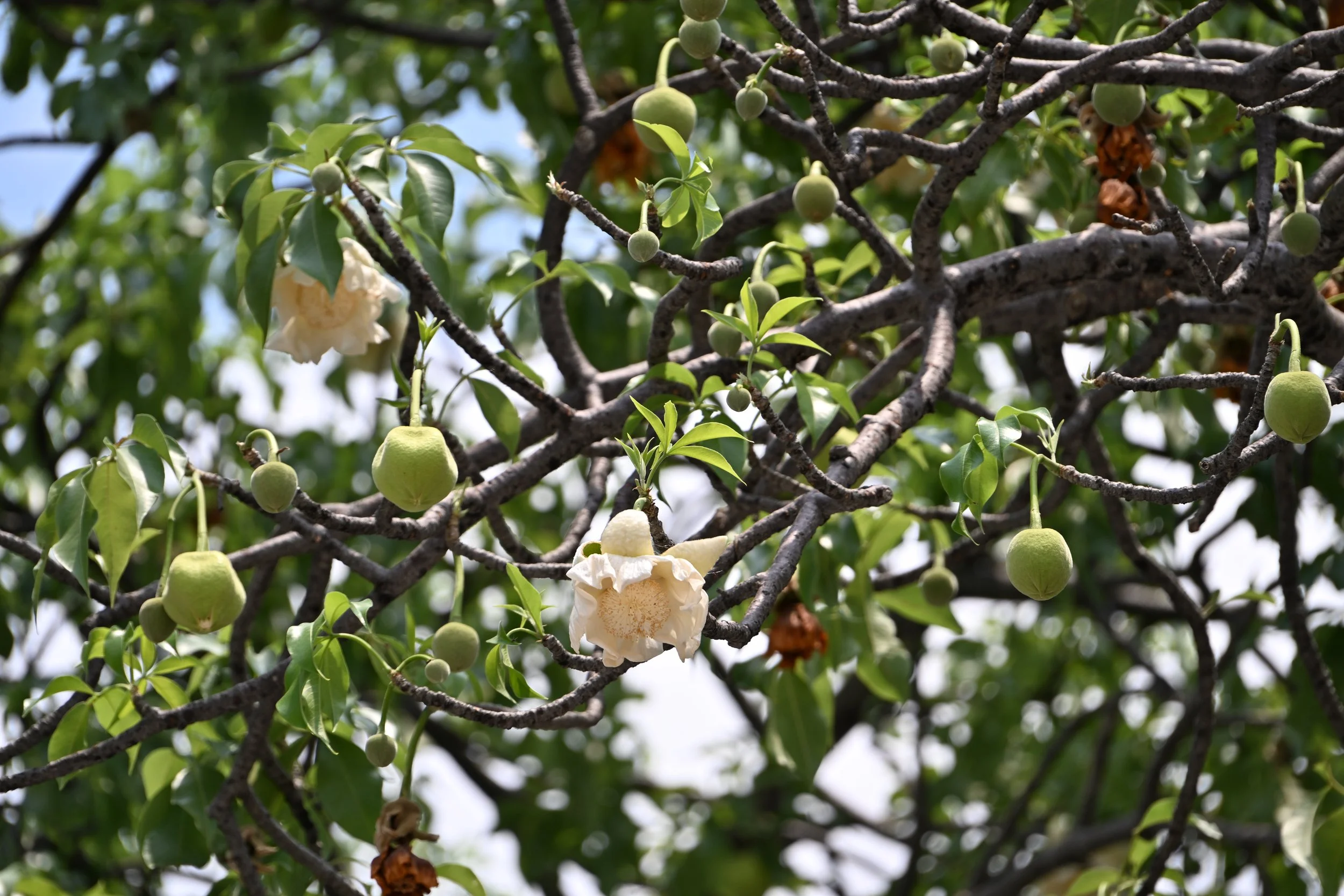
If you remember, when we were in Madagascar, it was dry season and none of the baobabs there had leaves. Well, this one was fully leafed, and with flowers/fruit to boot!

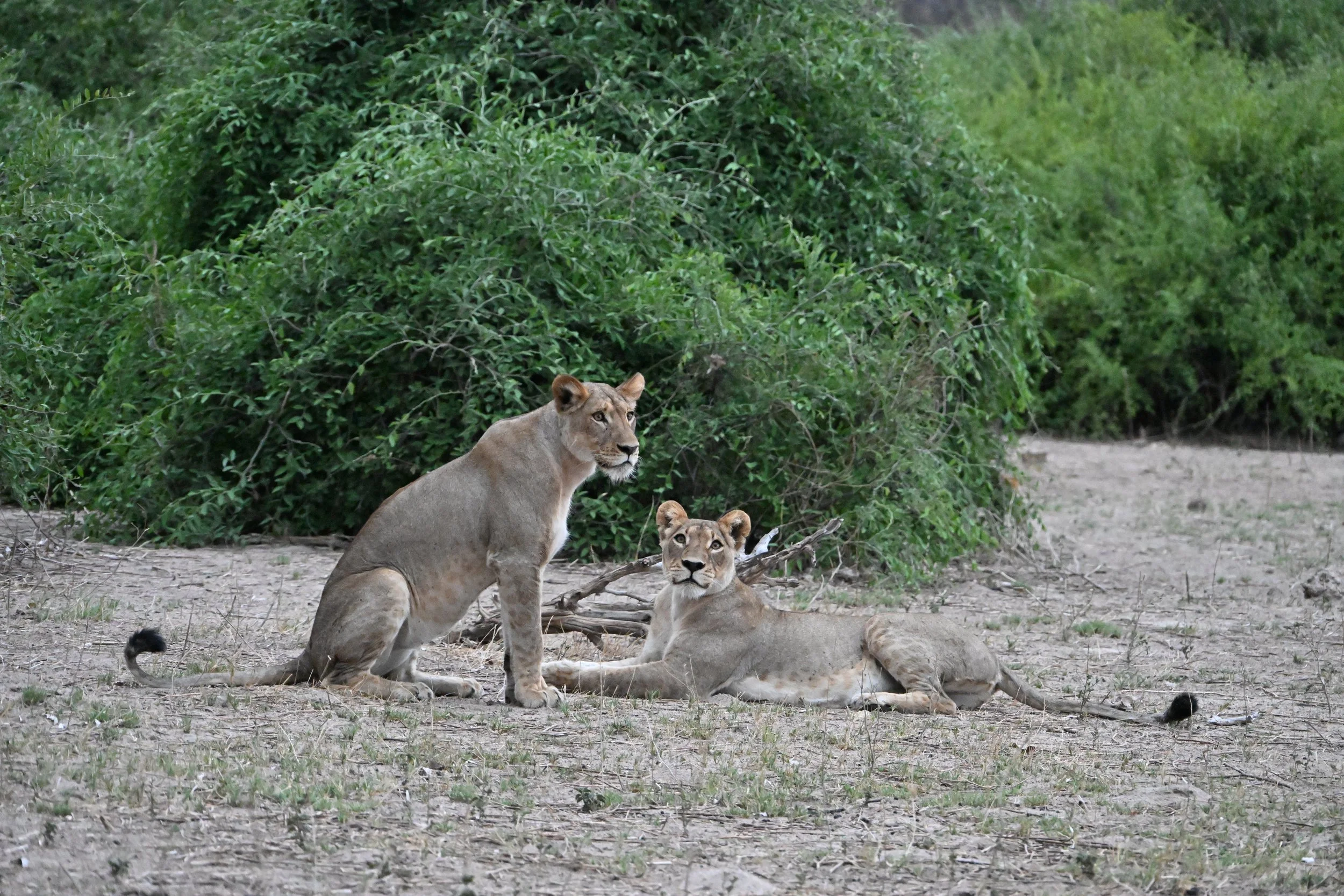
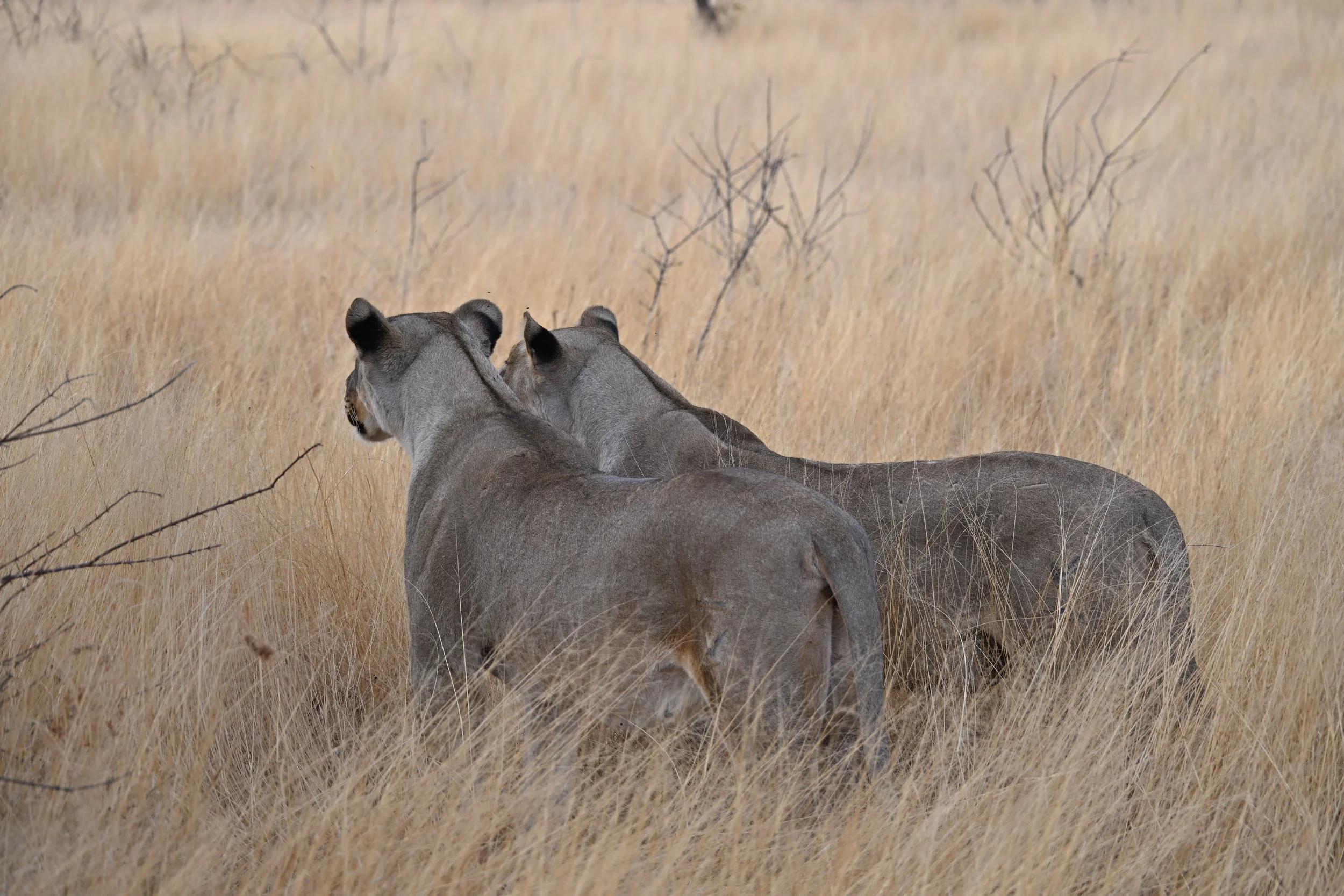
We had an afternoon game drive at Chobe Elephant Camp, and the first beasts we met were a pair of lions…

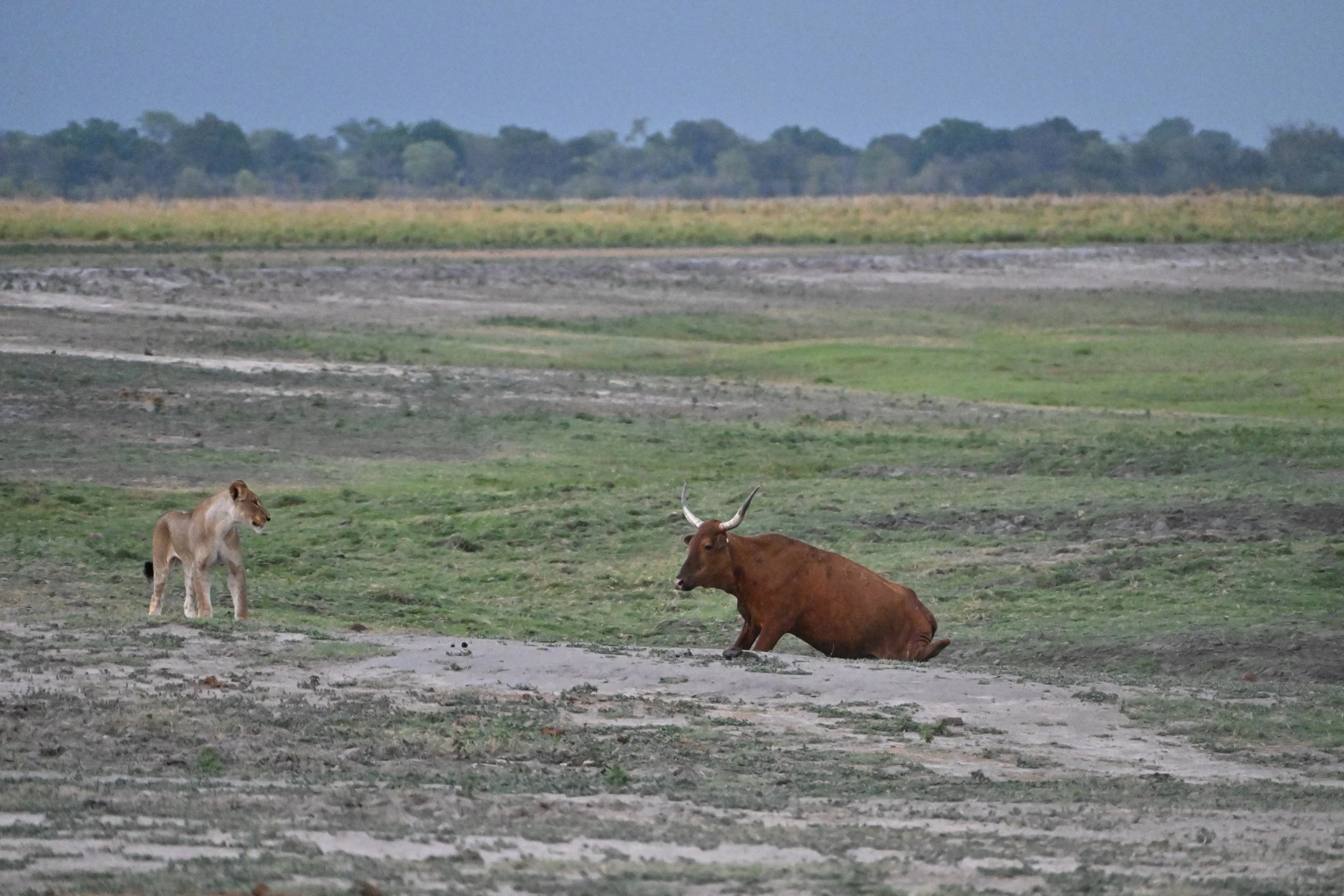
… that had crippled a cow earlier in the day by severing the tendons in its back legs -

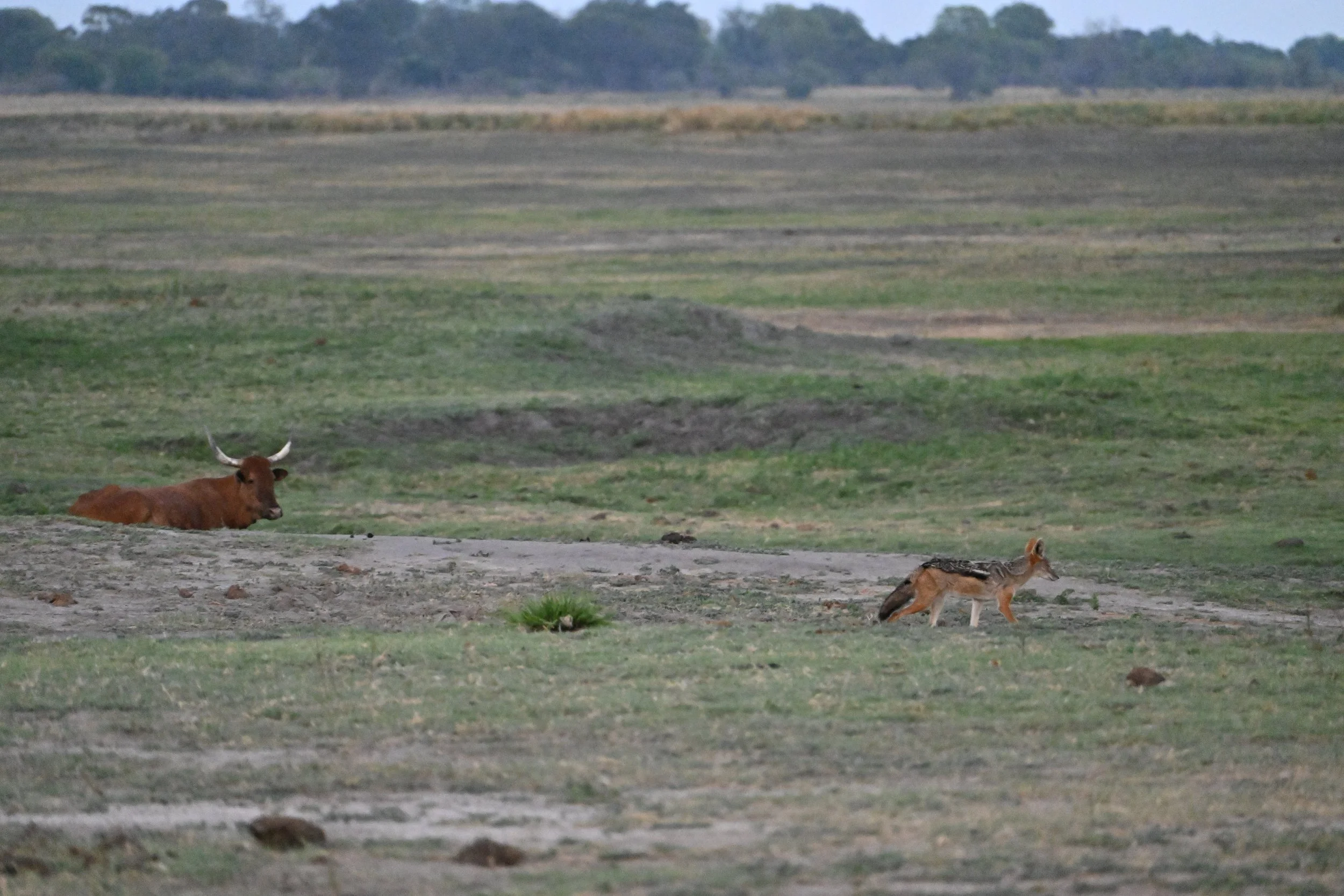
But it wasn’t giving up yet, and a Black-backed Jackal was also circling -

We watched the drama for awhile, but rain was coming in fast, so we hightailed it out of there. Unfortunately we didn’t leave soon enough, and the open-sided truck didn’t give much protection from the pouring rain and hail that pelted us on the 30 minute ride back to camp. Rainy season had arrived with a bang. Our guide/driver did a fantastic job getting us back safely through the deluge, driving on dirt roads that were becoming rivers underneath us, and luckily none of the nearby lightning strikes were ever that close.

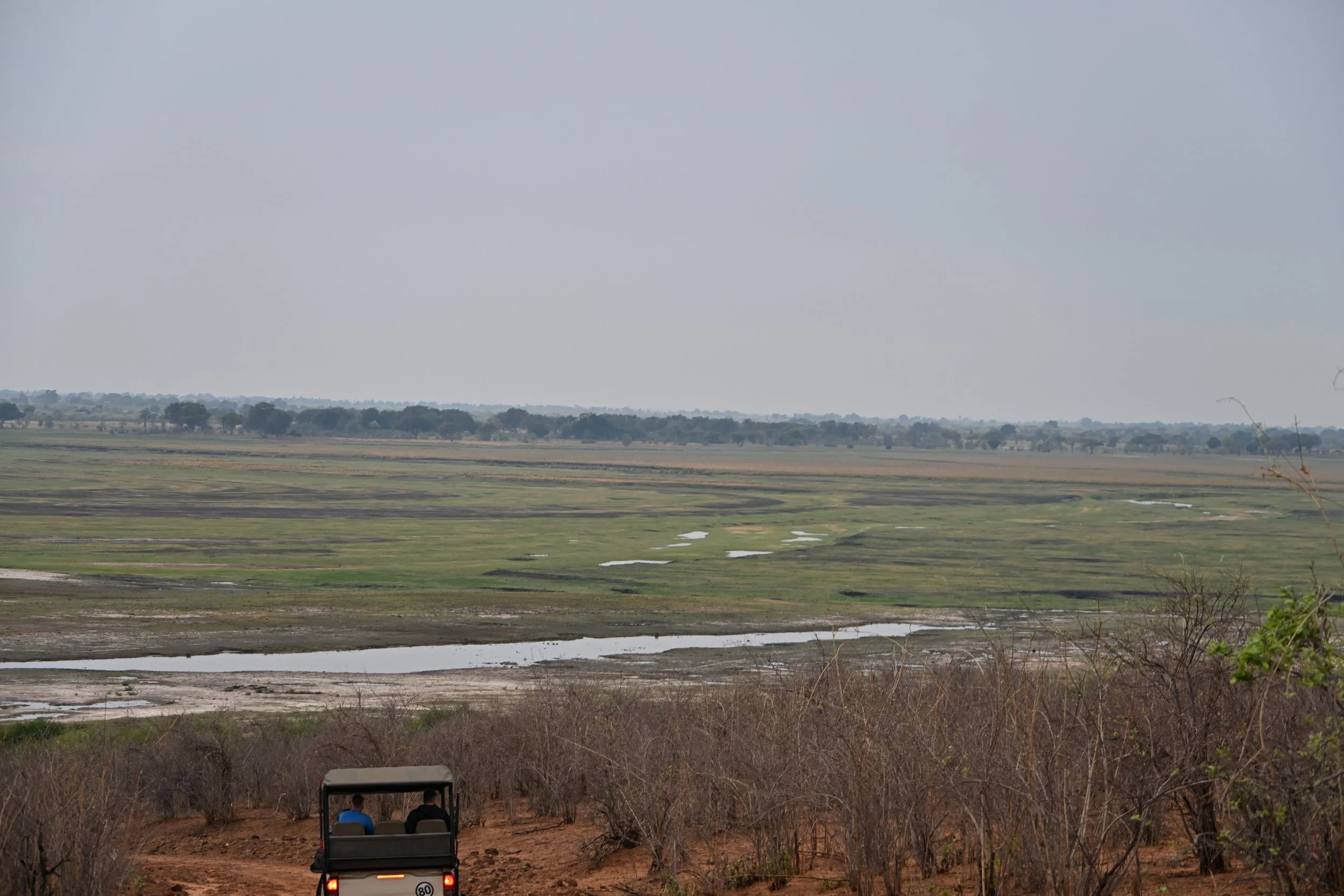
The next morning there were a lot more water pockets present than the previous day -

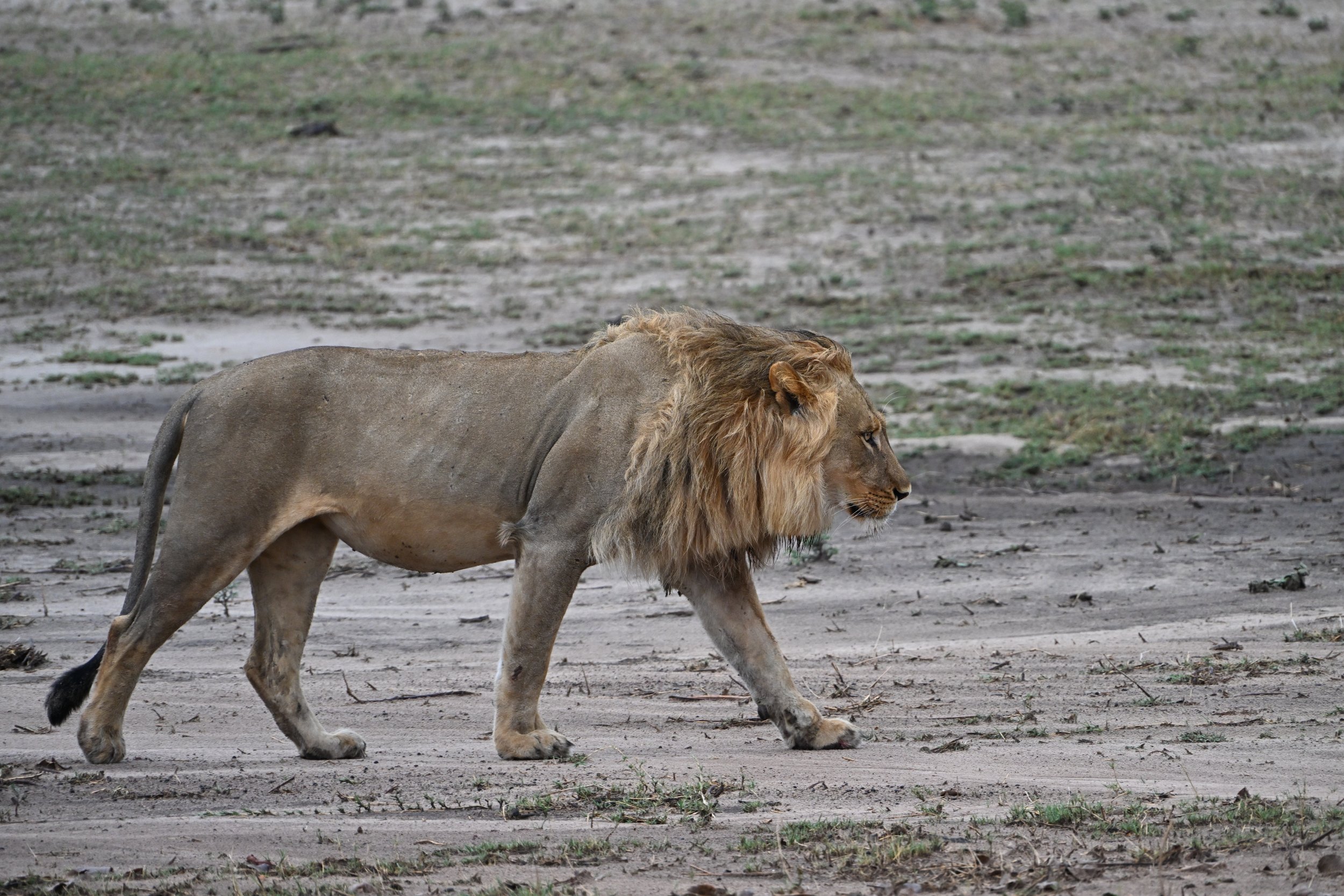
We found a lone male that probably had been feasting on the bull that the females killed the previous night -

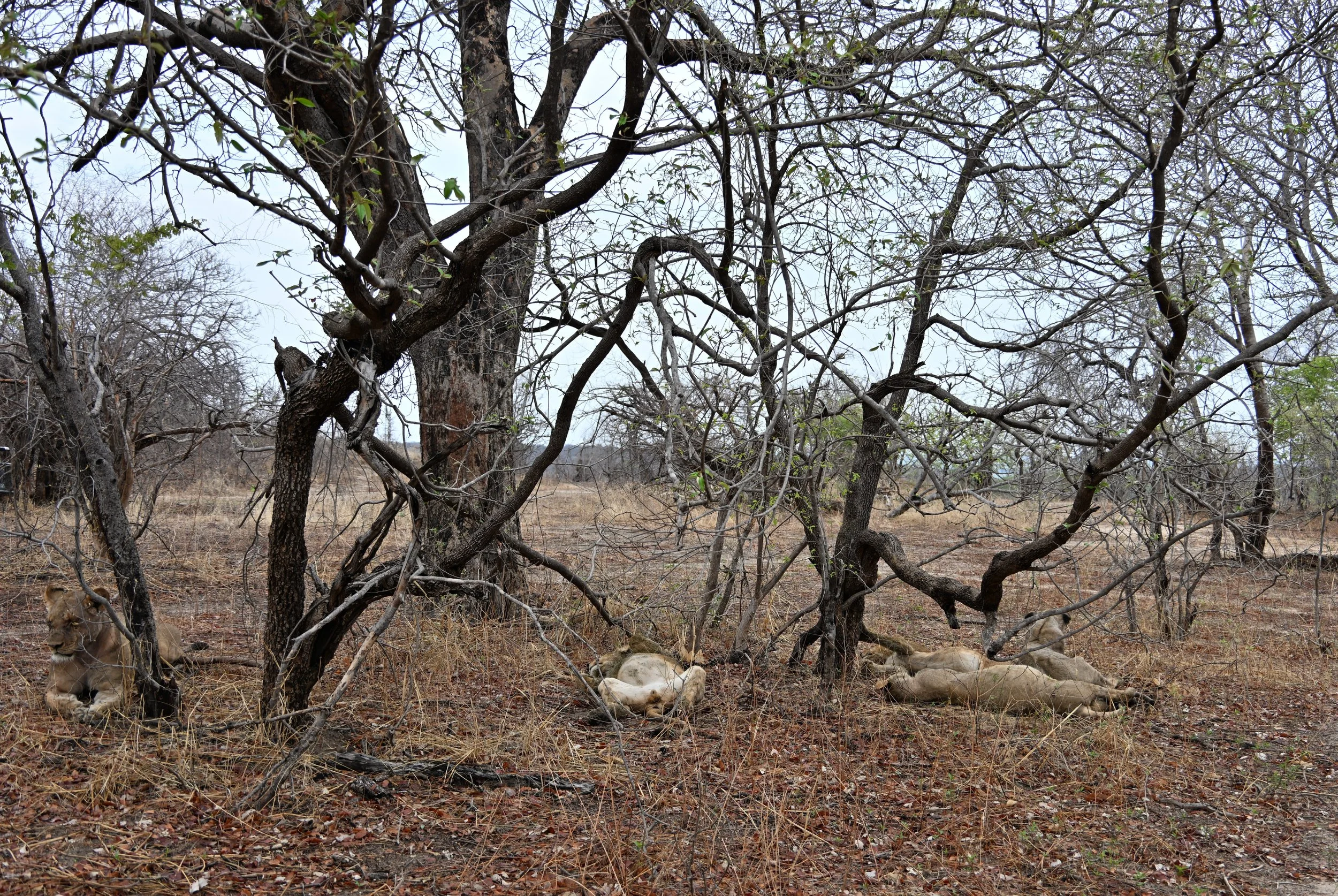
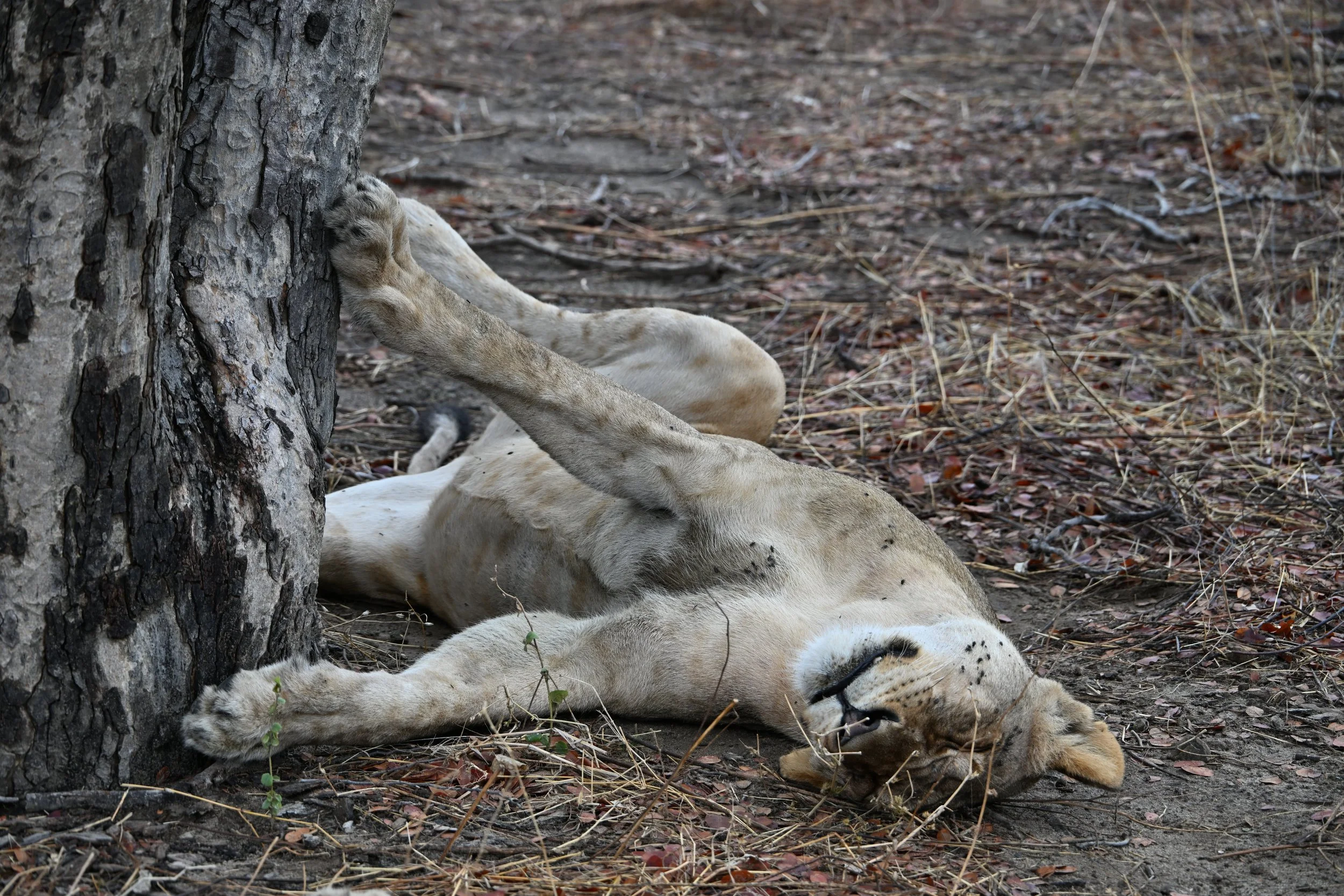
We later were alerted to a pride of lions that had been feasting on a young giraffe kill -

Their bellies were so full that they were frequently shifting positions to get more comfortable -

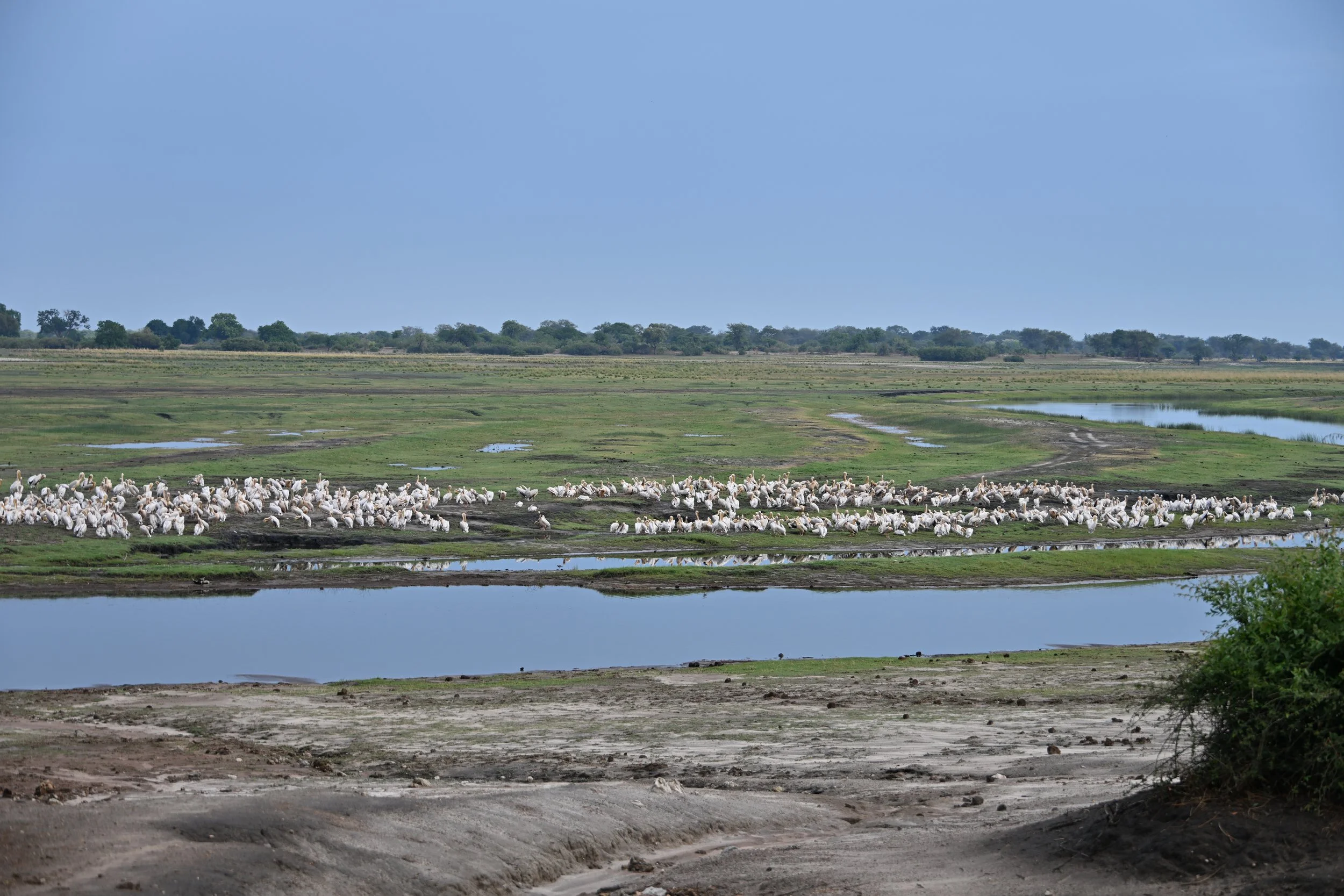
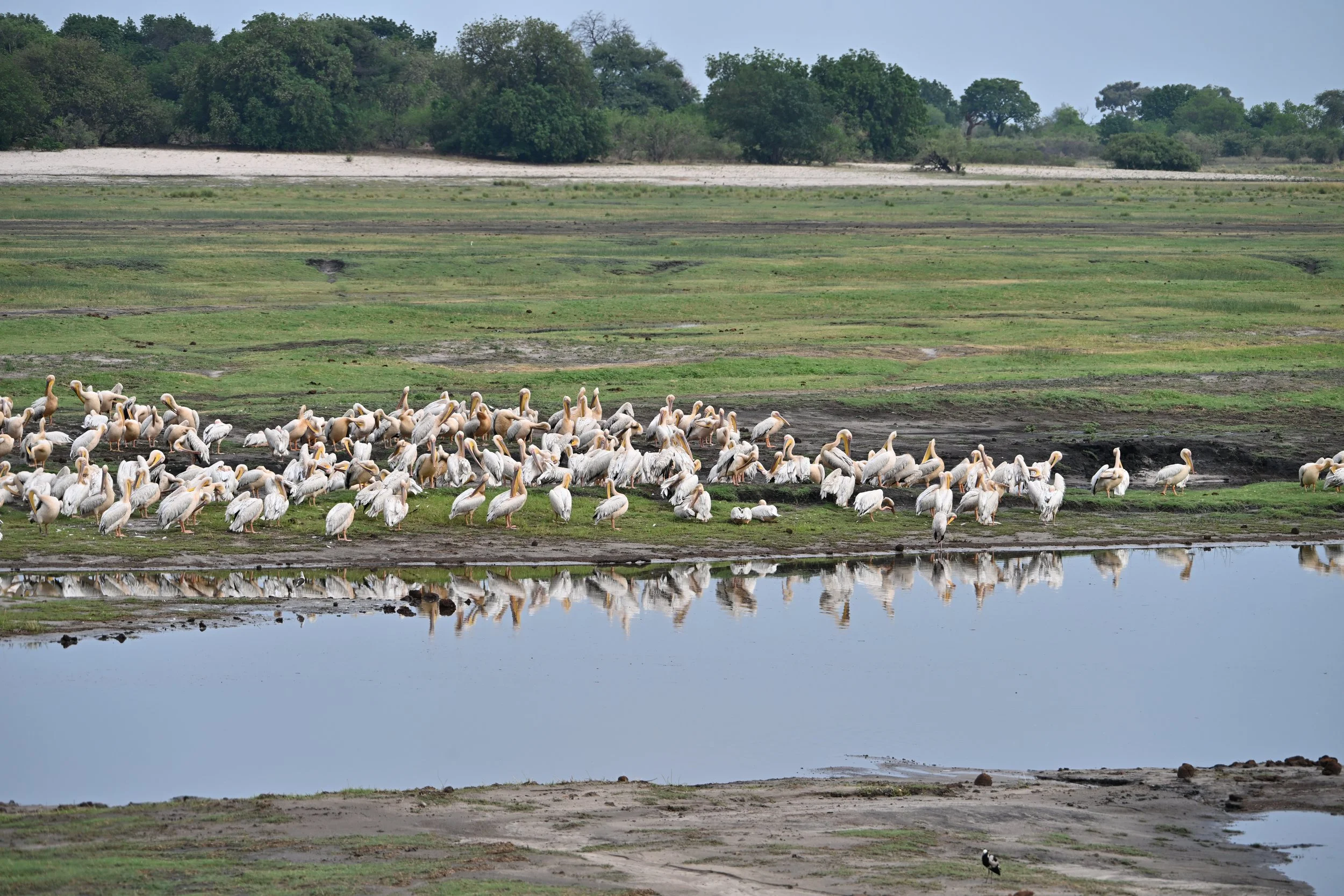
Other than the lions, this game drive found many different birds, including this huge flock of Great White Pelicans -

You can enlarge the next picture to get even more detail and appreciate their colors -

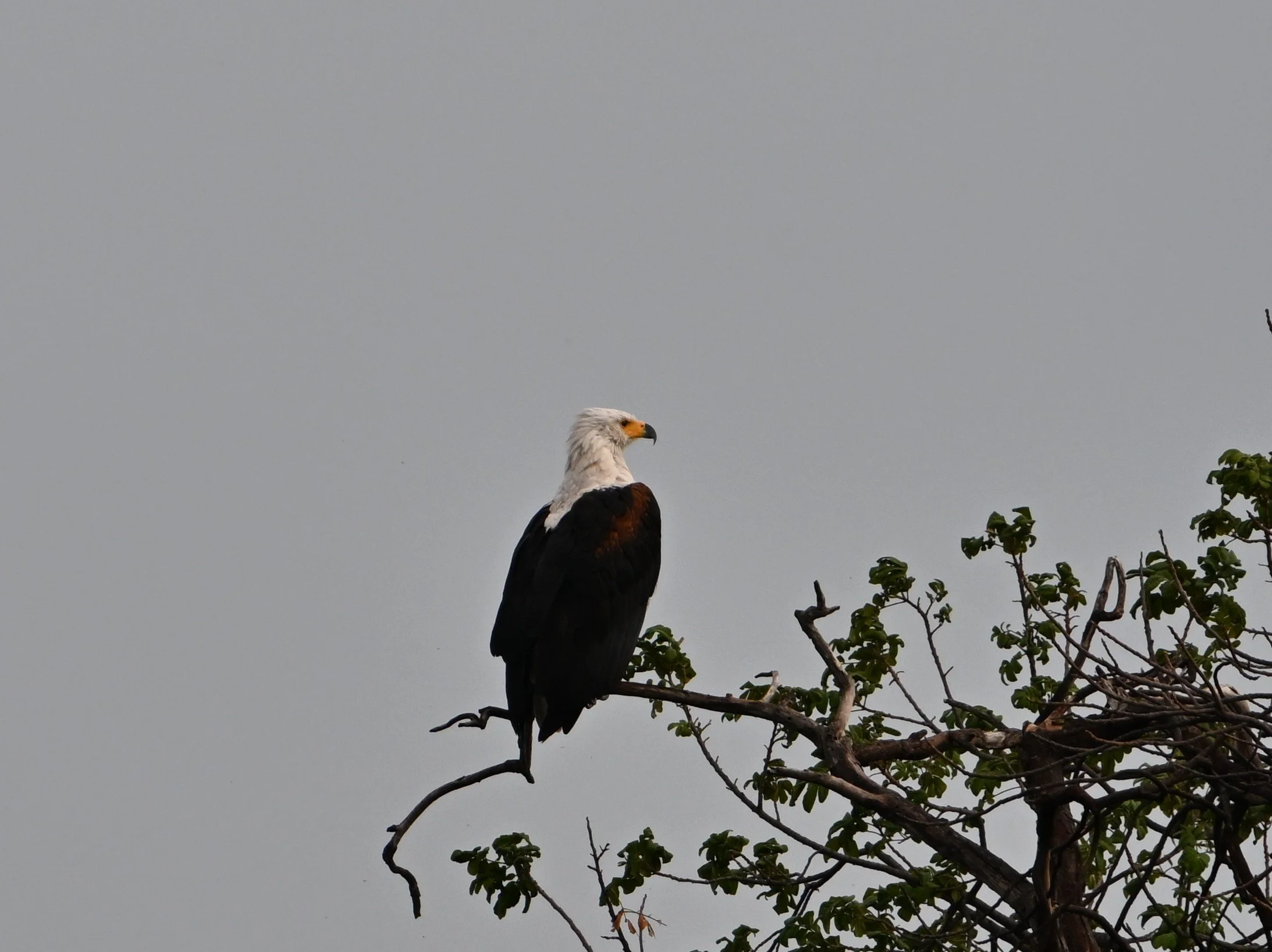
We also saw a majestic African Fish Eagle -

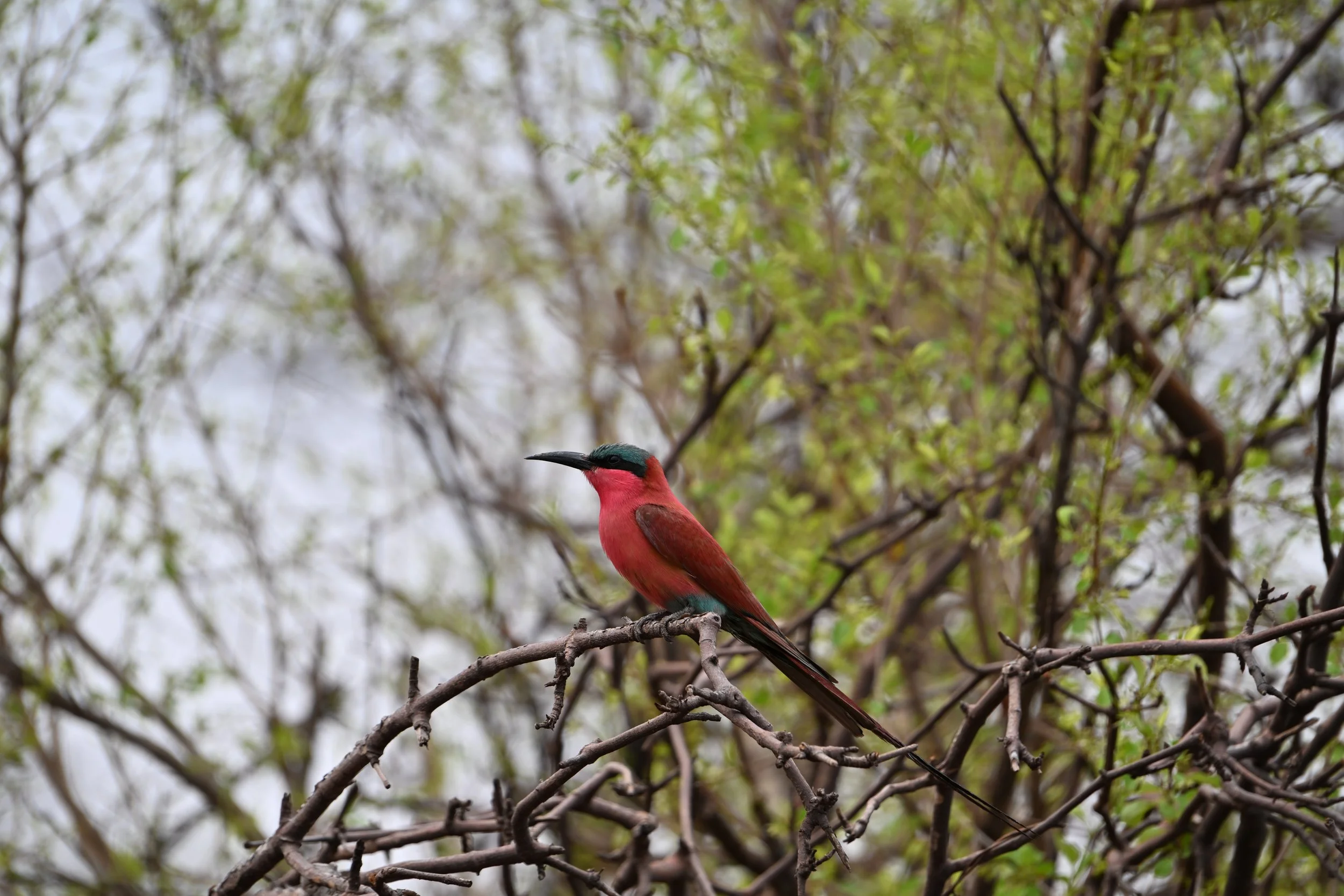
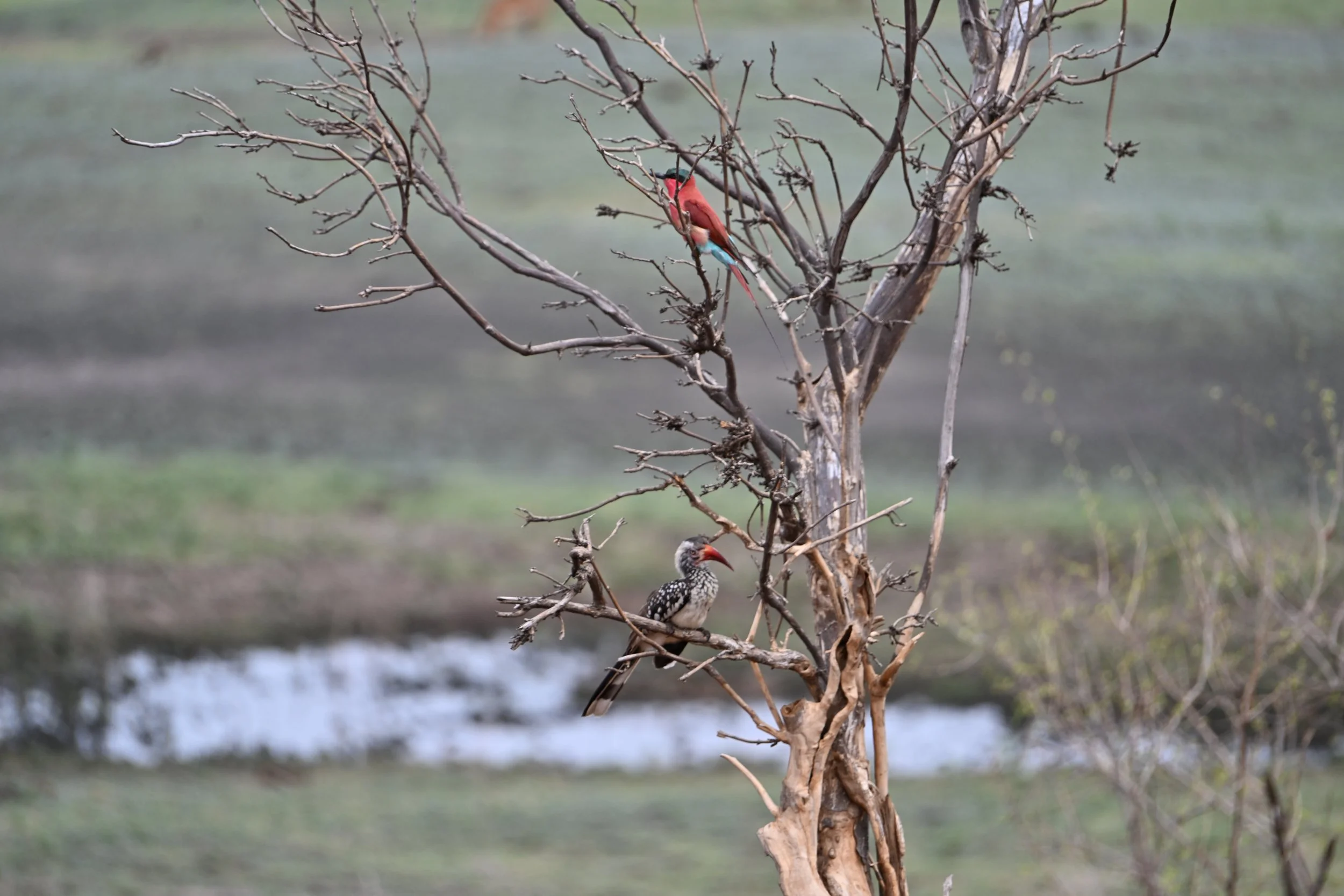
This Southern Carmine Bee-eater is resplendent by itself…

… but also makes a nice pairing with a Southern Red-billed Hornbill -

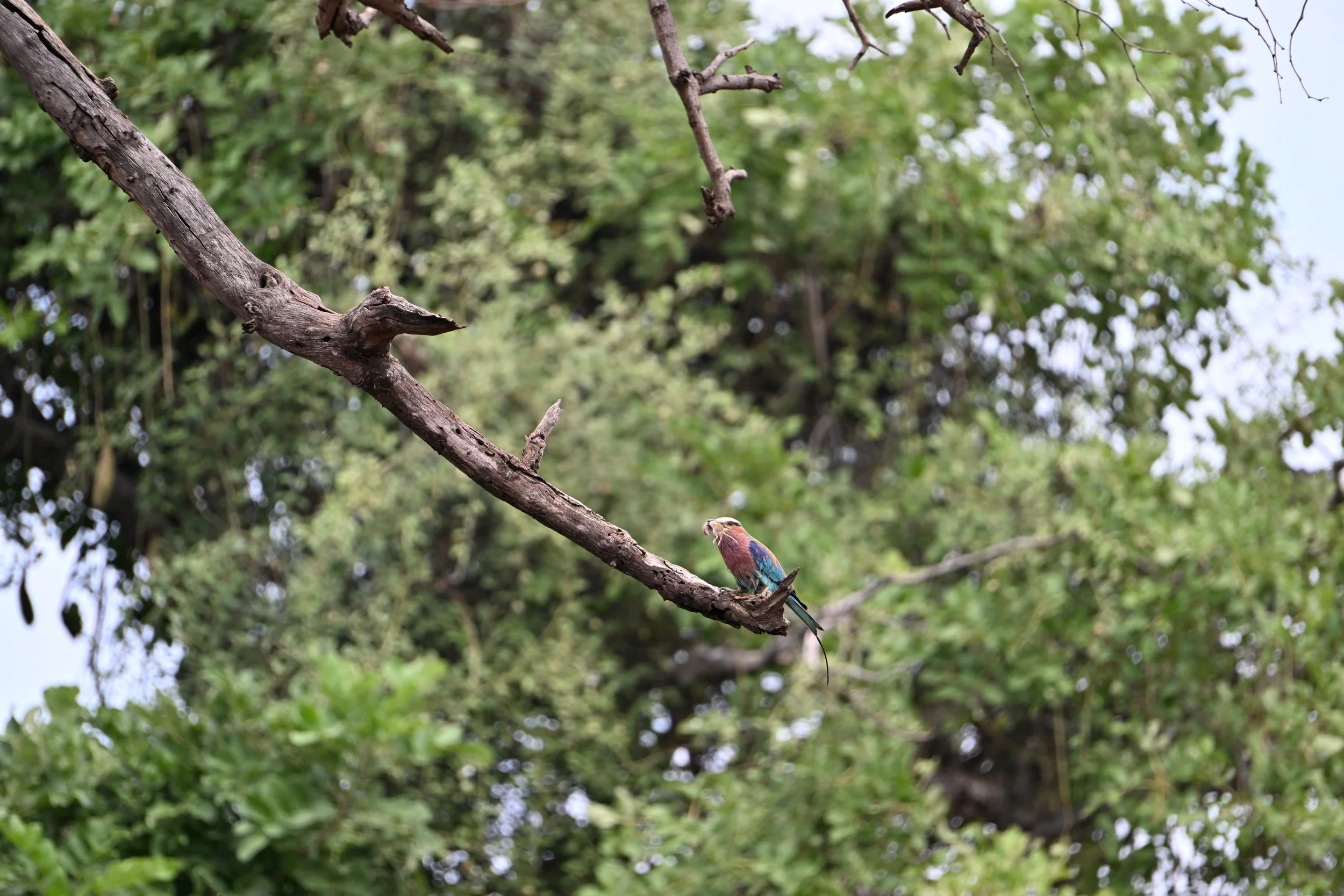
On this morning, I struck it rich with shots of birds and their prey. First I captured a Lilac-breasted Roller with a mouse…

This is one of my favorite birds, due to its coloration, but I was shocked by its being an omnivore. I recommend enlarging the picture for more detail.

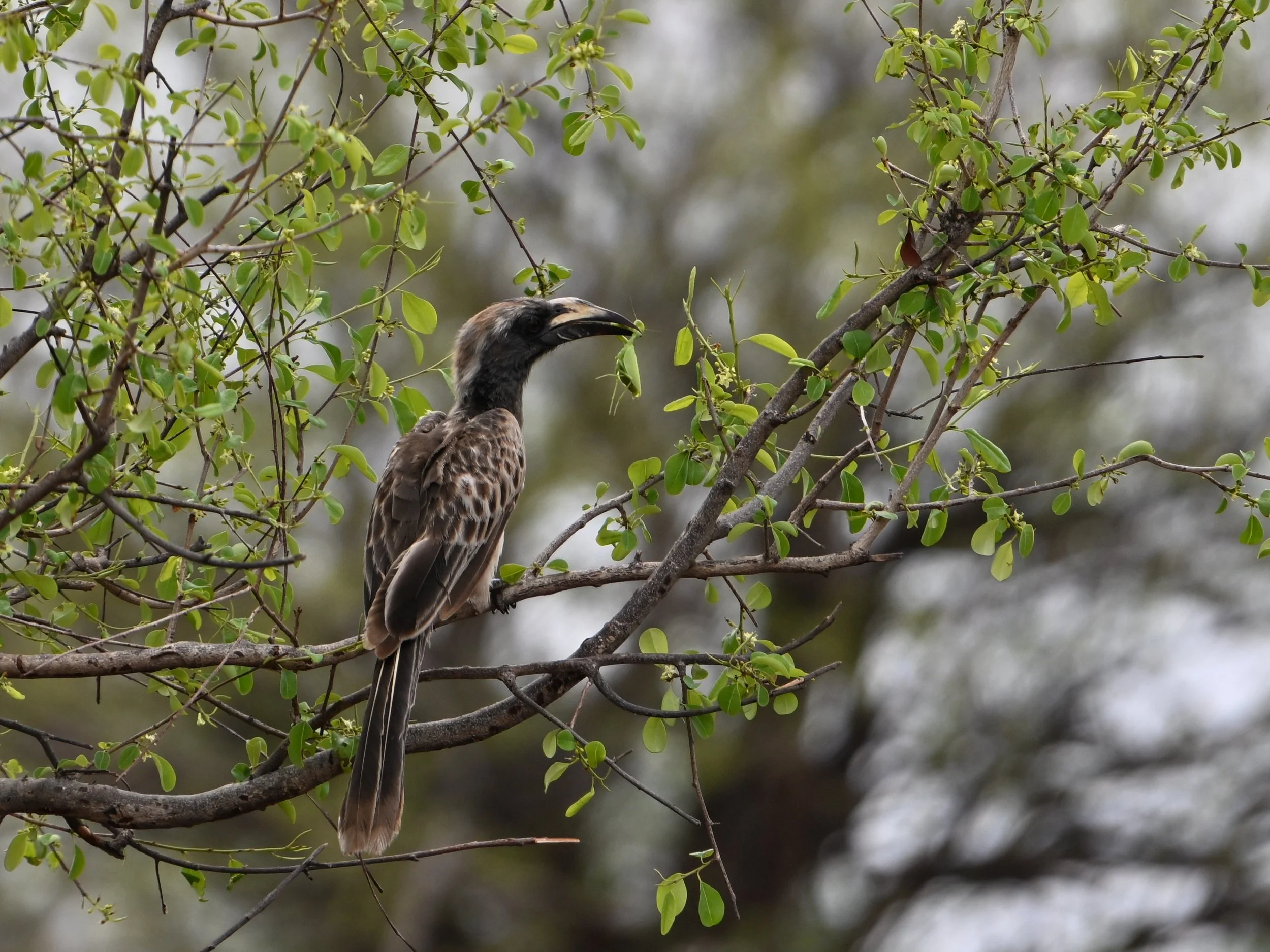
… and then an African Gray Hornbill with a praying mantis -

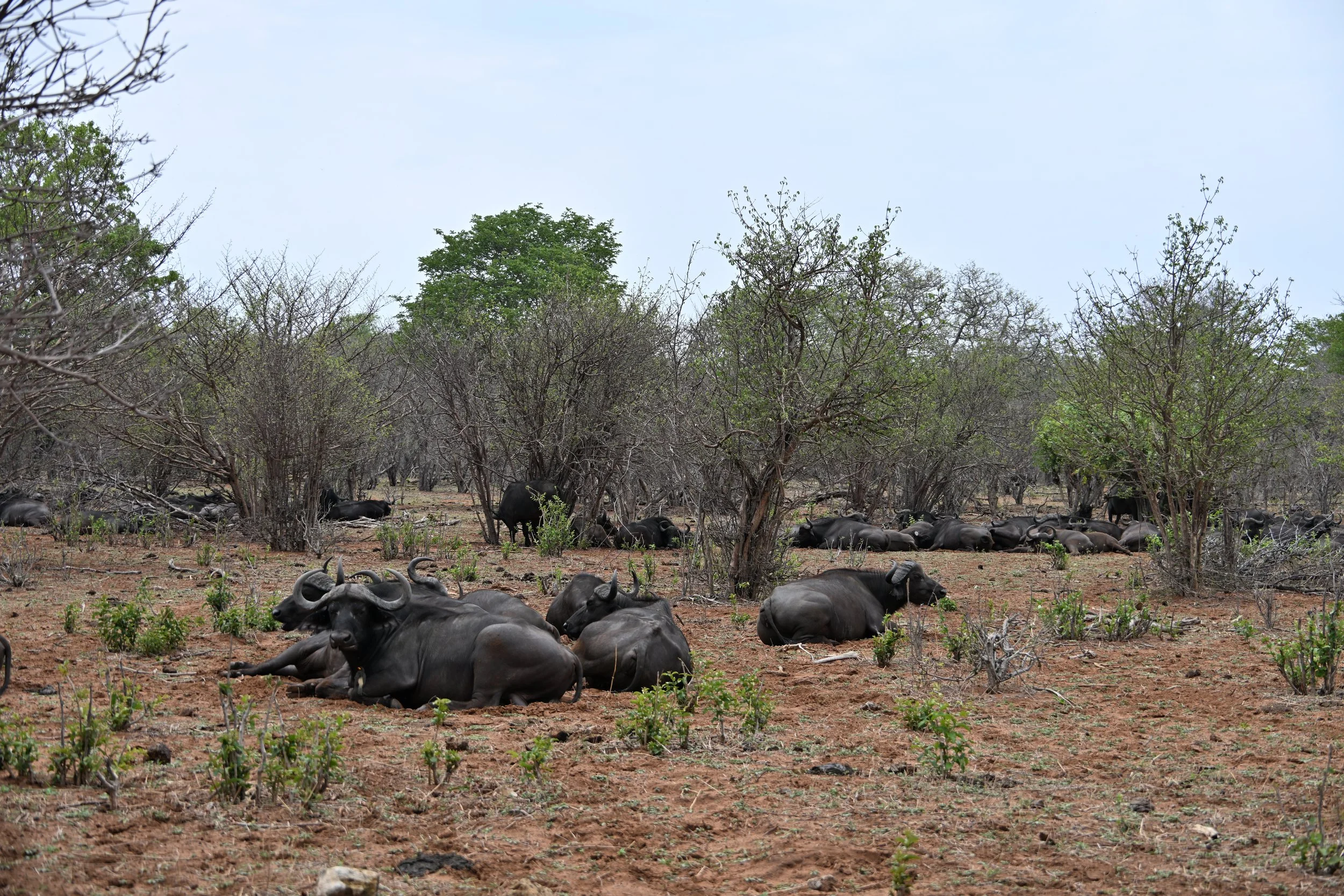
We also drove by a large herd of Cape Buffalo, that were (nicely) calmly resting. They have a well-deserved reputation for being aggressive and belligerent…

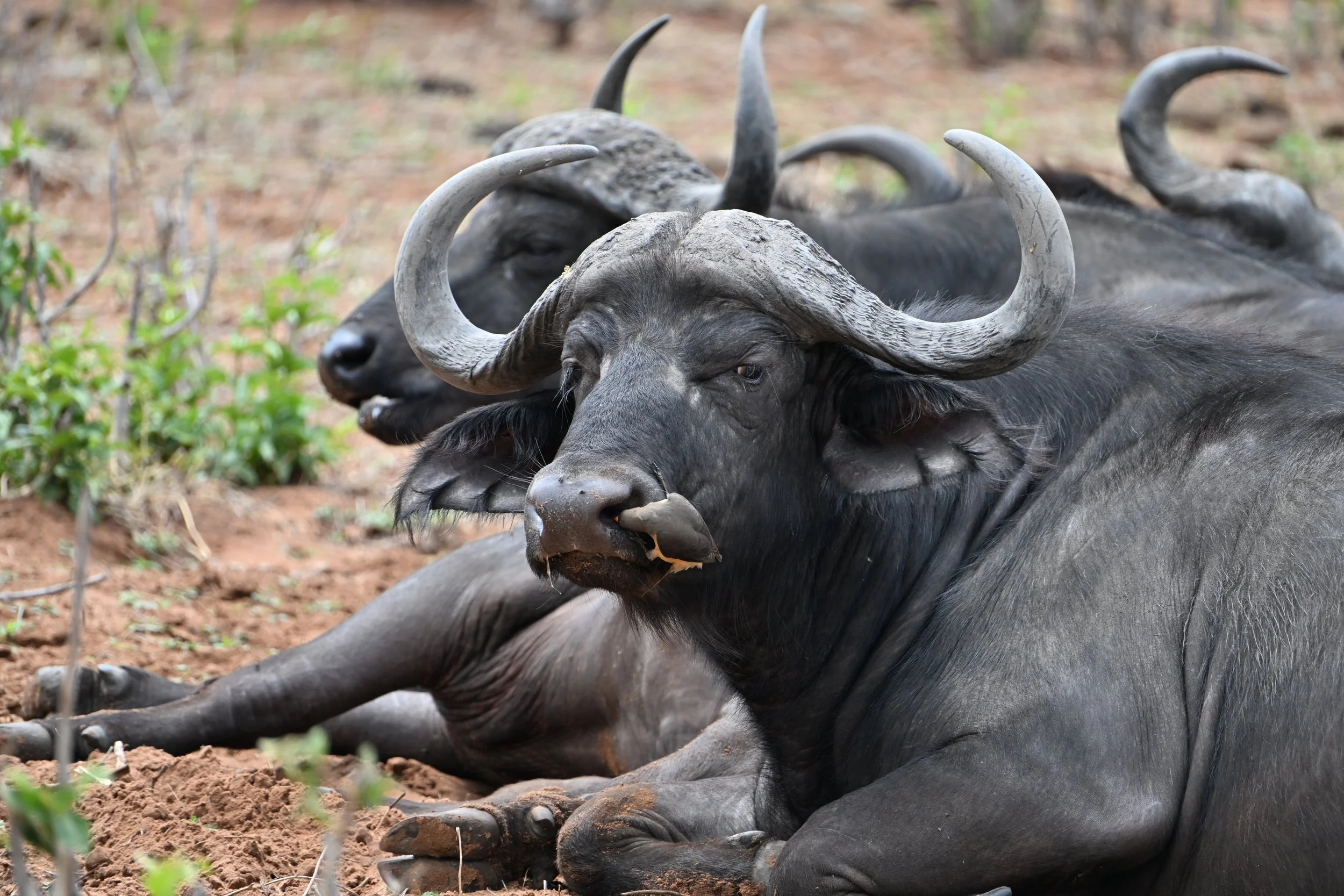
… but this one was preferring to pursue some personal grooming…

Note the bird in the nose

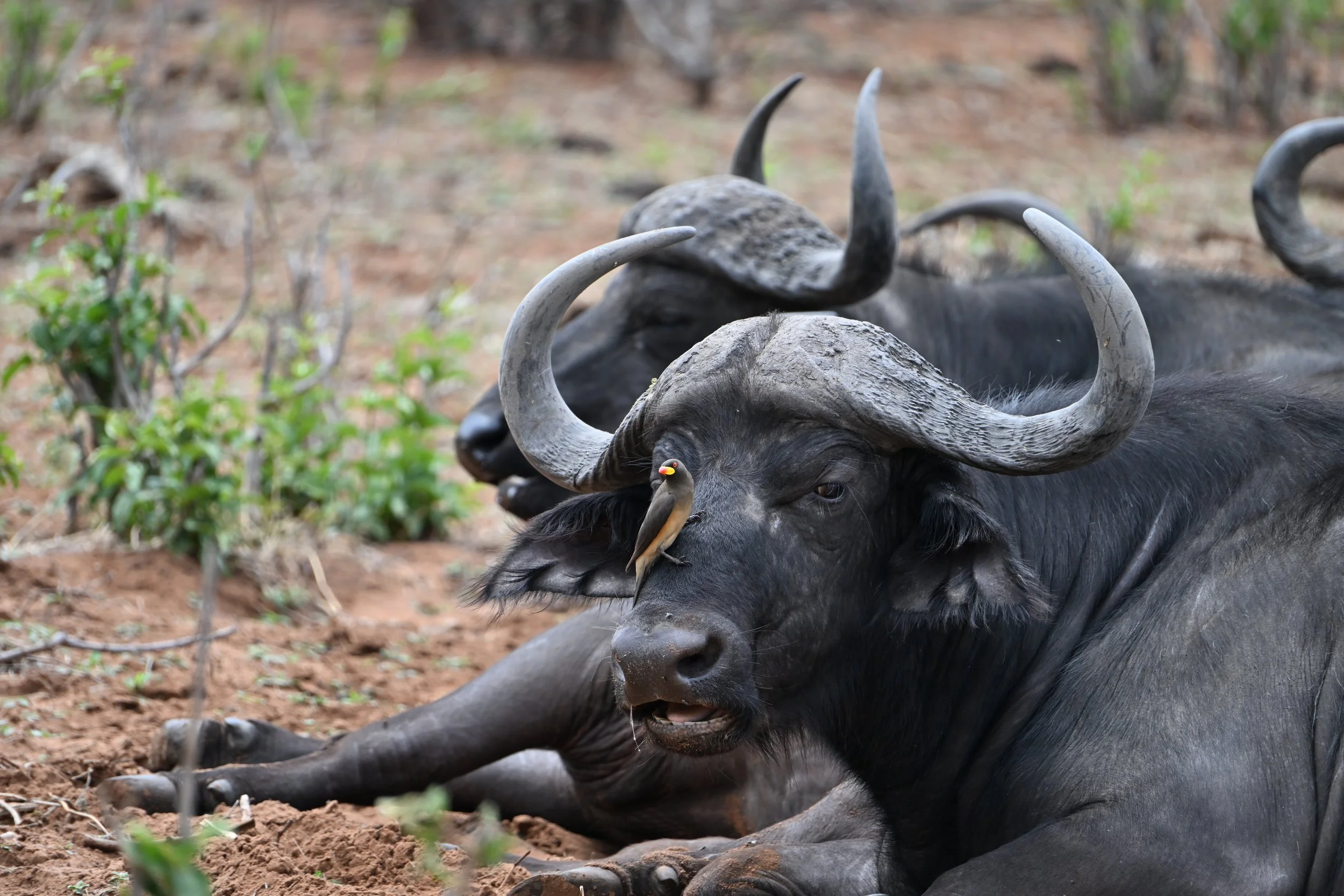
… after which, the Yellow-billed Oxpecker proudly posed -

Seeing the Buffalo completed our Big 5 sightings in Africa - elephant (although none to be seen at Chobe Elephant Camp due to the rains), rhino, leopard, and lion.

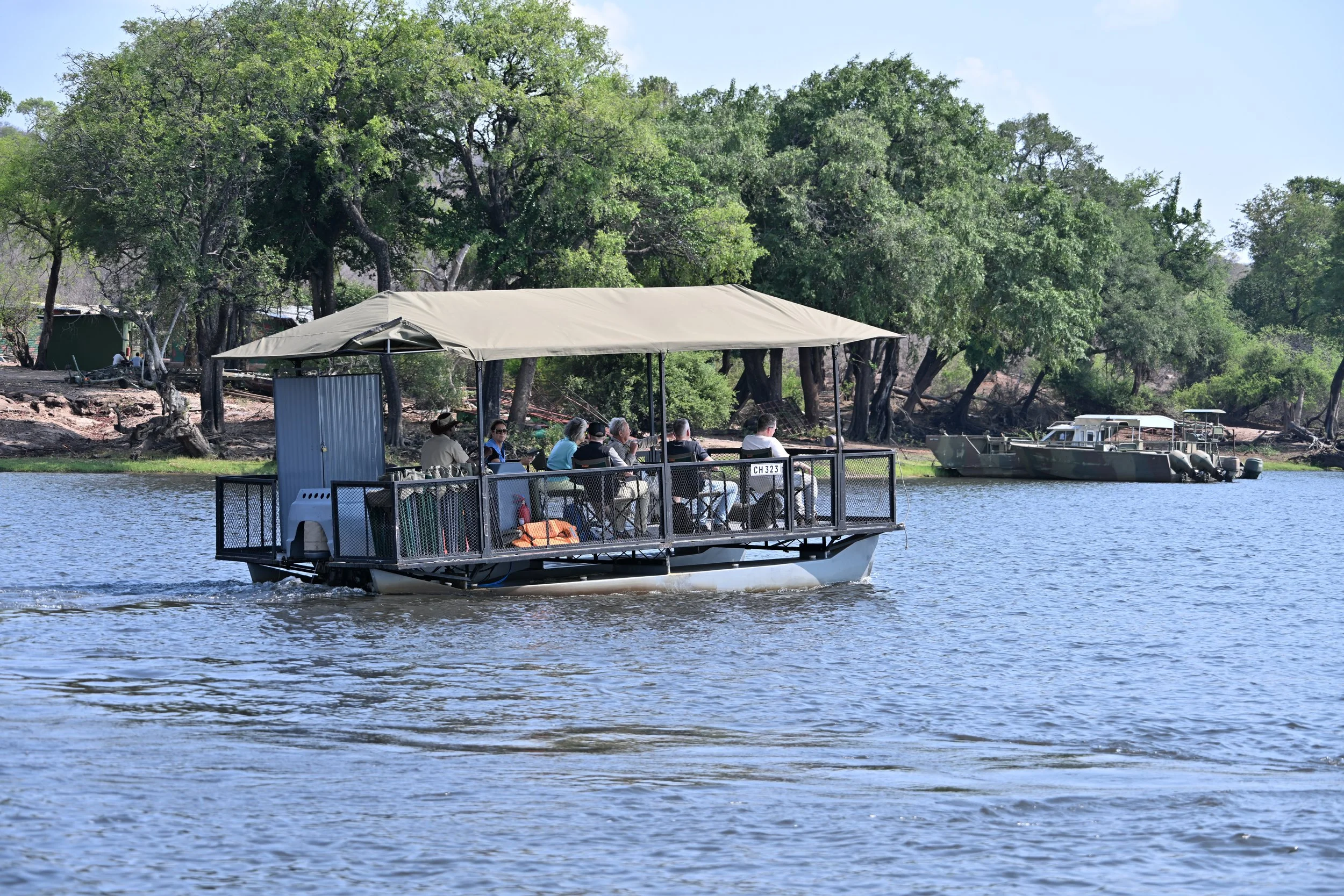
That afternoon we went on a ”luxury” river cruise on the Chobe River…

… where we saw hippos…

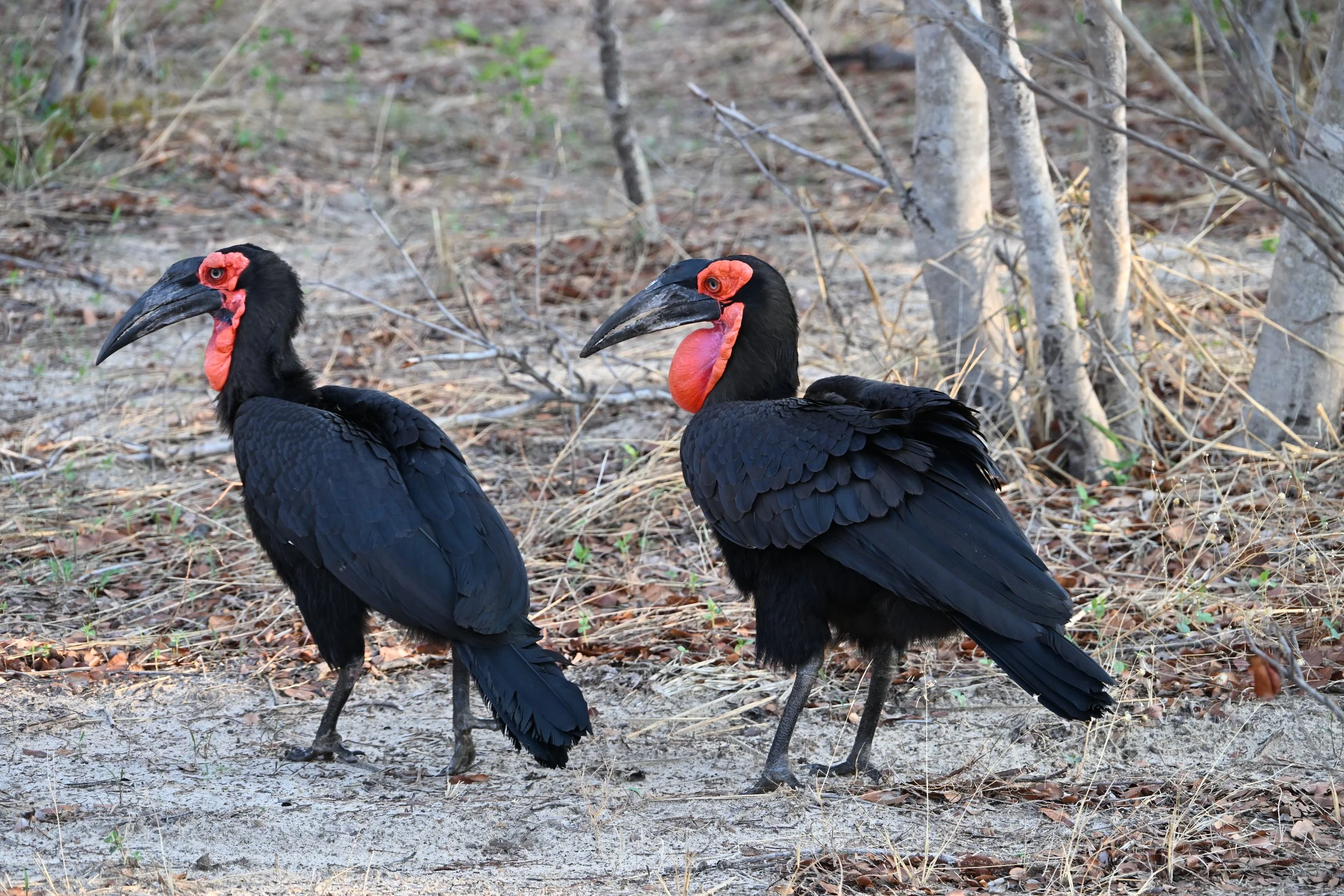
… and more birds. I know. Enough birds! So I’ll close with these enormous Southern Ground-Hornbills -

Caprivi Strip

This is also referred to as the Zambezi Region. It is a narrow (20 mile), long (280 miles) extension from the NE corner of the main body of Namibia, ending at the point where Zambia, Namibia and Botswana meet.

This was acquired by the Germans in 1890 to connect German South West Africa and German East Africa, as well as give access to the Zambezi River, and hopefully to the east coast of the continent. However, Victoria Falls defeated the latter goal.

We were used to seeing this landscape…

… but as we entered the Strip, we started seeing palm trees…

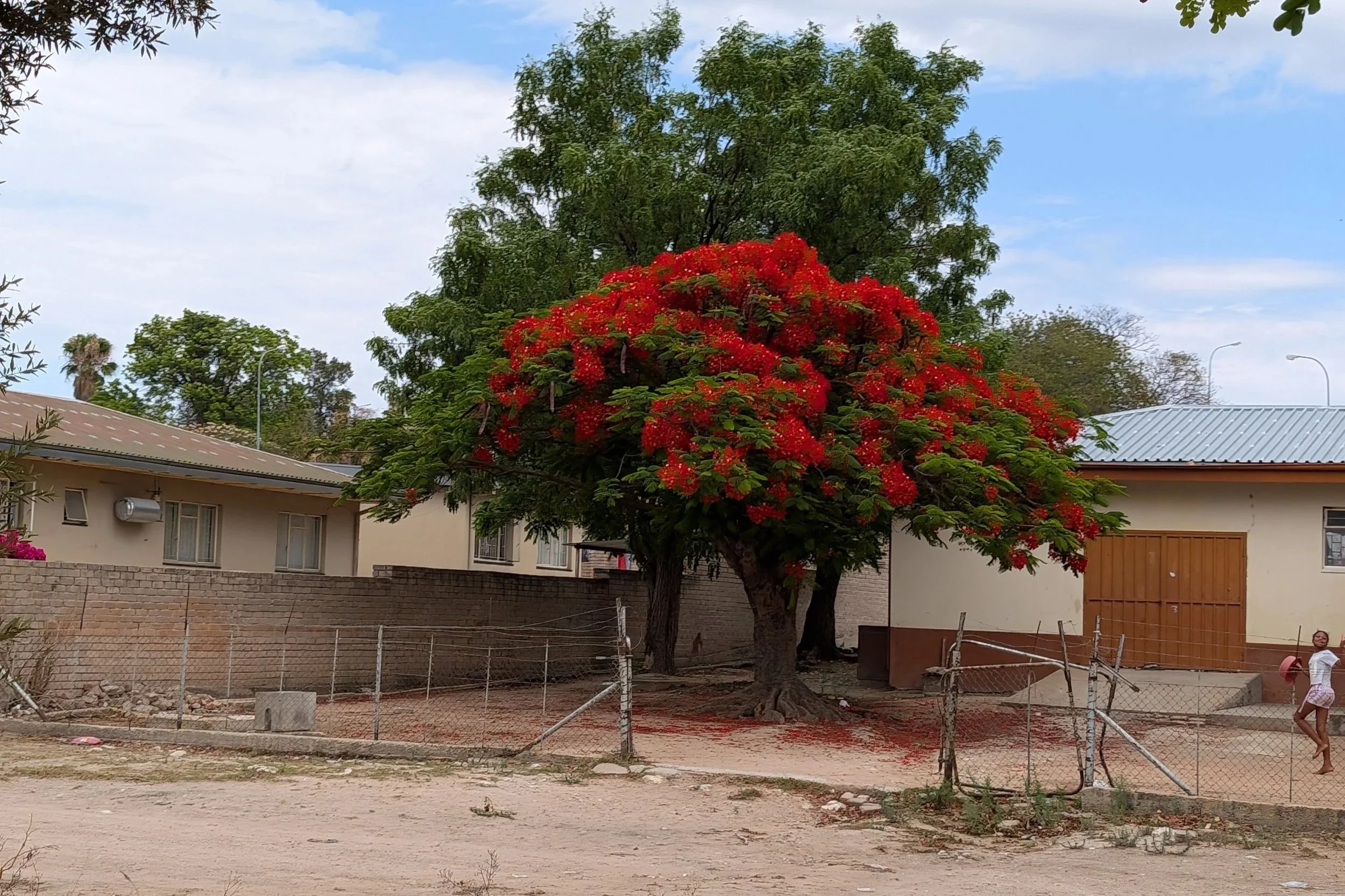
… and then Flamboyant trees in bloom -

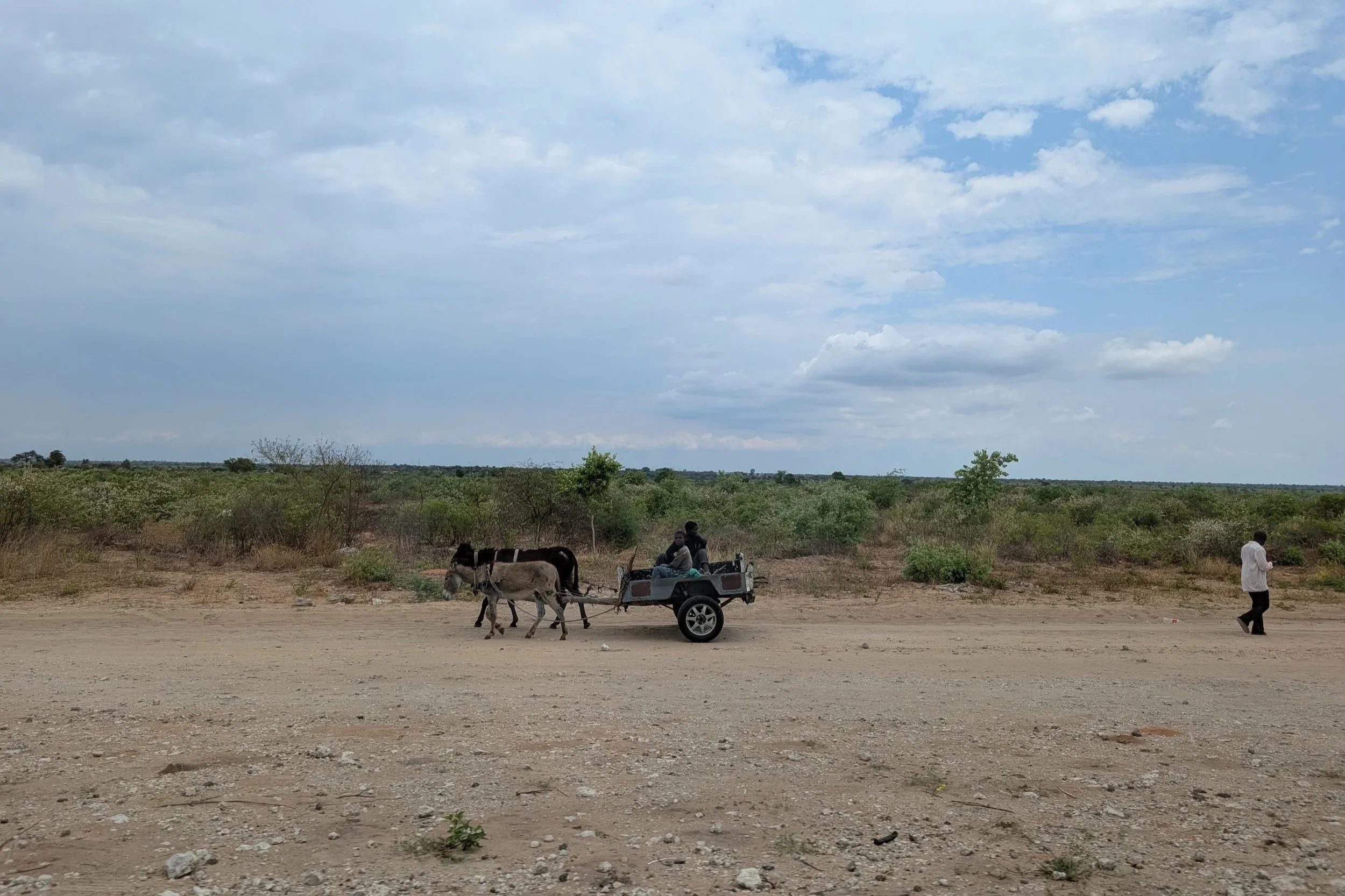
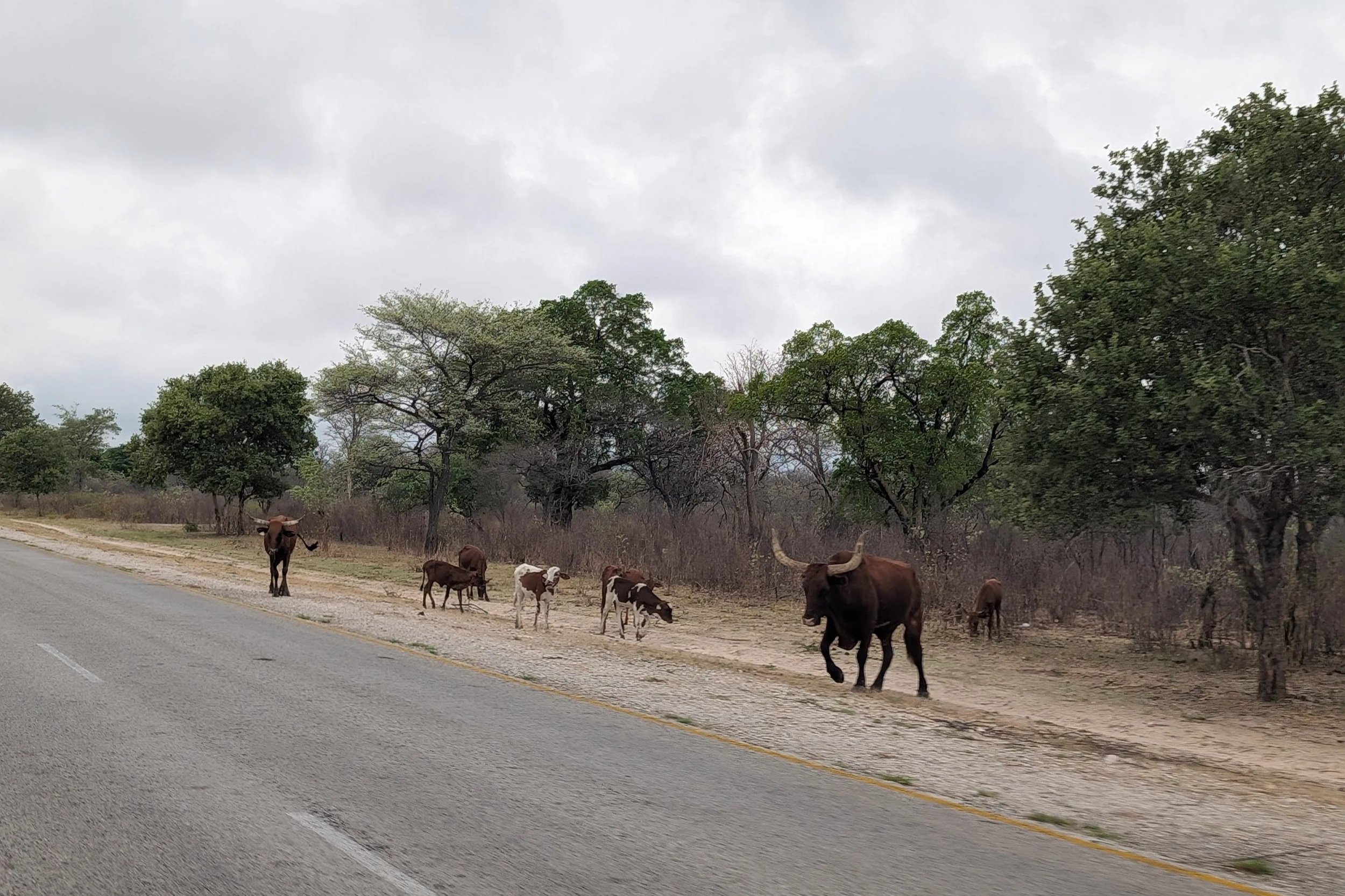
Just the presence of trees, solid buildings and towns was quite new after weeks of sparsely populated desert. The “wildlife” along the road was pretty interesting…

… including that in the road -

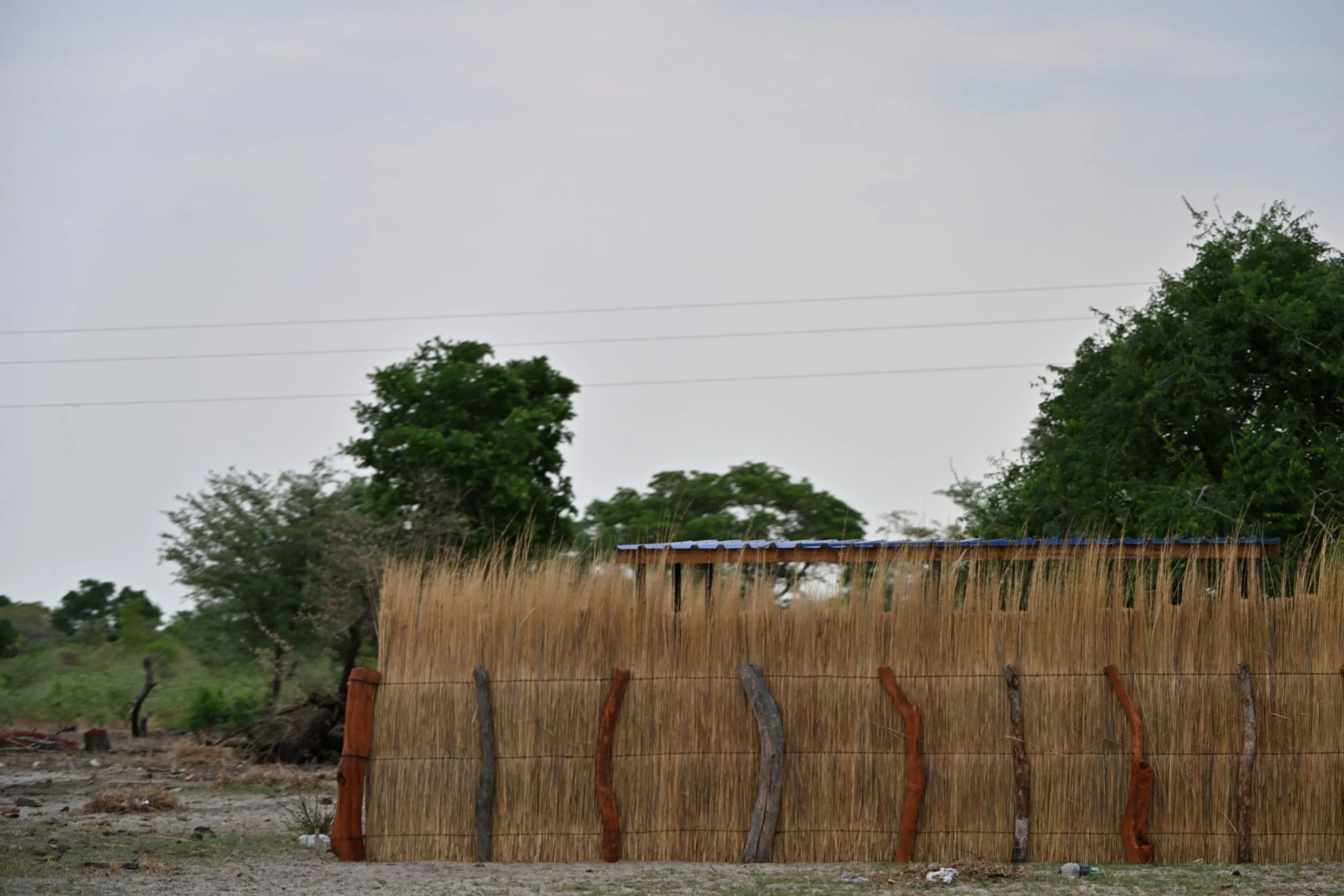
Livestock obviously graze freely, and the only fences were around buildings…

… to keep out the local denizens -

(we never did see any elephants along the road or crossing, although there were plenty of signs warning of such)

We were directed on our itinerary to do another self-guided game drive in Mahango Game Reserve, near our lodgings on the Okavango River.

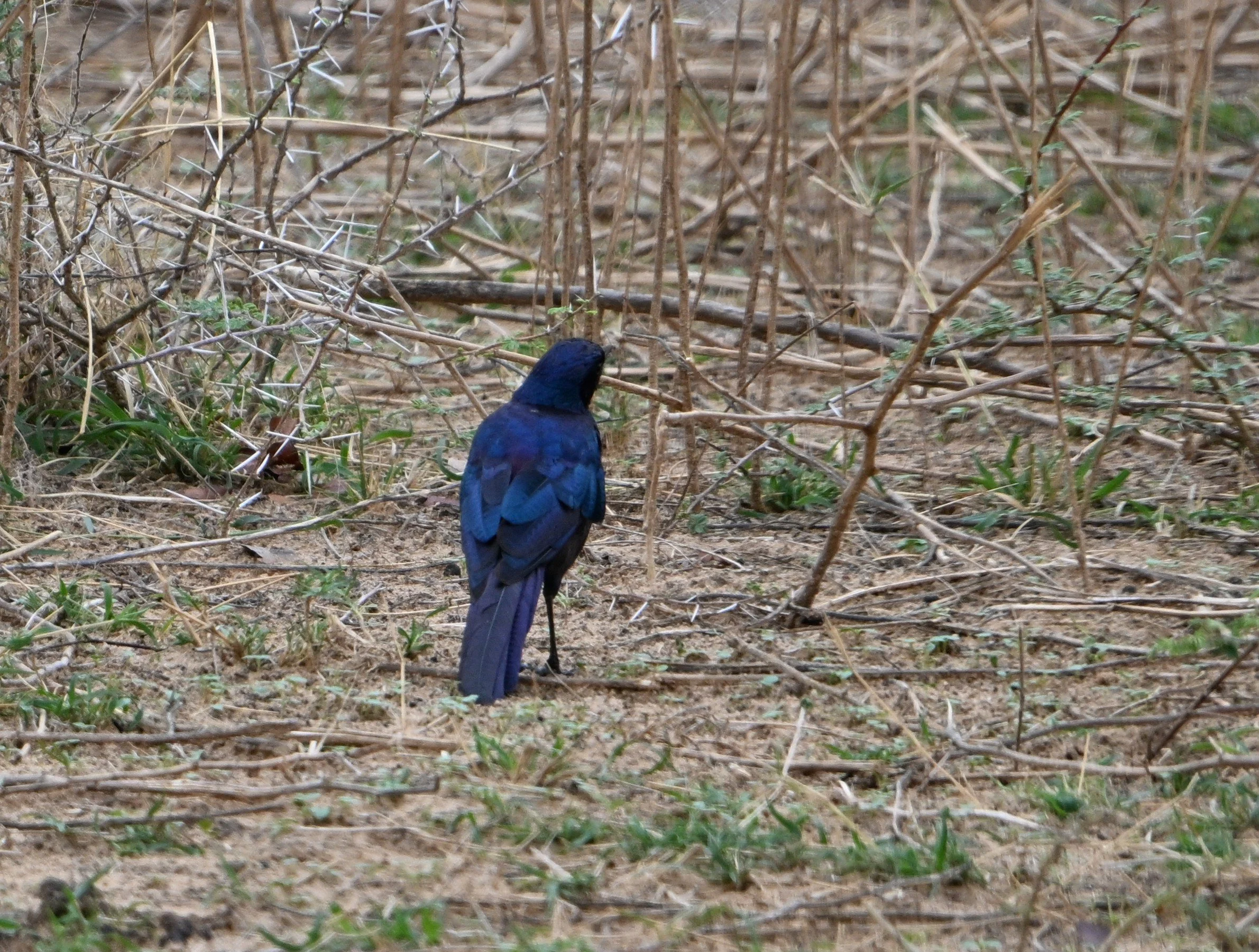
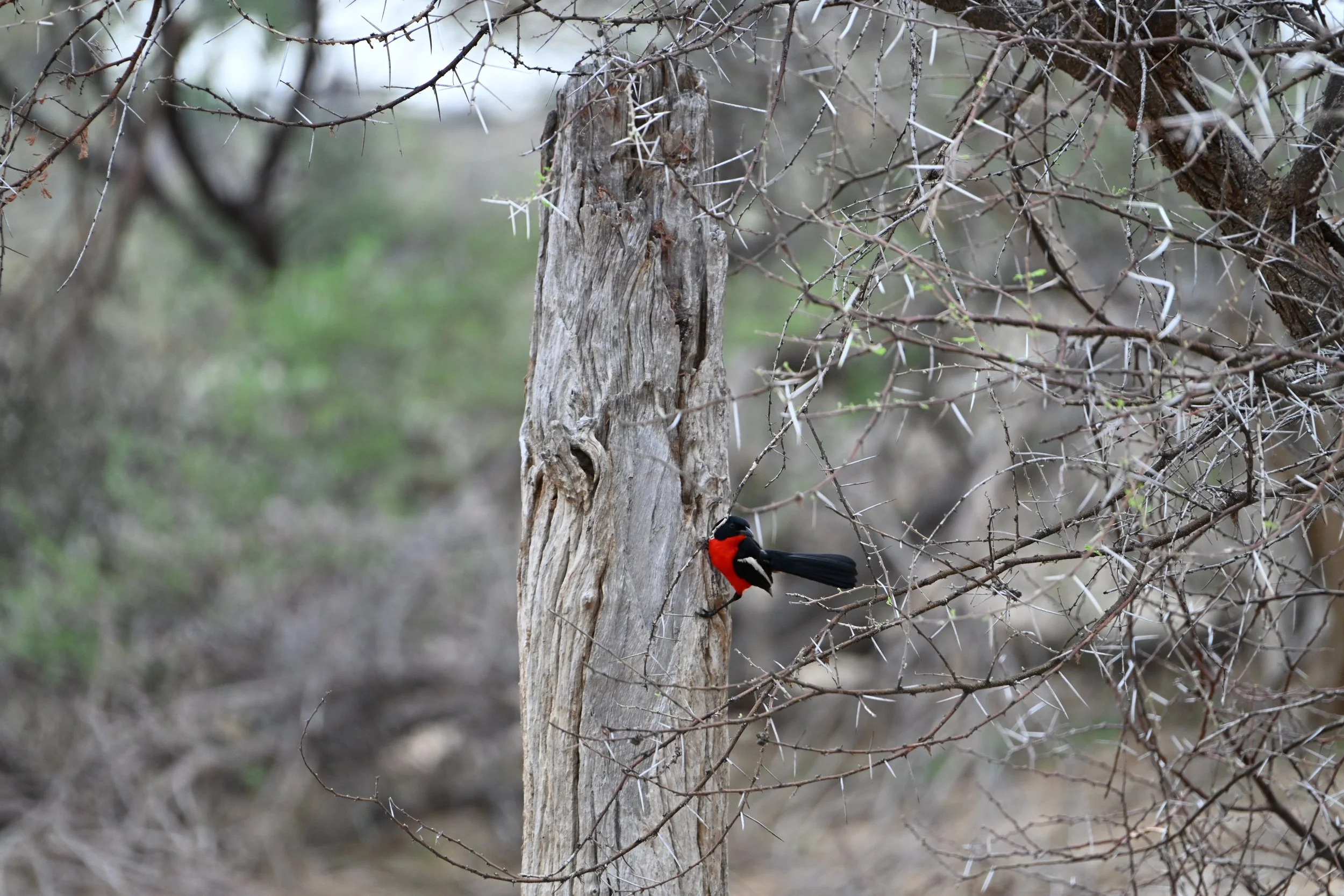
We saw a number of brilliantly colored birds…

Burchell’s Starling

Crimson-breasted Shrike

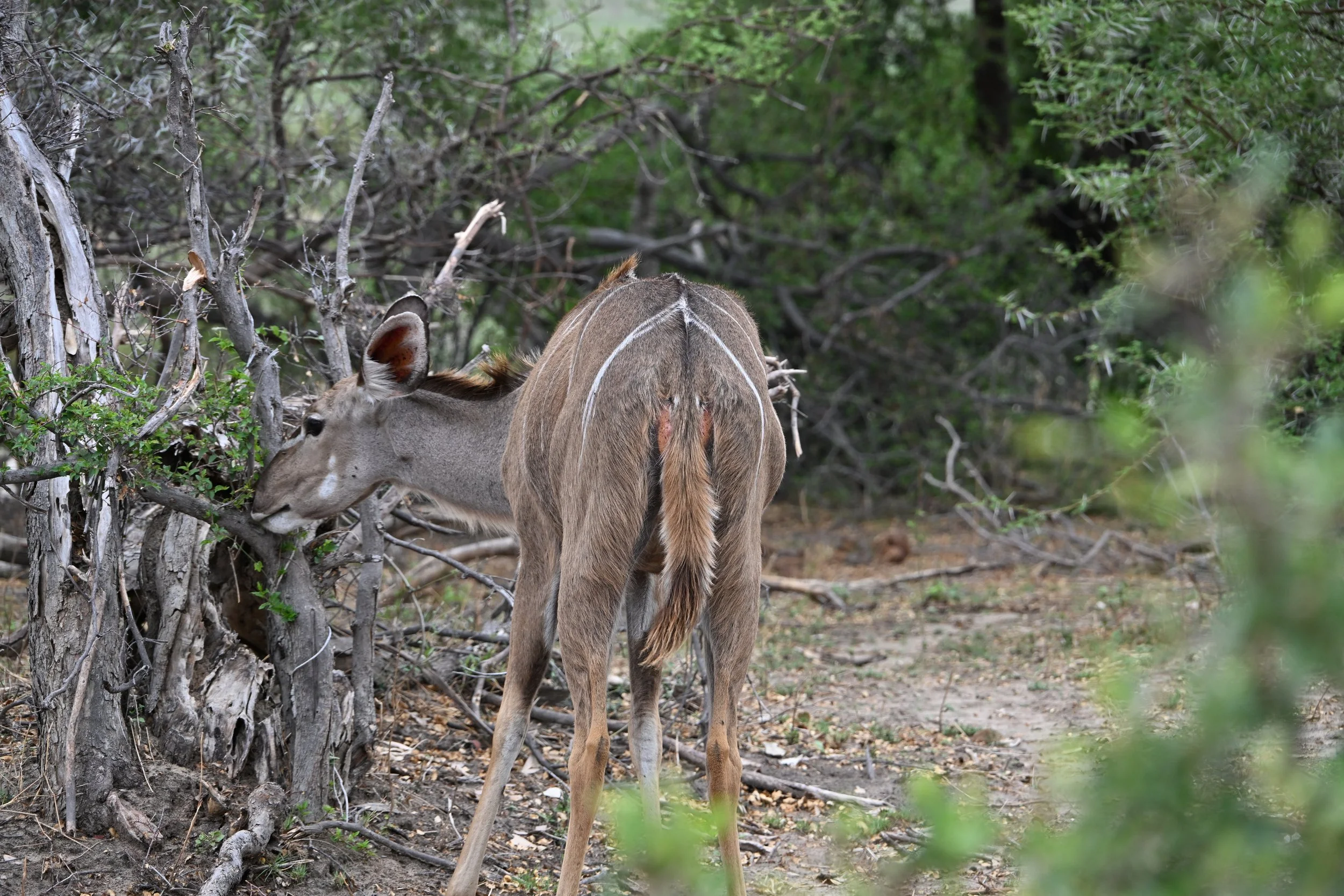
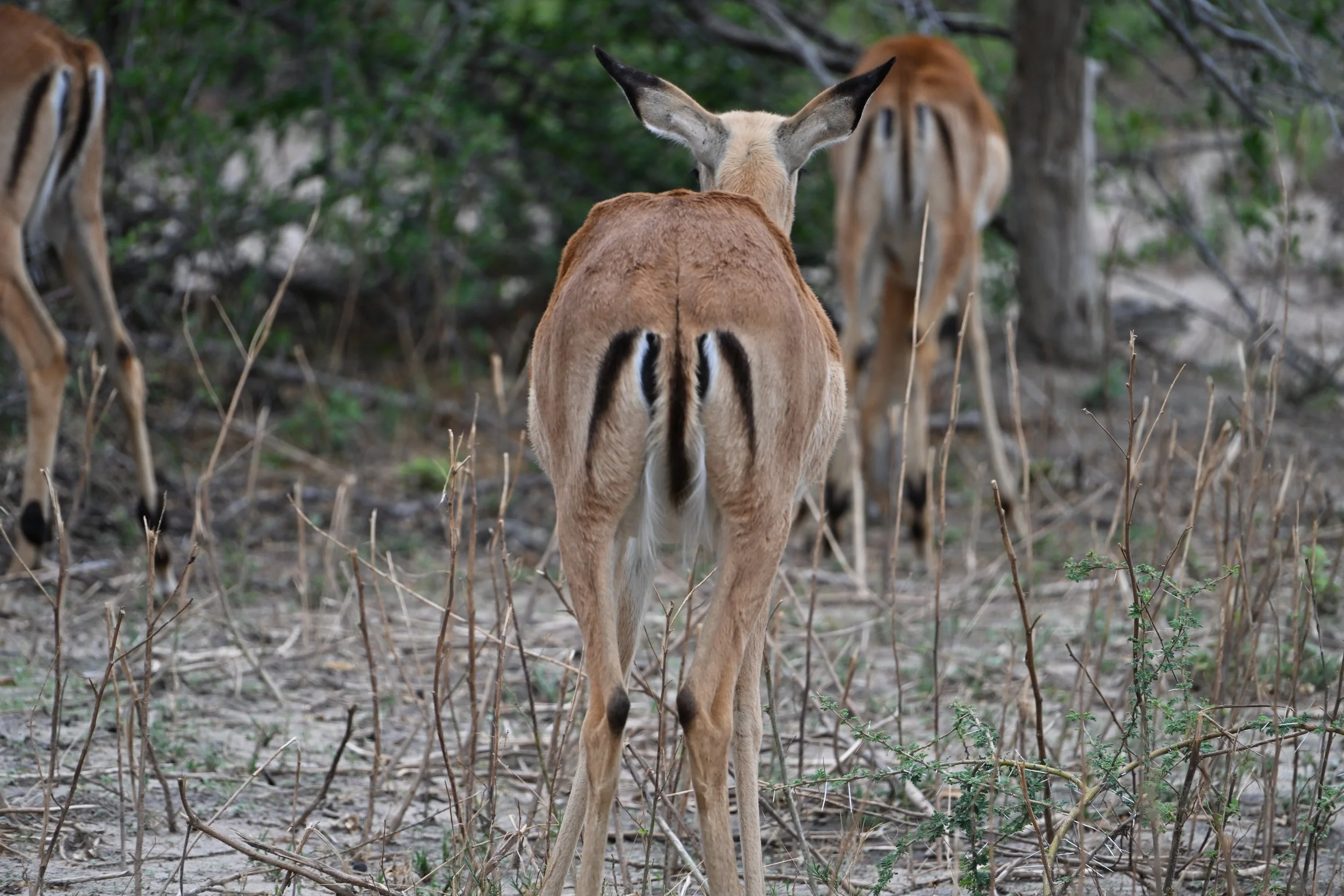
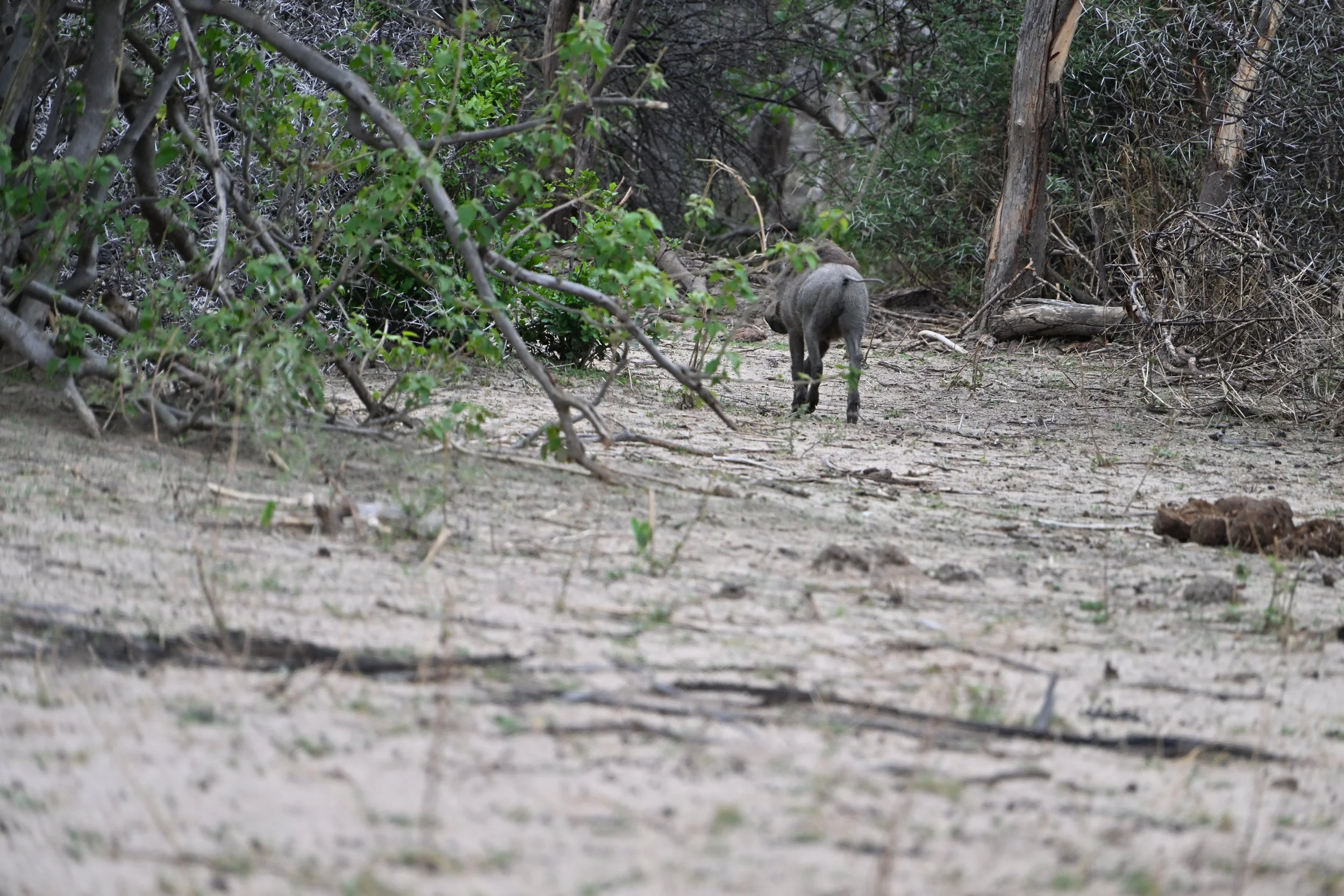
… and I added several butts to my collection -

Kudu

Common Impala

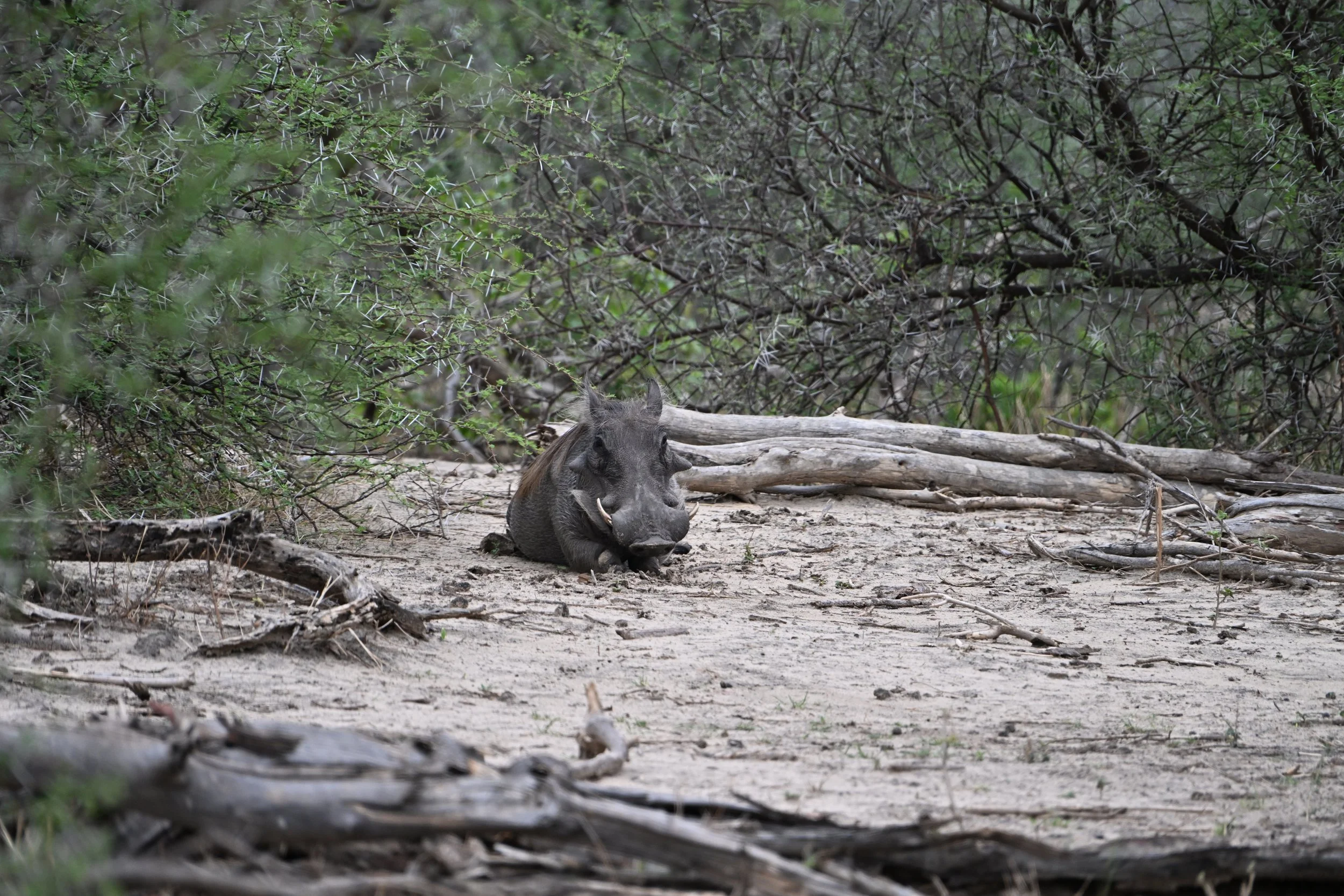
Warthog

The Warthog obliged by posing for a minute, before running off -

So this next video (as usual, click the link at the bottom of this post to open it in a browser) wasn’t this specific warthog, but this is what they look like when they run - (I had tried for days to capture this on video!)

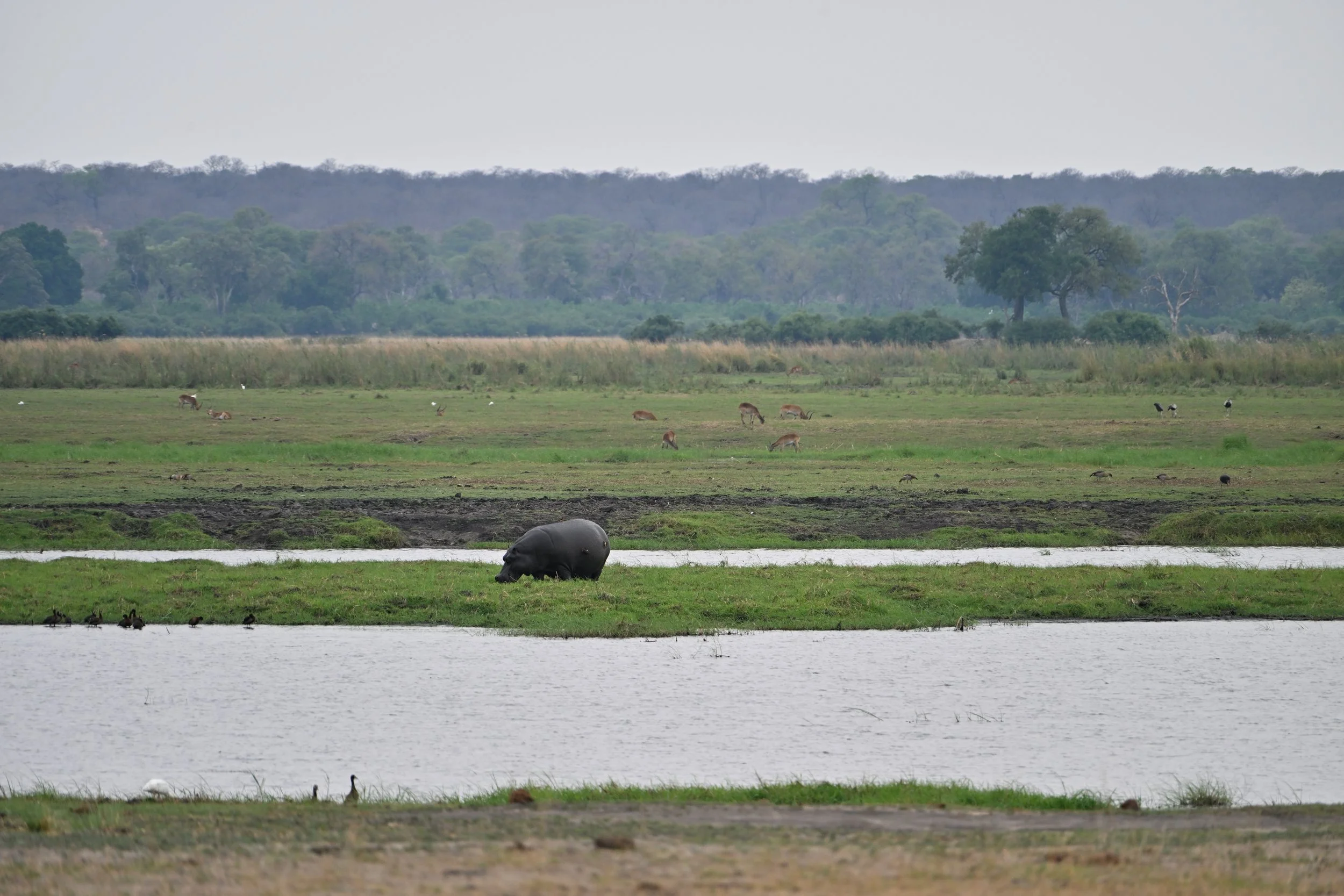
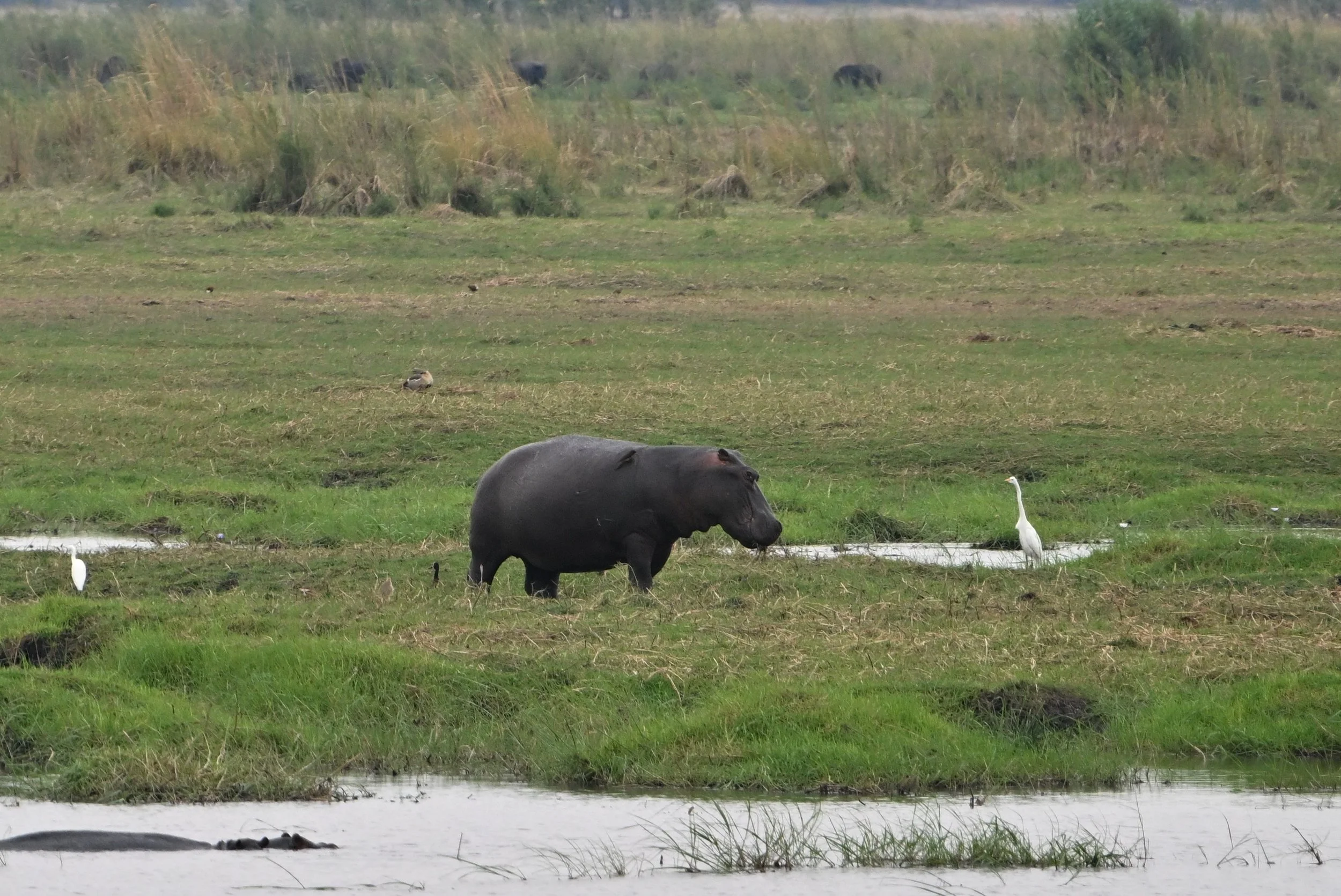
As we continued driving along the river, we spied hippos and Red Lechwe…

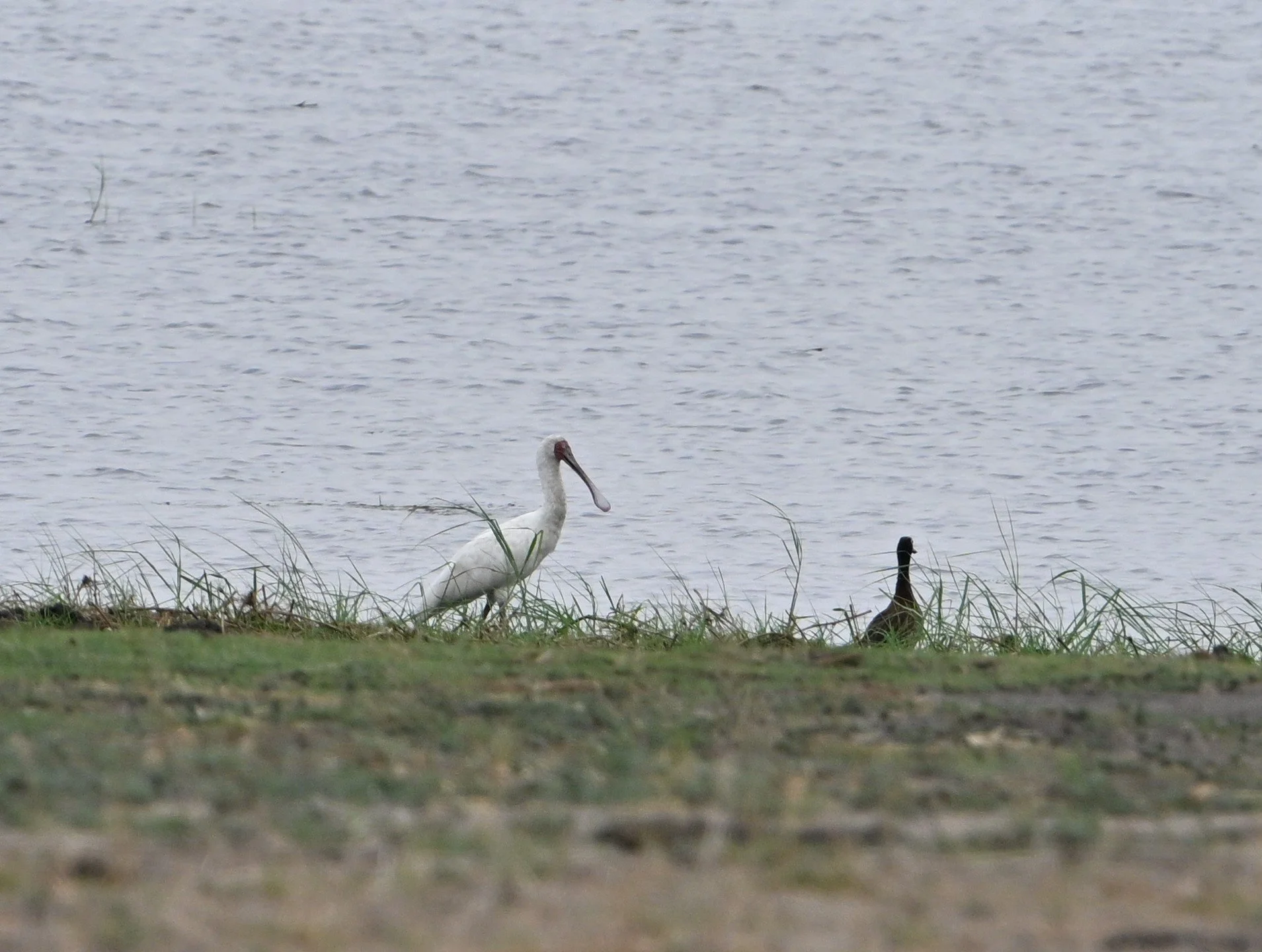
… and cool for me, an African Spoonbill!

I couldn’t decide if this expression was sly, or coy -

(be sure to enlarge this and see what you think)

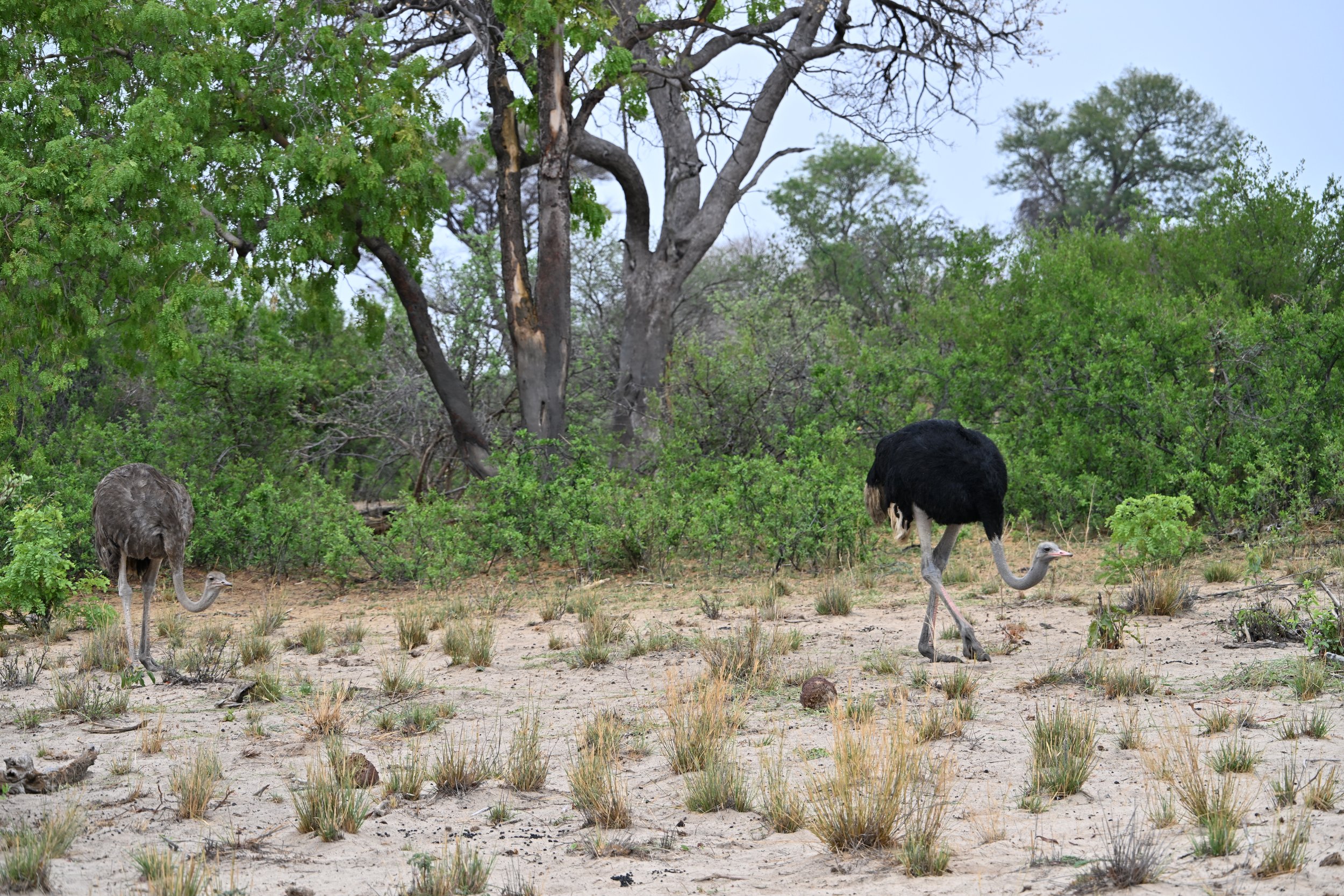
As we moved away from the river, a pair of ostriches was very close to the road…

… giving us a close up look at the creepy serpentine way their head and neck moves (video) -

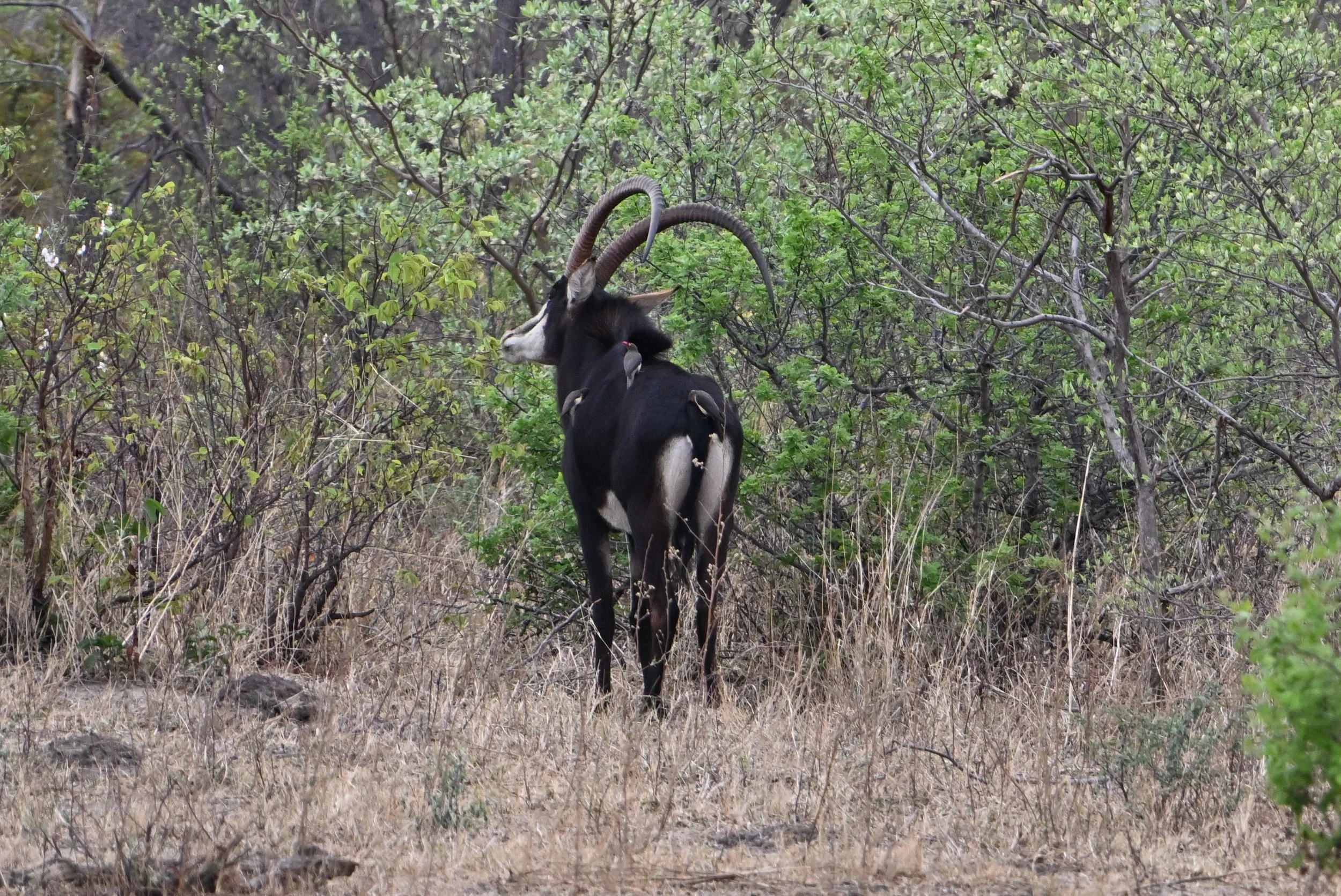
The day ended on a high note for me. I had never thought we’d see one of these, but as we rounded a corner near the end of our drive, I spotted this gorgeous Sable Antelope browsing in the bushes. He was only there for less than a minute, but what a fantastic finish to the day!

Etosha National Park

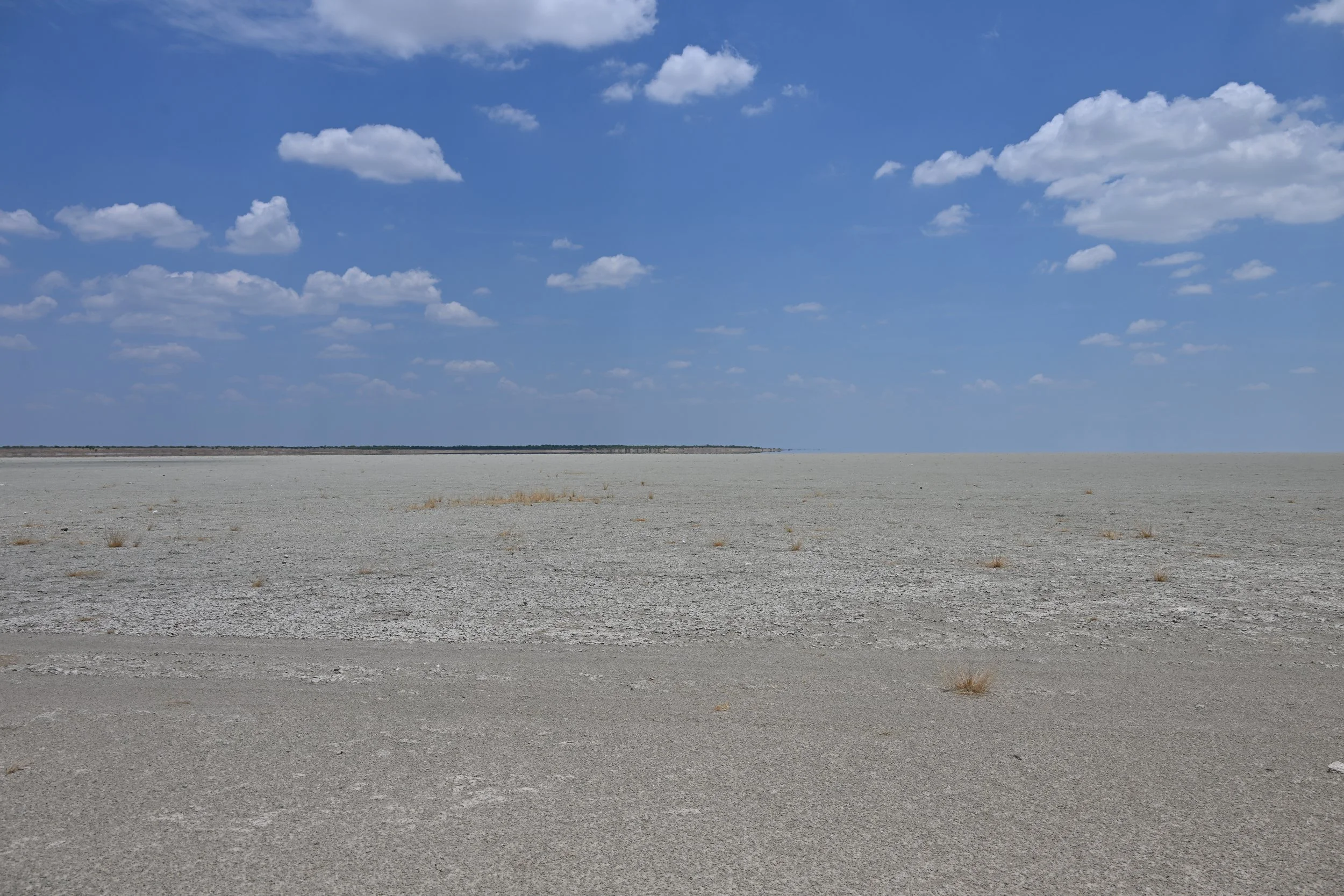
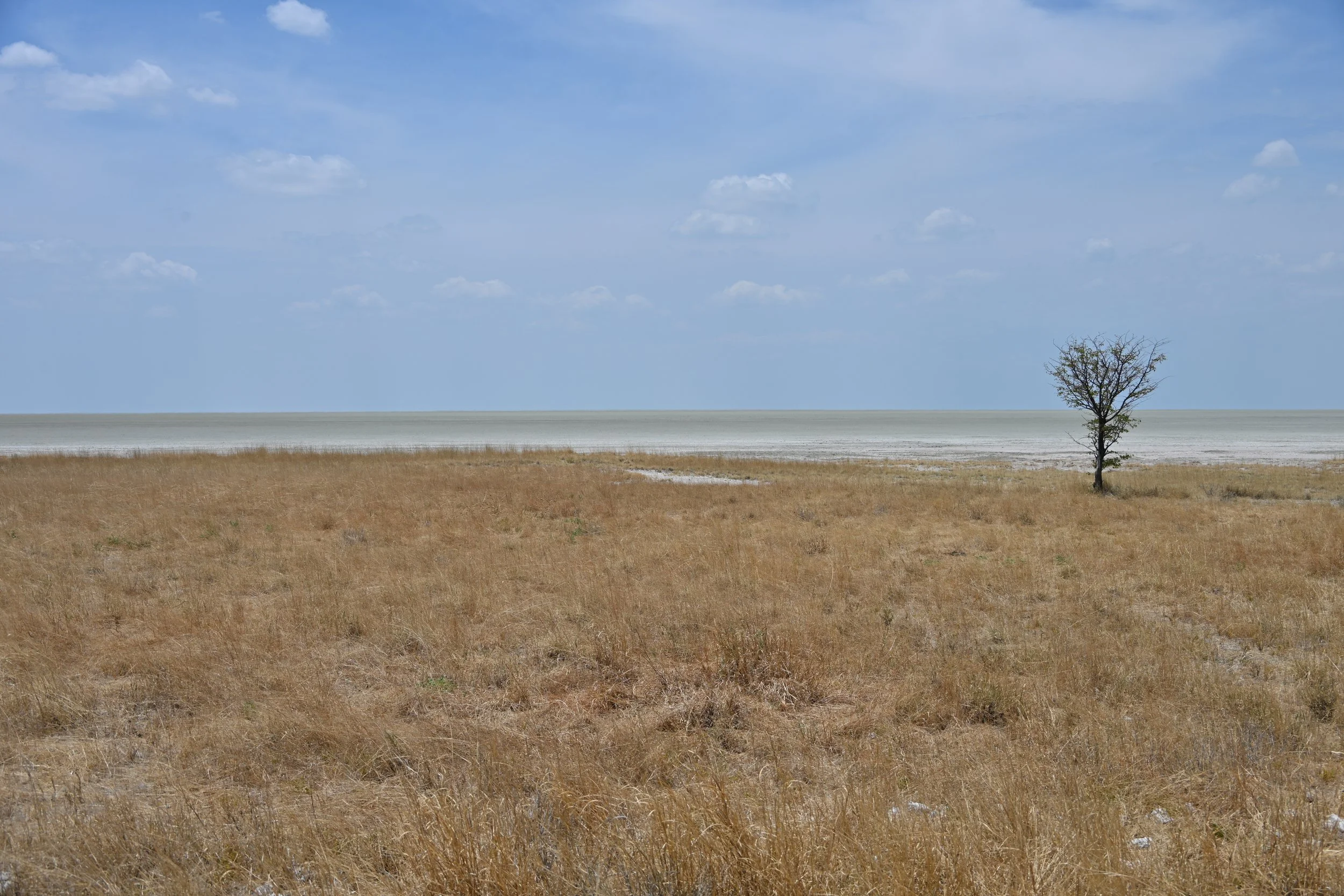
Etosha is one of the largest national parks in all of Africa, encompassing 8,600 sq miles. The Etosha Pan is a large salt pan (75 miles long) where water collects in the rainy season. When we were there in late Oct., it was quite empty…

(we were able to drive out into the middle of the lakebed)

… and dry -

There’s still an amazing amount of wildlife to be found. On our self-drive safari through Namibia, we had been driving ourselves between camps, but then going on game drives at each place, with a guide and spotter. Our instructions here were to “enjoy a self-guided game drive that may take you all day” on our way to the next camp. What??

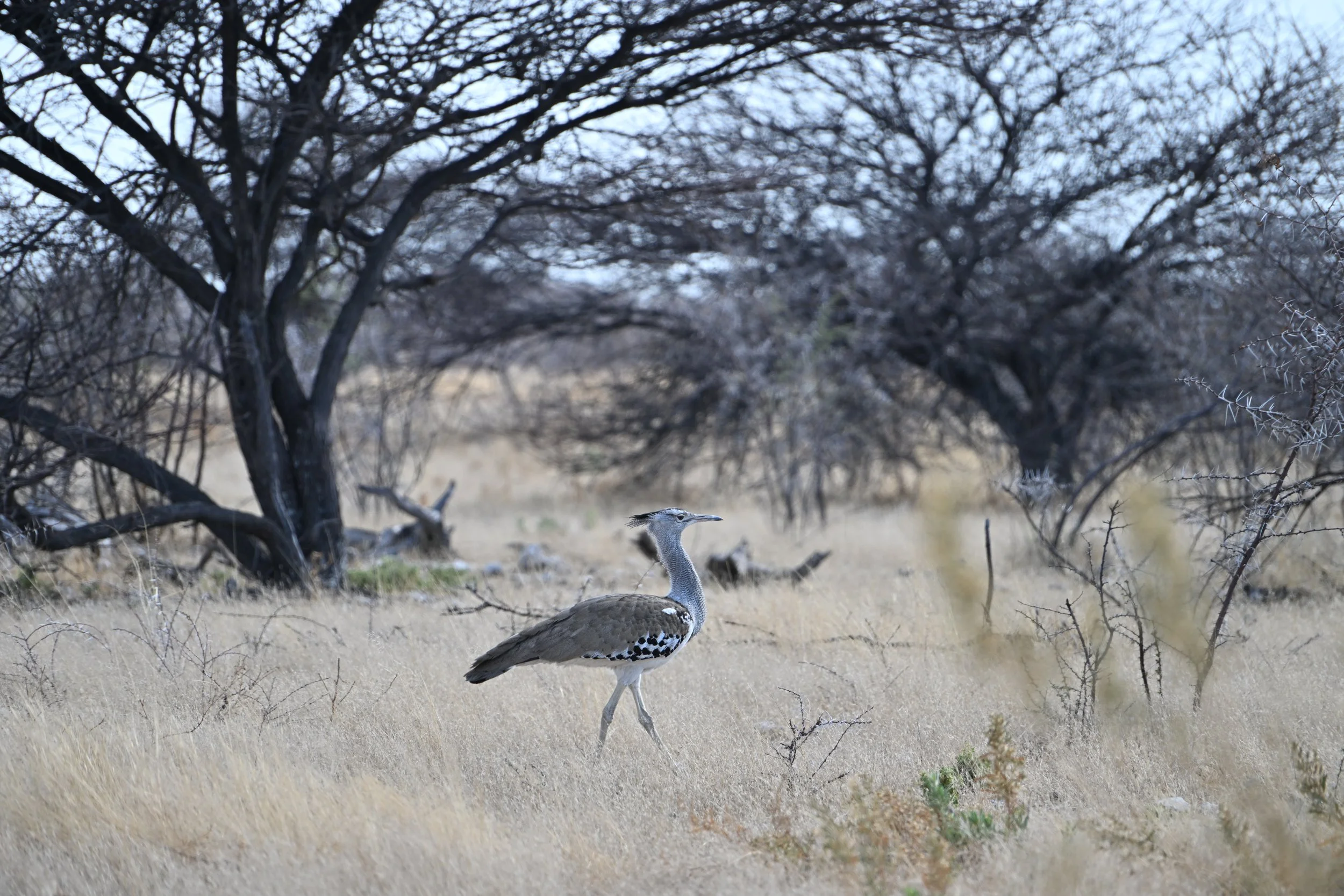
So, we first focused on birds, like that Kori Bustard above. It’s the largest flying bird in Africa, weighing 25 lbs on average and with a wingspan of 7-9 feet! We never saw one flying, rather they were always strutting around, singly or in mated pairs.

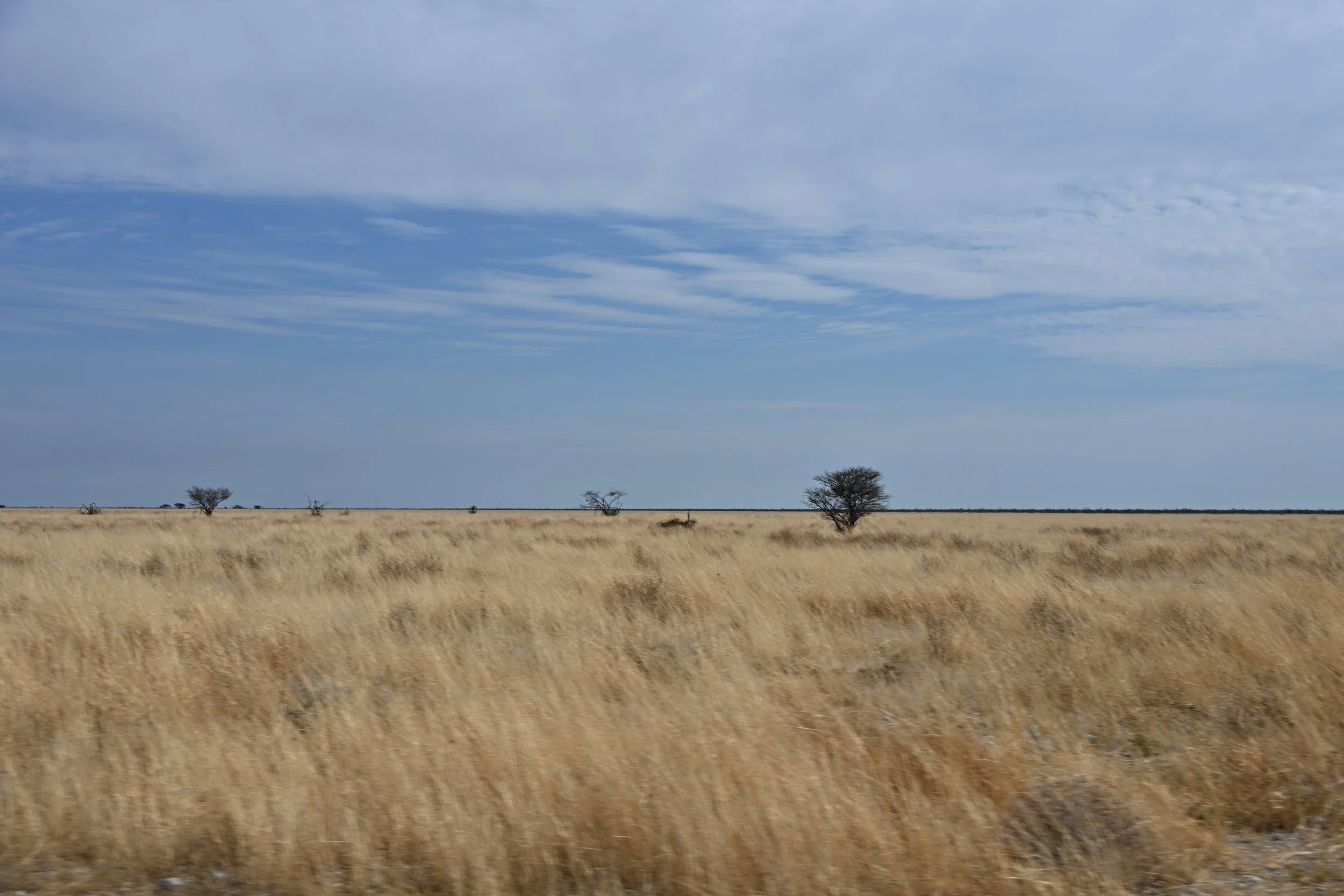
There were a lot of wide open plains…

… and we were wondering where all the purported wildlife was.

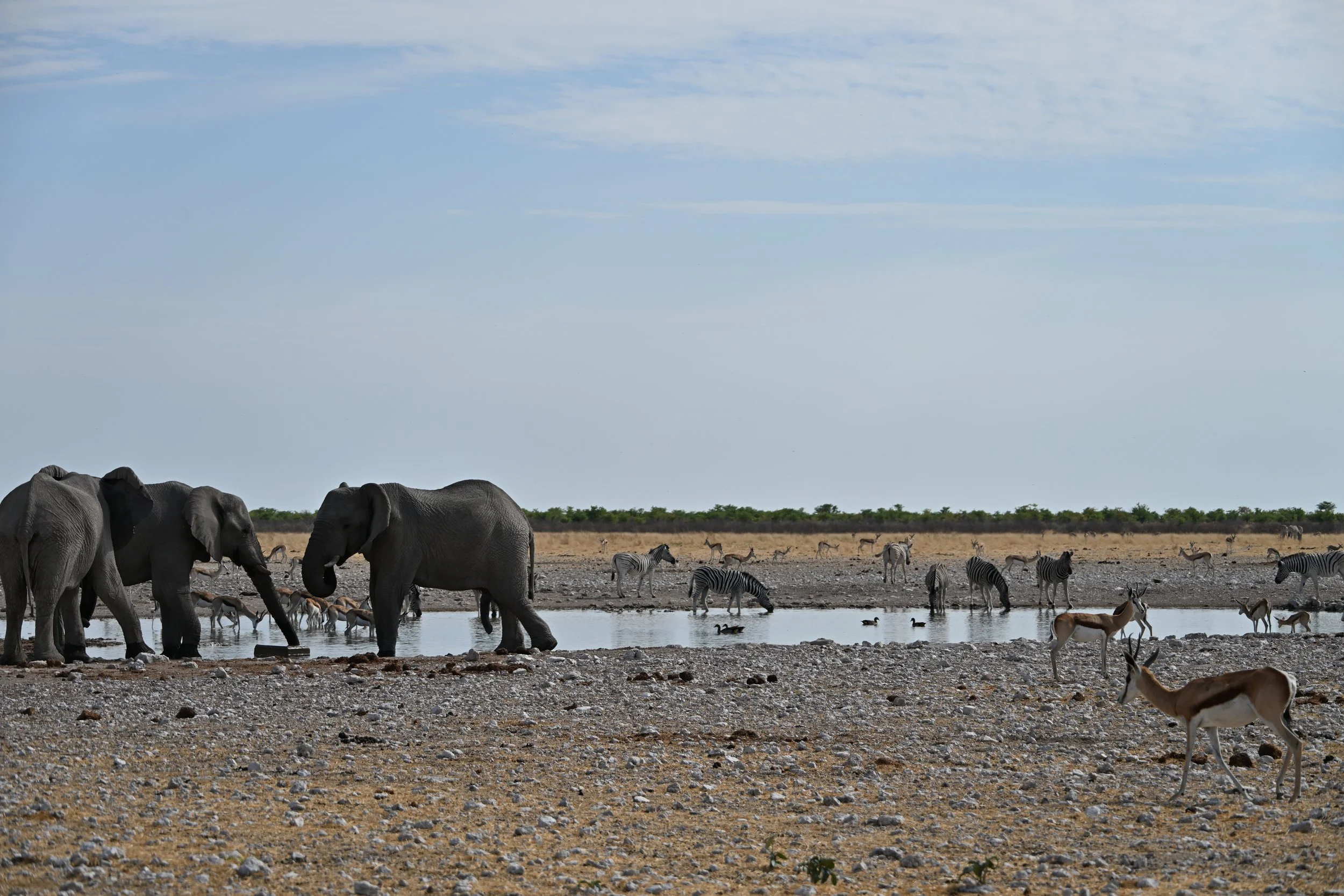
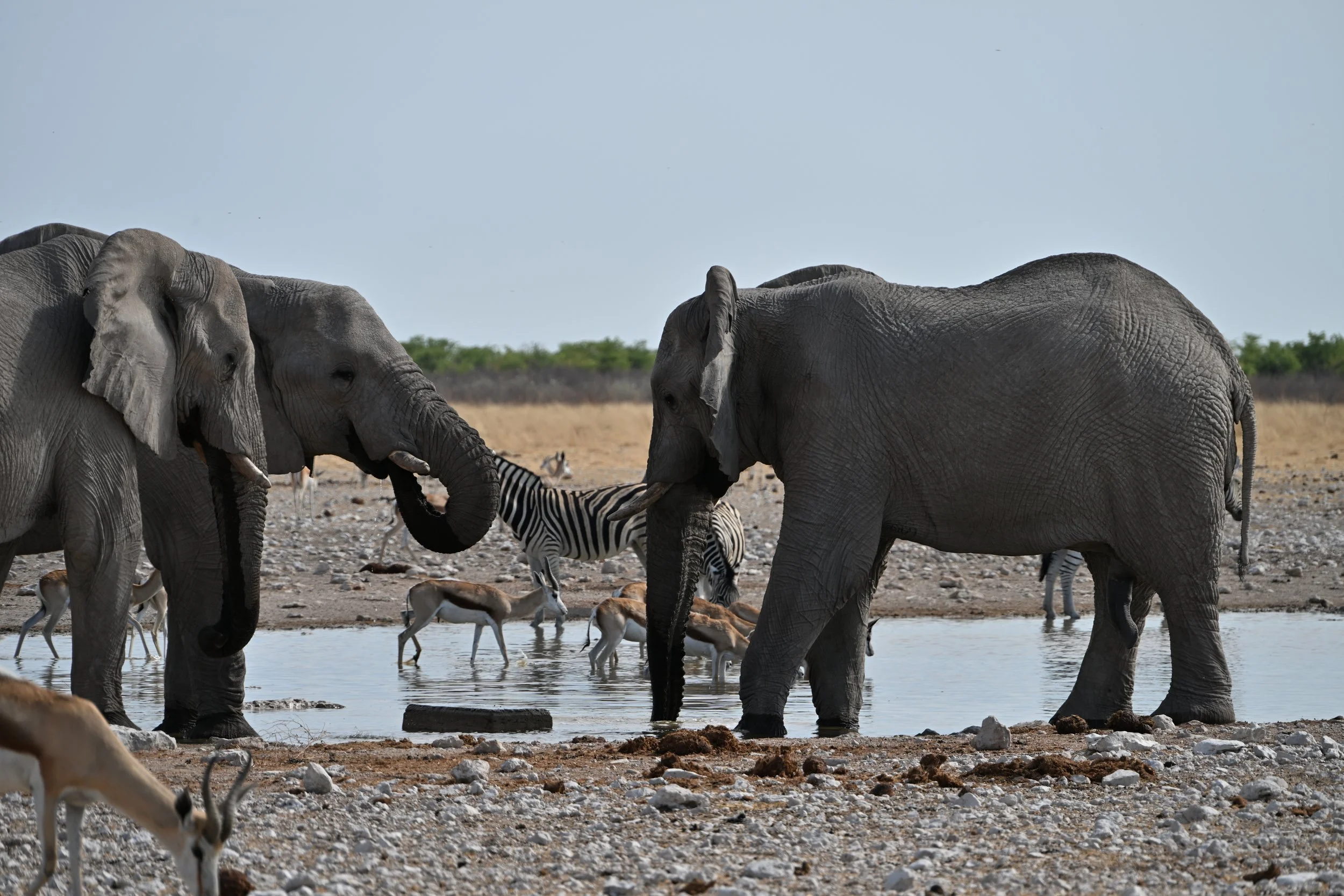
Our first stop at a waterhole -

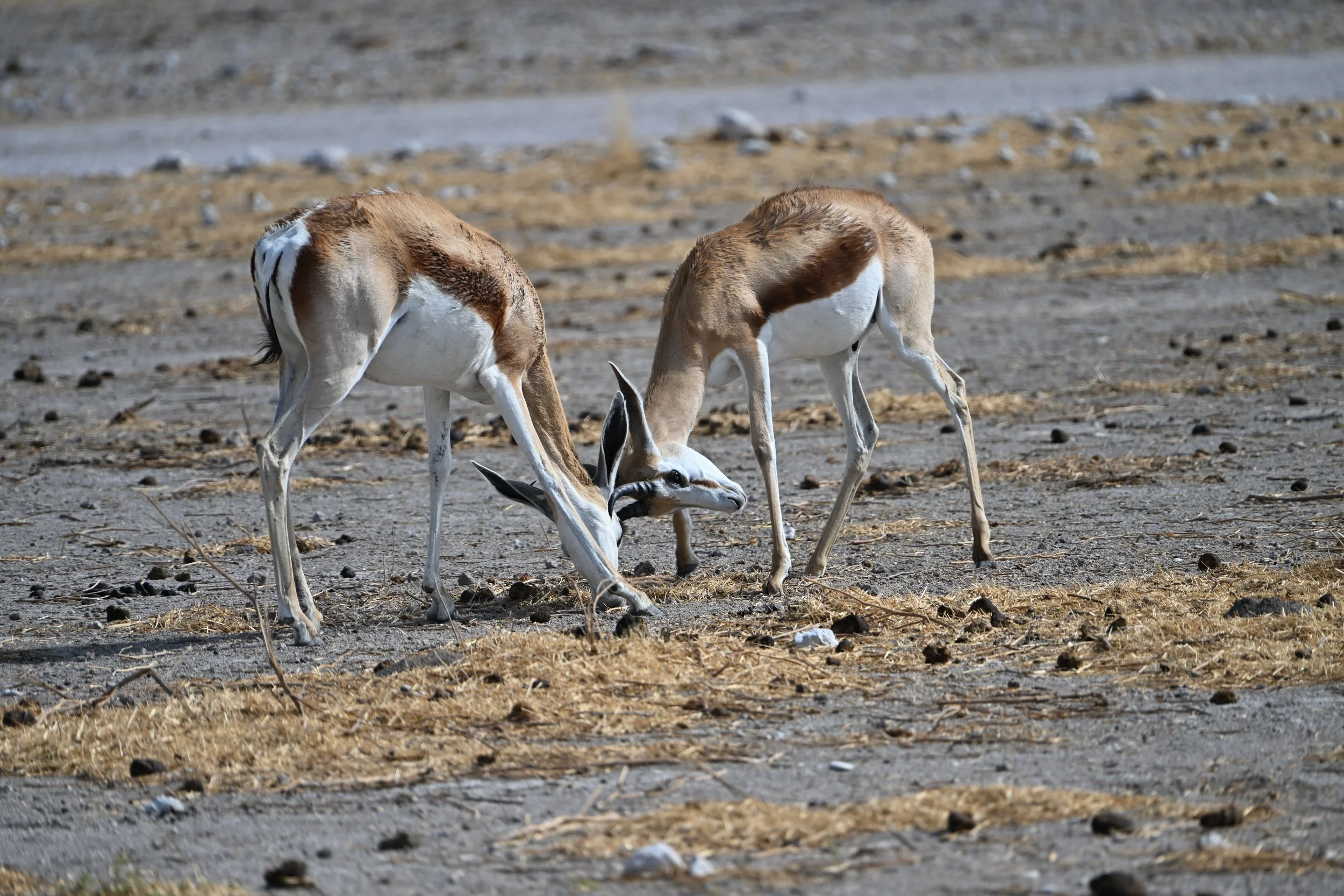
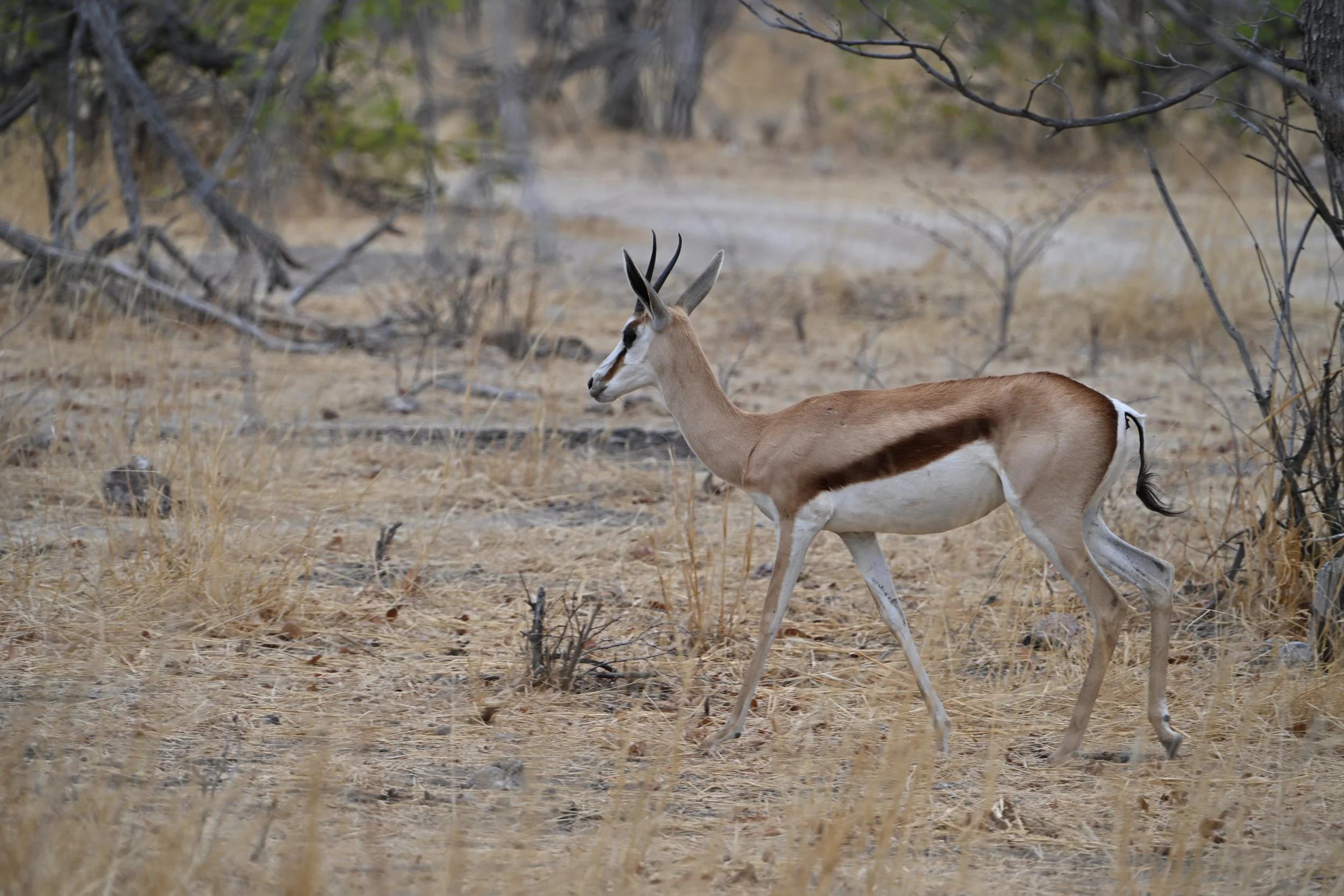
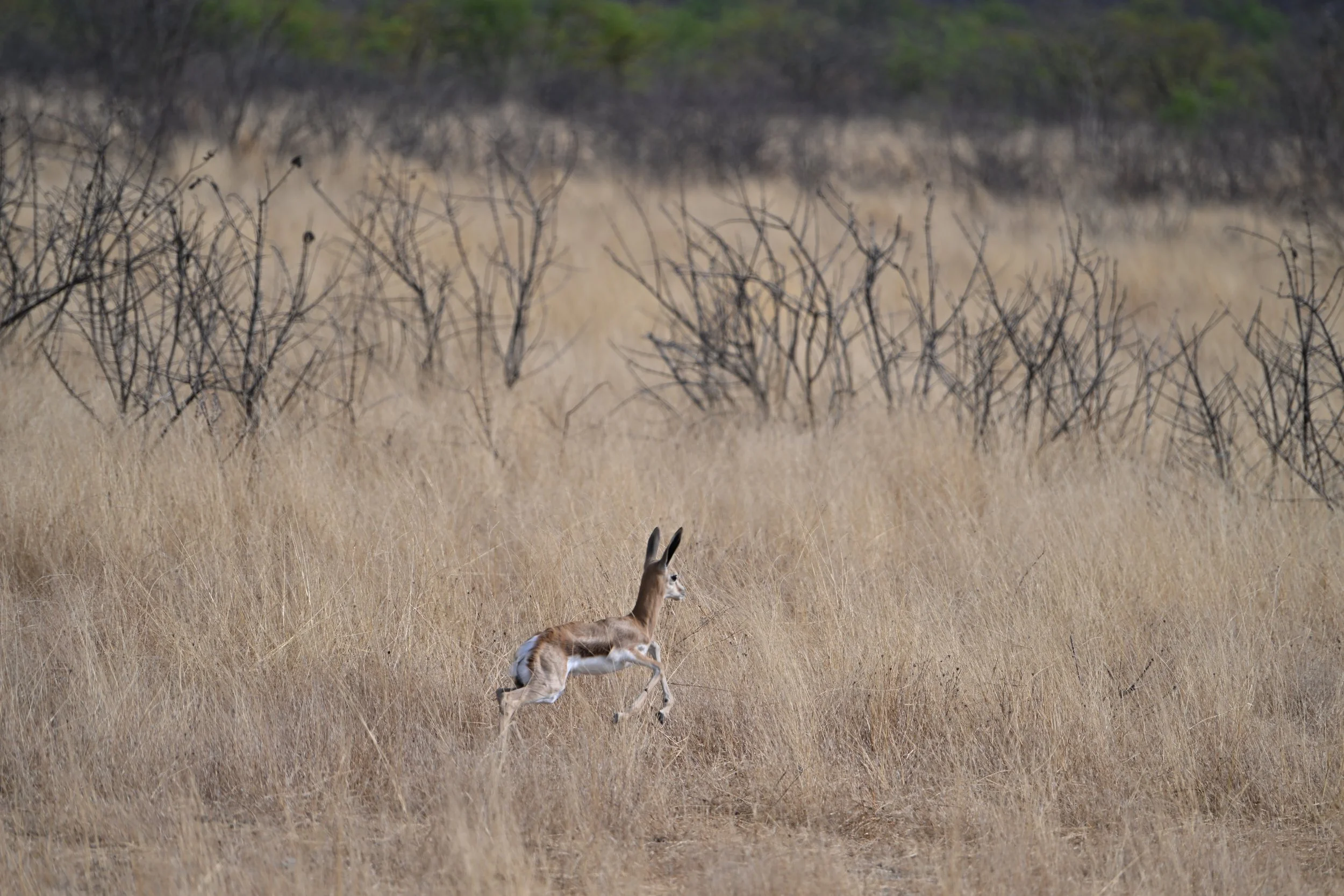
Some Springbok males were tussling -

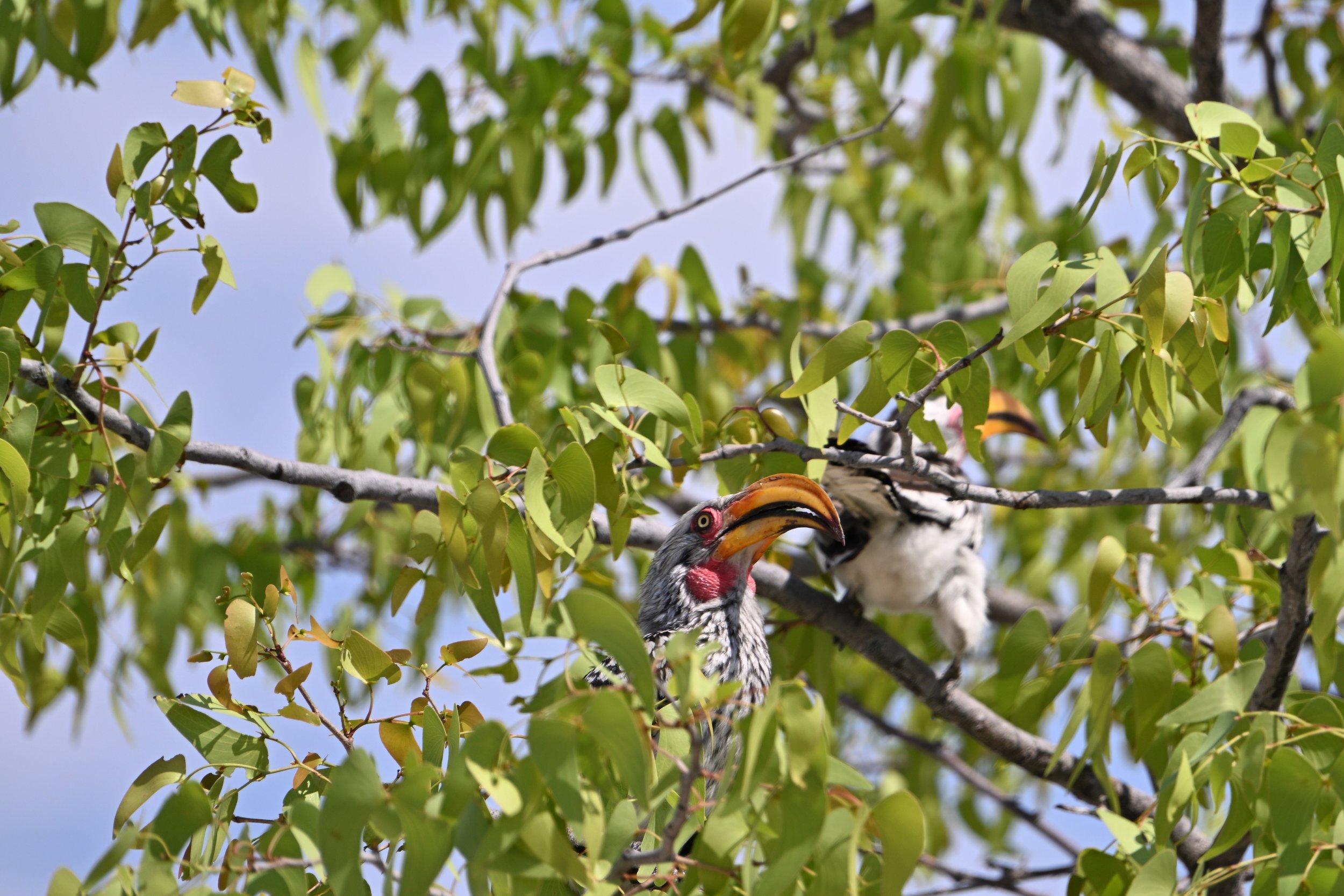
Then we found a small copse of Mopane trees where a pair of Southern Yellow-billed Hornbills were hanging out…

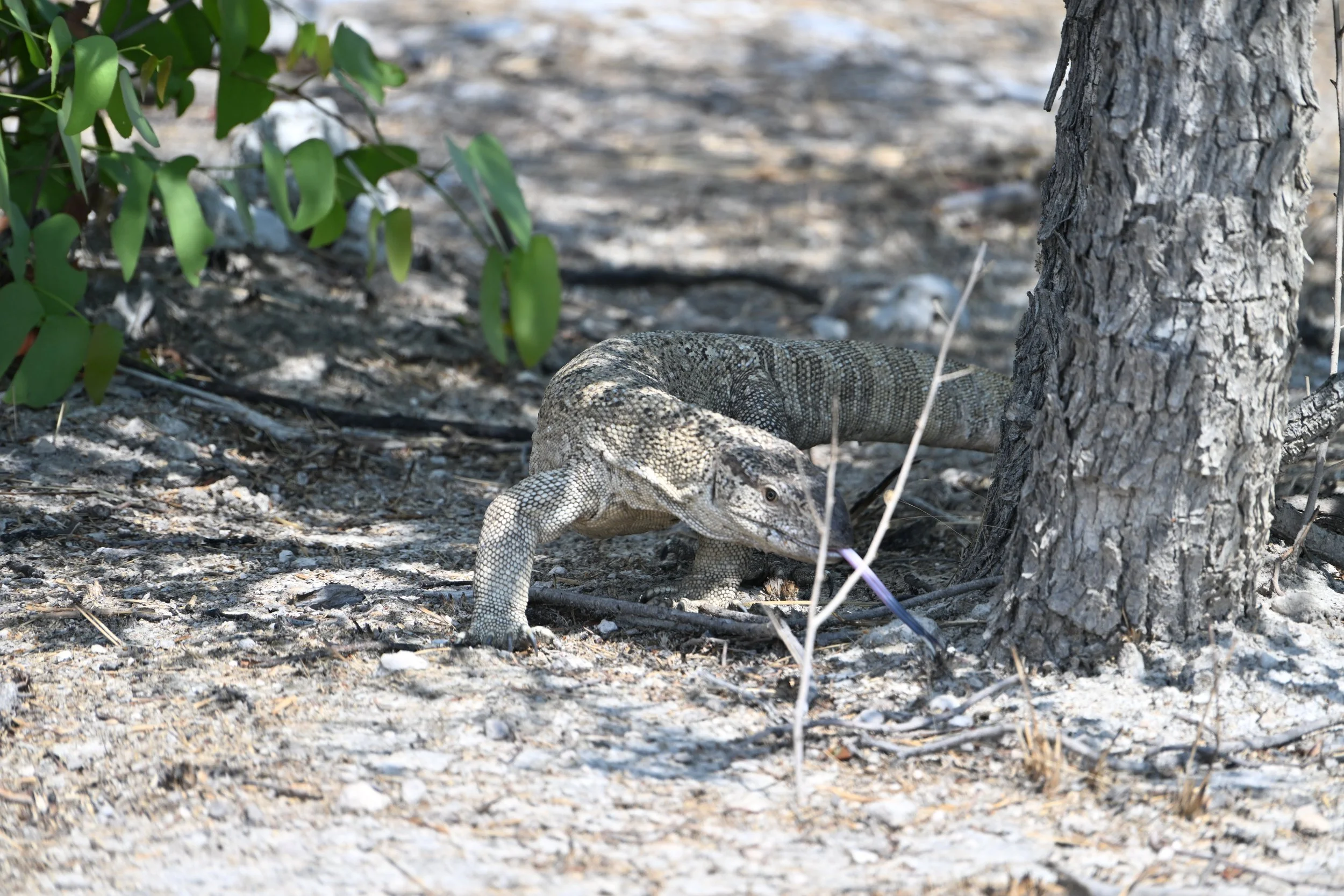
… and a large Rock Monitor Lizard rustled out of the underbrush -

check out that blue and purple tongue!

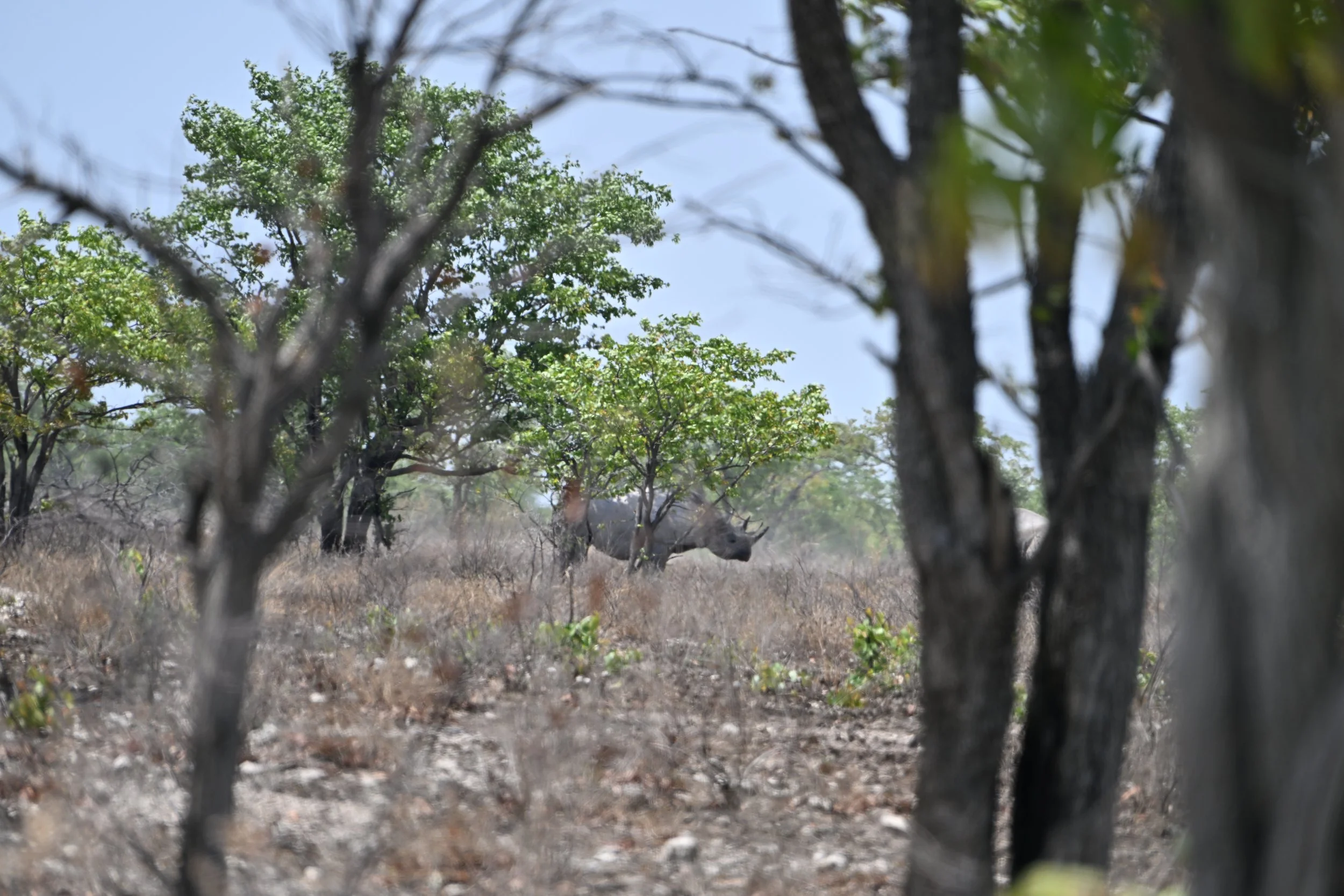
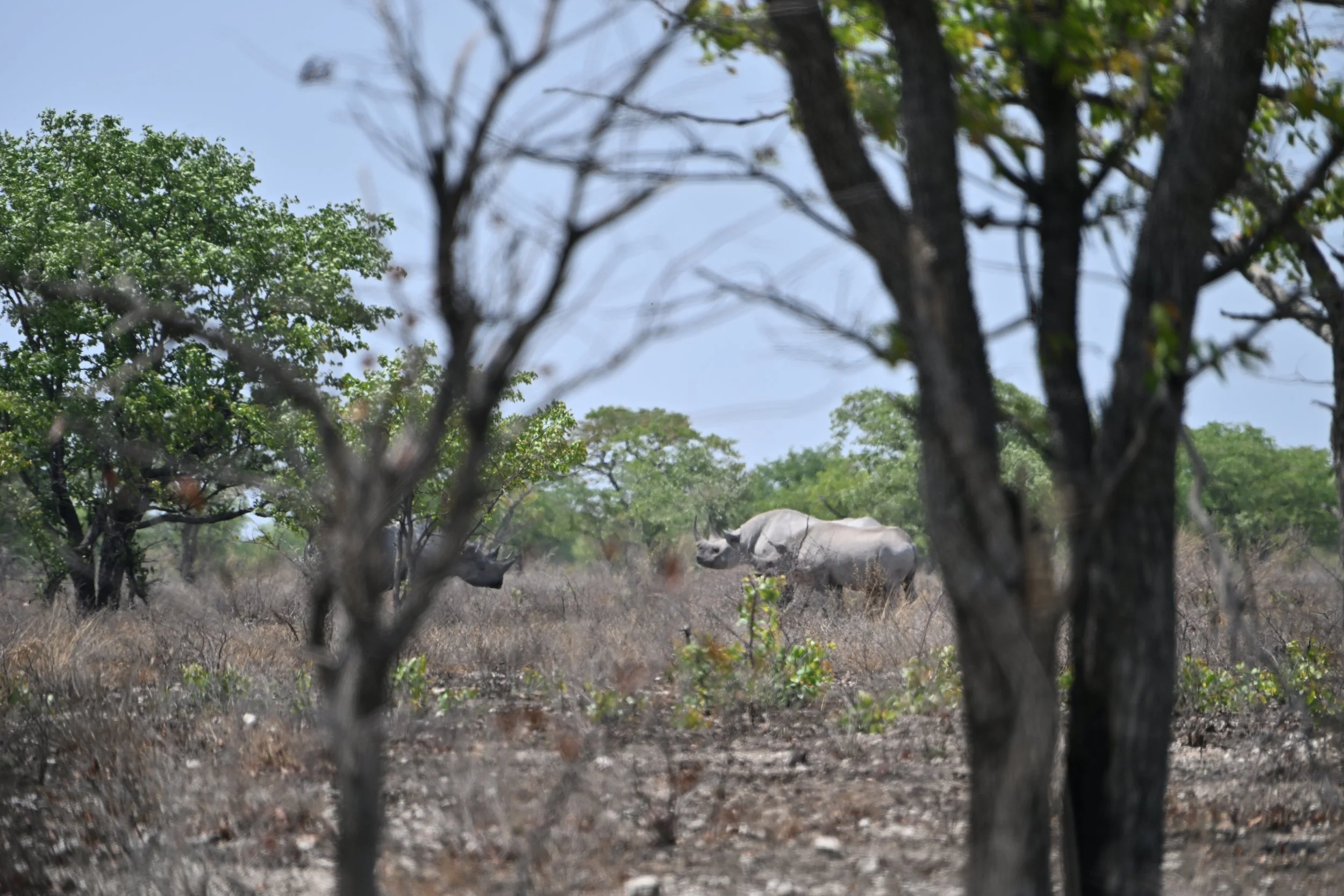
As we drove on through the park, we came upon several cars pulled over with their long lenses and binoculars trained deep in the woods —

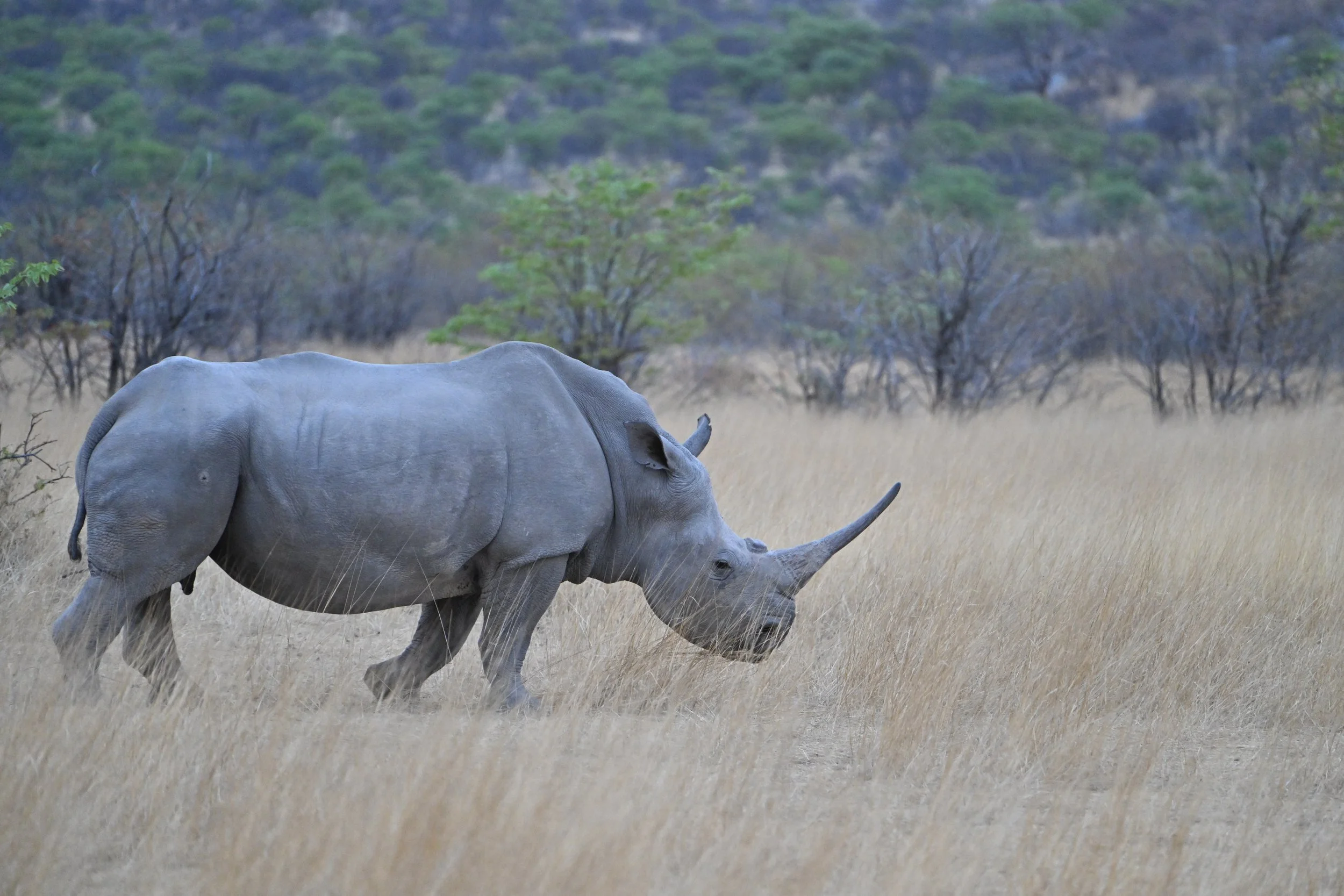
RHINOS! We think they were probably Black Rhinos (I’m guessing by the shape of their upper lips being pointed, and their location in a brushy area rather than in grasslands).
No better pictures were to be had, as we were forbidden to leave our vehicle, and we weren’t in a game drive truck where the guides go off-roading.
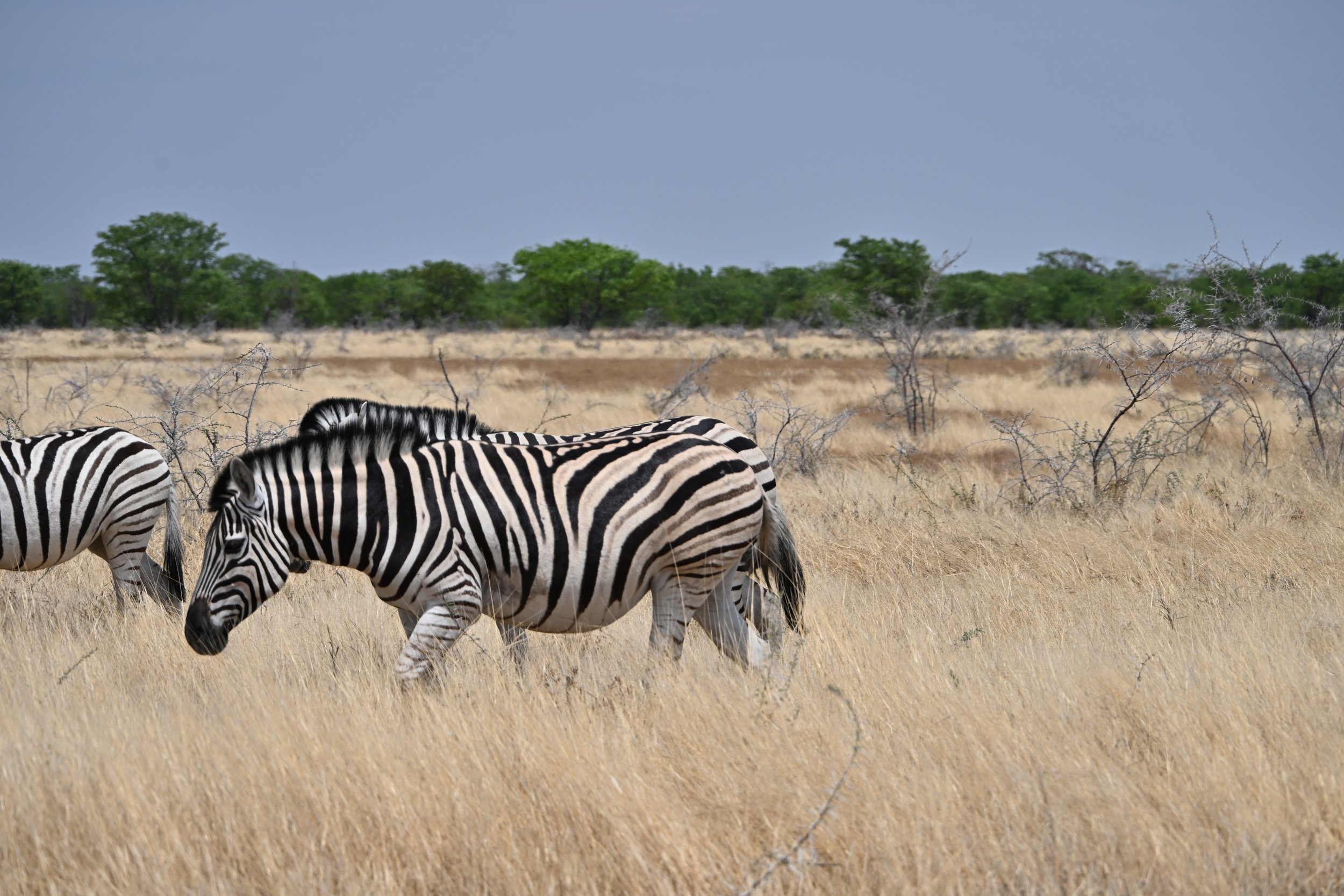
As, promised… more Plains Zebras -

We drove down a very long, very rutted gravel road to a waterhole, only to find -

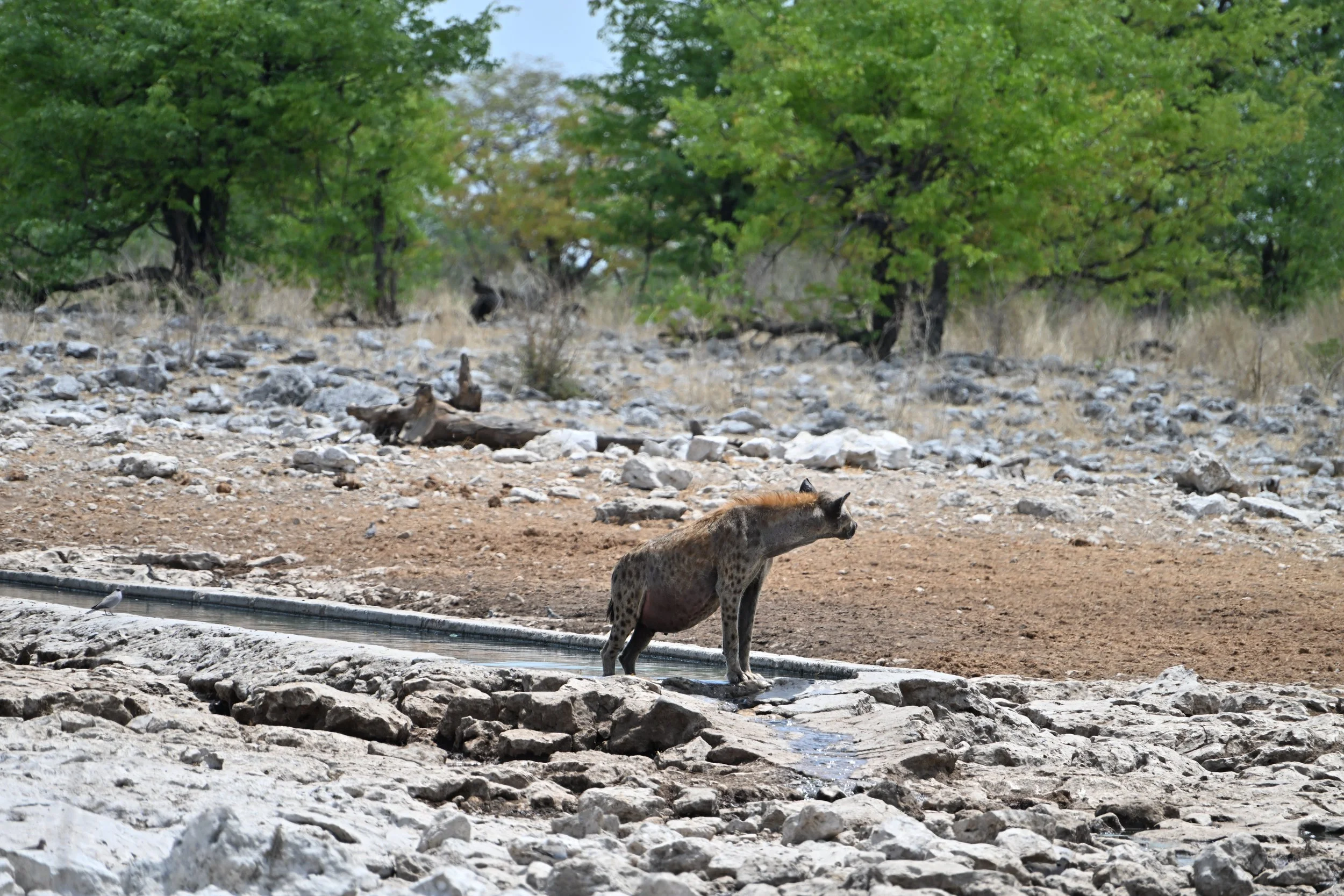
either a very pregnant or very full Spotted Hyena

There was no other wildlife to be seen.

When we got back out to the main road, this one was just waiting for us to pass -

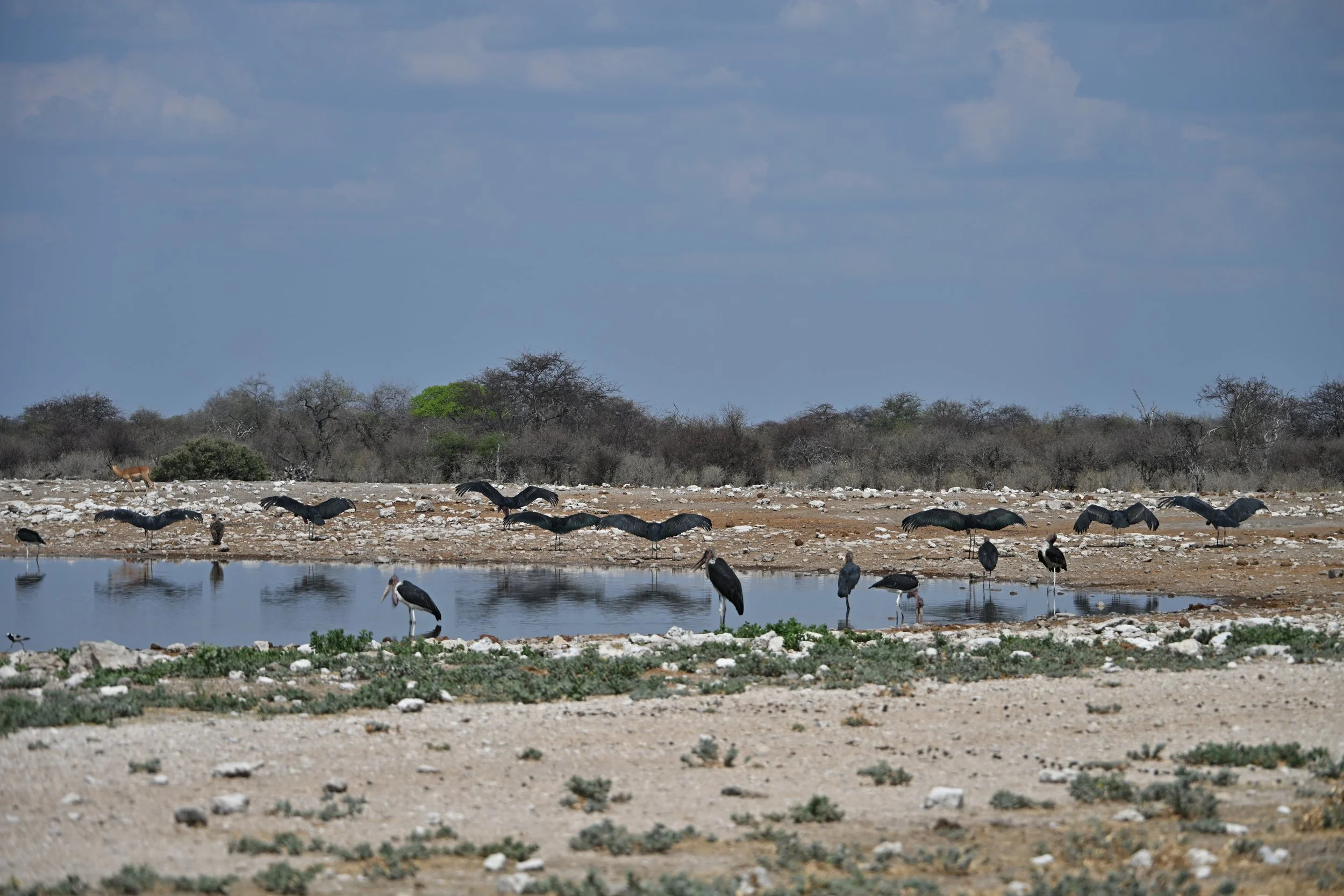
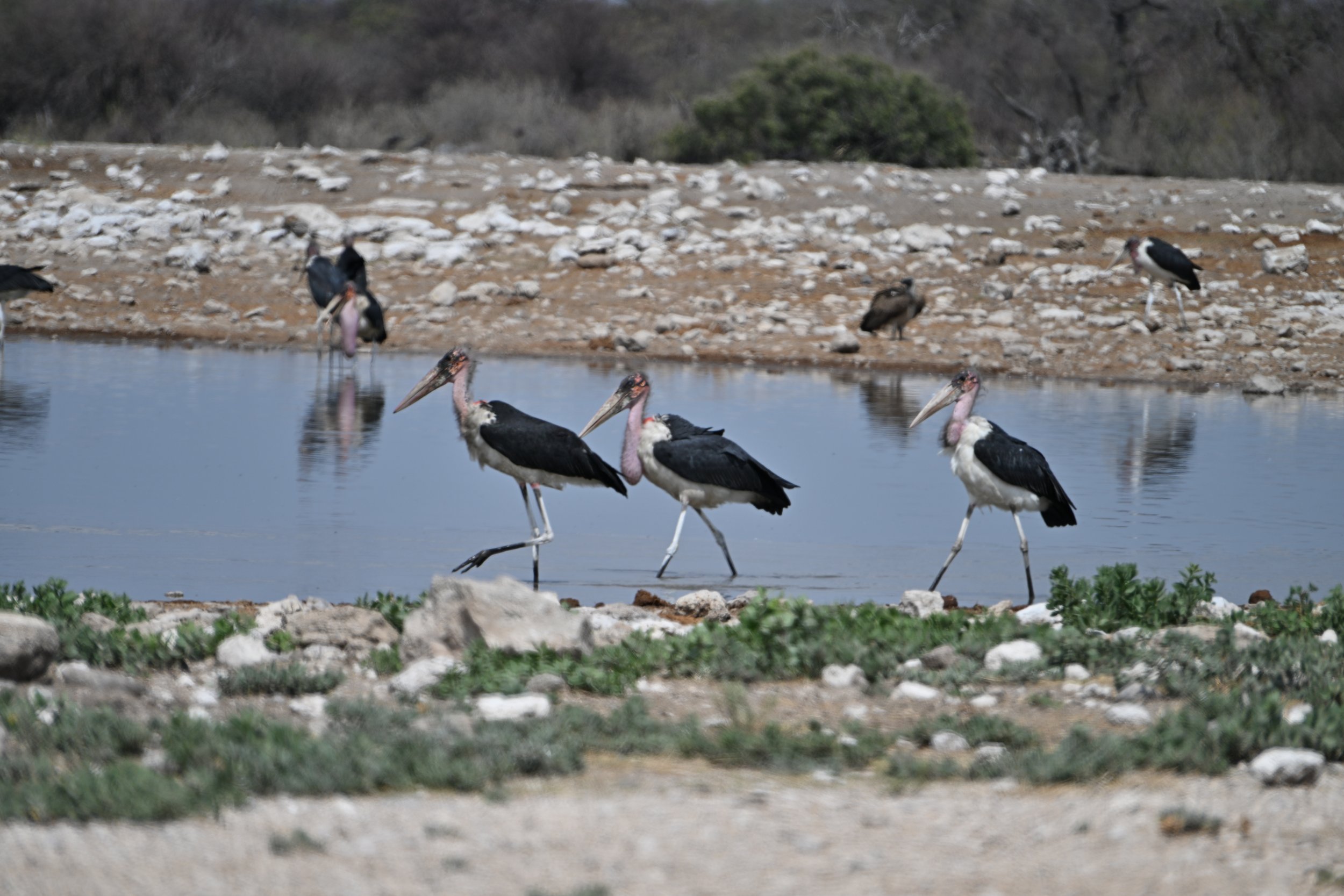
At the next waterhole, we had a bonanza; Maribou Storks sunning…

(these guys are really ugly) -

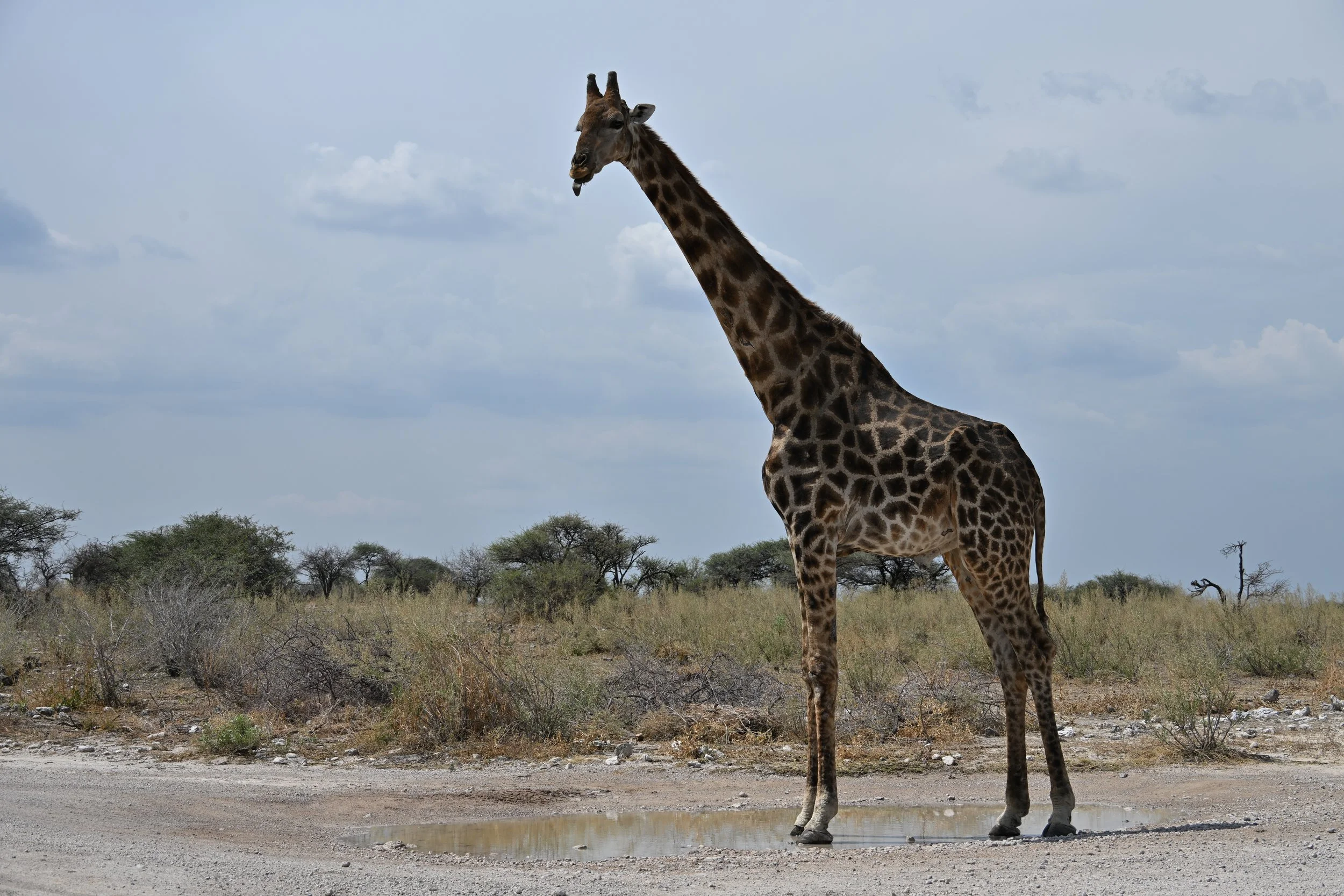
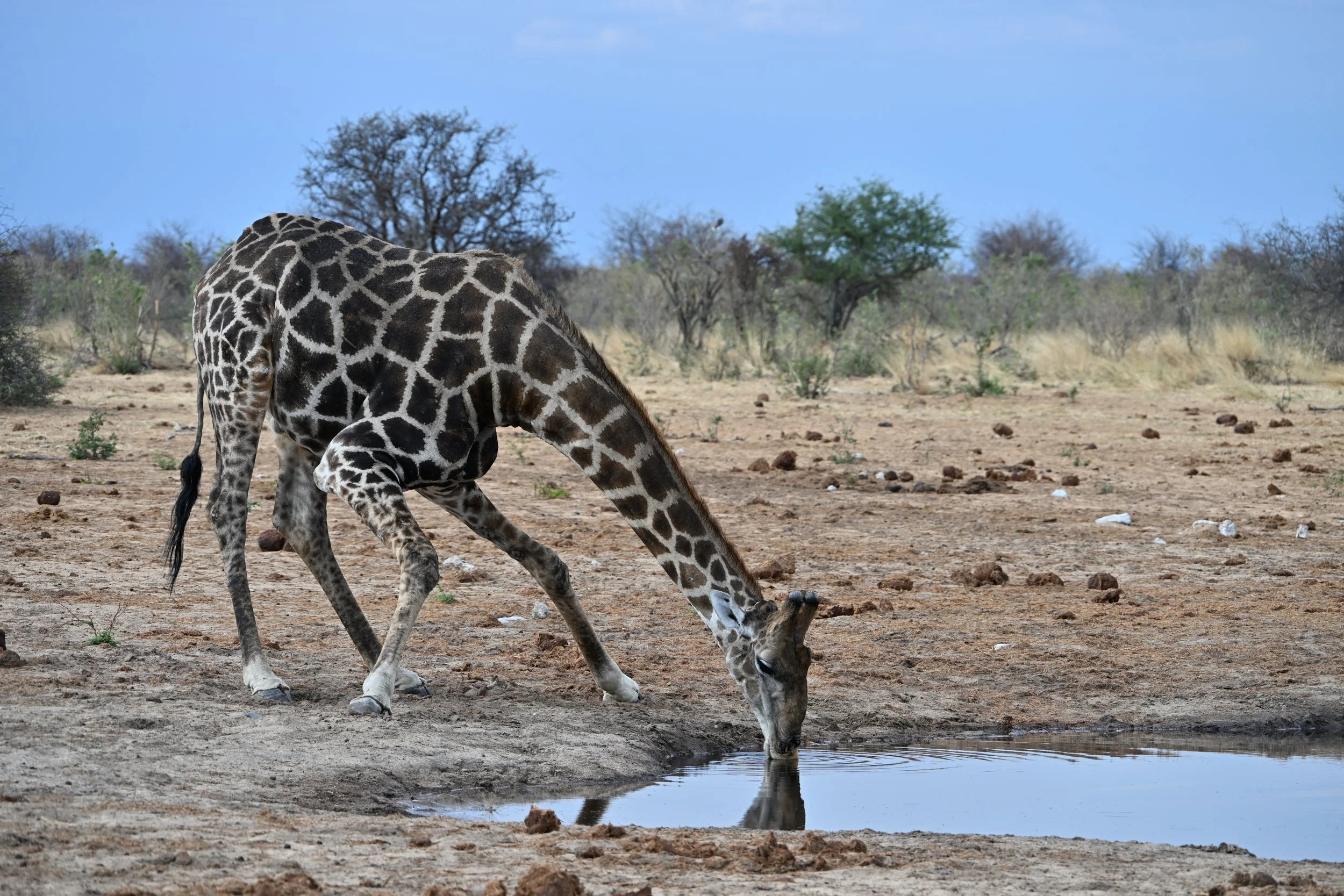
… and giraffes drinking. If this doesn’t look awkward and vulnerable, I don’t know what does -

Check out this video ( yes, the usual instructions to click the link at the end of the post to open it in your browser) on what it takes for them to be able to drink -

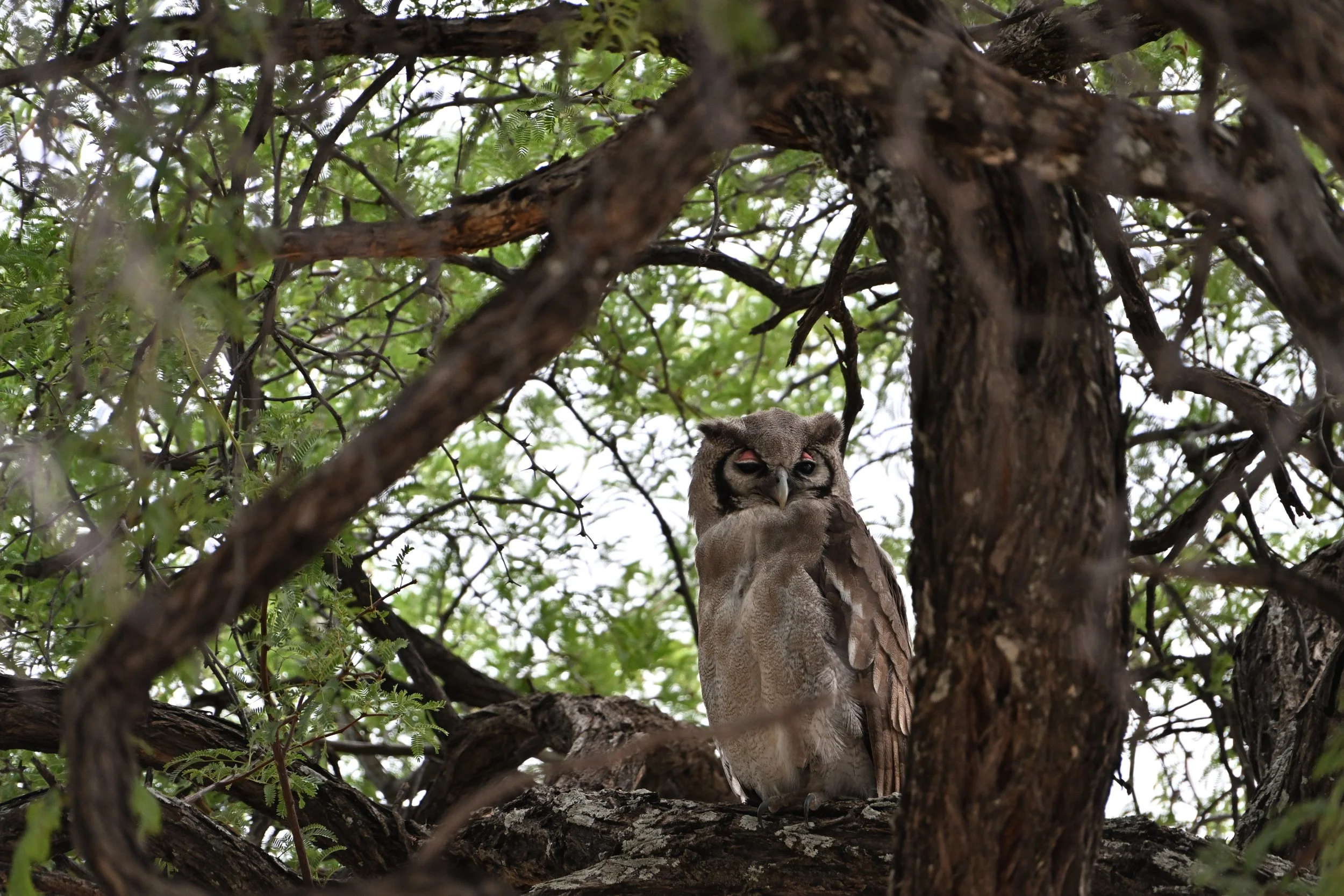
Well, we reached our next camp on the NE end of Etosha, and then went on a game drive the next morning with a knowledgeable guide. He found a gorgeous Giant Eagle Owl…

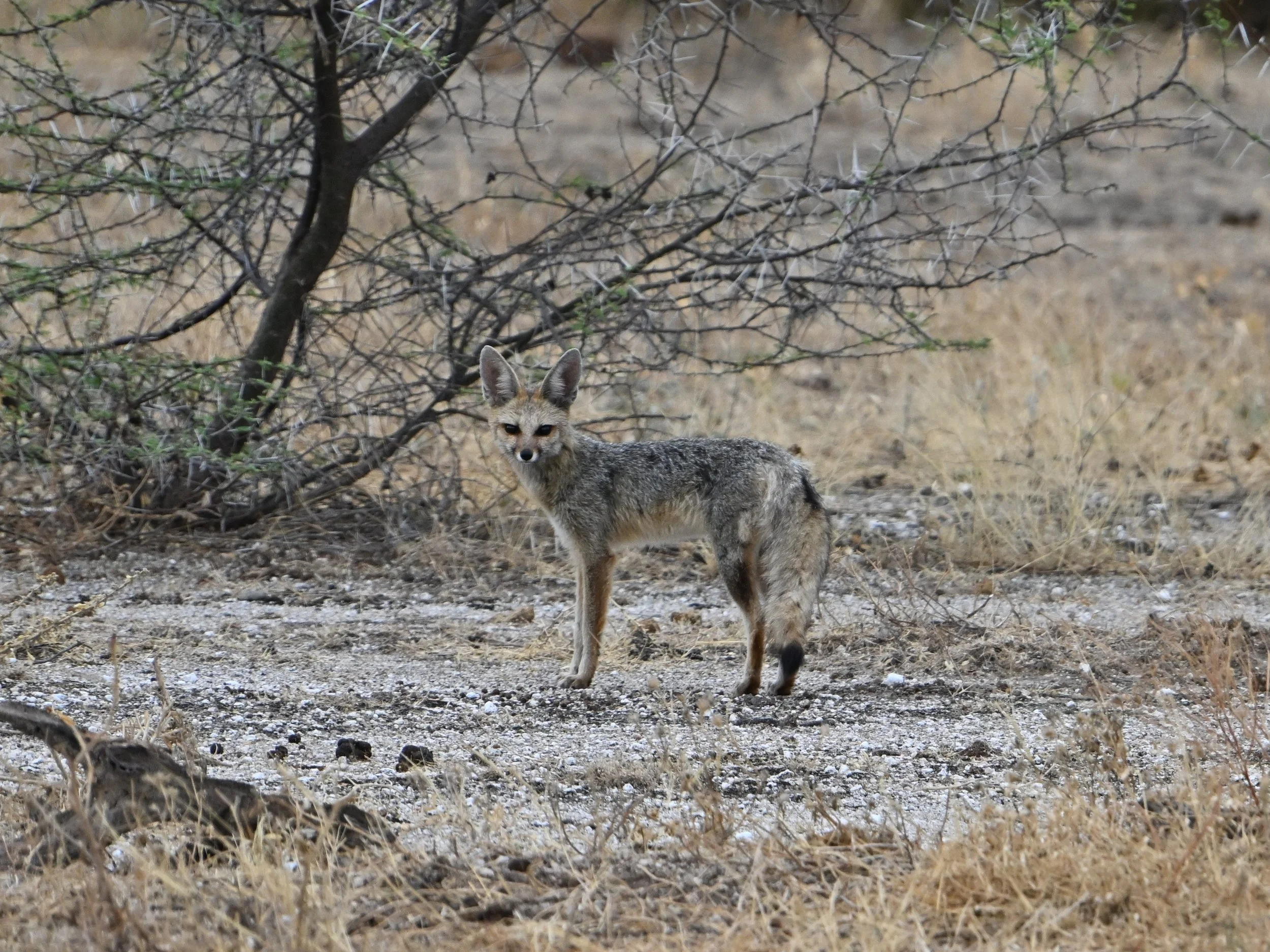
… and then a Cape Fox, in rapid succession -

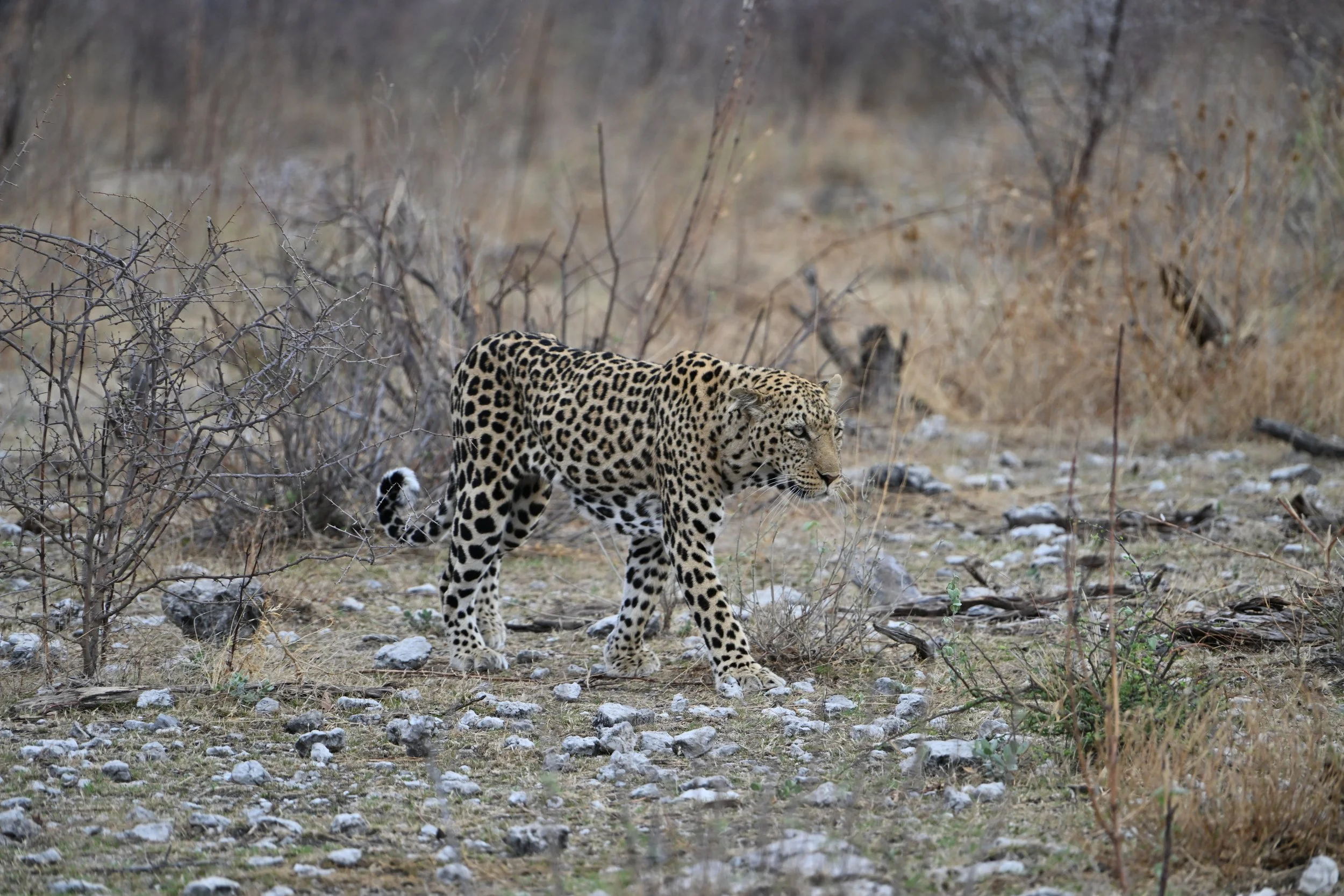
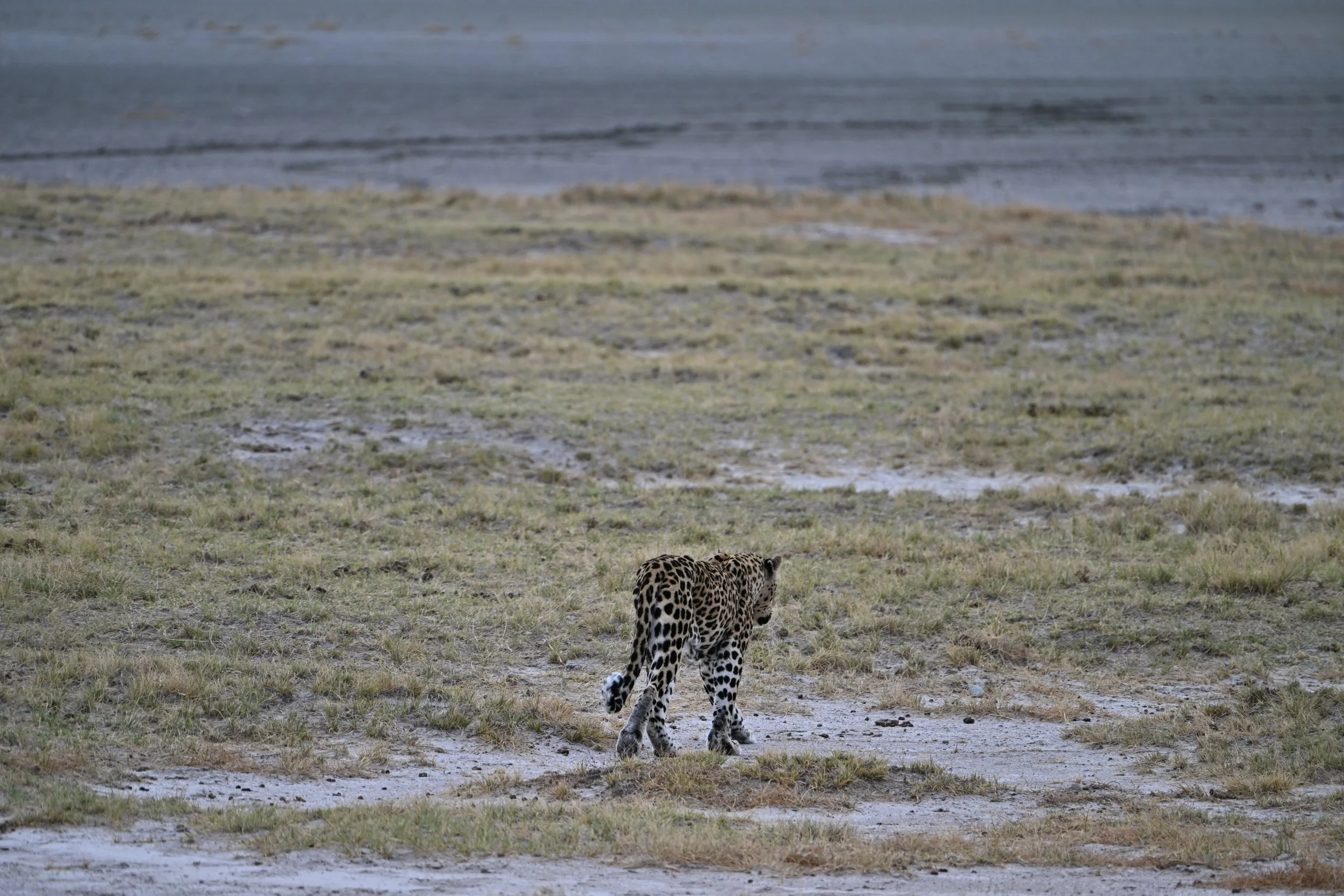
The crowning moment of the morning had to be this Leopard (!)…

… that walked right in front of our truck, and along the pan, probably looking for a quiet place to rest -

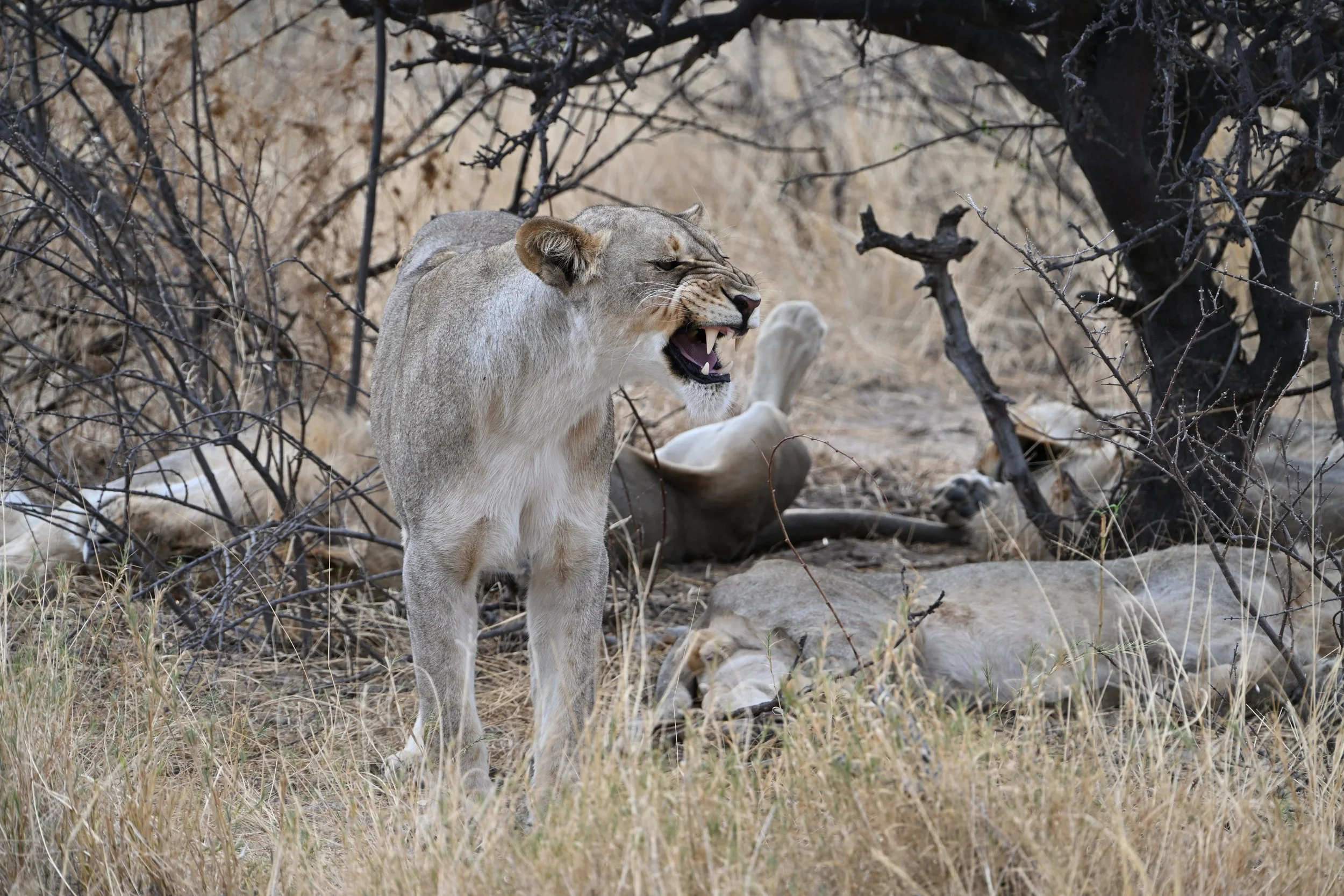
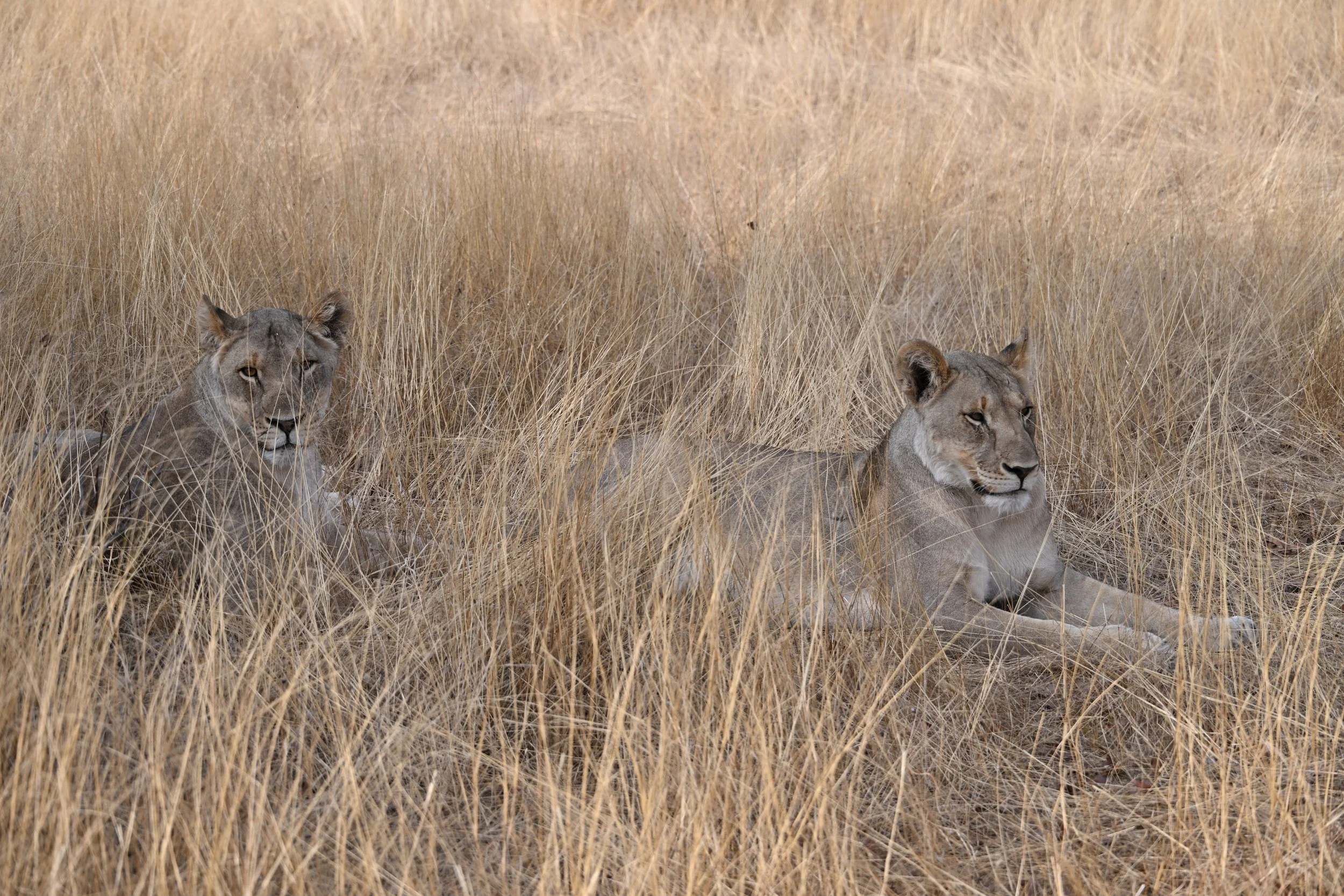
Other ho-hum moments included lions…

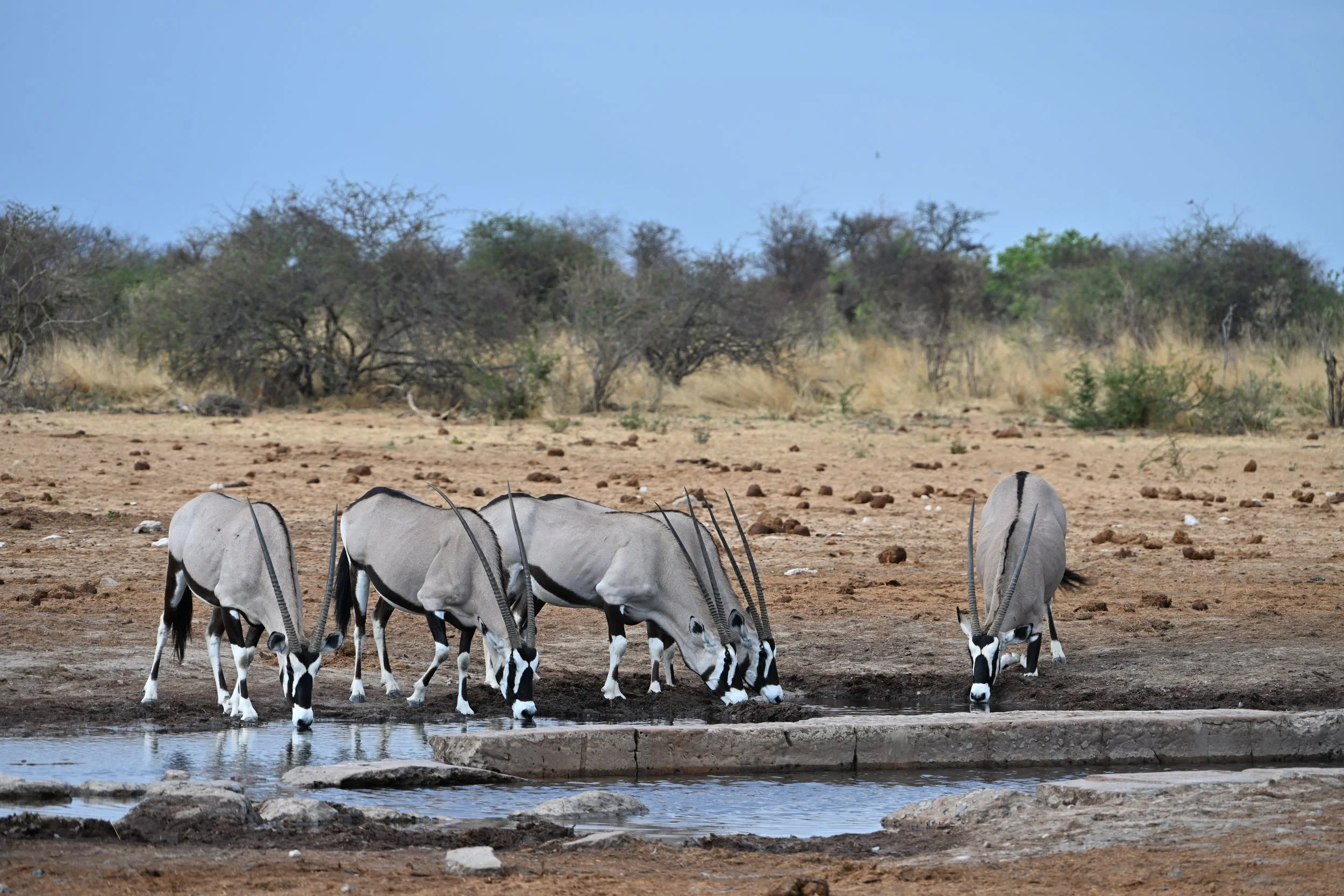
… Oryx…

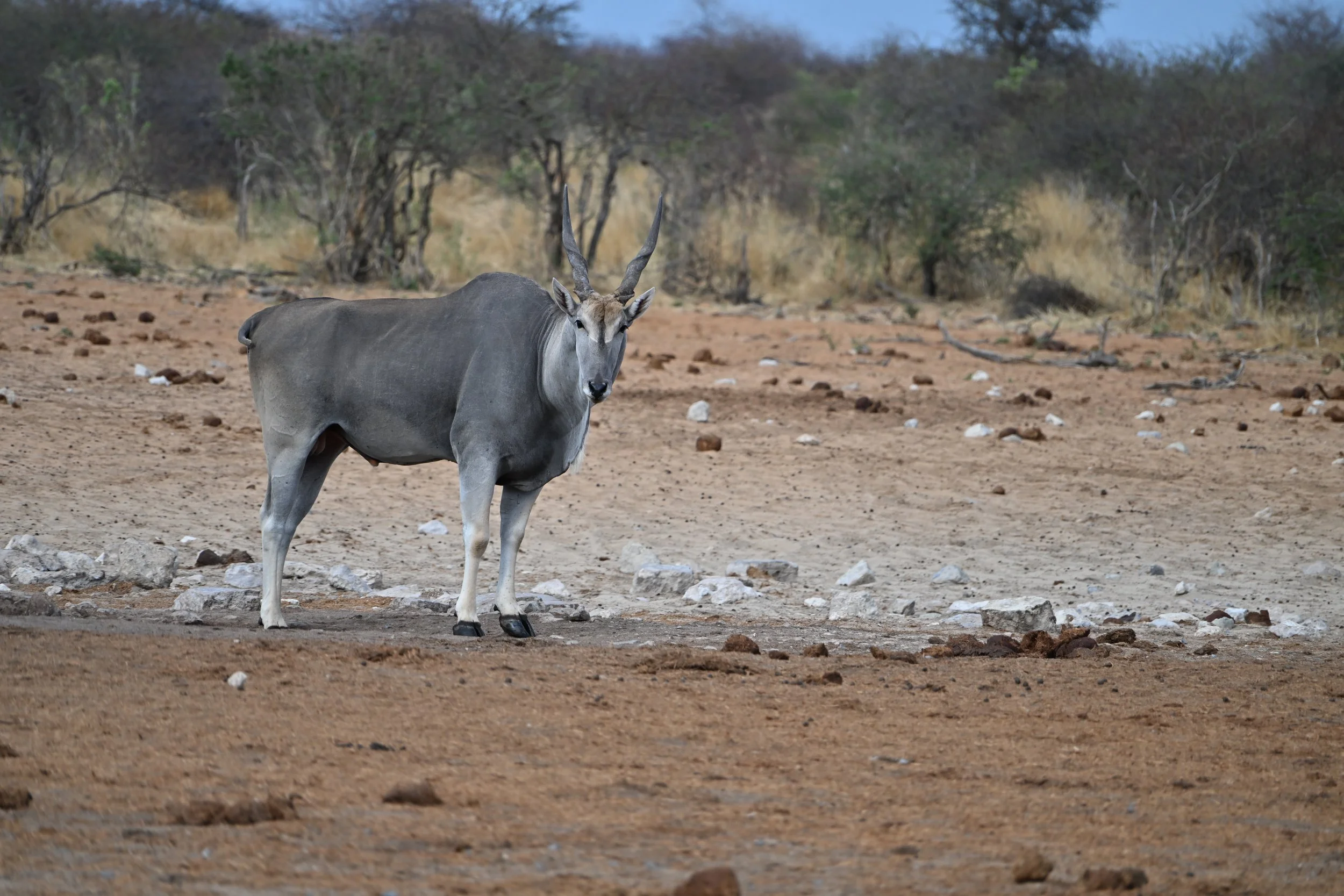
… and an Eland (very exciting for us since we had never seen one before!) -

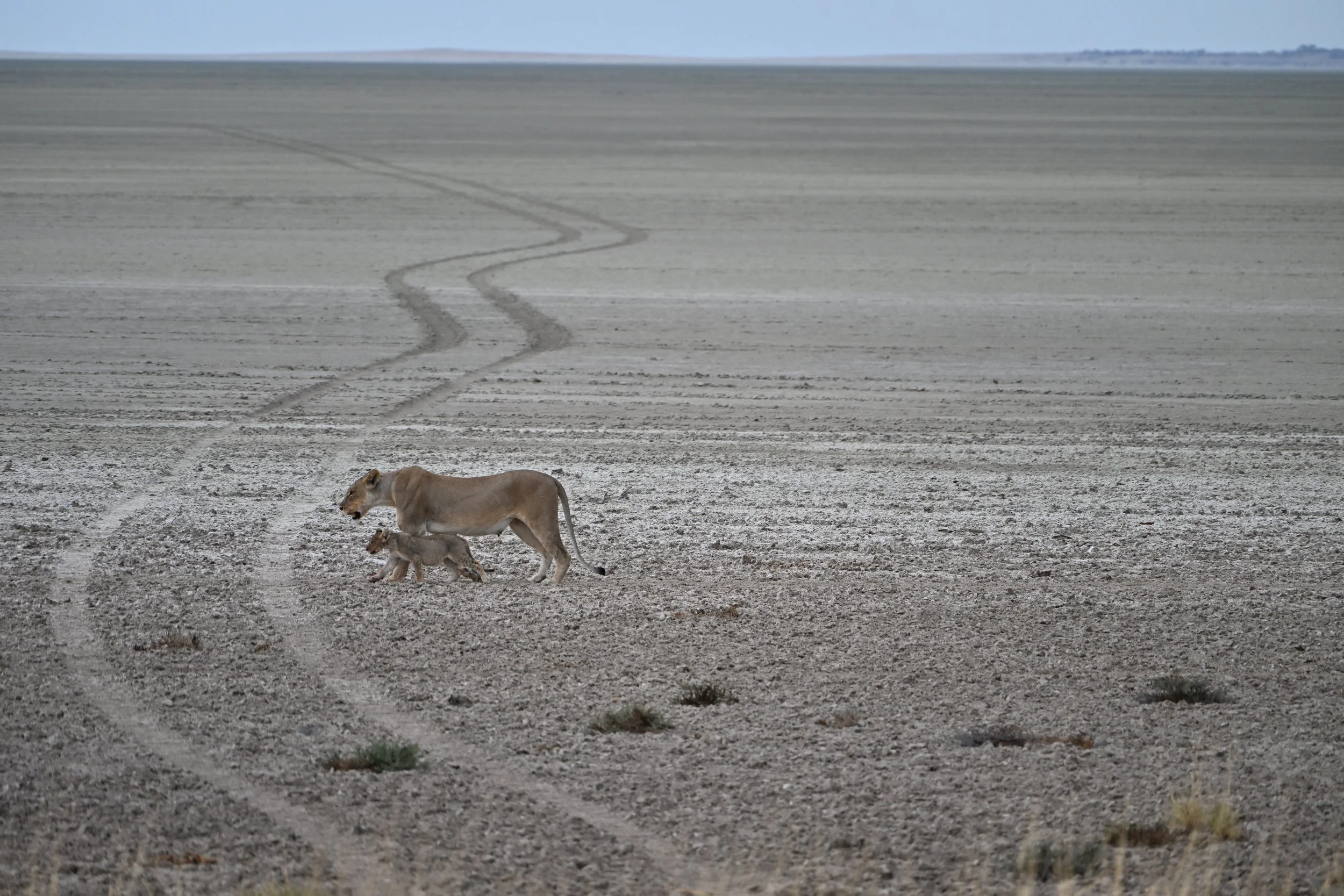
This was an interesting sight, of a mother and cub moving along the edge of the pan -

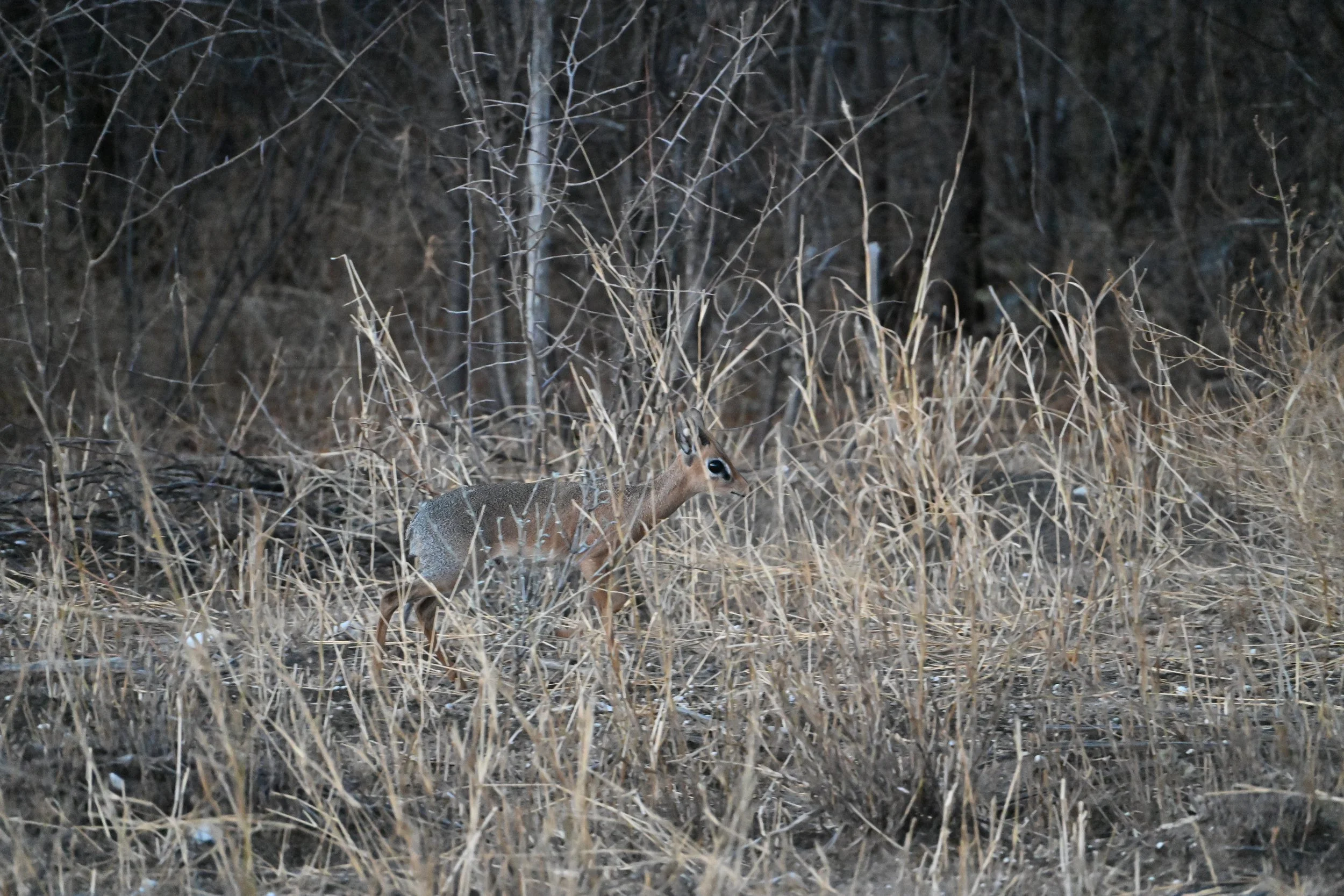
And the smallest antelope in the world, a Dik-dik (weighing only about 10 lbs and standing about 12 in high) -

This young giraffe was loping (which is actually very difficult to capture on video) and practicing kicking -

As you can see, loping involves both front feet landing ahead of the back feet together, and then when they resume walking, the legs on the same side will move together (very interesting transition).
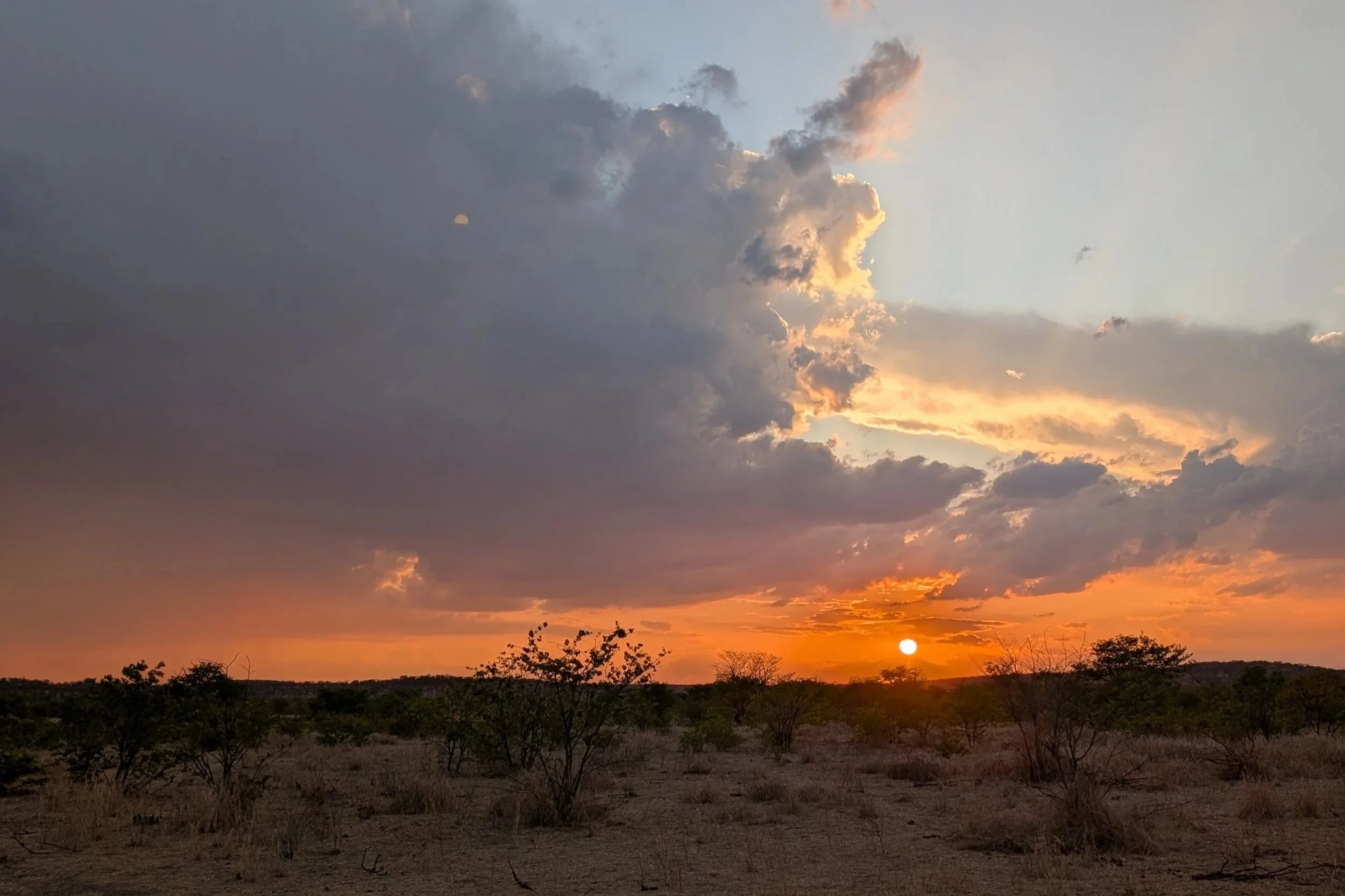
This sunset shows thunderclouds building up, presaging the pouring rain that soaked us that night, and began the rainy season.
Ongava Camp

I keep labeling these posts with the names of the camps we stayed at because my pictures are in folders corresponding to those locations. The wildlife (and stories) are pretty specific to those destinations. To reach this next camp, we drove several hours inland in a NE direction, ending on the southern border of Etosha National Park. This is a very famous park in Namibia that always has plentiful water, resulting in many animals of a variety of species.

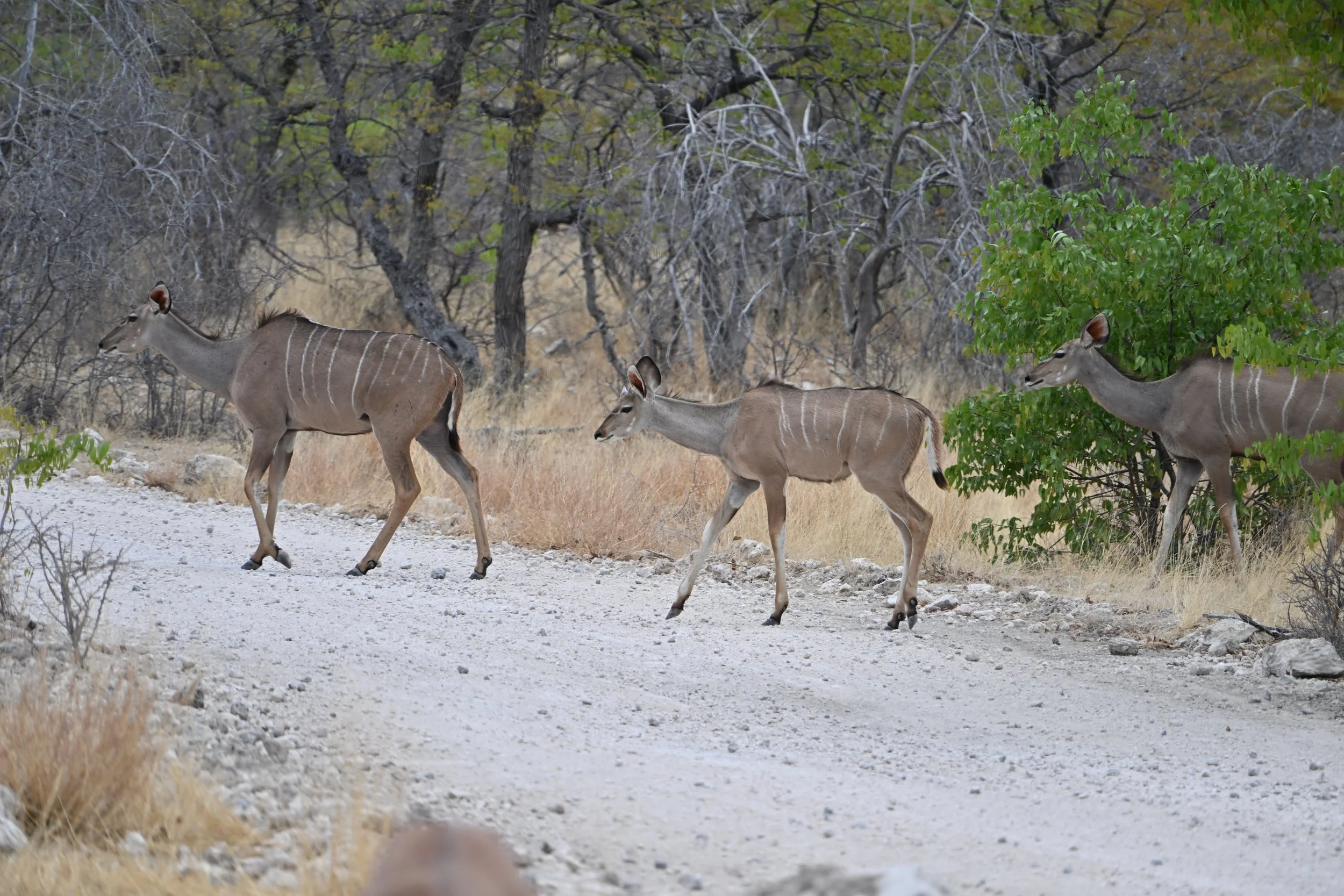
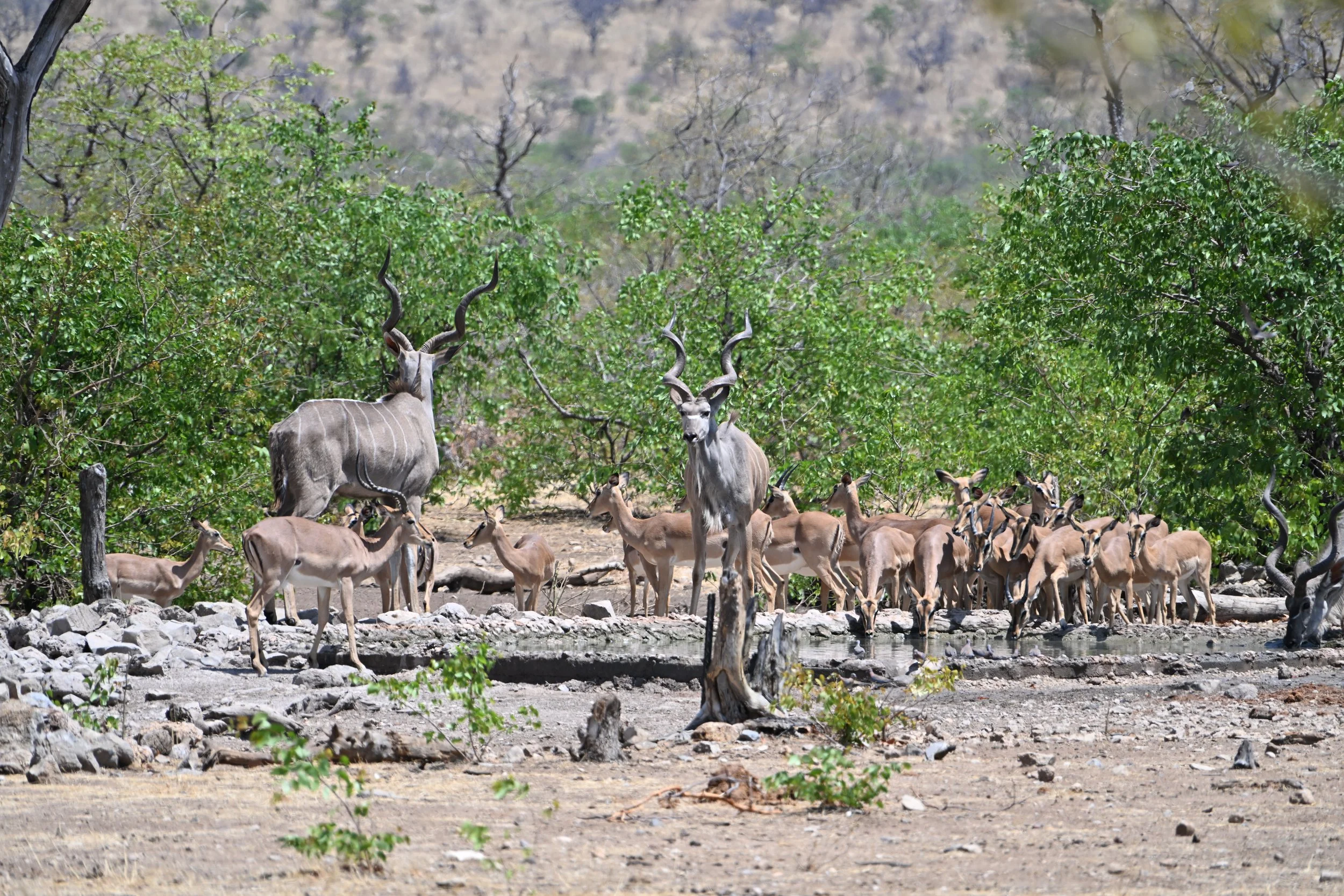
As we drove down the private drive to the camp, we were overwhelmed to see all the animals (in just our first 3 minutes), after the scarcity of the desert we’d just left. Kudus crossed the road first…

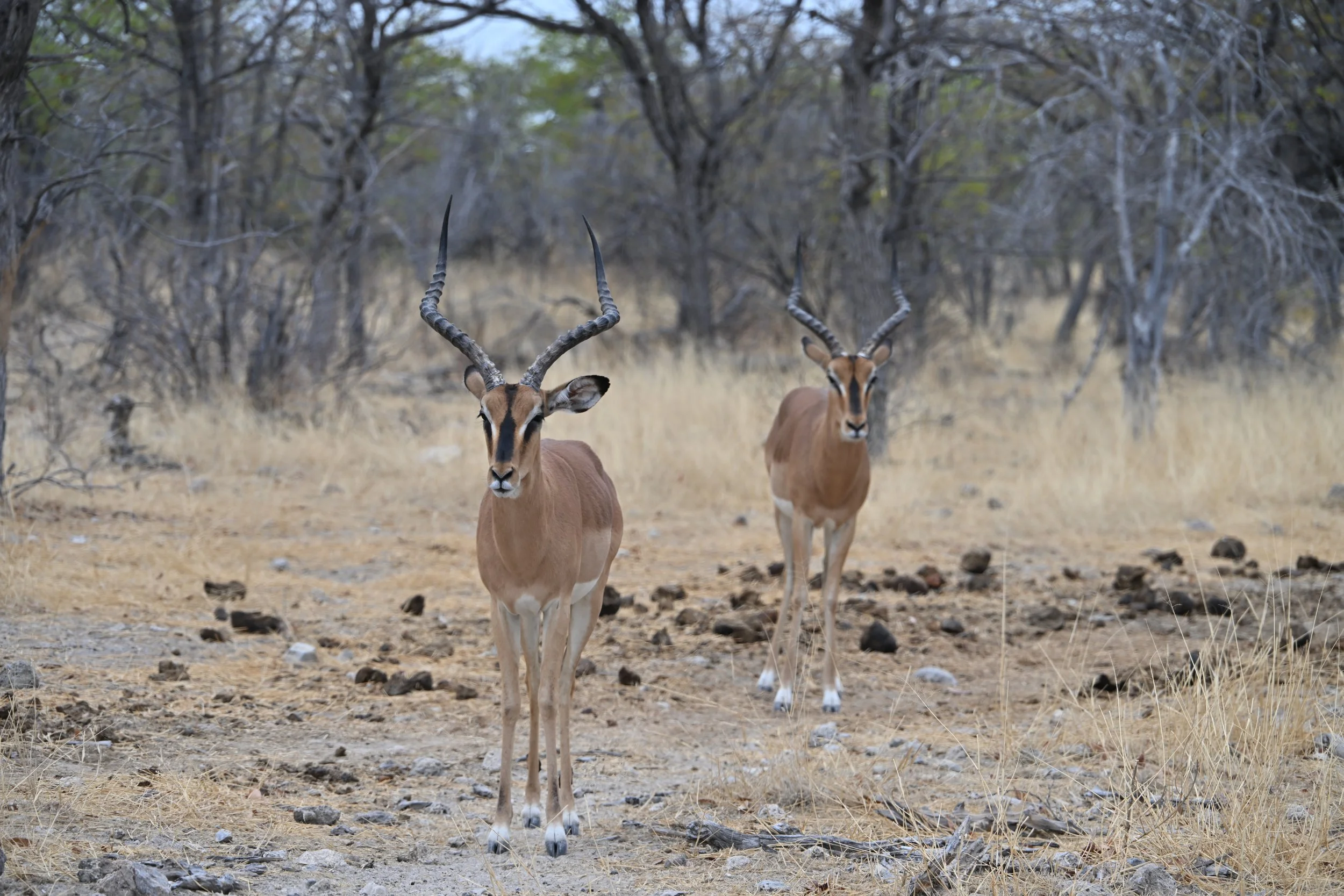
… while Black-faced Impalas watched us drive by -

A Springbok decided to saunter by just then -

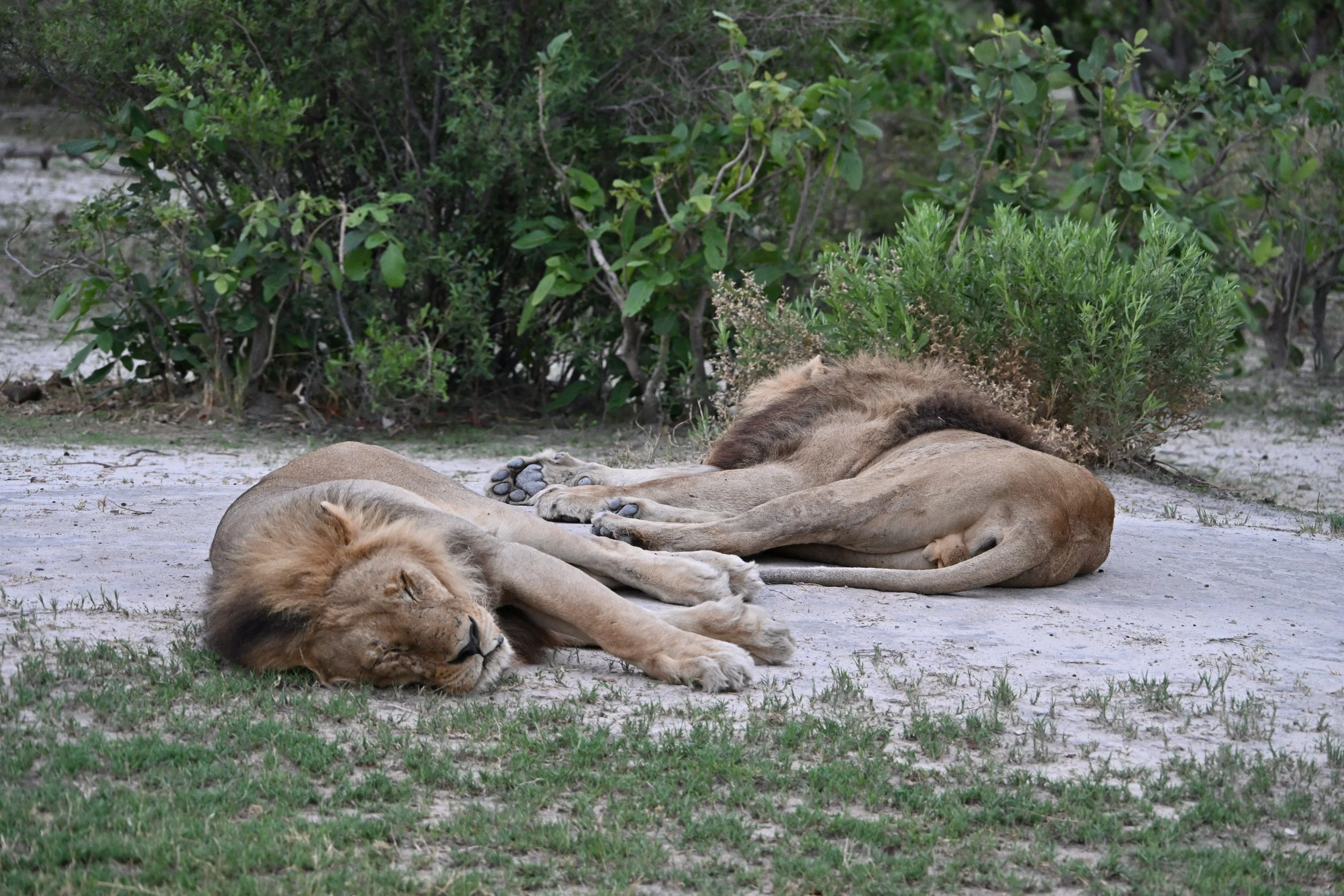
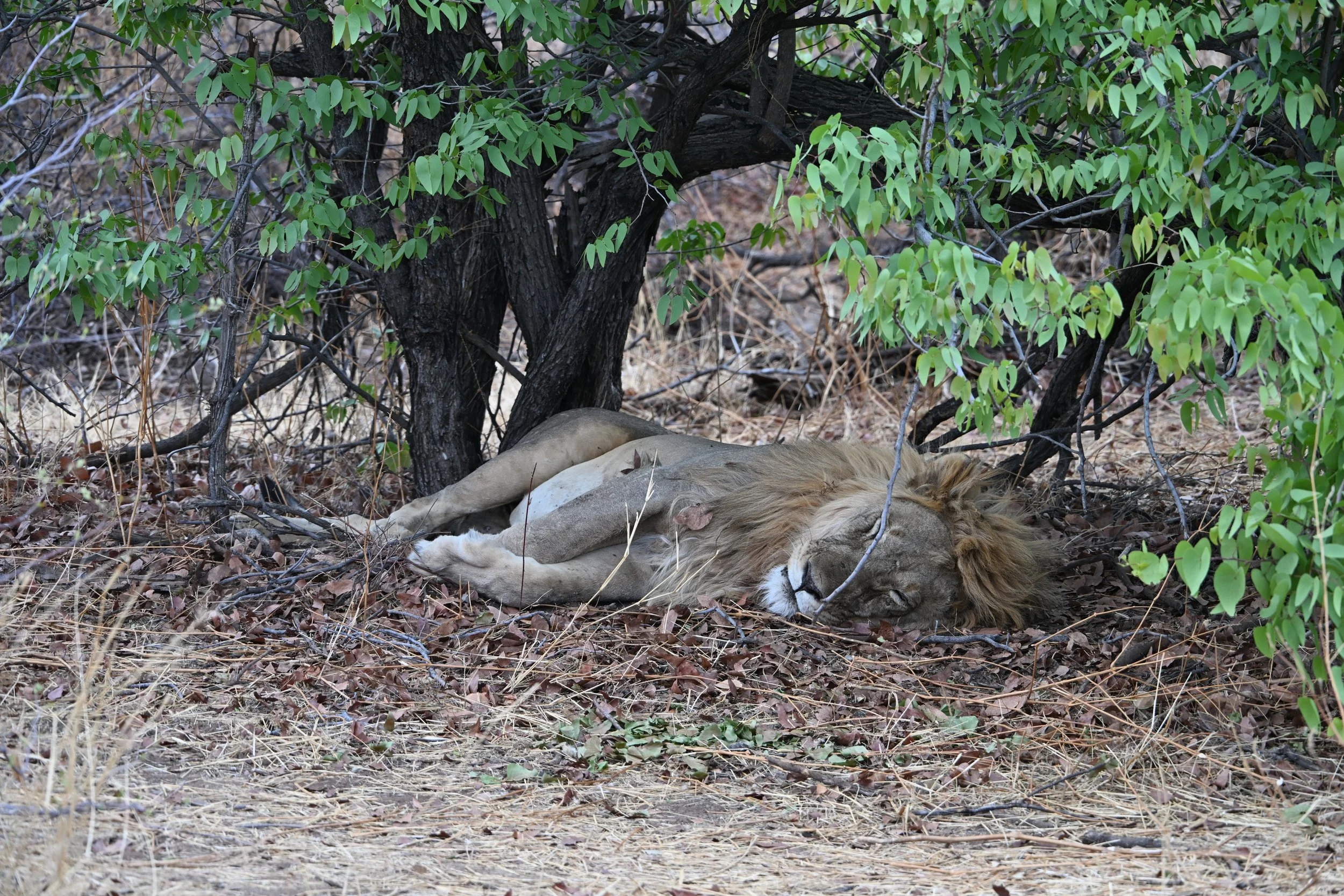
The next morning we got to check out the lion sleeping by the parking lot (such that we couldn’t park our car there the previous evening) -

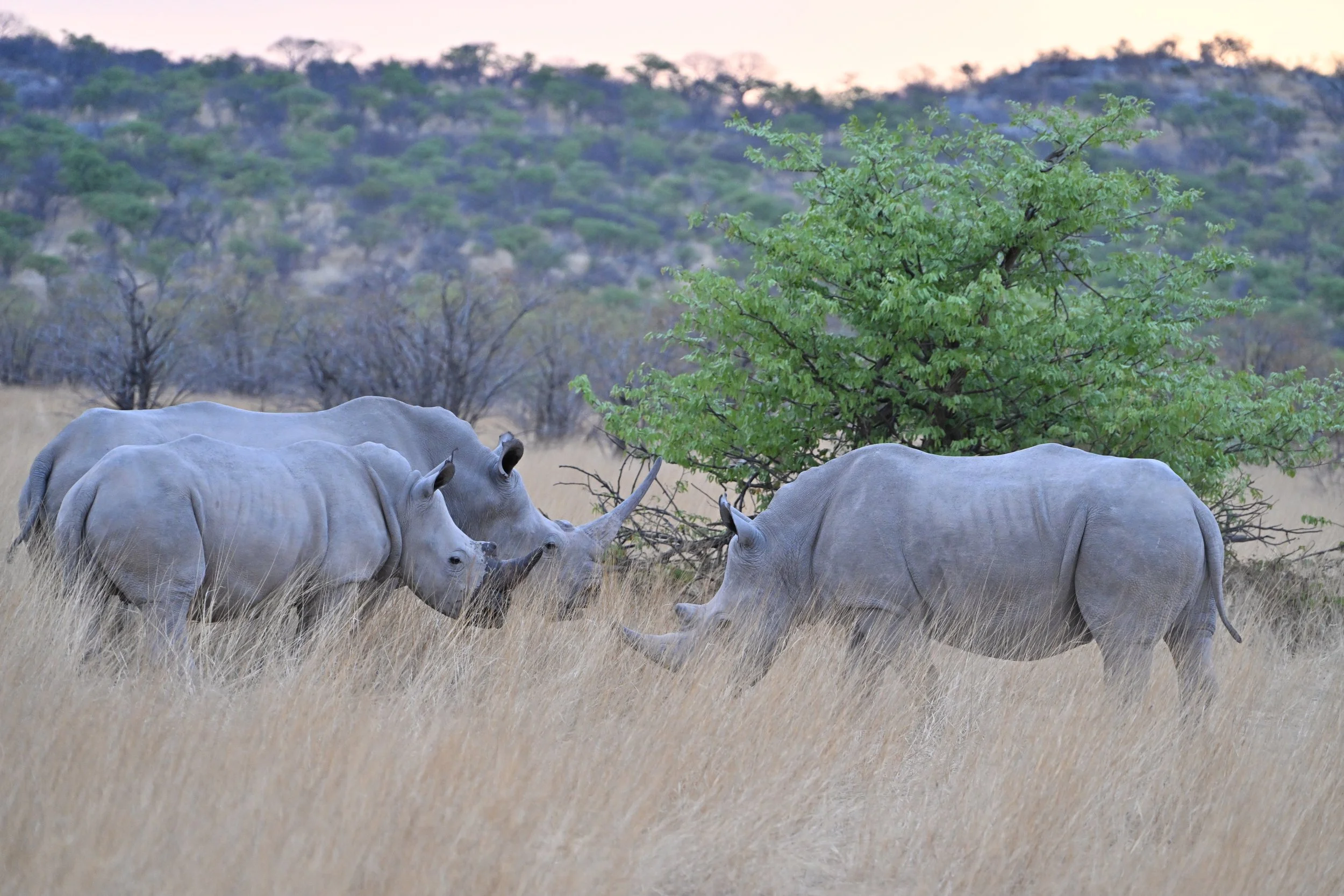
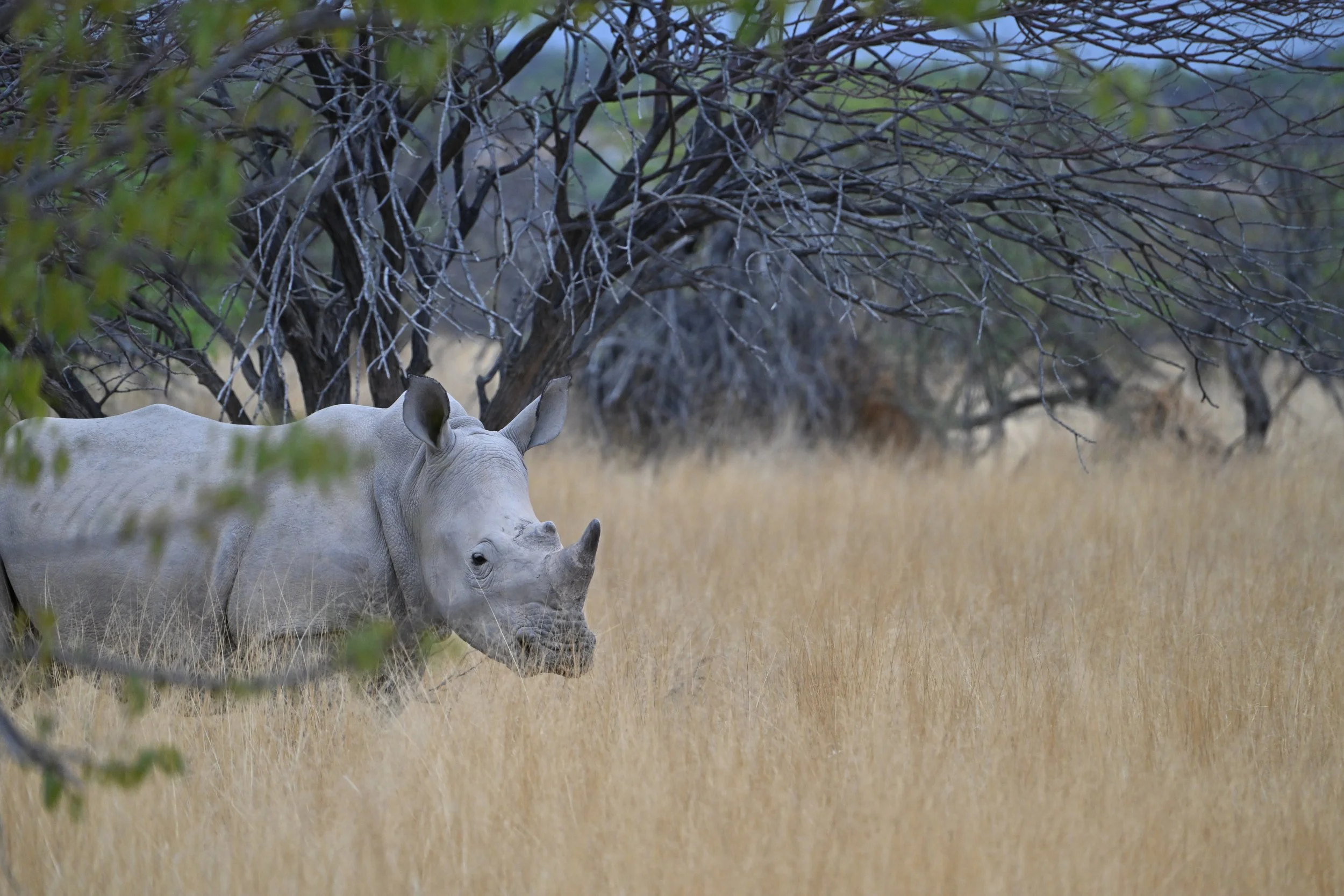
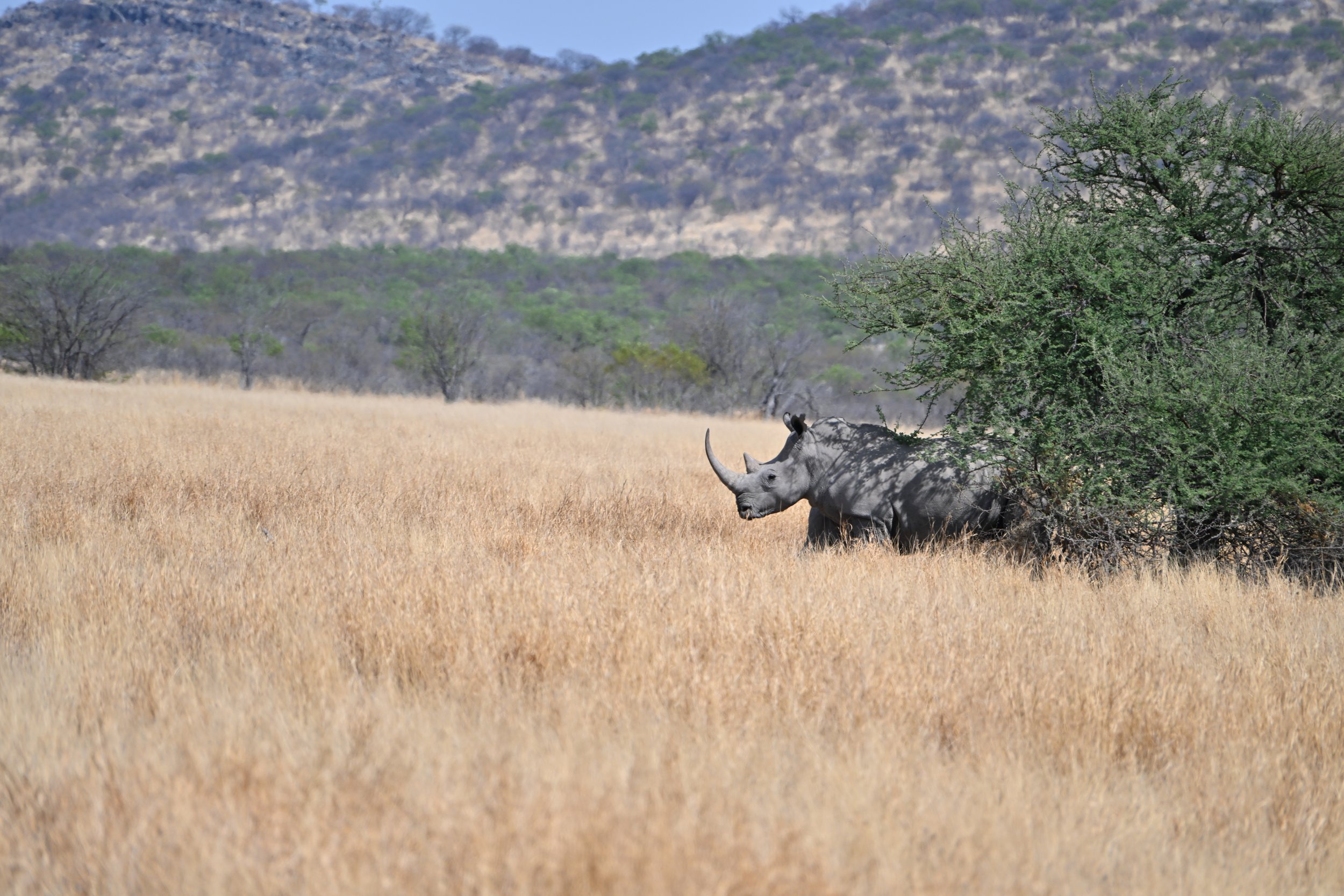
About an hour’s slow drive away from camp found us marveling at the placid White Rhinos grazing -

I loved the fact that this handsome male had his horn intact -

Hopefully you can see how wide their mouth is, which is their distinguishing feature from the Blacks -

The name “white rhino” is from a mistranslation of the Afrikaans word “weit” meaning wide, describing the upper lip of this grazer, in contrast to the Black rhino’s hooked lip for browsing. Both species are greyish, as you’ve probably noticed.

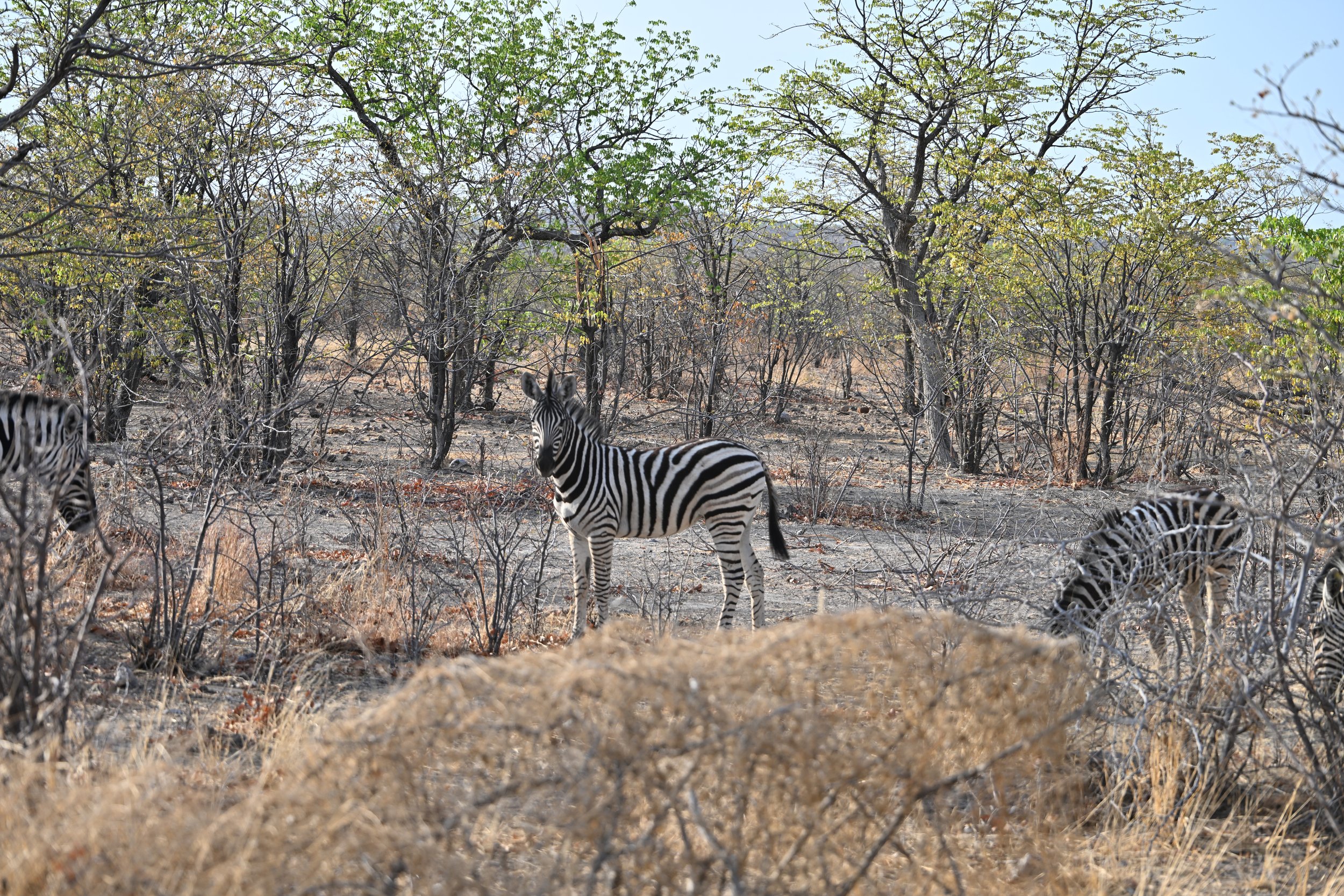
Here’s the Plains Zebra I promised, with the stripes going around the belly and “shadow” stripes on the haunch -

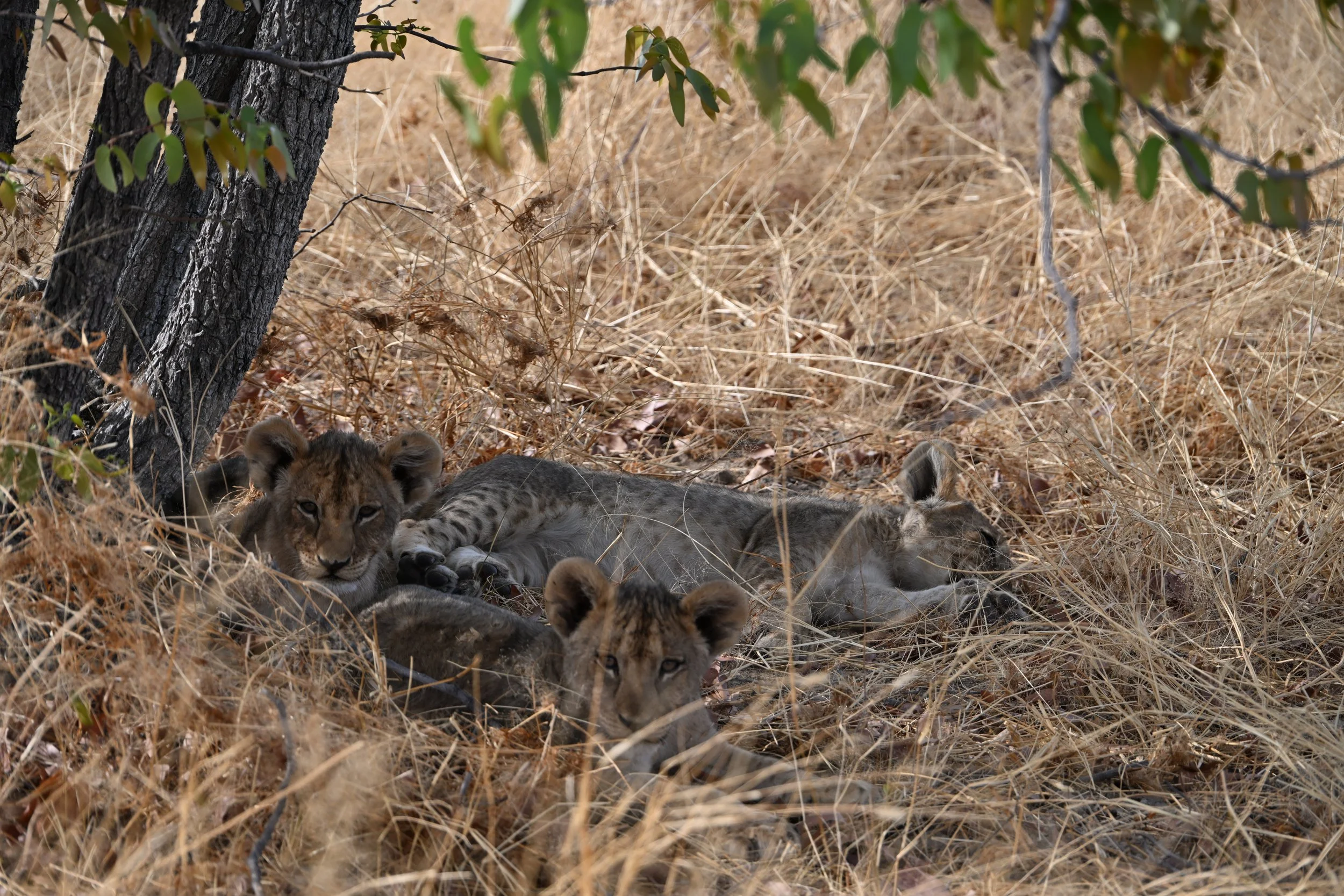
The variety of animals in this private reserve (74,000 acres, or 125 square miles) was fantastic. Lions…

… with their 3 month old cubs…

… came alert…

… as they spied a baby springbok…

… that was allowed to live (this time).

There was a waterhole just off the patio and dining area of our camp. It was quite busy when we were there, since it was the end of the dry season and there was little water to be found elsewhere. These kudus and impalas were interrupted…

… by this pair of young males who took it over for themselves, sparring a little first (video alert - open this post in a browser by clicking the link at the end, to aid in watching the video)…

… before a splash bath -

We were thinking this was amazingly close to us…

… but then this guy decided the trees near the building looked tasty -

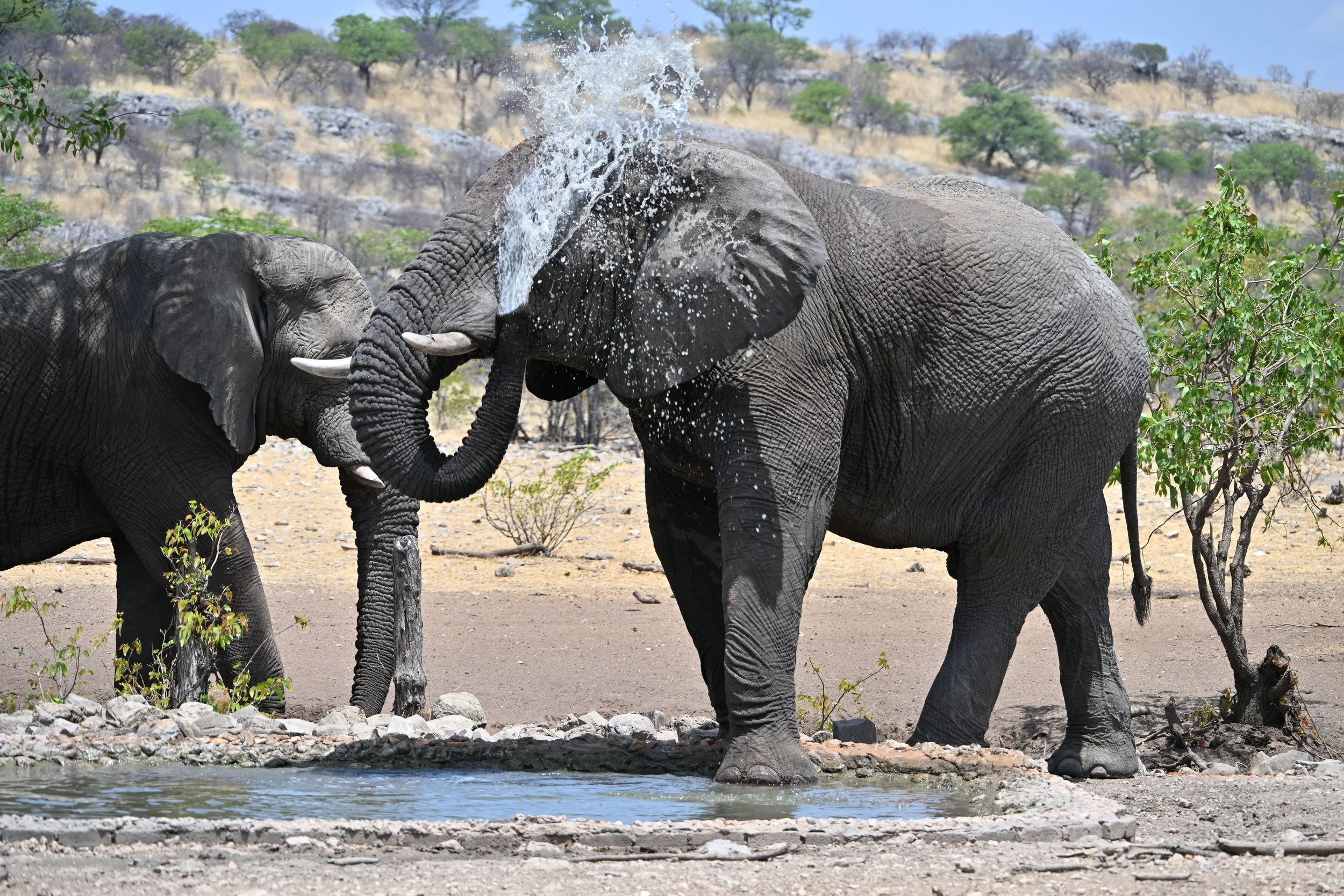
He didn’t seem fazed by our presence nearby, so of course, Steve moved closer for a selfie -

Remember, this is a wild elephant. When he decided to work more seriously at harvesting, we backed away some -

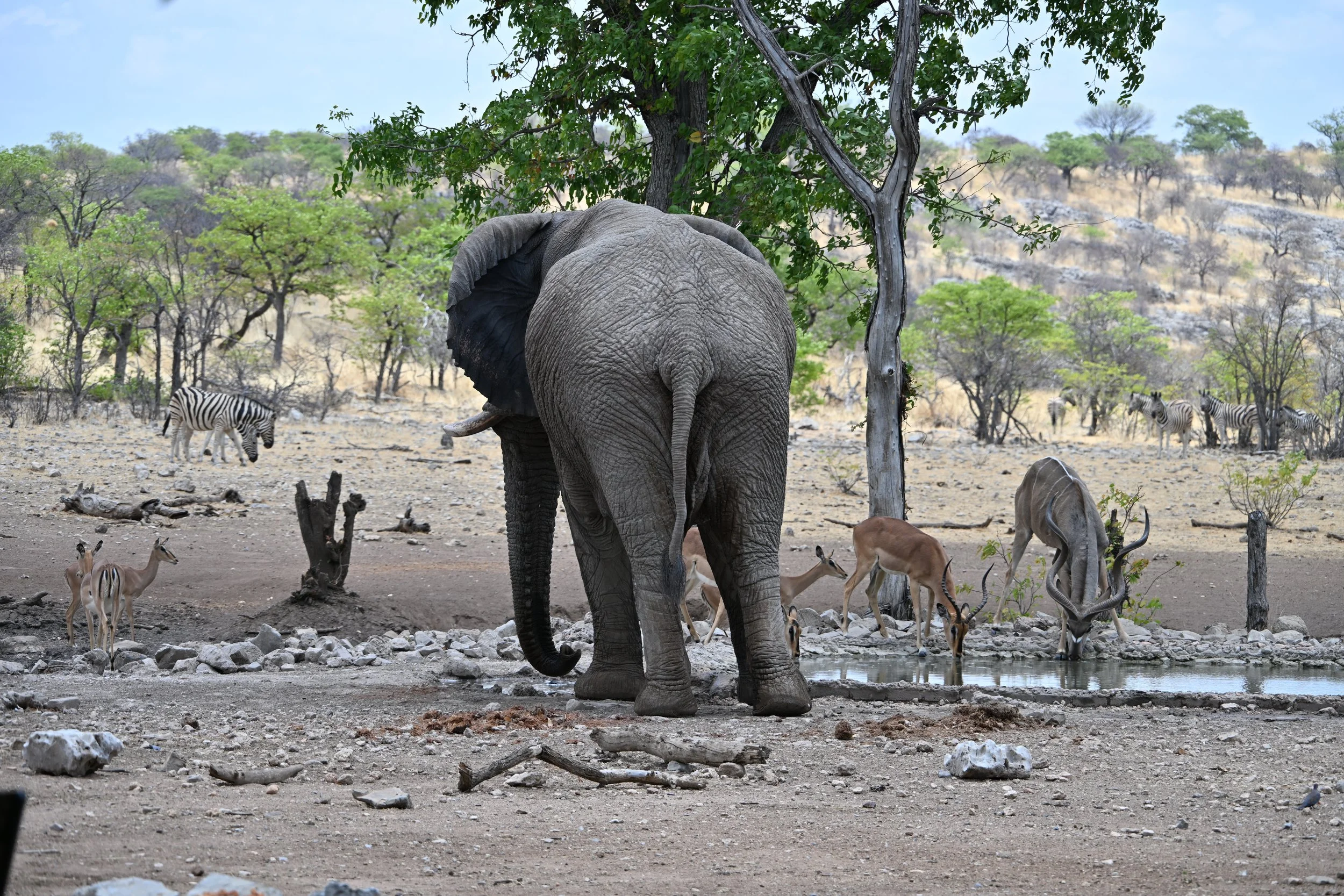
As he sauntered away, you could see the diversity at the waterhole-

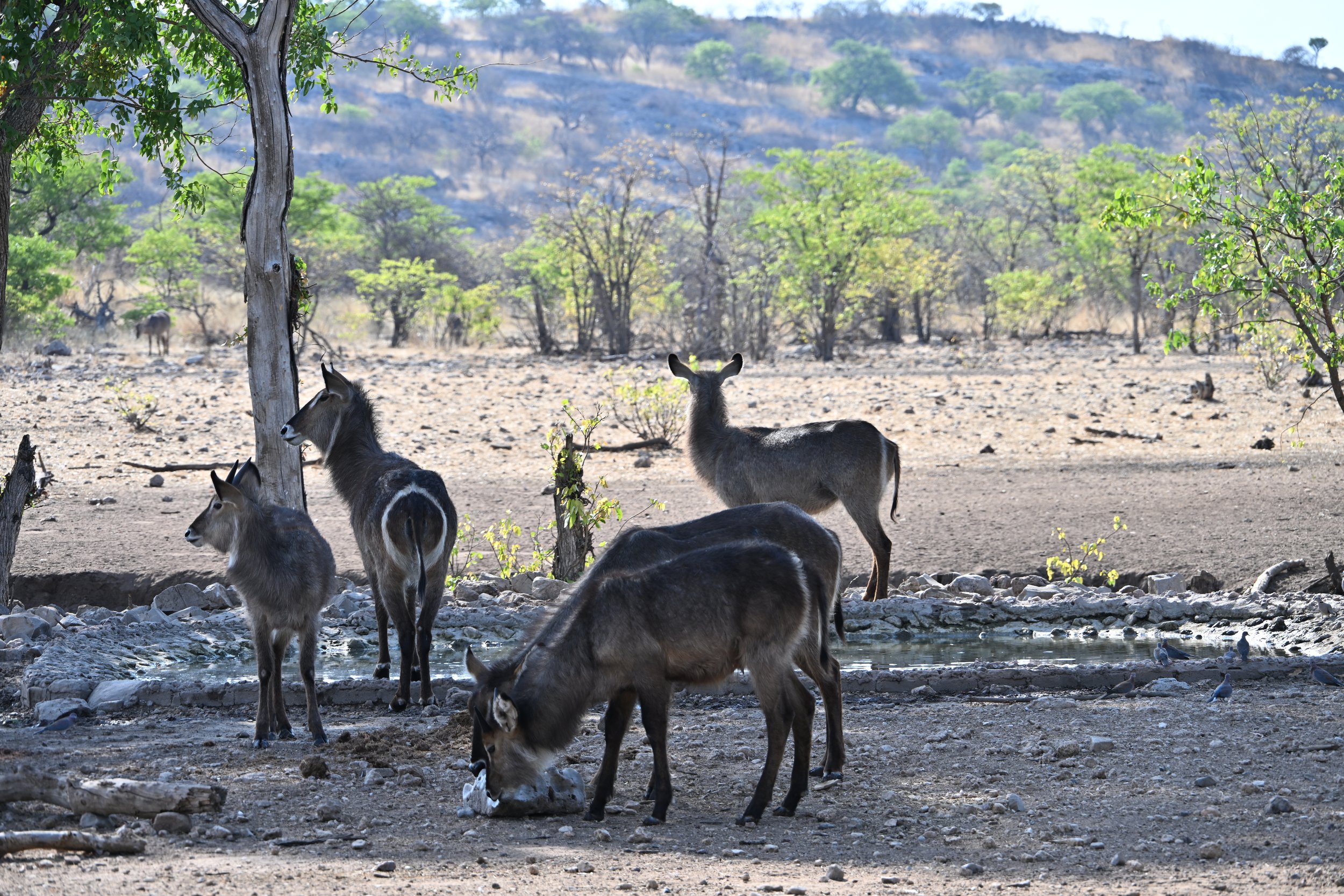
I loved the butt shot of the Waterbuck -

I’ll say goodbye, as this fella plays peek-a-boo -

Desert Rhino Camp

Our next accommodation tells you why we went there. One of my main goals of this safari trip was to see African rhinos - especially after we had seen the Asian rhinos in southern Nepal. We ultimately ended up almost directly north of Swakopmund, and inland of the Skeleton Coast. That designation of the Namibian coast conjured up dreamy images of sand dunes and desert adapted animals, but in actuality, it refers to the myriad rusting skeletons of ships that wrecked along that portion of the coast. We didn’t actually visit that area, but as my last posts showed, huge sand dunes do indeed meet the sea along the west coast of Namibia.

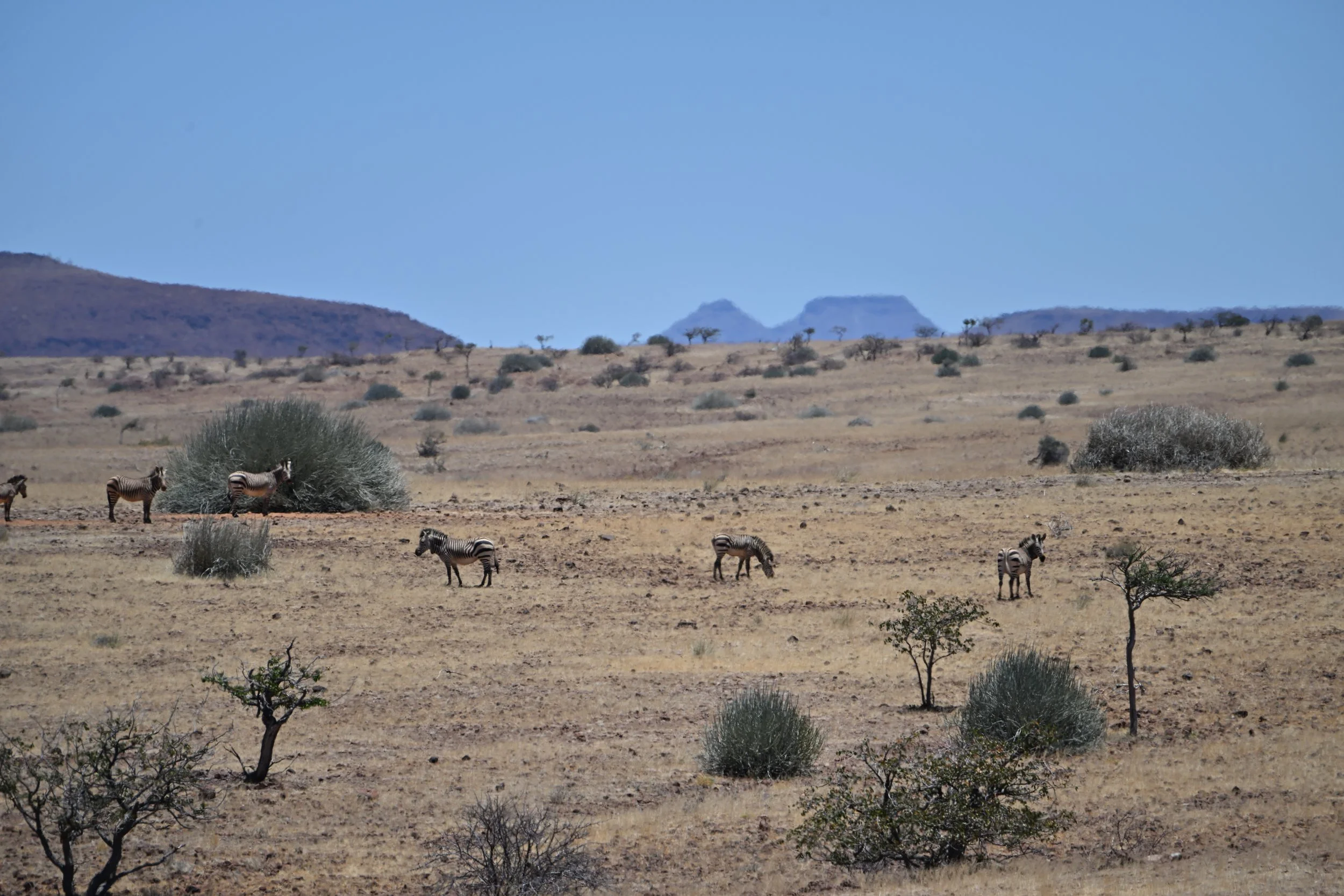
We were very surprised, as we were driven towards the camp in their game-viewing truck, to see zebras…

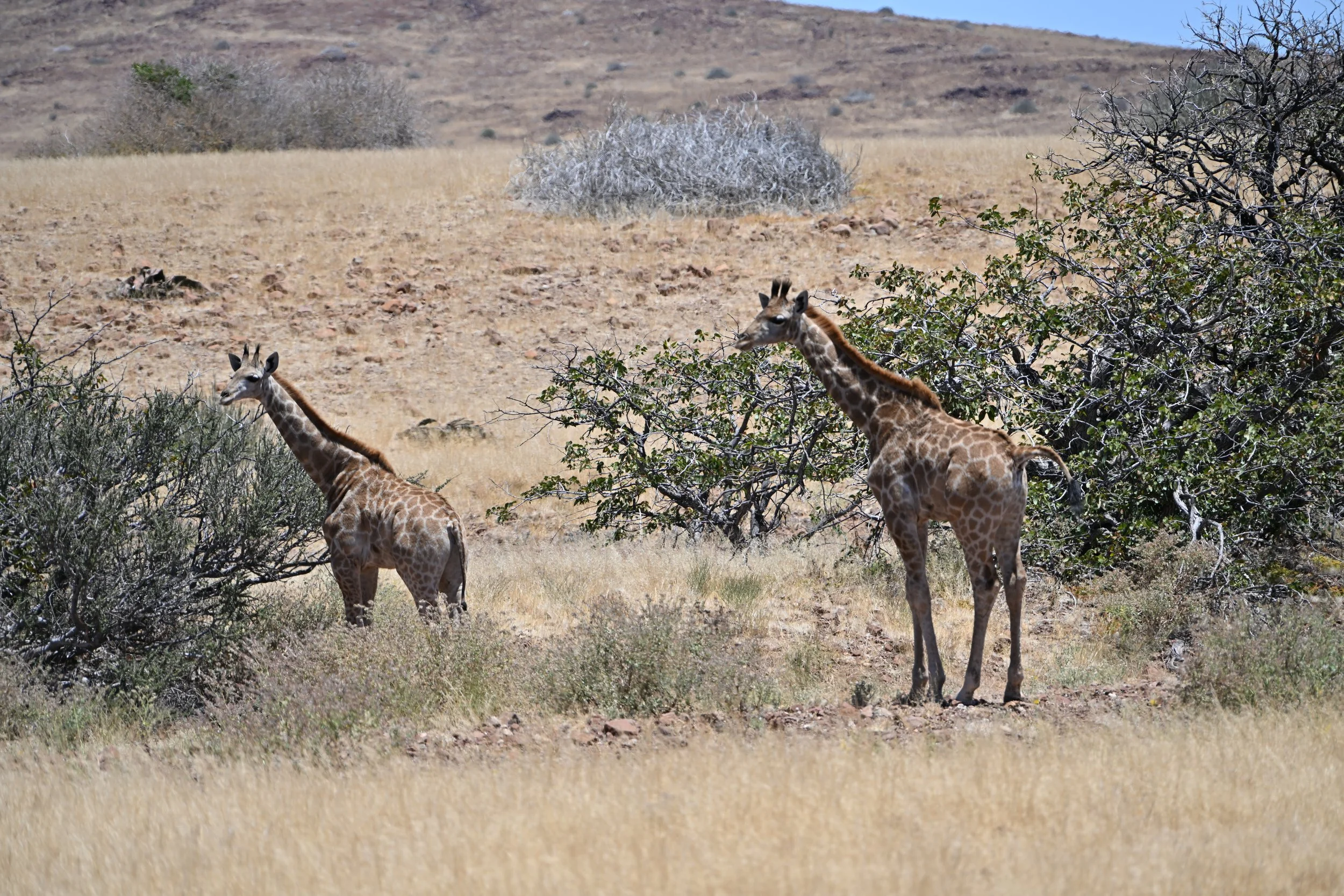
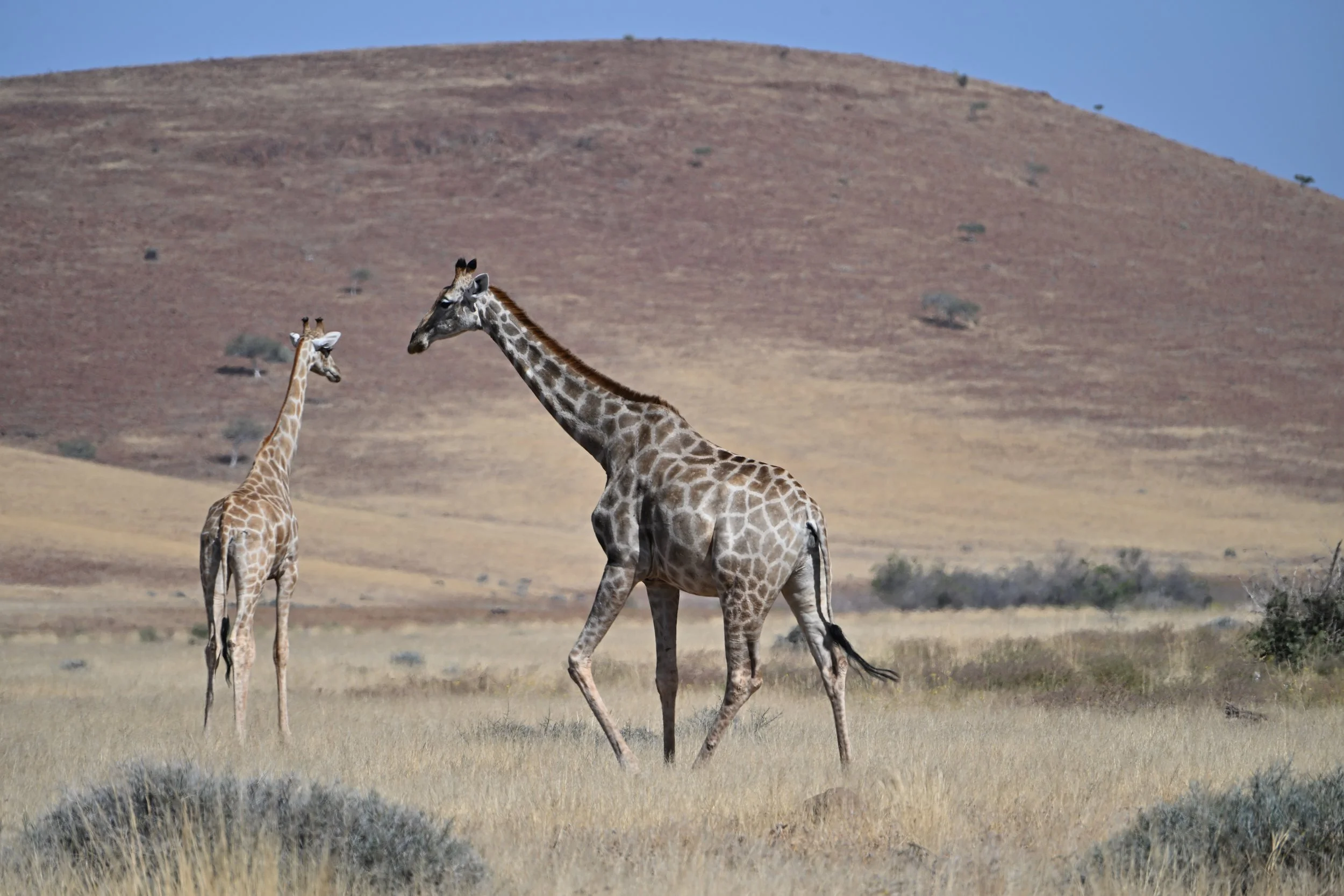
… and giraffes -

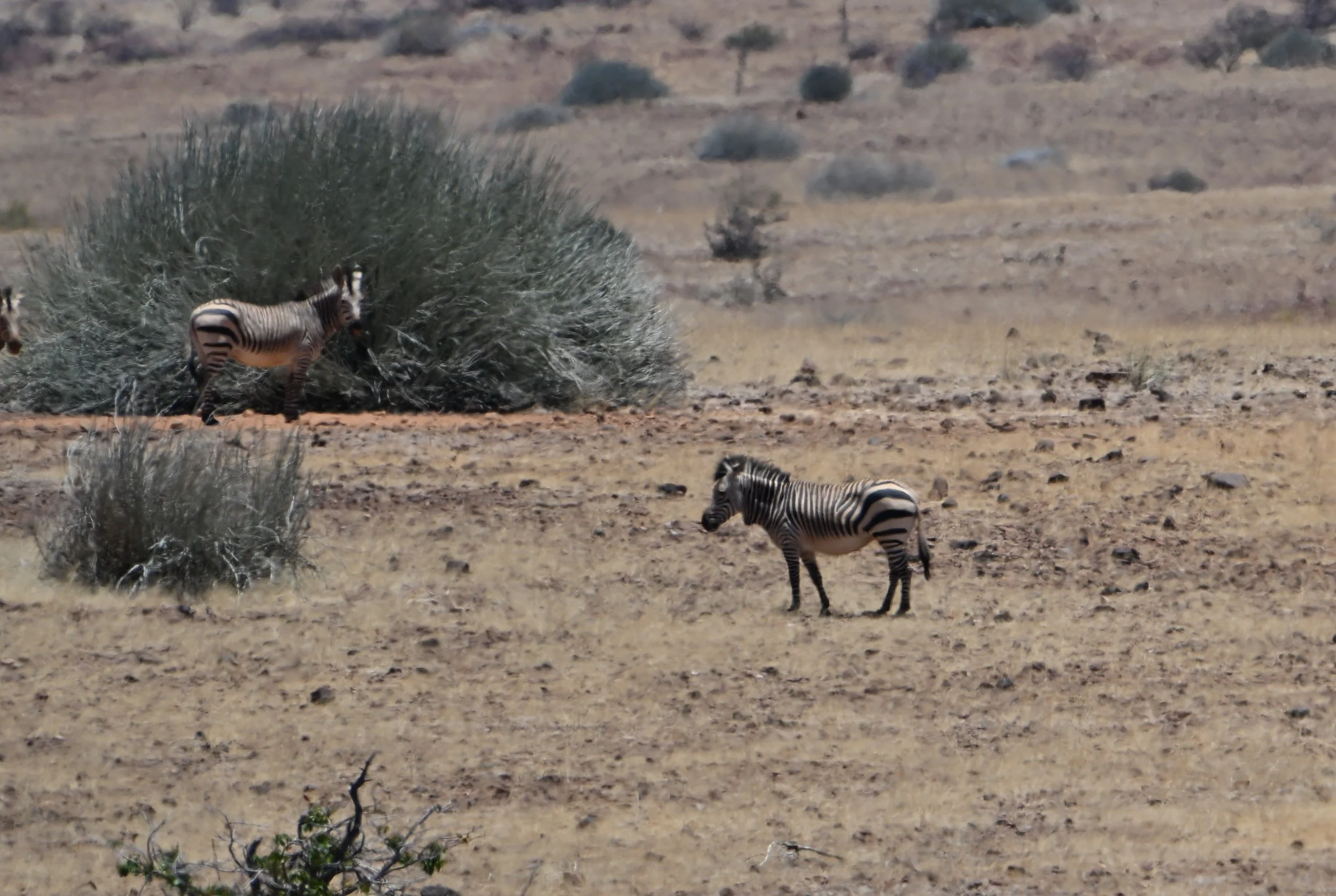
We were informed that the zebras are actually Mountain Zebras, in contrast to the Plains Zebras that we got our fill of in Tanzania on our last safari. Their markings are different, with the Mountain Zebras having their stripes end before the belly -

I’ll have pictures of Plains zebras in later posts, to let you see how that species has the stripes going down and around the belly.

We got to witness an episode of giraffe “necking”, which is their version of fighting. As usual, to watch the next video, open this post in your browser by clicking on the link at the end of the post.

The smaller, lighter-colored one is the younger combatant, trying to push the older one off balance. The blows that they land with their horns (actual bone) can be strong enough to break ribs! That video was “only” a minute long, but our guide said 2 males vying for territory can carry on like this for hours.

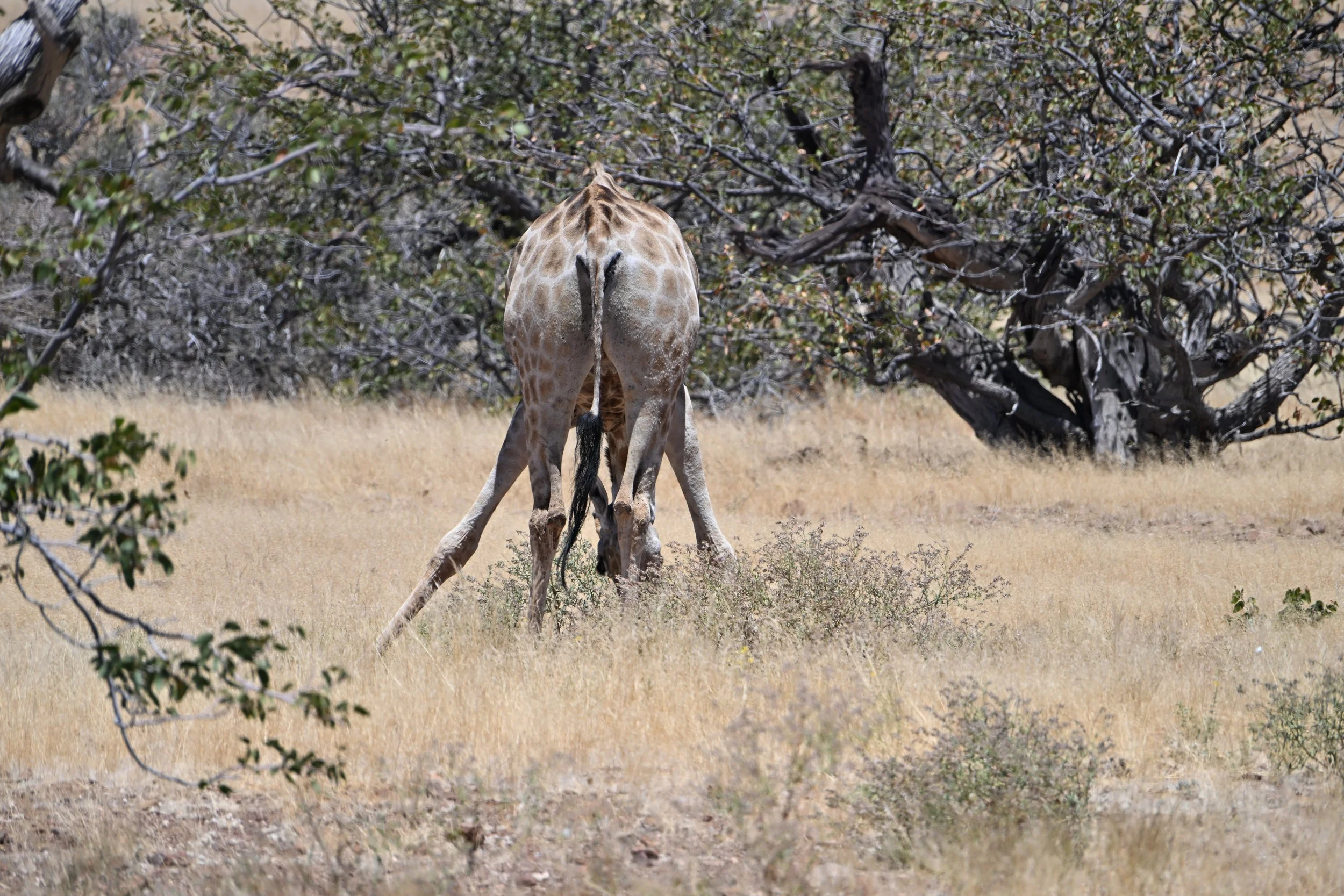
I liked this addition to my “butt” collection that I’m amassing.

It was amazing to see them grazing like this, as they are quite vulnerable in this position, as you can easily see. These are Angolan, or Smoky, giraffes -

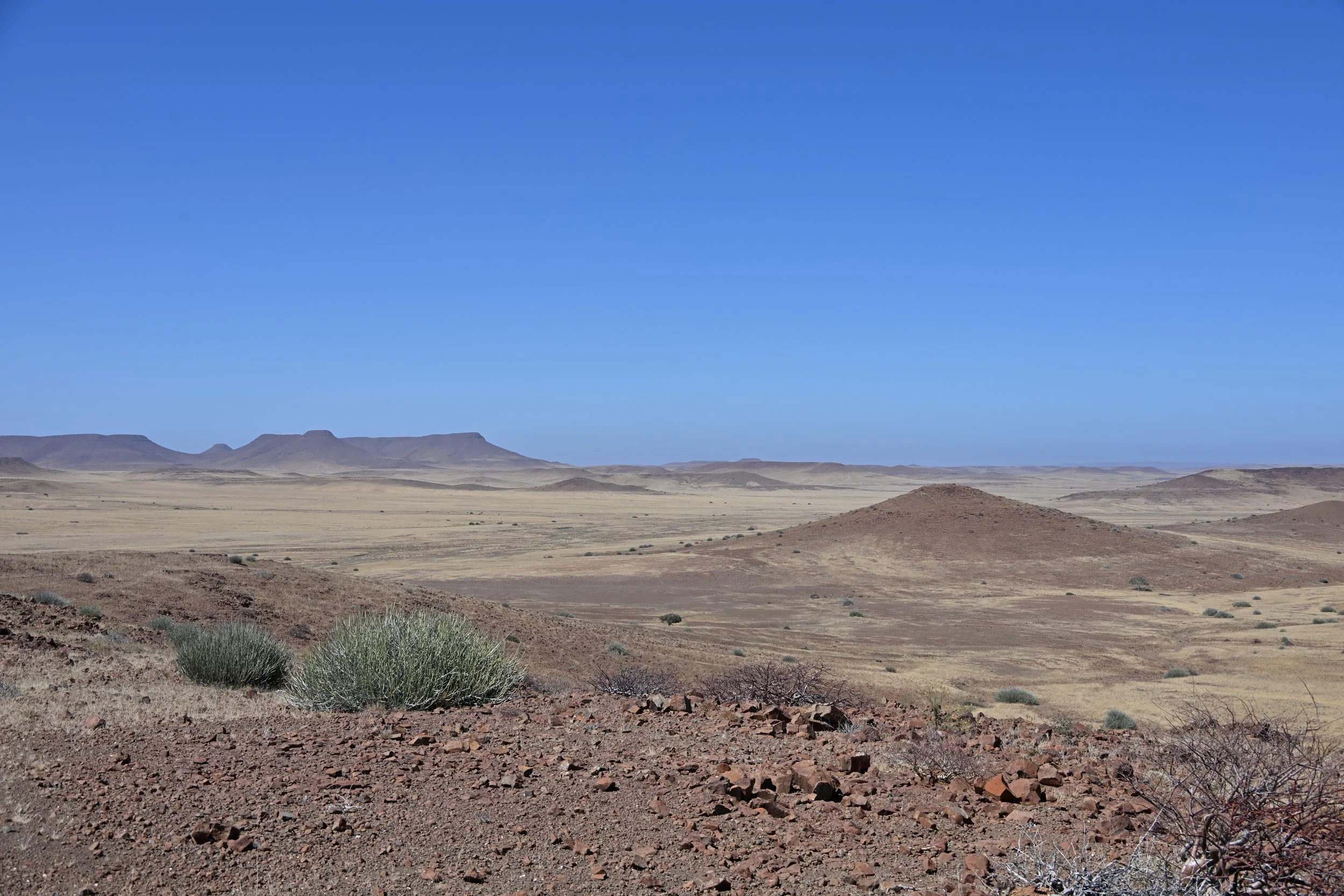
This is pretty inhospitable territory -

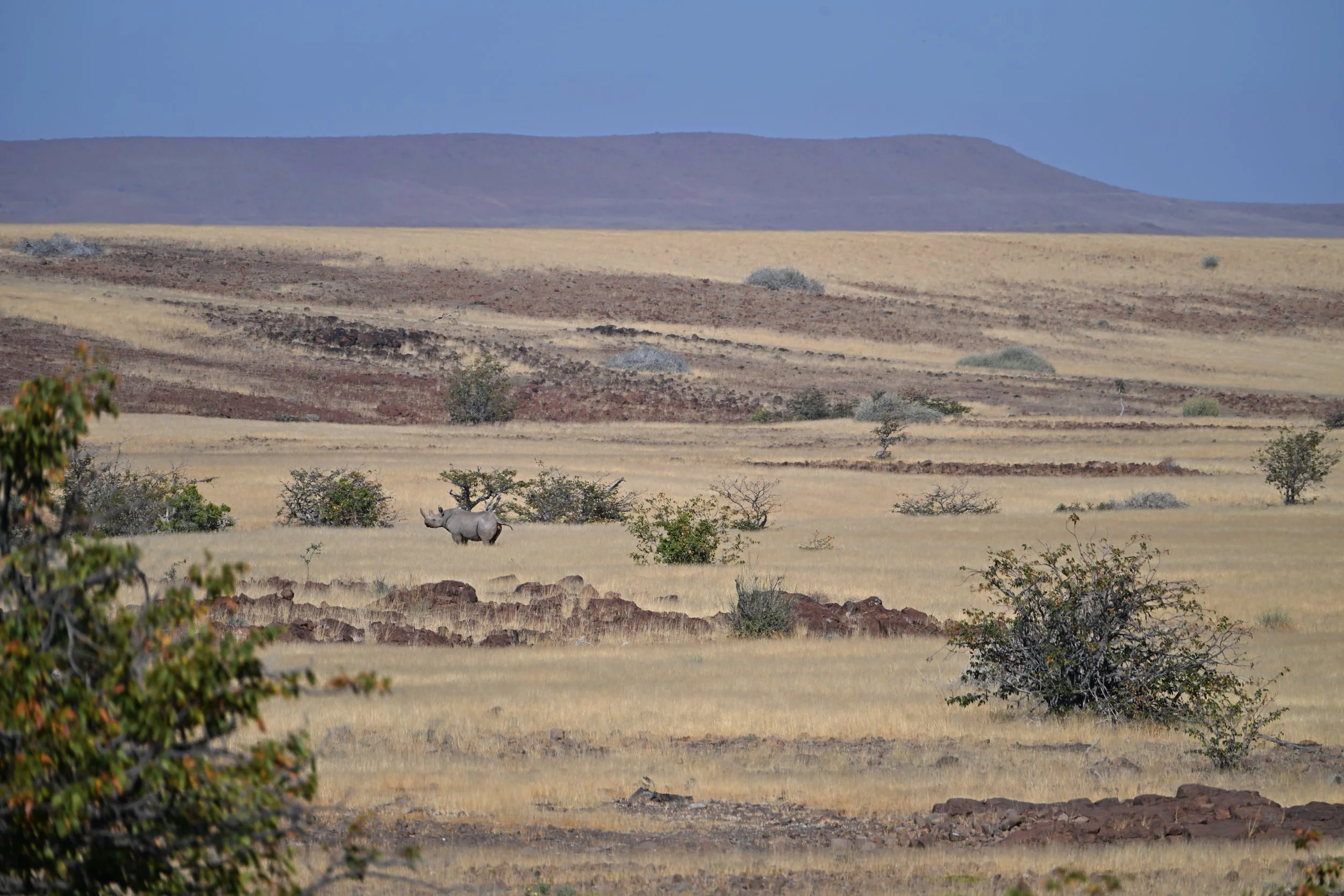
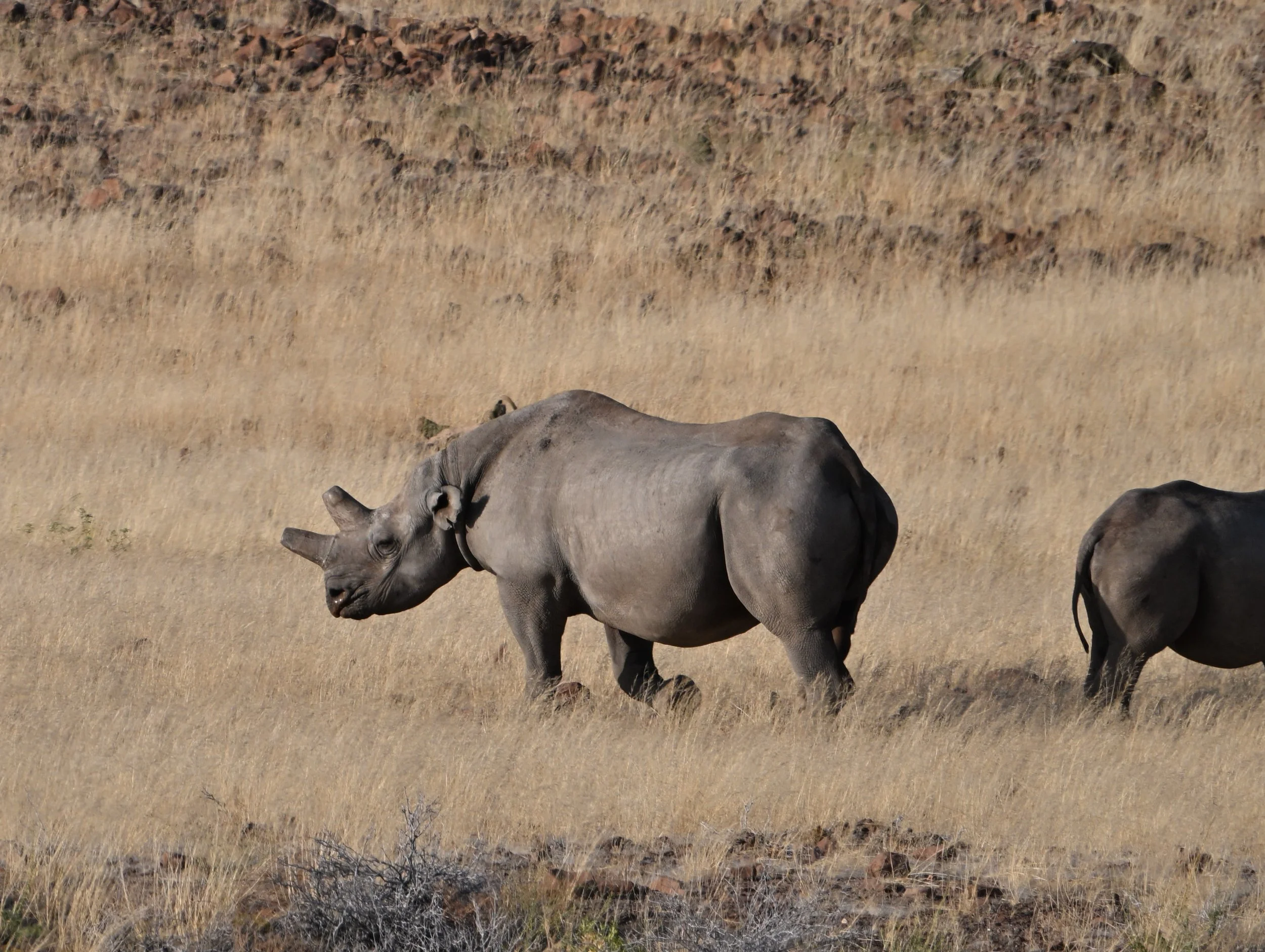
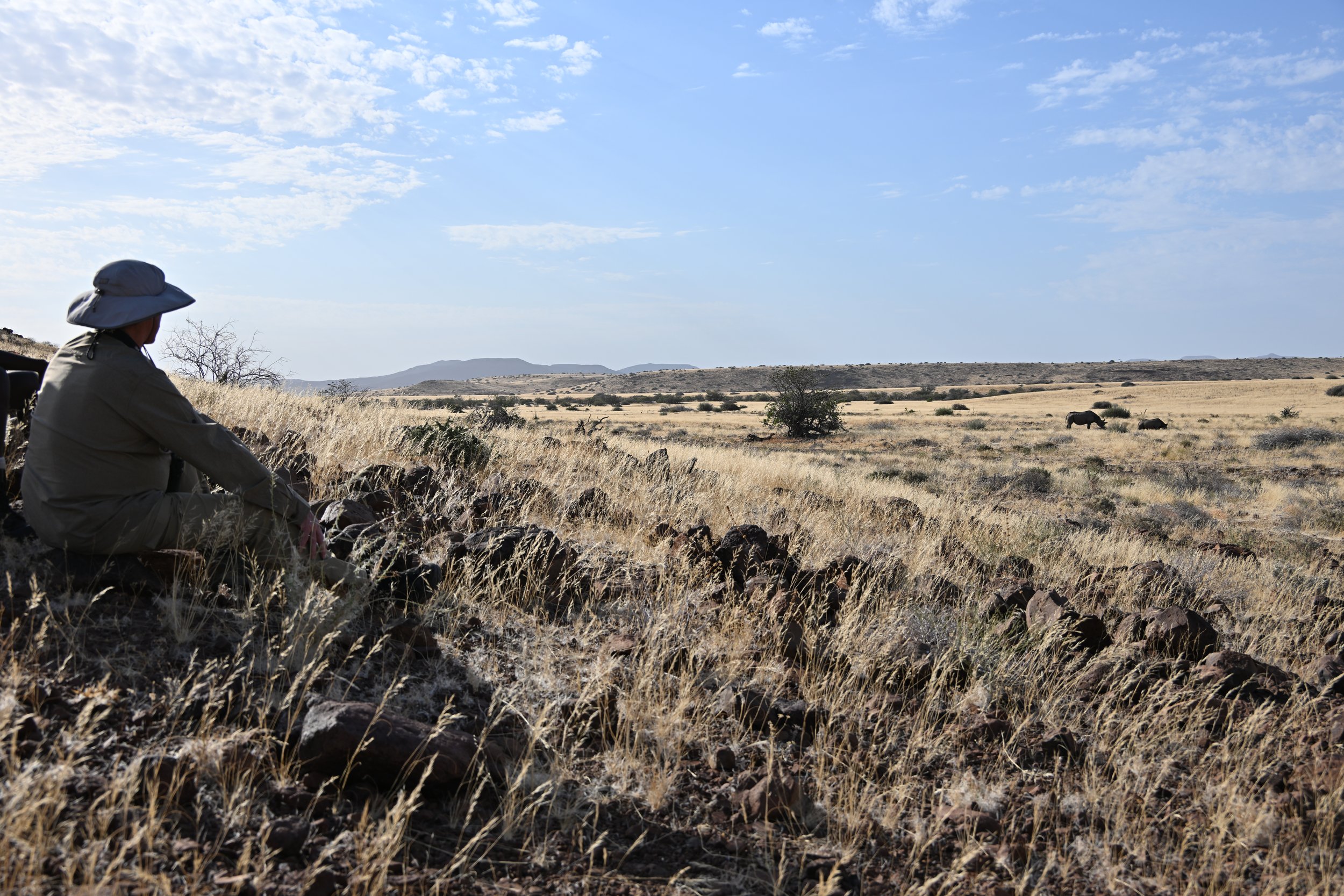
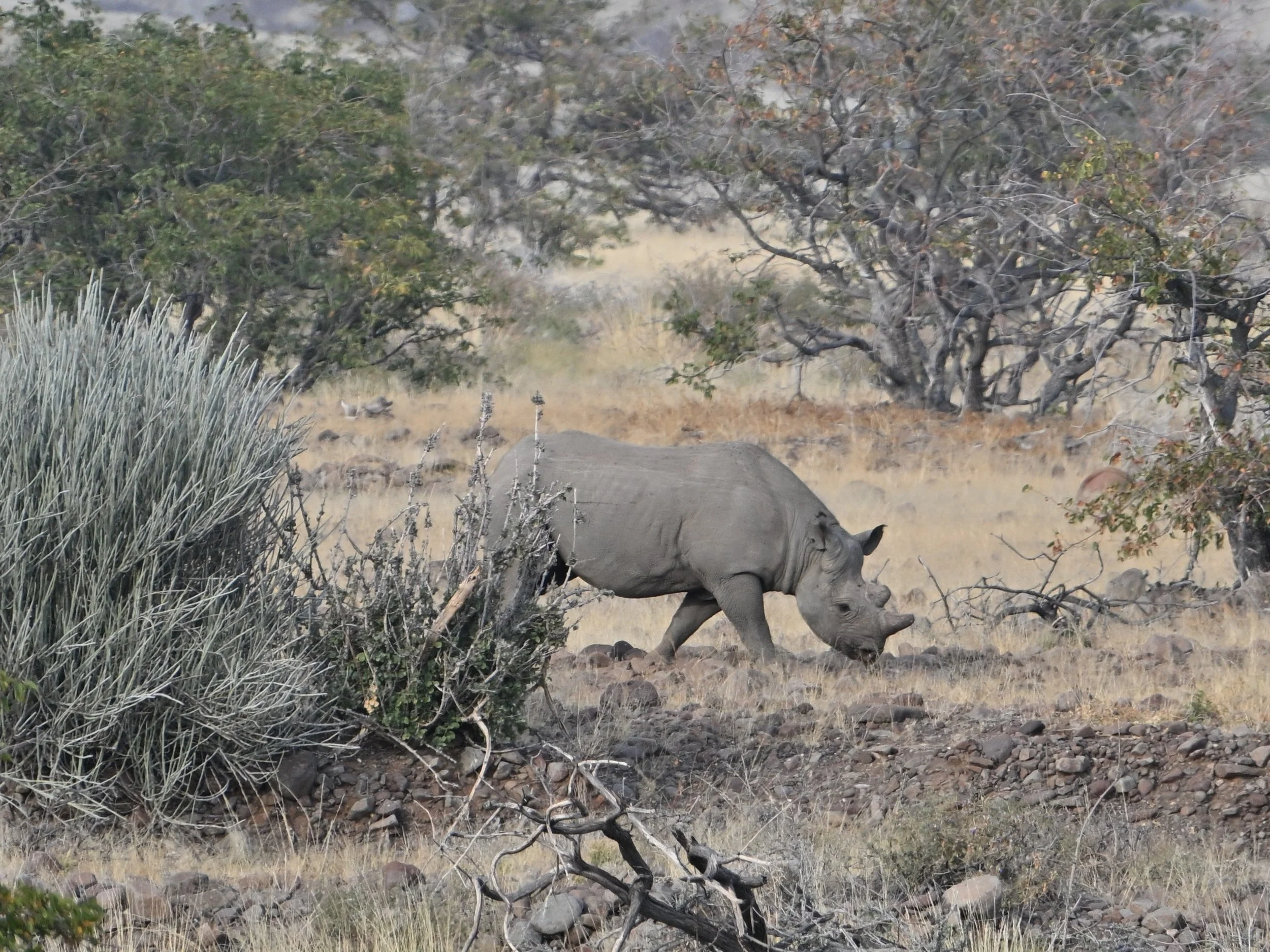
We spent our first full day at camp doing a game drive for hours. We finally met up with the trackers who said they’d found a Black Rhino, but we needed to get out of the truck and get closer on foot. We were to be quiet and walk in a single file line behind the trackers. We were approaching from downwind. Rhinos have very poor eyesight, but an excellent sense of smell. (I was surprised that our crunching and stumbling over rocks wasn’t a noisy problem.)… Finally!

(and this was taken at the full extent of my long lens)

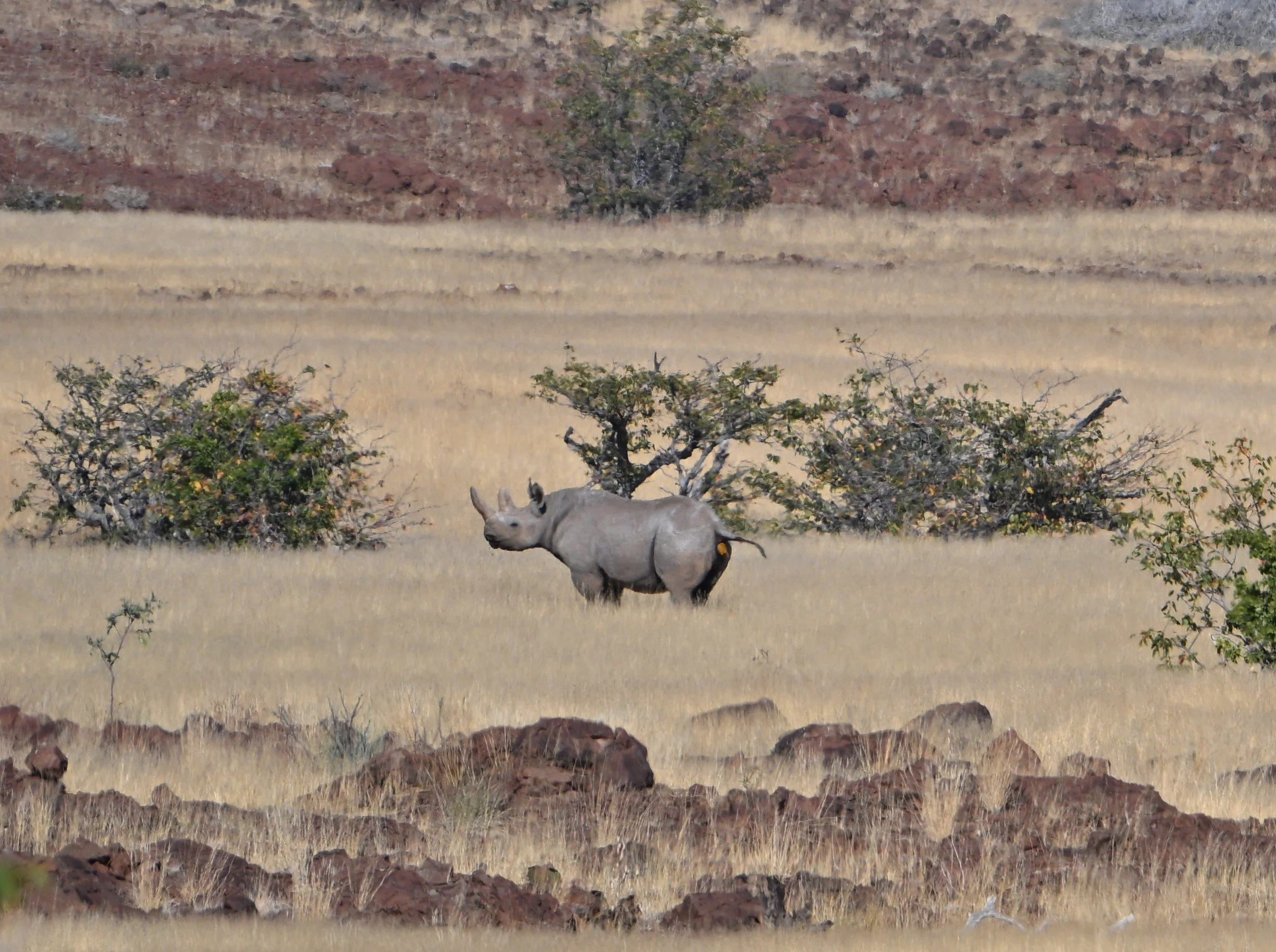
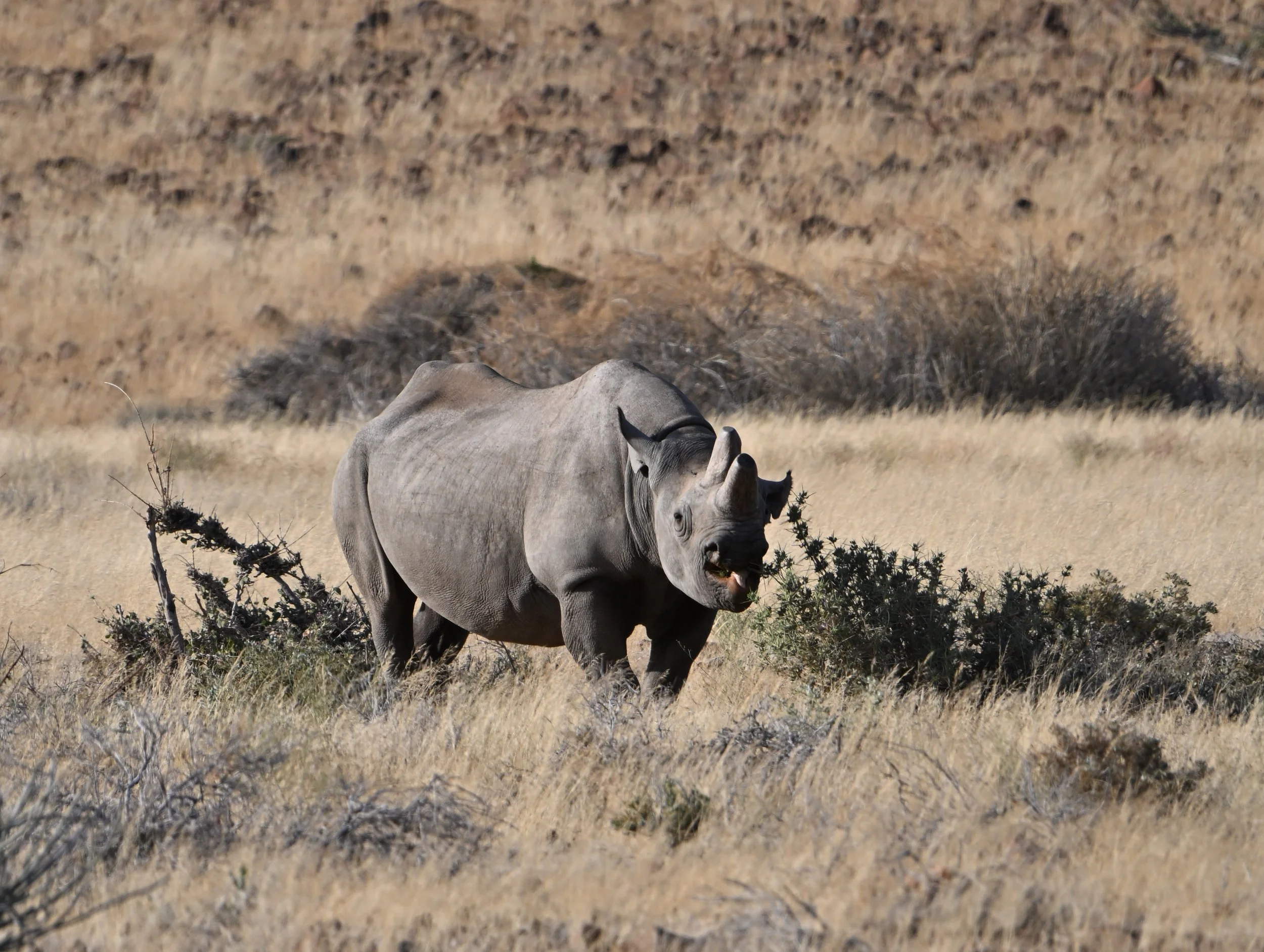
When I enlarged the picture on my computer, I found out just what it thought of us -

Black Rhinos are browsers, eating grasses, leaves and branches, and they sport a hooked upper lip to aid them when feeding on bushes -

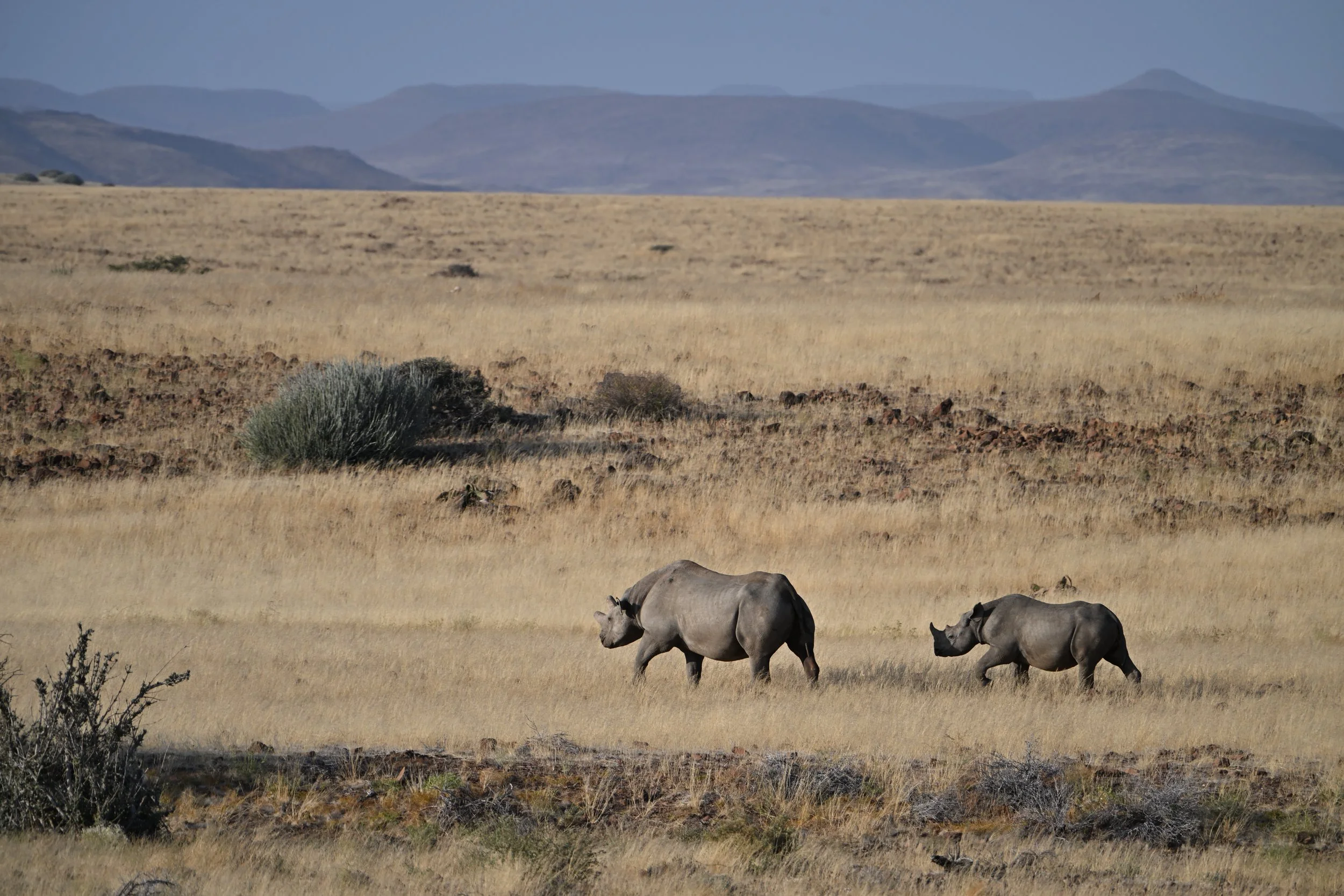
The female in the picture above has had her horns removed (it’s painless for them) as protection against poaching. Her “baby” still had hers -

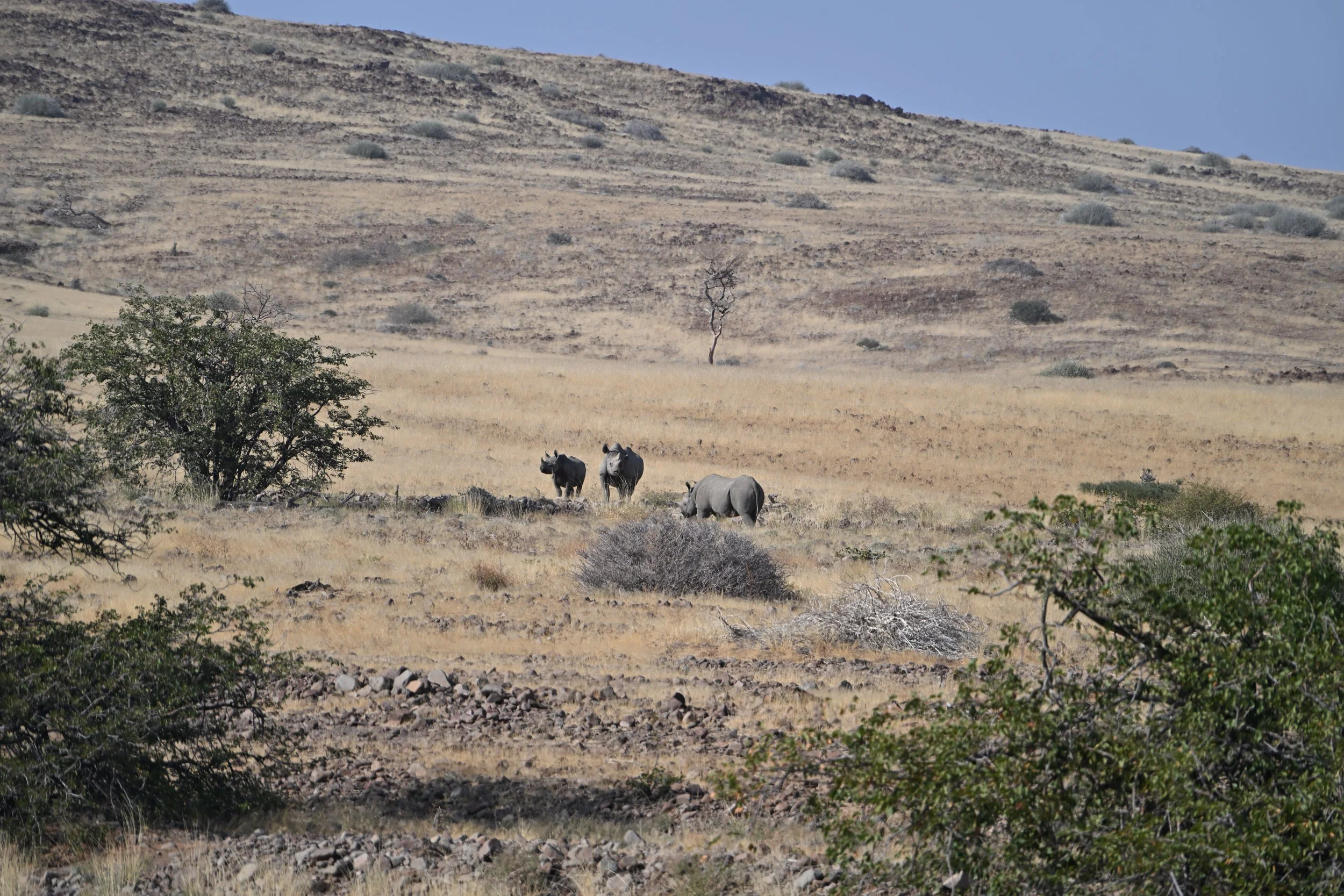
They have a reputation for aggressiveness. However at this private reserve (of over 1 million acres!), we found them very skittish and wary of humans, or anything associated with us. We had an excellent viewing opportunity on the last afternoon we were at this camp -

The wind was in our favor, so we were able to spend 30 minutes or more watching this pair. Video ahead - sorry, but I have tried numerous ways to get rid of the annoying wind sound before posting this, and completely failed (as did Steve), so I’m just asking that you hit mute when it starts playing.

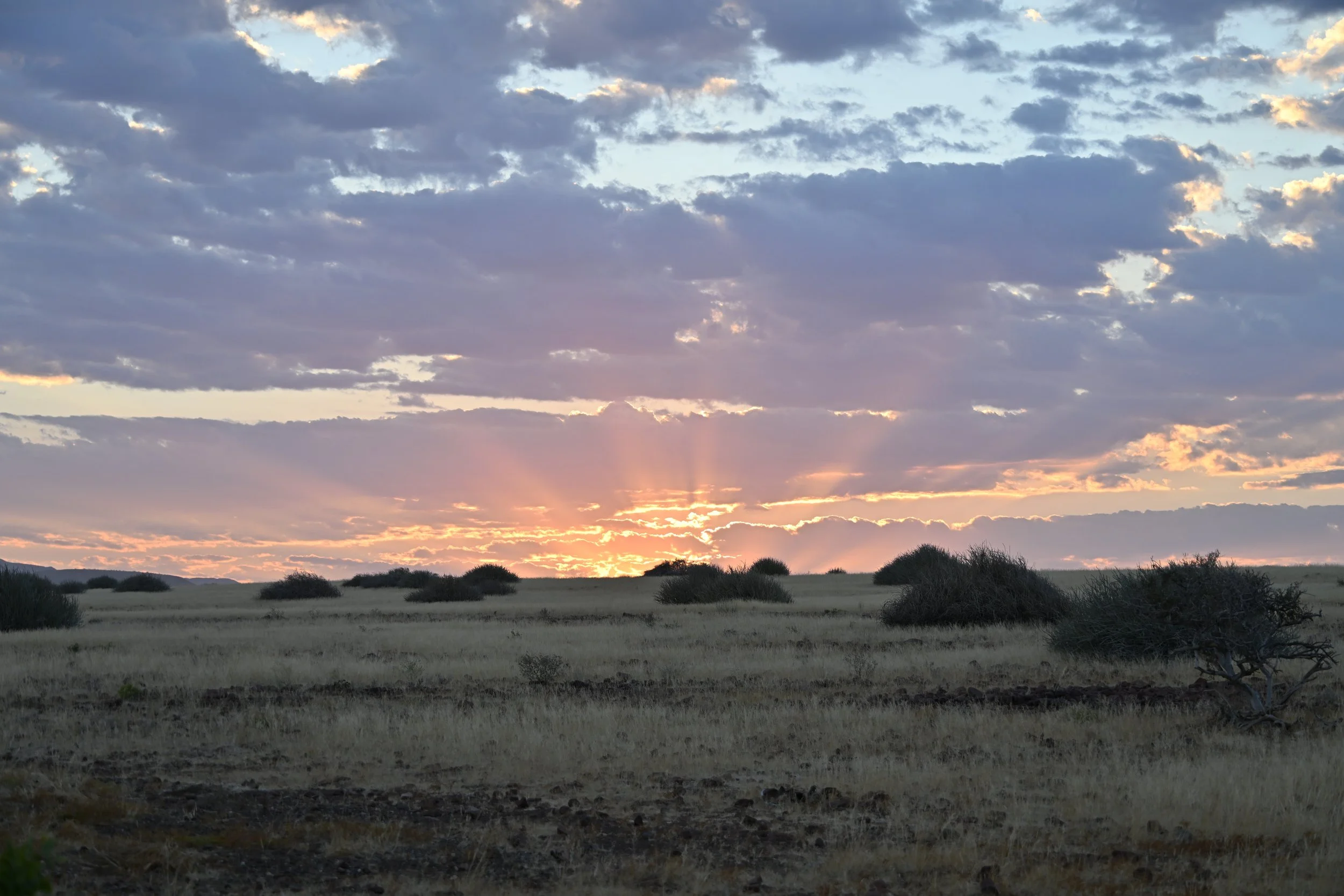
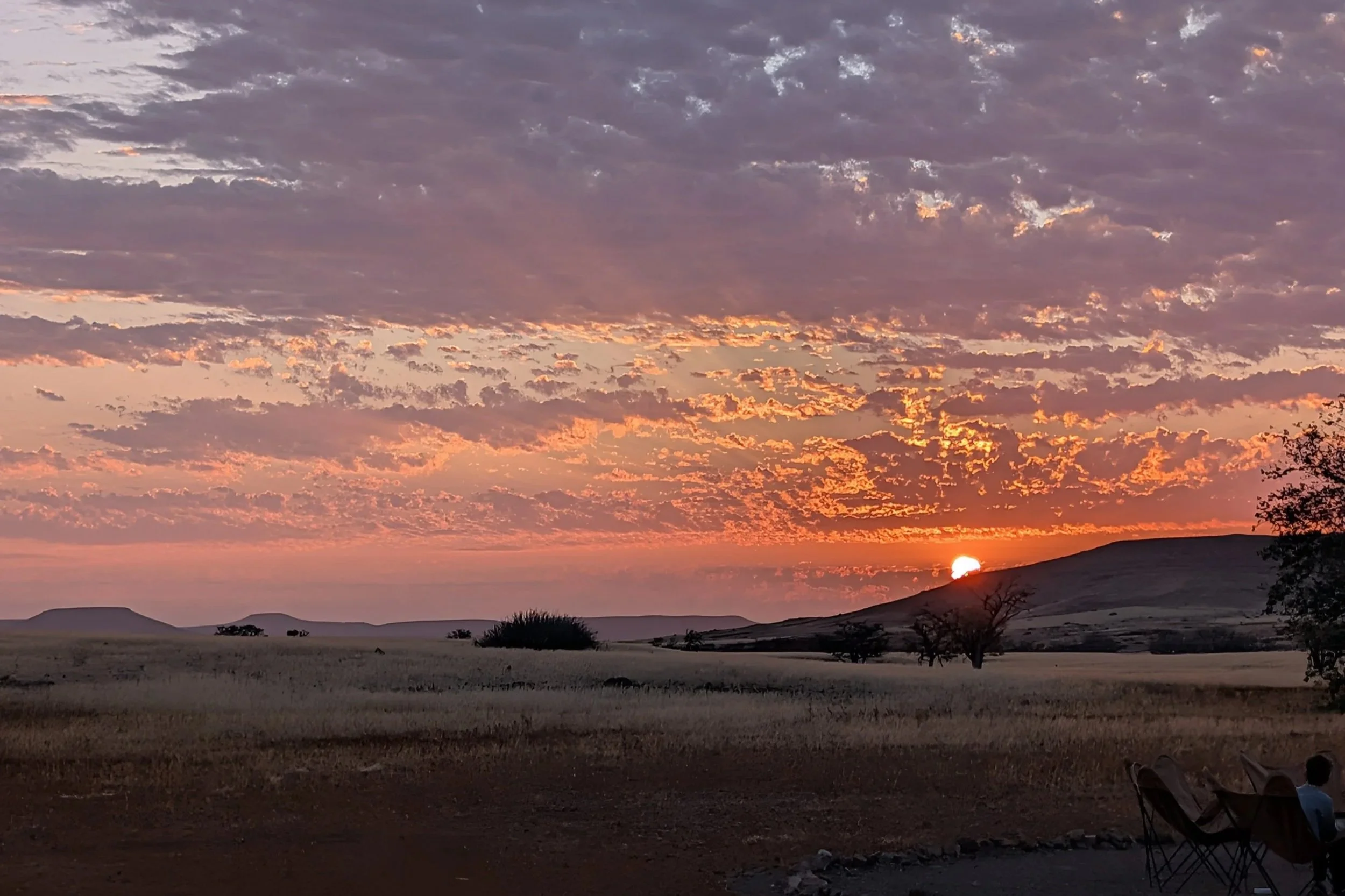
We saw some beautiful sunrises at this camp, as we headed out, hoping for more rhino sightings…

… and we were very lucky in our observations. We watched this male for awhile…

… when suddenly the female and her baby showed up!

Our guides said this was very unusual, but that she was probably going into heat, as her baby was about 3 yrs old.

This was an interesting thing I saw, but our guides didn’t say anything about it. I discovered by research that rhinos smell with a special organ in the roof of their mouth, so they will open their mouth when trying to discern several scents -

quite a lovely pose, don’t you think??

Just to share the sizes of these animals (Steve’s hand as scale against a rhino footprint) -

Enough rhinos! G’night -

More sand

After visiting the red sands of Sossusvlei, we headed to the west coast of the country and the town of Swakopmund…

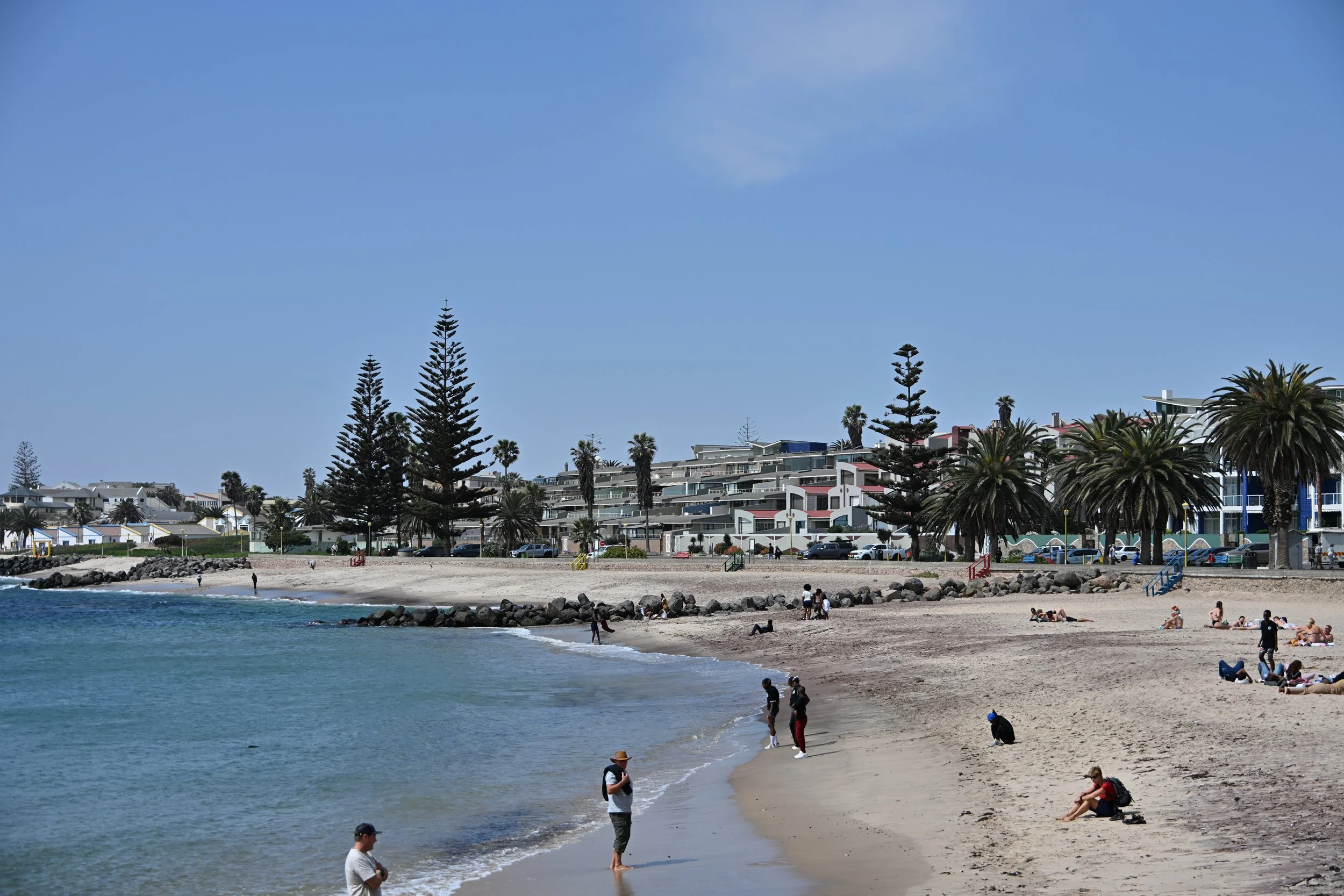
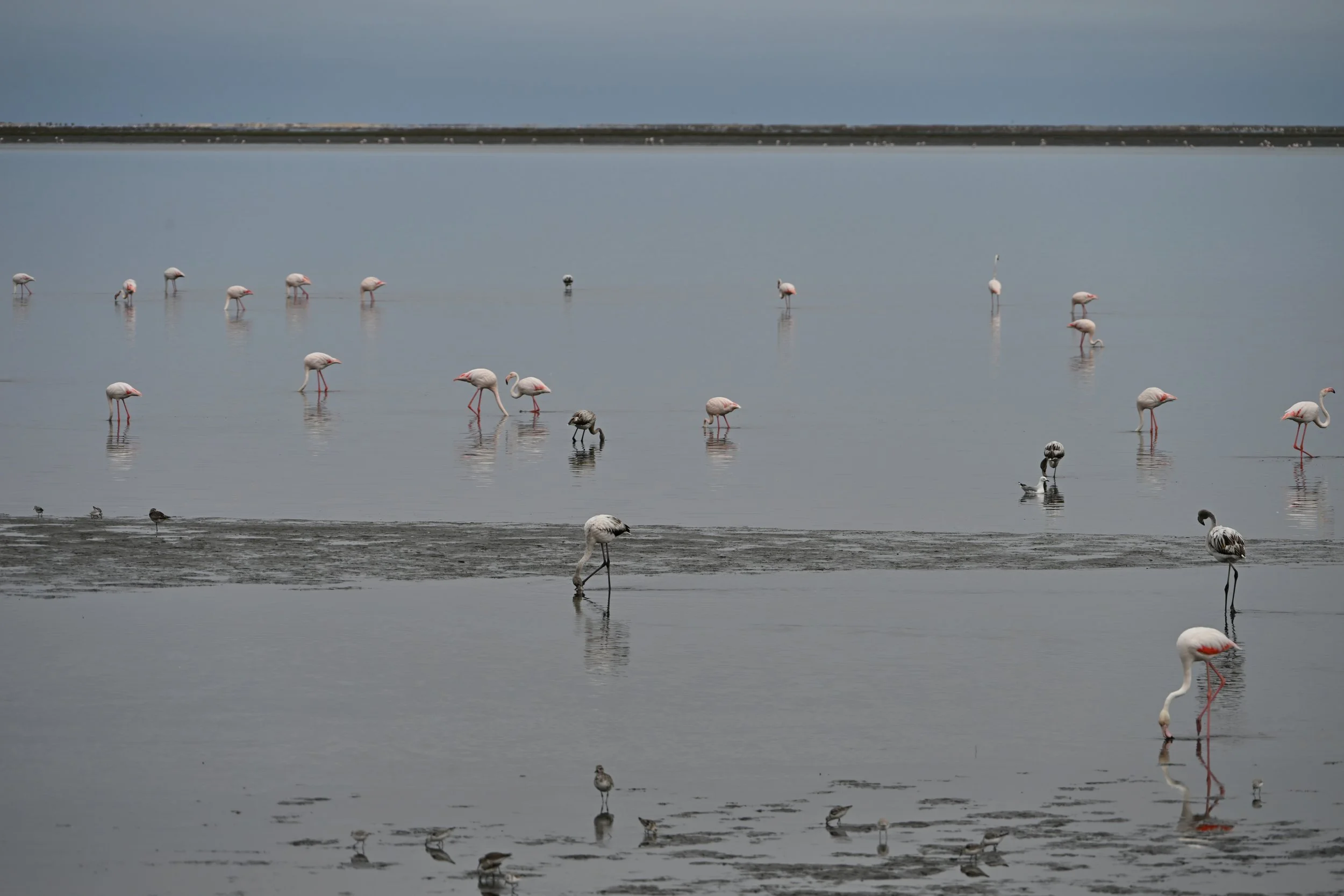
… which is a beach resort for those in Windhoek to escape the heat. We took a 4WD tour with an excellent guide to Sandwich Harbour, with its hundreds of flamingos -

(the black and white ones are juvenile Greater Flamingos, like the pink ones)

(Video alert - open this post in a browser by clicking the link at the end, so you can view it.) The flamingos stir up the sand and mud to get the crustaceans they feed on -

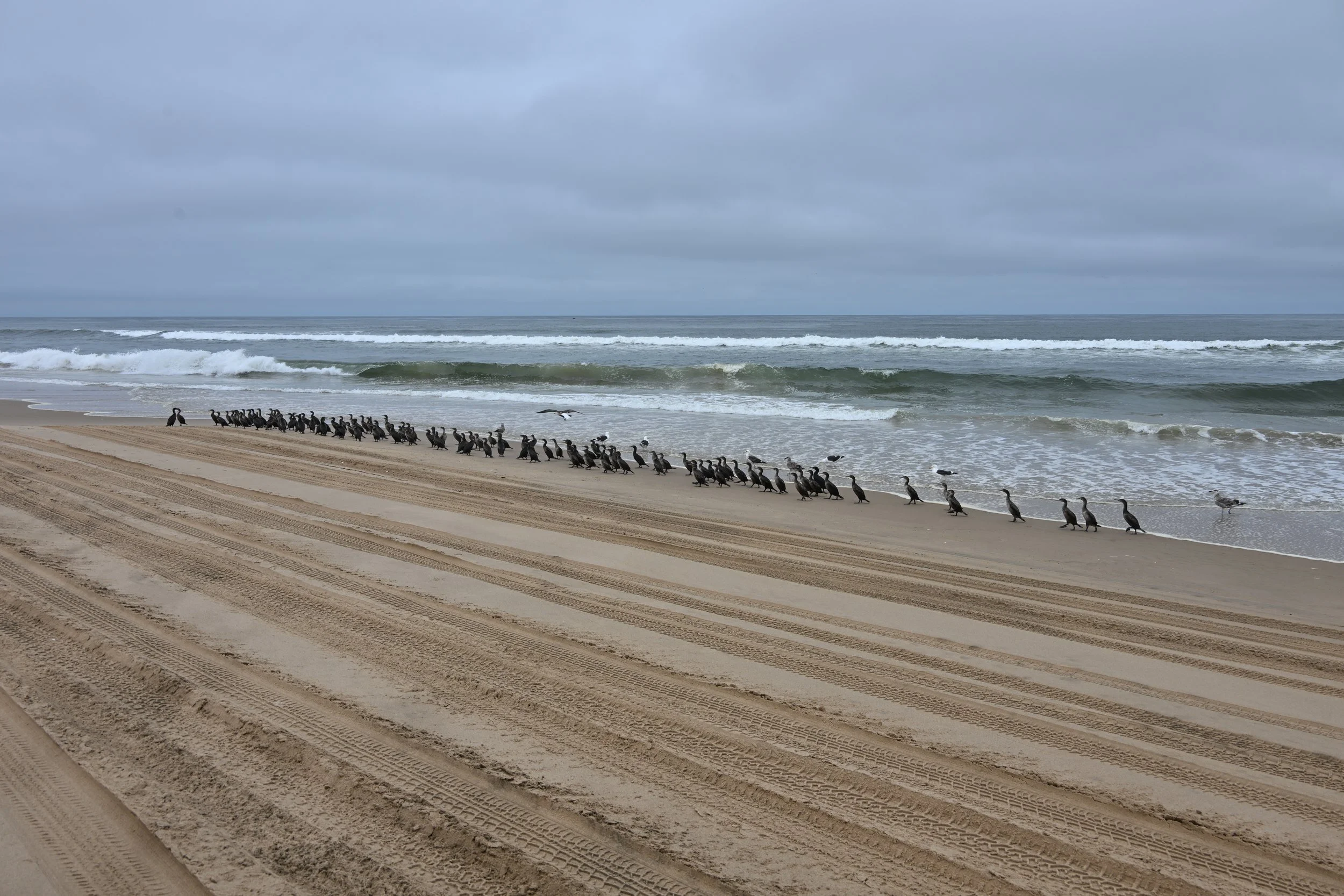
We then drove on the beach for miles, passing numerous shore birds, including this flock of Cormorants…

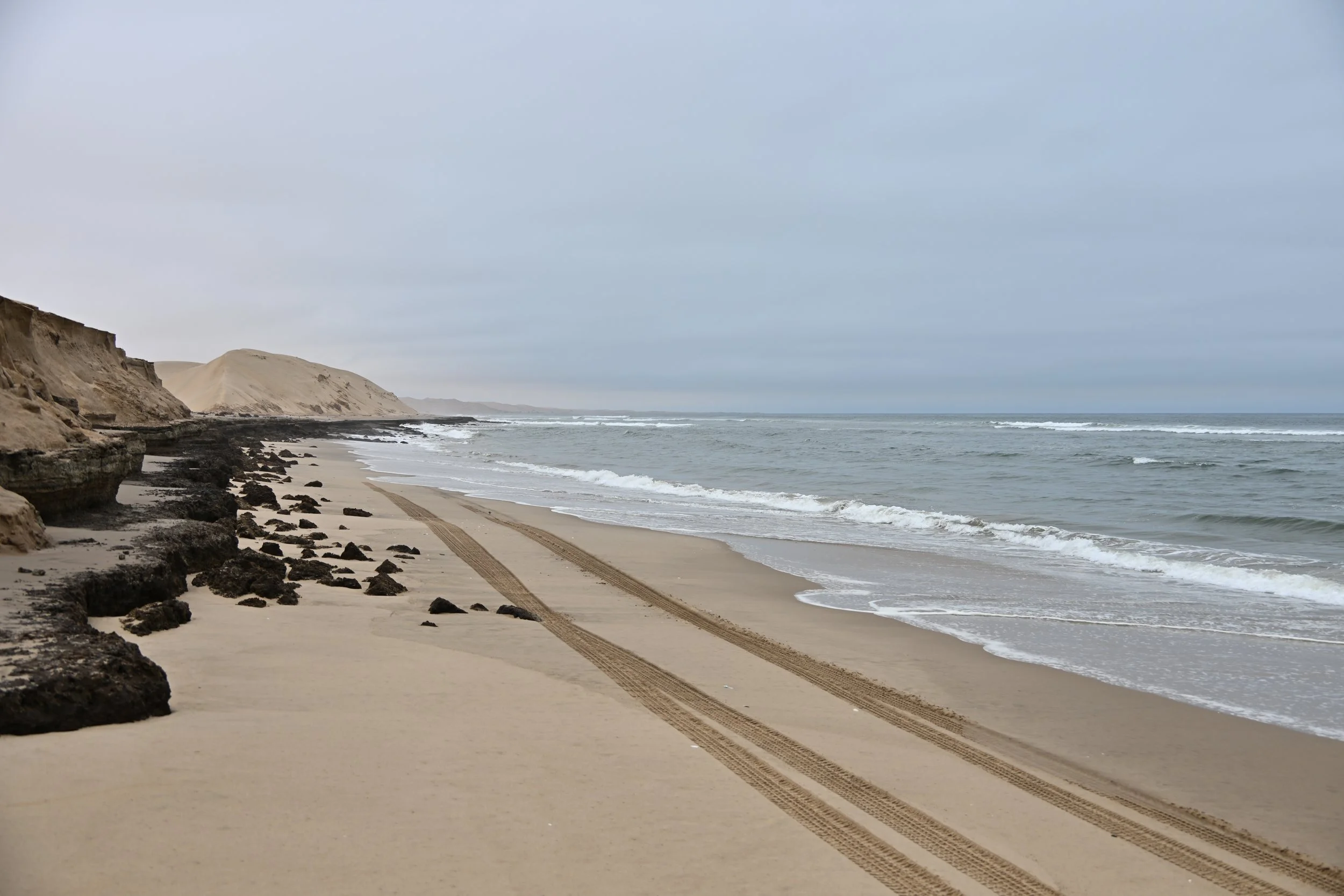
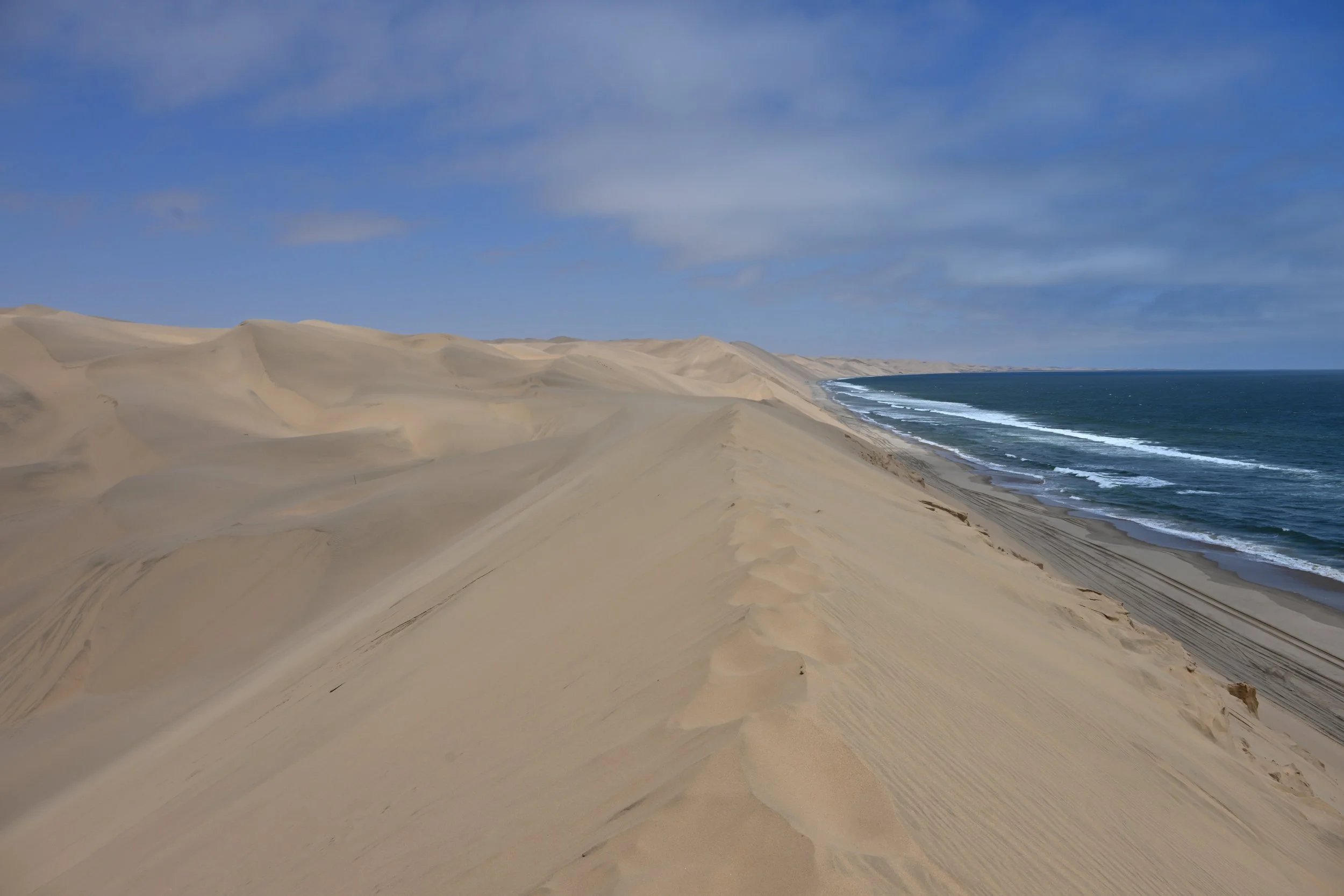
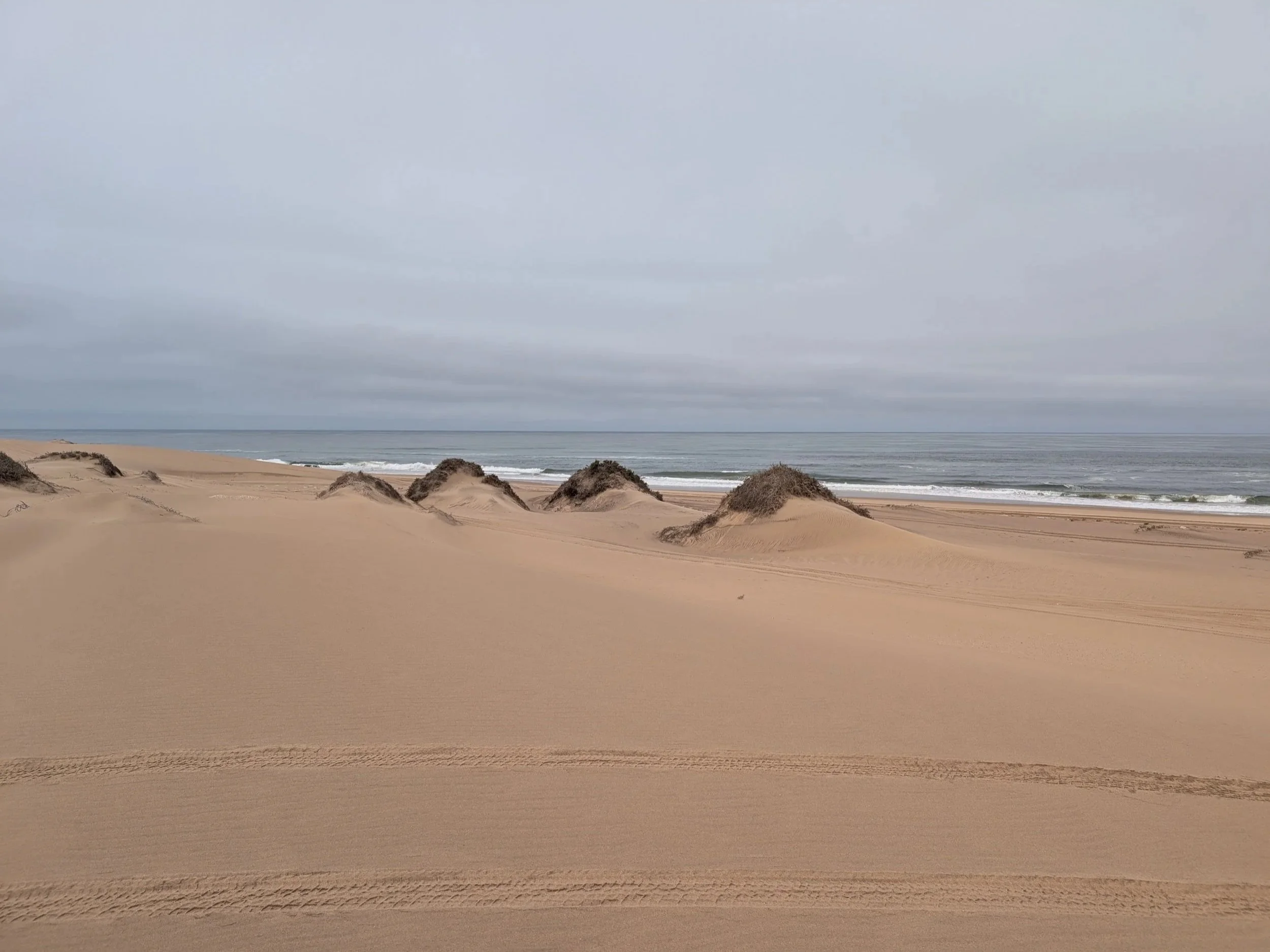
… until the dunes met the water -

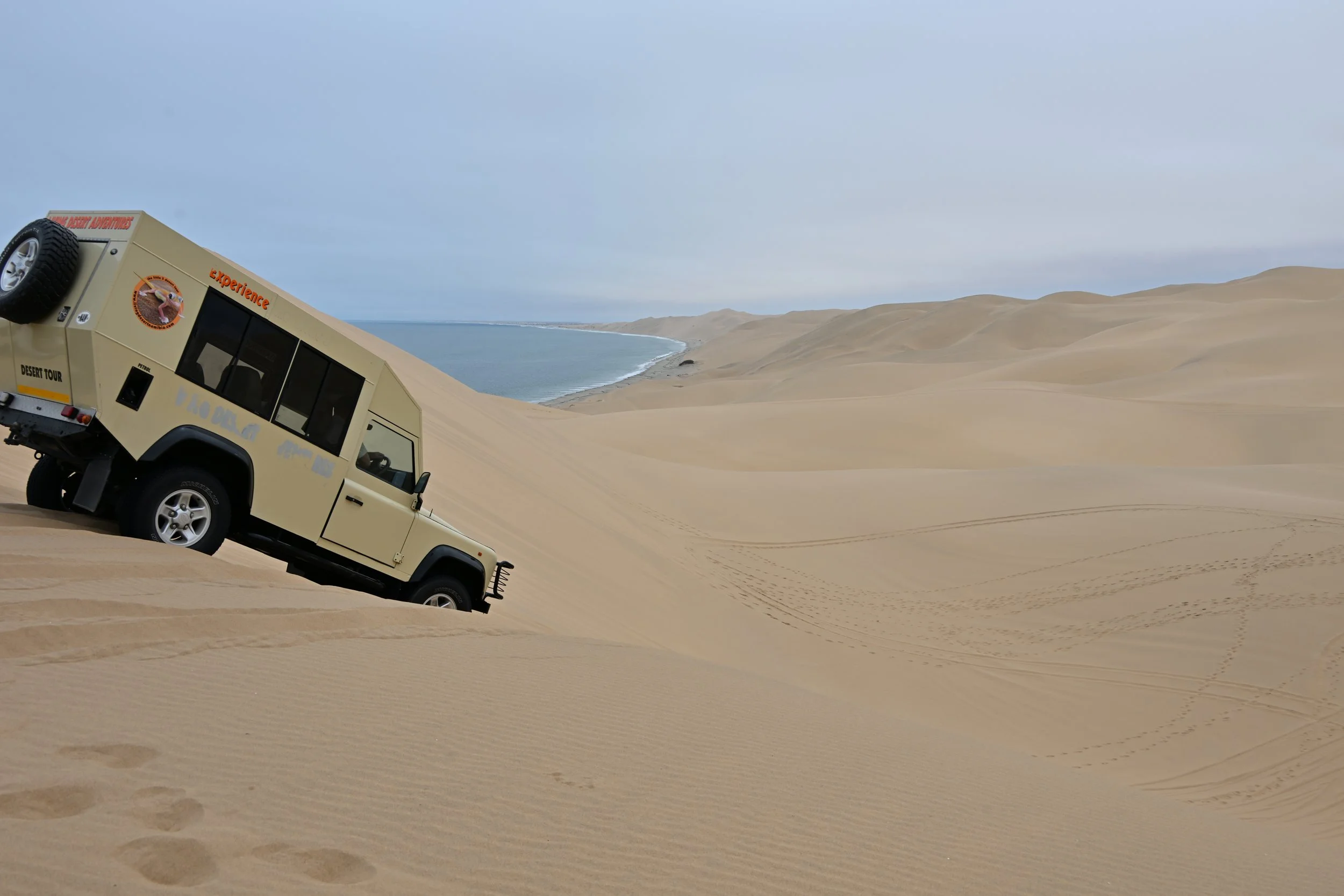
So we did what any self-respecting 4WD driver would do - we challenged the dunes -

Our guide told us that the maximum slope of a dune is 37%, and a car heading directly down will not flip tail-over-nose until well past that gradient. The first time we crested a dune and headed down, it sure made your heart speed up!

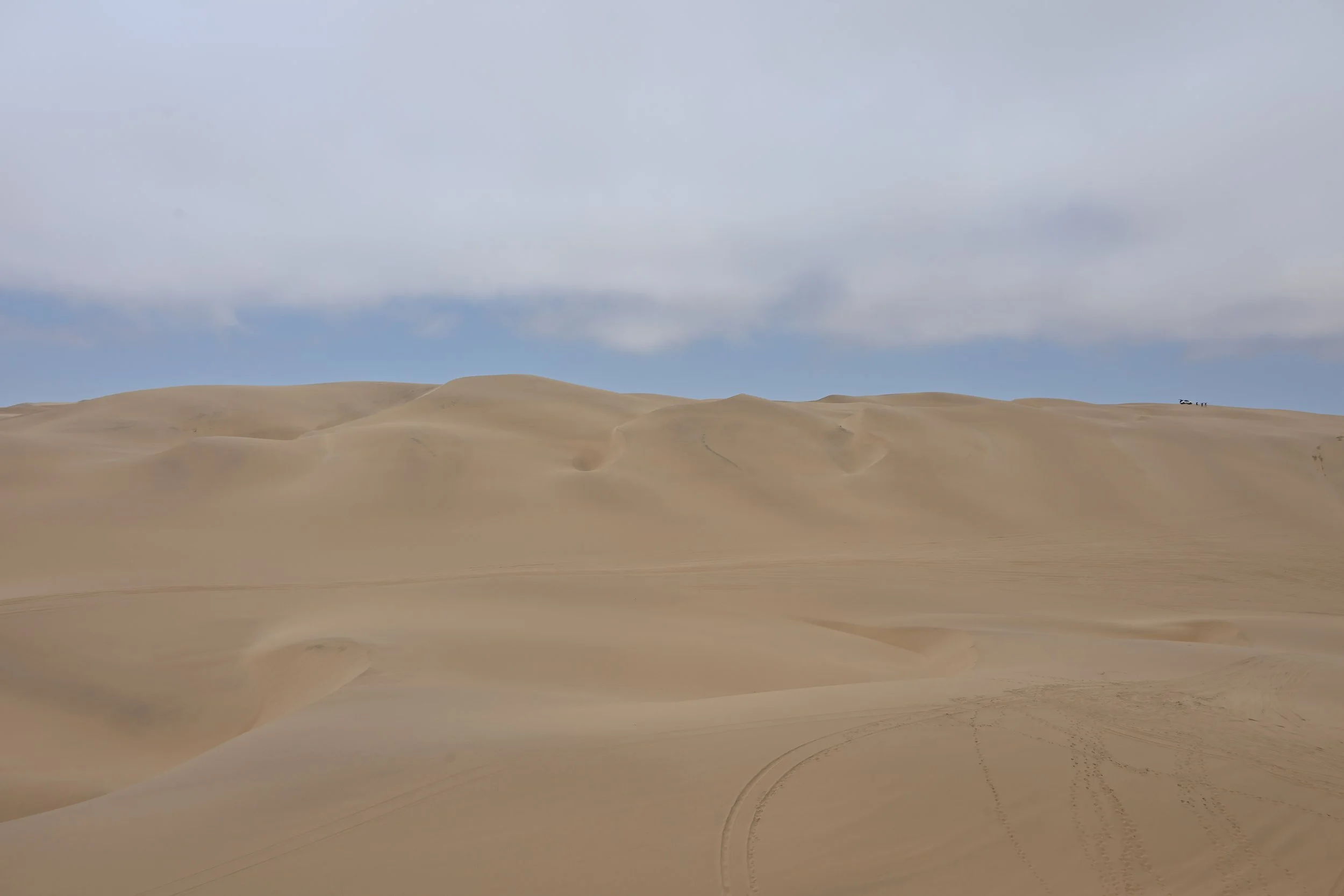
While we were in the dunes, we enjoyed several stops for walks…

… and to enjoy the solitude -

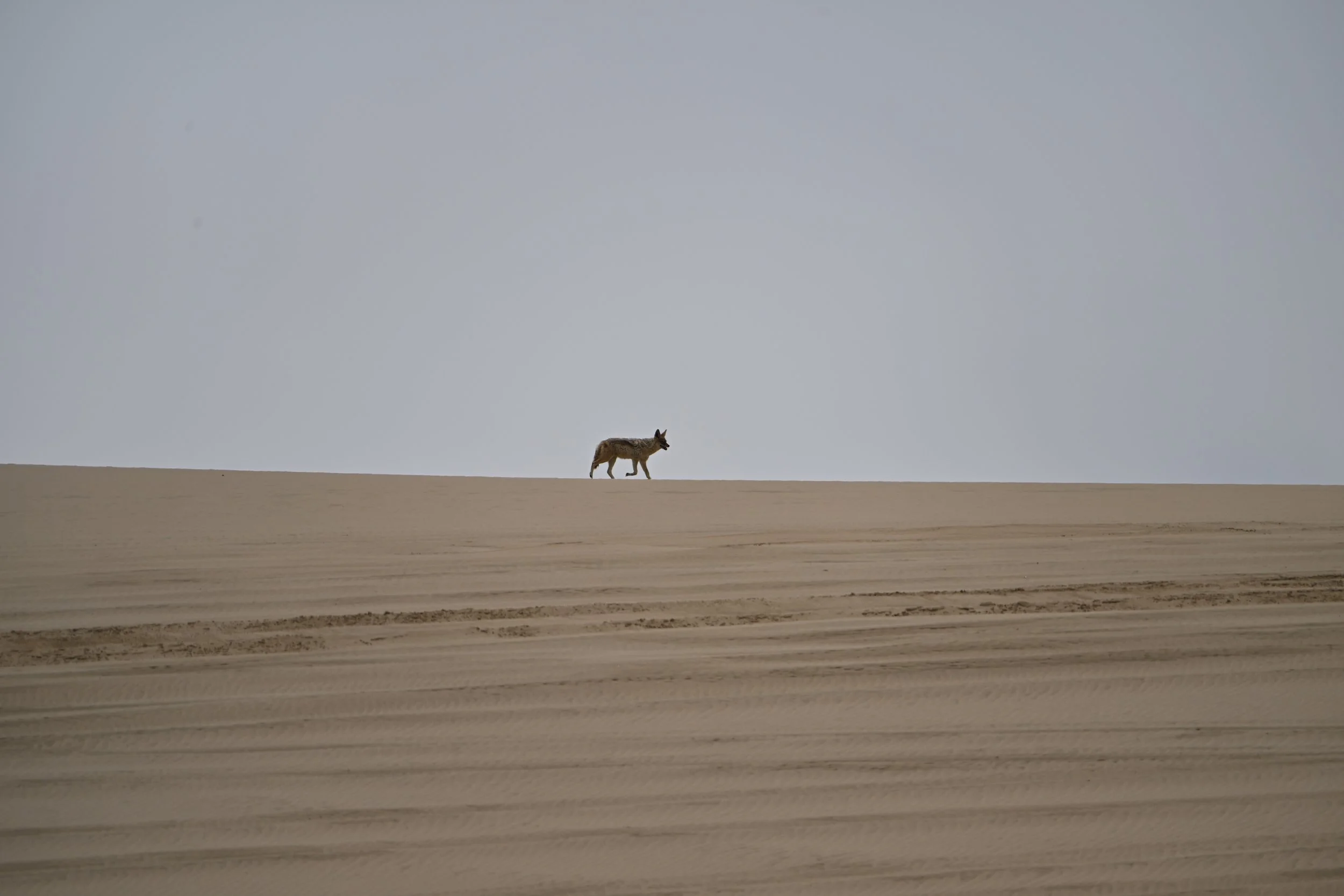
We also saw some wildlife, like this Black-backed Jackal…

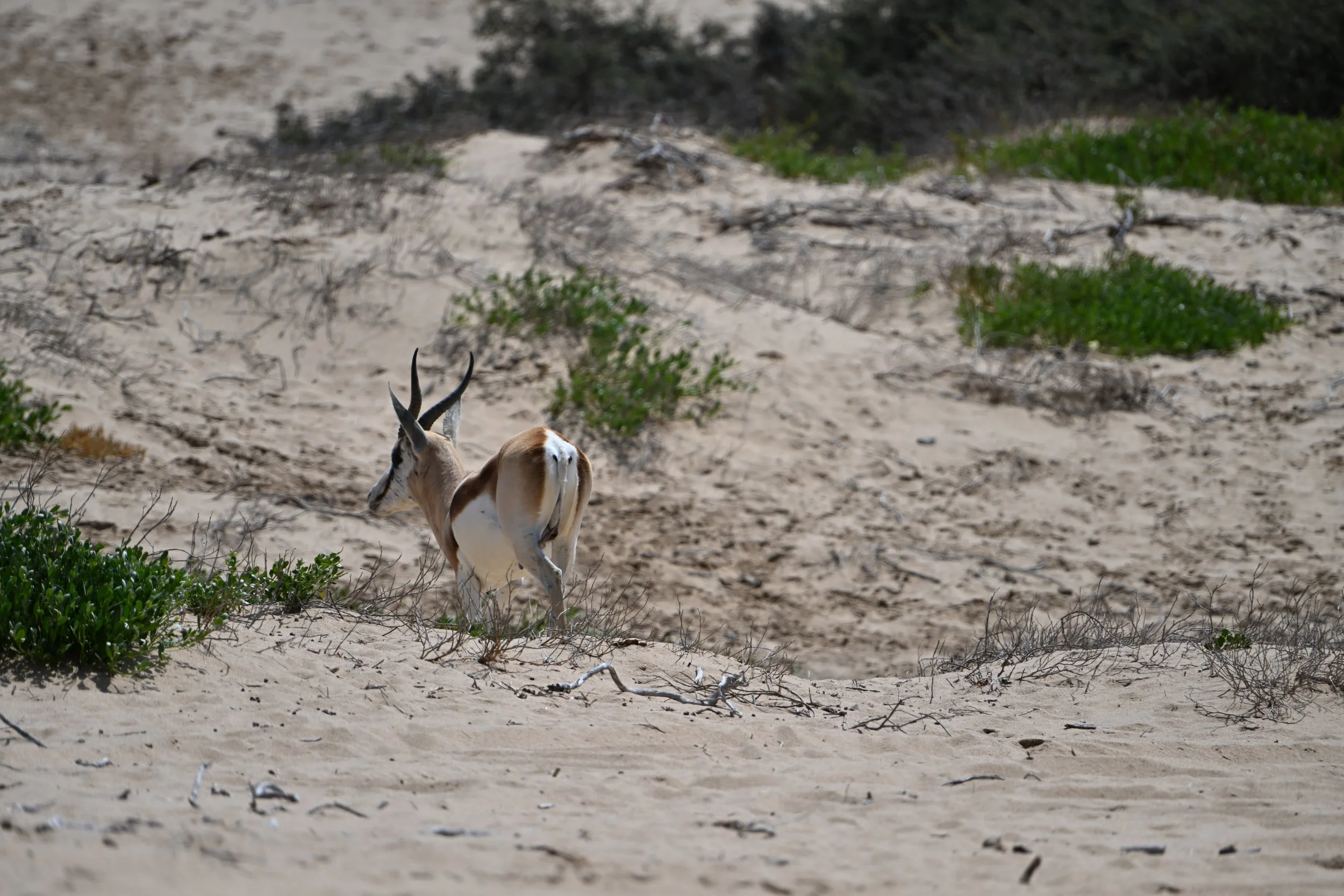
… and a Springbok -

Back down on the beach, we enjoyed lunch at the edge of the water, and the guide showed us the actual make-up of the sand. This beautiful pink area…

… is actually made of innumerable tiny gemstones, including garnet (which imparts the color) -

This next shot shows how dunes get started behind a small clump of vegetation -

On our way back to town we drove by the salt processing plant, with its mounds of road salt…

… and the drying pans for pink table salt -

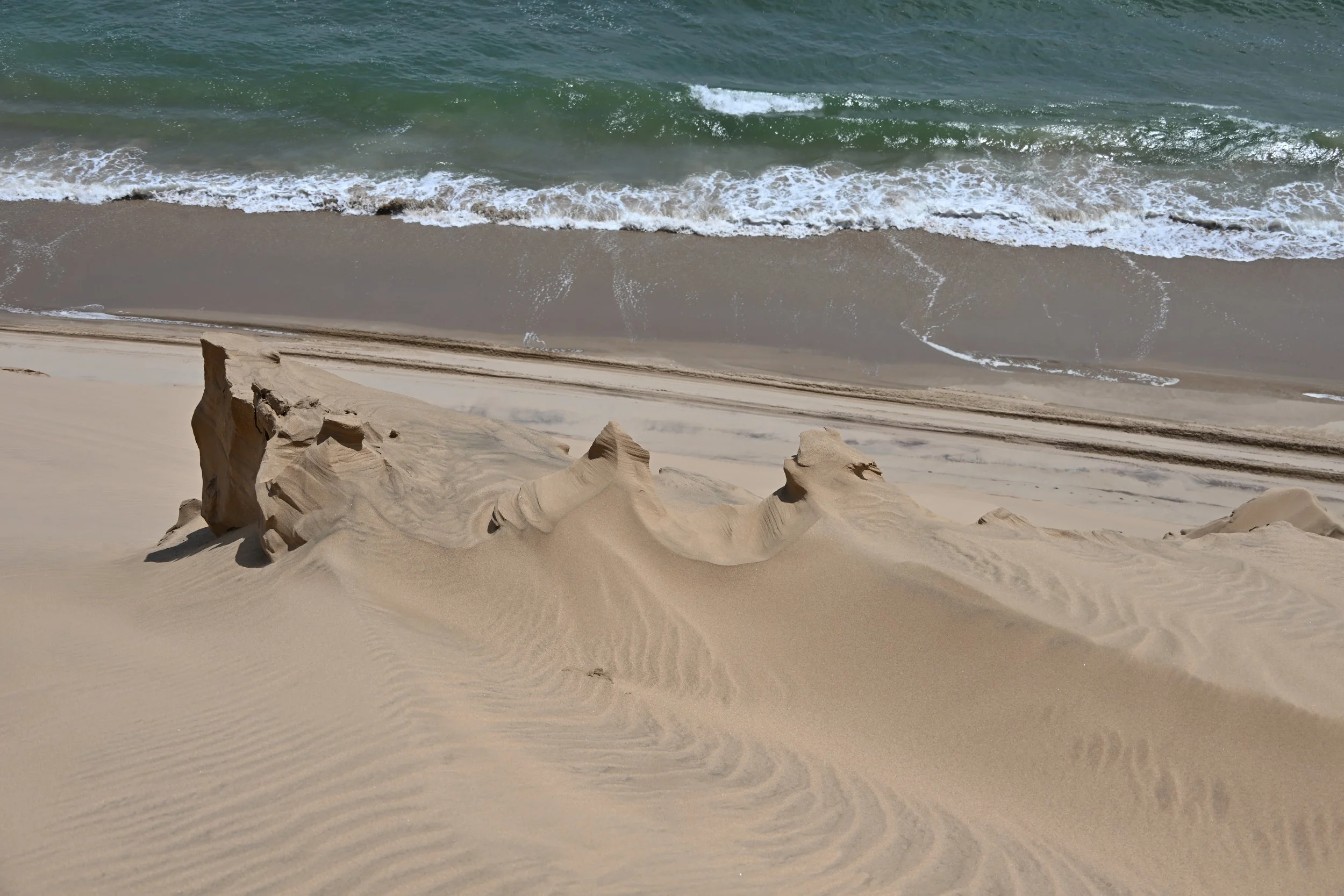
I’ll leave you with this beautiful sand sculpture, to close this post -

Sossusvlei

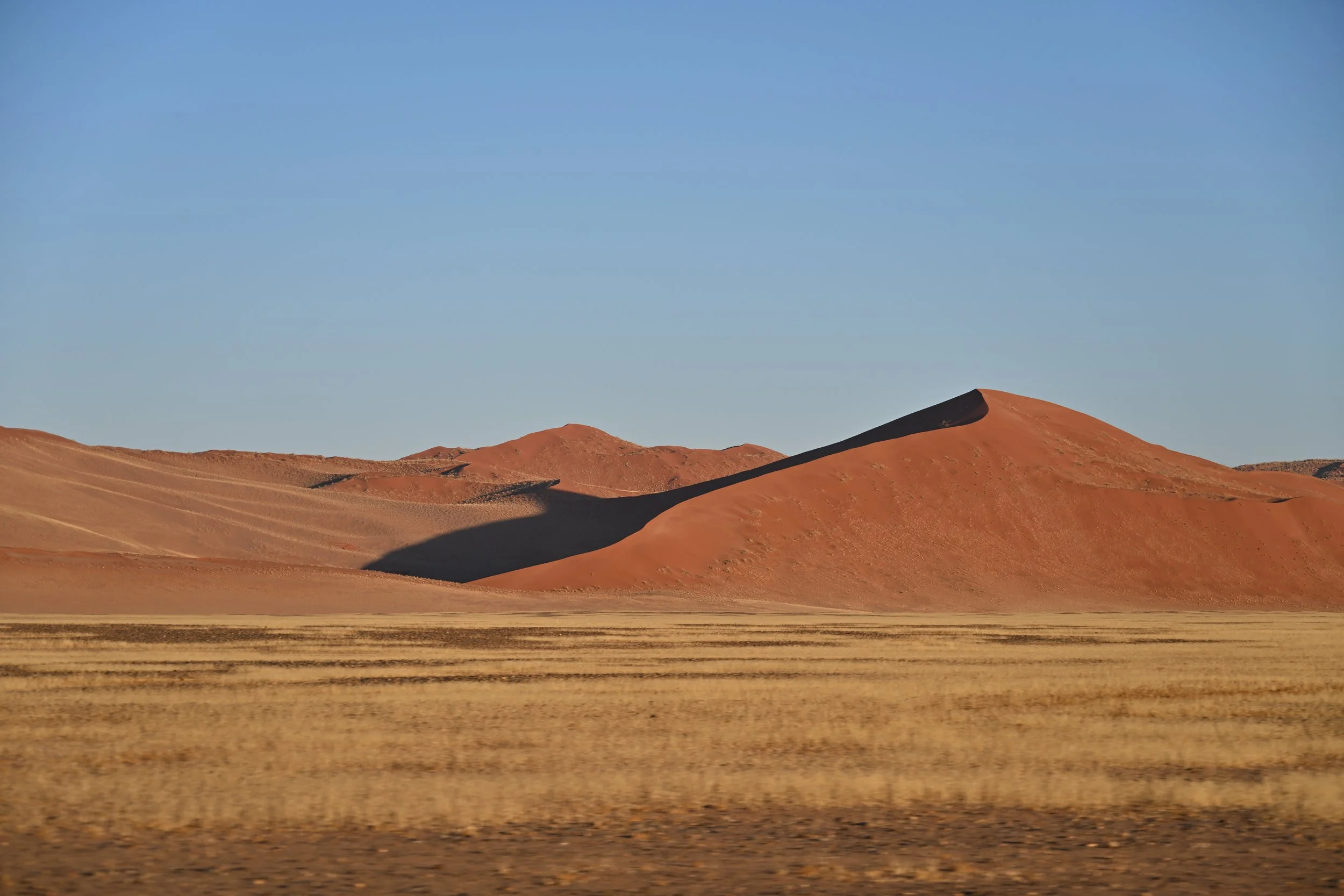
This word has a mixed origin. Vlei in Afrikaans means marsh, while sossus is Nama for dead-end or “no return”. The sand dunes in the area are various shades of red due to the iron content in the sand that has oxidized or rusted.

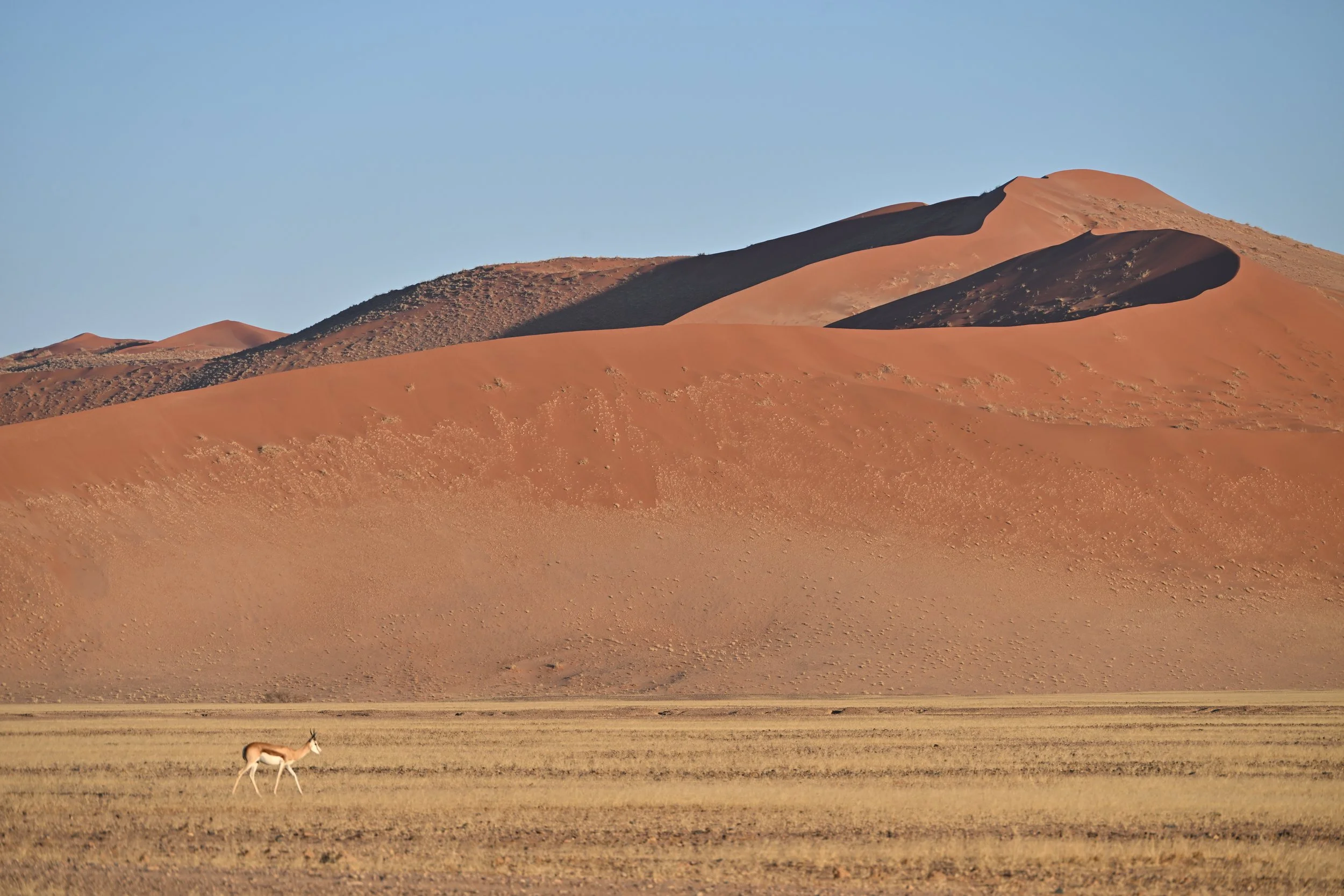
The early morning light brought out the various hues, as well as cast beautiful shadows. A Springbok was enjoying the cooler temps…

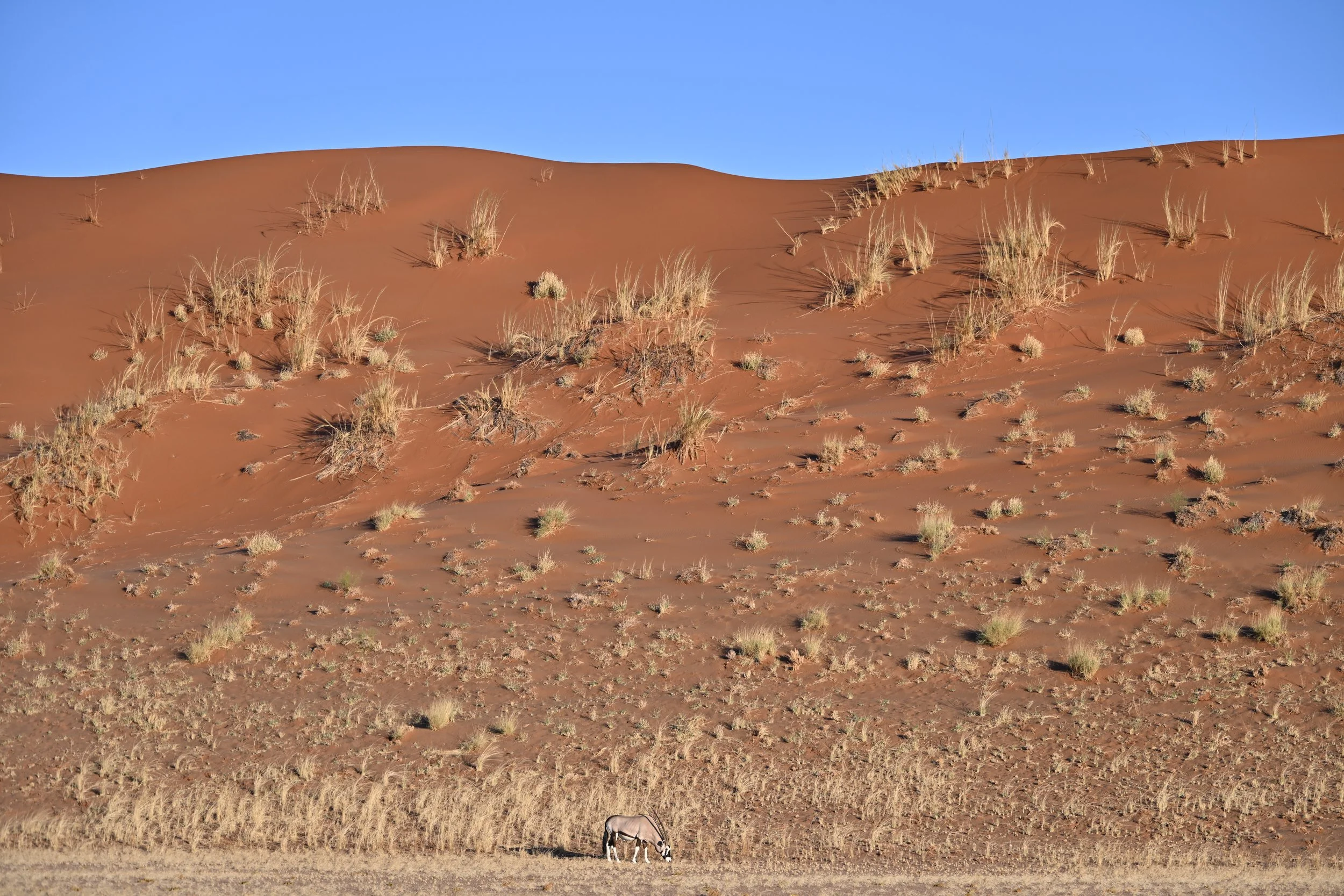
… while a beautiful Oryx provided a nice scale element -

(they are bigger than a deer, but smaller than an elk)

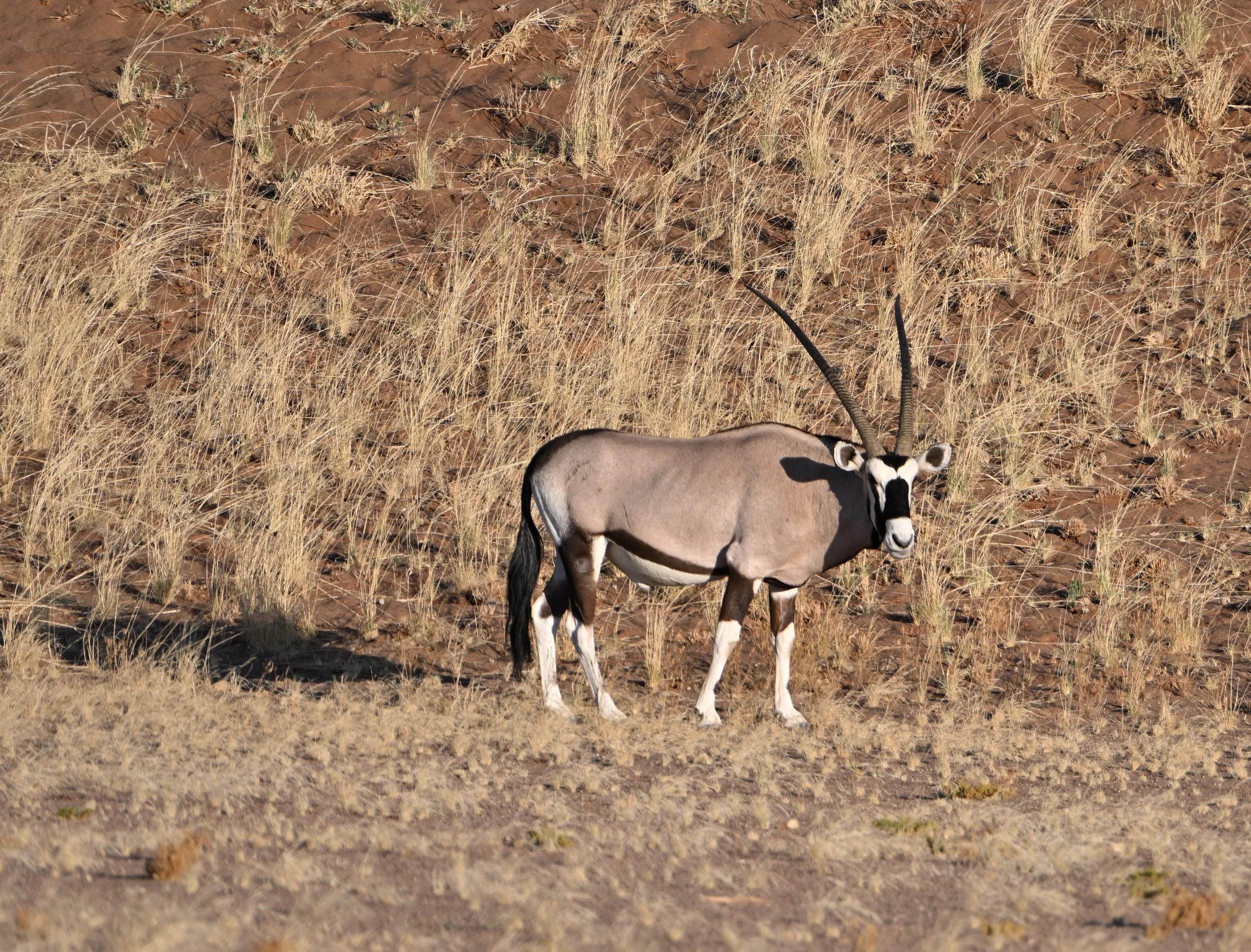
His close-up:

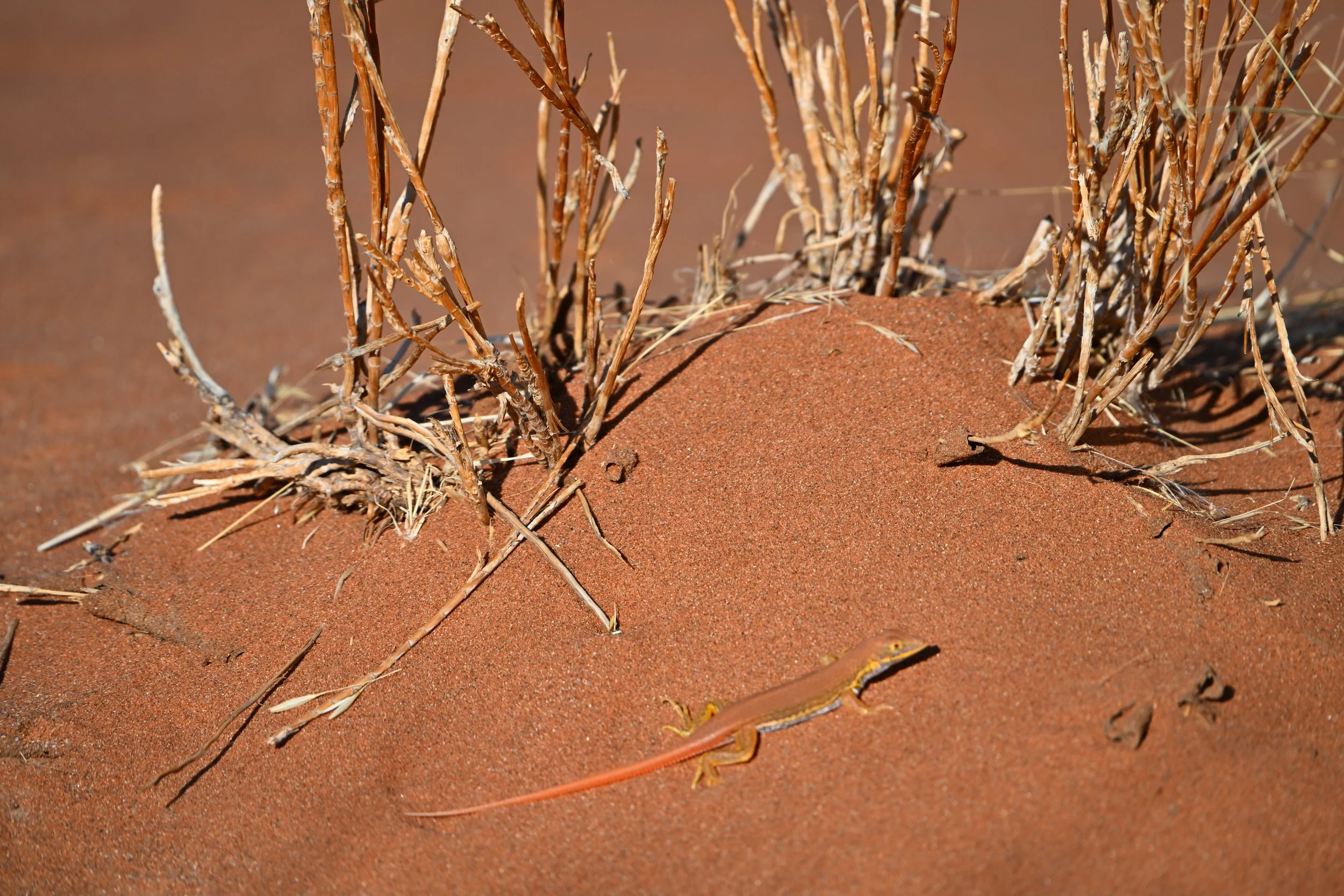
Our guide stopped in an area to show us the little residents of the dunes…

(I’m sorry about the fuzzy focus, but I wanted to share the colors of the Red-tailed Lizard)

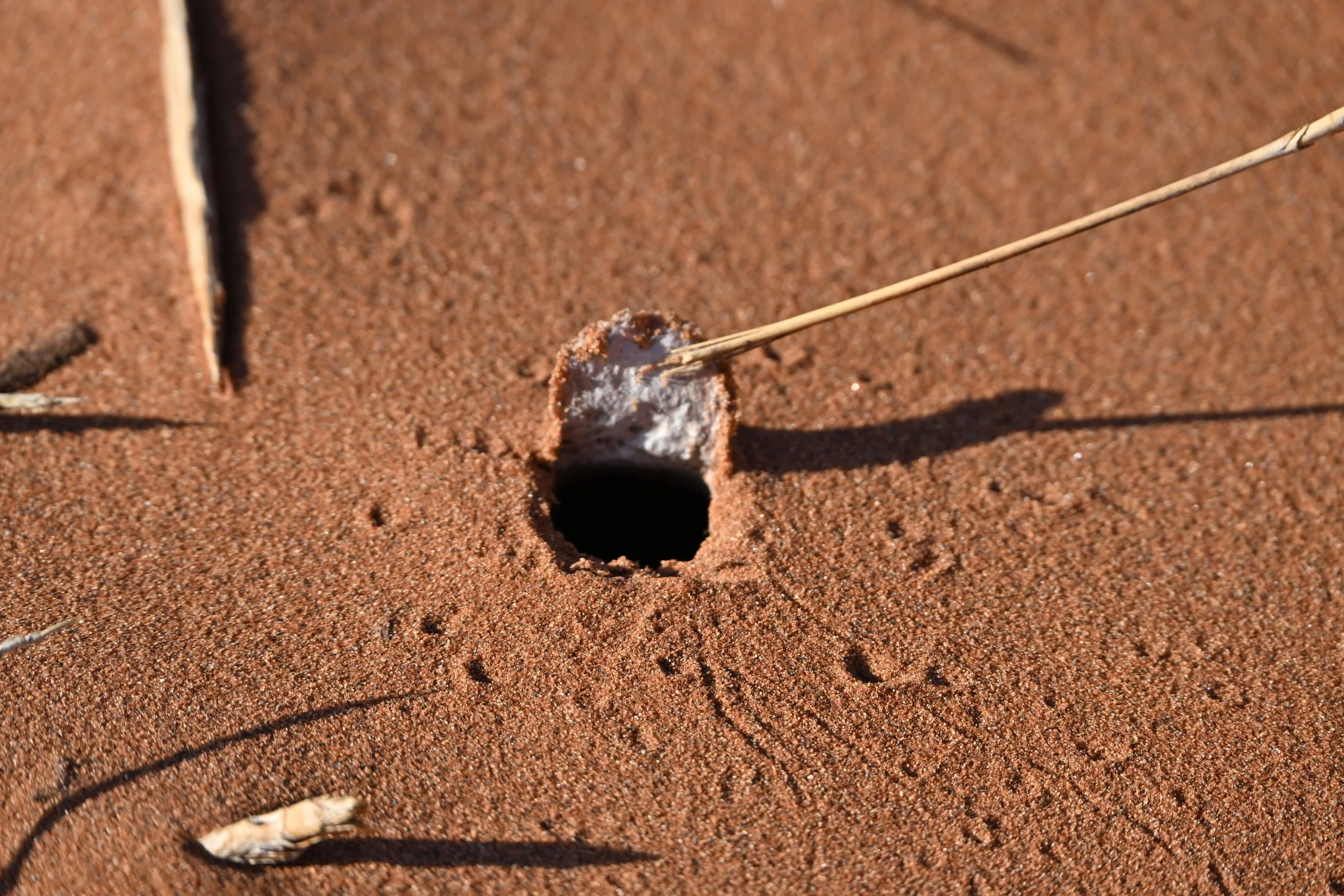
He showed us the trap door of the White Lady Dancing Spider’s den…

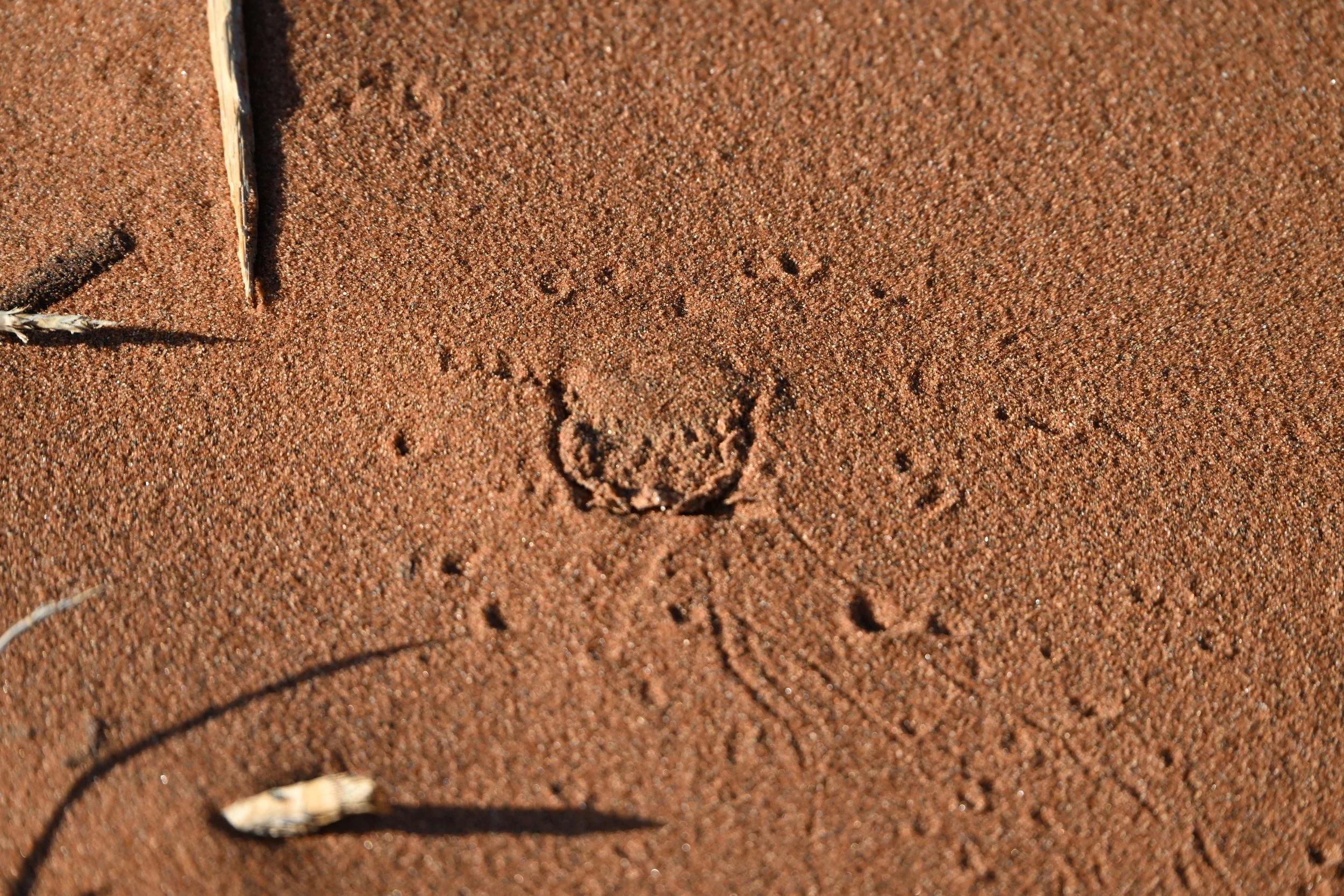
The sand is so fine that you can see the spider tracks leading up to it!

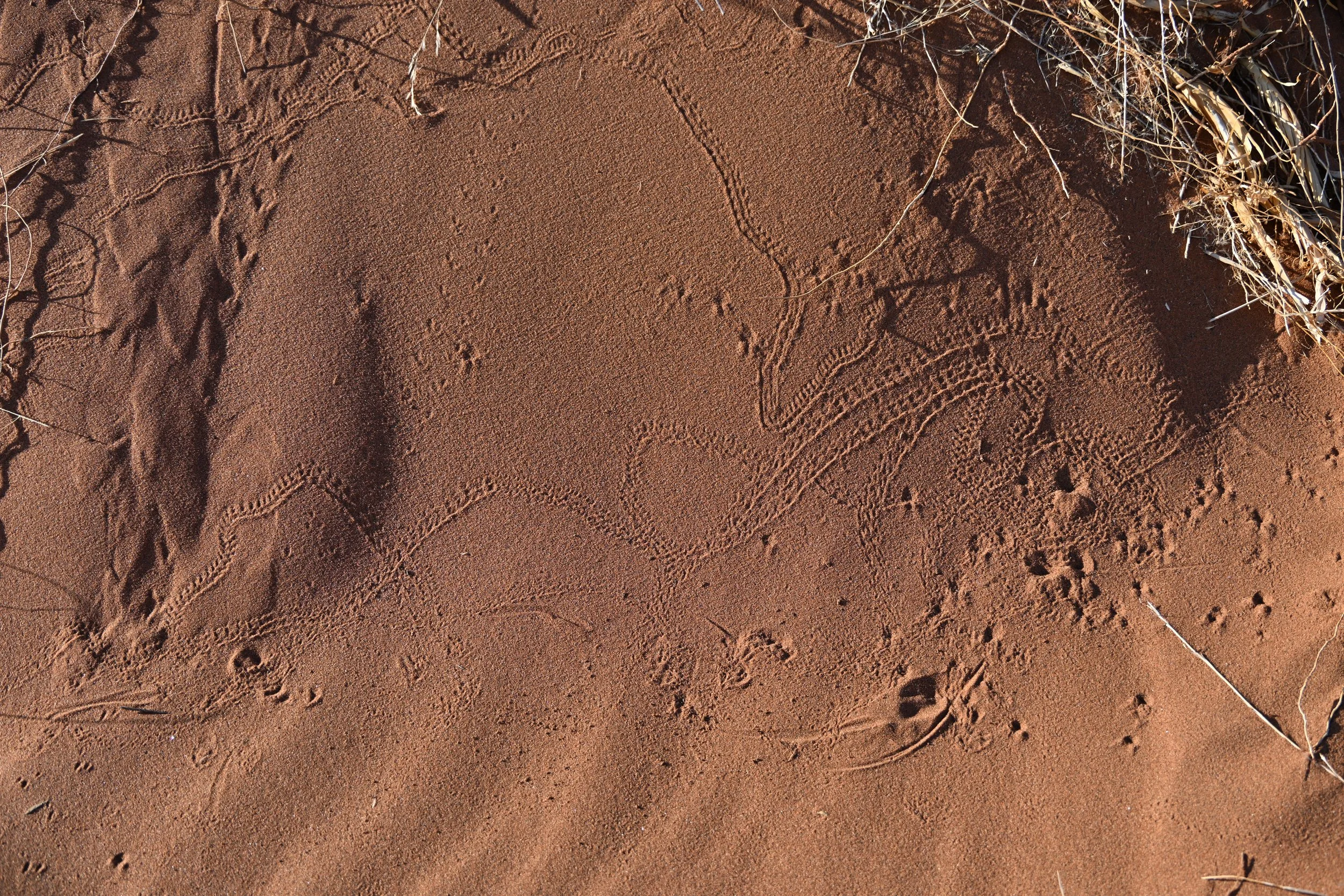
This one small area told a story of multiple creatures passing by (lizard, desert rat, and beetles) -

As we drove deeper into the region…

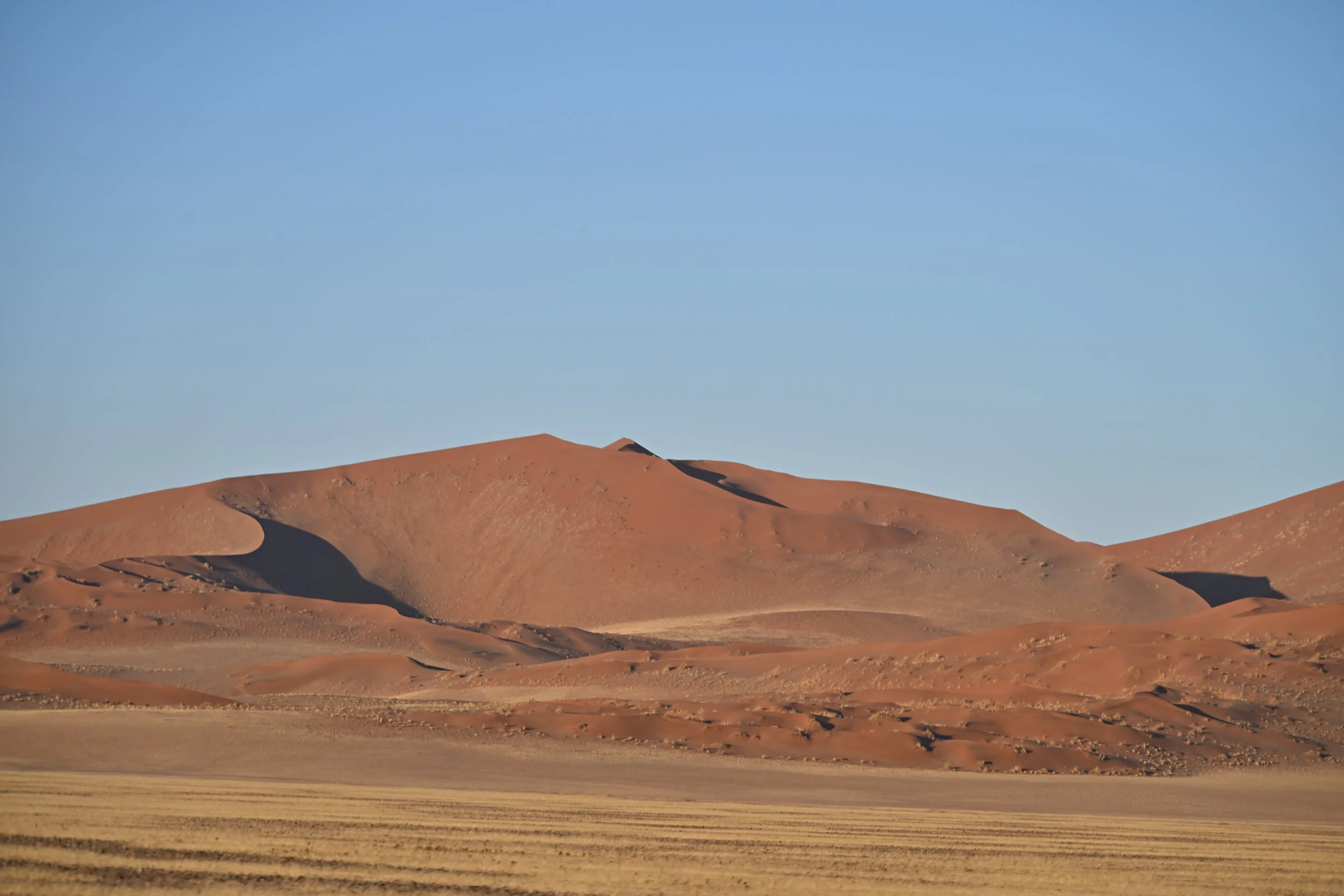
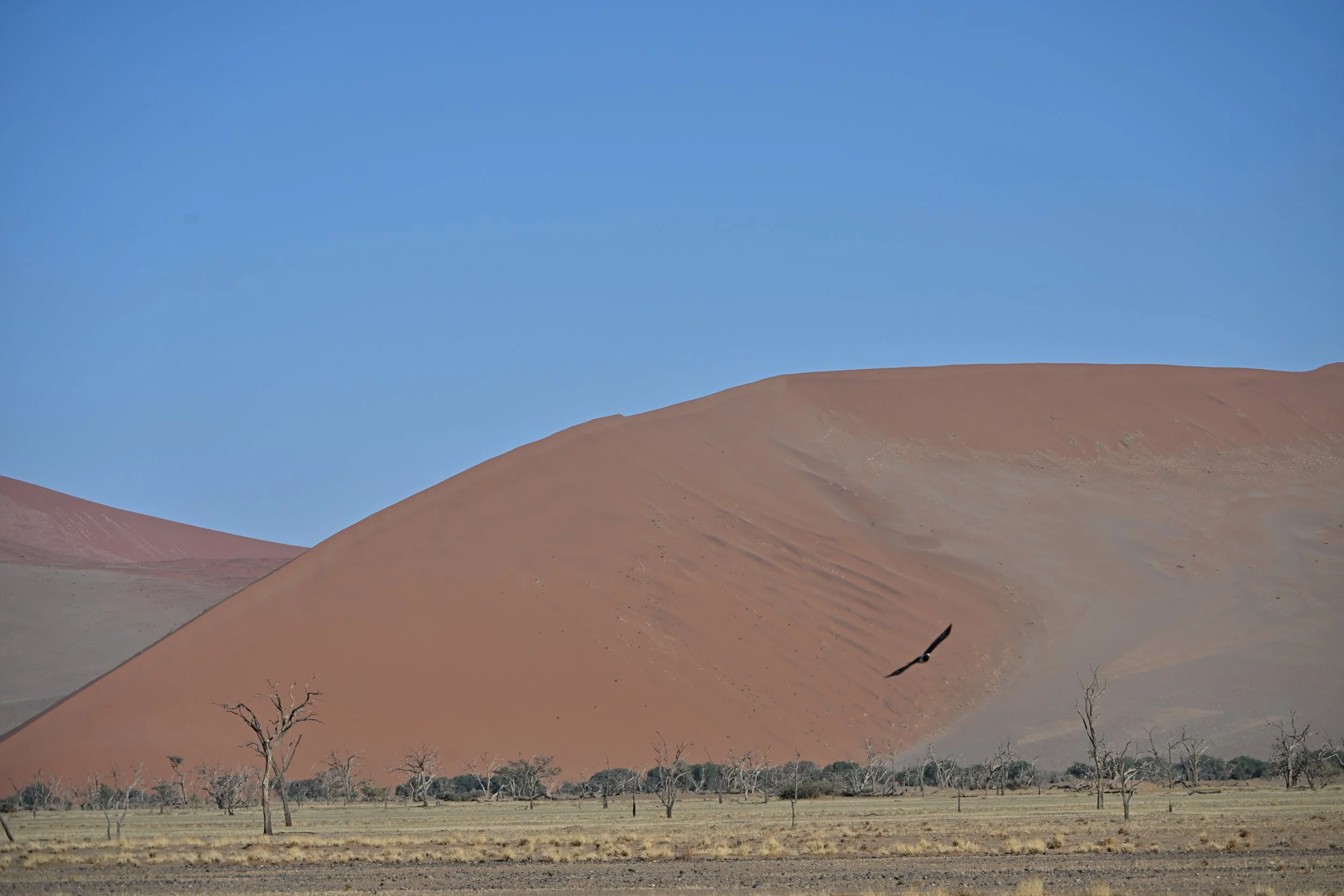
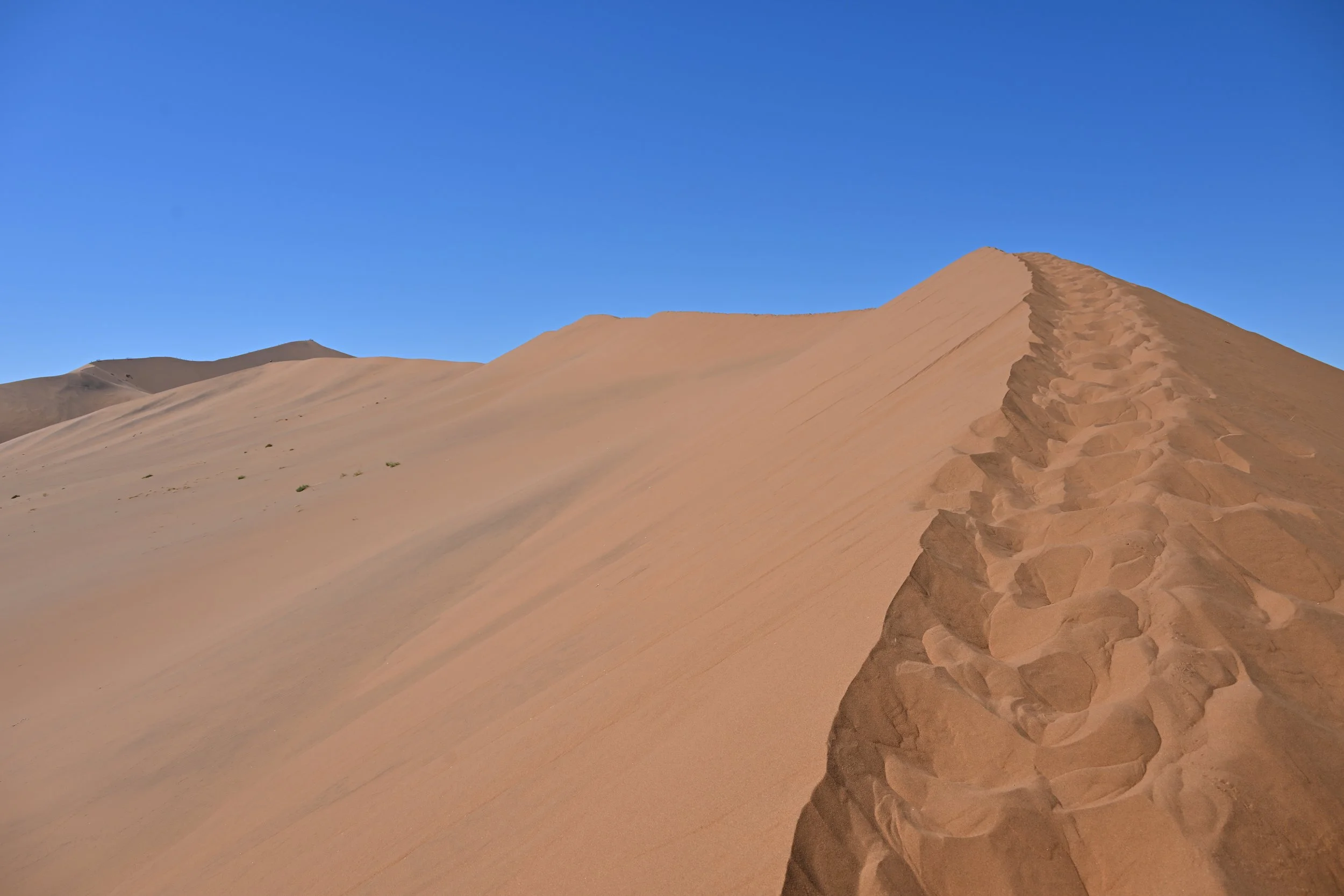
… the dunes grew higher and redder -

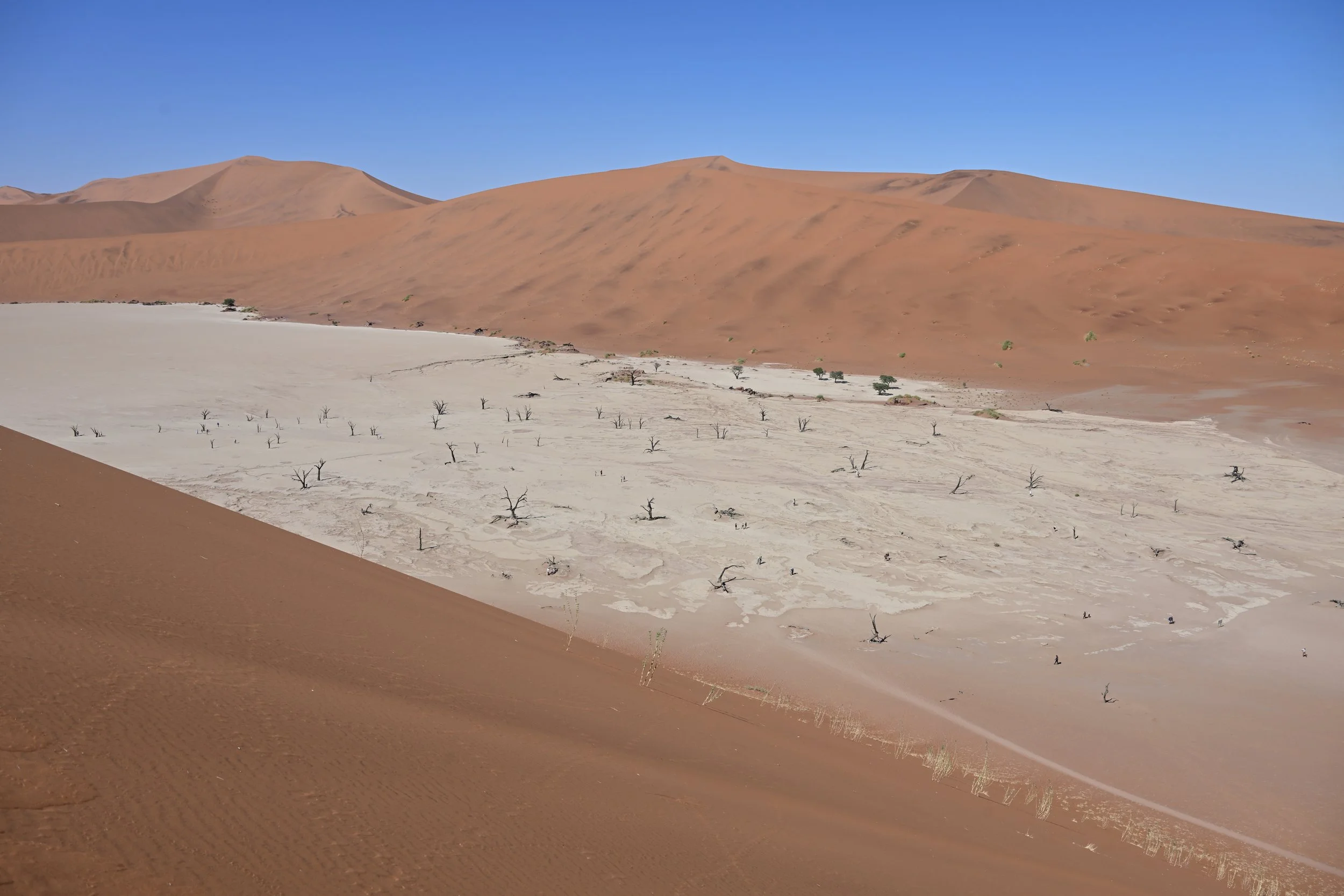
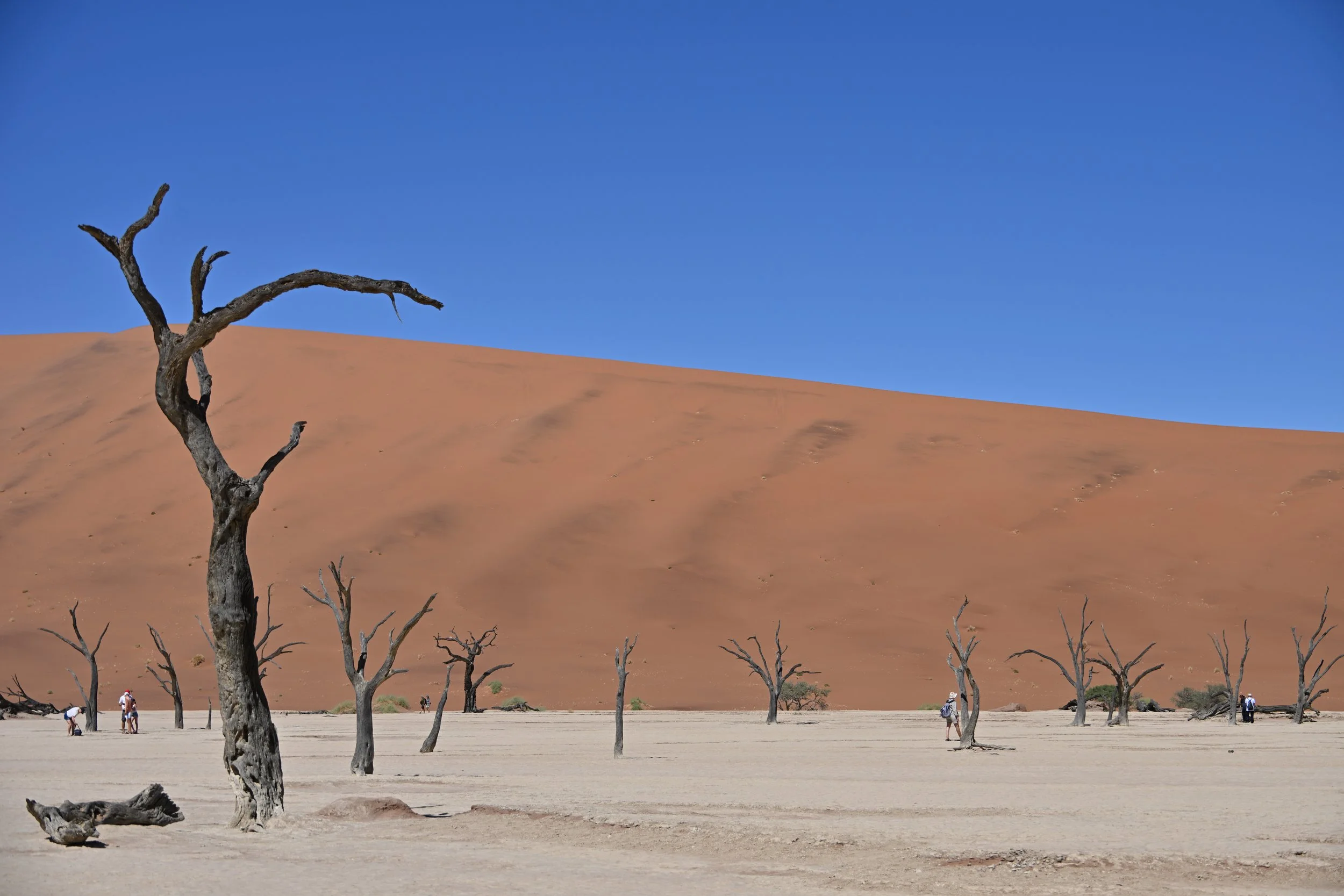
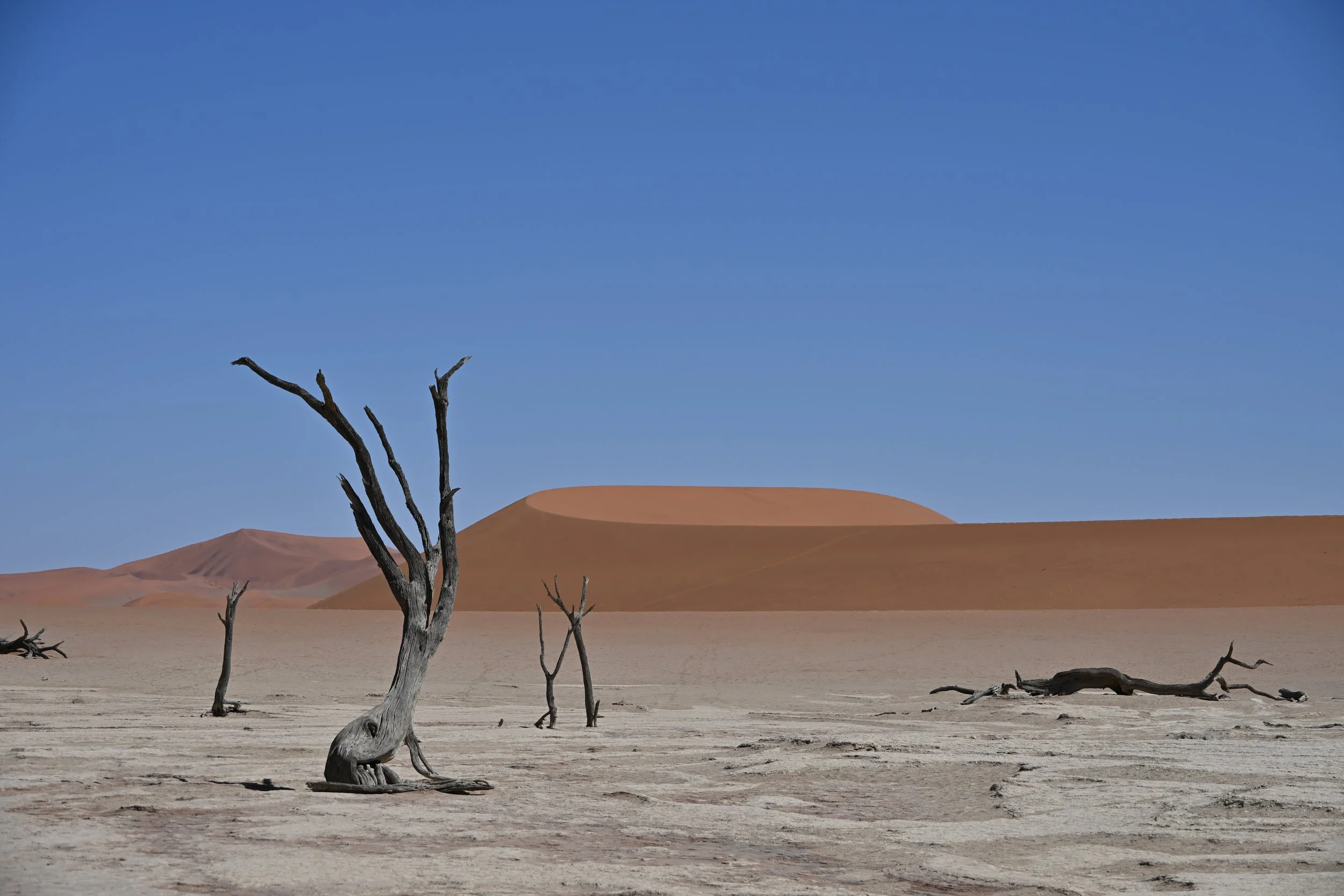
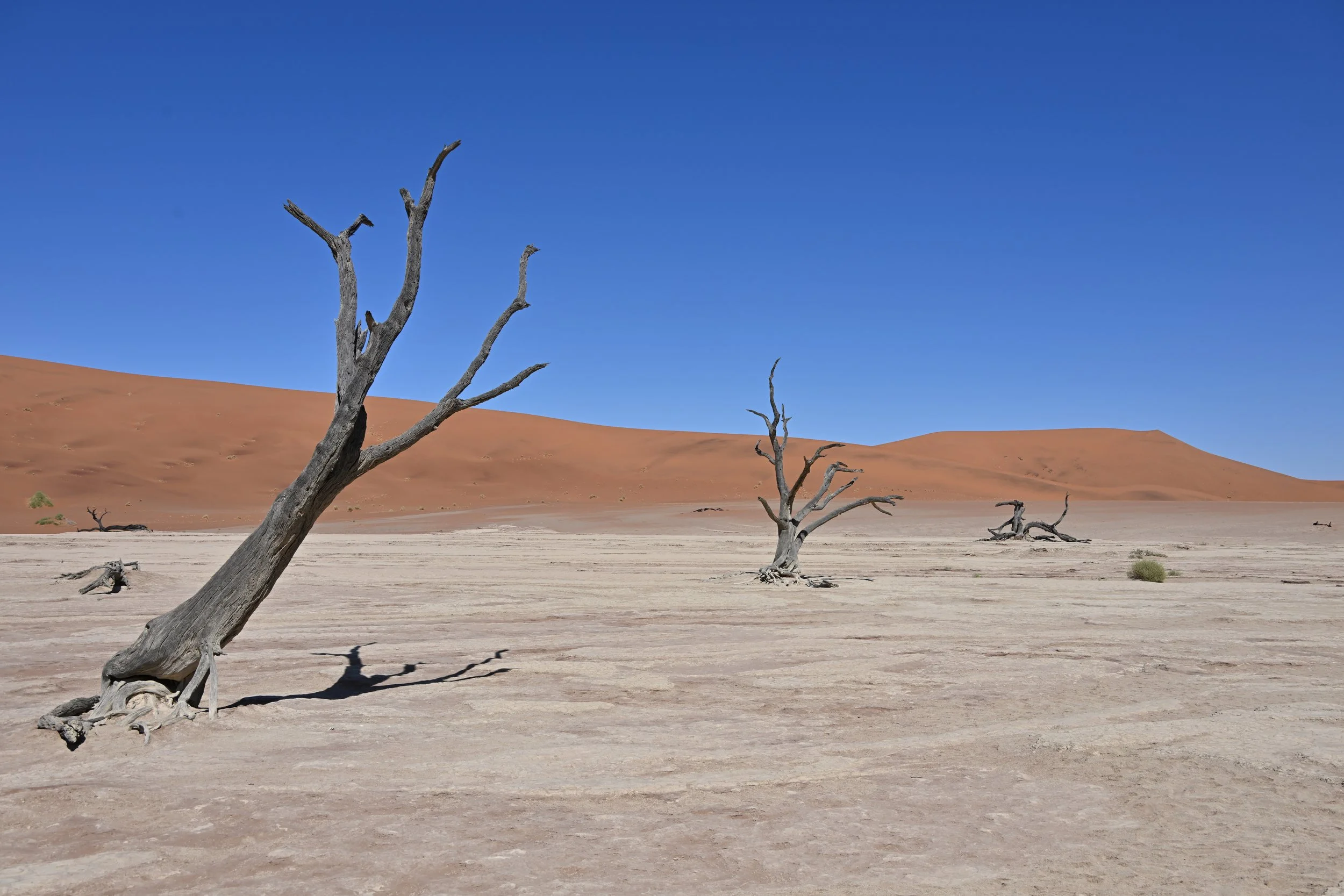
The pinnacle (pun intended) of our visit was to see Deadvlei…

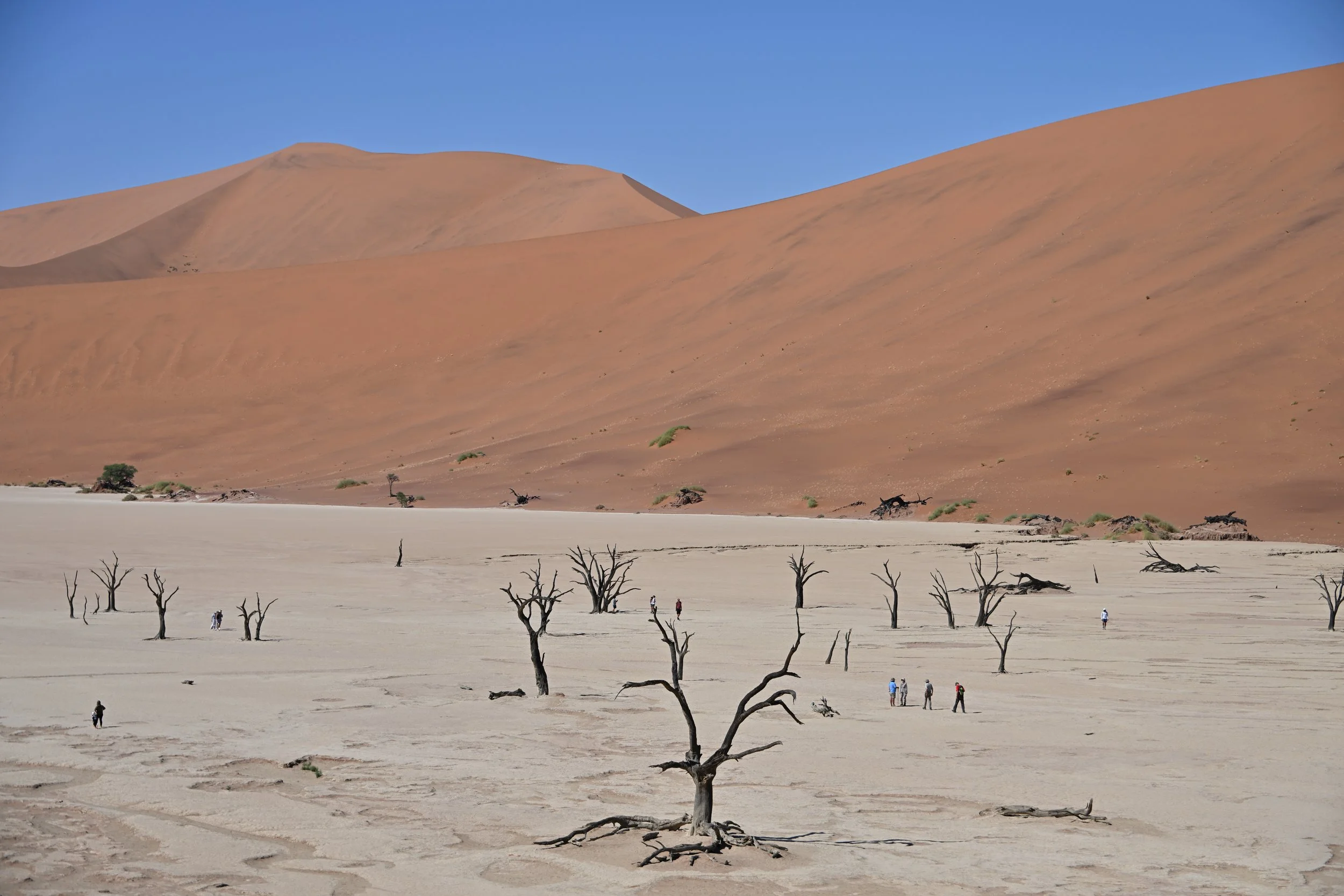
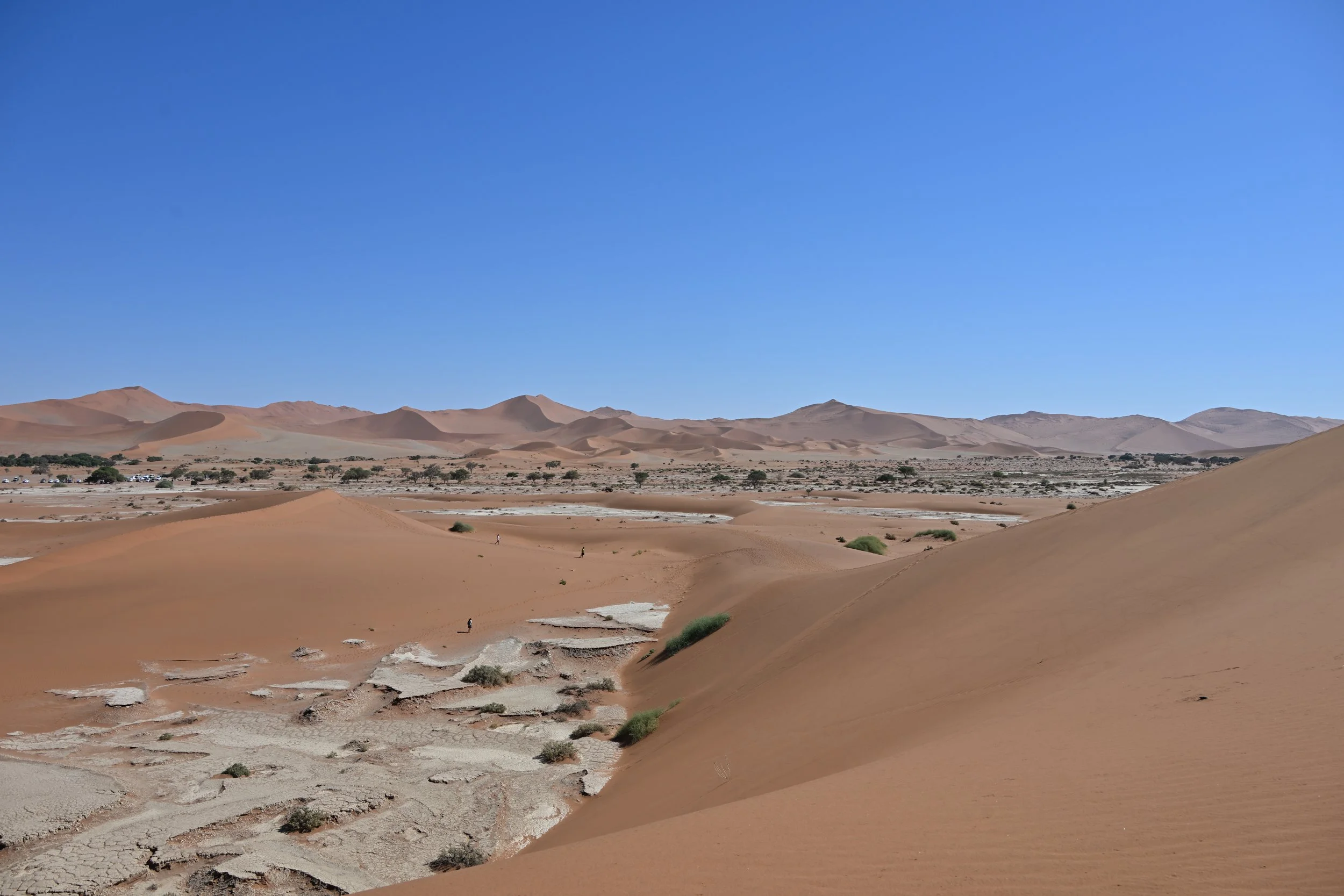
… a white clay pan surrounded by the (purported) tallest sand dunes in the world.

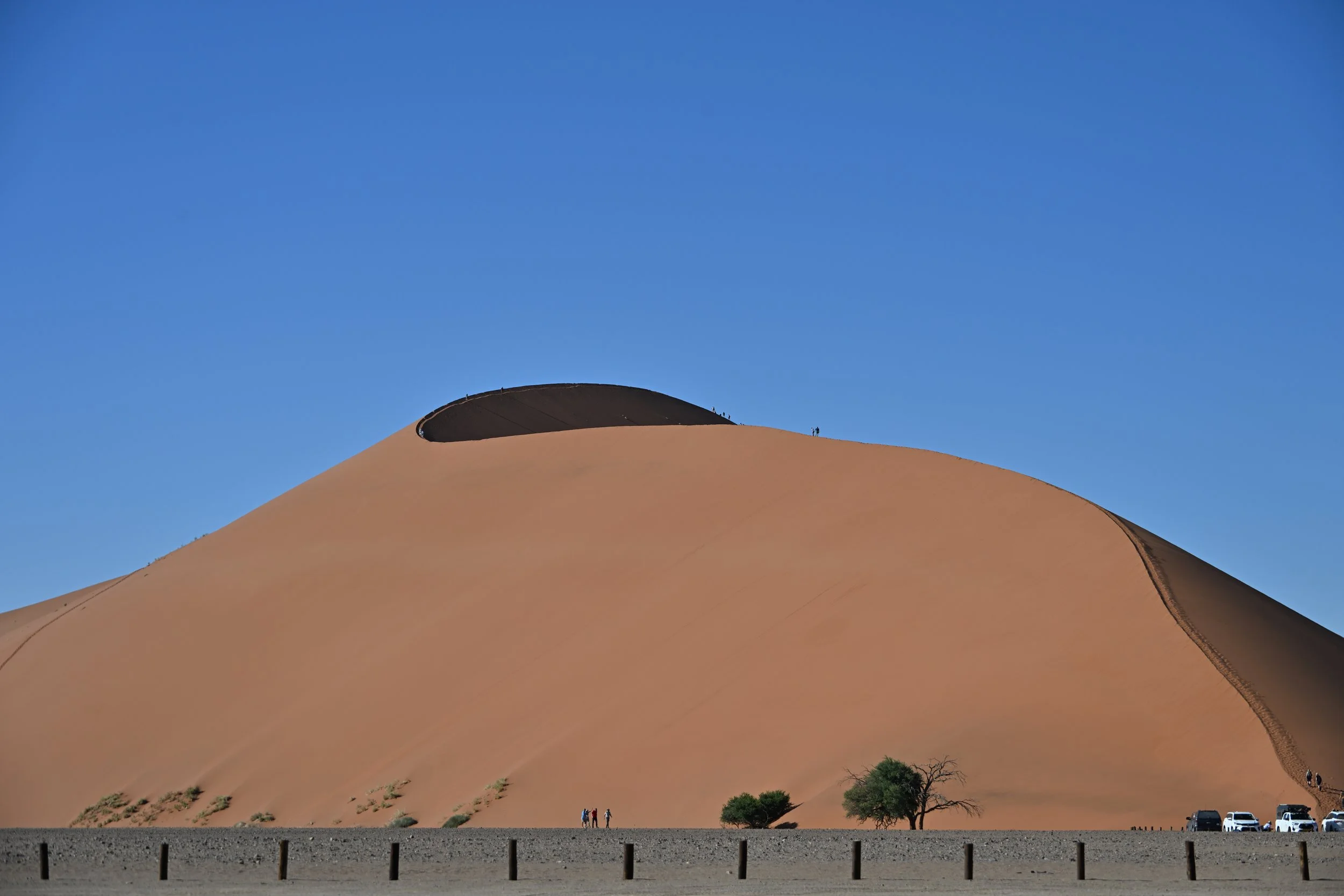
Big Daddy dune is 1,000-1,2000 ft high -

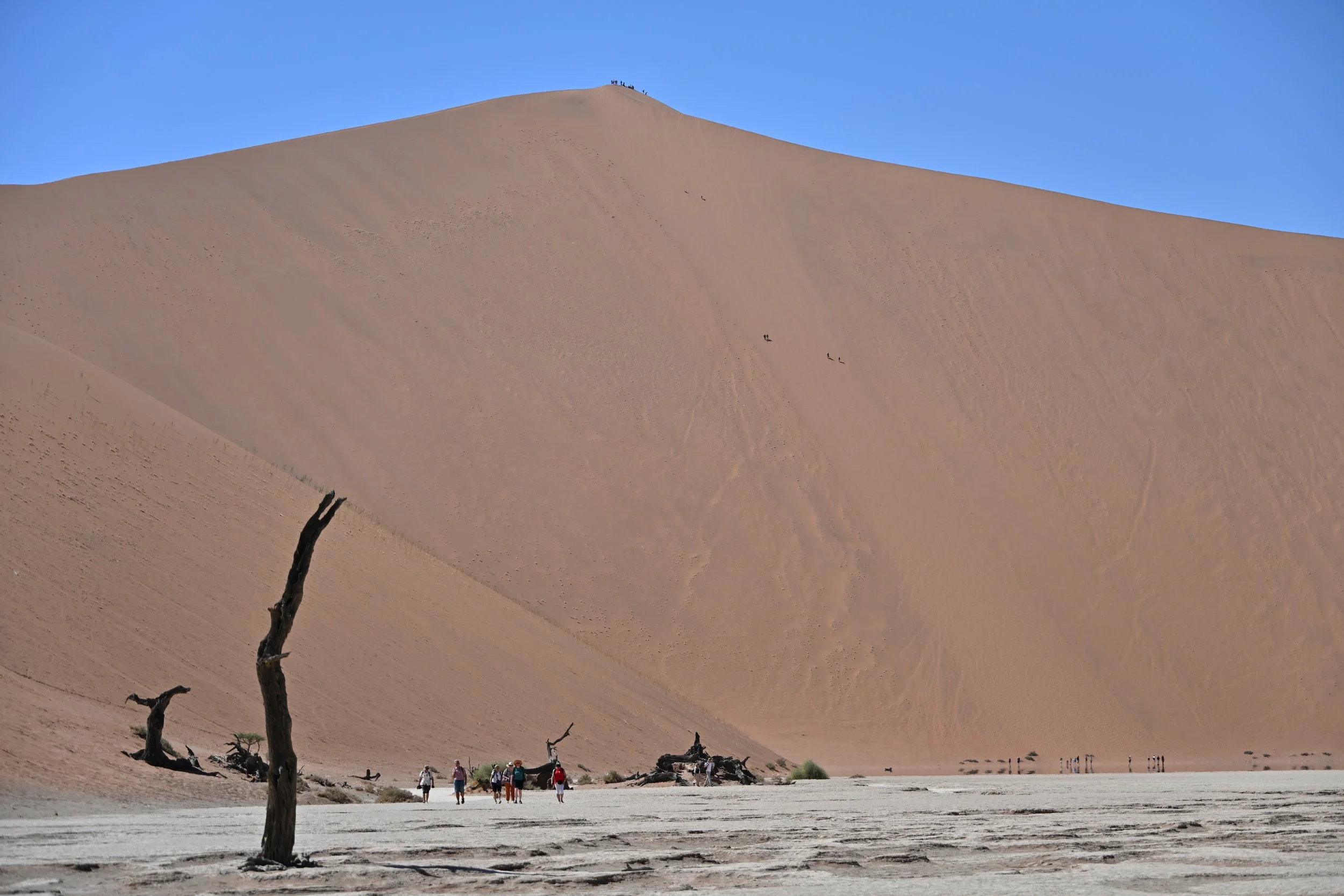
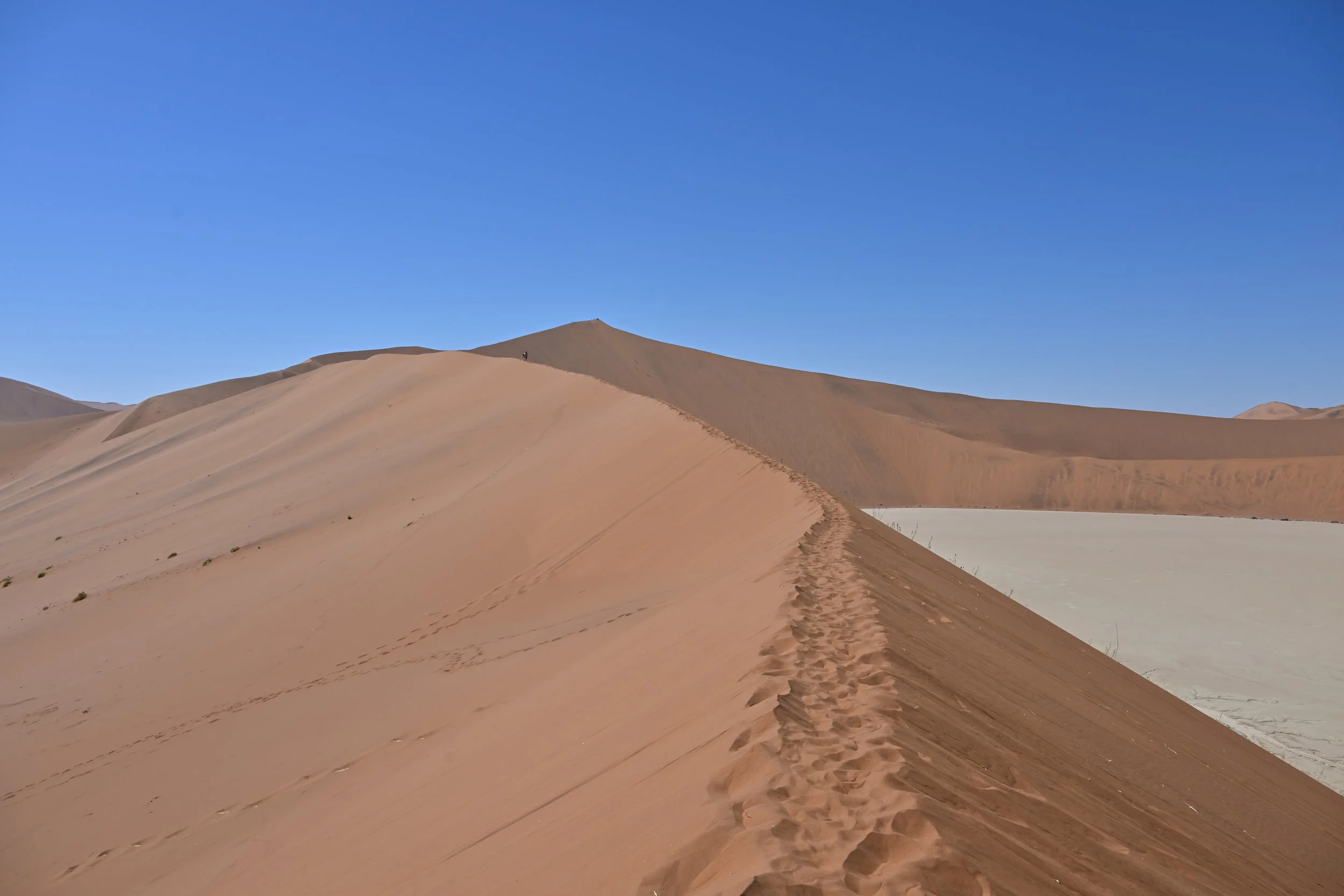
We didn’t have time to hike up there, but we did hike up the one alongside Deadvlei…

… enjoying the expanding views…

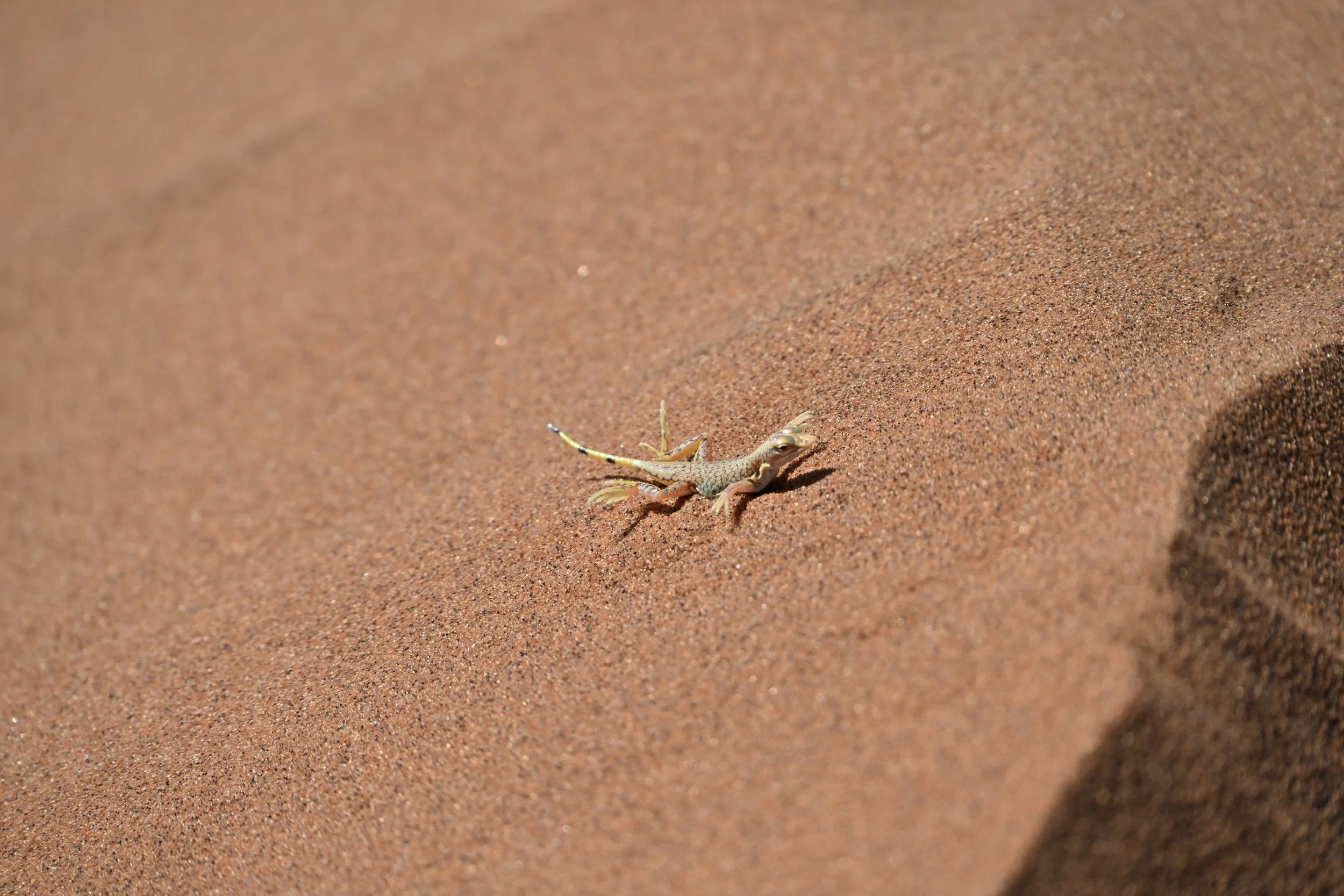
… and the local residents -

Shovel-snout Dancing Lizard (which is keeping its feet off the hot sand)

It was a bit intimidating when our guide dropped us off at the beginning of the track to Deadvlei, and told us “climb up the dune on your left, and then slide down”, and he drove off to wait for us to return. We followed the tracks of others before us…

… but we didn’t know where to start down, as previous tracks had disappeared. The guide had given us the tip of stepping down with our heels, and just keep sliding. Here’s Steve demonstrating good form (video alert - open this post in your browser by clicking the link at the end) -

He took a video as he slid down, to show the soft sand sluffing away as we went -

Where we came from -

After the water source to the marsh dried up, the clay soil hardened so much that the dead trees were left standing -

It was difficult to get pictures without people in them…

… but I kept trying…

This long day started before sunrise…

… but as the shadows grew long(er), we took one last picture -

Namibia

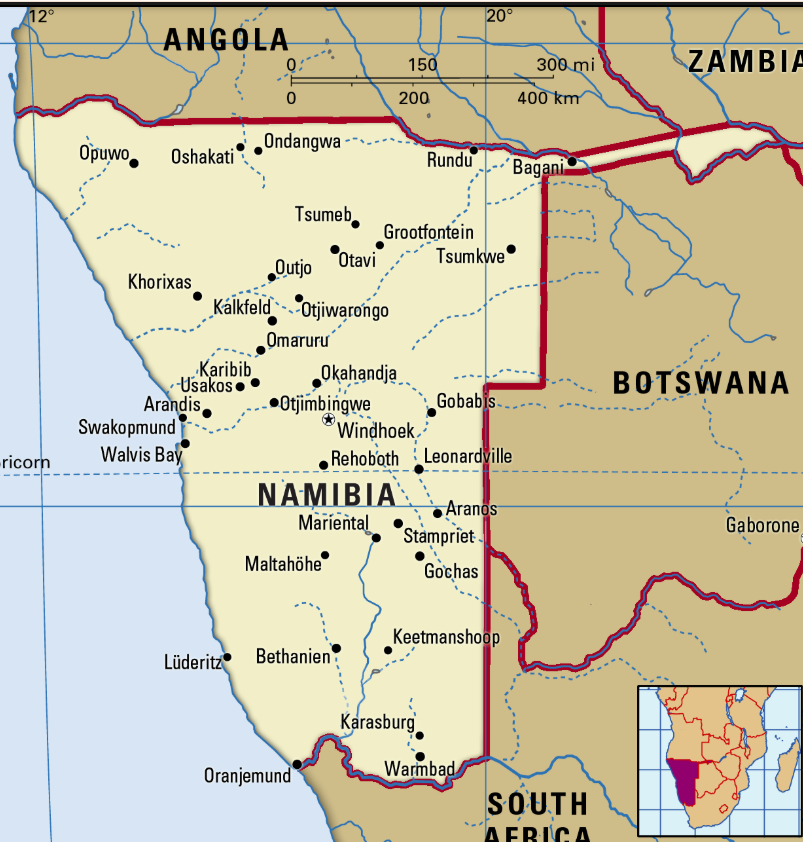
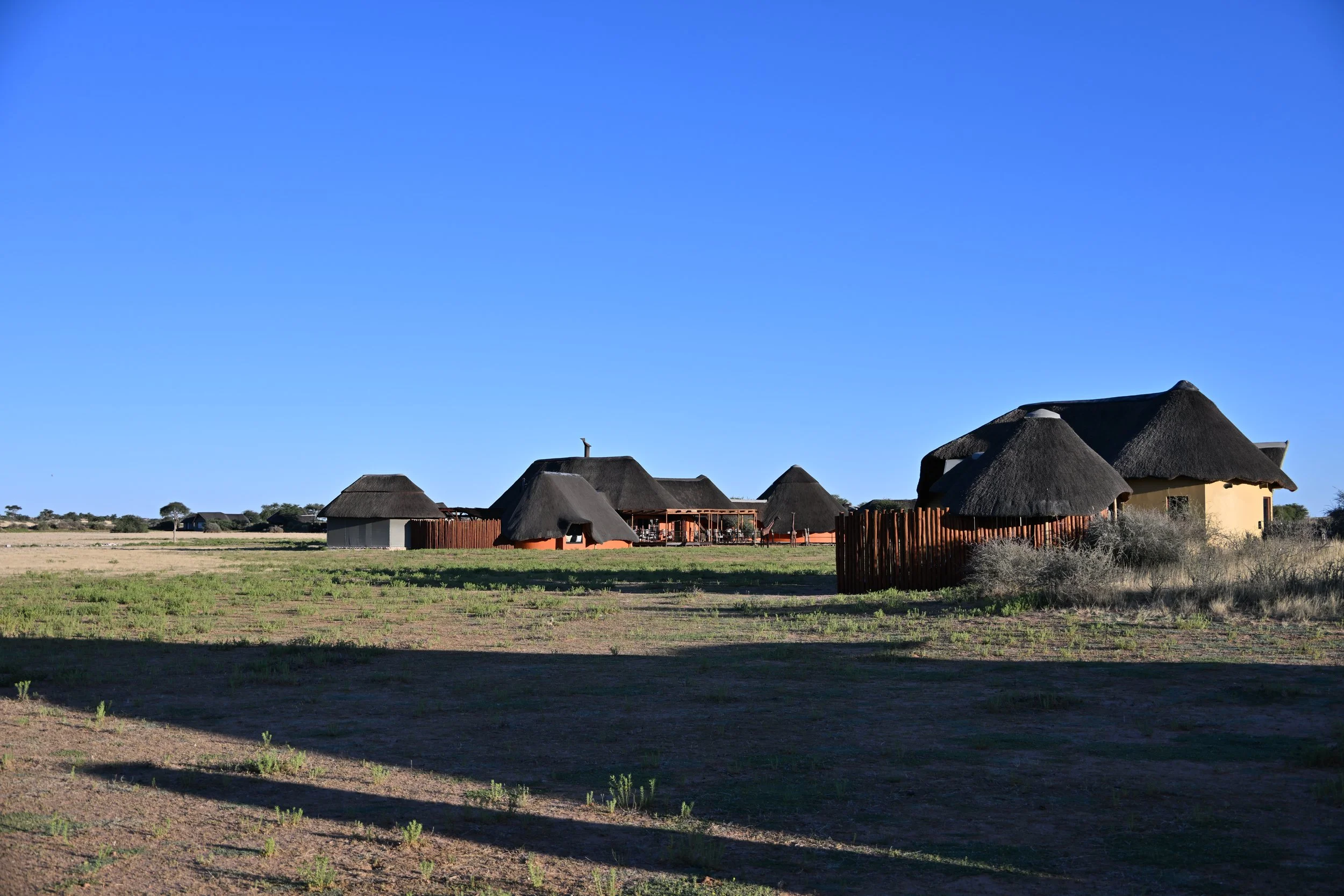
When we were setting up this trip, mainly for Madagascar and the lemurs, Steve suggested we add a safari in Namibia “since we’re basically already there”. If you don’t have your African geography down, Namibia is actually over across the southern end of the continent on the west coast (while Madagascar is off the east coast). Our first evening we stayed at a lodge with typical housing style…

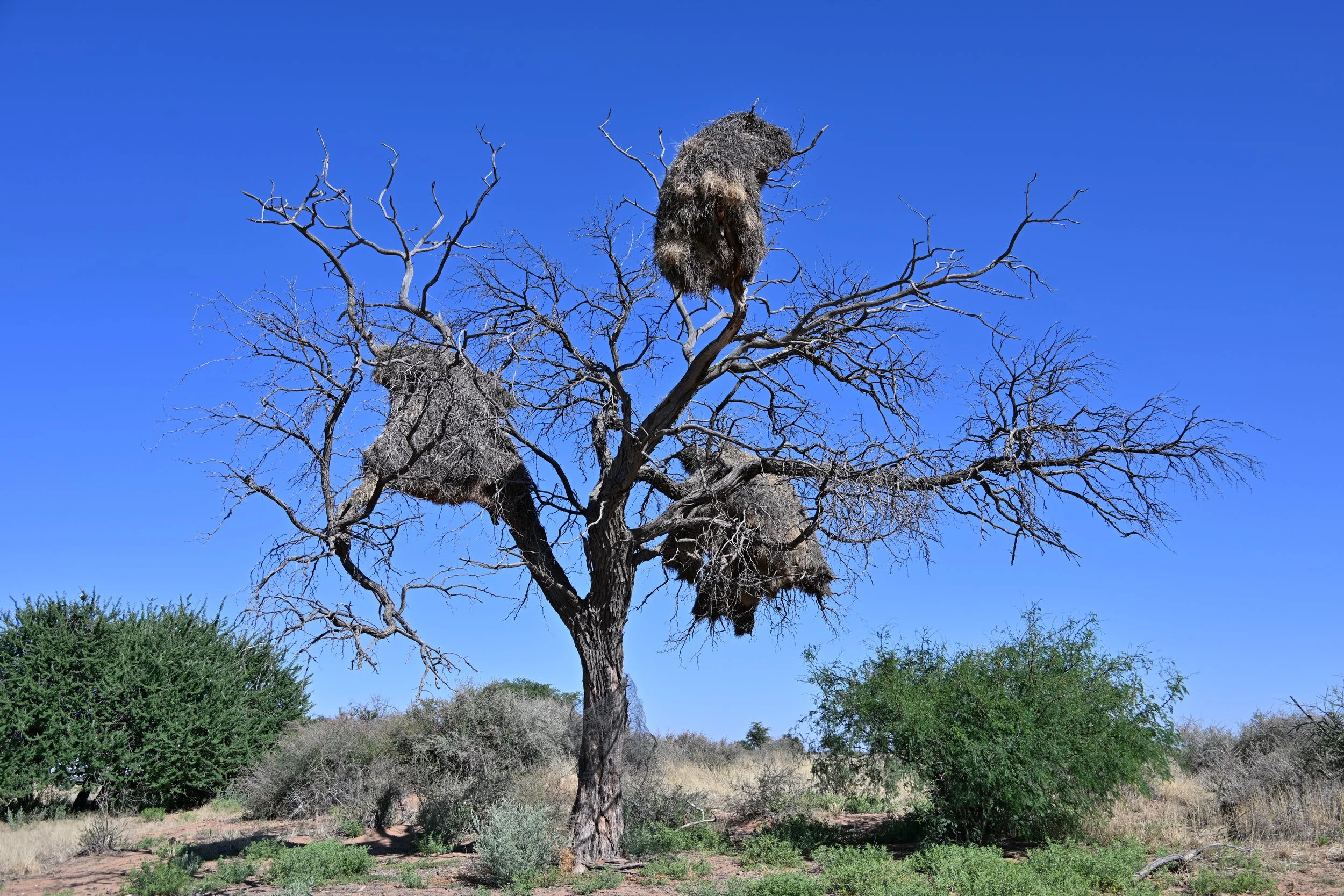
… that seemed to mirror the Sociable Weaver nests -

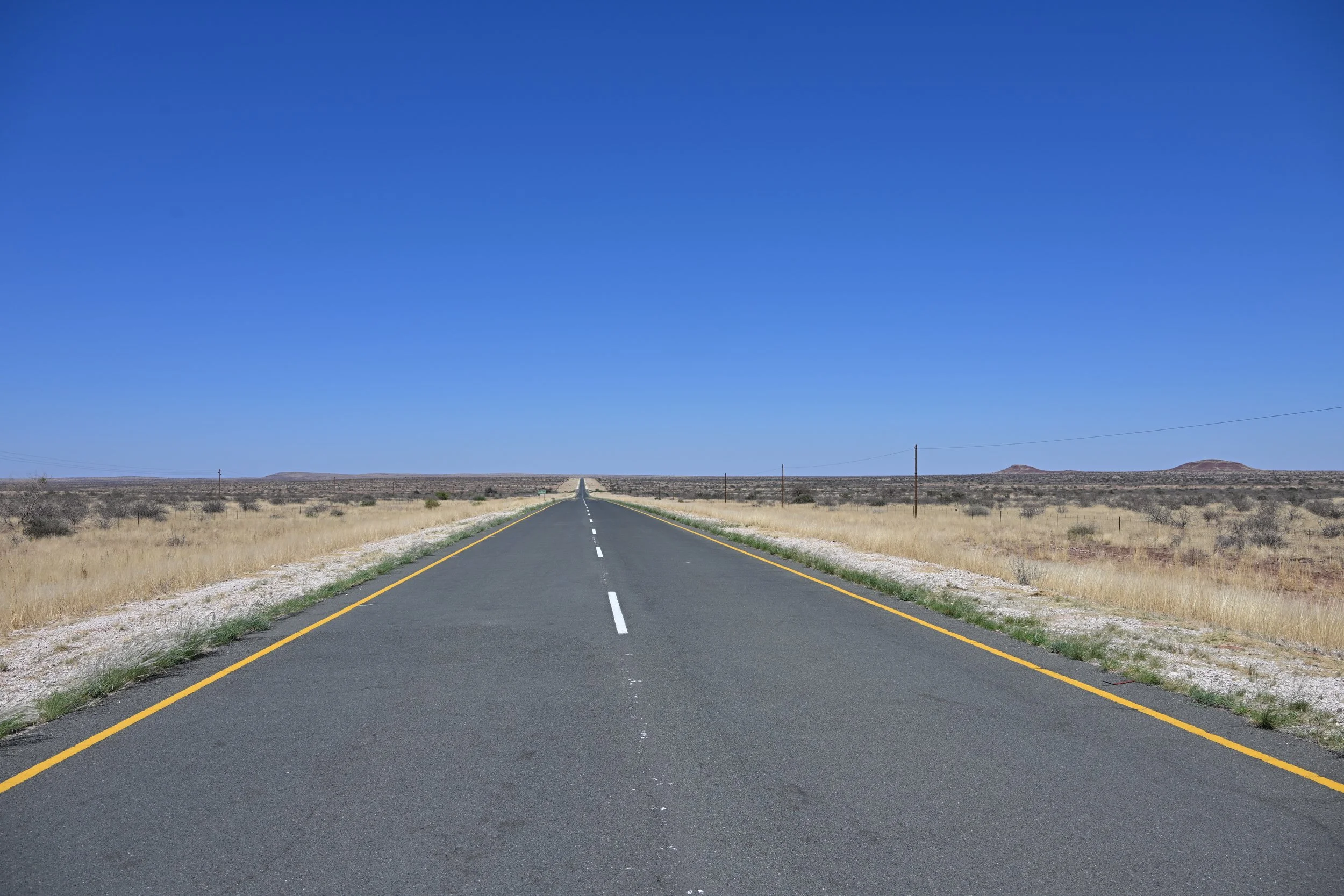
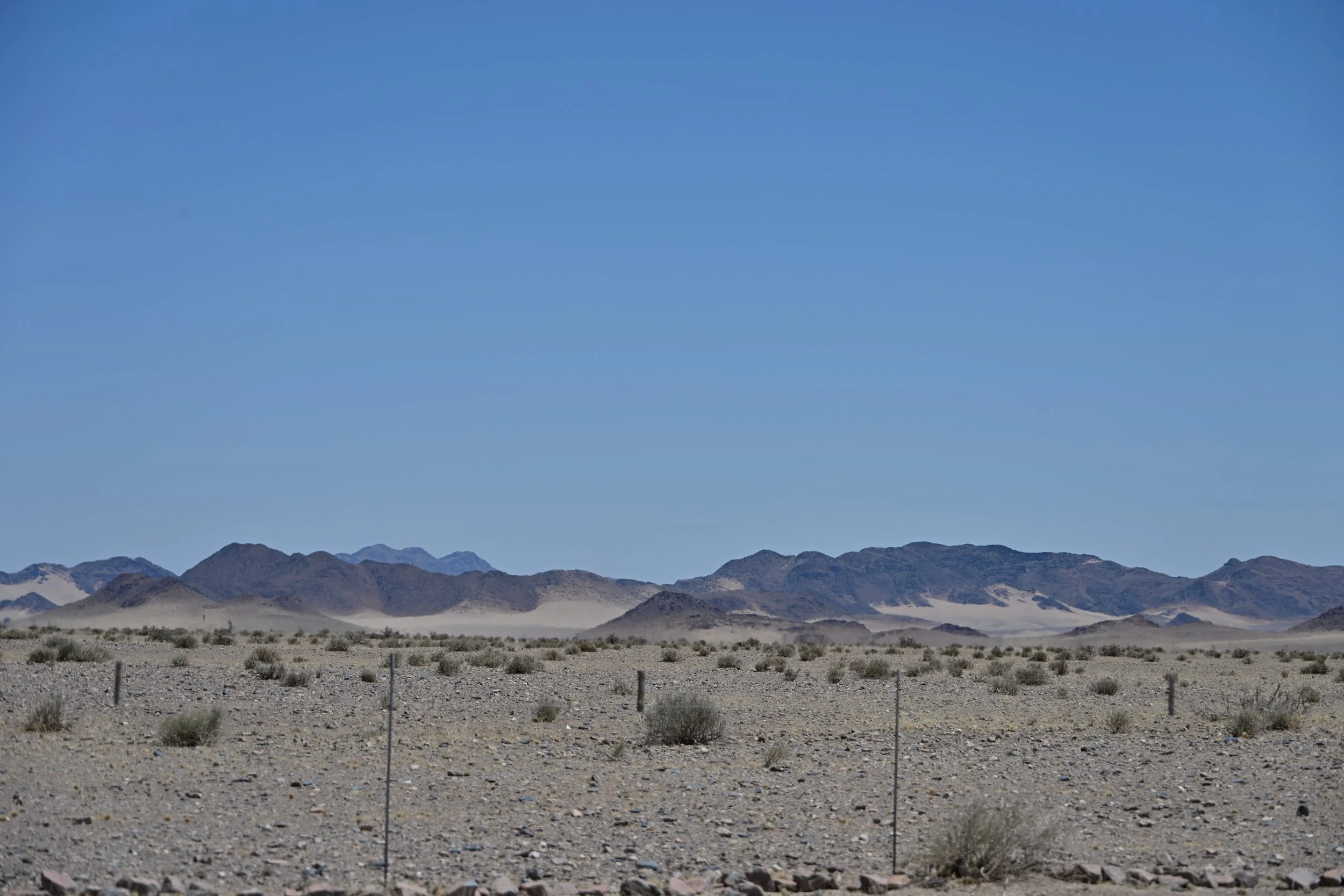
We had landed in Windhoek, the capital, and collected our rental truck for a 3 week driving safari. We headed south and then west, and we saw a whole lot of this…

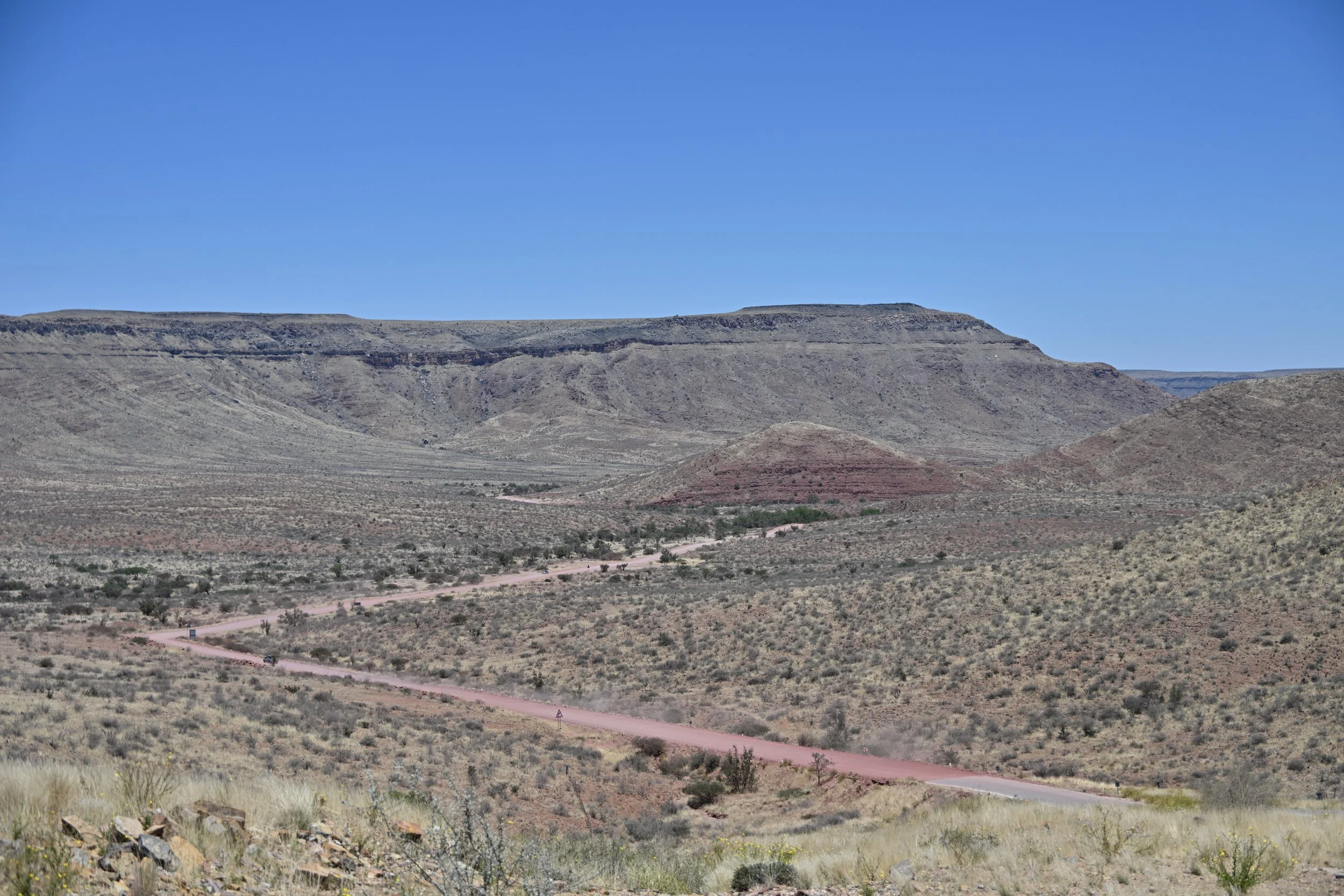
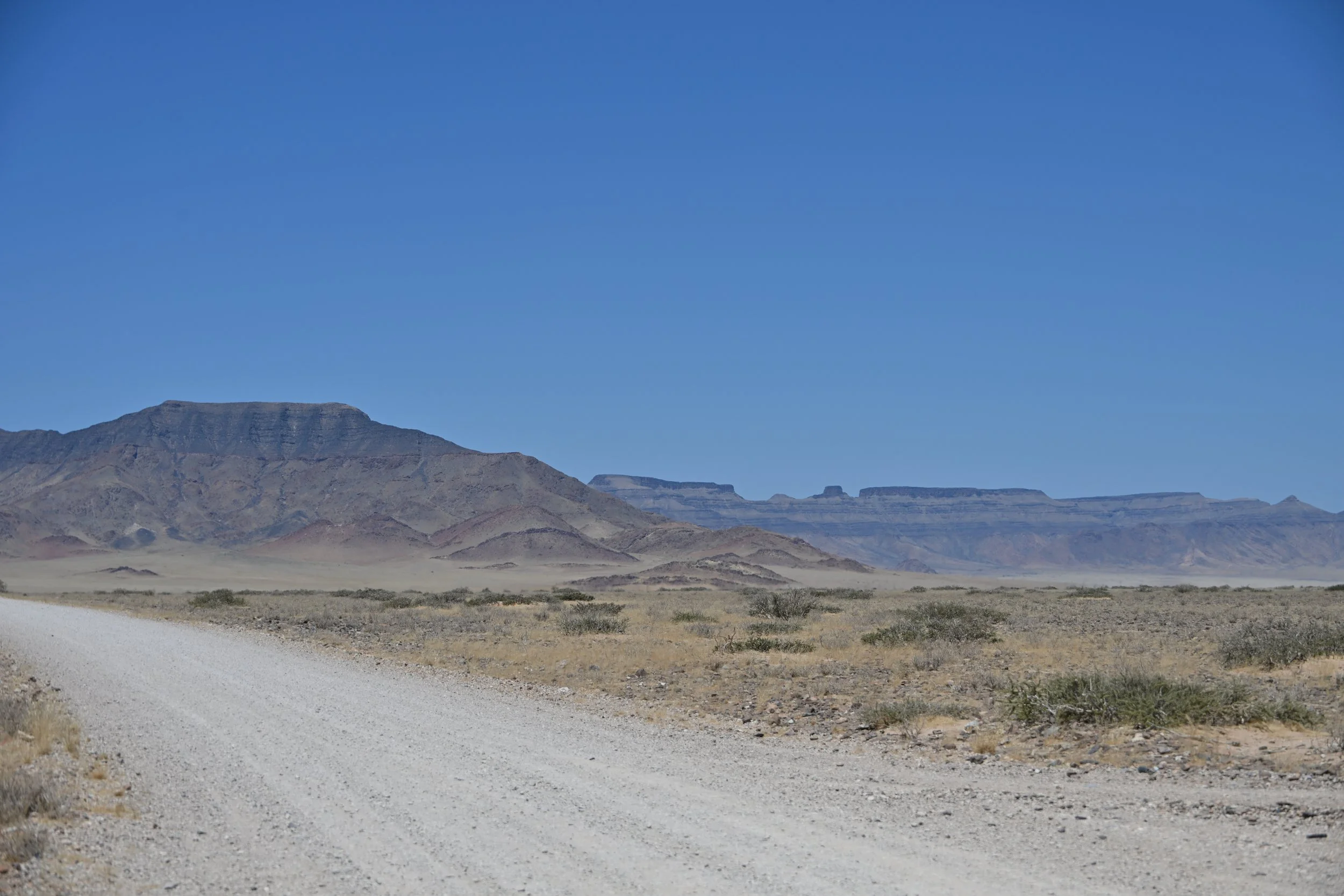
… with rare hills and their passes thrown in -

As we neared the SE coast, we started seeing sand creeping up the rock escarpments -

We drove many, many miles on gravel roads…

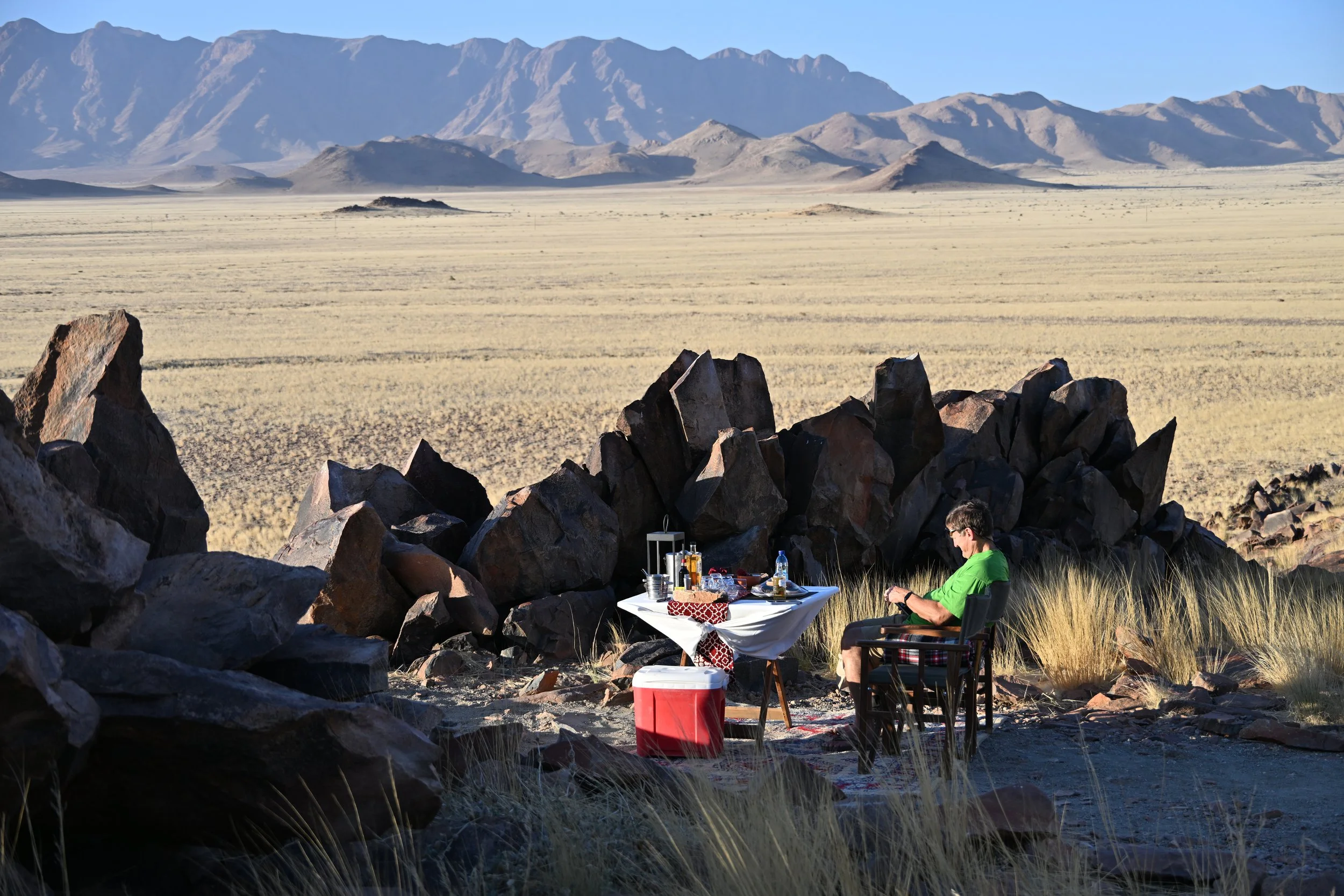
… and were always quite happy to reach our lodgings each afternoon. One evening we opted for the “sundowner” activity, which at this location included a nice private set-up…

… and even had a drinking buddy - a Dassie Rat (related to a Rock Hyrax) -

(it looks like a gerbil to me)

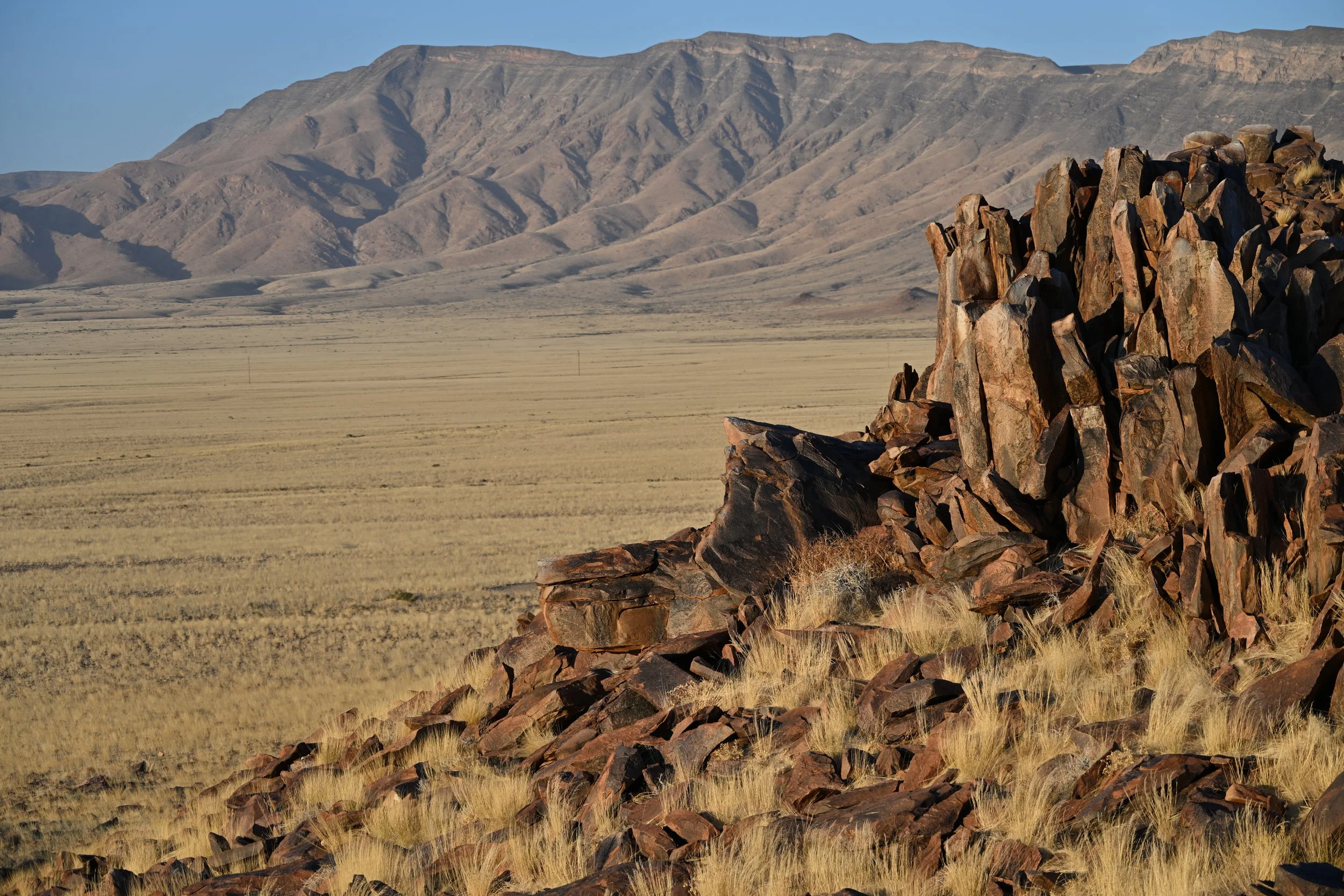
The setting was very grand…

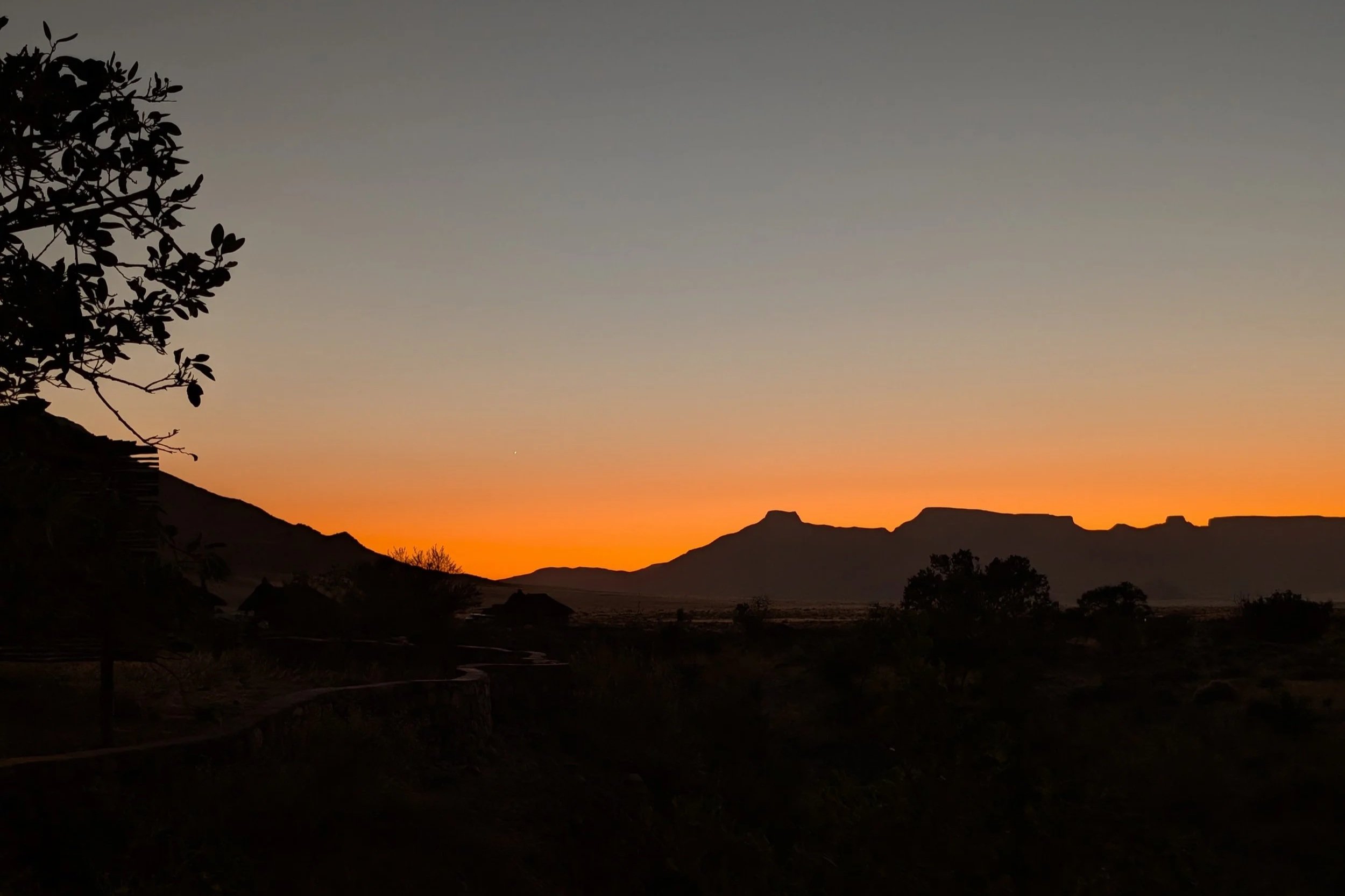
… and the sunset had a serene glow -

The Milky Way that night was spectacular -

(You might need to zoom in, depending upon your monitor settings.)

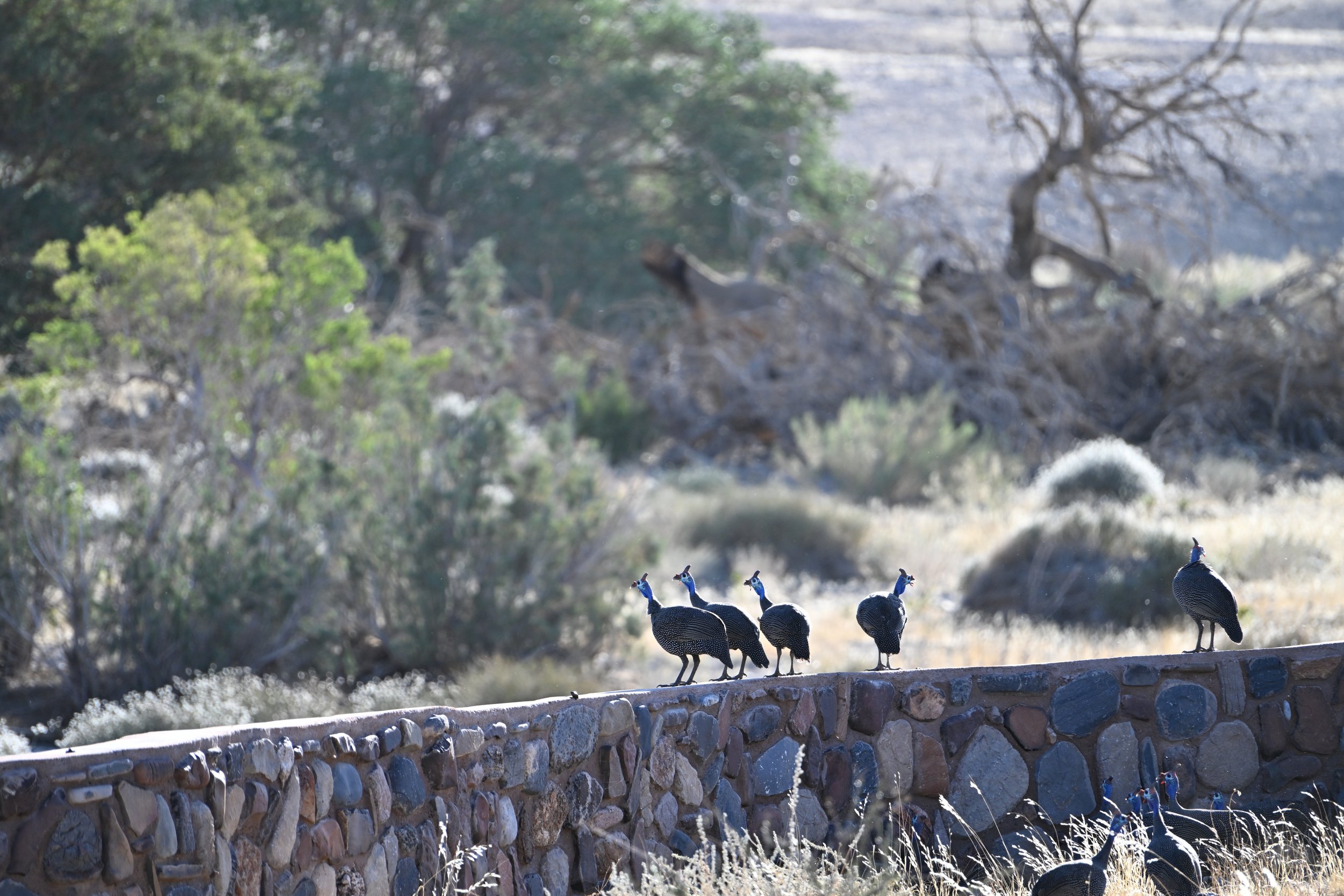
Our early morning wake-up call was aided by these Helmeted Guineafowl -

(as you may have guessed, this picture was taken the afternoon before)

We were heading out on an all day excursion to the sand dunes of Sossusvlai. I’ll share more in the next post -